

Monday, September 14, 2015
In yet another sign of the impacts of climate change, scientists at the UA Lab of Tree-Ring Research released a report showing that the snowpack in California's Sierra Nevada mountain range is the lowest it's been in five centuries; The release from UA News:
Friday, September 11, 2015
[Satire alert, in case anyone reading this thinks I'm being serious.]
The results are in, and the conclusions are clear. The Pew Research Center administered a test on science knowledge (you can take the test here), and it demonstrated a distinct difference in science knowledge based on people's age, gender and race. I've used those results to draw the following conclusions.
1. Science education in U.S. K-12 schools reached its peak during the years between 1980 and 2000. People between the ages of 30 and 49 earned the highest scores on the test, and they would have received their middle and high school science educations during the years roughly between 1980 and 2000. During those years, the Reagan administration's 1983 Nation at Risk report concluded that our schools were suffering from a "rising tide of mediocrity" and declared, "If an unfriendly foreign power had attempted to impose on America the mediocre educational performance that exists today, we might well have viewed it as an act of war." Peak science education continued through the post-Nation at Risk years when the improvement in our schools was said to be so minimal that we needed to impose a new educational model, No Child Left Behind, based on strict educational standards and yearly high stakes tests.
2. Science education in the U.S. has deteriorated since the advent of No Child Left Behind. People between the ages of 18 and 24, who received their middle and high school science educations since NCLB was passed in 2001, scored lower than people who went to school during the previous two decades. Whether that indicates a general deterioration of our schools or indicates that the increased emphasis on the tested subjects of reading, writing and math meant less emphasis on science instruction is unclear and will need to be examined further.
3. The worst time for post-World War II science education in K-12 schools was in the 1950s and 1960s, followed by the 1970s. The poorest performers on the test were people over 65, followed by people between the ages of 50 and 64.
4. More women attended failing schools and had poorly quality science teachers than men. Men scored higher on the test than women, indicating that women's science education was inferior to that received by men.
5. Science teachers in schools with predominantly African American and Hispanic students are inferior to teachers in schools with predominantly white students. Test takers who are African American and Hispanic scored lower than White test takers.
Someone better trained in statistics and polling than I may draw more sophisticated conclusions from this rich data source, but based on the quality of my analysis, the state's Department of Education should consider hiring me to help analyze the results of the AzMERIT tests.
Tags: Science test , Pew Research Center , AzMERIT test , No Child Left Behind
Monday, August 17, 2015
The UA is now just about a year away from the launch of OSIRIS-REx, the plucky space robot that will travel to the near-earth asteroid Bennu, orbit around it while taking photos and other measurements, and then swoop in to grab a sample and send it back to earth.
Last week, the OSIRIS REx team at the UA Lunar and Planetary Labs showed off the ICAMS, a suite of cameras that will serve as the spacecraft's eyes. The cameras were built here in Tucson and are shipping off to Denver's Lookheed Martin facility, where the spacecraft is being built.
OSIRIS-REx instrument scientist Bashar Rikz explains what the cameras do:
One of our most important assets is a trio of cameras called the OSIRIS-REx Camera Suite, or OCAMS, under construction at the University of Arizona. The design of OCAMS allows us to image Bennu over 9 orders-of-magnitude in distance, from an initial distance of 1-million kilometers (over 620,000 miles) down to 2 meters (6.5 feet). The camera suite is similar to a lookout nestled in the crow’s-nest of a tall ship. This scout must observe Bennu as we approach, survey, and recon the asteroid, and tell the ship’s navigator where to go.To let Tucsonans know more about this way-cool space mission, the OSIRIS-REx team is putting on a party on Saturday, Sept. 12, at downtown's Fox Theatre. Bennuval will feature OSIRIS-REx principal investigator Dante Lauretta of the UA's Lunar and Planetary Lab, as well as Geoff Notkin, star of Science Channel’s Meteorite Men; the comedic Tucson Improv Movement; fiery stunt team Flam Chen, and the ChamberLab music project. Tickets are just
You can learn more about the OSIRIS-REx mission here and here.
Here are the details on Bennuval, sent over by Zona Politics associate Jennifer Powers, who is organizing the space-age shindig:
Outer space takes the stage when Dante Lauretta, University of Arizona Professor of Planetary Science and Cosmochemistry and Principal Investigator on NASA’s OSIRIS REx Mission, is joined by Geoff Notkin, star of Science Channel’s Meteorite Men, to present Bennuval! An Evening of Space, Art and Music. This live variety show features performances by some of Tucson’s most innovative entertainers, including comedic troupe Tucson Improv Movement, daredevil acrobats Flam Chen, and avant-garde music project, ChamberLab. The Art of Planetary Science will exhibit works created from and inspired by the solar system and the scientific data with which we explore it. Meteorites will also be on display, completing the otherworldly atmosphere of this unique event.
Bennuval! takes its name from the asteroid Bennu, destination of OSIRIS-REx. Bennuval! celebrates the University of Arizona’s accomplishments in space as part of the vibrant creative culture that thrives in Tucson by bringing together art and outer space in an entertaining setting. Both imaginative and informative, Bennuval! establishes Tucson’s reputation as a space age city.
The presenting sponsor of Bennuval! is the University of Arizona College of Science & Galileo Circle. Other sponsors include Lunar and Planetary Laboratory, TEP, Godat Design, BRINKmedia, Bill Westcott, Paragon Space Development, Strategic Space Development, Kinetx Aerospace, Indigo Information Services and Volvo of Tucson.
Doors open at 6:00 p.m. and the show begins at 7:00 p.m.
Tags: OSIRIS-REx , NASA , University of Arizona , Arizona news , Tucson news , space mission , asteroids , Dante Lauretta , Bennuval , fox theater
Friday, August 14, 2015
Zona Politics Eps.37 from Zona Politics with Jim Nintzel on Vimeo.
This week on Zona Politics with Jim Nintzel: We go into outer space with author Chris Impey and deep beneath ancient African lakes with Dr. Andrew Cohen. Impey, the deputy head of the UA Astronomy Department, stops by talk about his new book Beyond: Our Future in Space, as well as dark matter, the possibility of life on other planets and much more. Then Cohen, a UA professor of geology and ecology and evolutionary biology, discusses his work in ancient African lake beds. You can learn more about Cohen's work, including how the samples he's retrieving are helping scientists understand the world our ancient ancestors lived in, here and you can watch A Human Climate below.Watch Zona Politics at 8 a.m. Sunday on the CW Tucson, Channel 8 on Cox and Comcast and Channel 58 on broadcast, DirecTV and Dish networks.
Here's a transcript of the show:
Hello, everyone. I’m Tucson Weekly senior writer Jim Nintzel and this is Zona Politics. Today, we’re taking a break from public affairs to learn a litle bit about life in outer space. Joining me is author and astronomy, Dr. Chris Impey. Dr. Impey is the deputy head of the U of a Astronomy Department and the author of several books. The most recent is “Beyond: Our Future in Space.” Dr. Impey, welcome to Zona Politics.
(Impey) Nice to be with you, Jim.
(Nintzel) Talk a little bit about what “Beyond” is all about.
(Impey) Well, I sort of felt that most people saw the space program was in the doldrums. You know, Americans can’t put an astronaut in orbit and it’s 40 years plus since we’ve been to the moon. You know the average person thinks it isn’t really happening. But, meanwhile, the private sector is gearing up and there are some pretty exciting things happening, so I felt it was time to sort of look at the space program and our future in space.
(Nintzel) How much longer before we see more people going up in space?
Tags: Zona Politics with Jim Nintzel , Chris Impey , Andrew Cohen , A Human Climate , Beyond: Our Future in Space , Arizona science , Arizona news , Tucson news , Video
Monday, August 3, 2015
Ever feel as though your future is truly written in the stars? Not in the sense of destiny or fate, but rather that the stars are actually your future? For those seeking real life experience in the field of astronomy or any nature related career, the Kit Pitt Observatory is offering a worthwhile volunteer experience.
The observatory is currently recruiting volunteers for their docent training class, starting this October. The class will prep volunteers for hosting guided tours and serving guests of the observatory. Docents play an important role in the observatory’s educational goals are will share their knowledge with guests. Facilitating hands-on demonstrations, creating informative exhibits and hosting school groups are just a few things volunteers will be responsible for.
This opportunity is open to all and no prior astronomy experience is required. Applicants will need to meet their basic physical requirements and be able to work on their feet for long periods of time at a heightened elevation of 7,000 feet.
While this is an unpaid volunteer opportunity, transportation to the observatory and lunch will be provided for free. Other perks include a 15 percent discount at the gift store, free admittance to the Nightly Observing Program and access to guest speakers. Official vests and hats will be available at cost to those who complete the training program.
The training program will last seven weeks and will require participants to meet two to three times each week. This is a long term commitment and volunteers will be required to work at least three days a month for two years after the training course.
Each volunteer shift will last six hours from 10 a.m. to 4 p.m. Participants will be able to select which days they would like to work up on the mountain but are asked to have some flexibility in their schedule.
Volunteers must be Kitt Pitt members or become members after their training to retain an active status.
The observatory is located on Kitt Peak, which is 56 miles southwest of central Tucson, and has no street address. If using GPS, you can enter in "intersection of Arizona State Route 86 and Arizona State Route 386.” Directions are available on their website.
If you see you stars aligning through sharing astronomy with others, engaging with the community and gaining valuable education in the astronomy field, registration is open now.
To apply, visit www.noao.edu/kpvc/Volunteer and download their application. For more information, email Robert Martino, Program Coordinator at [email protected].
Tags: Kitt Peak , Volunteer Opportunities , Astronomy , Space the Final Frontier
Tuesday, July 7, 2015
The Quaker nonprofit American Friends Service Committee is asking Gov. Doug Ducey to stop negotiations with the for-profit prison company that runs the state prison in Kingman—you know, where there was a riot last week.
After several days of craziness, nine prison staff and seven inmates were injured. The facility is so beat up, that roughly 1,000 people had to be moved out of the place. In response, Ducey called for an investigation into what happened, saying residents need to ensure stuff is in order within private and state-run prisons.
Mind you, this is the same prison where three inmates escaped and killed two people in 2010.
Still, in a few weeks, Ducey and Management and Training Corporation—which operates the prison in Kingman—and other prison gurus are going to discuss contracts to manage thousands of additional prison beds. The committee is calling on Ducey to suspend the talks, at least until the investigation into the riot clears up.
"None of these companies deserve another multi-million dollar 20-year contract," Caroline Isaacs, the committee's program director says in a statement. The group works to reduce the prison population and improve conditions for those who are incarcerated. "Problems like riots, assaults, and escapes are inherent in the business model of for-profit incarceration. These corporations’ first priority is to make money, and public safety comes second. The way to win contracts is to be the lowest bidder. Yet, these companies also need to make a profit. The result is cutting corners, usually on staff pay and training."
Isaacs says the sate's for-profit prisons have chronic issues with mismanagement and inexperienced staff. The only way to make sure the issues are addressed is to cancel the bidding process for new prison beds and do a full review of all contracts, she adds.
Tags: kingman , prison , arizona department of corections , doug ducey , amrican friends service committee
Monday, June 22, 2015
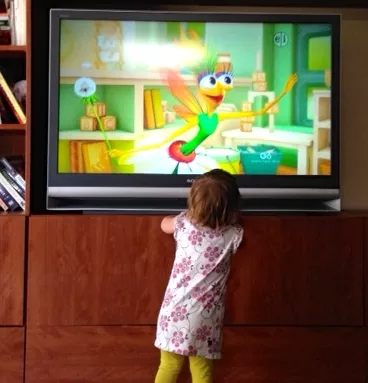
Anyway, Emily Oster of Five Thirty Eight Science looks at the latest research and discovers that maybe not all screen time is bad:
When I was a kid, my parents had strict television rules: no more than an hour a day, and the content must be educational. This meant a lot of PBS. I did briefly convince my mother that the secret-agent show “MacGyver” was about science, but that boondoggle ended when she watched an episode with me. These restrictions seemed severe at the time, but my parents were just following the orders of the American Academy of Pediatrics (AAP): Children and teens should have no more than one to two hours of screen time per day, with children under 2 having no screen time at all. Those orders remain the same today.And then there's Louis CK's NSFW take:
Relative to my childhood, limits on screen time have become increasingly restrictive and confusing. The iPad (and Kindle, and various other tablets) has opened up a world of “educational” screen time. If my 4-year-old is doing a workbook on the iPad, does that mean she learns less than if we used a physical workbook? The AAP advocates for newspapers and physical books over iPads, computers and other screen options.
The AAP statement on media seems opposed to screens per se (quote: “young children learn best when they interact with people, not screens”) without really differentiating among various uses and types of screens. But, not surprisingly, when you look at the research, the screen matters less than what you do with it.
Tags: screen time , kids , science , Louis CK , watching TV , Image , Video
Monday, May 4, 2015
The OSIRIS-REx mission is regularly posting snappy YouTube shorts to help you understand more about space science and why the UA and NASA are sending a robotic lab off to investigate the asteroid Bennu. Here's the latest.
Thursday, April 30, 2015
In this week's print edition, I have an interview with Dante Lauretta, a professor in the UA Lunar and Planetary Laboratory and the principal investigator on the UA's latest space mission, ORIRIS-REx, a robotic spacecraft that will journey to the asteroid Bennu to study the near-earth object and bring back a sample.
To see a longer interview with Lauretta, check out last week's Zona Politics with Jim Nintzel.
Friday, April 24, 2015
ZonaPol4-23finalb from Zona Politics with Jim Nintzel on Vimeo.
On this week's episode of Zona Politics with Jim Nintzel: UA Lunar and Planetary Laboratory Professor Dante Lauretta, the principal investigator for the OSIRIS-REx mission, stops by the set to talk about the plans to send a robotic spacecraft to explore the asteroid Bennu. You can learn more about the mission at this award-winning website. Then Anne-Marie Russell, the outgoing executive director of the Tucson Museum of Contemporary Art, stops by to say goodbye. Watch it online above or tune in at 9 a.m. Sunday morning on KGUN-9.

