

Wednesday, July 14, 2021
Monday, July 12, 2021

PHOENIX – With summer in full force, it’s more important than ever to wear sunscreen when outside. Arizonans are at particular risk for sun-related skin damage, according to experts at the University of Arizona’s Skin Cancer Institute.
Arizona sits at a higher altitude and lower latitude than most states, meaning it’s closer to the sun and the equator. High altitude and low latitude also mean residents have less atmospheric protection from various ultraviolet, or UV, rays that can cause skin cancer, according to the foundation. And in warmer climates, people who spend time outside often choose clothing that exposes more skin.
Sunscreen is key to protecting skin from sun damage. Guided by the SPF, or sun protection factor, sunscreen commonly comes in creams, lotion, sticks or spray and, according to the Mayo Clinic, all work when used frequently.
The SPF measures how well a sunscreen can defend against UV rays. The number isn’t directly related to the duration of solar exposure but rather the amount or intensity. A higher SPF doesn’t mean you can be out longer without reapplying, either. The Environmental Working Group recommends SPF 30 to 50, adding that any number higher than that is “misleading.”
The American Academy of Dermatology suggests three steps to proper sun-damage prevention:
Friday, July 9, 2021
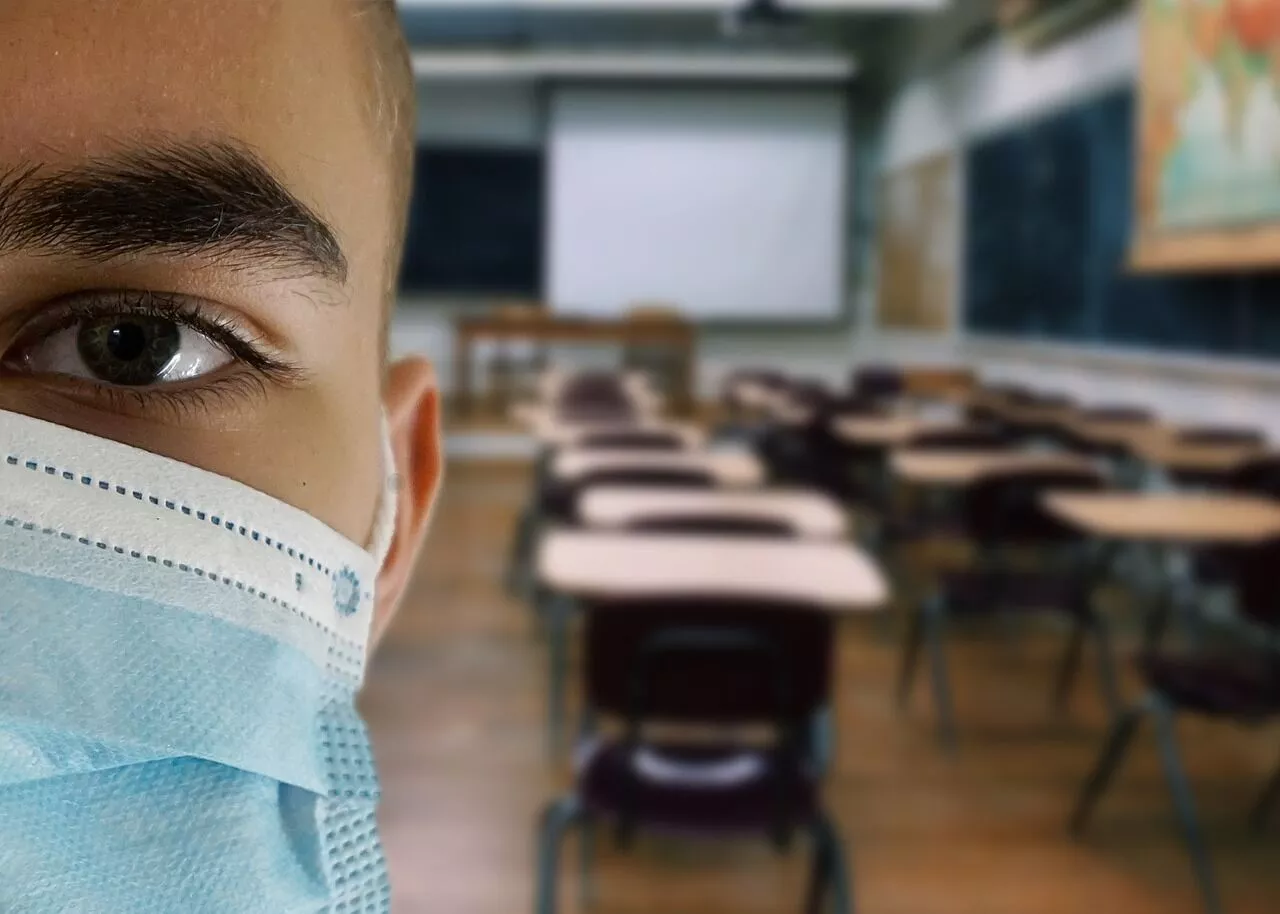
PHOENIX – Health experts are concerned that Arizona’s recently approved budget, which bans public schools and universities from enforcing mask mandates and COVID-19 testing for unvaccinated students, is endangering public health across the state.
In a virtual panel assembled by the Committee to Protect Health Care, a national advocacy organization that aims to “fight for quality, affordable health care that protects patients over profits,” experts weighed in on how the legislation, as well as Gov. Doug Ducey’s June 15 executive order banning masks at schools, could prolong the pandemic in Arizona.
“Students are being linked to community outbreaks, including in Arizona, and they accounted for 72% of all school-related cases in Maricopa (County) at one point in the past spring,” said Dr. Elizabeth Jacobs, a professor of epidemiology at the University of Arizona. “Banning schools from adopting a simple, cost-effective and scientifically proven safety measure like mask wearing while we are still in the midst of a pandemic makes absolutely no scientific or public health sense.”
Daily COVID-19 cases in Arizona have declined since March, according to the Arizona Department of Health Services, with only several hundred new cases per day now compared with the thousands of daily new cases earlier this year. However, in recent weeks, that number has ticked up slightly.
The state’s low vaccination rate also was a major concern for the experts on the panel.
“Only 23.5% of Arizona youth, aged between 12 and 17, have been vaccinated,” said Dr. Ricardo Correa, program director for endocrinology at the University of Arizona. “Policymakers and politicians must do better for Arizona and for children in our state, who deserve elected leaders who will use science and other resources to keep them safe during a pandemic.”
Thursday, July 8, 2021
The Los Reales Landfill is getting a new name—and a new mission.
Tucson Mayor Regina Romero and the Tucson City Council voted this week to rename the Los Reales Landfill as the Los Reales Sustainability Campus.
It is part of a larger planning effort to achieve waste reduction goals established by City Council in a Climate Emergency Declaration.
The declaration committed the City of Tucson to reach carbon neutrality by 2030 and to become a zero-waste city by 2050, with an intermediate 50% diversion goal by 2030. The city currently spends more than $8 million per year at Los Reales for waste processing and disposal operations.
“To become a zero-waste city, we must fundamentally change the way we view waste—from a liability to an asset,” Romero said in a prepared statement. “The Sustainability Campus is an outside-of-the-box initiative to transform Los Reales from merely being a landfill to a sustainable space—illustrating our city’s commitment to acting on climate.”
The project will also update the layout of Los Reales, designing it for new sustainability uses, including allowing solid waste/resource management companies to locate at this campus, space for a city tree nursery to help supply the Tucson Million Trees campaign, installation of solar panels and 500 feet of buffer between the campus and adjacent properties.
“The Los Reales Sustainability Campus will be a catalyst in attaining many of the city’s sustainability goals while yielding extensive community benefits for current and future generations,” said Carlos de la Torre, director of the Environmental and General Service Department.
City staff is working with the Mayor’s Office, the City Commission on Climate, Energy and Sustainability, the Environmental Services Advisory Committee, Mayor Romero’s Climate Action Advisory Council and community stakeholders to outline a plan to achieve zero waste at Los Reales.
Monday, June 28, 2021

PHOENIX – Experts describe “brain fog” as a cognitive dysfunction when your brain isn’t performing in top shape.
Although everyone is susceptible to occasional brain fog, experts say some of the worst cases have been identified in the group known as COVID-19 long-haulers – patients who had the disease and recovered but still can’t “get going” as they did before falling ill.
In February, the National Institutes of Health opened a multifaceted study into “long COVID” and its effects in the United States. Researchers hope to answer such questions as why symptoms are worse and last longer for some patients than others, and does the coronavirus that causes COVID-19 trigger other disorders of the brain and heart.
Two studies in England and Italy showed long-haulers did experience brain fog more commonly than non-COVID-19 patients during the pandemic. Long-haulers coping with brain fog improved over the course of the study.
Dr. Carmine Pariante, a professor of biological psychiatry at King’s College London, told The Guardian brain fog is the “cognitive equivalent of feeling emotionally distressed; it’s almost the way the brain expresses sadness, beyond the emotion” as a response to stress.
Although studies are in their initial stages, researchers don’t think brain fog stems from just one source. A predominant factor, though, is a lack of variety in our daily routine. CNBC reports that brain fog could be “a sign of something underlying, such as a health problem or the consequence of lifestyle choice.”
Doing a lot of the same things every day makes it hard for the brain to differentiate tasks, researchers say, so it essentially goes into an autopilot.
Friday, June 25, 2021

WASHINGTON – The Navajo Nation has yet to record a single case of the Delta variant of COVID-19, but now is not the time for tribe members to let down their guard, Navajo President Jonathan Nez said Wednesday.
Nez spent much of the time during a Washington Post program on public health talking about the Navajos’ success in fighting the pandemic, falling from a national COVID-19 hotspot at one point last year to negligible case numbers today.
But while the tribe has “been very cautious … I think we need to continue to be cautious,” Nez said, in part because of the arrival of the highly contagious Delta variant.
“We have heard updates that the city of Tucson has identified a Delta variant … so we are concerned,” Nez said.
An Arizona Department of Health official said Wednesday that the Delta variant has been found in northern, central and southern Arizona.
“The Alpha variant currently is the predominant strain in Arizona, but we anticipate that there will be an increase in the Delta variant since it appears to be more transmissible than the Alpha variant,” said Steve Elliott, a health department spokesperson.
Arizona Public Health Association Executive Director Will Humble said experts “expect that the Delta variant will be dominant by mid-to-late summer in Arizona.”
“It’s going to take over,” he said. “It’s just outcompeting the other strains. The question is how long it’s going to take.”
But Humble said that despite the high transmission rates health experts have seen for the Delta variant, it will likely not spread as fast as previous variants because of the availability now of COVID-19 vaccines.
Thursday, June 24, 2021
PHOENIX – If you’ve had COVID-19, chances are you lost your sense of smell, at least temporarily.
Losing the sense of smell and taste is one of the most common symptoms of COVID-19. A recent study of more than 2,500 COVID-19 patients published in the Journal of Internal Medicine found that 74% reported loss of smell.
For many, olfaction – the ability to smell – returns after a few days or weeks. In the study, 75% to 85% of the patients had recovered their sense of smell within two months. However, some people feel the lingering effects for much longer.
Dr. Janice Johnston with Redirect Health in metro Phoenix told ABC15 that sufferers are trying to find relief through smell therapy.
“The new term for it is smell therapy or physical therapy for your nose, which is a cute way to phrase that,” Johnston said. “What that means is, where you try to train the neurons that interpret those smells to learn again. And how do you do that? You can smell things that have a real distinct odor … say roses or eucalyptus or herbs or essential oils. As you are smelling them, try to envision what you’re smelling and try to teach your brain what that is.”
If smell therapy doesn’t work, she said, other treatments are being developed.
Dr. David Rosen, an otolaryngologist at Jefferson Health in Philadelphia, said alpha lipoic acid, vitamin A supplements and over-the-counter steroid nasal sprays also could help, according to the Health Nexus.
In this video, Cronkite News reporter Jordan Spurgeon explains smell therapy and how your brain has to retrain its sense of smell after losing it to COVID-19.
Cronkite News has partnered with ABC15 Arizona to expand the station’s Health Insider series, which provides expert advice and insights into health topics. Cronkite News is experimenting with storytelling tools and techniques to help explain the issues.
WASHINGTON – Arizona advocates are breathing “a sigh of relief” this week after the Supreme Court again refused to invalidate the Affordable Care Act, a decision that should preserve the health care program for at least several years.
The ruling is the third time the court has upheld “Obamacare” and comes as the number of people signed up for health insurance under the ACA continues to grow under a special open enrollment period. That included more than 23,000 Arizonans, bringing the total number insured through the act to 178,125 as of May 31.
“The strongest case they had by far was the one that failed last week,” said Will Humble, executive director of the Arizona Public Health Association, of ACA opponents. He predicted Monday that the act is here to stay for “at least three and a half years,” given the current administration and the unlikelihood of another court challenge.
Arizona was one of 17 states that joined a Texas lawsuit to overturn the act. Calls to attorneys general in Arizona and Texas were not immediately returned Monday.
But a spokesperson for Arizona Attorney General Mark Brnovich told ABC 15 after the ruling was released Thursday that it is “even more incumbent on Congress to pass legally sound policies to fix our broken healthcare system, further fractured by the Affordable Care Act.”
But Democrats were not nearly so hesitant to react to the ruling.
“Thankfully, the Supreme Court laid down a decisive ruling that protects these provisions,” said Arizona Democratic Party Chair Raquel Terán in a statement Friday, after what she called “the Republicans’ decade-long crusade against the Affordable Care Act.”
The court ruled 7-2 Thursday that the latest challenge to the law had to fail because the plaintiffs – 18 states and two individuals – could not show that they would be harmed by the law and, thus, lacked standing to sue.
Wednesday, June 23, 2021

Tuesday, June 22, 2021
PHOENIX – After months of relaxed COVID-19 precautions, including lifting restrictions on face masks and social distancing, India has suffered a second surge that set records for new infections and deaths.
As the United States begins to ease into a new normal and relaxes its own pandemic restrictions, is there a chance of a similar outbreak here? Dr. Janice Johnston, chief medical director of Redirect Health, told ABC15 multiple factors, including emerging variants and vaccines, ultimately will determine the severity of the spread.
“This is what viruses will do,” Johnston said. “They will start to mutate and vary. And what we think right now is that the vaccines are being quite effective with these variants, but time will tell.”
From a global perspective, health officials are watching the variants closely. The Centers for Disease Control and Prevention says its working with partners around the world to detect, track and respond to new variants.
In this video, Cronkite News reporter Jamie Landers explains where the U.S. stands compared to other countries.
Cronkite News has partnered with ABC15 Arizona to expand the station’s Health Insider series, which provides expert advice and insights into health topics. Cronkite News is experimenting with storytelling tools and techniques to help explain the issues.

