Monday, June 21, 2021
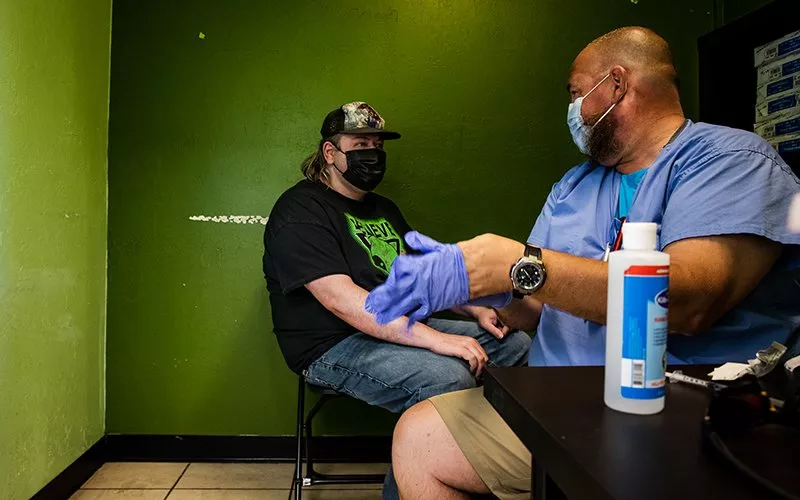
MESA – On a recent weekday morning, Paul Petersen of Florence was one of the first to arrive at Mint Dispensary to get something not usually offered at the cannabis shop: a free COVID-19 vaccine.
The 40-year-old had been holding off on getting vaccinated to see how others responded but was persuaded by an added perk: Mint’s Snax for Vaxx event. Mint gave away one free edible and a pre-rolled joint to anyone 21 or older receiving a Moderna vaccine.
Petersen said he took advantage of the opportunity to acquire “two things at once.”
“I’m comfortable with it now,” he said of the vaccination process, “but I didn’t trust the science before.”
With COVID-19 vaccination rates declining in Arizona and other states, public and private entities are using incentives to reverse the trend and get more shots into more arms.
From free doughnuts at Krispy Kreme shops to cold, hard cash from the state of California, individuals stepping up to get pricked can be rewarded in myriad ways.
In Arizona, Mint joined with Commerce Medical Group to provide vaccinations at pop-up clinics June 1 through 3 at its locations in Mesa, Tempe and Phoenix. Forty doses were brought to each location, and about two-thirds were distributed, said Kristy Jozwiak, a spokesperson for Mint.
Linzy Volm, a medical assistant for Commerce Medical Group who helped at the Mesa location, said more people turned up than she’d expected.
“I think it helps, giving a reward for (the shots),” she said. “But it kind of sucks that it has to come down to people being bribed to get vaccinated.”
Thursday, June 17, 2021
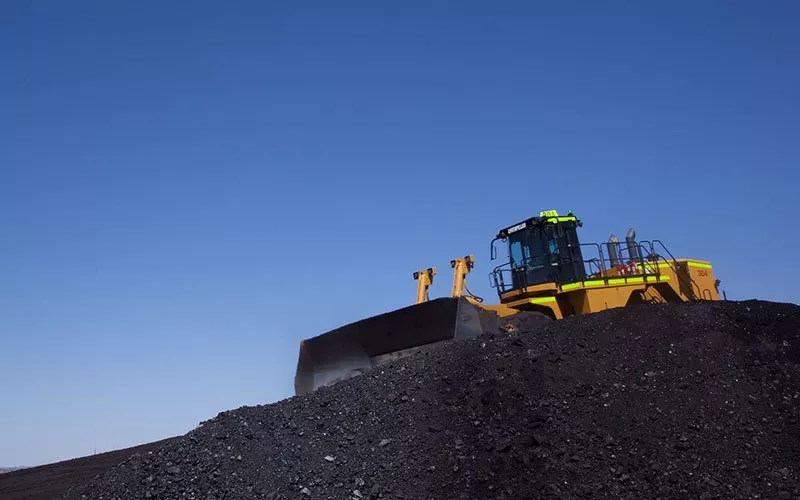
WASHINGTON – Navajo and Hopi witnesses agreed the region needs to move away from its economic dependence on coal, but specific proposals on how to get there remained elusive after a House hearing Tuesday.
The tribal representatives joined witnesses from across coal country at a House hearing on “supporting communities through the energy transition” – a transition that has been particularly hard on northeastern Arizona. The recent closure of mines there has left hundreds unemployed in an area with chronically high jobless rates.
“Our Navajo Nation government’s gross income from coal revenue severely decreased and we still have not found a way to replace the revenue in future fiscal years,” said Navajo Council Member Rickie Nez.
Nez said that while the transition away from coal has been “very painful,” tribal communities such as his are built on “a wealth of natural resources, including the critical minerals and rare earth elements necessary for achieving a renewable energy transition.” The area has the natural resources to rebound if the federal government stops throwing up hurdles to development, he said.
“We believe we have the right and responsibility to develop and manage these resources,” said Nez, who is also chairman of the council’s Resources and Development Committee. “Unfortunately, an estimated 86% of Indian lands that have this mineral wealth potential remain underdeveloped because of the federal government’s often heavy-handed regulation of Indian property.”
But other witnesses said that before moving forward, the government needs to make sure that mining companies clean up what they left behind.
“We Hopi people are very concerned that there is virtually nothing being done to repair and rehabilitate our lands that have been damaged and destroyed by over half a century of coal mining at Black Mesa,” said Ben Nuvamsa, executive director of the KIVA Institute and a former chairman of the Hopi tribe.
Nuvamsa, in joint testimony with Tó Nizhóní Ání Executive Director Nicole Horseherder, said the federal government’s focus should be on repairing the environmental damage that coal mines left behind.
“A half-century of coal mining and water withdrawals by Peabody have left considerable damage across the two mine sites that still remains unaddressed years after closure,” said Horseherder, founder of the grassroots Navajo group.
Wednesday, June 16, 2021
Monday, June 14, 2021
Friday, June 11, 2021

Some local COVID vaccination sites are changing operating hours because of expected increasing temperatures.
Starting Saturday, the two sites - Rillito Race Track, 4502 N. 1st Avenue, and Curtis Park, 2110 W. Curtis Road - will operate 7 to 11 a.m. and 7 to 10 p.m.
The Tucson area is expected to reach temperatures higher than 105 degrees during the next several days and precautions are being taken to keep clients, workers and volunteers safe, according to a news release from Pima County.
Some area vaccination sites are still offering lottery tickets* as incentives for those who have not yet been vaccinated.
June 11
- *Coronado Elementary School, 3401 E. Wilds Road, 4-7 p.m.
June 12 - 14
- Rillito Race Track, 4502 N. First Ave., 7 – 11 a.m.; 7 - 10 p.m.
- Curtis Park, 2110 W. Curtis Road, 7 – 11 a.m.; 7 - 10 p.m.
June 12
- Our Lady of Fatima Church, 1950 Irvington Place, 8 a.m.-noon
June 13
- Sacred Heart Church, 601 E. Fort Lowell Rd., 8 a.m.-noon
- St. Augustine Cathedral, 192 S. Stone Ave., 9 a.m.-1 p.m.
June 14
- *Palo Verde High School, 1302 S. Avenida Vega, 2-7 p.m.
- Cienega High School, 12775 E. Mary Ann Cleveland Way, Vail, 6:15 a.m.-noon
Monday, Wednesday, Friday
- *El Pueblo Library, 101 W. Irvington Road, 4 – 8 p.m.
- Tucson Medical Center, 7200 E. Tanque Verde Road (Morris K. Udall Center), 8 a.m.–5 p.m.
Monday-Saturday
- *Kino Event Center, 2805 E. Ajo Way, 9 a.m.–7 p.m.
Monday-Friday
- Tucson Convention Center, 260 S. Church Ave., 8 a.m.–4 p.m.
- Tucson Mall — in the former Justice store, 2nd floor between Dillards and Sears, 4500 N. Oracle Road, 11 a.m.-3 p.m.
- University of Arizona, Gittings, 1737 E. University, 9 a.m.–3 p.m., Second doses only, Last day: June 25
Monday-Saturday
- State POD-University of Arizona, Indoors: Gittings, 1737 E. University Blvd., 10 a.m.–5 p.m. (closed May 29-31)
- Tuesday-Friday
- Tucson Mall — in the former Justice store, 2nd floor between Dillards and Sears, 4500 N. Oracle Road, 11 a.m.-3 p.m.
*Incentives being offered to those getting first doses of vaccine.
The FEMA mobile units are scheduled to continue through June 26, although future locations are being moved to air-conditioned indoor buildings. Check pima.gov/covid19vaccine for updates on the FEMA units and all vaccination sites.
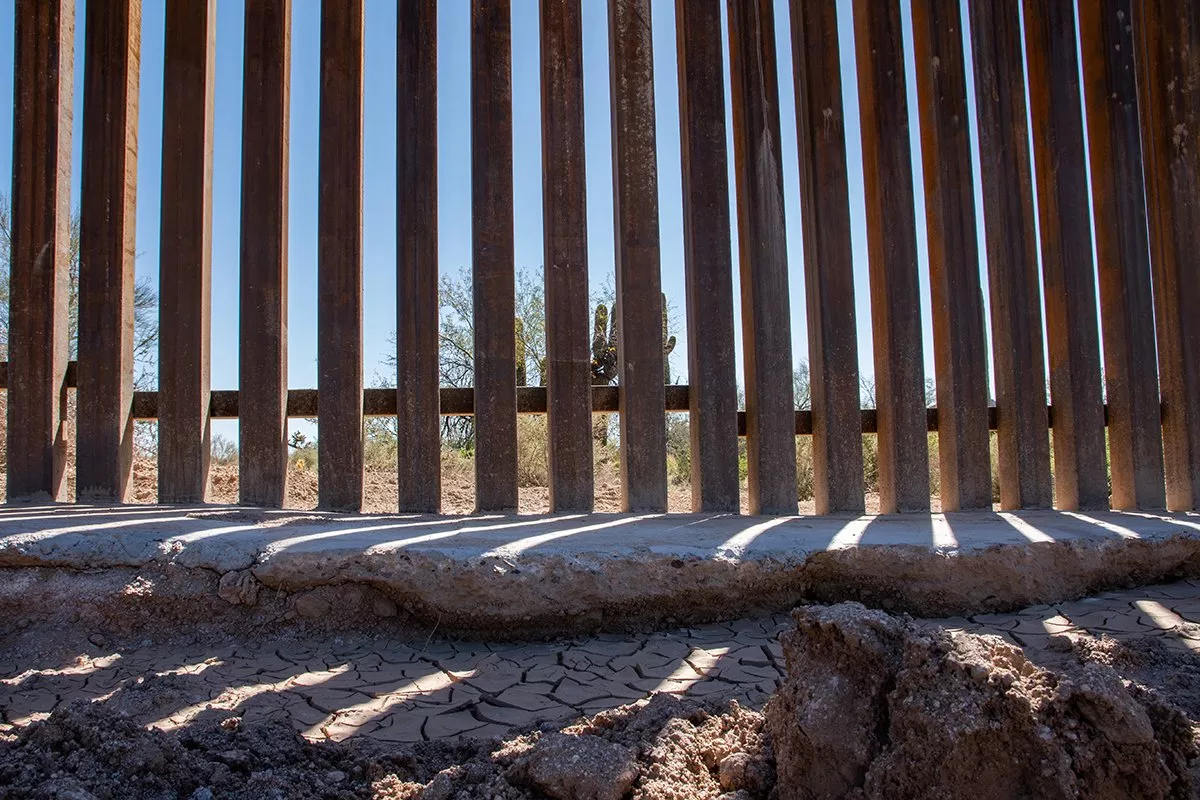
ORGAN PIPE CACTUS NATIONAL MONUMENT – Replanted saguaros stand like sentinels along a wide access road and a towering, 30-foot bollard barrier that’s part of construction ordered by then-President Donald Trump. But farther along the border, the new barrier ends, the road is incomplete, construction materials lay scattered and uprooted plants have long since died.
Locals, security experts and environmentalists say the half-finished project has introduced more problems than it fixed.
Now, the administration of President Joe Biden – which paused wall construction in January – faces a logistical, ethical and political quandary in determining the best way to proceed. Some groups and interests want the wall finished, others want to remove what has already been built.
Kelly Glenn-Kimbro, a fifth-generation rancher from Douglas, and Rijk Morawe of the National Park Service come from vastly different backgrounds and work along the border in different regions of Arizona. But both say the wall – as it stands – is little more than a political prop that has failed to secure the border with Mexico but has damaged landscapes and habitat in southern Arizona.
For them, the solution is to mitigate the damage caused during the building process by finishing access roads, completing flood control infrastructure and repairing as much environmental damage as possible.
“They got the fence built, right?” said Morawe, the chief of natural and cultural resources management at Organ Pipe Cactus National Monument, which runs 30 miles along the border. “Now they need to finish the project so that they don’t leave issues going forward.”
Glenn-Kimbro, who first caught the national spotlight in the 1980s when firearms manufacturer Ruger asked her to star in advertisements as the Ruger Girl, has been an advocate for border security for 45 years.
But the wall, for which $15 billion was allocated during Trump’s tenure, is a waste of taxpayers’ money, she said, because it doesn’t stop illegal border crossings. Glenn-Kimbro feels this way even though her ranch, which abuts Mexico, benefited financially from the construction.
“Instead of doing it right, they were just going to do it,” she said. “So instead of ending up with something very effective, they end up with something that’s a total disaster.”
In areas where barrier construction has been finished, there have been multiple reports of migrants scaling the wall with homemade ladders.
Making good on a campaign promise, Biden “paused” border wall construction in an executive order on his first day in office. The order demanded top officials in relevant departments, including Defense and Homeland Security, to present a plan by March 26 to redirect funds and repurpose contracts originally drawn up to build the wall.
That deadline passed without a resolution, leaving construction and staging sites along the wall abandoned with building materials baking in the sun, sections of constructed wall flat on the ground and various tasks undone, including the completion of floodgates, road grading, and measures to prevent flooding.
Wednesday, June 9, 2021

Thursday, June 3, 2021
Still haven't gotten your COVID vaccine? TMC hopes its vaccination party will convince you to finally get it done.
Tucson Medical Center and Pima County will host a free Vaccine Fiesta on Saturday for those 12 and older.
The party will offer entertainment, prizes, games and food for those who get their shots from 9 a.m. to noon at the Udall Park Vaccine Clinic, 7200 E. Tanque Verde Road.
Walk-ins are welcome.
Wednesday, June 2, 2021

Friday, May 28, 2021
A University of Arizona economics professor said taxing carbon emissions would help solve the significant challenges that climate change poses to U.S. and world economies.
Dr. Derek Lemoine, associate professor of economics at the UA Eller College of Management, presented his research at the 2021 Breakfast With the Economists on Thursday.
Climate as a distribution of weather, which we “live through and experience,” matters for the economy, Lemoine said.
Lemoine discussed rising carbon emissions, saying “we are really restoring carbon conditions from way before even pre-humans ever existed, like we're really taking the planet pretty far back.” By 2050, carbon dioxide could reach levels unseen in 50 million years, he said.
Increasing carbon emissions increases global temperatures. In the early 1900s, Tucson months were cooler than the 20th-century average, and by the early 21st century, more months were warmer than the 20th-century average, according to data from the National Weather Service of Tucson.
Lemoine connected increases in temperature to things that affect humans: mortality, corn yields, electricity use, labor supply and even math scores.
Data from India and Italy showed that extreme heat correlated with an increase in mortality. Corn yields also suffered in extreme heat, he said, and the data has been replicated for other crops around the world. Although not clear as to why, he said minutes of labor per day fall as temperatures increase.
“I don't entirely understand what the channel is but it does seem to be true that productivity does fall in both extreme cold and extreme heat, and that has important implications for the economy as productivity growth is one of the main sources of economic growth in the medium and long run,” he said.
Truly understanding the impact of climate change on the economy means tracking how people are affected not in the short term by weather, but in the long run by permanent changes in climate.
“This is the economics of it. People react differently when things are happening over and over and when they expect them to happen over and over, and that's what we call adaptation,” said Lemoine.
He explained how Arizona residents install air-conditioning, thus adapting to expected high temperatures or after experiencing hot temperatures over time.
“Both of these are relevant to climate change, and both make climate differ from like the one-off kind of weather shocks we've been looking at, because people are going to live with hot weather over and over and over and over with climate change, and it's going to be hot over and over and over with climate change,” said Lemoine. “It’ll drive longer run investments than what you might see otherwise.”
Lemoine finds adaptation actually increases long‐run costs in U.S. agriculture when farmers adapt by using scarce resources.