

Thursday, June 4, 2009
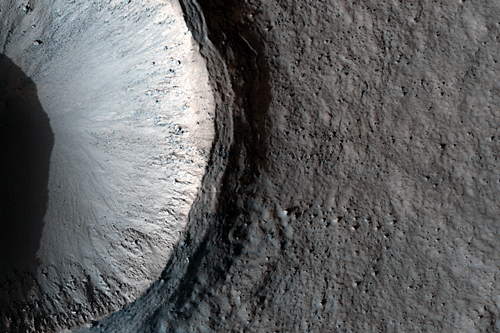
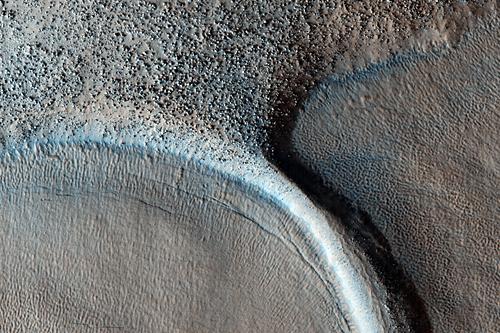
A new batch of Mars photos taken by the UA Lunar and Planetary Lab's HiRISE camera aboard the Mars Reconnaissance Orbiter is available online. This week's highlights include gorgeous craters.
Photos by NASA/JPL/University of Arizona
Wednesday, May 27, 2009
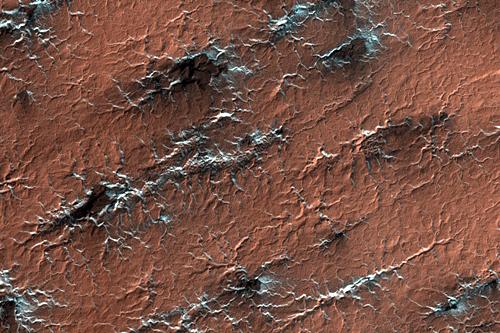
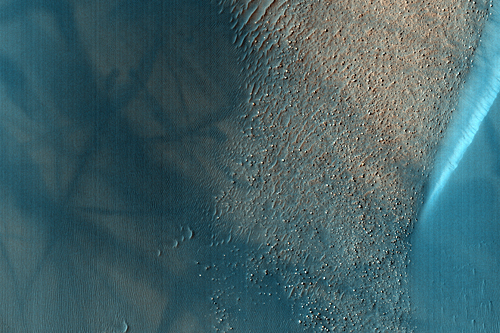
A new batch of Mars photos taken by the UA Lunar and Planetary Lab's HiRISE camera aboard the Mars Reconnaissance Orbiter is available online. The upper shot is titled simply "Spider Evolution," while the lower shot features sandy Martian dunes that have been swept by dust devils.
NAU student Addie Hite explains:
This image is located in a crater in the Hellespontus region that displays dunes and dust devil tracks.The larger barchan-like dunes are surrounded by
Tuesday, May 26, 2009
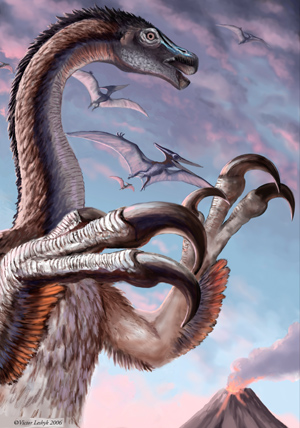 While up in the Flagstaff over the holiday weekend, I stopped by the Museum of Northern Arizona to finally see "Therizinosaur: Mystery of the Sickle-Claw Dinosaur." A few years back, fossil hunters in southern Utah stumbled across a nearly complete skeleton of a 13-foot-tall clawed and feathered dinosaur that lived 93 million years ago. This particular Therizinosaur, which shows evidence of evolution toward today's birds, somehow ended up miles out at sea before it sank beneath the Cretaceous Western Interior Seaway that then split North America. It looks like it was a mean prehistoric ostrich with long, razor-sharp claws.
The exhibit, which includes a model of the therizinosaur's skeleton, a collection of his actual bones and artistic interpretations of what the fearsome creature looked like, continues through Aug. 30. Here's more info.
The museum will have Hopi and Navajo festivals later this summer.
Therizinosaur illustration by Victor Leshyk.
Thursday, May 21, 2009
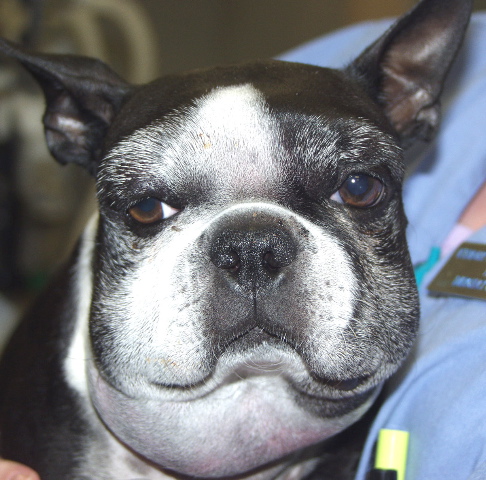
The Veterinary Specialty Center of Tucson informs us they just recently treated six dogs in a 12-hour period for snakebite.
Yikes. Not good.
They asked us to post these tips:
What to Watch For:
• Puncture marks oozing blood
• Rapid swelling and pain at the site of the bite
• Rapid breathing, weakness, collapse
• Pale gums, droolingWhat to Do:
• If your pet has been bitten, seek veterinary care immediately
• Keep your pet calm. Limit activity.
• DO NOT apply a tourniquet or ice, which can cut off circulation and worsen the injury.
• DO NOT attempt to suck the venom out of the bite: you could be injured or cause serious infection.
• DO NOT give your pet any human medications.Veterinary Care
Antivenin is usually recommended to neutralize the venom. Your pet may also be treated for shock, pain, infection, and could require hospitalization if the bite is severe. (Rattlesnake venom contains anti-coagulants and enzymes that damage blood vessels and tissue, and can cause the blood pressure to drop dangerously low.)*24 Hour Pet Emergency Care: 520-795-9955
The Veterinary Specialty Center of Tucson is located at 4909 N La Canada Drive (River and La Canada).
Wednesday, May 20, 2009
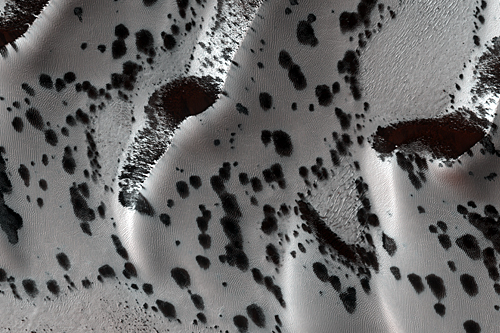
This week's new batch of Mars photos taken by the UA Lunar and Planetary Lab's HiRISE camera aboard the Mars Reconnaissance Orbiter has been posted, including this shot of Martian dunes. Photo by NASA/JPL/University of Arizona.
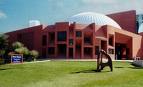
The UA's Flandrau Science Center will close its doors on Monday, June 1, after fueling imaginations of all ages for more than 30 years.
I try not to chime in with my opinion very often, but this totally sucks. I know the economy is a cruel mistress, and that no one is immune, but when local treasures like Flandrau start dying off it makes me wonder: Is there any intelligent life left here on planet earth?
Here's the text from the press release announcing the closure:
FOR IMMEDIATE RELEASE
May 20, 2009Say Goodbye to Hector Vector Star Projector
Flandrau Science Center closes June 1stTucson, Arizona - The public is invited to visit Flandrau: The University of Arizona Science Center and say goodbye to Hector Vector Star Projector before it closes it doors on June 1, 2009. Flandrau Science Center is closing as a result of state budget cuts announced earlier in the year.
Hector Vector Star Projector, the nickname local kids fondly gave the optical projector that rises from the floor at the beginning of each planetarium show to depict the realistic night image of our sky and solar system, has been a staple for generations of Tucsonans. Many adults that came to Flandrau Science Center as children years ago to watch Hector’s wondrous performances now bring
Friday, May 15, 2009
The Range made it out to Biosphere 2 last night for a reception to honor Peter Smith of the Lunar and Planetary Lab, who will be receiving his doctorate this weekend. Joaquin Ruiz, Dean of the UA College of Science, said that Smith, who was the principal investigator on the Phoenix Mars Mission, may have undertaken "the most expensive dissertation in history."
The reception also honored Ed Bass, the bazillionaire who paid for the construction of the Biosphere. Bass, who has generously turned the Biosphere over the UA College of Science, is receiving an honorary degree from the university this weekend.
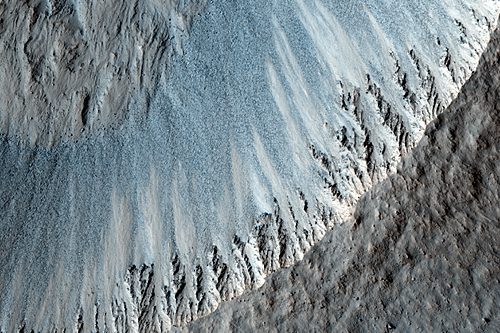
The photo above is one of the recent releases from the UA's HiRISE camera about Mars Reconnaissance Orbiter. The description:
This image taken at a high sun angle shows the relatively unshadowed pristine and youthful rayed crater Zumba.The crater’s rim-to-rim diameter is
Wednesday, May 6, 2009
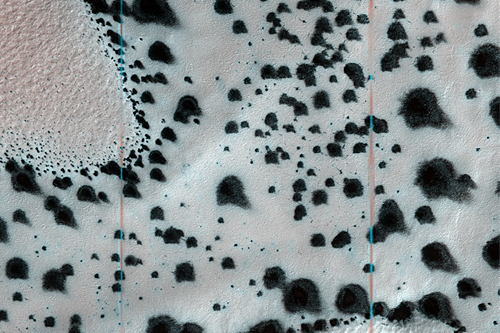
Our friends at the UA Lunar and Planetary Lab have released a whole new crop of images of Mars taken by the Mars Reconnaissance Orbiter. The above shot captures frost melting around an ancient volcano:
This HiRISE image was intended to investigate the nature of the volcanic materials at this location. However, the image was taken in early spring for this location in the southern hemisphere and so the ground is covered with bright frost except for some dark splotches found in discrete patches. This is where the sunlight has penetrated the frost and initiated defrosting around discrete spots.Clearly something is different about the patches where this defrosting has started before any other locations. One possibility is that these are (frost covered) dark sand dunes that heat up more easily than the surrounding terrain. However, we will need to take a new image in the summer time to really know what is happening here.
Photo by NASA/JPL/University of Arizona.

