

Thursday, May 13, 2021
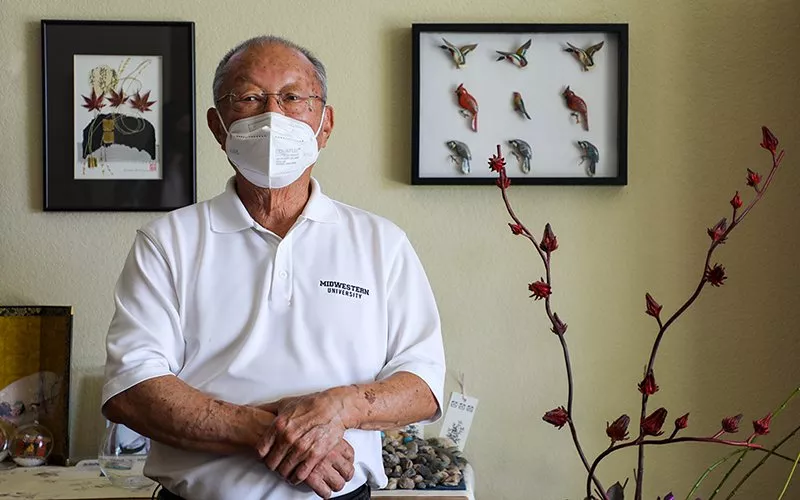
PHOENIX – Thirty miles southeast of Phoenix, on sacred land belonging to the Gila River Indian Community, lie the remnants of an internment camp that once housed more than 13,000 people, mostly Japanese Americans, during World War II.
Concrete foundations and cisterns remain, but gone are the fences, barracks and gun tower that revealed the purpose of the place was incarceration rather than internment, at a time when Japanese Americans were suspected of being spies and saboteurs.
“These internment camps were less like camps and more like prisons,” said Koji Lau-Ozawa, an archeology doctoral student at Stanford University whose grandparents were incarcerated there. “There’s a complicated history, but it’s important to note that.”
Gone, too, are the bases, bleachers and foul lines made of flour that represented a form of escapism for those inside the wire: baseball.
Two months after Japan bombed Pearl Harbor on Dec. 7, 1941, the U.S. government issued Executive Order 9066 authorizing the incarceration of an estimated 120,000 Japanese Americans on the West Coast. They often were given just 48 hours to sell their homes, businesses and possessions before assignment to one of 10 locations.
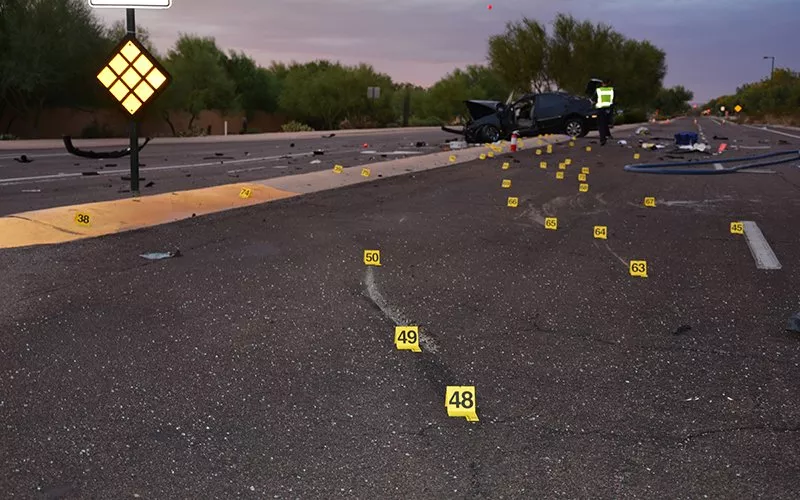
PHOENIX – Ramon Angel Carrasco and his girlfriend were driving home from a Scottsdale bakery in a white BMW in August 2019 when Robert J. Foster pulled up next to them in a light blue Lamborghini.
According to a witness account provided to police, Carrasco and Foster revved their engines at a red light on Hayden Road before heading north, and within seconds they were traveling more than 100 mph.
Meanwhile, Cynthia Ann Fisher was driving south on the same stretch of Hayden. The 68-year-old hairdresser had just left the grocery store and was planning to make breakfast the next morning for a new roommate, said Leah Stenzel, her friend and boss.
Fisher was turning left onto Williams Drive when Carrasco’s BMW struck the passenger side of her black Camry, propelling her car 160 feet from the impact, according to police records. Fisher, who was a minute from her home, was declared dead at the scene.
Carrasco and his girlfriend, Jaymi Lynn Chagolla, suffered minor injuries. Carrasco told police he had nothing to do with the Lamborghini and refused to speak further without an attorney present, but Chagolla confirmed what multiple witnesses who called police had reported.
“Yes, we did a pull against a Lamborghini,” she said when police asked whether the cars were racing.
Wednesday, May 12, 2021
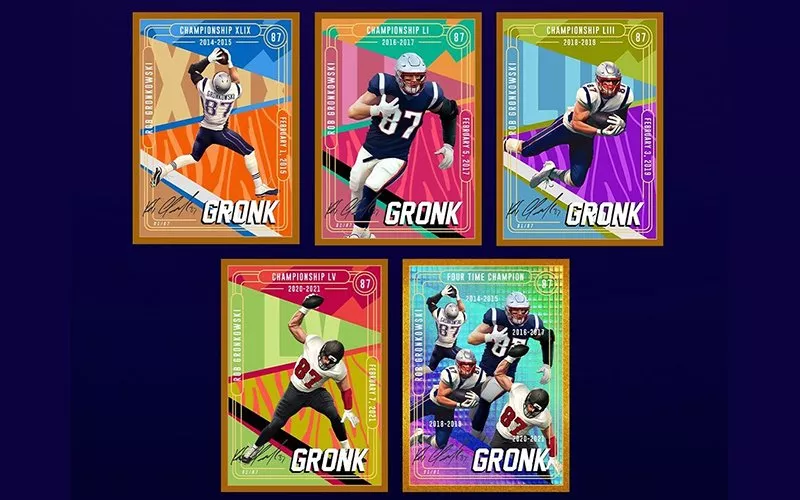
PHOENIX – Sports is a billion-dollar industry, with revenue streams ranging from television rights to ticket sales. Add cryptocurrency and NFTs to the mix, and this latest gold rush has leagues, teams and players taking advantage of opportunities in an unlikely territory.
Former Arizona Diamondbacks pitcher Taijaun Walker, now with the New York Mets, was the first known and active Major League Baseball player to create and sell a piece of digital art through a non-fungible token, otherwise known as an NFT, the New York Times reported. The piece of art sold for 2.35 Ether, a form of cryptocurrency, or roughly $4,275. Proceeds from the auction benefited the team’s charity, the Amazin’ Mets Foundation.
Walker’s NFT announcement opened eyes and raised eyebrows about this new way athletes could generate income.
What exactly is an NFT?
“(It is) a piece of digital asset, which can be video, file, photo, really anything that you like, to be managed by smart contracts,” said Dragan Boscovic, director of ASU’s Blockchain Research Lab.
Simply, think of it as something intangible – something you can’t hold in your hand – such as Walker’s digital art, or a unique video or Twitter CEO Jack Dorsey’s first tweet, which fetched a cool 1,630.58 Ether, the equivalent to about $2.9 million.
Boscovic added that with a smart contract “you can basically control certain properties of that digital asset.” If it’s a photo, for example, you can control who has access to it and how many copies of it can be made.
Wednesday, May 5, 2021
PHOENIX – The ability to attend a sporting event, place a bet on a team and possibly return home a winner will soon be a reality in Arizona.
So, too, could an uptick in gambling addiction, some worry.
Excitement surrounded Gov. Doug Ducey’s decision to sign a bill on April 15 that allows a significant expansion of gambling, including sports betting under licenses issued to tribes and professional sports teams. Gambling on fantasy sports and Keno games at horse race tracks will also be permitted.
But will accessibility increase detrimental behavior?
“Each state needs to take some responsibility and understand that a lot of people don’t gamble socially or don’t gamble like a normal person,” said a recovering gambling addict from Arizona who chose to remain anonymous.
Nearly 2.6% of the U.S. population, almost 10 million people, have an addiction problem because of gambling, according to the North American Foundation for Gambling Addiction Help. In WalletHub’s recent survey of “most gambling-addicted states,” Arizona ranked 41st, a number possibly impacted by the state’s newness to expanded gambling opportunities.
“I know it’s a revenue-making … function for the state but if they’re going to have places where you physically go and gamble like sportsbooks, they need to put right on the front door and visible that if you have a gambling problem, you need to call 1-800,” the recovering addict said, “because this is just going to open up a whole new can of worms for people, especially in today’s world with so many different stressors, so many different pressures on people whether economic, social, marriages, everything.”
Friday, April 30, 2021
PHOENIX – GateWay Community College coach Rob Shabansky admits he wasn’t a huge fan of technology and analytics in baseball.
He didn’t understand its true purpose, or the information it produced. He couldn’t grasp how this data could help improve the performance of his players on the diamond.
Shabansky, like many others in the baseball industry, was skeptical of this numbers-based approach.
“A lot of that information was, to a certain degree, recoded for people who really knew it,” Shabansky said. “But if you didn’t know it, you didn’t get much from it.”
Then Shabansky started talking to coaches he trusted in the collegiate and professional ranks who were familiar with the data, like Vanderbilt pitching coach Scott Brown and Arizona pitching coach Nate Yeskie. The more he learned from their experiences and about the data itself, the more he wanted to learn about how he could use it, too.
Shabansky’s views began to change and he isn’t alone in embracing a new approach. Across all levels of baseball in Arizona, coaches and players are following the lead of Major League Baseball innovators and turning their attention toward analytics-based development.
Even some high schools have gone that route although it is still more exception than rule. Cronkite News surveyed various Arizona high school baseball coaches and asked them to rank their use of analytics compared to their competitors on a scale of one to 10. The average score among 30 respondents was 4.6.
Thursday, April 29, 2021
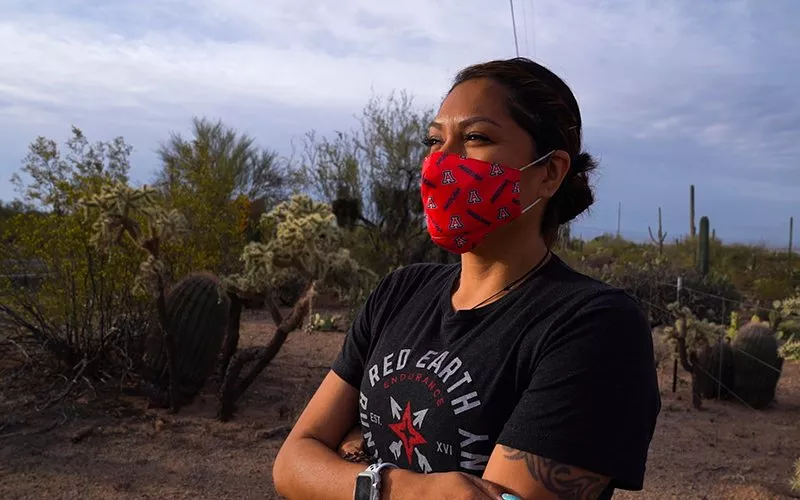
TUCSON – “Getting lost is the best part of trail running,” Marlinda Bedonie said with a chuckle as we shielded our eyes from the morning sun, searching for our cars.
We spoke on a recent morning while trekking through Tucson Mountain Park on a mostly flat, single-track loop trail. Dipping in and out of washes and brushing against the creosote along the trail, the Tohono O’odham and Navajo mother and I chatted – out of breath – as we shared our running journeys and spoke about our families.
When we came to what we thought was the end of our loop, we realized that although we’d learned a lot about what we share in common, neither of us had any idea where our cars were.
Sometimes, getting lost can be part of finding yourself. In the past four years, Bedonie, 41, has found a passion for running and representing her culture in the sport. She often is featured on the Native Women Running Instagram page highlighting her half-marathons, 10Ks and other races.
Even when she’s jogging Arizona trails solo, she’s far from alone.
Thursday, April 22, 2021
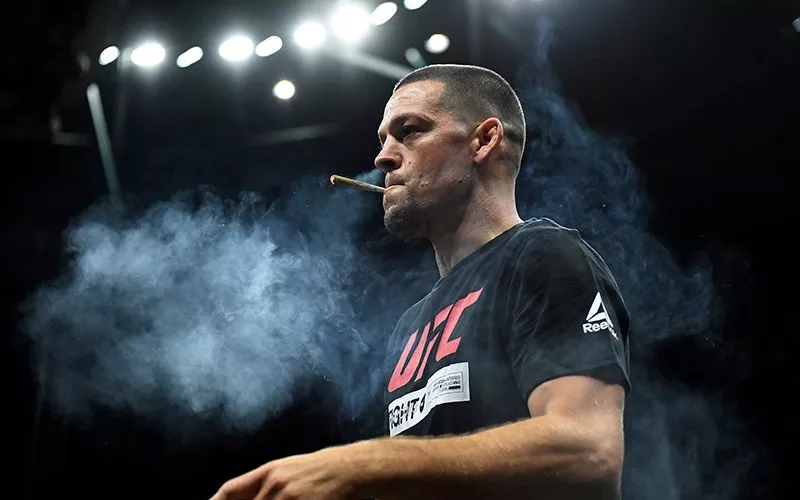
PHOENIX – The unofficial marijuana holiday, April 20, has become a popular day around the world.
This year, it comes at a time when the marijuana landscape is drastically changing in terms of its acceptance from a recreational standpoint and in the medical field. It’s also a substance that has been the root of much controversy in the sporting world, a substance some athletes are pushing their respective leagues to accept as a form of alternative medicine, especially for its potential value in phasing opioid use out of sports.
Jake Plummer, the legendary Arizona State quarterback and former Arizona Cardinals signal-caller, is among those athletes pushing for marijuana reform in sports. He believes the benefits far outweigh the potential negatives.
“It could help you sleep, reduce anxiety, inflammation, arthritis,” Plummer said. “Here we are talking about football players with inflammation, the onset of arthritis, with sleep issues, with anxiety, PTSD and all this crazy stuff, and here’s this natural plant that can help with all that.”
Before the 2020 NFL season, the league announced drastic changes to its drug policy as part of its new collective bargaining agreement. The window for the NFL to test players for THC, the main psychoactive compound in cannabis that produces a high sensation, was narrowed from four months to two weeks at the outset of training camp.
Players who test positive for THC will only receive game suspensions if they exceed the new 150 nanogram limit, a 115 nanogram increase from the former policy.
Monday, April 19, 2021
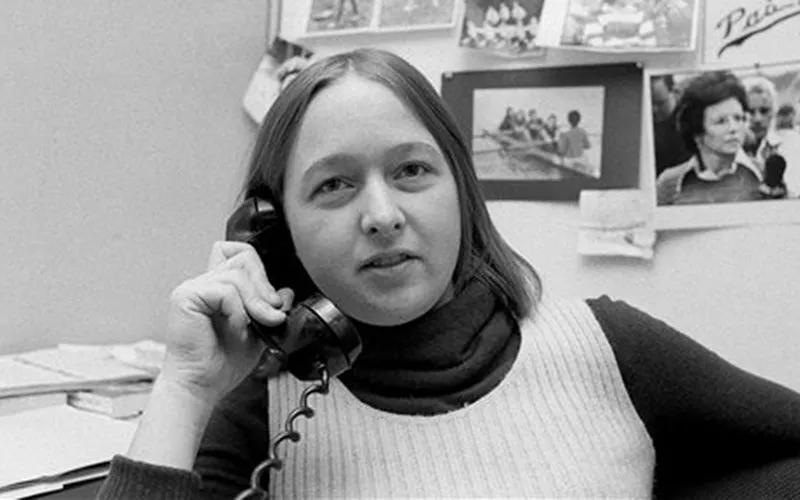
PHOENIX – A documentary recently aired in France titled, “I’m not a slut, I’m a journalist.”
The title might be shocking, but the experiences shared by female sports journalists featured in the documentary don’t come as a surprise to women in sports media.
The documentary featured women speaking candidly about the derogatory comments, lascivious advances and sexual harassment they have faced while working in the sports media industry. It is not uncommon.
Three months ago news broke that Jared Porter, then the general manager of the New York Mets, had sent sexually explicit photos to a female reporter while he was working for the Chicago Cubs.
Similar accusations emerged against Mickey Callaway, a pitching coach for the Los Angeles Angels.
At about the same time, former Golf Channel host Lisa Cornwell accused her male bosses of treating her unfairly in her job, an accusation she took to the Equal Employment Opportunity Commission.
Clearly, gender equality in the sports media industry is a prevalent issue.
“Look at sports television, women are all still expected to look like Barbie dolls,” said Sarah Kezele, update anchor and third voice on “Burns & Gambo,” the afternoon drive-time sports talk show on Phoenix’s ESPN affiliate, Arizona Sports 98.7 FM.
“So I do know that I have missed out on some opportunities because my ‘look’ is not what the hiring manager was looking for.”
Friday, April 16, 2021
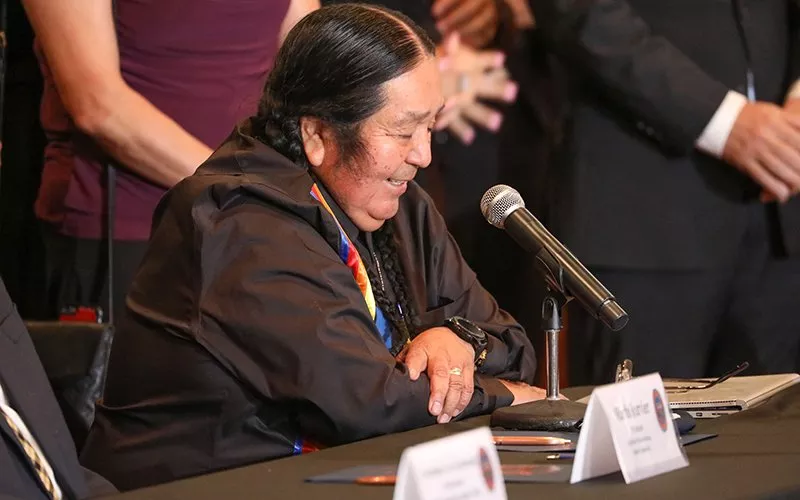
PHOENIX – After years of resistance from tribes around the state, Gov. Doug Ducey signed House Bill 2772 on Thursday, legalizing daily sports fantasy and sports betting in Arizona. The development comes on the heels of ratification of a revised Tribal-State Gaming Compact.
“Today’s signing is the culmination of years of discussion and engagement among many diverse stakeholders, tribal communities, both rural and urban, gaming industry partners and more,” Ducey said at a news conference to finalize the legislation.
“We did it by bringing everyone to the table, pushing individual agendas aside and putting Arizona first. The legislation associated with this compact amendment is a historic bipartisan achievement.”
Senate Bill 1797, a mirror bill to HB 2772, was ratified by a bipartisan majority earlier this week by the state Senate. These amendments to the existing compact grant specific organizations and groups sports betting permits to create sportsbooks in their particular venue. Ten licenses will be granted to sports organizations to open these books in or near their sporting facilities. An additional 10 licenses will be given to tribal nations to open sportsbooks at their respective casinos.
Wednesday, April 14, 2021
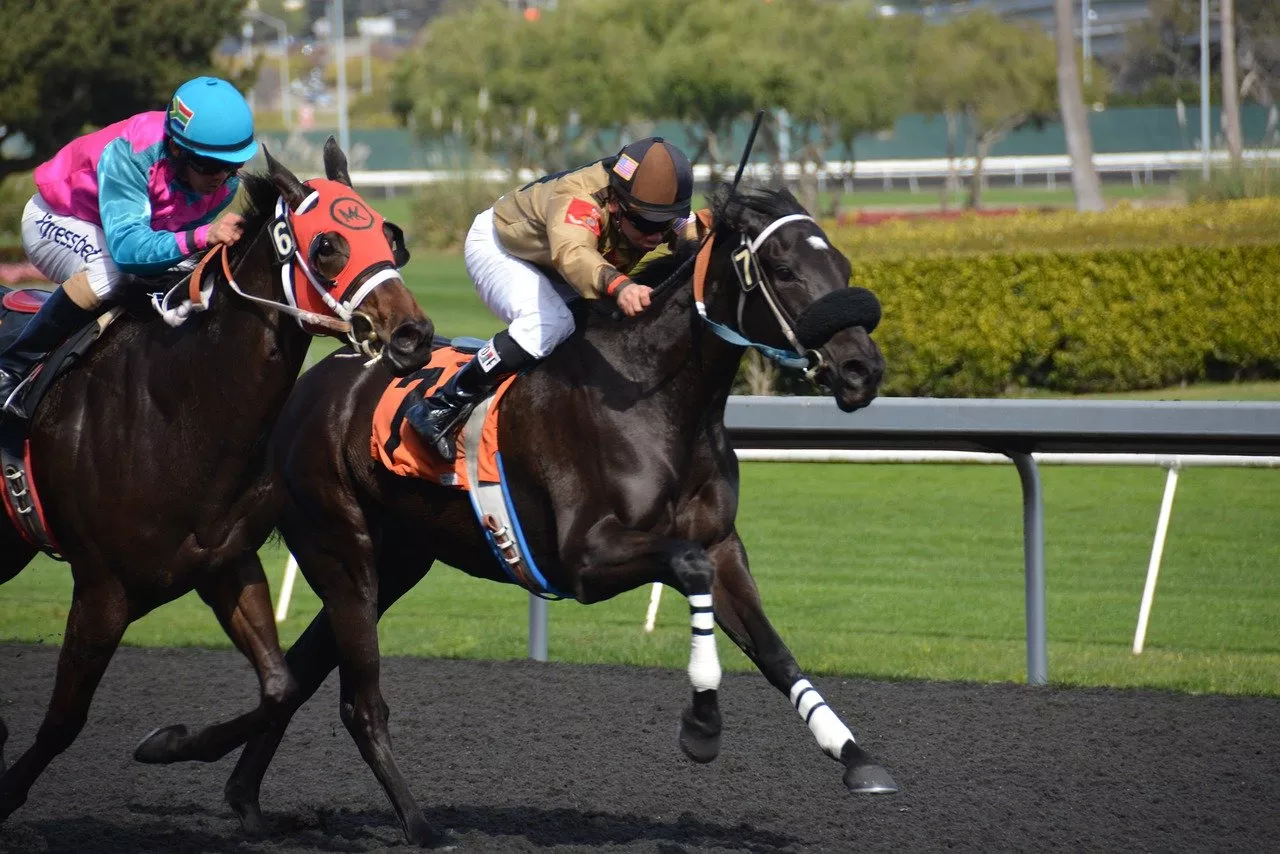
PHOENIX – The Arizona Senate passed legislation Monday night that paves the way for legalized sports betting in the state, possibly as soon as summer.
Senate Bill 1797 and House Bill 2772 were passed with bipartisan support on the new gaming compact, which includes the legalization of daily fantasy sports, and now head to Gov. Doug Ducey to be signed into law. The bill includes an emergency clause, which would enact the changes immediately if Ducey signs the bill.
“We could possibly begin gambling and wagering on sporting events as the Cardinals kick their season off this fall,” said Sen. T.J. Shope, R-Coolidge. “That has been our aspirational goal from the beginning. It is my hope that we’ll go ahead and achieve that.”
Included in the agreement, 10 licenses would be granted by the state to sports organizations. They would have the ability to create their own sportsbooks within their respective venues. Golf courses, race tracks and other sports arenas would have the ability to apply and use one of these licenses.
Another 10 licenses would be provided to Native American tribes throughout the state to create a sportsbook at their respective casinos.
Co-sponsors of this bill – Shope and Rep. Jeff Weninger, R-Chandler – have been working directly with the Governor’s Office for a number of years to get sports betting legalized.

