

Tuesday, March 16, 2021

GLENDALE – They named her Luna, which is Spanish for moon.
The name fits nicely with the Arizona Coyotes’ crescent moon logo from 1996, which is at center ice this season at Gila River Arena.
Luna is fond of taking naps in Jakob Chychrun’s locker. She wobble-skates on the ice. She has left a mark on the NHL team and soon will make an even bigger impact helping a veteran in need.
“The guys loved when she was around,” Coyotes coach Rick Tocchet said. “She was a great little dog. Big dog now. I love when dogs are around, so hopefully we get another one.”
More than 1.1 million veterans were diagnosed with at least one of five mental illnesses, including post-traumatic stress disorder, bipolar disorder, depression, substance abuse or anxiety, according to a 2016 study by the American Journal of Public Health.
Service dogs assist veterans in healing, and in the U.S., 19% of the dogs are trained to help veterans with PTSD.
PHOENIX – When Bryce Drew was hired to replace Dan Majerle as coach at Grand Canyon last March, the Lopes were not in a great spot.
The 2019-20 season saw GCU suffer its worst season since becoming a Division I basketball school in 2013, a 13-17 overall record and 8-8 mark in the Western Athletic Conference. Majerle, who guided the program through its transition to Division I and is beloved by Phoenix Suns fans, was fired because of the poor results.
That opened the door for Drew, whose last coaching stop hadn’t gone any better than Majerle’s final season at GCU. In Drew’s final season at Vanderbilt in 2018-19, the Commodores won only nine games and were 0-18 in conference play. He was fired at season’s end.
But Drew’s first season at Grand Canyon provided important firsts, and some big surprises.
The Lopes won their first WAC Tournament title and with it, the school’s first NCAA Tournament bid. And the Lopes did it in a season in which their in-state foes Arizona State (which began the year as a Top 25 team) and Arizona (a staple in March Madness) surprisingly missed the Big Dance entirely.
“It’s been a tough year. Just a lot of things thrown at us this year,” ASU coach Bobby Hurley said.
It all seems fitting in such a strange season, not just for Arizona teams but around the college basketball world.
Friday, March 12, 2021
TUCSON – At 21, Marcus Smith is already in unique company.
When he was named head men’s and women’s golf coach at Pima Community College as a 20-year-old, Smith joined an elite group to be named a head coach just out of their teens. Dennis Mahan Michie is believed to be the first, when he led the U.S. Military Academy football program in 1890, also at 20.
Smith doesn’t consider it anything special, and that’s when he considers it at all.
“I don’t necessarily think about it too much,” Smith said. “I think, you know when I’m goofing off with friends and stuff, they definitely remind me quite a bit of how young I am. So it is exciting, and I do take it very seriously. It’s a very great responsibility. I’m blessed to have that title.”
Day I got hired was the day @pima_golf and I started flirting with greatness! Always chasin’ it!
— Marcus Smith (@smith11marcus) January 13, 2021
Not just a job, a lifestyle. Tryna Elevate Tucson🏜 pic.twitter.com/Xi73c8sAeH
While Smith’s coaching career in golf started earlier than most, his playing experience came late in the game. He didn’t pick up a golf club until his junior year at Deer Valley High School in Phoenix, where he met Allen Ferguson, the school’s golf coach.
Wednesday, March 10, 2021

In any other year, the boys’ basketball teams from Marana, Ironwood Ridge, Marana Mountain View, Amphi and Flowing Wells would all be headed to the state tournament. But this is the Year of the Pandemic, and not only are all five not going, NOT ONE of those teams is going. It’s an awful shame and it can be argued that it’s either nobody’s fault or the fault of a whole lot of people, many of whom have absolutely nothing to do with high-school sports.
Here in Arizona, high school basketball season generally starts up right after Halloween, with the first games being played the week of Thanksgiving. This season, things were initially pushed back to early January. But when the New Year arrived, the virus was raging. The Arizona Interscholastic Association, acting on health guidelines, initially canceled the winter sports season (basketball, wrestling and soccer).
After a public uproar, the AIA reluctantly relented, but went with strong COVID protocols, some of which called for the complete shutdown of programs if there was an outbreak. Teams would have to play at least 10 games to be considered for state. And then the AIA added one more thing for this season only: a reduction in the number of teams that advance to postseason play. The bigger-schools classes (6A, 5A, and 4A) have, for many years, had 24 teams advance to the playoffs. This year, that number was cut to 16.
The compressed season went on, with cancellations and re-scheduling all over the place. (The Ironwood Ridge girls played three games the first week of February, then shut down their season for good. On the girls’ side, Mountain View, Canyon Del Oro, and Marana managed to squeeze in nine, 10, and 11 games, respectively, with none coming close to going to state.)
The boys’ teams from Ironwood Ridge, Mountain View, and Marana sputtered along, with each facing hurdles ranging from roster reductions to complete shutdowns. Marana, for example, went two weeks in the middle of the season with no practice, games or contact of any kind. Those missed games would prove to be crucial. (Sierra Vista Buena played an unprecedented double-header the last day of the season to reach the 10-game threshold and advance to state.)
Heading into the final week of the regular season, Mountain View and Ironwood Ridge were both in the Top 16 of the Power Points, with Marana sitting at No. 18, within striking range. In an average season, the Power Points formula utilized by the AIA is a travesty. This year, it proved to be a total abomination. If any of the three aforementioned teams could win out that last week, they’d go to state.
Marana had four games scheduled in the final week—two relatively easy games on Monday and Friday sandwiched around vital contests, one at Ironwood Ridge and a home game with rival Mountain View. The Tigers had come out of the two-week layoff in mid-February and immediately had to face Mountain View at the Mountain Lions’ place. Mountain View won a tight one, but Marana bounced back and won their next four.
Heading into that final week, Tigers Coach Sean Roebuck was guardedly optimistic. However, right before the start of that crucial week, his team had played a game at Sunnyside and, after the game, a Sunnyside kid had tested positive. Due to the protocols, Roebuck was left with almost no varsity players. He had to bring up some kids from the freshman and JV teams. They squeaked out an overtime win at CDO, but then got clobbered the next night at Ironwood Ridge.
A couple days later, Roebuck got word that some of his quarantined players had been cleared to play. This did not sit well with people from Mountain View. The Mountain Lions had severely damaged their chances earlier in the week with an inexplicable loss to 3-11 Casa Grande. Now they were missing some players and, all of a sudden, Marana was almost whole.
The game was to be played in Marana’s older, smaller Alumni Gym because the big gym was being used for a boys’ volleyball game. Even with following the tight COVID protocols on fan attendance, there was a significant number of people in the stands. Well before the tipoff and then into the game, several Mountain View fans verbally expressed their displeasure with the fact that Marana had an almost-complete roster. It was…unpleasant. Marana won by 30.
(I asked one Mt. View booster—and Marana alum—if he thought that Roebuck would ever cheat. Silence. Then I asked, “And if he were going to cheat, why didn’t he do it against Ironwood Ridge the other night?” Louder silence.)
While all the Marana-Mountain View drama was unfolding, all Ironwood Ridge had to do was beat 4-9 Flowing Wells to put themselves in great position to go to state. You guessed it: Flowing Wells 62, Ironwood Ridge 58.
Marana won the next night, finished the turbulent season 8-4, and moved up to No. 18 in the Power Points. Ironwood Ridge, Mountain View and Flowing Wells would finish 22nd, 23rd and 24th, respectively. Thus ended a forgettable 5A season that no one is ever going to be able to forget.
Oh yeah: Amphi’s boys won their 4A Conference title, but due to a Pandemic Season quirk, didn’t advance to state.
Tuesday, March 9, 2021
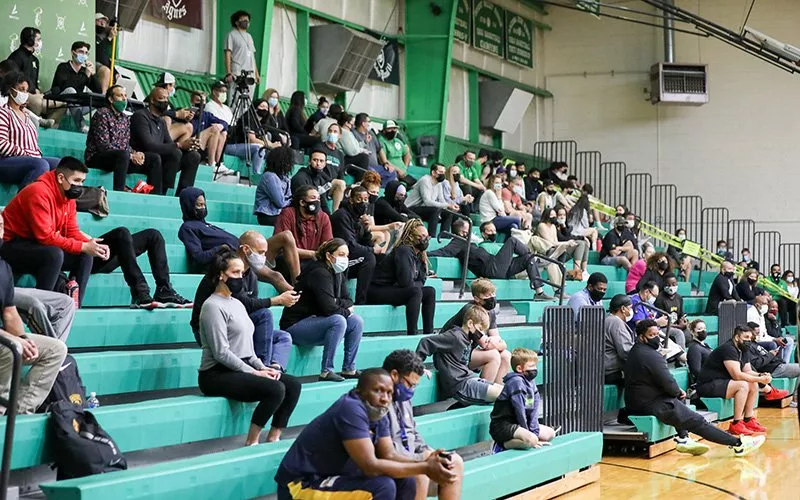
TEMPE – Gloves are popping. Bats are cracking. And gates are opening.
Spring training baseball is back. But should it be? And, more important, should fans be able to attend the games just when the end to a global pandemic seems within reach?
These aren’t just health questions. They’re ethical ones.
“If it’s safe for baseball teams to be practicing and to travel here from all sorts of other parts of the country and set up, then why isn’t it (safe) for the symphony orchestra to be playing? Or for all the museums to be open?” said Dr. Mary Feeney, a Lincoln Professor of Ethics in Public Affairs at Arizona State University.
“And then when we extend that to fans, it’s the same sort of question. How come it’s safe for fans to go to a baseball game, but not to go see the symphony or the opera? And what does that say about our priorities as a society?”
Feeney stressed that she is not an epidemiologist, but she is up to date on guidelines and best practices. She raised important questions about how masks would be enforced at sporting events and how teams and leagues will know if each pod is actually a domestic group, or just a group of friends ignoring guidelines. She also questioned what teams and leagues will do if a fan gets sick – or worse – due to their event, and how they will handle that responsibility.
“I think these are questions they have to ask themselves because the state’s certainly not telling them what to do,” she said.
Thursday, March 4, 2021

PHOENIX – Picture a baseball game at Chase Field. Or a basketball game at Suns Arena. As more fans begin returning to sporting events after the COVID-19 pandemic, they are welcomed by the benefits of live competition, from ballpark hot dogs to the energy of a packed stadium.
In the near future, the Arizona sports fan’s experience could include the ability to place bets inside sports venues while the action unfolds. For others, daily online fantasy sports platforms like Draft Kings and FanDuel might soon be operating legally in the state.
Arizona moved several steps closer to making those opportunities a reality with sports-gambling legislation now moving through both the House and the Senate as two separate bills, each with similar strings attached.
The new legislation would overcome the barriers set by the Arizona Tribal-State Gaming Compacts in 2002. That agreement set the rules for tribes to operate casinos but with no opportunities for sports betting, on or off of tribal land.
Now, HB 2772 and SB 1797 would allow both event wagering and online sports betting, with up to 10 tribes and 10 professional teams licensed to provide online betting platforms. There are 16 tribes in Arizona operating casinos. And there are eight professional teams, including NFL, MLB, NHL, and NBA franchises.
If passed, people would be able to place bets at Chase Field during a Diamondbacks game, or at Gila River Arena with the Coyotes skating. Bettors could also place wagers at sports books at select Indian casinos or legally participate in popular daily fantasy sports games.
Wednesday, March 3, 2021
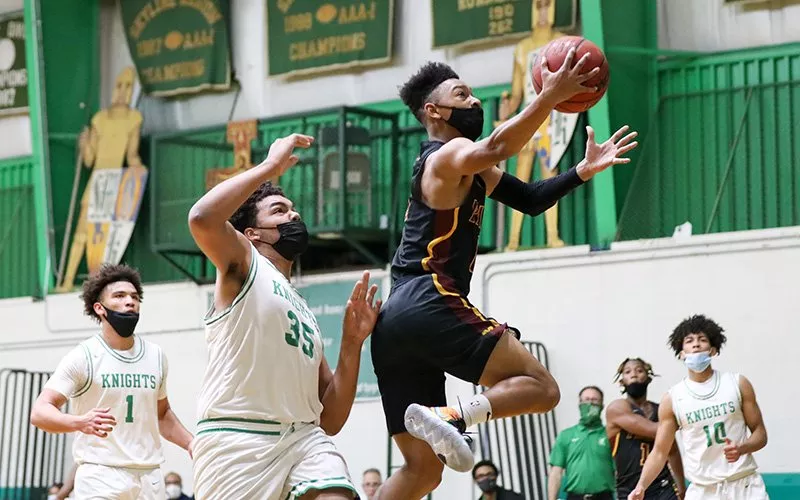
PHOENIX – High school athletes will not be required to wear masks during spring sports competition and neither will winter sports athletes during playoffs, the Arizona Interscholastic Association Executive Board voted Tuesday
The decision comes after the Sports Medicine Advisory committee recommended removing the mask mandate for outdoor spring sports.
The only exception is for boys volleyball. It was recommended they should continue wearing masks for play.
The committee also recommended finishing the winter regular season with masks. The removal of the mask mandate only applies to those in the field of competition, including officials. All coaches, players on the bench and spectators will continue to be required to wear masks.
The AIA has had about 160 positive COVID cases out of roughly 10 to 12,000 athletes participating in winter sports, AIA Executive Director David Hines said.
“We also have information that the medical professionals get in regard to hospital capacity, hospital cases, hospital COVID cases, in ICU, in hospitals, etc.,” Hines said. “They absolutely admit the numbers are coming down, getting much better.”
Friday, February 26, 2021
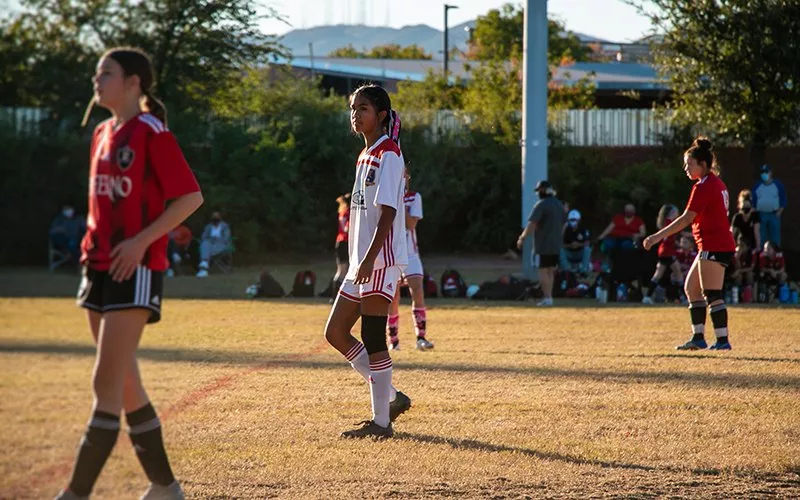
PHOENIX – Krystle Mann, a stay-at-home mother to three sons, makes and sells cornbread and jam to pay for new baseball gear and help cover club fees – approximately $1,500 per year.
Her older son, Sam, 12, plays for the AZ Diamond Dawgs in Queen Creek, while her middle son, Tommy, 11, plays for both the Paladin Knights and AZ Storm in San Tan Valley. Both boys have played baseball for about seven years, making the transition from Little League to club baseball recently.
Club sports are run by private associations that, unlike school-sponsored sports programs, charge high fees to participants who are hoping to enhance their individual or team skills.
“I think this has been the best thing for the boys mentally, physically and emotionally,” Mann said.
Some families say club sports are worth the high costs for the confidence, friendships and athletic skills their children gain, but not all can afford the fees.
A study by the Open Access Journal of Sport Medicine reports that 75% of U.S. families with school-aged children have at least one playing an organized sport, or about 45 million kids.
But there is a clear economic divide between higher- and lower-income families in youth sports.
Thursday, February 25, 2021
Tuesday, February 23, 2021
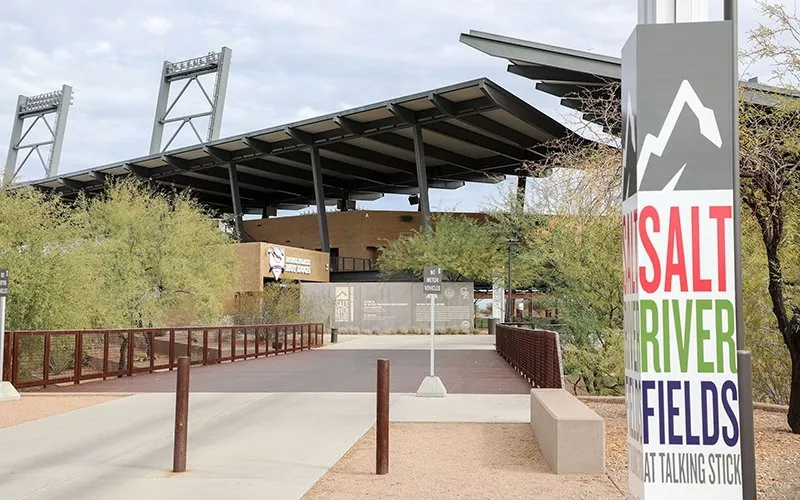
PHOENIX – Going, going, almost gone!
Tickets are selling out fast at the Valley’s Cactus League stadiums, where 15 major league teams are based during spring training. With attendance limited this year because of the ongoing COVID-19 pandemic, seats are scarce.
At least four Cactus League teams already are sold out for the spring, including the Arizona Diamondbacks, who sold out their games within 24 hours of tickets going on sale.
“The fact that it sold out as fast as it did – that fires me up,” Arizona manager Torey Lovullo said. “We’ve been looking forward to this day as much as them.”
Now, Arizona fans will have to rely on third-party ticket sites like StubHub or search for tickets at other stadiums when the Diamondbacks are playing away from Salt River Fields.

