

Monday, March 15, 2021

PHOENIX – An escalation in firearms sales last year, driven in part by new gun owners, is prompting some health experts to call for more attention to gun safety and the relationship between owning weapons and injuries or suicide.
In 2020, the FBI processed a record 39.7 million firearm background checks, one of the best measurements of likely sales. The week of March 16-22 – just after COVID-19 was declared a global pandemic and then a national emergency – is the top week for background checks since the agency’s instant system launched in November 1998.
The National Shooting Sports Foundation, a trade association for the firearms industry, estimates more than 8 million people were first-time gun buyers last year, and experts cite pandemic-related worries, as well as the presidential election, as primary drivers of rising sales.
Researchers from the University of Pennsylvania’s Perelman School of Medicine are among those calling for action to help prevent firearm injuries or deaths amid the uptick in purchases.
More safety education “is essential to address the potential downstream adverse effects of increases in firearm ownership with regard to injury and suicide prevention,” the researchers wrote recently in JAMA Network Open.
They pointed to one study that found some California gun owners had begun using less safe storage practices during the pandemic, choosing to leave weapons loaded and unlocked. Respondents cited concerns about pandemic-prompted lawlessness or prisoner releases, along with government collapse, as some reasons for their purchases.
Experts note that the rise in gun sales coincided with increasing psychological distress caused by isolation, economic worries and health concerns related to COVID-19. Studies show that depression, substance abuse and suicidal thoughts all have worsened during the pandemic.

Friday, March 12, 2021
Three Arizona doctors warned today of the fatal consequences of loosening restrictions without first vaccinating the public.
Phoenix endocrinologist Dr. Ricardo Correa, Tucson family medicine specialist Dr. Cadey Harrel and Glendale obstetrician/gynecologist Dr. Dionne Mills spoke out against loosening restrictions in Arizona.

“For the past year, too many people have struggled, sacrificed and died to get at this point in the pandemic,” said Correa. “We are close to eradicating COVID-19, but if you don't make the final effort, we are close to be back to where we were last year.”
Back-to-back executive orders on March 3 and March 5 by Gov. Doug Ducey, moved Arizona closer to reopening. The first mandated schools reopen by March 15 or after Spring Break. The second removed capacity limits on businesses and allowed spring training baseball and other professional and collegiate sports to operate after the approval of a safety and public health plan.
On March 3, the Arizona House passed bill, HB 2770 with a vote of 31-28, which asserts businesses are not required to enforce mask mandates from the state, a city, town or county or any other jurisdiction. The bill has now passed to the Senate for consideration.
Faced with these developments, Harrel urges Gov Ducey and Arizona legislators to “do the right thing and to listen to the science.”
Harrel, the CEO of Agave Community Health and Wellness, said that loosening restrictions should not occur until we have achieved herd immunity, or community immunity, which epidemiologists and health experts say occurs when 70-90 percent of the population is vaccinated and enough people have immunity to stop the spread of the COVID-19 within the general public.
As of March 12, little over 10 percent of Arizonans have been fully vaccinated, meaning they have received both doses of either Pfizer or Moderna or one dose of the Janssen vaccine, and about 20 percent have received a single dose.
“The facts tell us again and again that until we achieve that 70% of vaccination rate in Arizona's population, that we need to continue to double mask, we need to continue to physically distance and we need to take every precaution necessary to prevent the spread and further unnecessary death in our community,” said Harrel.
For the week of Feb 21, Arizona is at 98 cases per 100,000, 6.5% of tests were positive and 3.5 % of reported hospital visits were for COVID-like illnesses.
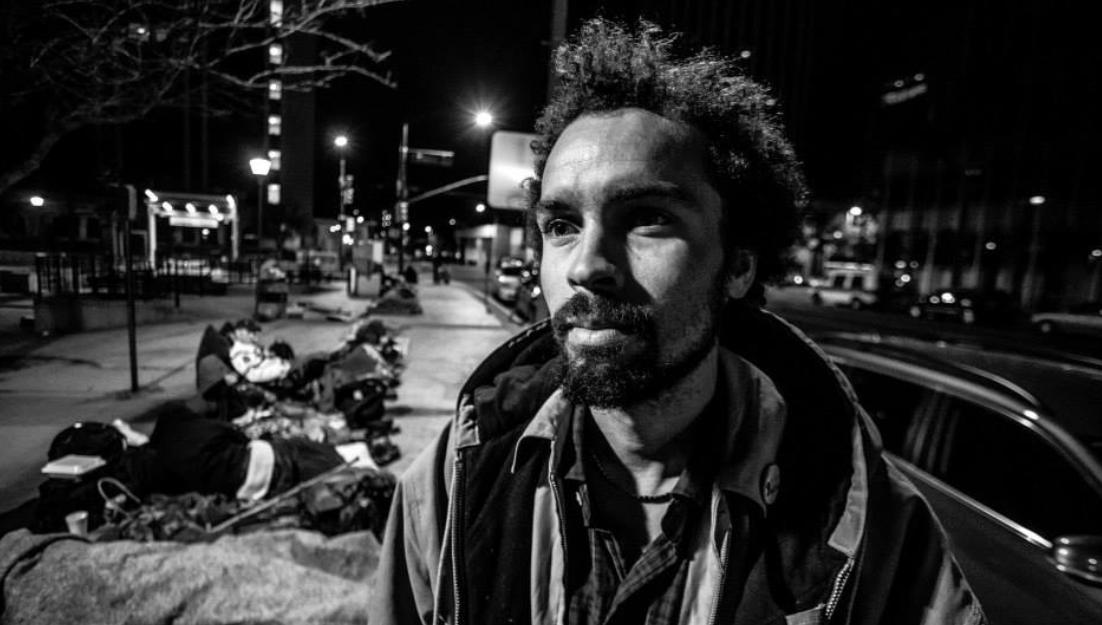
Tucson photographer and filmmaker Patrick McArdle has spent years documenting the life and struggles of homeless populations. First spending six months photographing the homeless in San Diego in stark black and white, McArdle says that project felt unresolved because of the city’s lack of effort to fix the problem. But in Tucson, an army veteran’s work to help inspired McArdle’s latest project, “Here Comes That Dreamer.” The full documentary will be screening at the MSA Annex from 6 to 8 p.m. on Thursday, March 18.
McArdle filmed his documentary on the streets of Tucson from 2015 to 2020, taking two years off in the middle during his own struggles with cancer. While covering a variety of people, the documentary partly focuses on Jon McLane, an Iraq war veteran with PTSD who is leading the Veteran Rescue Mission, with the objective of minimizing veteran and civilian recidivism and suicide rates.
“My intent is to show the public that there are solutions, you just have to be active and be willing to make it happen,” McArdle said. “I hope this documentary changes something.”
McArdle met McLane right at the beginning of filming, originally interested in McLane’s project “Safe Park.” The effort saw multiple boxes set up in Veinte De Agosto Park downtown to provide shelter for the homeless, but was eventually closed after a legal fight with the city.
McLane, now an ordained minister, helped introduce McArdle to the homeless population for filming.
TUCSON – At 21, Marcus Smith is already in unique company.
When he was named head men’s and women’s golf coach at Pima Community College as a 20-year-old, Smith joined an elite group to be named a head coach just out of their teens. Dennis Mahan Michie is believed to be the first, when he led the U.S. Military Academy football program in 1890, also at 20.
Smith doesn’t consider it anything special, and that’s when he considers it at all.
“I don’t necessarily think about it too much,” Smith said. “I think, you know when I’m goofing off with friends and stuff, they definitely remind me quite a bit of how young I am. So it is exciting, and I do take it very seriously. It’s a very great responsibility. I’m blessed to have that title.”
Day I got hired was the day @pima_golf and I started flirting with greatness! Always chasin’ it!
— Marcus Smith (@smith11marcus) January 13, 2021
Not just a job, a lifestyle. Tryna Elevate Tucson🏜 pic.twitter.com/Xi73c8sAeH
While Smith’s coaching career in golf started earlier than most, his playing experience came late in the game. He didn’t pick up a golf club until his junior year at Deer Valley High School in Phoenix, where he met Allen Ferguson, the school’s golf coach.
There are two high-profile animated movies in theaters right now, and both of them also have streaming options.
One of those movies is a total piece of garbage, the other is a heartwarming, rousing adventure that is very much worth the money you will plunk down to either see it in a theater or rent at home.
See which one is which in the reviews below:
RAYA AND THE LAST DRAGON
Now Playing at Roadhouse Cinemas
(Also available for home rental on Disney+ Premier Access)
The latest Disney animated movie checks off all of the boxes when it comes to what Disney fans are looking for in an animated adventure, and then it checks off a few more, unexpected ones.
Title character Raya is the latest addition to the “Disney Princess” sub-franchise, a terrific character creation voiced by Kelly Marie Tran of the last two Star Wars movies (the second of which her character was brushed aside…oh, don’t get me started). She lives in the ancient land of Kumandra, a world once inhabited by happy dragons but currently cursed by a plague that has turned most of the animal life (including the dragons) to stone.
Raya’s mission to restore her land leads to the awakening of Sisu the Dragon, voiced by Awkwafina in the sort of vocal triumph that reminds of Robin Williams in Aladdin and Eddie Murphy in Shrek. Sisu can also morph into human form, and both her dragon and human forms look quite like the actress voicing them (the wide smile, the big eyes, those awesome eyebrows). And, of course, both have her distinctive vocals, tailor made for this kind of movie.
The four directors who put this movie together, along with a quite the roster of writers, have inhabited this film world with enchantment, great action, and solid laughs. One of the film’s best running gags would be the “Con Baby,” an infant plague survivor who manages to display superhero qualities while occasionally throwing her diapers at those who dare to chase her.
The story winds up being a terrific take on redemption, and the finale (which owes a little bit to Avengers: Endgame) will leave the family in the kind of tears. Brightly animated, cleverly written, and masterfully constructed, it’s a movie that will put a smile on your face and get your young daughters interested in martial arts and dragons.
TOM & JERRY
Now playing at Roadhouse Cinemas, Harkins Tucson Spectrum 18 and Harkins Arizona Pavilions 12, while also streaming on HBO Max
I hated Tom & Jerry when I was a kid. And, as things turn out, I hate them equally as a grown up adult-typed person thing. It’s just a cat being mercifully tortured by a mouse, a one-joke slog-a-thon.
Granted, Itchy and Scratchy, the spoof of Tom & Jerry that has long appeared on The Simpsons is classic, and wouldn’t exist if it weren’t for Tom & Jerry, so I guess I have to be a little grateful to the duo.
On second thought, nope…Tom & Jerry can go to Hell.
Director Tim Story tries to bring some life to a long (thankfully) dead franchise by pulling a Roger Rabbit and mixing traditional animation with live action. Tom the cat and Jerry the mouse, along with all other animals other than humans in this film, are animated, with little effort to really integrate them into the real world. As a result, this movie has a very dull visual palette to go with its crap script.
The original cartoon shorts never had significant plots, and their cinematic vehicle has a thin one that works as nothing but an excuse to see Tom falling out of buildings and crashing into shit.
A young events planner wannabe (Chloe Grace Moretz) goes to a fancy Manhattan hotel looking for a job, fakes a resume (making her instantly unlikeable), and gets a gig planning the big wedding of the year. Jerry the mouse moves into the hotel, with Tom following him there because he’s pissed and all that, so there’s your plot. The planner needs to catch the mouse and uses the cat in her trapping scheme. Now that the thin story is established, let’s break things over Tom’s head.
The humans look miserable, as are we. This is a film that manages to make Michael Pena unfunny. It’s also a movie looking for comedic acting chops from SNL writer Colin Jost, who just has to know he screwed up royally signing on for this one. He plays the guy getting married, and just looks like he is hating life the entire time. Most assuredly, Michael Che should skewer him on Weekend Update for this one.
Rest assured that the wedding in this movie will have elephants so that we can get that classic joke of elephants being afraid of mice. You can also go to bed tonight safe in the knowledge that at some point in this movie Jerry is going to leave a wise-assed note to somebody in a mouse trap. You know, something like “Haha…I’m a mouse and I figured out this is a trap, and I took your fucking cheese anyway. Fuck you!”
Minus the swear words of course. This is a PG movie for kids where you can see Ken Jeong clearly having the word “asshole” dubbed over in his dialogue. Noticing that was the funniest part of the movie for me. Everything else was about as funny as a wise-assed note left by a rodent in place of cheese chunk in a mouse trap.
PHOENIX – Arizona students haven’t been properly taught about the Holocaust in recent years, according to a recent poll conducted by the Conference on Jewish Material Claims Against Germany. Among Arizona millennials surveyed in March 2020, 42% could not name a single concentration camp the Nazis built to detain and exterminate Jews and others deemed undesirable.
The same report found that only 48% of the state’s millennial respondents recognized the term Auschwitz, and only 33% knew the number of Jews who were killed from 1933 through 1945.
Such findings worry Lawrence Bell, executive director of the Arizona Jewish Historical Society, and other Jewish leaders in the state. The concern is heightened as more Holocaust survivors – who have been crucial to putting a human face on unfathomable tragedy – pass away.
“Memory of the Second World War is really starting to fade from popular consciousness,” Bell said. “A lot of people don’t think about the Second World War, they don’t think about the Holocaust. … It’s something that’s largely faded out.”
In October, the Arizona Department of Education made a rule change that requires students to receive instruction on the Holocaust at least twice during their secondary school career.

With 1,397 new cases reported today, the total number of Arizona’s confirmed novel coronavirus cases closed in on 832,000 as of Friday, March 12, according to the Arizona Department of Health Services.

Pima County, which reported 110 new cases today, has seen 111,041 of the state’s 831,832 confirmed cases.
With 55 new deaths reported today, a total of 16,519 Arizonans have died after contracting COVID-19, including 2,293 deaths in Pima County, according to the March 12 report.
A total of 831 coronavirus patients were in the hospital as of March 11 That’s roughly 16% of the number hospitalized at the peak of the winter surge, which reached 5,082 on Jan. 11. The summer peak was 3,517, which was set on July 13, 2020. The subsequent lowest number of hospitalized COVID patients was 468, set on Sept. 27, 2020.
The number of people visiting emergency rooms with COVID-like symptoms has bumped up this week, with 1,1097 people visiting ERs on March 11 with COVID symptoms. Still, that number is less than half of the record high of 2,341 set on Tuesday, Dec. 29, 2020. That number had peaked during the summer wave at 2,008 on July 7, 2020; it hit a subsequent low of 653 on Sept. 28, 2020.
A total of 236 COVID-19 patients were in intensive care unit beds on March 11, which is roughly 20% of the record 1,183 ICU patients set on Jan. 11. The summer’s record number of patients in ICU beds was 970, set on July 13, 2020. The subsequent low was 114 on Sept. 22, 2020.
UK variant circulating in Pima County
Four cases of the COVID-19 UK variant have been found in Pima County, said Pima County Health Department Director Dr. Theresa Cullen during a briefing this afternoon.
Pima County Health Department has been tracking genomic sequencing of positive COVID-19 PCR tests (aka the nasal swab test). They send a random sample of those positive PCR tests to the Translational Genomics Research Institute (TGen) in Flagstaff for sequencing, Cullen said.
This process takes up about three to four weeks from the collection and procession of the sample to getting a positive result and then sending it to a lab like TGen, where the genetic sequencing takes place. In other words, the variant has been in Pima County for at least three to four weeks since the sample was collected, Cullen said.
According to the CDC, this variant, first detected in the U.S. in late December 2020, spreads more easily and quickly than other variants. Some experts in the U.K. reported the variant may be associated with an increased risk in death, but this finding has not been confirmed.
“It's not to make the community frightened, but it is to remind the community that COVID-19 is a deadly disease,” said Cullen. “It has significant morbidity and mortality and the way we protect ourselves right now is to do the three W's, to abide by the recommendations that we've given.”
"Serving Arizonans has been my absolute honor and joy, but after much consideration, I have decided not to seek re-election in 2022. I will continue the good fight through this Congress, and when the term is up, I will hand over the baton." https://t.co/jBuB85SeHH
— Rep. Ann Kirkpatrick (@RepKirkpatrick) March 12, 2021
Fresh on the heels of the signing of the $1.9 trillion COVID relief package, Arizona Rep. Ann Kirkpatrick announced she will not seek a sixth term in 2022 in a Twitter post this morning.
The congresswoman represents Southern Arizona's District 2, which includes eastern Pima County and Cochise County.
Kirkpatrick, 70, was first elected in CD2 in 2018. She previously represented a Northern Arizona district. She left Congress in 2016 to unsuccessfully challenge the late Sen. John McCain and then relocated to Pima County to run for Congress.
She took a leave of absence last year to seek recovery for alcohol addiction.
Kirkpatrick's departure is sure to set off a scurry of potential candidates on both sides of the aisle but with redistricting on the horizon, the future boundaries of the district for the 2022 election cycle remain to be seen.
Kirkpatrick's full statement:
Every two years for the past 18 years, there has been an election in Arizona with my name on the ballot. Serving Arizonans has been my absolute honor and joy, but after much consideration, I have decided not to seek re-election in 2022. I will continue the good fight through this Congress, and when the term is up, I will hand over the baton.
For all the attention on Biden’s changes to border policy, there are plenty of factors out of the U.S.’s control — which might make migrants increasingly desperate.
The cause of the collision between an SUV and a semitruck that left 13 dead in Holtville, California, on Tuesday morning is still a horrific mystery. But federal investigators are exploring a likely explanation for why the overloaded car sped through an intersection in the rural area: a case of human smuggling turned deadly.
Surveillance footage shows the 1997 Ford Expedition and another SUV loaded with people entering the U.S. through a breach in the border fence shortly before the crash. Ten victims were Mexican nationals; the other three were women from Guatemala. While consular officers keep working to confirm victims’ names, special agents from Immigration and Customs Enforcement began piecing together how 25 adults came to be crammed into a vehicle meant for no more than eight.
It’s an all-too-familiar story, and one that has not become less common as the world fights a global pandemic and migrants south of the border wait to see the effects of immigration changes promised by the administration of President Joe Biden. Clandestine migration to the U.S. has accelerated through last fall and into the early weeks of the new administration, as poverty, crime and public health conditions across the border have grown more desperate.
“You’ve lost your source of income, whatever it is. People — especially in the informal economy, which are the ones that drive local economies, as we know — you’ve lost those sources of income. Their own relatives who could have afforded to support them are probably also broke,” says Gabriella Sanchez, a migration researcher with the Danish Institute for International Studies.
“People who might not have thought about migrating, now are like, ‘Well, at this point, I really don’t have anything else to lose. Anything I could have lost, I already lost.’”
For the last year, the U.S. has used an obscure public health law to expel anyone caught trying to cross the border rather than formally deporting them. That keeps the federal government from having to detain migrants for days (and often months or years) after their arrival on the U.S. side of the border. But it also further incentivizes evading detection by the authorities, which is where the smugglers come in.
The crash occurred about 10 miles from the U.S.-Mexico border; United Farm Workers members said the victims weren’t among the 6,000 farmworkers who commute from Mexico to tend crops in the Imperial Valley. The SUV’s passengers ranged in age from 16 to 65, packed into a vehicle manufactured to carry a passenger weight of no more than 2,000 pounds. (All but the front seats of the Ford had been removed to create space.)
An ICE spokesperson told the Los Angeles Times, which has been the authoritative news source on the incident, that Homeland Security investigations agents “responded to the scene of today’s fatal crash” and began their smuggling investigation. The surveillance footage showed a second SUV, which held 19 people, also crossing the border around the same time. It subsequently caught fire; the Holtville fire chief speculated to the Los Angeles Times that the combined weight of the passengers caused the vehicle to malfunction.
There are plenty of ways for migrants to be killed trying to come to the United States. People suffocate in locked tractor trailers, die of heat or cold in the Arizona desert, or drown off the California shore. Migrants die in crashes while being chased by the Border Patrol, a phenomenon that ProPublica and the Times investigated in 2019. Even when they’re not being pursued — as they weren’t in this case — vehicles overstuffed with people can be hard to steer and dangerous to drive, which may have been the case here.
When Sanchez first heard about the crash, she immediately recognized the hallmarks of a smuggling accident. The case “reminded me of when I lived in California, growing up,” says Sanchez. “The trucks are packed, and then immigration coming over or chasing them.”
The need to evade apprehension by border agents creates danger. That’s part of the logic of deterrence — a logic that has guided U.S. border policy for decades. If the point of border security is to make it as difficult and unappealing as possible to enter the United States, the only possible routes will be the most dangerous ones, and the people who are willing to take them will be the most desperate.
For the last few years, national attention has focused on the relatively recent phenomenon of large numbers of children and families coming to the United States, mostly from Central America and mostly to seek asylum. There’s a reason for that: The deterrence system was not built for families and children, so it didn’t have the resources to address them.
The Biden administration is simultaneously trying to expand its capacity to keep unaccompanied children in custody (before releasing them to sponsors, usually relatives, in the U.S.) and trying to slowly unwind some of the policies imposed by the administration of President Donald Trump to expel families from U.S. soil as quickly as possible.
American policymakers can sometimes speak as if the most important factor in migration is U.S. government policy — or at least how welcoming the country is perceived to be. Biden officials take every opportunity to tell would-be migrants explicitly not to come; the new administration’s critics (such as Trump immigration czar Stephen Miller) say that any loosening of immigration restrictions is encouraging a flood of new migrants. But the fact is that beyond U.S. borders, the rest of the world changes too, often in ways that make emigration seem not just appealing but necessary.
In the early months of the pandemic, it seemed that tight restrictions on international travel — including the Trump administration’s mass-expulsion policy under the public health law — had all but frozen migration. But smugglers of drugs and people quickly rebounded, modifying their tactics, taking fewer trips with bigger loads, for example, to adapt to the pandemic while meeting demand. And the demand was very much there.
In Central America, the U.N.’s World Food Program estimates that hunger quadrupled from 2018 to 2020, and that was before the region was pummelled by hurricanes at the end of last year. Interviews with emigrants reveal that many of them have simply lost hope that things will ever get better in their home countries. In Mexico, meanwhile, things have gotten worse. The country’s economy shrank by 8.5% in 2020; its national coronavirus czar was hospitalized last week with the virus, epitomizing a disastrous government response that’s contributed to 186,000 Mexican deaths in the pandemic; and homicides in the first 11 months of 2020 had already passed the record for a full year (set in 2019).
While we don’t know the whole story of migrants like the victims in Imperial County — or any other unknown victims of deadly migrations — it is possible they knew they could be killed on the journey and still felt that it was their best or only option.

