

Wednesday, March 10, 2021

Now that COVID-19 cases are trending downward across Pima County —and the governor has removed business occupancy restrictions—Hotel Congress is looking to celebrate St. Patrick's Day.
"We are not idiots. A traditional green beer and Irish whiskey-drenched bacchanalia is not an appropriate option, but maybe—just maybe— we do a little more than a "tip o' the hat" to St. Patrick's Day," according to a recent Hotel Congress release.
The hotel's Cup Cafe will begin serving traditional Irish fares like corned beef and cabbage, Guinness beef stew and Irish cream cupcakes until 3 p.m. Wednesday. Then the party kicks into full swing at 5 p.m. on the hotel's plaza as the Plaza Eats food truck serves up all your Irish food favorites, Irish coffee, Irish whiskey flights, along with specials on Guinness pints and Jameson shots.
DJ PC Party will be holding down the ones-and-twos, complimentary party favors will be handed out to partygoers and the evening is set to crescendo with the Great Guinness Toast at 10 p.m.
Hotel Congress will be adhering to COVID-19 protocols during the celebration. For more information, visit the Hotel Congress website.
With 830 new cases reported today, the total number of Arizona’s confirmed novel coronavirus cases topped 828,000 as of Wednesday, March 10, according to the Arizona Department of Health Services.

Pima County, which reported 148 new cases today, has seen 110,790 of the state’s 828,630 confirmed cases.
With 78 new deaths reported today, a total of 16,404 Arizonans have died after contracting COVID-19, including 2,270 deaths in Pima County, according to the March 10 report.
The number of hospitalized COVID cases statewide dipped below 900 today for the first time since October. A total of 868 coronavirus patients were in the hospital as of March 9. That’s roughly 17% of the number hospitalized at the peak of the winter surge, which reached 5,082 on Jan. 11. The summer peak was 3,517, which was set on July 13, 2020. The subsequent lowest number of hospitalized COVID patients was 468, set on Sept. 27, 2020.
The number of people visiting emergency rooms with COVID-like symptoms has bumped up this week, with 1,118 people visiting ERs on March 9 with COVID symptoms. Still, that number is less than half of the record high of 2,341 set on Tuesday, Dec. 29, 2020. That number had peaked during the summer wave at 2,008 on July 7, 2020; it hit a subsequent low of 653 on Sept. 28, 2020.
A total of 251 COVID-19 patients were in intensive care unit beds on March 9, which is roughly 21% of the record 1,183 ICU patients set on Jan. 11. The summer’s record number of patients in ICU beds was 970, set on July 13, 2020. The subsequent low was 114 on Sept. 22, 2020.

Oportun Inc., a small-dollar loan company, disclosed to investors that it is the subject of a probe by the Consumer Financial Protection Bureau following reporting by ProPublica and The Texas Tribune.
ProPublica is a nonprofit newsroom that investigates abuses of power. Sign up to receive our biggest stories as soon as they’re published.
This article is co-published with The Texas Tribune, a nonprofit, nonpartisan local newsroom that informs and engages with Texans. Sign up for The Brief weekly to get up to speed on their essential coverage of Texas issues.
A federal consumer watchdog agency has launched an investigation into a company that aggressively sued thousands of Latino borrowers in Texas during the coronavirus pandemic while depicting itself as a financial ally of the community.
Oportun Inc., a Silicon Valley-based installment lender, which was founded to help Latino immigrants build credit so they can go on to achieve the American Dream, disclosed to investors last week that it had received a civil investigative demand from the Consumer Financial Protection Bureau.
The company indicated that it was part of a larger probe of small-dollar lenders by the federal watchdog, which was formed by Congress in the wake of the 2008 financial crisis in an effort to better guard Americans from abusive lending practices.
The investigation comes after ProPublica and The Texas Tribune last year revealed that Oportun had become the most litigious personal loan company in Texas, suing thousands of lower-income borrowers at a rapid pace even as other lenders halted or slowed legal action during the pandemic.

Tuesday, March 9, 2021

Deadname Wash, a new compilation of electronic music, is raising funds for rent relief for transgender people. The album’s 13 songs were composed by musicians throughout Arizona, including multiple Tucson artists like Flor de Nopal, Kell, jaeki and Lav Andula.
The music on the album ranges from pop to post-punk to dance music, but all keep a foot in the realm of electronic music, and all songs are written by members of the queer community.
While the opening track "Isn't it Too Dreamy?" starts the compilation off with a dark and rhythmic track similar to The Cure, the album varies greatly, with “When” being more upbeat, and the lo-fi “i hear it gets better” in a mellower vein.
Deadname Wash is currently available as “name your price” on bandcamp, so you can support the cause with your purchase, or listen for free. For more information, visit deadname-wash.bandcamp.com
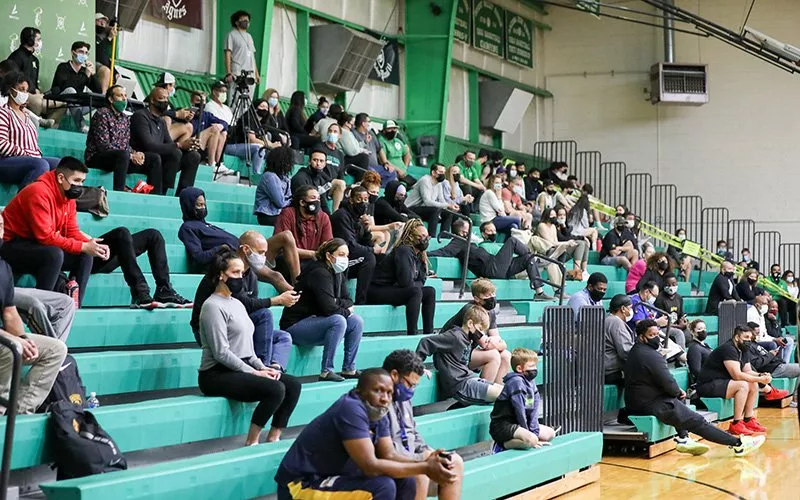
TEMPE – Gloves are popping. Bats are cracking. And gates are opening.
Spring training baseball is back. But should it be? And, more important, should fans be able to attend the games just when the end to a global pandemic seems within reach?
These aren’t just health questions. They’re ethical ones.
“If it’s safe for baseball teams to be practicing and to travel here from all sorts of other parts of the country and set up, then why isn’t it (safe) for the symphony orchestra to be playing? Or for all the museums to be open?” said Dr. Mary Feeney, a Lincoln Professor of Ethics in Public Affairs at Arizona State University.
“And then when we extend that to fans, it’s the same sort of question. How come it’s safe for fans to go to a baseball game, but not to go see the symphony or the opera? And what does that say about our priorities as a society?”
Feeney stressed that she is not an epidemiologist, but she is up to date on guidelines and best practices. She raised important questions about how masks would be enforced at sporting events and how teams and leagues will know if each pod is actually a domestic group, or just a group of friends ignoring guidelines. She also questioned what teams and leagues will do if a fan gets sick – or worse – due to their event, and how they will handle that responsibility.
“I think these are questions they have to ask themselves because the state’s certainly not telling them what to do,” she said.
One year ago today, March 9, 2020, Pima County's first patient tested positive for COVID-19.

Earlier in the day, a group of elected officials, including Tucson Mayor Regina Romero and the late Pima County Supervisor Richard Elias, held a press conference to warn that COVID-19 was on its way. They predicted it would be like a bad flu season and encouraged people to wash their hands more often.
At the time, few knew just how bad it would get.
By mid-March, dozens of spring events had been canceled, from the Tucson Book Festival to concerts at the Rialto Theater. Restaurants and bars shut down or switched to takeout service. Pasta, meat and especially toilet paper began flying off grocery shelves. As we all learned about Zoom, Gov. Doug Ducey and Superintendent of Public Instruction Kathy Hoffman announced that the public school system would go to remote learning at the end of spring break; university and college leaders did the same.
During the past 12 months, Arizona has twice been one of the world’s worst COVID hot spots. With the winter wave receding, here’s where we stand.
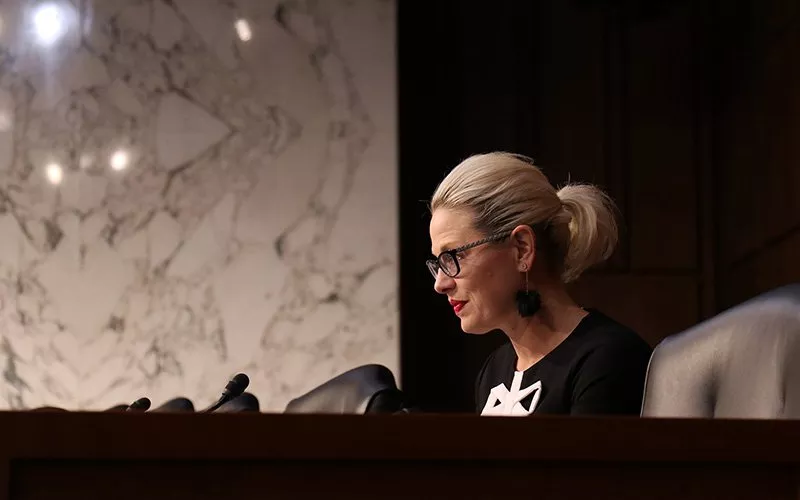
WASHINGTON – Arizona Sen. Kyrsten Sinema said she still believes the Senate should take up a higher minimum wage, but that didn’t keep critics from lighting into her after her Friday vote to keep the higher wage out of the latest pandemic relief package.
Sinema was one of seven Democrats who joined Republicans to reject an amendment to the American Rescue Plan that would have raised the wage to $15 an hour over five years. That move was backed by the House and the White House but rejected in the Senate on procedural grounds.
A video of Sinema appearing to curtsy before giving a thumbs-down to the minimum wage amendment brought an angry outburst on social media. With hashtags like #letthemeatcake, opponents recycled a 2014 Sinema tweet where she called a higher minimum wage a “no-brainer,” and they issued calls for her to be “primaried” by the liberal wing of the Democratic Party.
But analysts are split on how much damage the vote, and the ensuing hubbub, will have on Sinema’s long-term political future.
Garrett Archer, a data analyst at ABC15, said that Sinema may have to face a “credible challenger” in the 2024 primaries, something unusual for the typically outnumbered Democratic Party in Arizona.
Monday, March 8, 2021

The University of Arizona will celebrate spring 2021 commencement with a series of in-person ceremonies with the hope of honoring graduates of 2020 as well, UA President Robert C. Robbins said Monday morning.
Commencement is tentatively scheduled from Tuesday, May 11, to Tuesday, May 18, and will be live streamed and recorded.
“We're going to have many different smaller venues in order to be safe,” said Robbins. “The in-person component of the ceremonies will be for students only.”
While the planning is ongoing, the hope is to give graduates the Arizona Stadium experience, said Robbins.
Robbins paints a picture of roughly 1,000 students socially distanced and masked, each one walking to the stage and getting their moment on the Jumbotron, then walking off and out of the stadium.
“This past year has obviously been very, very challenging and I know that has had a significant impact on the senior year of this graduating class,” said Robbins. “We're all looking forward to coming together in a different, but memorable way to celebrate the academic achievements of the class of 2021.”
The Class of 2020 celebrated through a virtual commencement. Robbins wants to honor these students as well.
“They are looking at what they can do to incorporate a big celebration for those that missed out on 2020,” said Holly Jensen, vice president of communications for the university.
The university, with the help of public health officials, will continue to monitor health conditions, said Jensen.

