

Monday, March 1, 2021

PHOENIX – For the second time since 2019, the Arizona Department of Corrections has been found in contempt for its failure to follow health care guidelines designed to protect prisoners.
In a ruling issued Wednesday, U.S. District Court Judge Roslyn Silver fined the Arizona Department of Corrections Rehabilitation & Reentry $1.1 million for neglecting health care guidelines the department agreed to follow in 2015. The fine is to be paid this month.
This is the second time the department has been found in violation of these regulations. The original lawsuit, filed in 2012 on behalf of over 33,000 inmates by the American Civil Liberties Union and Perkins Coie LLC, cited concerns about the lack of care within Arizona’s 48 correctional facilities, whether it be comprehensive health care, dental or mental health care. Through the settlement, 112 benchmarks were created and agreed upon. To avoid fines, the department would have to remain 70% compliant with the settlement.
In 2019, however, the department was held in contempt for failing to meet enough of those benchmarks. Lawyers for the plaintiffs say that equates to inadequate health care for those in the system who have needs that go beyond basic care.
“Within correctional facilities, we see individuals with cancer and heart disease as well as drive-by mental health encounters that can last anywhere from two to three minutes,” said David Fathi, director of the ACLU National Prison Project. “These incarcerated individuals need to go and see outside specialists, and are more often than not not taken to those specialists.”
A spokesperson for the Department of Corrections confirmed officials had received the order from the court and would be reviewing it with their attorneys.
The Department of Corrections is required to report to the ACLU each month with documentation of the care inmates receive through its health care providers. Through these documents and the department’s medical records, the ACLU has been able to repeatedly determine noncompliance in the system, Fathi said.
The new $1.1 million fine only applies to February. To avoid being fined for the whole year – which could be up to $17 million – the state must be able to show cause for this month as well as why they should not be fined for the whole year.
“A large part as to why this is happening is a lack of awareness in the Legislature,” said Daniel Barr, ACLU co-counsel and an attorney with Perkins Coie. “We’ve met with several legislative bodies and many of them had never even heard of the case.”
In Barr’s opinion, this lack of awareness is due in part to the blatant disregard by lawmakers as well as the news media.
“There are 36,000 prisoners in the state of Arizona right now, and these people have the constitutional right to health care just like everyone else,” Barr said. “The Eighth Amendment right to this care is extremely basic, and these people aren’t even getting that much.”
Fathi said the February fine will be used to fund a systemwide study to identify the root causes of the persistent negligence. Some key factors, he said, are the understaffing of correctional facilities, as well as the political unpopularity of criminal offenders.
“These people have been abused, neglected and victimized,” Fathi said. “I haven’t seen a lot of attention on these individuals from elected officials. It all comes down to a lack of resources and attention.”
Fathi and Barr find the lack of action in the nine years since the original suit appalling.
“It is historic to hold a state agency in contempt not once, but twice in three years,” Fathi said. “It‘s a rebuke of the state’s failure to acknowledge the need for change.”
With 1,039 new cases reported today, the total number of Arizona’s confirmed novel coronavirus cases closed in on 818,000 as of Monday, March 1, according to the Arizona Department of Health Services.
Pima County, which reported 113 new cases today, has seen 109,601 of the state’s 817,821 confirmed cases.
A total of 15,971 Arizonans have died after contracting COVID-19, including 2,216 deaths in Pima County, according to the March 1 report.
The number of hospitalized COVID cases statewide has declined in recent weeks, with 1,241 coronavirus patients in the hospital as of Feb. 28. That’s less than a fourth of the number hospitalized at the peak of the winter surge, which reached 5,082 on Jan. 11. The summer peak was 3,517, which was set on July 13, 2020. The subsequent lowest number of hospitalized COVID patients was 468, set on Sept. 27, 2020.
A total of 952 people visited emergency rooms on Feb. 28 with COVID symptoms, a big drop from the record high of 2,341 set on Tuesday, Dec. 29, 2020. That number had peaked during the summer wave at 2,008 on July 7, 2020; it hit a subsequent low of 653 on Sept. 28, 2020.
A total of 382 COVID-19 patients were in intensive care unit beds on Feb. 25, less than a third of the record 1,183 set on Jan. 11. The summer’s record number of patients in ICU beds was 970, set on July 13, 2020. The subsequent low was 114 on Sept. 22, 2020.
How to get a vaccine
While supplies are limited, Pima County is providing vaccination shots to people 65 and older as well as educators, first responders and healthcare workers. Those who qualify in Pima County’s 1B priority group of eligible vaccine recipients can register for a vaccine at www.pima.gov/covid19vaccineregistration or by calling 520-222-0119.
A state-run vaccination site opening at the University of Arizona was not accepting first-dose appointments as of Monday, March 1. When accepting new appointments, the site follows the state’s current vaccine eligibility, which includes those 65 and older, educators, childcare workers and protective service workers.
As the state-run POD, or point of distribution, registrations will go through ADHS’s website. When online registration resumes, you can make an appointment at at pod vaccine.azdhs.gov, and those who need assistance can call 1-844-542-8201. More details here.
Eight CVS pharmacies throughout Arizona began offering COVID-19 vaccines starting last week.
Patients must register in advance at CVS.com or through the CVS Pharmacy app. People without online access can contact CVS Customer Service: (800) 746-7287. Walk-in vaccinations without an appointment will not be provided. Per the state of Arizona, eligible individuals for the Federal Retail Pharmacy Program are people age 65 and over, health care workers, protective services, teachers and childcare providers.
As more supply becomes available, the company will expand vaccine access through an increasing number of store locations and in more Arizona counties.
Click here register in advance for a vaccine at a CVS location.
Cases continue decline, health officials say relaxed restrictions on horizon
With the winter wave of coronavirus cases receding and more Pima County residents getting vaccinated, local officials say they may soon loosen COVID-related restrictions on crowd sizes and similar measures meant to slow the spread of the disease.
Dr. Theresa Cullen, head of the Pima County Public Health Department, said last week that as long as current trends continue, she expected that she’d release a new Public Health Advisory that would offer relaxed recommendations in the near future.
“If you go look at the Public Health Advisory, it still recommends that people stay in groups of 10, that would be a thing we would loosen up,” said Cullen. “We loosen up the concept of having spectators at external sporting events, which I know is near and dear to many people.”
However people should still expect the “three W's” (wear a mask, wash your hands, and wait) to remain in place as well as a physical distance of six feet, said Cullen.
Dr. Cara Christ, the head of the Arizona Department of Health, said that the state will also look at easing restrictions on large gatherings and other COVID-related regulations if the numbers continue a downward slide.
“We'd normally wait for all of the metrics to get down into the yellow for two weeks before we would start loosening some of those things,” said Christ.
Dr. Joe Gerald, an associate professor at the UA College of Public Health who puts out a weekly tracker of COVID trends, noted that for the week ending Feb. 21, at least 9,646 COVID cases were diagnosed in Arizona, which represented a 16% drop in the previous week’s numbers. That’s the lowest weekly number since Nov. 1 and marked six straight weeks of decline, but Arizona still had the 17th highest rate of transmission in the nation, according to the CDC.
In his weekly report released over the weekend, Gerald noted that the number of COVID patients in both general-ward and ICU beds dropped by 20 percent compared to the previous week. “While Arizona hospitals’ safety margins remain low, they are slowly improving,” Gerald wrote.
He urged people to continue wearing masks in public, avoid social gatherings, maintain physical distance from people not in your household and spend less than 15 minutes in indoor spaces, but said people could likely resume lower-risk activities once rates fall below 100 new diagnoses per 100,000 residents per week.
While the week ending Jan. 17 remained Arizona’s deadliest with 1,021 people dying after contracting COVID, Gerald estimated that the coronavirus death toll would be above 200 a week for another two to four weeks and falling below 200 a week by the end of March.
A total of 1,093 Pima County residents tested positive for COVID-19 in the week ending Feb. 21, which was a 34% drop from the 1,666 cases in the previous week. Pima County saw 104 new cases per 100,000 residents in the week ending Feb. 21, according to Gerald.
Vaccination progress
As of last Friday, Feb. 26, more than 1 million Arizonans have received at least the first dose of the vaccine with over 1.6 million doses administered, according to Dr. Cara Christ, head of the Arizona Department of Health Services.
With an expected increase in vaccine doses with the FDA’s approval of the Johnson & Johnson vaccine, Christ anticipates expanding the pool of people eligible to receive a vaccine at a state point of distribution sometime this month.
“If it's approved, we anticipate receiving the (Johnson & Johnson) vaccine in early March,” Christ said.
Christ said while the state was still working out the details, she expected to get between 50,000 and 60,000 Johnson & Johnson doses. Because people only need one shot of the Johnson & Johnson vaccine, it would be ideal for hard-to-track populations.
“This would be a great thing for doing mobile vaccination, especially out in rural communities,” said Christ. “You only have to go once and they are considered a completed dose, so they don't have to go back for that second dose.”
An estimated 15,000 to 20,000 Pima County residents in the 65+ group remained to be vaccinated as of last Friday, Feb. 26, said Dr. Theresa Cullen, head of the Pima County Health Department. Pima County had administered more than 250,000 vaccinations, with roughly 173,000 people receiving the first dose and roughly 80,000 people fully vaccinated.
However, expanding the pool of people eligible for the vaccine will depend on balancing second shots for those who have received their first one with scheduling first shots for 1B patients.
“We are in the process of working with both TCC and TMC which are our large efficient pods, as well as Banner to figure out how to appropriately get the first shots into the system,“ said Cullen
For the current week, the health department requested 40,000 doses independent of the UA POD, and received 24,000 Moderna doses, along with 17,550 Pfizer doses for Banner North and UMC for a total of 41,550 doses, said Cullen.
Get tested: Pima County has free COVID testing
After the state agreed to provide additional funding to keep testing centers open through at least March 2, Pima County is continuing to offer a number of testing centers around town.
You’ll have a nasal swab test at the Kino Event Center (2805 E. Ajo Way), the Udall Center (7200 E. Tanque Verde Road) and downtown (88 E. Broadway).
The center at the northside Ellie Towne Flowing Wells Community Center, 1660 W. Ruthrauff Road, involves a saliva test designed by ASU.
In addition, the Pima County Health Department, Pima Community College and Arizona State University have partnered to create new drive-thru COVID-19 testing sites at three Pima Community College locations. At the drive-thru sites, COVID-19 testing will be offered through spit samples instead of nasal canal swabs. Each site will conduct testing from 9 a.m. to noon, and registration is required in advance. Only patients 5 years or older can be tested.
Schedule an appointment at these or other pop-up sites at pima.gov/covid19testing.
The University of Arizona’s antibody testing has been opened to all Arizonans as the state attempts to get a handle on how many people have been exposed to COVID-19 but were asymptomatic or otherwise did not get a test while they were ill. To sign up for testing, visit https://covid19antibodytesting.arizona.edu/home.
—with additional reporting from Austin Counts, Christina Duran, Jeff Gardner and Mike Truelsen

PHOENIX – Land, and specifically what to do with land, has been among the most divisive topics in U.S. history since the arrival of European settlers in 1492. More than 500 years later, little has changed.
On Jan. 20, the Biden administration ordered a 60-day pause on new oil and gas leases on federal lands and waters after environmental activists sent a letter urging the administration to issue a permanent ban rather than a temporary one.
The order prompted an array of reactions, with some environmentalists hailing it as an important incremental step and others dismissing it as a toothless attempt to fight climate change. Among tribal leaders, reactions underscored how the relationship to land differs among tribes.
Arizona will go largely unaffected by the order, as most natural resource extraction in the state is for helium and carbon dioxide, according to Frank Thorwald, chairman of the Arizona Oil and Gas Conservation Commission, which is responsible for regulating and approving oil and gas extraction operations.
For oil-producing Indigenous nations, such as the Ute Indian Tribe of northeastern Utah, the order came across as overstepping and disrespectful.
An open letter from the chairman of the tribe’s business committee to acting Interior Secretary Scott de la Vega called the order “a direct attack on our economy, sovereignty, and our right to self-determination.” But the pause may not have much effect on tribal land.

Saturday, February 27, 2021
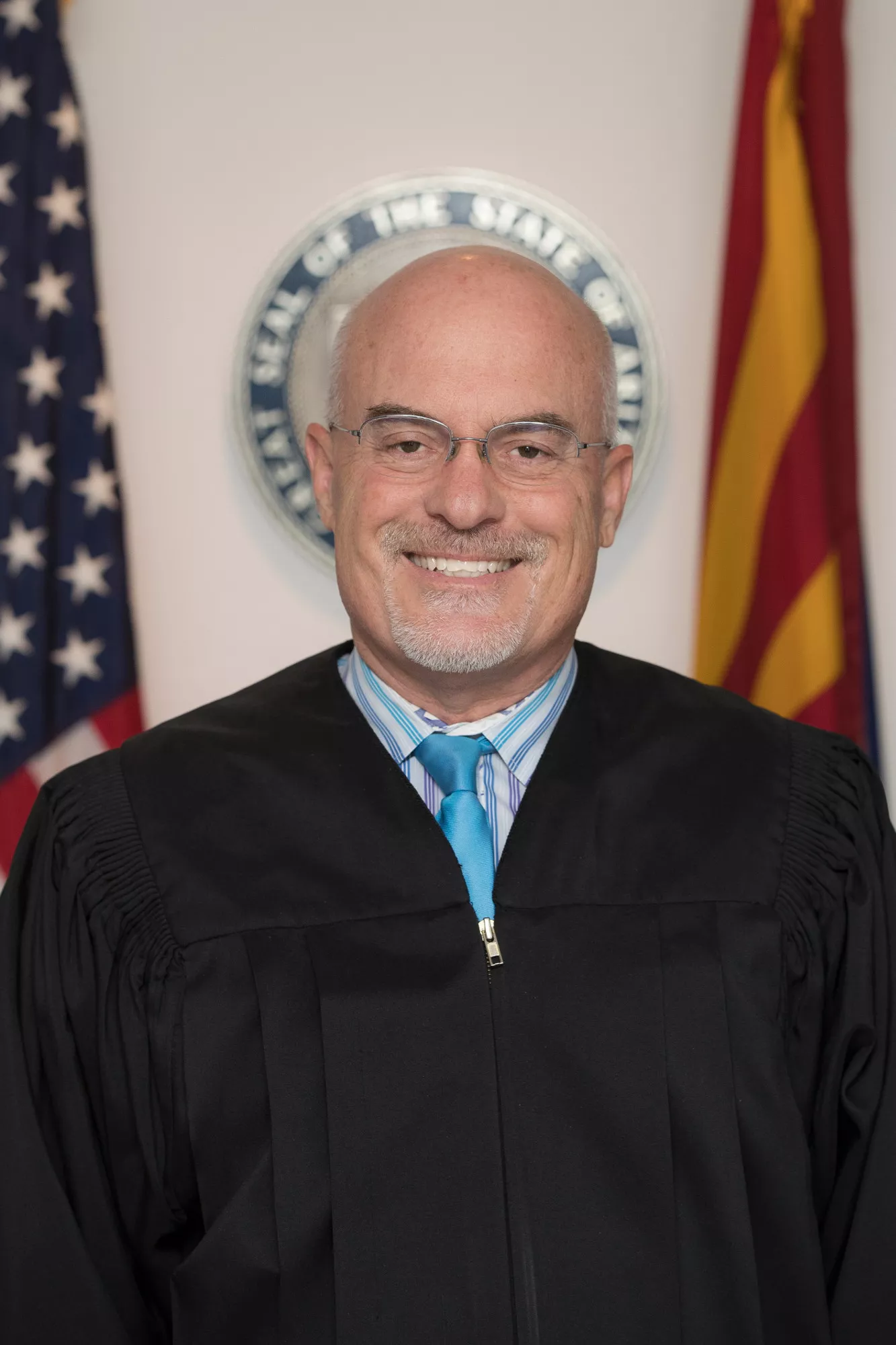
In a quaint, affluent neighborhood near the Catalina Foothills, weeks of harassment against a Pima County judge culminated in the justice of the peace firing his handgun as a warning shot to the perpetrator, who was once a plaintiff in his courtroom.
Judge Adam Watters, the justice of the peace for Precinct 1, fired a bullet at the ground to scare off a landlord, Fei Qin, 38, who was part of an eviction case he presided over in January.
The judge claims for weeks, the man dumped trash on Watters’ property and slashed his truck tires on two separate occasions.
In an incident report from the Pima County Sheriff’s Department, Watters, 59, told officers he went to leave for work on the morning of Feb. 5 to find the tires of Ford F-150 sliced open and deflated.
Watters’ wife, Jill Watters, told police she heard her dogs barking the night before and went to investigate, but found nothing. The next morning, she learned all four of her husband’s tires had been slashed while a bag of trash was left sitting on the roadway near the truck.
“She advised in her neighborhood, there was not so much as a grocery bag blowing around, so it looked to be out of place,” the police report said.
Judge Watters, who did not respond to multiple requests for an interview for this story, hoped the tire vandalism would be a one-time incident—perhaps someone he put in jail or an individual who was unhappy with a judgment and sought retribution.
But as the days went by, the Watters family continued to find trash littering their property.
The morning of Feb. 11, Watters told police his wife came inside the house visibly upset and said: “They’ve done it again.”
All four of Watters’ truck tires had been slashed a second time. He said another bag of trash was left in place of the one left behind in the first vandalism.
The report said in one of the trash dumps on Feb. 13, police found a letter addressed to Shayna Serrato, a tenant of Qin’s he attempted to evict in a case Watters presided over.
Watters arranged a periodic check-in with the Pima County Sheriff’s Department. Police would drive by to check on the residence due to the ongoing littering and vandalism reports. The judge told police he’d seen deputies driving by in the early morning hours, as the stress of the situation kept him from sleeping.
Neighbors had documented a grey Subaru station wagon driving past the house. Esther Underwood, head of the neighborhood watch, told police she once saw a man exit the vehicle and slowly walk up to the residence and return to his car again.
While Underwood was able to take photos of the car and its license plate, the driver’s face had yet to be captured.
According to the incident report, on Feb. 14, Watters’ set out on a mission to capture a photo of the litterer’s face. The man would usually make his drive-bys around noon.
The morning of Valentine’s Day, Watters went out to breakfast with his wife and bought her flowers. He then set up a green lawn chair in the desert surrounding his residence and armed himself with a handgun.
His daughters, Caitlin and Cassandra, also set up chairs by the family’s guest house and waited for the man to arrive. The women were armed with a shotgun.
Watters told police Caitlin brought the shotgun to the house for her mother, who was often home alone. At the time, Caitlin Watters worked at the Pima County Attorney’s Office, although she has since resigned.
The judge said, at first, they didn’t expect to observe another trash dumping drive-by in their makeshift stake out—the man usually did them on weekdays. Then, Watters recounts hearing one of his daughters make the chilling statement: “He’s here.”
Friday, February 26, 2021

PHOENIX – Krystle Mann, a stay-at-home mother to three sons, makes and sells cornbread and jam to pay for new baseball gear and help cover club fees – approximately $1,500 per year.
Her older son, Sam, 12, plays for the AZ Diamond Dawgs in Queen Creek, while her middle son, Tommy, 11, plays for both the Paladin Knights and AZ Storm in San Tan Valley. Both boys have played baseball for about seven years, making the transition from Little League to club baseball recently.
Club sports are run by private associations that, unlike school-sponsored sports programs, charge high fees to participants who are hoping to enhance their individual or team skills.
“I think this has been the best thing for the boys mentally, physically and emotionally,” Mann said.
Some families say club sports are worth the high costs for the confidence, friendships and athletic skills their children gain, but not all can afford the fees.
A study by the Open Access Journal of Sport Medicine reports that 75% of U.S. families with school-aged children have at least one playing an organized sport, or about 45 million kids.
But there is a clear economic divide between higher- and lower-income families in youth sports.

PHOENIX – Reminders to stay connected and reach out to loved ones have been constant during the pandemic. However, as shutdowns and quarantines continued, the safety precautions worsened a long-term issue for LGBTQ seniors – loneliness.
It’s a feeling Lavina Tomer, executive director of Southern Arizona Senior Pride in Tucson, knows all too well.
“In terms of isolation and loneliness – that’s something that we’ve all lived with, with varying degrees at certain times,” she said.
Tomer was just 23 in the 1970s when she came out as a lesbian to her Lebanese-American family of six on the East Coast. The reaction from her religious family was mixed. Although a few were supportive, others were upset and chose to ignore her sexuality.
At church, coming out was traumatic and difficult for Tomer.
“It caused such a big issue that people began to treat me differently,” she recalled. “The minister was not willing to support me. So I chose to leave the church because I felt people were not ready to welcome me in my authenticity.”
With 1,621 new cases reported today, the number of Arizona’s confirmed novel coronavirus cases reached 814,528 as of Friday, Feb. 26, according to the Arizona Department of Health Services.
Pima County, which reported 185 new cases today, has 109,137 of the state’s cases.
With 83 new deaths reported today, a total of 15,897 Arizonans have died after contracting COVID-19, including 2,212 deaths in Pima County, according to the Feb. 26 report.
The number of hospitalized COVID cases statewide has declined in recent weeks, with 1,354 coronavirus patients in the hospital as of Feb. 25. That’s less than a third of the number hospitalized at the peak of the winter surge, which reached 5,082 on Jan. 11. The summer peak was 3,517, which was set on July 13, 2020. The subsequent lowest number of hospitalized COVID patients was 468, set on Sept. 27, 2020.
A total of 1,190 people visited emergency rooms on Feb. 25 with COVID symptoms, a big drop from the record high of 2,341 set on Tuesday, Dec. 29, 2020. That number had peaked during the summer wave at 2,008 on July 7, 2020; it hit a subsequent low of 653 on Sept. 28, 2020.
A total of 419 COVID-19 patients were in intensive care unit beds on Feb. 25, down from a peak of 1,183 set on Jan. 11. The summer’s record number of patients in ICU beds was 970, set on July 13, 2020. The subsequent low was 114 on Sept. 22, 2020.
How to get a vaccine
While supplies are limited, Pima County is providing vaccination shots to people 65 and older as well as educators, first responders and healthcare workers. Those who qualify in Pima County’s 1B priority group of eligible vaccine recipients can register for a vaccine at www.pima.gov/covid19vaccineregistration or by calling 520-222-0119.
A state-run vaccination site opening at the University of Arizona began appointments last week. The new site follows the state’s current vaccine eligibility, which includes those 65 and older, educators, childcare workers and protective service workers.
The POD is expanding its hours of operation from 10 a.m. to 10 p.m seven days a week.
As the state-run POD, or point of distribution, registrations will go through ADHS’s website. Online registration will be available at podvaccine.azdhs.gov, and those who need assistance can call 1-844-542-8201. More details here.
Eight CVS pharmacies throughout Arizona are set to begin offering COVID-19 vaccines starting today, but CVS is not yet announcing which locations. Company officials say this is to avoid “stores from being overwhelmed by those who may seek a vaccination without making an appointment," but they have confirmed vaccinations will be offered in Pima, Maricopa, Mohave, Pinal and Yuma counties. Rather than selecting a specific store, patients choose their city.
Patients must register in advance at CVS.com or through the CVS Pharmacy app. People without online access can contact CVS Customer Service: (800) 746-7287. Walk-in vaccinations without an appointment will not be provided. Per the state of Arizona, eligible individuals for the Federal Retail Pharmacy Program are people age 65 and over, health care workers, protective services, teachers and childcare providers.
As more supply becomes available, the company will expand vaccine access through an increasing number of store locations and in more Arizona counties.
Click here to register in advance for a vaccine at a CVS location.
Get tested: Pima County has free COVID testing
After the state agreed to provide additional funding to keep testing centers open through at least March 2, Pima County is continuing to offer a number of testing centers around town.
You’ll have a nasal swab test at the Kino Event Center (2805 E. Ajo Way), the Udall Center (7200 E. Tanque Verde Road) and downtown (88 E. Broadway).
The center at the northside Ellie Towne Flowing Wells Community Center, 1660 W. Ruthrauff Road, involves a saliva test designed by ASU.
In addition, the Pima County Health Department, Pima Community College and Arizona State University have partnered to create new drive-thru COVID-19 testing sites at three Pima Community College locations. At the drive-thru sites, COVID-19 testing will be offered through spit samples instead of nasal canal swabs. Each site will conduct testing from 9 a.m. to noon, and registration is required in advance. Only patients 5 years or older can be tested.
Schedule an appointment at these or other pop-up sites at pima.gov/covid19testing.
The University of Arizona’s antibody testing has been opened to all Arizonans as the state attempts to get a handle on how many people have been exposed to COVID-19 but were asymptomatic or otherwise did not get a test while they were ill. To sign up for testing, visit https://covid19antibodytesting.arizona.edu/home.
—with additional reporting from Austin Counts, Jeff Gardner, Nicole Ludden and Mike Truelsen

WASHINGTON – The House voted Thursday to expand civil rights protections to include sexual orientation, gender identity and pregnancy, a move supporters said will grant those groups “the full equality under the law they deserve.”
But critics of the Equality Act blasted it as a measure that will trample on religious freedom and individual rights, and ultimately backfire on the people it aims to protect.
The 224-206 vote fell mostly on party lines, with just three Republicans joining all Democrats to support the bill. Many Republicans were like Rep. Andy Biggs, R-Gilbert, who derided the bill as the “inequality act.”
“While it attacks religious freedom, freedom of expression, and freedom of association, all-important rights recognized in the first amendment, it doesn’t stop there,” Biggs said during a Freedom Caucus news conference before the vote. “It also denies the biological facts that men and women are the two genders.”
But Rep. Greg Stanton, D-Phoenix, said the bill is needed because in too many places in the U.S. “discrimination is still permitted under the law.”
“Everyone deserves equal treatment under the law, no matter who they are, who they love, or how they express themselves,” Stanton said during debate on the House floor.

