

Tuesday, February 16, 2021
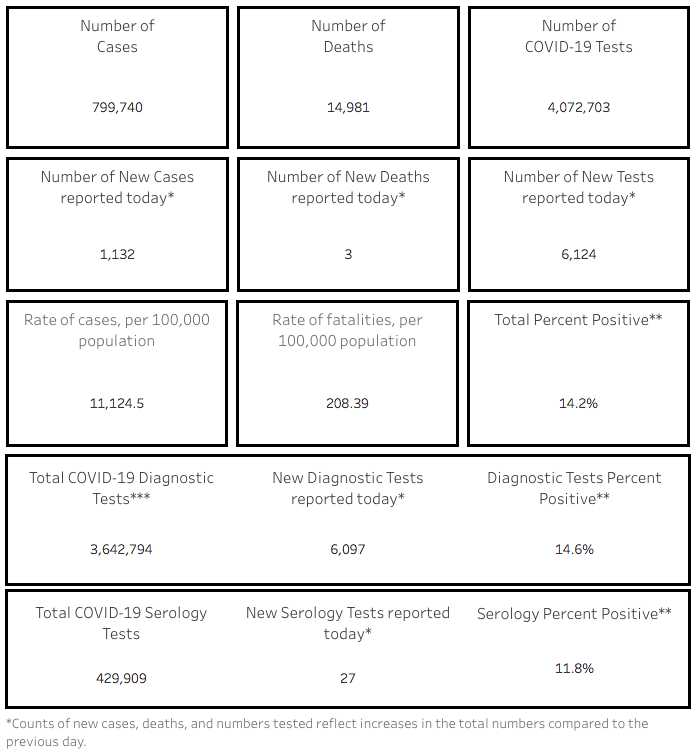
With 1,132 new cases reported today, the total number of Arizona’s confirmed novel coronavirus cases hovered just below 800,000 as of Tuesday, Feb. 16, according to the Arizona Department of Health Services.

Pima County, which reported 155 new cases today, has seen 107,213 of the state’s 799,740 confirmed cases.
A total of 14,981 Arizonans have died after contracting COVID-19, including 2,075 deaths in Pima County, according to the Feb. 16 report.
The number of hospitalized COVID cases statewide has declined in recent weeks, with 2,047 coronavirus patients in the hospital as of Feb. 15. That’s fewer than half the number who were hospitalized at the peak of the winter surge, which reached 5,082 on Jan. 11. The summer peak was 3,517, which was set on July 13, 2020. The subsequent lowest number of hospitalized COVID patients was 468, set on Sept. 27, 2020.
A total of 1,175 people visited emergency rooms on Feb. 15 with COVID symptoms, down from the record high of 2,341 set on Tuesday, Dec. 29, 2020. That number had peaked during the summer wave at 2,008 on July 7, 2020; it hit a subsequent low of 653 on Sept. 28, 2020.
A total of 601 COVID-19 patients were in intensive care unit beds on Feb. 15, down from a peak of 1,183 set on Jan. 11. The summer’s record number of patients in ICU beds was 970, set on July 13, 2020. The subsequent low was 114 on Sept. 22, 2020.
How to get a vaccine
Currently, Pima County is providing vaccination shots to people 70 and older as well as educators, first responders and healthcare workers. Those who currently qualify in Pima County’s 1B priority group of eligible vaccine recipients can register for a vaccine at www.pima.gov/covid19vaccineregistration or by calling 520-222-0119.
A state-run vaccination site opening at the University of Arizona will begin appointments on Feb. 18. The new site will follow the state’s current vaccine eligibility, which includes those 65 and older, educators, childcare workers and protective service workers, according to Arizona Department of Health Services Director Dr. Cara Christ.
As the state-run POD, or point of distribution, registrations will go through ADHS’s website. Appointments will begin on Feb. 18, and registration will open at 9 a.m. on Feb 16. Online registration will be available atpodvaccine.azdhs.gov, and those who need assistance can call 1-844-542-8201.
Limited supply forces reduction in vaccine appointments
Despite a widening population of eligible vaccine recipients and the addition of a state-run POD at the University of Arizona set to open on Thursday, Pima County’s vaccine allocation from the state has been cut yet again.
Two weeks ago, the county's vaccine supply was decreased to 17,850—a 40% deduction from the previous week. Last week, the doses were cut down by 9% for a total allotment of 16,300.
According to a memo from County Administrator Chuck Huckelberry, the truncated allocation has limited the county’s ability to give first-time doses—many for those 70 and older who became eligible last week—and delayed plans for vaccinations in vulnerable congregate settings.
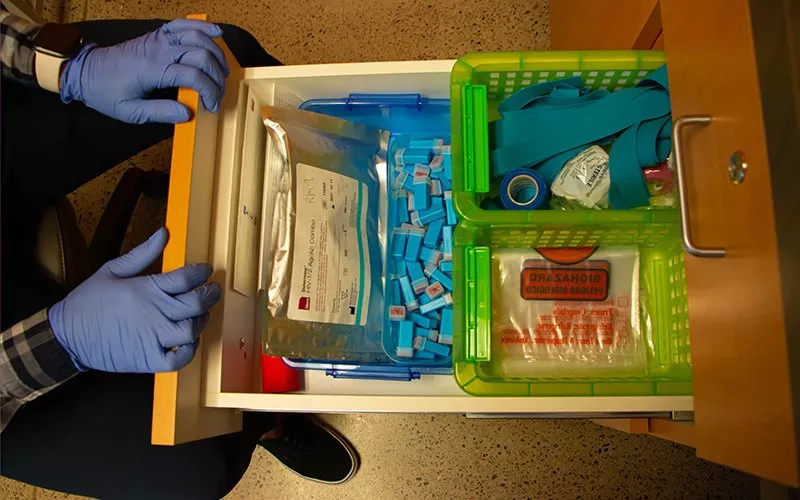
PHOENIX – In a downtown parking garage, a health care worker, dressed in protective gear, waits for cars to pull up for drive-thru HIV tests. Inside the building, volunteers assemble packages of at-home tests and condoms to be shipped across the state.
Elsewhere in metro Phoenix, a van travels to neighborhoods whose residents may face higher risk of infection to provide regular HIV testing, while doctors and case managers across the area respond to telehealth appointments by phone and Zoom.
Although face-to-face interactions have been the preferred method for testing and treating people for HIV and supporting them in vulnerable moments, the COVID-19 pandemic has forced local health care providers to get creative and adapt.
Such services as Zoom appointments, along with drive-thru, at-home and mobile testing, epitomize this new normal.
Dr. Ann Khalsa, an HIV specialist with more than 30 years of experience, has been part of the shift. She serves as medical director at Valleywise Community Health Center-McDowell, and spends most days on Zoom and phone calls with patients.
Khalsa said that amid COVID-19 – with so many people “hunkered down” and not prioritizing other medical needs – her clinic has seen a 30% decrease in people getting tested for HIV and linked to treatment.
However, some of the changes in delivery of care are helping, she added, and are likely here to stay.
Monday, February 15, 2021
PHOENIX – Dale Earnhardt, or “The Intimidator” as most fans knew him, was probably the most-feared driver in NASCAR history.
His black No. 3 Chevrolet was almost always running at the front or near the front of the pack on Sundays. Even the asphalt he drove on seemed to be afraid of him.
This is why in 2001, while still at the top of the sport at 49, it shocked the world that a place Earnhardt had mastered, a race track, was where he lost his life.
On Feb. 18, 2001 – Thursday will be the 20th anniversary – Earnhardt was racing hard on the final lap of the Daytona 500 when he crashed and hit the barricade in what appeared to be a routine crash. Instead, he tragically passed away from the severe fracture to the base of his skull and the bruising and bleeding to the brain caused by the impact.
Memories of the driver came fast and furious in the weeks leading up to today’s Daytona 500.
The accident was a major wake-up call to those within NASCAR. Driver safety became a priority. Among the advancements is the Next Gen car, which will be introduced in the 2022 Cup Series season and was tested in Phoenix in 2019.
Additionally, experts outside the sport were consulted.
“I think it was the right thing to do to get outside opinions and have other people looking at the whole situation,” said Richard Childress, the owner of Earnhardt’s team and a good friend of the driver. “As terrible as it was, and we’ll never get over losing Dale Earnhardt, but there’s a lot that came out of it in the safety part going forward. There’s been some horrendous crashes. Austin Dillon’s (2015 Coke Zero 400), Ryan Newman’s (2020 Daytona 500). You go on down the list of crashes and these drivers have walked away because of the safety.”
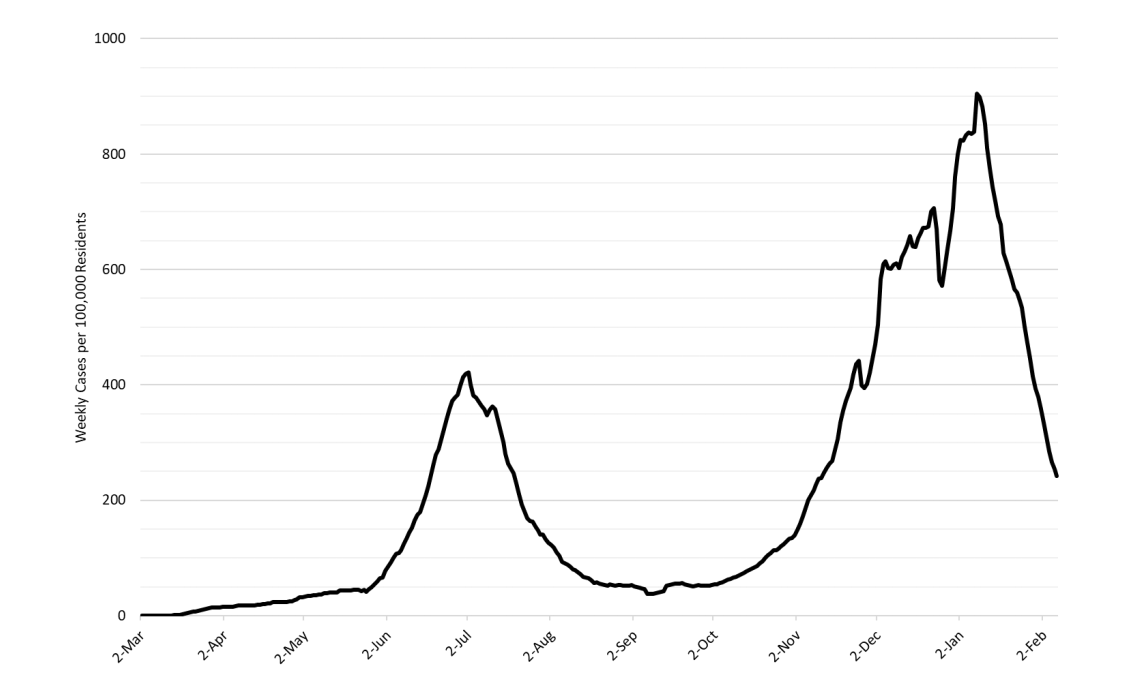
With the fourth week in a row of declining COVID-19 cases in Pima County, Arizona has evolved from a state of “crisis” to one of “elevated risk,” according to Dr. Joe Gerald, a University of Arizona professor who creates weekly coronavirus epidemiology reports based on Arizona Department of Health Services data.
According to Gerald’s latest report, the week ending Feb. 7 saw a 35% decrease in coronavirus cases from the week prior.
The amount of COVID-19 patients in the state’s general ward beds decreased by 25% the week of Feb. 12 from the week before, while ICU bed usage dropped 17%, according to Gerald.
“With continued improvements being forecast over the next 4 weeks, hospital capacity is adequate to meet Arizona’s most critical needs,” the professor wrote in the report. “Nevertheless, it will be many months before the backlog of non-COVID care can be fully addressed.”
In Pima County, the week ending Feb. 7 saw a 33% drop from the previous week, Gerald reports.
Furthermore, for the first time in 2021, two of the indicators on Pima County’s COVID-19 progress report, which tracks key epidemiological factors to make recommendations to business schools, have improved.
Adequate hospital capacity and timely case investigation metrics have moved from the “not met” to “progress” category.
Timely case investigation tracks how long it takes for the county’s case investigators to reach an individual who’s tested positive COVID-19 after they’re diagnosed.
Cases over two consecutive weeks, percent positivity for the virus and the predominance of COVID-19 like illness remain in the “criteria not met” category.
Although hospitals are seeing a slight reprieve, they remain under pressure, according to Pima County Health Department Director Dr. Theresa Cullen.
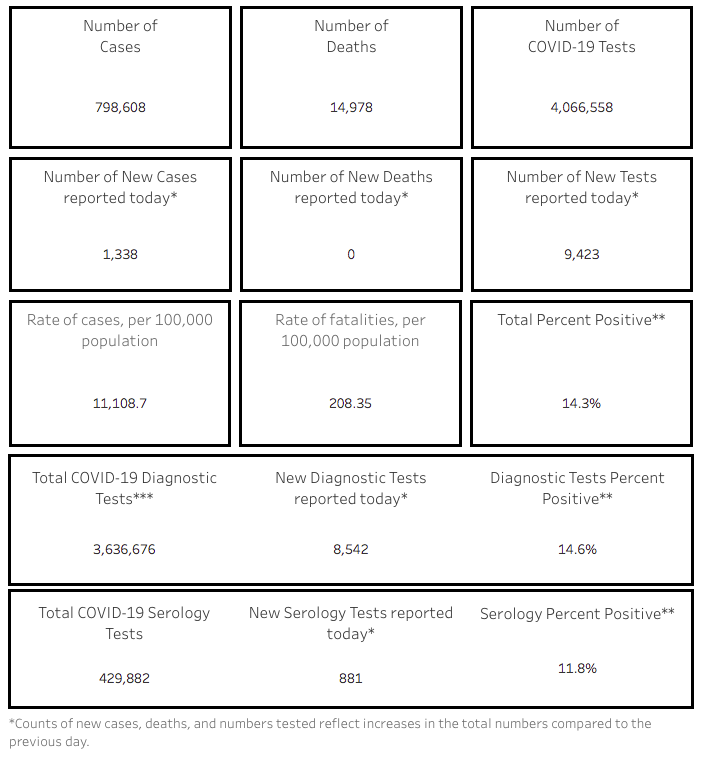
With 1,338 new cases reported today, the total number of Arizona’s confirmed novel coronavirus cases closed in on 800,000 as of Monday, Feb. 15, according to the Arizona Department of Health Services.

Pima County, which reported 246 new cases today, has seen 107,058 of the state’s 798,608 confirmed cases.
A total of 14,978 Arizonans have died after contracting COVID-19, including 2,075 deaths in Pima County, according to the Feb. 15 report.
The number of hospitalized COVID cases statewide has declined in recent weeks, with 2,119 coronavirus patients in the hospital as of Feb. 14. That’s fewer than half the number who were hospitalized at the peak of the winter surge, which reached 5,082 on Jan. 11. The summer peak was 3,517, which was set on July 13, 2020. The subsequent lowest number of hospitalized COVID patients was 468, set on Sept. 27, 2020.
A total of 1,208 people visited emergency rooms on Feb. 14 with COVID symptoms, down from the record high of 2,341 set on Tuesday, Dec. 29, 2020. That number had peaked during the summer wave at 2,008 on July 7, 2020; it hit a subsequent low of 653 on Sept. 28, 2020.
A total of 644 COVID-19 patients were in intensive care unit beds on Feb. 14, down from a peak of 1,183 set on Jan. 11. The summer’s record number of patients in ICU beds was 970, set on July 13, 2020. The subsequent low was 114 on Sept. 22, 2020.
How to get a vaccine
Currently, Pima County is providing vaccination shots to people 70 and older as well as educators, first responders and healthcare workers. Those who currently qualify in Pima County’s 1B priority group of eligible vaccine recipients can register for a vaccine at www.pima.gov/covid19vaccineregistration or by calling 520-222-0119.
A state-run vaccination site opening at the University of Arizona will begin appointments on Feb. 18. The new site will follow the state’s current vaccine eligibility, which includes those 65 and older, educators, childcare workers and protective service workers, according to Arizona Department of Health Services Director Dr. Cara Christ.
As the state-run POD, or point of distribution, registrations will go through ADHS’s website. Appointments will begin on Feb. 18, and registration will open at 9 a.m. on Feb 16. Online registration will be available atpodvaccine.azdhs.gov, and those who need assistance can call 1-844-542-8201.
Limited supply forces reduction in vaccine appointments
Despite a widening population of eligible vaccine recipients and the addition of a state-run POD at the University of Arizona set to open on Thursday, Pima County’s vaccine allocation from the state has been cut yet again.
Two weeks ago, the county's vaccine supply was decreased to 17,850—a 40% deduction from the previous week. Last week, the doses were cut down by 9% for a total allotment of 16,300.
According to a memo from County Administrator Chuck Huckelberry, the truncated allocation has limited the county’s ability to give first-time doses—many for those 70 and older who became eligible last week—and delayed plans for vaccinations in vulnerable congregate settings.
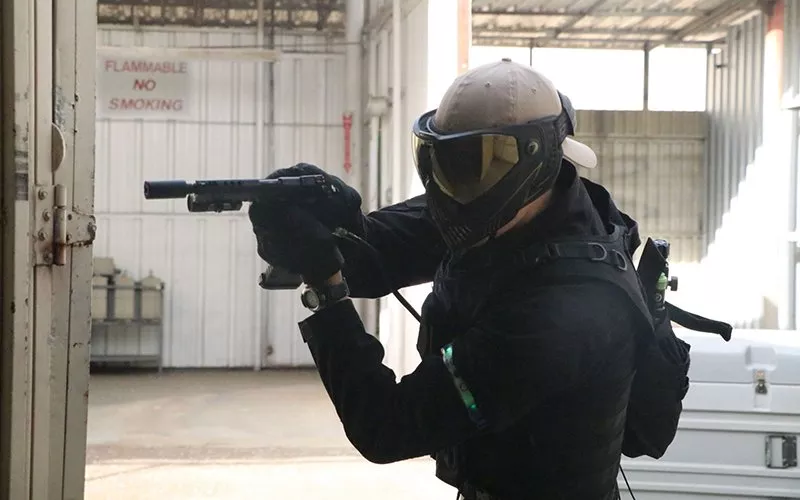
Tempe police responded to a 911 call on Jan. 15, 2019, about a suspected burglary in an alley. Officer Joseph Jaen arrived to find Antonio Arce, sitting in a truck with a handgun.
Jaen called to Arce, 14, who turned and ran. “Let me see your hands!” Jaen yelled, but Arce continued running, and Jaen shot and killed him.
In body camera footage taken minutes after the shots, Jaen can be heard saying “It’s a (expletive deleted) toy gun.” It was, indeed, an airsoft replica of a Colt 1911 pistol, with its orange tip still intact.
“That’s supposed to alert the public, as well as the police, to the fact that this is not a real gun,” said Daniel Ortega Jr., a lawyer for Arce’s family. Airsoft guns use springs or compressed air to fire nonlethal plastic projectiles.
The family sued Tempe, later settling for $2 million. Jaen was granted accidental disability retirement in January. He did not face charges from the Maricopa County Attorney’s Office.

Friday, February 12, 2021
Despite a widening population of eligible vaccine recipients and the addition of a state-run POD at the University of Arizona set to open on Thursday, Pima County’s vaccine allocation from the state has been cut yet again.
Last week, the county's vaccine supply was decreased to 17,850—a 40% deduction from the previous week. This week, the doses were cut down by 9% for a total allotment of 16,300.
According to a memo from County Administrator Chuck Huckelberry, the truncated allocation has limited the county’s ability to give first-time doses—many for those 70 and older who became eligible last week—and delayed plans for vaccinations in vulnerable congregate settings.
The county’s accelerated immunization plan calls for 300,000 vaccines by the end of March, a goal the health department was previously ahead of. Now, county health Director Dr. Theresa Cullen said the plan will come to a “near halt” within weeks if the county doesn’t receive more doses.
According to Cullen, more than 100,000 residents need a second dose to be considered fully immunized over the next three to four weeks.
“We believe we can protect second-dose appointments with the current allotment, but if supplies remain this tight, it will be difficult for the public to schedule new first-dose appointments in the coming weeks,” Cullen said. “We need to follow through on our promise to them, so that means first dose appointments will be limited for a while, which really slows down our Accelerated Plan, unfortunately.”Dr. Francisco Garcia, the county’s chief medical officer, said the limited vaccine supply will likely result in reduced hours at the county’s current vaccination sites, but the health department is working with its vaccination partners to avoid canceling existing vaccine appointments.

