

Thursday, February 4, 2021
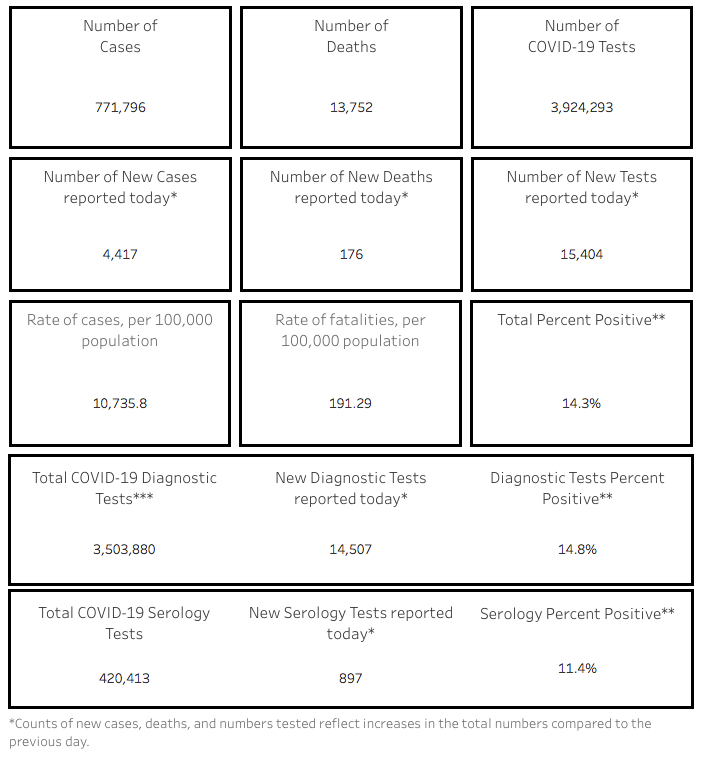
With 4,417 new cases reported today, the total number of Arizona’s confirmed novel coronavirus cases surpassed 771,000 as of Thursday, Feb. 4, according to the Arizona Department of Health Services.

Pima County, which reported 736 new cases today, has seen 103,448 of the state’s 771,796 confirmed cases.
With 176 new deaths reported today, a total number of 13,752 Arizonans have died after contracting COVID-19, including 1,868 deaths in Pima County, according to the Feb. 4 report.
The number of hospitalized COVID cases statewide has declined in recent weeks, with 3,303 in the hospital as of Feb. 3. That number peaked at 5,082 on Jan. 11. The summer peak was 3,517, which was set on July 13, 2020. The subsequent lowest number of hospitalized COVID patients was 468, set on Sept. 27, 2020.
A total of 1,633 people visited emergency rooms on Feb. 3 with COVID symptoms, down from the record high of 2,341 set on Tuesday, Dec. 29, 2020. That number had peaked during the summer wave at 2,008 on July 7, 2020; it hit a subsequent low of 653 on Sept. 28, 2020.
A total of 946 COVID-19 patients were in intensive care unit beds on Feb. 3, down from a peak of 1,183 set on Jan. 11. The summer’s record number of patients in ICU beds was 970, set on July 13, 2020. The subsequent low was 114 on Sept. 22, 2020.
How to get a vaccine
Currently, Pima County is providing vaccination shots to people 75 and older as well as educators, first responders and healthcare workers. Those who currently qualify in Pima County’s 1B priority group of eligible vaccine recipients can register for a vaccine at www.pima.gov/covid19vaccineregistration or by calling 520-222-0119.
Health officials worry Super Bowl could be super spreader
While COVID-19 cases have declined for the second week in a row, the top clinical leader of Arizona’s largest hospital system warns the state’s medical facilities remain overloaded.
Banner Health’s Chief Clinical Officer Dr. Marjorie Bessel said 44% of Arizona’s hospitalized patients have COVID-19 while 60% of ICU hospitalizations are for coronavirus patients.
The state’s seven-day average positivity rate for the virus is at 16%, according to Bessel. While this is lower than the peak of Arizona’s winter surge, health experts say communities should maintain a rate below 5%.
Bessel said the cause for the decline in cases is “multifactorial.” The holiday season of large gatherings is over, and the natural trends of any pandemic contain surges and declines.
But with the upcoming Super Bowl Sunday this weekend, Banner’s leader warns everyone to continue to avoid large gatherings to prevent another COVID-19 spike.
“Any gathering of individuals with whom you don't live with offers the opportunity for spread to occur. When you're with others that you don't live with, wear your mask appropriately and certainly do not go out and gather with individuals if you are not feeling well,” Bessel said. “We hope that everybody can take appropriate precautions so that we do not have another spike post this upcoming Super Bowl Sunday, like we did after Christmas, for instance.”
Banner to expand elective surgeries
On Jan. 22, Bessel announced Banner will resume some outpatient surgeries and procedures that require no more than a one-night stay and no ICU care would resume.
As of Feb. 1, Banner hospitals expanded these criteria to include all outpatient surgeries and inpatient surgeries that require no more than three nights stay in a regular inpatient bed or one night’s stay in the ICU. However, the ultimate decision to conduct a surgery will depend on conditions at each facility.
While hospitals continue to be inundated with COVID-19 patients, the backlog of delayed surgeries makes conditions even busier.
More contagious COVID-19 variant identified in Arizona
Although COVID-19 cases are declining, the emergence of the virus’ more contiguous mutations could cause a worsening spread in the future.
Coronavirus variants from the UK, South Africa and Brazil have been discovered in the U.S. In Arizona, at least three test samples have come back positive for the presence of the UK variant, according to the Arizona Department of Health Services.
Bessel said the vaccine may not work as well against the variants as the original coronavirus, but the current COVID-19 vaccines still provide protection.
“While research is ongoing, vaccines appear to be less effective against this variant, though still within the protective range and are highly recommended,” she said. “There's still a lot unknown about the COVID variant and what it will do to the spread of COVID-19 in our communities. For this reason, we continue to stress when it's your turn to get your vaccine, please get vaccinated.”
Vaccine available now in Marana and Oro Valley area
MHC Healthcare is currently scheduling COVID-19 vaccine appointments for those above 75 in the Marana and Oro Valley areas.
On Mondays, Tuesdays and Wednesdays, appointments will take place at MHC Healthcare Marana Main Health Center at 13395 N. Marana Main St.
Beginning this week, vaccinations will take place every Thursday at the James D. Kriegh Park at 23 W Calle Concordia in Oro Valley.
Appointments will run from 9 a.m. to 1 p.m., and residents of Oro Valley, Marana, Dove Mountain, Catalina, Avra Valley, Picture Rocks and Summer Haven can register at mhchealthcare.org.
Vaccinations at both locations will be administered in a drive-thru setting using the Moderna vaccine.
As of Monday, MHC had received 2,300 vaccines from the Pima County Health Department and administered 1,714.
Get tested: Pima County has free COVID testing
Pima County offers a number of testing centers around town.
You’ll have a nasal swab test at the Kino Event Center (2805 E. Ajo Way) the Udall Center (7200 E. Tanque Verde Road) and downtown (88 E. Broadway).
The center at the northside Ellie Towne Flowing Wells Community Center, 1660 W. Ruthrauff Road, involves a saliva test designed by ASU.
In addition, the Pima County Health Department, Pima Community College and Arizona State University have partnered to create new drive-thru COVID-19 testing sites at three Pima Community College locations. At the drive-thru sites, COVID-19 testing will be offered through spit samples instead of nasal canal swabs. Each site will conduct testing from 9 a.m. to noon, and registration is required in advance. Only patients 5 years or older can be tested.
Schedule an appointment at these or other pop-up sites at pima.gov/covid19testing.
The University of Arizona’s antibody testing has been opened to all Arizonans as the state attempts to get a handle on how many people have been exposed to COVID-19 but were asymptomatic or otherwise did not get a test while they were ill. To sign up for testing, visit https://covid19antibodytesting.arizona.edu/home.
—with additional reporting from Austin Counts, Jeff Gardner, Nicole Ludden and Mike Truelsen
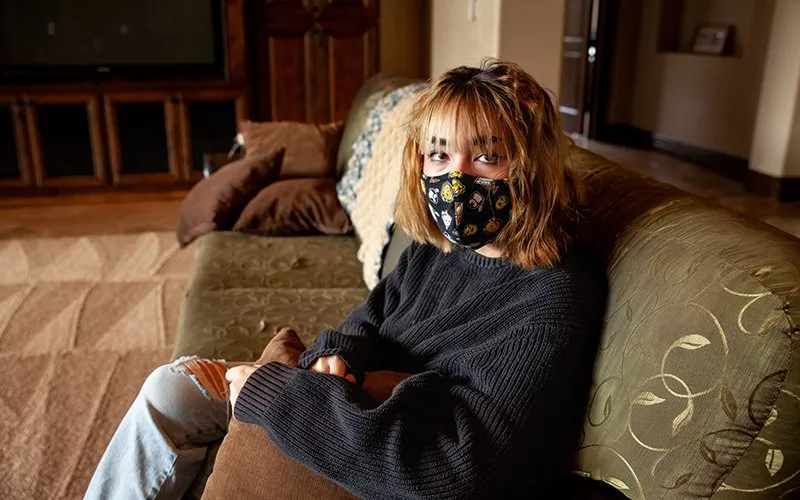
PHOENIX – As the daughter of a medical technician, Hanna Hyland was raised to put her faith in science. But Hyland, 18, also was raised as a person of color in a country with a health care system marred by historic instances of racism.
When it comes to deciding whether to get vaccinated against COVID-19 or not, the latter is winning out – for now.
“As an Asian American, I know the United States has had no issue with lucrative testing in marginalized groups,” said Hyland, a freshman at Mesa Community College. “I have never had an issue with getting any sort of vaccination. In fact, I think getting fully vaccinated is important to personal safety and to protect those around you, but I am skeptical about this vaccine for many reasons.”
Those reasons vary, but center on examples of medical experimentation on people of color – starting with nonconsensual surgeries performed on slaves in the U.S., the Tuskegee syphilis studies in which Black men went untreated for decades so researchers could observe the disease’s progression, and the covert biological warfare research the Japanese army conducted on Chinese civilians in the 1940s.
Hyland isn’t alone in her worries. As the nation undertakes an enormous vaccination effort to combat a disease that has cost the lives of some 450,000 Americans, medical experts are working to overcome skepticism and misinformation prompting some to think twice about getting the shots – from false claims the vaccines can cause infertility to concerns that they were approved too quickly to be safe.
Hyland said she considers these first vaccinations “a test trial, one that can be used to later develop the vaccine.”

Wednesday, February 3, 2021
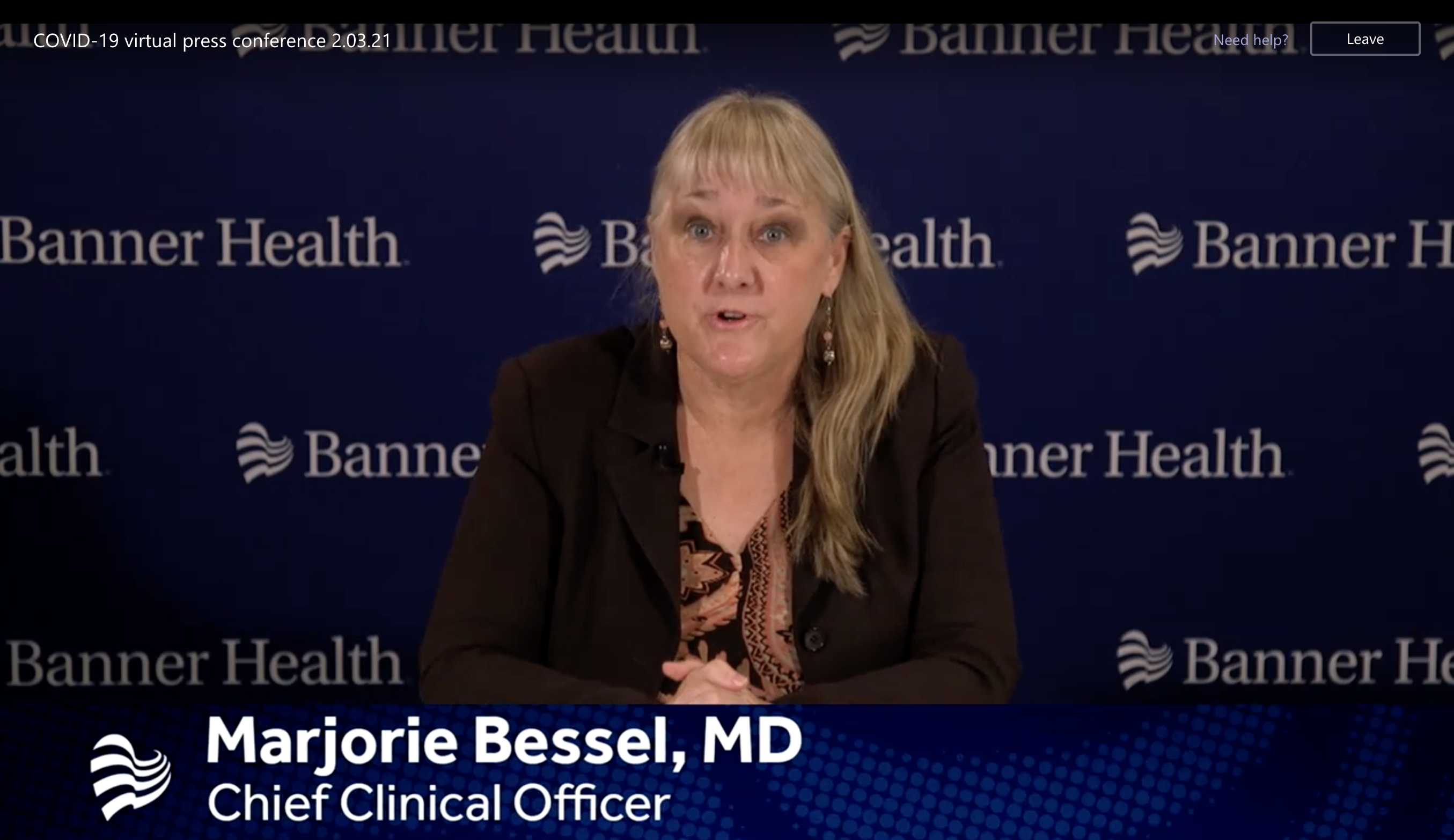
While COVID-19 cases have declined for the second week in a row, the top clinical leader of Arizona’s largest hospital system warns the state’s medical facilities remain overloaded.
Banner Health’s Chief Clinical Officer Dr. Marjorie Bessel said 44% of Arizona’s hospitalized patients have COVID-19 while 60% of ICU hospitalizations are for coronavirus patients.
The state’s seven-day average positivity rate for the virus is at 16%, according to Bessel. While this is lower than the peak of Arizona’s winter surge, health experts say communities should maintain a rate below 5%.
Bessel said the cause for the decline in cases is “multifactorial.” The holiday season of large gatherings is over, and the natural trends of any pandemic contain surges and declines.
But with the upcoming Super Bowl Sunday this weekend, Banner’s leader warns everyone to continue to avoid large gatherings to prevent another COVID-19 spike.
“Any gathering of individuals with whom you don't live with offers the opportunity for spread to occur. When you're with others that you don't live with, wear your mask appropriately and certainly do not go out and gather with individuals if you are not feeling well,” Bessel said. “We hope that everybody can take appropriate precautions so that we do not have another spike post this upcoming Super Bowl Sunday, like we did after Christmas, for instance.”
Banner to expand elective surgeries
On Jan. 22, Bessel announced Banner will resume some outpatient surgeries and procedures that require no more than a one-night stay and no ICU care would resume.
As of Feb. 1, Banner hospitals expanded these criteria to include all outpatient surgeries and inpatient surgeries that require no more than three nights stay in a regular inpatient bed or one night’s stay in the ICU. However, the ultimate decision to conduct a surgery will depend on conditions at each facility.

Graduating high school seniors could get some financial help for college, thanks to Hughes Credit Union.
Any local senior, who is a primary member of Hughes and entering a college, university, trade school or certification program in the fall, can apply for one of 10 $1,000 scholarships in Hughes' 16th Annual Scholarship Program.
Applicants will complete an online scholarship form with either a written essay or a one- to two-minute video that answers the question, “What is the most important financial lesson you have learned in the past year and how has it impacted your plans for the future?”
Complete details and the online application form are available at HughesFCU.org/Scholarship. Submission deadline is March 15, 2021. Winners will be announced on May 14, 2021.
“Hughes is proud to again support local high school students graduating in 2021 who want to further their education and skills,” said Hughes Business Development Representative Irlanda Cuevas. “As in past years, we expect the essays and video submissions this year to be impressive and informative as it relates to their experience managing personal finances.”
Tucson Mayor Regina Romero has proposed replacing Council Member Paul Durham with former Ward 3 Councilmember Karin Uhlich, who served three terms on the council between 2005 and 2017, when she decided against seeking reelection.
Durham announced earlier this week that he would resign on March 1 rather than complete the final year of his term. Durham took a leave of absence from the council in September to care for his husband, who is suffering from terminal cancer.

Romero has called a special meeting of the council on March 1 to appoint someone to finish out the remainder of Durham's term.
“Karin has previously been elected by the residents of Ward 3, knows the neighborhoods, understands city government, and can step into the role without a learning curve, which is particularly valuable during these unprecedented times,” said Romero in a prepared statement. “Council Member Durham and I believe Karin is the best choice, and we wanted to propose this early ahead of the March 1 special meeting to help ensure a smooth transition and avoid uncertainty. I also believe that we should not appoint someone who is running for the Ward 3 seat to avoid the perception of tipping the scale for any one candidate.”
Durham said he was on board with the plan.
"I support the nomination of Karin Uhlich to serve the remainder of my term,” Durham said. “Karin knows the issues facing Ward 3, and will be able to step in and work with my staff to ensure the continuity of services. It has been an honor to serve the residents of Ward 3, and I know they will be in good hands with Karin.”
Uhlich moved out of Ward 3 during her final term in office, but she told The Weekly on Wednesday that she has since moved back into the ward.
Uhlich said she would not seek election to the Ward 3 seat later this year.
Juan Padres, who ran against Pima County Supervisor in 2020, has said he is interested in running for the seat later this year.
With 2,296 new cases reported today, the total number of Arizona’s confirmed novel coronavirus cases surpassed 767,000 as of Wednesday, Feb. 3, according to the Arizona Department of Health Services.
Pima County, which reported 392 new cases today, has seen 102,712 of the state’s 767,379 confirmed cases.
A total number of 13,576 Arizonans have died after contracting COVID-19, including 1,831 deaths in Pima County, according to the Feb. 3 report.
The number of hospitalized COVID cases statewide has declined in recent weeks, with 3,456 in the hospital as of Feb. 2. That number peaked at 5,082 on Jan. 11. The summer peak was 3,517, which was set on July 13, 2020. The subsequent lowest number of hospitalized COVID patients was 468, set on Sept. 27, 2020.
A total of 1,639 people visited emergency rooms on Feb. 2 with COVID symptoms, down from the record high of 2,341 set on Tuesday, Dec. 29, 2020. That number had peaked during the summer wave at 2,008 on July 7, 2020; it hit a subsequent low of 653 on Sept. 28, 2020.
A total of 955 COVID-19 patients were in intensive care unit beds on Feb. 2, down from a peak of 1,183 set on Jan. 11. The summer’s record number of patients in ICU beds was 970, set on July 13, 2020. The subsequent low was 114 on Sept. 22, 2020.
How to get a vaccine
Currently, Pima County is providing vaccination shots to people 75 and older as well as educators, first responders and healthcare workers. Those who currently qualify in Pima County’s 1B priority group of eligible vaccine recipients can register for a vaccine at www.pima.gov/covid19vaccineregistration or by calling 520-222-0119.
State preparing to set up a 24-hour vaccination site in Pima County
After some communication troubles between Pima County and the state, Arizona Department of Health Services Director Cara Christ said plans are in the works to set up a 24-hour vaccination site in the county.
Although County Administrator Chuck Huckelberry has requested the state’s help in setting up a 24-hour point of distribution site at Rillito Park, it’s not clear where the state-run site would be set up.
Christ wrote in a letter to Huckelberry on Jan. 29 that “ADHS will work with the Arizona Department of Emergency and Military Affairs (DEMA) to select the vaccination site and discuss logistics.”
If the state sets up the POD, the vaccines supplying it would be taken out of Pima County’s total state allocation.
As of Tuesday, the state’s allocated Pima County 165,950 doses, and the county has administered 119,585 vaccines.
“Any remaining doses of vaccine will be passed on to the county for further allocation. We will notify the Pima County Health Department once details are finalized,” Christ wrote in the letter.
Huckelberry responded to the letter on Monday requesting the state follow Pima County’s accelerated vaccination plan to ensure those most vulnerable to COVID-19 receive vaccines first and that “disadvantaged populations” have equal access to vaccinations. More details here.
Vaccinations continue in Pima County
Pima County has administered 114,165 COVID-19 vaccines as of Feb. 1 but has only completed 18,691 series of the two doses needed to be fully immunized.
This week, the county’s vaccine allocation from the state rose to 165,950, up from 140,425 doses last week, according to Arizona Department of Health Services data.
While Pima County struggles to vaccinate nearly 150,000 currently eligible—the 75+ population, educators, childcare providers and protective service workers—Maricopa County’s two 24-hour state-run PODS are receiving nearly 35,000 doses more than the entirety of Pima County, according to data from ADHS.
The two PODs—one at the State Farm Stadium in Glendale that opened on Jan. 11 and a second at the Phoenix Municipal Stadium on that opened Monday—have been allocated 200,850 vaccine doses.
Maricopa County has been allocated 461,375 vaccines on top of its state-run PODs and has administered 297,469 doses as of Monday.
Pima County Administrator Chuck Huckelberry made the case for allocating more vaccines to Pima County in a Jan. 29 memo.
“While population is one measure, another measure would be the percent of the population that is more vulnerable to COVID-19 than other population components within the County,” he wrote.
The county administrator compared racial groups, individuals over 65, those living below the federal poverty level and those in the state’s Medicaid program in Pima and Maricopa counties. These populations are expected to be most impacted by the pandemic.
Of Pima County’s population, 38% are Hispanic, 20% are above age 65, 14% live below the poverty level and 31% are enrolled in Arizona’s Medicaid program, according to the memo.
In Maricopa County, 31% are Hispanic, 16% are above 65, 12% live below the poverty level and 28% are enrolled in state Medicaid.
Despite struggling for the county’s fair share of vaccines, Huckelberry also announced the next group to be eligible for the vaccine, those over 65, could be able to register for vaccines by “early February.”
After working out the many kinks of the county’s registration site, Huckelberry now believes the website will be able to handle the surge of new registrants. More details here.
Vaccine available now in Marana and Oro Valley area
MHC Healthcare is currently scheduling COVID-19 vaccine appointments for those above 75 in the Marana and Oro Valley areas.
On Mondays, Tuesdays and Wednesdays, appointments will take place at MHC Healthcare Marana Main Health Center at 13395 N. Marana Main St.
Beginning this week, vaccinations will take place every Thursday at the James D. Kriegh Park at 23 W Calle Concordia in Oro Valley.
Appointments will run from 9 a.m. to 1 p.m., and residents of Oro Valley, Marana, Dove Mountain, Catalina, Avra Valley, Picture Rocks and Summer Haven can register at mhchealthcare.org.
Vaccinations at both locations will be administered in a drive-thru setting using the Moderna vaccine.
As of Monday, MHC had received 2,300 vaccines from the Pima County Health Department and administered 1,714.
Get tested: Pima County has free COVID testing
Pima County offers a number of testing centers around town.
You’ll have a nasal swab test at the Kino Event Center (2805 E. Ajo Way) the Udall Center (7200 E. Tanque Verde Road) and downtown (88 E. Broadway).
The center at the northside Ellie Towne Flowing Wells Community Center, 1660 W. Ruthrauff Road, involves a saliva test designed by ASU.
In addition, the Pima County Health Department, Pima Community College and Arizona State University have partnered to create new drive-thru COVID-19 testing sites at three Pima Community College locations. At the drive-thru sites, COVID-19 testing will be offered through spit samples instead of nasal canal swabs. Each site will conduct testing from 9 a.m. to noon, and registration is required in advance. Only patients 5 years or older can be tested.
Schedule an appointment at these or other pop-up sites at pima.gov/covid19testing.
The University of Arizona’s antibody testing has been opened to all Arizonans as the state attempts to get a handle on how many people have been exposed to COVID-19 but were asymptomatic or otherwise did not get a test while they were ill. To sign up for testing, visit https://covid19antibodytesting.arizona.edu/home.
—with additional reporting from Austin Counts, Jeff Gardner, Nicole Ludden and Mike Truelsen
WASHINGTON – Arizona Secretary of State Katie Hobbs said the 2020 elections “challenged our democracy in ways we’ve never seen before” but that officials still managed to deliver a safe, secure election with record-breaking turnout in the midst of a pandemic.
Hobbs, speaking as part of a panel of election officials Tuesday, also blasted what she called “election extremists” in Arizona and other states who she said “are working overtime to make voting more difficult.”
“Some of these lawmakers are trying to rehash the debunked theories about the 2020 election as an excuse to limit access to voting and it’s shameful,” Hobbs said during a conference hosted by the Voter Protection Project.
Hobbs had particular disdain for a bill in the Arizona House that would allow the Legislature to reverse the secretary of state’s certification of presidential election results, a move she said would make “a vote for president meaningless.”

Tuesday, February 2, 2021
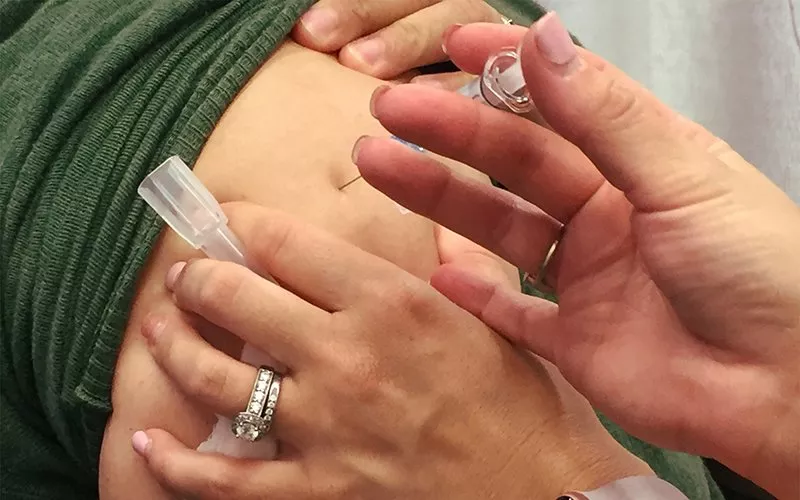
MHC Healthcare is currently scheduling COVID-19 vaccine appointments for those above 75 in the Marana and Oro Valley areas.
On Mondays, Tuesdays and Wednesdays, appointments will take place at MHC Healthcare Marana Main Health Center at 13395 N. Marana Main St.
Beginning this week, vaccinations will take place every Thursday at the James D. Kriegh Park at 23 W Calle Concordia in Oro Valley.
Appointments will run from 9 a.m. to 1 p.m., and residents of Oro Valley, Marana, Dove Mountain, Catalina, Avra Valley, Picture Rocks and Summer Haven can register at mhchealthcare.org.
Vaccinations at both locations will be administered in a drive-thru setting using the Moderna vaccine.
As of Monday, MHC had received 2,300 vaccines from the Pima County Health Department and administered 1,714.

