

Wednesday, November 11, 2020

WASHINGTON – In addition to wearing the traditional red, white and blue, people watching the Veterans Day parade in Prescott are being encouraged to wear something else this year: a mask.
It’s just one of the ways that organizations across Arizona have responded to the coronavirus, trying to balance the usual parades and picnics with the need to prevent the spread of COVID-19.
Those range from scaled-down events to virtual programs to Mesa’s plan for a parade “in reverse” – with select parade participants staying in place while spectators drive past.
“Obviously, there are a lot of things there that don’t work with COVID,” said Theresa Carmichael, a volunteer with the East Valley Veterans Parade that is organizing the Mesa event. “What we’ve done is decide how we can still honor veterans and socially distance.”
While different organizers came up with different solutions, they all had the same goal: honoring and recognizing America’s veterans.
“When you’re serving in the military, it’s not always easy,” said Paula Pedene, executive director for Honoring America’s Veterans, which runs the Phoenix parade. “To come back and to be welcomed home and to get a thank you just means the world to them.”

Tuesday, November 10, 2020

WASHINGTON – As the Supreme Court discusses the constitutionality of the Affordable Care Act – again – Tuesday, Tucson resident Alicia DeWitt is closely watching the case.
Without the ACA, DeWitt said she would not have been able to get health insurance to pay for surgery to remove a brain tumor, and would not be able to afford the medications that keep her alive today.
“I’m completely dependent on medication. I’ve been left with this permanent disability and this dependent for the rest of my life because I didn’t have access to care,” said DeWitt, a social worker, of the complications she lives with as a result of Cushing’s disease.
DeWitt is one of an estimated 223,000 Arizonans who could lose their health care coverage if the ACA is overturned, according to Protect Our Care, an advocacy group that fights to preserve the law.
That number includes and estimated 50,000 young adults in Arizona would no longer be able to stay on their parents’ insurance until age 26, and 75,000 children who would lose protection, the group said.
But the 18 states that challenged the law – including Arizona – say its “individual mandate,” which requires that people have health insurance, is an unconstitutional burden on private citizens.
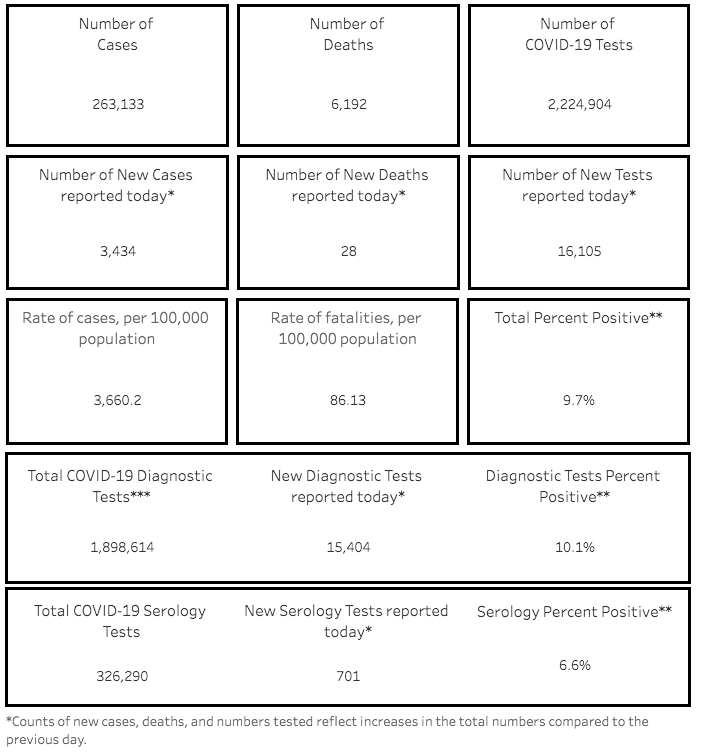
With more than 3,400 new cases reported today, the number of Arizona’s confirmed novel coronavirus cases soared past 263,000 as of Tuesday, Nov. 10, according to the Arizona Department of Health Services.

That’s the highest single-day jump in cases since July 25.
Pima County, which reported 520 new cases today, has seen 31,013 of the state’s 263,133 confirmed cases.
After 28 new deaths were reported today, a total of 6,192 Arizonans had died after contracting COVID-19, including 659 deaths in Pima County, according to the Nov. 10 report.
The number of hospitalized COVID cases statewide continues to climb upward as the virus has begun to spread more rapidly. ADHS reported that as of Nov. 9, 1,289 COVID patients were hospitalized in the state, the highest that number has been since Aug. 13. That number peaked with 3,517 hospitalized COVID patients on July 13; it hit a subsequent low of 468 on Sept. 27.
A total of 1,023 people visited emergency rooms on Nov. 9 with COVID symptoms. That number peaked at 2,008 on July 7; it hit a subsequent low of 653 on Sept. 28.
A total of 294 COVID-19 patients were in intensive care unit beds on Nov. 9, the highest that number has been since Aug. 26. The number of COVID patients in ICUs peaked at 970 on July 13 and hit a subsequent low of 114 on Sept. 22.
On a week-by-week basis in Pima County, the number of positive COVID tests peaked the week ending July 4 with 2,452 cases, according to an Nov. 4 report from the Pima County Health Department.
Pima County is seeing a steady rise in cases in recent weeks. For the week ending Oct. 10, 465 cases were reported; for the week ending Oct. 17, 543 cases were reported; for the week ending Oct. 24, 911 cases were reported; and for the week ending Oct. 31, 1,166 cases were reported.

WASHINGTON – The Trump campaign added Arizona this weekend to the list of states where it has gone to court to challenge the ballot count, charging that Maricopa County rejected ballots that should have been given a second review.
The suit, filed Saturday in Maricopa County Superior Court, claims that those rejected ballots would “yield up to thousands of additional votes for President Trump and other Republican candidates” if they were counted.
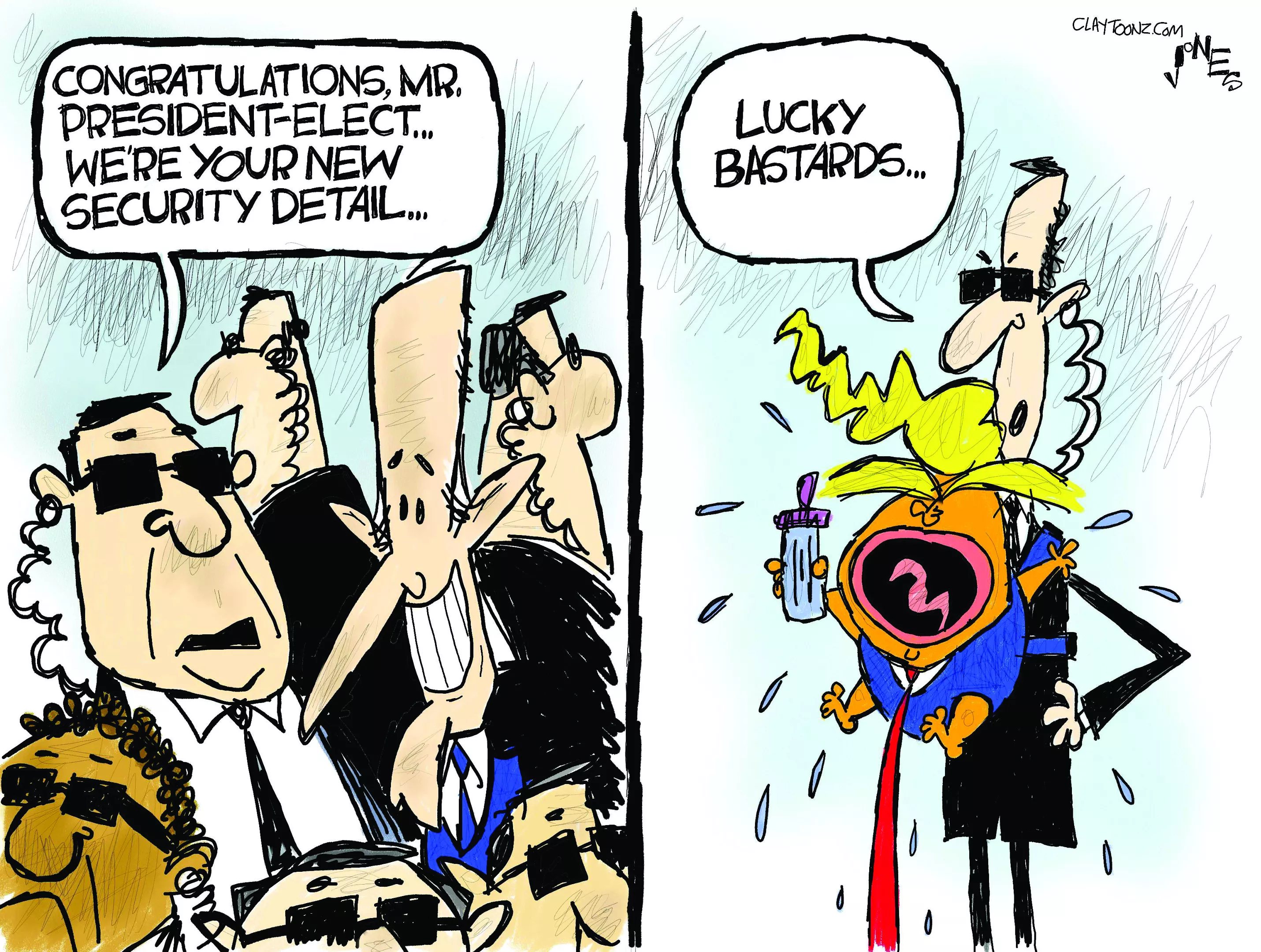
It was filed the same day that prominent media organizations said Democrat Joe Biden appeared to have won in enough states to secure the 270 Electoral College votes needed to win the presidency, leading Biden to assume the mantle of president-elect.
Arizona has already been called a win for Biden, but Trump has increasingly chipped away at his lead since Election Day. As of Monday afternoon, the two men were separated by just 15,432 votes, with 71,497 votes still to be counted, according to the secretary of state’s office.
“This election is far from over. The American people are entitled to an honest election: that means counting all legal ballots, and not counting any illegal ballot,” said Arizona Republican Party Chairwoman Kelli Ward in a prepared statement. “We will not rest until the American people have the honest vote count they deserve and that our nation demands.”
Monday, November 9, 2020
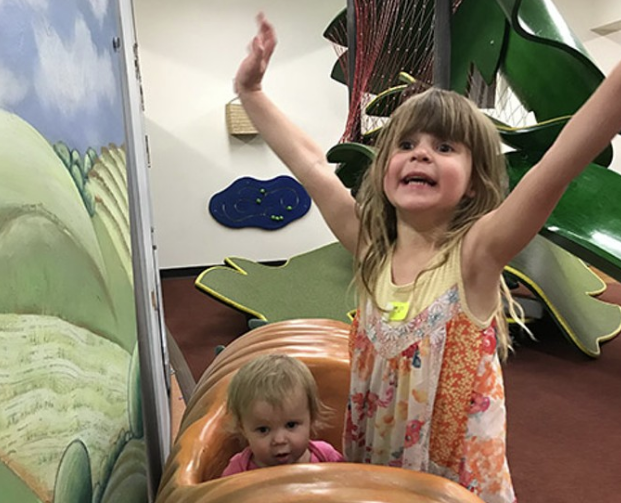
The Children’s Museum in downtown Tucson has announced their plans to reopen with limited admission on Wednesday, Nov. 11. The Museum will be open with two two-hour play sessions from 9-11 a.m. and from 2-4 p.m. Wednesdays through Sundays. Visitors will have access to all indoor exhibits, as well as their outdoor “curiosity courtyard.” Museum admission, including the courtyard, will be by timed ticket only, with a limit of 50 visitors at the museum at once.
Visitors ages 5 and older will be required to wear masks while at the museum. There will also be sanitation stations in the courtyard for visitors, and staff will clean and disinfect activities and areas between sessions.
The Curiosity Courtyard is filled with activities, crafts and games, including a cactus ring toss and animal-themed beanbag toss. A dig pit with backhoes has also been added to the courtyard.
The Children’s Museum in Oro Valley will continue with virtual programming only as part of their phased reopening plan.
Admission is $9 per person, with discounts available for military and visitors on public assistance. The Children’s Museum is located at 200. S. 6th Ave.
For more information, visit ChildrensMuseumTucson.org
As a key metric tracking the spread of coronavirus in Pima County is likely to shift to substantial spread this week, the Tucson Unified School District will not open as planned this Thursday, Superintendent Gabriel Trujillo announced in a letter to the district’s families Friday.
“In my briefings this week with the Pima County Health Department leadership team, I was informed that our county will be in a state of widespread community transmission of COVID-19 at the time of our planned opening,” Trujillo said in the letter. “Out of an abundance of caution, our leadership team has made a commitment to only initiate ‘hybrid’ instruction when Pima County is in a state of moderate transmission or better.”
The district approved a Nov. 12 reopening date in a hybrid model at an Oct. 27 governing board meeting when Pima County Public Health Director Theresa Cullen said the county had, at the time, met the health department’s three guidelines for opening in a hybrid model: two weeks with new case rates below 100 per 100,000, two weeks of percent positivity below 7 percent and hospital visits for COVID-19 illness below 10 percent.
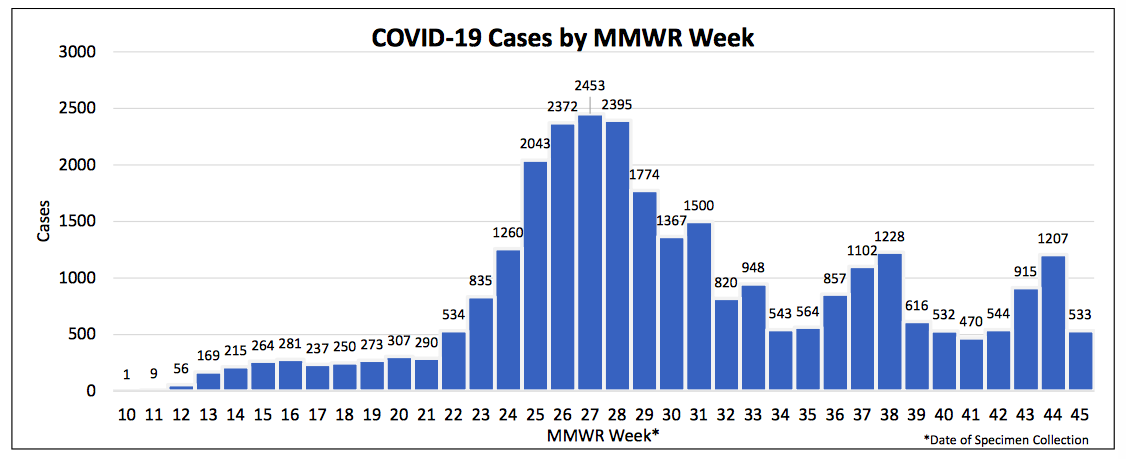
Pima County reported 1,207 new cases the week of Oct. 25-31, which will likely put it in the “substantial spread” category for a two-week decline in cases when the county’s progress report is updated this Thursday.
In a Facebook post, TUSD Governing Board Member Adelita Grijalva said in-person classes will resume in January 2021.
Last week, Cullen predicted the metric tracking a two-week decline in cases—a key benchmark the state based its school reopening guidelines on—would likely move to substantial spread.
“We're showing numbers of 900 to 1,000 [per week], which means on the dashboard, that first disease measure is more than 100 cases per hundred thousand, puts us into the red, which is accelerated transmission. My guess, even though that number is not 1,000 yet for week 44, I think I'm expecting it will hit that.”
Now that the health department’s data reports show more than 1,000 cases reported for week 44 (Oct. 25-31), Cullen’s prediction will likely come true.

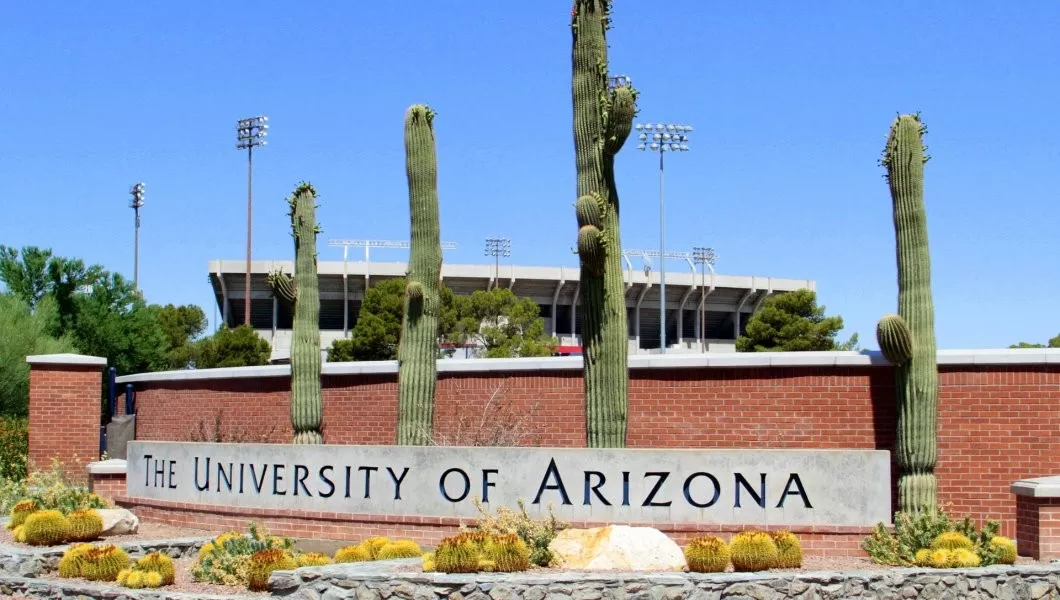
As statewide coronavirus data trends upward, the University of Arizona is showing elevated COVID-19 cases compared to recent weeks as it gears up for a pre-fall break testing blitz, UA President Robert C. Robbins shared in a news conference Monday, Nov. 9.
From Oct. 29 through Nov. 7, UA found 71 positive coronavirus cases after administering 8,345 tests for a positivity rate of 0.9%, a slight decrease from the 1.1% rate the university reported the previous 10-day period. Before that, the university reported a 0.6% positivity rate.
In the two weeks before fall break, the university will allow classes of 50 or fewer students to meet in-person, remaining in stage two of its reopening plan. After the break, all classes will be remote until the end of the semester, Robbins said.
Today, the university began its “testing blitz” to reduce the spread of the virus as travel is likely to increase over the holiday season. Until Nov. 15, students are asked to register for an appointment-only test after completing a survey with their traveling plans.
If students travel outside the Tucson area over fall break, the university is asking them to complete the semester outside the area or remotely online. Those who don’t travel can complete the semester from their student residences.
Reentry Task Force Director Richard Carmona went over statewide COVID-19 data that shows a 14-day increase in cases of 68 percent, and a 289 percent increase in deaths throughout Arizona.
Pima County’s COVID-19 cases are also increasing, and Carmona said “from the beginning of October, we were doing pretty well, and all of a sudden we’re on the rise again.”
Pima County’s current R0, pronounced “R naught”—which indicates how contagious a virus is by showing the average number of people who will contract the virus from an infected person—is at 1.69. The transmissibility rate for the zip code surrounding the university has increased from 1.25 to 2.22 this week, according to Carmona.

