

Tuesday, October 20, 2020
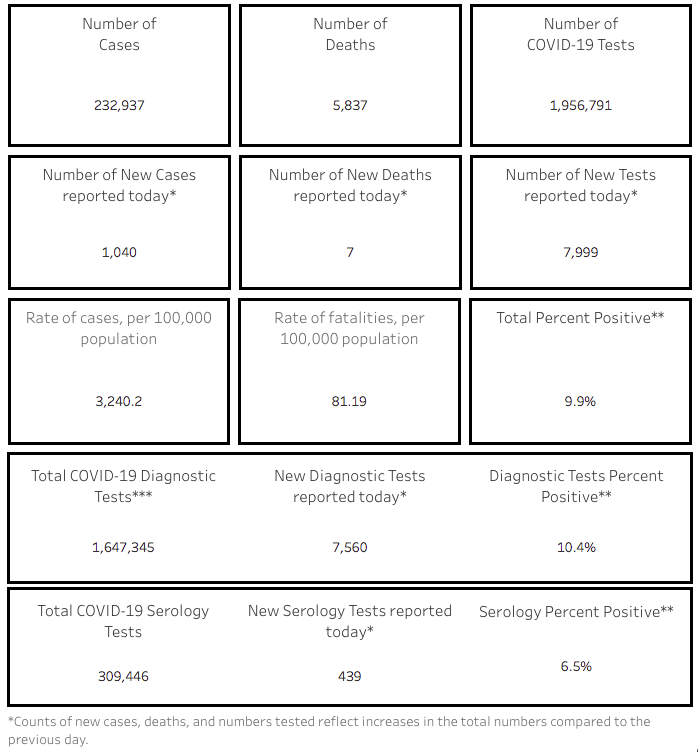
With 1,040 new cases reported today, the number of Arizona’s confirmed novel coronavirus cases closed in on 233,000 as of Tuesday, Oct. 20, according to the Arizona Department of Health Services.

Pima County had seen 27,019 of the state’s 232,937 confirmed cases.
With seven new deaths yesterday, a total of 5,837 Arizonans had died after contracting COVID-19, including 634 deaths in Pima County, according to the Oct. 20 report.
The number of hospitalized COVID cases has declined from July peaks but has ticked upward in recent weeks. ADHS reported that as of Oct. 19, 777 COVID patients were hospitalized in the state, the highest that number has been since Aug. 28, when 812 people were hospitalized. That number peaked with 3,517 hospitalized COVID patients on July 13.
A total of 747 people visited emergency rooms on Oct. 19 with COVID symptoms. That number peaked at 2,008 on July 7.
A total of 170 COVID-19 patients were in intensive care unit beds on Oct. 19. The number of COVID patients in ICUs peaked at 970 on July 13.
On a week-by-week basis in Pima County, the number of positive COVID tests peaked the week ending July 4 with 2,453 cases, according to an Oct. 16 report from the Pima County Health Department.
After a bump following the return of UA students, cases on a week-to-week basis are on the decline. For the week ending Sept. 19, 1,225 cases were reported; for the week ending Sept. 26, 596 cases were reported; for the week ending Oct. 3, 523 cases were reported; for the week ending Oct. 10, 466 cases were reported.
Deaths in Pima County are down from a peak of 54 in the week ending July 4 to 10 in the week ending Sept. 5, one in the week ending Sept. 12, three in the week ending Sept. 19, four in the week ending Sept. 26 and three in the week ending Oct. 3.
Hospitalization peaked the week ending July 18 with 221 COVID patients admitted to Pima County hospitals, but it has been on the rise in recent weeks. In the week ending Sept. 12, 24 patients were admitted; in the week ending Sept. 19, 17 patients were admitted; in the week ending Sept. 26, 13 people were admitted; in the week ending Oct. 3, 20 patients were admitted; and in the week ending Oct. 10, 24 people were admitted. (Recent weeks are subject to revision.)
UA increases number of in-person classes as campus-area cases remain low
The University of Arizona will allow more students to return to campus this week as metrics tracking the spread of coronavirus remain low, UA President Robert C. Robbins said in a news conference Monday, Oct. 19.
Continuing phase two of its reopening plan, the university will allow classes of 50 or fewer to return the week of Oct. 26, raising last week’s maximum of 30 students.
From Oct. 8-17, UA found 44 positive coronavirus cases after administering 6,867 tests for a positivity rate of 0.6%, the same rate the university reported last week.
“We have five weeks before the break. I’m very proud of the way the university has risen to the challenge so far, but we cannot become complacent,” Robbins said.

WASHINGTON – President Donald Trump was welcomed by boisterous MAGA-hatted crowds in Prescott and Tucson on Monday, the last stops on a Western swing as the campaign entered its final two weeks.
But not everyone was putting out the welcome mat.
Democrats in the state criticized what they called the president’s “super spreader” events during the COVID-19 pandemic, with Tucson Mayor Regina Romero, a Democrat, sending a “friendly reminder” of the city’s mask regulations – and the fact that Trump’s campaign still owed the city for services from previous visits.
Marion Pack, headquarters director for the Yavapai County Democratic Party, was more blunt. She said the president’s refusal to mandate masks or social distancing at his rallies is “unconscionable” and urged him to “stick to the White House.”
“We think that he’s just continuing his reckless behavior,” Pack said before Trump’s midday stop at the Prescott Regional Airport.

Monday, October 19, 2020
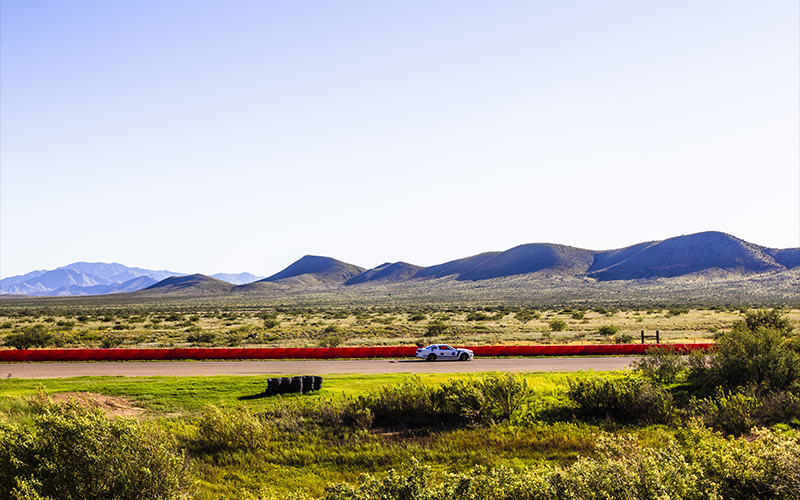
PHOENIX – Inde Motorsports Ranch has been a staple among motorsports enthusiasts across North America for a decade.
The 2.75-mile road course sits in Willcox, a community of 3,500 about 80 miles of Tucson. It grants its 200-plus members exclusive access to private garages, trackside casitas and 40 different track configurations, while boasting one of the greatest scenic backdrops in Arizona.
The racing country club serves as an escape for people across the United States, ranging from doctors, dentists and everyone in between looking to test their skills or relieve the stresses of everyday life. Initiation fees range from $25,000 to $75,000 as the facility delivers an intimate and exclusive feel to the premier motorsports experience – which the club says is about to get even better.
As it celebrates its 10th anniversary, it is receiving a major facelift in the form of a complete track resurfacing, among other additions, promising an enhanced experience for everyone.
Purchased in 2008 by track president CJ Dorland and his father, Graham, the duo transformed a working cattle ranch owned by dealership titan Tex Earnhardt into one of the most desirable destinations in motorsports.
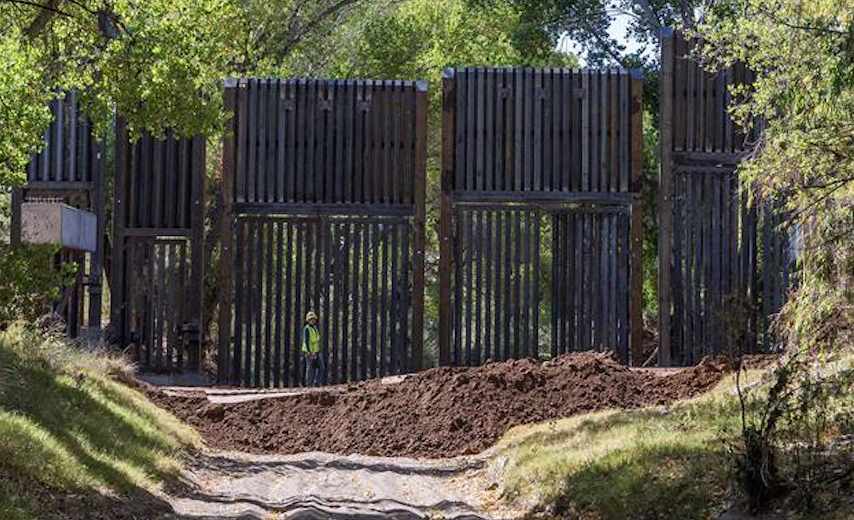
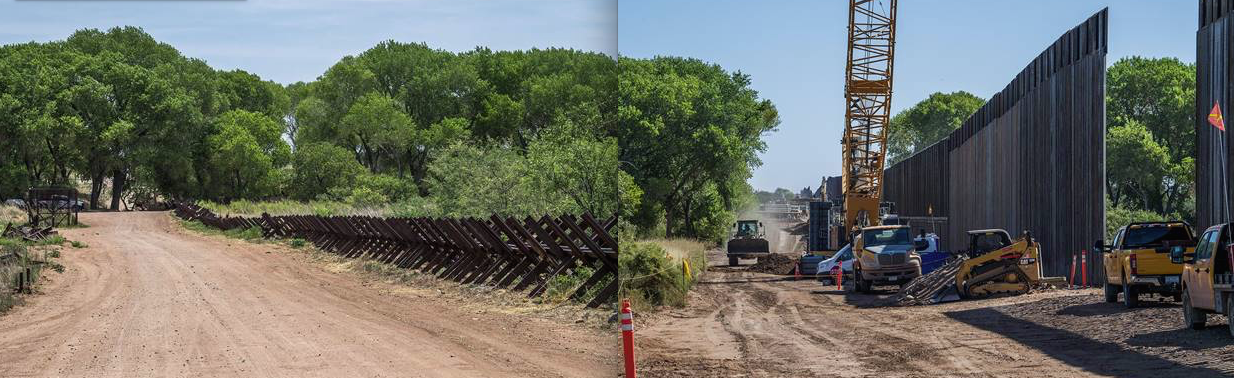
The wall's construction has proved controversial in Southern Arizona, prompting one of the largest political demonstrations in Cochise history against the destruction of the San Pedro floodplain. In addition, local governments officials have expressed frustration over the lack of communication by the Department of Homeland Security regarding construction specifics.
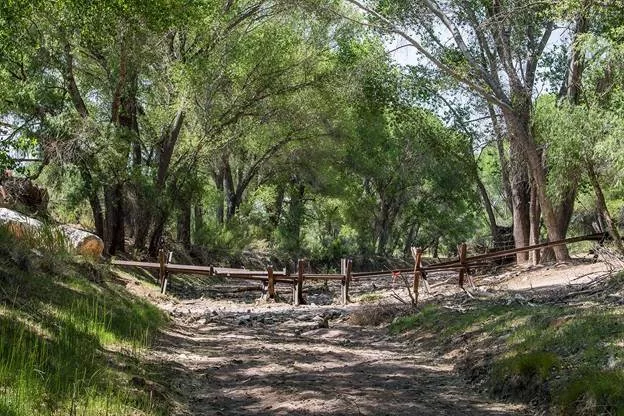
One of the main concerns about the construction is its impact on wildlife. According to CBD, the wall is blocking one of the best remaining wildlife corridors in the region, and is likely to clog the river with debris during monsoons.
Congresswoman Ann Kirkpatrick says she has sent multiple letters to the Department of Homeland Security requesting transparency on the border wall construction, all of which have gone unanswered.
At a February board meeting, the Cochise County Board of Supervisors approved a letter supporting Kirkpatrick's efforts encouraging DHS to engage with local agencies and the general public to offer information about their border construction. According to the Board of Supervisors, Cochise County had "not been made aware of, or consulted on, any site plans or construction timelines."

WASHINGTON – Local officials pushed back this week against a new report that showed three Arizona cities slipping in a national ranking on clean-energy policies, saying the report does not appear to reflect their clean- and renewable-energy efforts.
The 2020 City Clean Energy Scorecard, released last week by the American Council for an Energy-Efficient Economy, scores the 100 largest cities in the country in five categories ranging from local government to energy and water utilities.
Phoenix finished 19th in the ranking, while Tucson was 68th and Mesa was 76th – all three slightly lower rankings than the cities got on 2019’s scorecard.
That surprised Caryn Potter, a utility program manager with the Southwest Energy Efficiency Project, who considers Arizona “an energy efficiency success story.”
“While our cities are making important commitments towards reducing air pollution, conserving water, and making their cities more walkable and livable, I was surprised to see the drop in Phoenix, Mesa, and Tucson’s overall scores,” she said in an email.
Tags: solar power , wind power , clean energy , Image
The University of Arizona will allow more students to return to campus this week as metrics tracking the spread of coronavirus remain low, UA President Robert C. Robbins said in a news conference Monday, Oct. 19.
Continuing phase two of its reopening plan, the university will allow classes of 50 or fewer to return the week of Oct. 26, raising last week’s maximum of 30 students.
From Oct. 8-17, UA found 44 positive coronavirus cases after administering 6,867 tests for a positivity rate of 0.6%, the same rate the university reported last week.
“We have five weeks before the break. I’m very proud of the way the university has risen to the challenge so far, but we cannot become complacent,” Robbins said.
With fall break approaching Nov. 26, UA is taking proactive measures to minimize the potential spread of COVID-19 as students travel outside the area.
On Nov. 6, the university will begin a “testing blitz” by appointment only. Students who plan to travel over break and have not received a positive coronavirus test over the past 90 days are “strongly encouraged” to get tested.
All main campus students are required to take a coronavirus antigen test and complete a survey with their fall break traveling plans. Those who travel outside the Tucson area over break are encouraged to complete the semester remotely, according to Robbins.
However, UA students won’t get a similar week off in the spring. Instead of spring break, the university will have five separate “reading days” with no classes held.
“It’s a traumatic step to say we’re not going to have spring break next year, but it’s a really important step,” UA Provost Liesl Folks said. “The CDC is unambiguous about the fact that travel is one of the core ways that we spread the virus around the country.”
Reentry Task Force Director Dr. Richard Carmona highlighted the university’s 4.7% coronavirus positivity rating for their total testing window since the beginning of August. He said although the “desired number” is below 5%, the university shouldn’t get too comfortable.
During the past week, the university’s CART team, a collaboration with the UA and Tucson police departments that looks for noncompliance to COVID-19 precautions, responded to 15 incidents.
“We are happy that the intense public health practices we are inspiring others to adopt in our campus, in our community, are actually doing the job, but we got to push even harder now,” Carmona said.
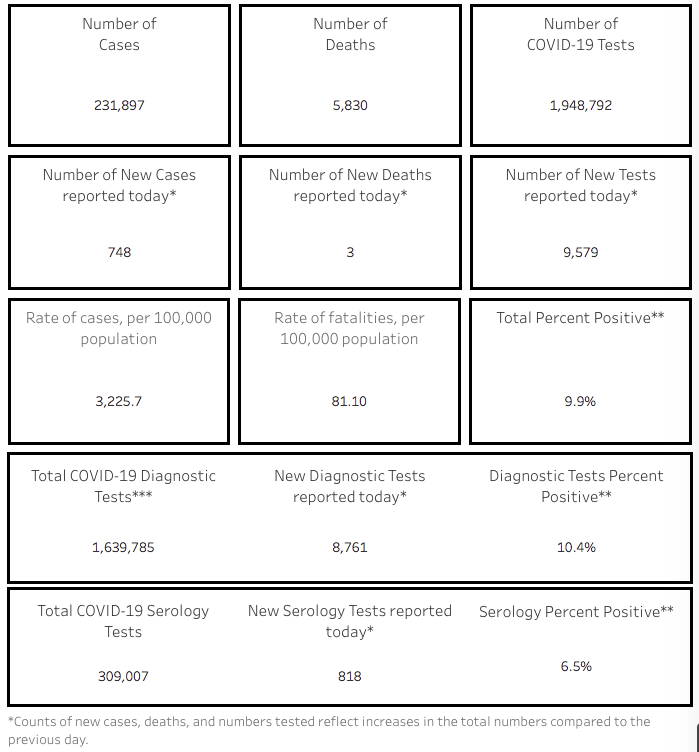
With 748 new cases reported today, the number of Arizona’s confirmed novel coronavirus cases closed in on 232,000 as of Monday, Oct. 19, according to the Arizona Department of Health Services.

Pima County had seen 26,955 of the state’s 231,897 confirmed cases.
With three new deaths yesterday, a total of 5,830 Arizonans had died after contracting COVID-19, including 634 deaths in Pima County, according to the Oct. 19 report.
The number of hospitalized COVID cases has declined from July peaks but has ticked upward this week. ADHS reported that as of Oct. 18, 721 COVID patients were hospitalized in the state. That number peaked with 3,517 hospitalized COVID patients on July 13.
A total of 717 people visited emergency rooms on Oct. 18 with COVID symptoms. That number, which peaked at 2,008 on July 7, hadn’t climbed above 800 since Sept. 21.
A total of 177 COVID-19 patients were in intensive care unit beds on Oct. 18. The number of COVID patients in ICUs peaked at 970 on July 13.
On a week-by-week basis in Pima County, the number of positive COVID tests peaked the week ending July 4 with 2,453 cases, according to an Oct. 7 report from the Pima County Health Department. For the week ending Sept. 5, a total of 863 cases were reported; for the week ending Sept. 12, 1,105 cases were reported; for the week ending Sept. 19, 1,219 cases were reported; for the week ending Sept. 26, 582 cases were reported; for the week ending Oct. 3, 472 cases were reported. (Recent weeks are subject to revision.)
Deaths in Pima County are down from a peak of 54 in the week ending July 4 to 10 in the week ending Sept. 5, one in the week ending Sept. 12, three in the week ending Sept. 19, two in the week ending Sept. 26 and one in the week ending Oct. 3. (Recent weeks are subject to revision.)
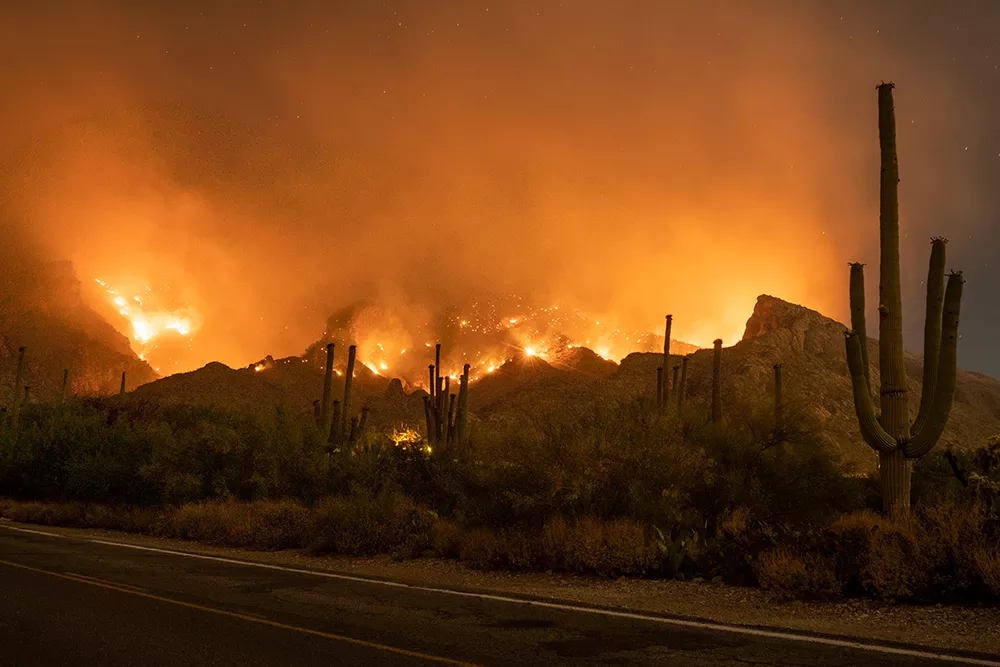
For many communities in the West, the water that flows out of kitchen faucets and bathroom showerheads starts high up in the mountains, as snowpack tucked under canopies of spruce and pine trees.
This summer’s record-breaking wildfires have reduced some of those headwater forests to burnt trees and heaps of ash. In high alpine ecosystems, climate change has tipped the scales toward drier forests, lessened snowpack, hotter summers and extended fire seasons.
Wildfires don’t just cause problems while they’re burning. For municipal drinking water systems, fires are felt for years after they’re snuffed out.
Few places in the West know that as well as Fort Collins, Colorado. Until eight years ago, one of the city’s of main water sources, the Poudre River, was nearly pristine. All year round, it tumbled out of the Rocky Mountains and into the city’s treatment plant for use by 135,000 people.
“We had been privileged and in some ways probably took for granted that these watersheds were providing us consistently clean, clear water, all the time,” said Jill Oropeza, the city’s water quality manager.
Tags: wildfire , climate change , water , Image

ANAHEIM, California – Guidelines for theme park reopening are coming “very shortly,” Gov. Gavin Newsom said in mid-September, but the Magic Kingdom remains closed and Disney fans, laid-off workers and city officials are pleading for tourism’s return to Orange County.
Newsom last week pointed to the severity of the COVID-19 pandemic and told reporters the state “is in no hurry” to reopen theme parks. California has the second-highest weekly rate of new infections in the country after Texas, according to the CDC, and Newsom chooses to err on the side of caution. Disneyland has been closed since March 14.
“We are going to be led by a health-first framework,” he said in an Oct. 7 news conference. “We’re going to be stubborn about it and that’s our commitment.”

