
Friday, July 24, 2020
Professional spring sports are back after COVID-19 delayed or canceled numerous leagues' seasons.
Major League Baseball and professional soccer are trying to salvage what’s left of their seasons with a shortened number of league games, coronavirus checks before matchups and playing in empty arenas.
The Arizona Diamondbacks kick off their season opener against the San Diego Padres at Petco Park in San Diego this evening, beginning a three-game series this weekend. The matchup will be broadcast on FOX Sports Arizona at 6:10 p.m. MST.
Experts predict the victor of this weekend’s series will be poised to take second place in the NL West division, behind the Los Angeles Dodgers, who in the top spot. The D-Backs faced the Dodgers earlier this week in this season’s brief two-game spring training but were blown out by a score of 9-2 on Sunday, July 19, and 12-1 on Monday, July 20.
Major League Baseball shorted their typical 162-game season down to a mere 60 games in addition to hosting games in crowd-less stadiums. The league is also testing players for the virus before the start of games. Before Thursday’s season opener between the Washinton Nationals and New York Yankees, Nationals star Juan Soto tested positive for COVID-19 and will be out of the season until he recuperates.
While the D-Backs battle the Padres, professional soccer club FC Tucson is on their way to Florida to face Inter Miami II for their season opener on Saturday, July 25 at 4:00 p.m. Just like MLB they too won’t be having attendees at their matches. However, that isn’t the case for all the clubs within the league—USL League One, according to FC Tucson President Amanda Powers.
“You’ll find that some of the USL marketed teams we’ll be playing against will actually have fans in the stadiums. Games in Tucson will not,” Powers said. “While we won’t be having fans at Kino Sports Complex, we will be streaming all our games on ESPN Plus and also hosting a drive-in watch party at El Toro Flicks Carpool Cinema.”

Major League Baseball and professional soccer are trying to salvage what’s left of their seasons with a shortened number of league games, coronavirus checks before matchups and playing in empty arenas.
The Arizona Diamondbacks kick off their season opener against the San Diego Padres at Petco Park in San Diego this evening, beginning a three-game series this weekend. The matchup will be broadcast on FOX Sports Arizona at 6:10 p.m. MST.
Experts predict the victor of this weekend’s series will be poised to take second place in the NL West division, behind the Los Angeles Dodgers, who in the top spot. The D-Backs faced the Dodgers earlier this week in this season’s brief two-game spring training but were blown out by a score of 9-2 on Sunday, July 19, and 12-1 on Monday, July 20.
Major League Baseball shorted their typical 162-game season down to a mere 60 games in addition to hosting games in crowd-less stadiums. The league is also testing players for the virus before the start of games. Before Thursday’s season opener between the Washinton Nationals and New York Yankees, Nationals star Juan Soto tested positive for COVID-19 and will be out of the season until he recuperates.
While the D-Backs battle the Padres, professional soccer club FC Tucson is on their way to Florida to face Inter Miami II for their season opener on Saturday, July 25 at 4:00 p.m. Just like MLB they too won’t be having attendees at their matches. However, that isn’t the case for all the clubs within the league—USL League One, according to FC Tucson President Amanda Powers.
“You’ll find that some of the USL marketed teams we’ll be playing against will actually have fans in the stadiums. Games in Tucson will not,” Powers said. “While we won’t be having fans at Kino Sports Complex, we will be streaming all our games on ESPN Plus and also hosting a drive-in watch party at El Toro Flicks Carpool Cinema.”
PHOENIX – Arizona schools must open their doors to at least some of their students on Aug. 17, state officials said Thursday, but districts will have the flexibility to offer alternative schooling to students who want to stay home.
The announcement by Gov. Doug Ducey and State Schools Superintendent Kathy Hoffman follows weeks of uncertainty for school officials around the state, many of whom called the Aug. 17 reopening – already delayed two weeks – unrealistic and unsafe.
“School leaders and educators are under a tremendous amount of stress as they plan for the upcoming school year,” Hoffman said. “I cannot ask our educators and families to enter this school year without critical assurances, policies and resources to set them up for safety and success.”
The executive order Ducey issued Thursday says public health benchmarks for reopening will be released by Aug. 7 – just 10 days before the scheduled reopening. Ducey also announced an additional $370 million to help high-need schools reopen, including $40 million to expand broadband in rural communities.

The announcement by Gov. Doug Ducey and State Schools Superintendent Kathy Hoffman follows weeks of uncertainty for school officials around the state, many of whom called the Aug. 17 reopening – already delayed two weeks – unrealistic and unsafe.
“School leaders and educators are under a tremendous amount of stress as they plan for the upcoming school year,” Hoffman said. “I cannot ask our educators and families to enter this school year without critical assurances, policies and resources to set them up for safety and success.”
The executive order Ducey issued Thursday says public health benchmarks for reopening will be released by Aug. 7 – just 10 days before the scheduled reopening. Ducey also announced an additional $370 million to help high-need schools reopen, including $40 million to expand broadband in rural communities.
PHOENIX – Arizona skywatchers have been over the moon about a comet that has graced the night sky since July 11.
Comet NEOWISE was discovered March 27 by Amy Mainzer, principal investigator on NASA’s Near-Earth Object Wide-field Infrared Survey Explorer mission, and her team at the University of Arizona.
“We’re specifically interested in what we call ‘near-Earth objects,’” Mainzer said. “These are the asteroids and comets that come within about 1.3 times the distance from the Earth to the sun.”
The 3-mile wide ball of ice, dust and rock survived a close approach to the sun and is headed toward the outer edge of our solar system before starting another very long trip around the sun. Unlike a shooting star, viewers have a chance to view the comet for longer than a split second.
“This comet, even though it’s traveling at enormous speeds, you’d think, given this incredible speed, that it’d be gone in an instant,” Mainzer said. “But space is so big, that even at that incredible speed, it still takes an appreciable number of days to traverse the sky.”

Comet NEOWISE was discovered March 27 by Amy Mainzer, principal investigator on NASA’s Near-Earth Object Wide-field Infrared Survey Explorer mission, and her team at the University of Arizona.
“We’re specifically interested in what we call ‘near-Earth objects,’” Mainzer said. “These are the asteroids and comets that come within about 1.3 times the distance from the Earth to the sun.”
The 3-mile wide ball of ice, dust and rock survived a close approach to the sun and is headed toward the outer edge of our solar system before starting another very long trip around the sun. Unlike a shooting star, viewers have a chance to view the comet for longer than a split second.
“This comet, even though it’s traveling at enormous speeds, you’d think, given this incredible speed, that it’d be gone in an instant,” Mainzer said. “But space is so big, that even at that incredible speed, it still takes an appreciable number of days to traverse the sky.”
PHOENIX – As activists nationwide vandalize, topple and demand the removal of Confederate statues and memorials, the United Daughters of the Confederacy on Wednesday removed two monuments from the Capitol complex and along U.S. 60 near Gold Canyon.
After advocacy groups and local leaders sent letters to Gov. Doug Ducey urging the removal of at least six monuments throughout the state, the United Daughters of the Confederacy on June 30 sent its own letter to Arizona Department of Administration Director Andy Tobin requesting the state “regift” the monuments for repairs.
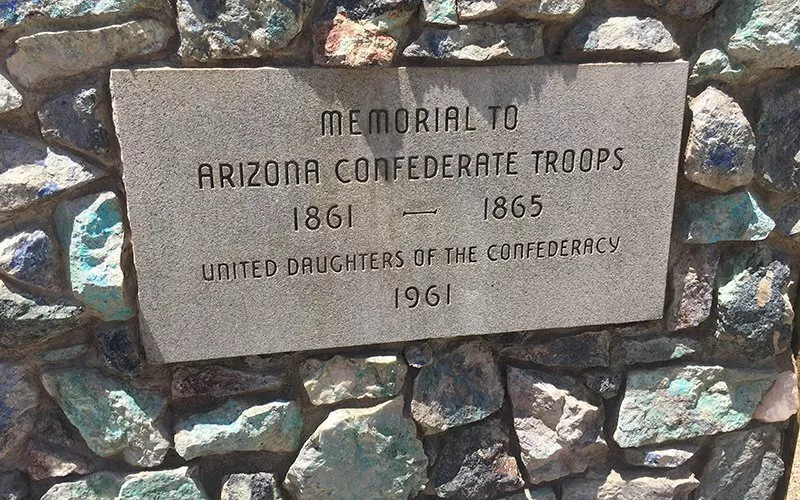
Overnight, two memorials – the Memorial to the Arizona Confederate Troops in Wesley Bolin Plaza and the Jefferson Davis Memorial Highway marker near Gold Canyon – were removed from state property and “returned to the United Daughters of the Confederacy, the private organization that originally placed the monuments on state property,” according to a news release Thursday from the Arizona Department of Administration.
Activists recently defaced and vandalized these monuments, according to the letter from the United Daughters of the Confederacy, a hereditary society founded in 1894 to honor rebel war dead. It said the monuments are “now in need of repair, but due to the current political climate, we believe it unwise to repair them where they are located.”
After advocacy groups and local leaders sent letters to Gov. Doug Ducey urging the removal of at least six monuments throughout the state, the United Daughters of the Confederacy on June 30 sent its own letter to Arizona Department of Administration Director Andy Tobin requesting the state “regift” the monuments for repairs.
Overnight, two memorials – the Memorial to the Arizona Confederate Troops in Wesley Bolin Plaza and the Jefferson Davis Memorial Highway marker near Gold Canyon – were removed from state property and “returned to the United Daughters of the Confederacy, the private organization that originally placed the monuments on state property,” according to a news release Thursday from the Arizona Department of Administration.
Activists recently defaced and vandalized these monuments, according to the letter from the United Daughters of the Confederacy, a hereditary society founded in 1894 to honor rebel war dead. It said the monuments are “now in need of repair, but due to the current political climate, we believe it unwise to repair them where they are located.”
The Sundance Film Festival Shorts Tour “Virtual Edition” is coming to you via The Loft’s streaming series, and this collection is a winner. The Festival has helped launch the likes of Paul Thomas Anderson, Wes Anderson (Both Andersons!), Lynn Ramsay, and Taika Waititi, and this year’s selection has some new candidates for greatness.
The program is definitely goat centric. The opening film, Benevolent Ba, features a goat that sounds human when it screams, and a Goat Boy that is much different from the one Jim Breuer played on Saturday Night Live. The closing film, So What if the Goats Die, features a supernatural element similar to the recently released The Vast of Night. (If you haven’t seen that yet, it is streaming on Amazon Prime and is highly recommended.)
Best in show would be the insane Meats, written, directed by and starring Ashley Williams in a semi-crazy performance as a pregnant vegan grappling with meat cravings in a very graphic way. Also terrific would be the animated Hot Flash, where a female meteorologist experiencing hot flashes is accidentally seen naked when she tries to air everything out. The results are quite funny.
There are six shorts in all, and they range from decent to great. It begins streaming on July 24 and can be purchased on The Loft's Website.
The total number of confirmed coronavirus cases in Arizona climbed past 156K as of Friday, July 24, after the state reported 3,349 new cases this morning, according to the Arizona Department of Health Services.
Pima County had seen 14,428 of the state's 156,301 confirmed cases.
A total of 3,142 people have died after contracting the virus, including 409 in Pima County.
Maricopa County had 104,613 of the state's cases.
Hospitals remain under pressure, although they report a slight decrease in the number of Arizonans hospitalized with COVID-19-related symptoms. The report shows that 2,844 COVID patients were hospitalized yesterday in the state, down from a peak of 3,517 on July 13.
A total of 1,407 people visited ERs yesterday with COVID symptoms. That number peaked at 2,008 on July 7.
A total of 837 COVID-19 patients were in ICU beds yesterday. The number of COVID patients in ICUs peaked at 970 on July 13.
NEW SCHOOL RULES
Gov. Doug Ducey and State Superintendent of Public Instruction Kathy Hoffman announced yesterday that while school districts have to open up schools by Aug. 17, they do not have to provide in-class instruction. Instead, the schools can open up for students who need a place to go during the day but offer all online courses, as Tucson Unified School District announced it would do earlier this month.
Ducey agreed to Hoffman’s plan to use metrics regarding the spread of the virus to determine whether schools are safe to reopen. The Arizona Department of Health Services is working with education leaders to develop the standards before Aug. 7.
Hoffman had proposed using metrics rather than a calendar date to determine whether schools could reopen safely. Her suggested metrics included a downward trajectory of confirmed new cases, a decrease in positivity rates in testing, and widespread availability of tests.
Public health experts have been warning that community transmission is too widespread to safely open the schools as planned. Will Humble, executive director of the Arizona Public Health Association, said there are two main factors to consider when opening schools in the fall: mitigation measures alongside the level of community spread within a school district.
“Because we have the level of community spread that we have, I just don’t see that mitigation measures, which help but don’t eliminate transmission, are going to be adequate to make it a safe environment for teachers and schools and families,” Humble said.
The state needs a much lower percentage of positive tests and much more hospital capacity before schools can safely reopen, Humble said.
Pima County had seen 14,428 of the state's 156,301 confirmed cases.

A total of 3,142 people have died after contracting the virus, including 409 in Pima County.
Maricopa County had 104,613 of the state's cases.
Hospitals remain under pressure, although they report a slight decrease in the number of Arizonans hospitalized with COVID-19-related symptoms. The report shows that 2,844 COVID patients were hospitalized yesterday in the state, down from a peak of 3,517 on July 13.
A total of 1,407 people visited ERs yesterday with COVID symptoms. That number peaked at 2,008 on July 7.
A total of 837 COVID-19 patients were in ICU beds yesterday. The number of COVID patients in ICUs peaked at 970 on July 13.
NEW SCHOOL RULES
Gov. Doug Ducey and State Superintendent of Public Instruction Kathy Hoffman announced yesterday that while school districts have to open up schools by Aug. 17, they do not have to provide in-class instruction. Instead, the schools can open up for students who need a place to go during the day but offer all online courses, as Tucson Unified School District announced it would do earlier this month.
Ducey agreed to Hoffman’s plan to use metrics regarding the spread of the virus to determine whether schools are safe to reopen. The Arizona Department of Health Services is working with education leaders to develop the standards before Aug. 7.
Hoffman had proposed using metrics rather than a calendar date to determine whether schools could reopen safely. Her suggested metrics included a downward trajectory of confirmed new cases, a decrease in positivity rates in testing, and widespread availability of tests.
Public health experts have been warning that community transmission is too widespread to safely open the schools as planned. Will Humble, executive director of the Arizona Public Health Association, said there are two main factors to consider when opening schools in the fall: mitigation measures alongside the level of community spread within a school district.
“Because we have the level of community spread that we have, I just don’t see that mitigation measures, which help but don’t eliminate transmission, are going to be adequate to make it a safe environment for teachers and schools and families,” Humble said.
The state needs a much lower percentage of positive tests and much more hospital capacity before schools can safely reopen, Humble said.
For more Claytoonz, click here.

Tags: maga , trump , cognition , moca , test , ability , speech , political , cartoon , claytoonz , Image
Thursday, July 23, 2020
PHOENIX – A lot goes into running a successful election in a normal year, but in the era of COVID-19 that also includes 3,200 gallons of hand sanitizer.
That’s one of several items on a shopping list that includes gloves, masks and face shields, as state elections officials work to make sure they have safeguards in place to protect the vote and voters in the Aug. 4 primary.
With that election less than two weeks away, Arizona Secretary of State Katie Hobbs said she is optimistic.
“For both the primary and the general I just feel really confident about being ready to handle the situation,” Hobbs said this week. “I know that things are going to continue to come up that we’re not anticipating, but my office spent all of last year really laying the groundwork to be prepared.”
Hobbs delivered much the same message Tuesday during a virtual meeting of the National Association of Secretaries of State, where elections officials traded stories and tips on how they are “Preparing for Increased Voter Turnout in November 2020.”
For Arizona, that has included a renewed emphasis on mail-in voting, an increase in the use of curbside voting and the development of safety recommendations, released Monday in a pair of guides for voters and poll workers.

That’s one of several items on a shopping list that includes gloves, masks and face shields, as state elections officials work to make sure they have safeguards in place to protect the vote and voters in the Aug. 4 primary.
With that election less than two weeks away, Arizona Secretary of State Katie Hobbs said she is optimistic.
“For both the primary and the general I just feel really confident about being ready to handle the situation,” Hobbs said this week. “I know that things are going to continue to come up that we’re not anticipating, but my office spent all of last year really laying the groundwork to be prepared.”
Hobbs delivered much the same message Tuesday during a virtual meeting of the National Association of Secretaries of State, where elections officials traded stories and tips on how they are “Preparing for Increased Voter Turnout in November 2020.”
For Arizona, that has included a renewed emphasis on mail-in voting, an increase in the use of curbside voting and the development of safety recommendations, released Monday in a pair of guides for voters and poll workers.
ProPublica is a nonprofit newsroom that investigates abuses of power. Click here to read their biggest stories as soon as they’re published.
Frustrated by the lack of response to their complaint of the “imminent danger” posed by COVID-19, three meatpacking workers at the Maid-Rite Specialty Foods plant outside of Scranton, Pennsylvania, took the unusual step Wednesday of filing a lawsuit against the Occupational Safety and Health Administration and Labor Secretary Eugene Scalia.
The lawsuit, filed in a Pennsylvania federal court, accuses the government of failing to protect essential workers from dangerous conditions that could expose them to the coronavirus. It relies on a rarely used provision of the Occupational Safety and Health Act that allows workers to sue the secretary of labor for “arbitrarily or capriciously” failing to counteract imminent dangers.
On May 19, the Maid-Rite workers had turned to a Pennsylvania organization called Justice at Work to help them file an anonymous complaint with OSHA that detailed the lack of protections at the plant and described how they were required to work elbow-to-elbow with their co-workers on the production line.
Their complaint followed a similar report from another Maid-Rite employee in early April, which the workers weren’t aware of at the time.
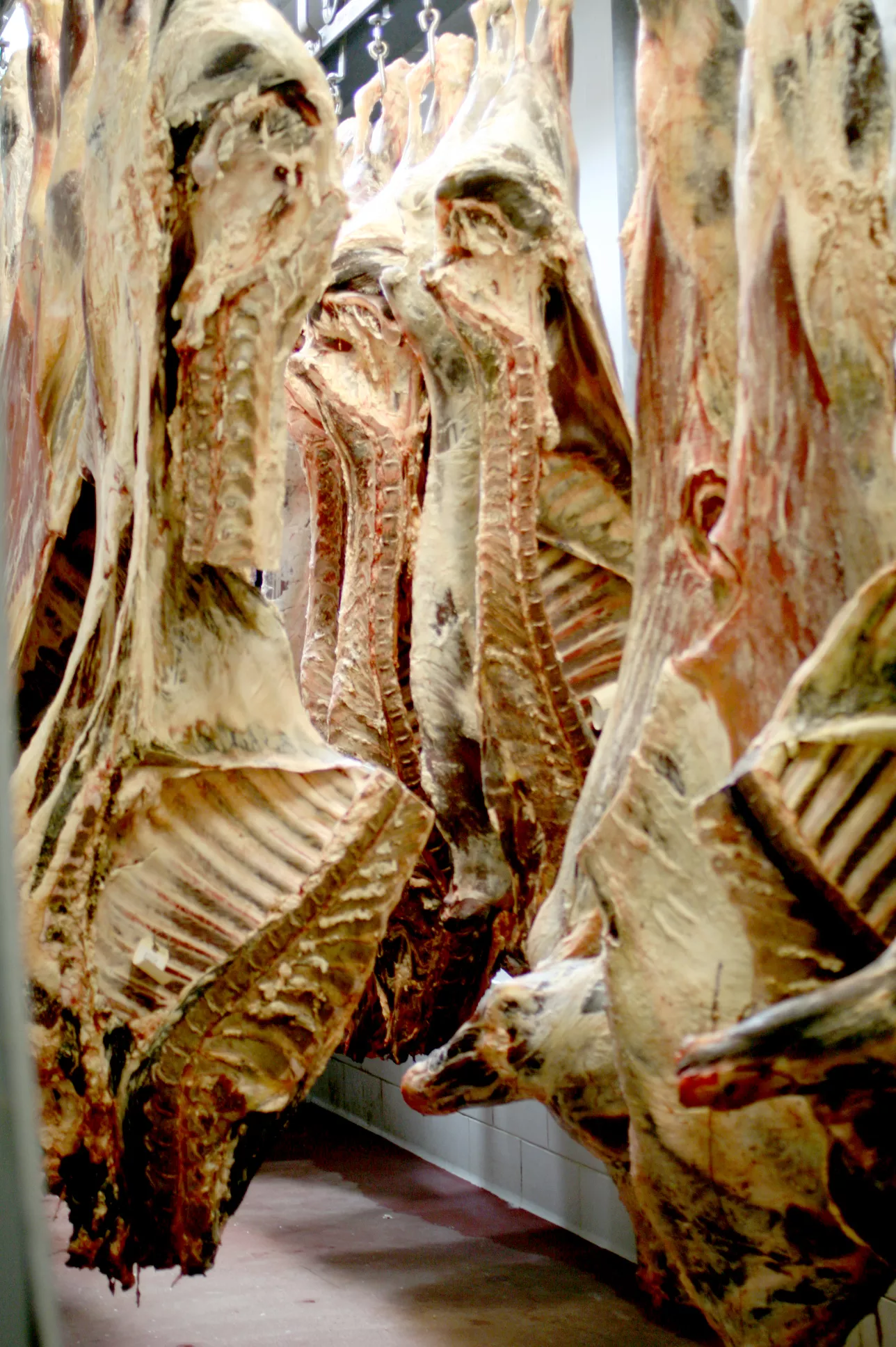
Frustrated by the lack of response to their complaint of the “imminent danger” posed by COVID-19, three meatpacking workers at the Maid-Rite Specialty Foods plant outside of Scranton, Pennsylvania, took the unusual step Wednesday of filing a lawsuit against the Occupational Safety and Health Administration and Labor Secretary Eugene Scalia.
The lawsuit, filed in a Pennsylvania federal court, accuses the government of failing to protect essential workers from dangerous conditions that could expose them to the coronavirus. It relies on a rarely used provision of the Occupational Safety and Health Act that allows workers to sue the secretary of labor for “arbitrarily or capriciously” failing to counteract imminent dangers.
On May 19, the Maid-Rite workers had turned to a Pennsylvania organization called Justice at Work to help them file an anonymous complaint with OSHA that detailed the lack of protections at the plant and described how they were required to work elbow-to-elbow with their co-workers on the production line.
Their complaint followed a similar report from another Maid-Rite employee in early April, which the workers weren’t aware of at the time.
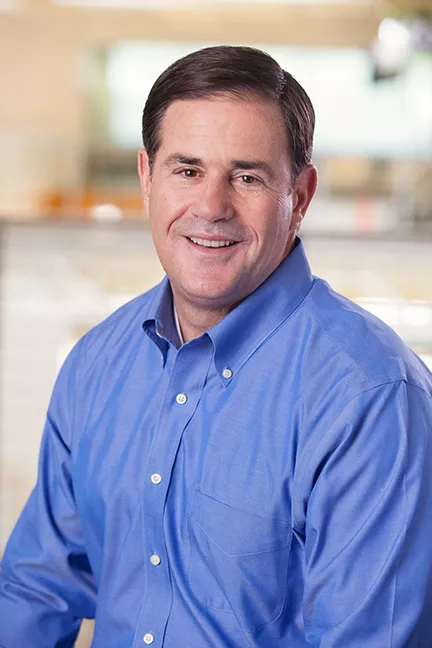
PHOENIX – Gov. Doug Ducey has asked Arizona’s congressional delegation to focus on unemployment and other matters important to Arizonans in the next federal COVID-19 relief package.
Ducey’s July 21 letter seeks funds to guarantee the unemployed will be eligible to receive at least 100% of their weekly earnings, and to replenish the state’s $1 billion unemployment trust fund, which has paid out $640 million since the pandemic began.
“We know we will continue to have needs over the coming weeks and months and we are working to be good stewards of those dollars to the benefit of all Arizonans,” Ducey wrote.
The governor also asked for an extension beyond the Dec. 30 deadline for tribal leaders to spend money allocated by Congress “to ensure they can target their highest areas of need, including infrastructure that will allow them to continue providing needed services.”
A spokeswoman for Sen. Martha McSally, R-Arizona, told The Arizona Republic the senator is “deeply engaged” in crafting the next relief package, a followup to the CARES Act Congress passed in March.
“Employees who are unable to return to work should receive sustained financial relief with expanded unemployment benefits,” McSally said in a later statement. “Congress should provide more support to small businesses that continue to be impacted by restrictions so they can stay afloat.”
Ducey’s July 21 letter seeks funds to guarantee the unemployed will be eligible to receive at least 100% of their weekly earnings, and to replenish the state’s $1 billion unemployment trust fund, which has paid out $640 million since the pandemic began.
“We know we will continue to have needs over the coming weeks and months and we are working to be good stewards of those dollars to the benefit of all Arizonans,” Ducey wrote.
The governor also asked for an extension beyond the Dec. 30 deadline for tribal leaders to spend money allocated by Congress “to ensure they can target their highest areas of need, including infrastructure that will allow them to continue providing needed services.”
A spokeswoman for Sen. Martha McSally, R-Arizona, told The Arizona Republic the senator is “deeply engaged” in crafting the next relief package, a followup to the CARES Act Congress passed in March.
“Employees who are unable to return to work should receive sustained financial relief with expanded unemployment benefits,” McSally said in a later statement. “Congress should provide more support to small businesses that continue to be impacted by restrictions so they can stay afloat.”