
Wednesday, June 10, 2020
The Best of Tucson 2020® is ready to go and waiting for your nominations! After you're done, you can take a look at the other stories we covered today, just in case you missed them earlier.

- The number of confirmed coronavirus cases in Arizona surpassed 29,000 as of Wednesday, June 10, with another jump of 1,556 new cases reported this morning, according to the Arizona Department of Health Services.
- So, the first uncomfortable reality of your slow home internet is that it’s likely there’s an infrastructure problem that will not be addressed until the customer complaints reach the intolerable level.
- More Arizona residents who want a COVID-19 antibody test may do so after the University of Arizona and the state announced expanded testing eligibility.
- More than two months have passed since The Loft Cinema closed their theaters due to COVID-19.
- The Tucson City Council unanimously voted to reopen discussions on the controversial ordinance prohibiting the public to enter and film a crime scene without having officer permission during Tuesday’s study session.
- The Eighth Amendment to the Constitution of the United States prohibits cruel and unusual punishment. It states: “Excessive bail shall not be required, nor excessive fines imposed, nor cruel and unusual punishments inflicted.”
The following is an opinion piece written by William Cooper, an attorney and columnist whose pieces have appeared in publications such as The Wall Street Journal, New York Daily News, Huffington Post, Washington Times, and USA Today, among others.
The Eighth Amendment to the Constitution of the United States prohibits cruel and unusual punishment. It states: “Excessive bail shall not be required, nor excessive fines imposed, nor cruel and unusual punishments inflicted.”
The Supreme Court has construed “cruel and unusual punishments” to include certain forms of torture, such as drawing and quartering. Yet the Court has allowed the death penalty – which is still legal in dozens of states – to continue, with some restrictions. In sum, the Eighth Amendment prohibits criminal punishments that are very harmful to prisoners and also rare or unprecedented.
Right now, over two million inmates sit locked inside US prisons, where the novel coronavirus is rapidly spreading. They are confined in close quarters and typically unable to practice physical distancing. They are, moreover, at the mercy of prison officials when it comes to receiving protective equipment and medical attention. A huge percentage of these prisoners will be infected by the virus. A subset of those infected will get severe symptoms. And a subset of those with severe symptoms will die. Each and every inmate will suffer the torment of not knowing where she or he will ultimately fit into that equation.
Is confining people under these deadly and unprecedented conditions cruel and unusual punishment? Put another way: Is imprisonment during the coronavirus very harmful to prisoners and also unprecedented?
Yes, of course.
The Eighth Amendment to the Constitution of the United States prohibits cruel and unusual punishment. It states: “Excessive bail shall not be required, nor excessive fines imposed, nor cruel and unusual punishments inflicted.”
The Supreme Court has construed “cruel and unusual punishments” to include certain forms of torture, such as drawing and quartering. Yet the Court has allowed the death penalty – which is still legal in dozens of states – to continue, with some restrictions. In sum, the Eighth Amendment prohibits criminal punishments that are very harmful to prisoners and also rare or unprecedented.
Right now, over two million inmates sit locked inside US prisons, where the novel coronavirus is rapidly spreading. They are confined in close quarters and typically unable to practice physical distancing. They are, moreover, at the mercy of prison officials when it comes to receiving protective equipment and medical attention. A huge percentage of these prisoners will be infected by the virus. A subset of those infected will get severe symptoms. And a subset of those with severe symptoms will die. Each and every inmate will suffer the torment of not knowing where she or he will ultimately fit into that equation.
Is confining people under these deadly and unprecedented conditions cruel and unusual punishment? Put another way: Is imprisonment during the coronavirus very harmful to prisoners and also unprecedented?
Yes, of course.
The Tucson City Council unanimously voted to reopen discussions on the controversial ordinance prohibiting the public to enter and film a crime scene without having officer permission during Tuesday’s study session.
Councilmember Lane Santa Cruz brought forth the motion, which was seconded by Councilmember Nikki Lee. Both council members asked for more clarity about the specifics of the ordinance before it was originally voted upon in late April.
"I think that a government works best when we're co-governing as elected officials, administrators and the community," Mayor Regina Romero said. "That's why I think it's important that we open the dialogue on this important issue."
 City Ordinance 11746 passed unanimously on April 21 without allowing public comments due to the city closing their offices due to the COVID-19 pandemic. However, outrage over the killing of George Floyd by a Minneapolis police officer sparked a renewed interest to allow Tucsonans to voice their concerns which could potentially amend or rescind the ordinance.
“When we voted in April, that was a very different time. I think our community and our country as a whole is really fed up with business as usual and are demanding a seat at the table,” Santa Cruz said. “Our responsibility as elected officials is to make room and to also recognize that we don’t always have it figured out. The more input we get, the more we can make informed decisions.”
Critics contend the ordinance tramples First Amendment rights by restricting the public’s access to film officers during interactions and arrests. Tucson Police Chief Chris Magnus and several city council members say the ordinance is to protect officers from being obstructed from their job. The chief also said the ordinance was written so it doesn’t violate the public’s freedom of speech.
“It is really about providing a safe area for officers to engage with the public, suspects, witnesses, whoever...without fear of having someone obstruct or interfere with them doing their work,” Magnus said. “It constitutionally protects the right of people to record police activity. It is very specific and has been a part of the training we’ve been given.”
Magnus also noted TPD officers haven’t made any arrests due to a violation of the ordinance to date since it passed in April.
Councilmember Lane Santa Cruz brought forth the motion, which was seconded by Councilmember Nikki Lee. Both council members asked for more clarity about the specifics of the ordinance before it was originally voted upon in late April.
"I think that a government works best when we're co-governing as elected officials, administrators and the community," Mayor Regina Romero said. "That's why I think it's important that we open the dialogue on this important issue."

"I think that a government works best when we're co-governing as elected officials, administrators and the community," Mayor Regina Romero said. "That's why I think it's important that we open the dialogue on this important issue."
“When we voted in April, that was a very different time. I think our community and our country as a whole is really fed up with business as usual and are demanding a seat at the table,” Santa Cruz said. “Our responsibility as elected officials is to make room and to also recognize that we don’t always have it figured out. The more input we get, the more we can make informed decisions.”
Critics contend the ordinance tramples First Amendment rights by restricting the public’s access to film officers during interactions and arrests. Tucson Police Chief Chris Magnus and several city council members say the ordinance is to protect officers from being obstructed from their job. The chief also said the ordinance was written so it doesn’t violate the public’s freedom of speech.
“It is really about providing a safe area for officers to engage with the public, suspects, witnesses, whoever...without fear of having someone obstruct or interfere with them doing their work,” Magnus said. “It constitutionally protects the right of people to record police activity. It is very specific and has been a part of the training we’ve been given.”
Magnus also noted TPD officers haven’t made any arrests due to a violation of the ordinance to date since it passed in April.

More than two months have passed since The Loft Cinema closed their theaters due to COVID-19. In that time, they're adapted to social distancing by allowing virtual film rentals from their website, and even hosted some free online screenings. Now they have a new offer for you: Rent the theater to watch the movie of your choice in a private screening!
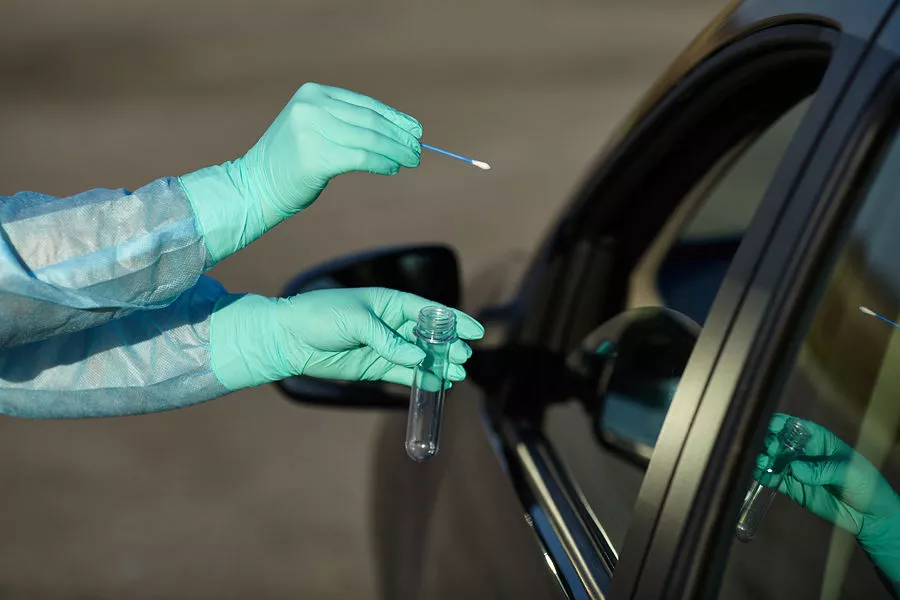
More Arizona residents who want a COVID-19 antibody test may do so after the University of Arizona and the state announced expanded testing eligibility.
Hospital employees, healthcare professionals licensed by the boards of naturopathy, homeopathy, podiatry, chiropractic examiners, optometry and nine other health care categories are all eligible, as well as corrections officers and child safety workers employed by the state.
The university also announced a new testing site in Nogales, Arizona.
According to UA, the roughly 6,000 blood samples analyzed during the first phase of testing in Pima County resulted in no false positives. The tests measure the amount of antibodies in a person’s blood.
Registration for the test is available at this website, where participants also can find a list of all the groups eligible for testing.
Hospital employees, healthcare professionals licensed by the boards of naturopathy, homeopathy, podiatry, chiropractic examiners, optometry and nine other health care categories are all eligible, as well as corrections officers and child safety workers employed by the state.
The university also announced a new testing site in Nogales, Arizona.
According to UA, the roughly 6,000 blood samples analyzed during the first phase of testing in Pima County resulted in no false positives. The tests measure the amount of antibodies in a person’s blood.
Registration for the test is available at this website, where participants also can find a list of all the groups eligible for testing.

I recently flagged down a technician from my local internet provider about why the service seems so darn slow all the time. He confirmed one problem I’d always suspected. Upgrading infrastructure is expensive so a company tends to put far too many customers onto the bandwidth than can ever hope to achieve the promised upload and download speeds.
So, the first uncomfortable reality of your slow home internet is that it’s likely there’s an infrastructure problem that will not be addressed until the customer complaints reach the intolerable level.
Even after local economies return to whatever passes for normal in the near future, expect that many who went home to work during the pandemic will not return to the office, thus creating even more demand for the finite resource of internet bandwidth.
The good news is that there’s a solid chance that a few tweaks to your router and applying other tricks of the trade can speed things up considerably while you wait for your provider to crack open the wallet and undertake a full-scale upgrade.
Test Your Speed First
There’s not much point in changing anything until you know what you’re working with. That means you should test upload and download speeds to see if they happen to be anywhere near what was promised in the package you signed up for.
Once you have numbers for both your upload and download speed (the latter is typically much faster), compare them against what area providers say they deliver. Maybe you’ll be pleasantly surprised, but there’s a good chance you won’t. If your real world numbers are too far removed from your plan numbers, a phone call to the home office might be in order.
Advertised speed is usually calculated as a “best case” scenario and intended to be used as the top end of a range.
Turn Off Unused Devices
Every single internet device in your house is sipping (maybe even gulping) data at all times unless it’s turned off or the wifi capability is switched off. Wait! Don’t just speed through this suggestion as too Mickey Mouse to try. It really can help.
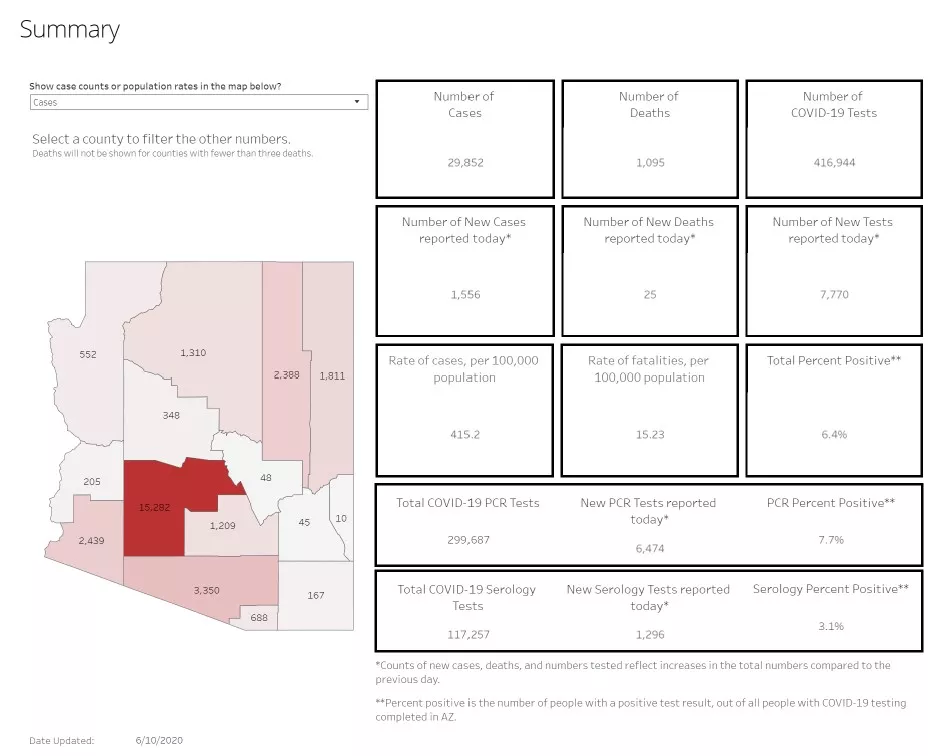
The number of confirmed coronavirus cases in Arizona surpassed 29,000 as of Wednesday, June 10, with another jump of 1,556 new cases reported this morning, according to the Arizona Department of Health Services.
Pima County had 3,350 of the state's 29,852 confirmed cases.
A total of 1,095 people have died after contracting the virus, including 216 in Pima County, according to the report.
In Maricopa County, the number of confirmed COVID-19 cases hit 15,282.
Because symptoms can take as long as two weeks to appear after exposure to the virus (while some people can remain entirely asymptomatic), health officials continue to urge the public to avoid unnecessary trips and gatherings of more than 10 people, especially if you have underlying health conditions, and have advised people to cover their faces with masks in public.
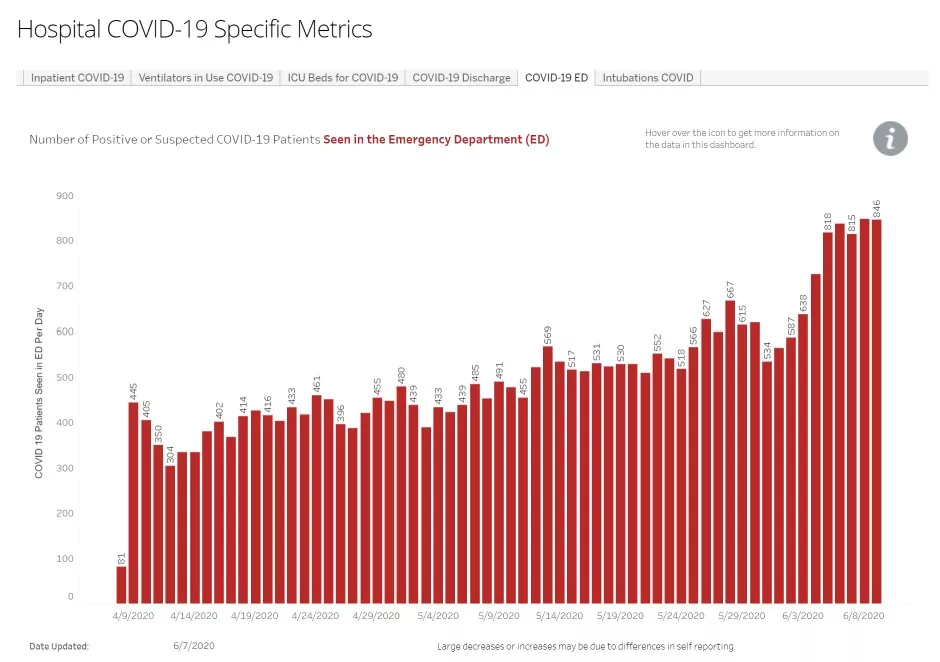
Following the end of Gov. Doug Ducey's stay-at-home order on May 15, Arizona hospitals continue to see a rise in the number of people hospitalized with COVID symptoms, as well as more people visiting emergency rooms. This morning's Arizona Department of Health Services report shows that as of yesterday, 1,274 Arizonans were hospitalized. There are 413 COVID patients in ICU units and 846 people arrived at emergency rooms with COVID-like symptoms on June 9, according to the report.
Banner Health's chief clinical officer Marjorie Bessel hosted a special briefing about the rapidly increasing numbers of COVID hospitalizations in Arizona on Friday, June 5. Bessel warned that if current trends continue, Banner will soon need to exercise its surge plan to increase ICU capacity. Bessel highlighted a steep increase of COVID-19 patients on ventilators: On June 4, Banner’s Arizona hospitals had 116 COVID-19 patients on ventilators, up from roughly 15 a month prior.
When Ducey lifted Arizona's stay-at-home order on May 16, he noted that CDC gating criteria included two weeks of falling cases or a two weeks decreasing positive cases as a percentage of total tests. Total cases continue to rise, as does the number of positive cases as a percentage of total tests. On May 17, the percentage of positive tests to total tests was 6 percent; on May 24, it was 9 percent; on May 31, it was 12 percent, according to figure on the ADHS website.
At a June 4 press conference, Ducey said he and Department of Health Services Director Dr. Cara Christ anticipated the current increase in positive COVID-19 cases because testing has “dramatically increased” within the state. Christ downplayed the alarm about the recent increase in cases, which some have attributed to the end of the stay-at-home order on May 15, saying “as people come back together, we know there will be transmissions of COVID-19.”
Pima County had 3,350 of the state's 29,852 confirmed cases.

A total of 1,095 people have died after contracting the virus, including 216 in Pima County, according to the report.
In Maricopa County, the number of confirmed COVID-19 cases hit 15,282.
Because symptoms can take as long as two weeks to appear after exposure to the virus (while some people can remain entirely asymptomatic), health officials continue to urge the public to avoid unnecessary trips and gatherings of more than 10 people, especially if you have underlying health conditions, and have advised people to cover their faces with masks in public.
Following the end of Gov. Doug Ducey's stay-at-home order on May 15, Arizona hospitals continue to see a rise in the number of people hospitalized with COVID symptoms, as well as more people visiting emergency rooms. This morning's Arizona Department of Health Services report shows that as of yesterday, 1,274 Arizonans were hospitalized. There are 413 COVID patients in ICU units and 846 people arrived at emergency rooms with COVID-like symptoms on June 9, according to the report.
Banner Health's chief clinical officer Marjorie Bessel hosted a special briefing about the rapidly increasing numbers of COVID hospitalizations in Arizona on Friday, June 5. Bessel warned that if current trends continue, Banner will soon need to exercise its surge plan to increase ICU capacity. Bessel highlighted a steep increase of COVID-19 patients on ventilators: On June 4, Banner’s Arizona hospitals had 116 COVID-19 patients on ventilators, up from roughly 15 a month prior.
When Ducey lifted Arizona's stay-at-home order on May 16, he noted that CDC gating criteria included two weeks of falling cases or a two weeks decreasing positive cases as a percentage of total tests. Total cases continue to rise, as does the number of positive cases as a percentage of total tests. On May 17, the percentage of positive tests to total tests was 6 percent; on May 24, it was 9 percent; on May 31, it was 12 percent, according to figure on the ADHS website.
At a June 4 press conference, Ducey said he and Department of Health Services Director Dr. Cara Christ anticipated the current increase in positive COVID-19 cases because testing has “dramatically increased” within the state. Christ downplayed the alarm about the recent increase in cases, which some have attributed to the end of the stay-at-home order on May 15, saying “as people come back together, we know there will be transmissions of COVID-19.”
Fore more Claytoonz click here.

Tags: maga , trump , conspiracy , protest , push , police , political , cartoon , Image
Tuesday, June 9, 2020
Here are the stories we covered for you today. Don't forget to also vote in the 2020 Best of Tucson!

- The number of confirmed coronavirus cases in Arizona surpassed 28,000 as of Tuesday, June 9, with another 618 new cases reported this morning, according to the Arizona Department of Health Services.
- In his May 20 presser, Ducey laid out his case for re-opening Arizona. He pointed to the White House's guidance "Opening Up America Again" and the implementation guidelines provided by the CDC, using them to argue that Arizona met the gating criteria for moving into Phase One of the White House plan.
- On June 2 Bank of America announced their commitment to spend $1 billion helping local communities address economic and racial inequality accelerated by the COVID-19 pandemic.
- Congressional Democrats unveiled a sweeping police reform bill Monday that would ban the use of chokeholds and make it easier to hold officers accountable, a bill that one Arizona police group blasted as “one-sided” and “disappointing.”
- The $2.2 trillion coronavirus aid package that Congress passed in March has provided medical and financial relief to millions of Americans, including allocations for low-income, rural and uninsured populations.
- A Senate investigation has found that the IRS has conducted little oversight of its partnership with the for-profit tax prep industry to offer free tax filing, and calls for the agency to increase funding to promote the free option.
- Do you want to see how legislation that was supposed to be a bailout for our economy ended up committing almost as much taxpayer money to help a relative handful of the non-needy as it spent to help tens of millions of people in need?
ProPublica is a nonprofit newsroom that investigates abuses of power. Click here to read their biggest stories as soon as they’re published.
Since 2018, Capital One has been a looming presence in Julio Lugo’s life, ever since the company sued him, as it did 29,000 other New Yorkers that year, over an unpaid credit card. But when the coronavirus hit the city this March, it wasn’t on his mind.
At Mount Sinai in Manhattan, where he works, he’d been drafted into the hospital’s frenzied effort against the virus. He normally gathered patient information at the front desk of a radiology clinic in orderly shifts, 9 to 5. Now he was working 16-hour days, often overnight. At one moment he might be enlisted to help a team of doctors or nurses put on their full-body protective equipment and then he would rush to disinfect another team. He lost track of the days, only orienting himself by the need to juggle care with his ex-wife of their two young children who were now out of school.
But despite a global pandemic, Capital One didn’t forget about him. The company began in late March to seize a portion of his wages to collect on that debt — one that he says wasn’t even his.
Federal, state and local officials have all taken some steps to protect Americans from the ravages of the economic crash due to COVID-19. Congress halted a substantial portion of evictions, foreclosures and collection on student loans. And when it sent $300 billion in stimulus checks out to families, many states took steps to make sure that debt collectors didn’t grab the money. But one of the most aggressive and common forms of debt collection has generally been allowed to continue: seizure of wages for old consumer debts.

Since 2018, Capital One has been a looming presence in Julio Lugo’s life, ever since the company sued him, as it did 29,000 other New Yorkers that year, over an unpaid credit card. But when the coronavirus hit the city this March, it wasn’t on his mind.
At Mount Sinai in Manhattan, where he works, he’d been drafted into the hospital’s frenzied effort against the virus. He normally gathered patient information at the front desk of a radiology clinic in orderly shifts, 9 to 5. Now he was working 16-hour days, often overnight. At one moment he might be enlisted to help a team of doctors or nurses put on their full-body protective equipment and then he would rush to disinfect another team. He lost track of the days, only orienting himself by the need to juggle care with his ex-wife of their two young children who were now out of school.
But despite a global pandemic, Capital One didn’t forget about him. The company began in late March to seize a portion of his wages to collect on that debt — one that he says wasn’t even his.
Federal, state and local officials have all taken some steps to protect Americans from the ravages of the economic crash due to COVID-19. Congress halted a substantial portion of evictions, foreclosures and collection on student loans. And when it sent $300 billion in stimulus checks out to families, many states took steps to make sure that debt collectors didn’t grab the money. But one of the most aggressive and common forms of debt collection has generally been allowed to continue: seizure of wages for old consumer debts.