

Tuesday, October 26, 2021
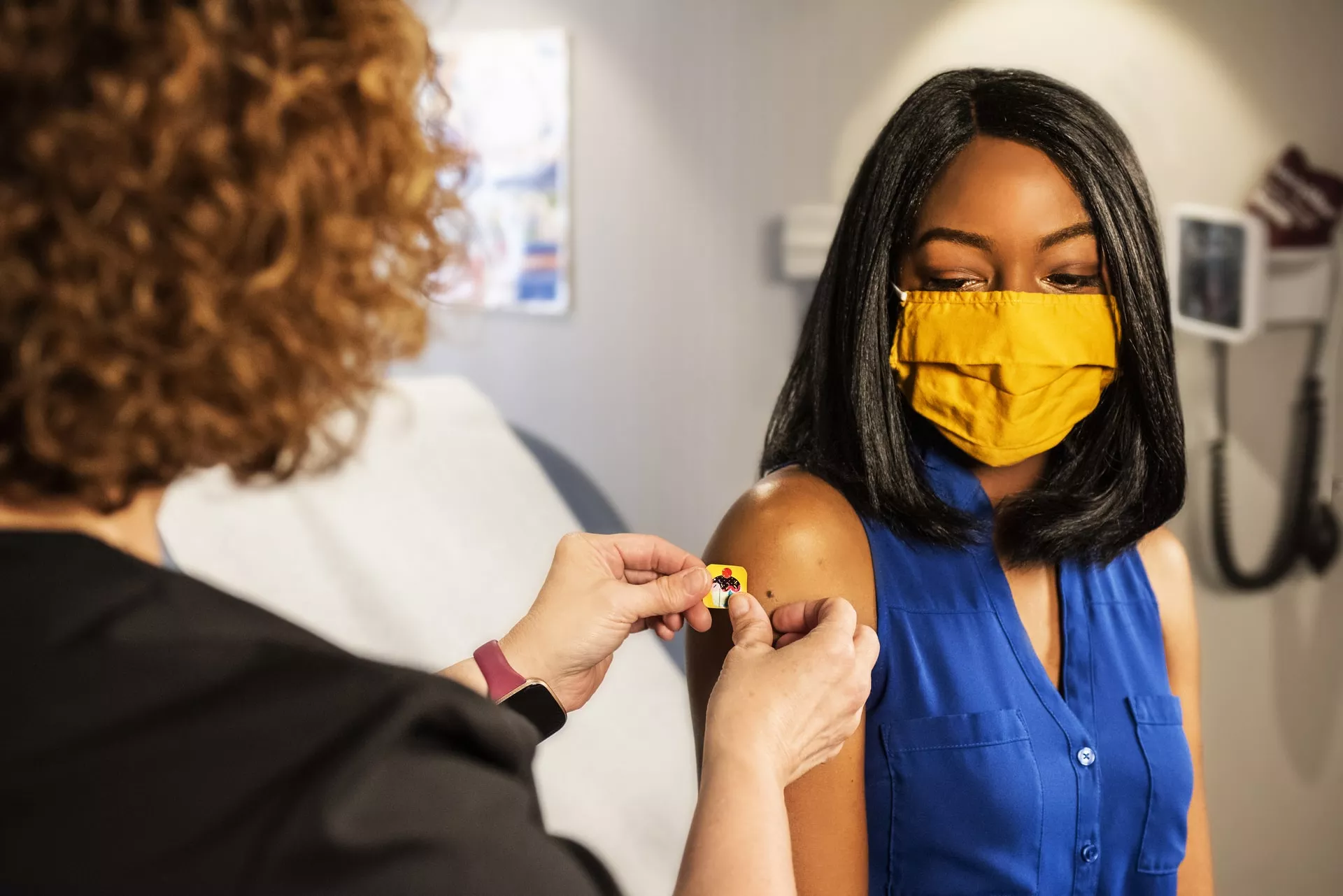
The Pima County Health Department is now offering all three types of COVID-19 boosters to eligible individuals at its health clinics, vaccination PODs and mobile clinics.
The Centers for Disease Control and Prevention on Oct. 21 approved the boosters after previously authorizing the Pfizer booster. The CDC is also allowing people to choose which booster they receive.
If you completed two doses of Pfizer or Moderna at least six months ago, you are eligible for a booster if you are:
- 65 years or older
- 18+ and live in long-term care settings
- 18+ and have underlying medical conditions
- 18+ and work or live in high-risk settings for exposure to COVID-19
If you initially received a J&J shot, boosters of any vaccine type are recommended for those 18 and older and who were vaccinated at least two months ago.
Find a complete list of Pima County health clinics and mobile sites, with days and hours of operation, at www.pima.gov/covid19vaccine. The vaccine is free, and no ID is required at County sites.
All three vaccine booster types also are widely available at pharmacies. Check on locations and vaccine type available on the Arizona Department of Health Services webpage and at vaccines.gov.
Time is running out for Senate Democrats to deliver millions of undocumented immigrants a path to citizenship that their families and advocates nationwide have been clamoring for years, and some business leaders in Arizona are emphasizing the economic benefits of a path to legalization.
In a letter to U.S. Sens. Mark Kelly and Kyrsten Sinema, 32 business leaders, elected officials and heads of nonprofits asked them to ignore the recommendations from the Senate parliamentarian, who twice rejected a plan to include a pathway to citizenship in a budget reconciliation plan.
“It has never been more urgent to achieve immigration reform to boost our economy, address our labor shortage, level the playing field for all workers and to support families,” the letter read. “The urgency is clear, the benefits are undeniable, the legislative vehicle is on the table and there is bipartisan popular support for action. We can not let this opportunity slip away. Our nation can’t afford (that) and neither can Arizona.”
Former Republican state senator Bob Worsley organized the coalition that signed the letter, which includes executives of real estate, construction and retail companies, Mesa Mayor John Giles, and Nogales councilwoman Liza Montiel.
“We have less than a couple of weeks to try to get some immigration reform into reconciliation,” Worsely said. “I’m afraid that, if we don’t get something in there, we are back to square one where we were earlier this year after Biden was elected.”
Monday, October 25, 2021
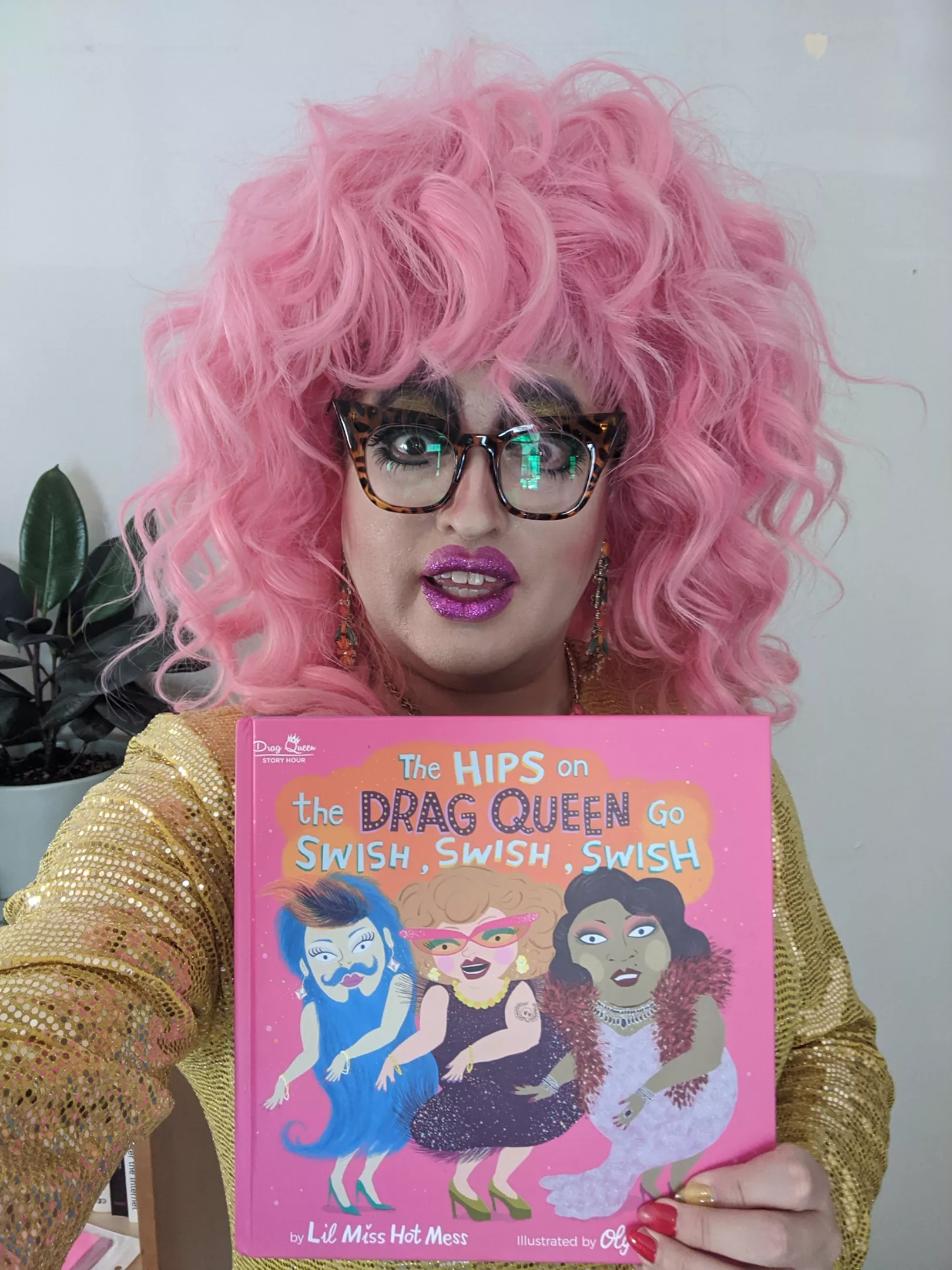
Lil Miss Hot Mess will present her research on drag studies at the University of Arizona Poetry Center, 1508 E. Helen St., in the Dorothy Rubel Room at 7 pm on Tuesday, Oct 26.
Lil Miss Hot Mess is a well-known drag queen, activist, scholar, children’s book writer and storyteller of Drag Queen Story Hour, a program that brings drag queens and children together for storytime. Her children’s books include The Hips on the Drag Queen Go Swish, Swish, Swish. (The forthcoming If You’re a Drag Queen and You Know It will be available in May.) Lil Miss Hot Mess is a professor at UA who teaches history and theory of play. Lil Miss Hot Mess’s presentation is part of UA’s 2021 Tucson Humanities Festival and will be available for live stream at humanitiesfestival.arizona.edu/live.
What can attendees expect to see at the presentation?
It’s an overview of my work with Drag Queen Story Hour and some research that I've done on drag pedagogy. In addition to being a drag performer, I am also a professor at the U of A. Some of my research is about what can we learn from Drag Queen Story Hour in the broadest possible sense. Not just, how do we think about LGBT or gender 101? But, how we can learn to be better teachers or educators if we adapt some of the strategies of drag performers. I talk about things like how to incorporate humor to de-stigmatize difficult topics.
What topics are you destigmatizing?
When I talk about drag I like to actually highlight that it's not just about gender, it's not just about a physical transformation because drag has many different forms. Drag is about exaggeration. It's about turning your fantasy into a reality and often it's about dealing with difficult topics through a sense of camp, through a sense of humor. Being willing to laugh at ourselves and laugh at the world, but also take some of these things seriously. For example with Drag Queen Story Hour, we like to read books that address different topics of diversity, bullying, of finding your own creative voice. But, we also like to read the classic Everyone Poops. Which is a way of taking a thing that can be serious, scary, or shameful for kids and reading the book together and laughing at it. I also think it is for kids who might be questioning their identity, their gender identity or feel different because they are multiracial, adopted or have a disability. They learn about finding strength through humor and leaning into those things that make us different is part of what drag culture is all about.
What inspired you to do this type of research?
I fell into Drag Queen Story Hour through some of my friends in the San Francisco Bay Area. It started in 2015. I was living in New York at the time, and we brought it to New York. You know, it's blossomed all around the country and all around the world. I think there are so many affinities between drag performers and children. Drag is literally dressing up and playing. Kids are all about imagination. They're all about play, they're all about asking a lot of questions and I think that's another thing drag does well is that it questions authority, it questions history. It asks why? Why should we do something one way because it has always been done that way? Being able to explore that with kids not only provides them an important educational opportunity but I've also learned a lot in so many different ways from working with children in drag. The research came after doing the events because I wanted to go a little bit deeper.
It's like a commentary on education and how we can approach talking about these deeper topics with kids.
Much of education is test scores and memorizing. Even important work in diversity or social justice topics still tends to be framed as learning the vocabulary for LGBTQ or learning how to get some of these things right. I think that drag opens up a little bit more space for improvisation, for experimentation, for taking risks, for being willing to fail together and laugh at off or learn from it. I think that is actually a major shift from the way that we think of education in this country.
What are you hoping people walk away with from your event?
My main goal throughout all of this work is to get people to loosen up a little bit and enjoy that sense of play and be open to thinking about things in a different way. I will talk about five specific strategies that people can use but again, I don't want people walking away with notes. I want people to walk away feeling that we can activate our imaginations to do things differently. How do we tap into our own creativity? How do we use that to reimagine our world?
I think drag can intersect with a lot of different aspects of our lives. One thing that I try to make clear is that when I talk about drag pedagogy or drag education, I'm not suggesting that every teacher put on a wig or a pair of heels. But that people think about some of these elements to transforming something about the way you work, or bringing out an aspect of your personality that you don't always allow to shine can change the way that you relate to people or relate to different situations. So it's not about becoming a drag but it’s really about learning a little bit from us.
Tags: Tucson Humanities Festival , drag , drag queen , Lil Miss Hot Mess , University of Arizona , UA , humanities , storytelling , children's books , Image
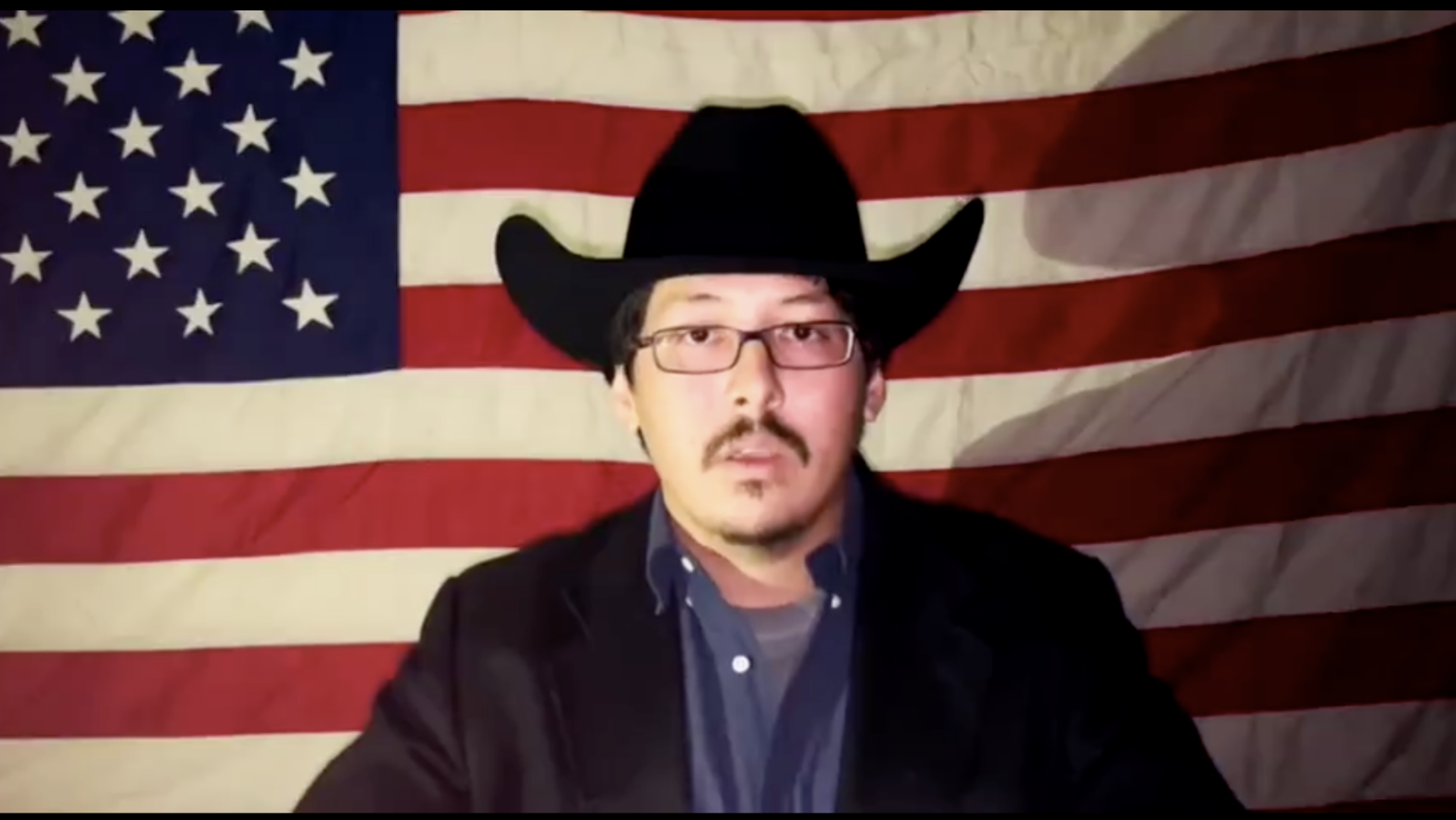
Five days before Ron Watkins, the notorious MAGA conspiracy theorist who helped spread the violent far-right QAnon conspiracy, posted a video to his Telegram account announcing his candidacy for a rural Arizona congressional district, he registered to vote in Maricopa County.
Watkins, who is widely believed to have been behind QAnon’s master account, has been making national headlines for his congressional bid in Arizona where he is attempting to unseat Democratic Congressman Tom O’Halleran in a large, rural district that encompasses a large portion of the state.
However, that district won’t exist in 2022: All of the state’s districts are being redrawn by the Arizona Independent Redistricting Commission, and final decisions won’t be made until the end of the year.
The Arizona Mirror obtained a copy of Watkins’ voter registration information through the state’s public records law. It shows Watkins registered to vote in Maricopa County on Oct. 9, at a condominium in the Biltmore neighborhood of Phoenix. Property records show that the property is owned by Liz Harris, a Republican who lost a bid for the state legislature in 2020 and has since become a leading proponent of false claims that widespread fraud changed the election’s results.
Harris is also the real estate agent for the property, which was listed for sale in August. Online realty websites show the condominium is priced at about $287,000 and that a sale is pending. It’s unclear if Watkins is purchasing the property.
Harris has been the driving force behind a group of conservatives who have canvassed Maricopa County and other parts of the state to identify alleged voter fraud. But the report she spearheaded based on that door-to-door scouring was rife with errors, including listing areas that had homes on it as vacant lots and lacking other corroborating information.
But who exactly is Watkins? And how is a man who has spent the past decade living in Japan, China and the Philippines able to run for higher office in Arizona?
Saturday, October 23, 2021

County spokesperson Mark Evans said Tucson police were investigating the accident.
Tucson police closed Broadway Boulevard between Scott and Church avenues this morning following the collision.
Huckelberry has been county administrator since 1993.
Friday, October 22, 2021
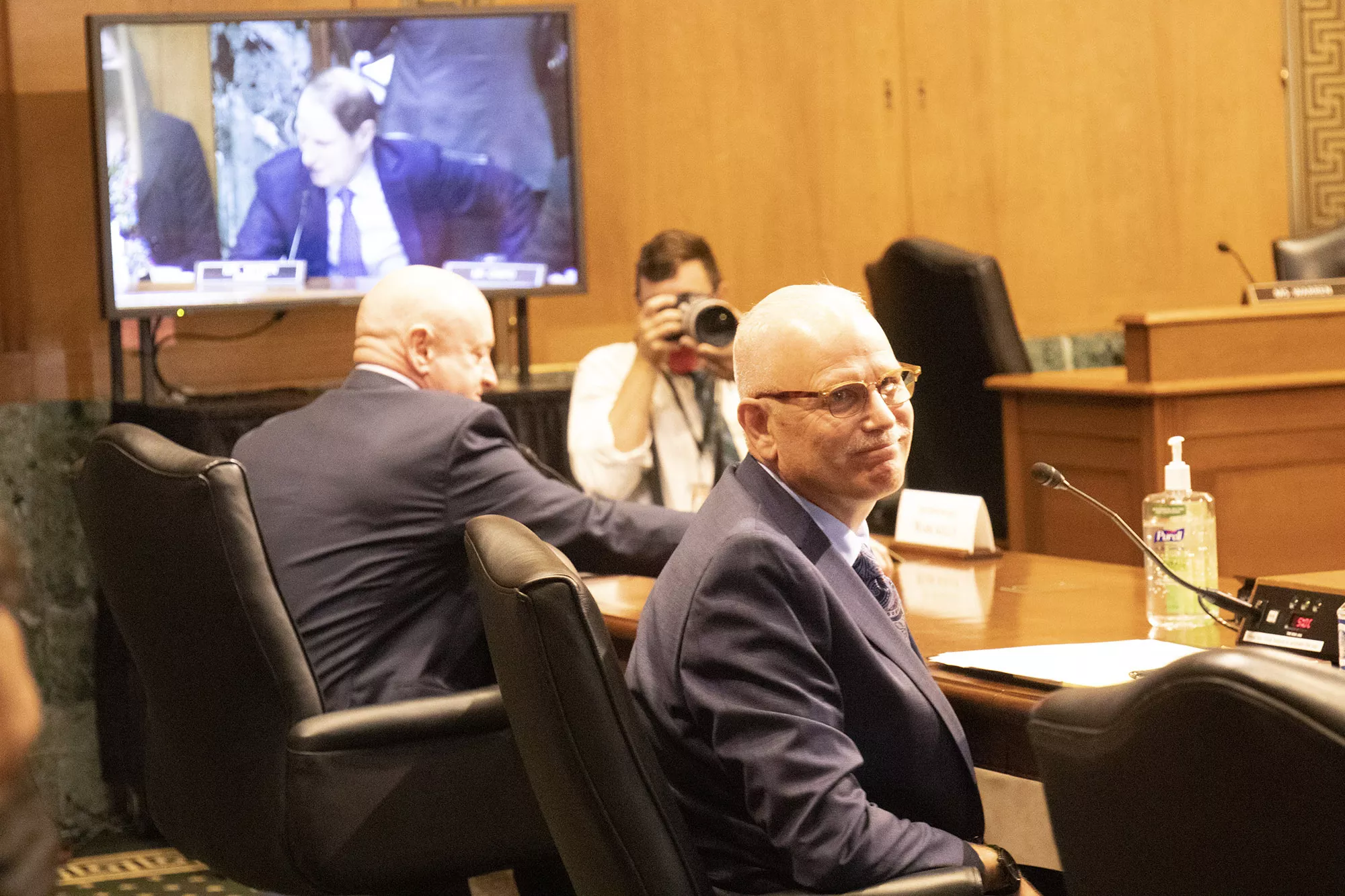
WASHINGTON – Tucson Police Chief Chris Magnus walked a fine line in a hearing Tuesday on his nomination to lead Customs and Border Protection, easily fielding questions from Democrats while telling GOP senators some of what they wanted to hear.
Republicans could not get Magnus to say there is a “crisis” at the border, but he did agree that COVID-19 vaccinations for immigrants would be reasonable and that a border wall would make sense in some areas, along with better technology for Border Patrol officers.
Mostly, Magnus said he wanted to work with others, both in Congress and in CBP, to find solutions to the challenges the agency faces, from border security to battling forced labor and intellectual property theft.
“If we spent a little less time debating on what the terminology is and perhaps a little more time trying to fix a broken system and working together, we could address what I’ve already acknowledged is one of the most serious problems that we face right now in our nation,” Magnus said.
Despite the sometimes-rough questioning from Republicans on the Senate Finance Committee, one analyst said she expects his nomination to advance.
“He strikes an important balance for both the moderate and more left-wing parts of the Democratic Party in that he clearly believes in border security, but on the other hand, he is also the most progressive nominee put forth for CBP,” said Jessica Bolter, associate policy analyst at the Migration Policy Institute.
Thursday, October 21, 2021
Halloween Kills is the most unfortunate of sequels in that it could’ve been so good and winds up being part efficient slasher movie and part total garbage.
Come on. You have David Gordon Green and Danny McBride working as director and co-writers on this movie. Those are the guys who did Pineapple Express, a stellar example of mixing sinister shit with hilarious comedy. Pineapple Express feels like both a serious crime thriller and a buddy comedy.
Green’s 2018 Halloween balanced sufficient creepiness with some hilarious moments and harkened back the brilliance of the John Carpenter original. The jokes never took you out of the horror vibe, but they were pretty funny (the kid and his babysitter, the son and his dad talking about dancing). It was one of the best things about that Halloween, combined with the kind of look and sound Halloween fans want with these movies.
In Halloween Kills, Green still has the look and sound dialed in perfectly. This is, without a doubt, one of the best-looking films in the series. It sits firmly in the top three. When Michael Myers is killing people in this movie, it is horrifying, and it should be. If you took the murder scenes in this movie and placed them in their own separate place and just watched those, you would think you were dealing with one of the all-time great slasher films. When the movie is good, it is really good.
But, when it is bad…oh boy, is it ever bad.
After the events of the last film, where Michael was supposedly killed in a house fire, there’s an extremely well-done flashback to 1978, featuring a pristine mask and an effects driven Dr. Loomis (Donald Pleasance). It then jumps back to 2018 and, of course, Michael is very much still ticking. There are some brutal, absolutely horrifying kill scenes in the first half hour or so. At this point, Halloween Kills looks like a solid sequel at the least.
Then, instead of comedy, Green goes for politics in trying to depict a serious mob uprising as the town of Haddonfield decides enough is enough. Halloween canon like Tommy Doyle (now played by Anthony Michael Hall) and Lindsey (Kylie Richards) show up as scarred, PTSD sufferers who want Mike’s head on a stake. They rile up a crowd at the hospital (echoes of the original Halloween 2), which culminates in a final street fight that feels a little like the ending of Rocky V.
There’s a repeated chant of “Evil dies tonight!” that sounds an awful lot like “USA!” There’s a moment where a person has a choice of jumping off a building or facing an even worse kind of death inside the building. There are moments where those fireman alarms, the ones that indicate a fighter in distress, are going off. It’s a lot of 9/11 and COVID battle parallels, and it is way, way lame. Horrible dialogue, horrible acting, and seriously bad plot choices.
Christ, you have Green and Danny McBride, the Pineapple Express guys. Make that mob comedic on some levels. Pay McBride a little extra to be in that mob. Add some dark comedy, like the Ash and Evil Dead series. Fans don’t want attempts at total seriousness in their Halloween movie. All shreds of dark comedy, and I mean all of them, have been replaced by dumb monologue meanderings on the origins of evil, and Anthony Michael Hall sweating a lot. It’s not fun. It’s the exact opposite. It’s awkward and just damned awful.
Halloween Kills is a true oddity. It has some of the year’s best looking and sounding film moments mixed with very worst picture of the year drama. Another cut of this film that removes the hospital subplot altogether, with Danny McBride and Bruce Campbell replacing Anthony Michael Hall, is in order.
The film made $50 million at theaters, a nice haul considering it was released to streaming on the same day as its theatrical opening. The big haul virtually assures the final chapter in the trilogy, which is scheduled to shoot in January. Hopefully, Green gets back on track and finishes strong.
If you have Peacock, don’t waste your time at the theater with Halloween Kills. That is not money well spent.

