

Tuesday, October 19, 2021

Monday, October 18, 2021


Four years ago, Liverpool, England, the city that begat the Beatles, commissioned renowned choreographer Mark Morris to create a dance that would honor the 50th anniversary of Sgt. Pepper’s Lonely Hearts Club Band, one of the Beatles' most influential albums.
Two years ago, the Mark Morris Dance Group was touring the U.S. with the piece, dubbed Pepperland.
A tribute to the Beatles, the 70-minute dance was a jazzy explosion of color, with innovative modern dance moves and plenty of music, including six Beatles songs. The Washington Post found the dance ravishing.
“Pepperland is an ecstatic and provocative Beatles tribute,’’ dance writer Sarah L. Kaufman declared, “and like no land you’ve been to before.”
Regrettably, that dancing Beatle land did not come to Tucson that year. Because in the midst of all the praise, Pepperland went dark. COVID had descended and the tour shut down. Tucson would have to wait.
Like every other choreographer, Morris spent much of the past year and a half stuck in the studio, but he used the time to experiment with new ways to dance.
Instead of leading some of the nation’s best modern dancers across America’s stages, he put them in dance videos, filmed in lonely New York apartments, with the performers dancing solo. The online videos were a hit, and bit by bit, the troupe ventured carefully back into the world. During the past month, the ever-innovative Morris debuted new works created during the pandemic time. The dancers performed them outdoors in different parts of the Big Apple.
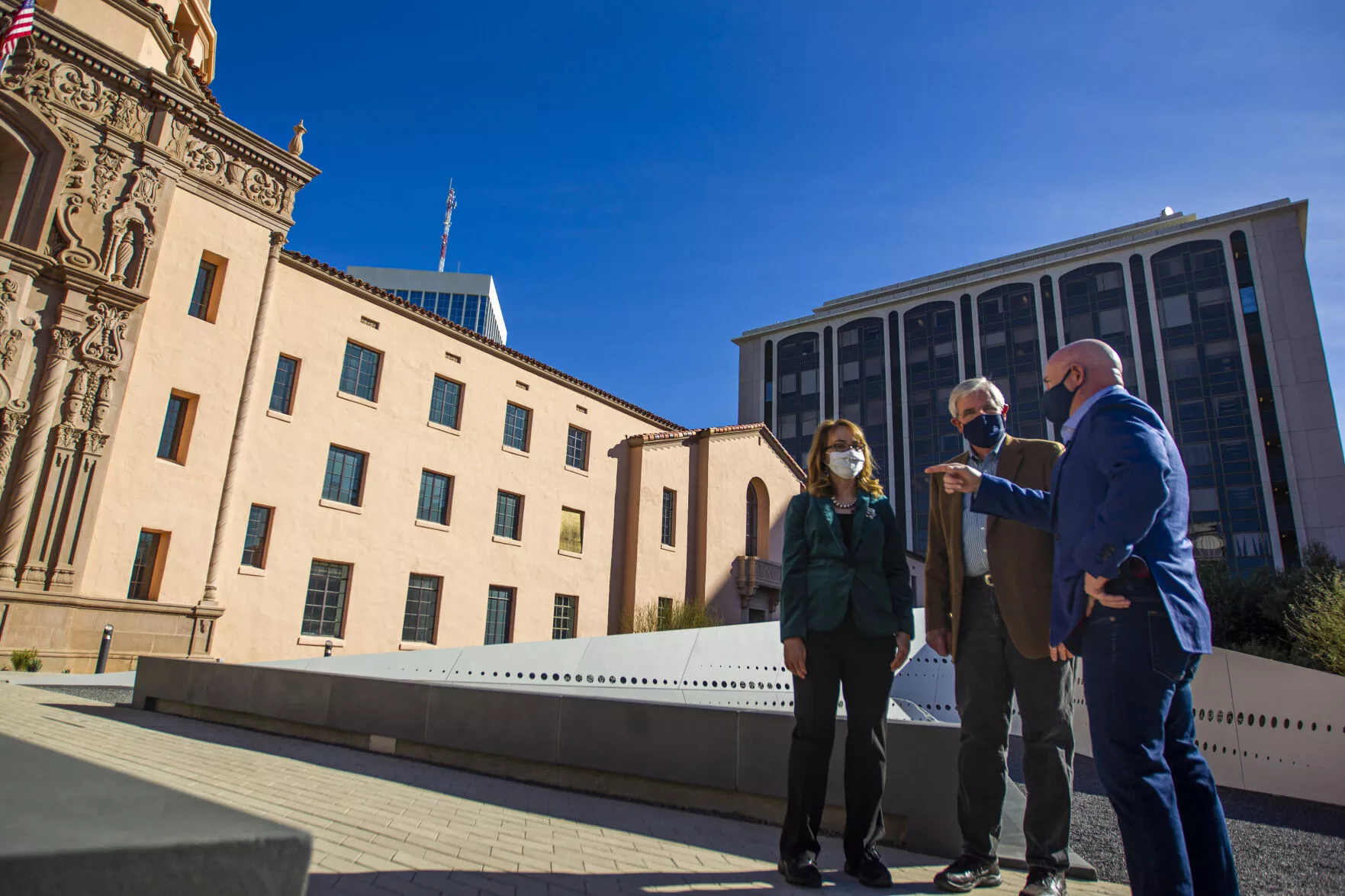
WASHINGTON – The Jan. 8, 2011, mass shooting in Tucson that killed six and wounded 13, including then-Rep. Gabrielle Giffords, reverberated nationally.
Ron Barber thinks it should be remembered nationally, too.
Barber testified Thursday in support of a bill that would make the January 8th Memorial in Tucson an “affiliated area” of the National Park System, a designation that he said “allows for our country to know it exists.”
“When you look at what happened that day, it has national and international significance,” Barber told a House Natural Resources subcommittee hearing on the bill. “When that shooting took place, it didn’t just affect the conscience of our community, it affected the conscience of our whole country and abroad.”
The proposal got a lukewarm reception from the National Park Service, which said it could not support affiliate designation until it has a chance to study whether the site “meets the criteria for national significance, suitability, and feasibility” for inclusion in the national park system.
“The Department appreciates the desire of the bill’s sponsor to bring greater recognition to the events of January 8, 2011,” said Mike Caldwell, the National Park Service’s acting associate director for park planning, facilities and lands. “However, we have no basis for knowing whether the proposed site meets the criteria for inclusion in, or affiliation with, the National Park System, as a study has not been completed for the site.”
Barber disagreed, saying during the hearing that “if this isn’t nationally significant, I don’t know what is.”

Friday, October 15, 2021
Emerge Center Against Domestic Abuse will be collecting supplies for domestic abuse survivors at October events in Pima County.
Donations will be collected from 8 am. to 6 p.m., Oct. 16, at The Loft Cinema, 3233 E. Speedway Blvd.; and 9 a.m. to 8 p.m., Oct. 29, at the Oro Valley Walmart, 2150 E Tangerine Road.
A virtual Stuff the Bus is also available during October for those who prefer to maintain social distancing but want to support domestic abuse survivors.
Most-needed items include:
- Towels
- Natural Hair Care Products (leave-in conditioner, hair oil)
- Toiletries
- Shampoo & Conditioner
- Toothbrushes & Toothpaste
- Soap & Body Wash
- Deodorant
- Activity Books for Teens
- Reusable Water Bottles
- Baby Wipes
- Diapers (newborn - 6T)
Emerge cannot accept used items. A complete wish list can be found at emergecenter.org
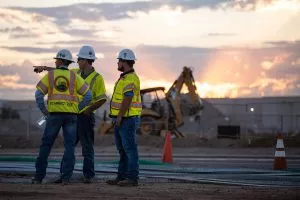
PHOENIX – When construction worker Lorenzo Tejeda moved to Arizona in November 2019 after living in San Diego his whole life, he had to make a lifestyle change to properly adjust to working in the Arizona heat.
“I had to change the way I ate, I had to change the way I hydrated, I had to change the way I exercised in order to condition my body to be ready to work possibly eight to 10 to 12 hours outside in 115-degree heat,” Tejeda said. “It was a long process and it was a complete lifestyle change.”
Tejeda is the safety and environmental manager for Markham Contracting, a construction company in Phoenix.
On Sept. 20, the Biden administration announced a new effort to protect workers like Tejeda from heat-related illness in the U.S. Before this, there were no federal regulations for heat protection or mitigation for workers or communities.
“Rising temperatures pose an imminent threat to millions of American workers exposed to the elements, to kids in schools without air conditioning, to seniors in nursing homes without cooling resources, and particularly to disadvantaged communities,” President Joe Biden said in a news release.
At Biden’s request, the Occupational Safety and Health Administration is launching a rulemaking process to develop a workplace heat standard, implementing an enforcement initiative on heat-related hazards, developing a national program on heat inspections and forming a working group to engage stakeholders and coordinate with state and local officials.
For Tejeda, the president’s move doesn’t mean any major changes in how Markham handles heat-related issues on job sites. Tejeda said the company currently provides electrolyte packets to workers who need them, and people are encouraged to follow proper nutrition and drink plenty of water.

Thursday, October 14, 2021
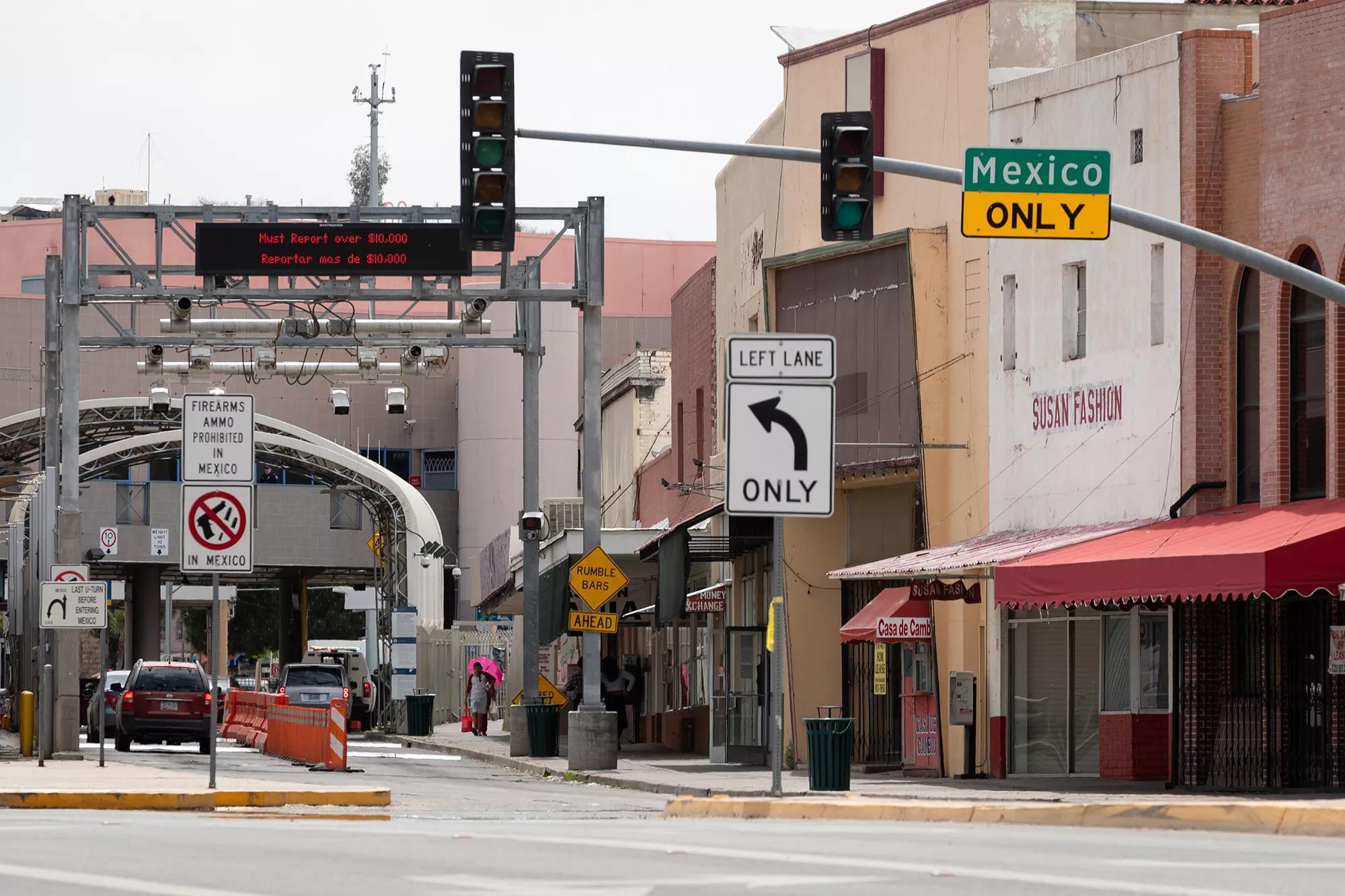
WASHINGTON – Fully vaccinated non-essential travelers will be allowed to cross the U.S. border from Mexico starting in November, ending nearly 20 months of pandemic restrictions that were choking businesses in border communities.
No specific date was given for when the restrictions will be lifted, but the long-awaited announcement was welcomed by area officials, who have been repeatedly disappointed in their hopes that nonessential travel would be allowed to resume.
“It’s a great start and we’re really elated to be able to have friends, be able to return back to visit us here in business, and throughout the state of Arizona,” Douglas Mayor Donald C. Huish said Wednesday.
He was particularly pleased that the new rule would take effect in time for people to cross the border for holiday shopping and visiting.
The new rule, announced Tuesday by the Department of Homeland Security, will allow nonessential travelers to cross at land borders from Mexico and Canada if they have proof of vaccination, reversing a ban on nonessential travel from those countries that began in March 2020.
Essential travelers, like commercial truckers, health care workers and others, have been allowed to cross the border during the pandemic. But they will also need to produce proof of vaccination beginning in January if they wish to continue crossing, under the new policy.
ProPublica is a Pulitzer Prize-winning investigative newsroom. Sign up for The Big Story newsletter to receive stories like this one in your inbox.
Local news organizations are rethinking their relationships with the communities they serve, from deploying new messaging platforms that deliver news to overhauling their reporting practices, editors told ProPublica in a series of recent conversations.
Amid increased polarization and a pandemic in which misinformation has spread as fast as the virus, editors in Atlanta, Phoenix and Detroit told us in live virtual events that the notion of local news as a public good is more relevant than ever.
Each event examined different aspects of local news, from community journalism in Phoenix to nonprofit startups in Detroit. But all addressed how local news is keeping pace with rapid changes in the media industry and the extent to which these moves reflect demographic shifts in their cities.
Outlier Media, for instance, empowers Detroiters to set its editorial agenda and built an SMS platform to give residents access to the reporting and reporters. “We understand that Outlier’s mission is to serve those who are most underserved in Detroit by news, but also by systems,” Executive Director Candice Fortman said.
Outlier Media is part of a new wave of mission-driven media organizations that are filling what they see as gaps in coverage. This includes reporting on historically overlooked neighborhoods in Atlanta, making COVID-19 information available in Spanish to Arizona readers and explaining how Detroiters can file their taxes.
Editors at legacy newsrooms say they are likewise focusing on building new relationships with their communities and the people they cover. They noted that diversifying newsrooms at every level is necessary to better serve communities and to ensure fair and accurate coverage. “Your newsroom should match the community,” said P. Kim Bui, director of product and audience innovation at The Arizona Republic. “It’s the easiest thing to say, it’s very difficult to do. Especially in a local news setting, especially in a small newsroom.”

