
Monday, September 27, 2021
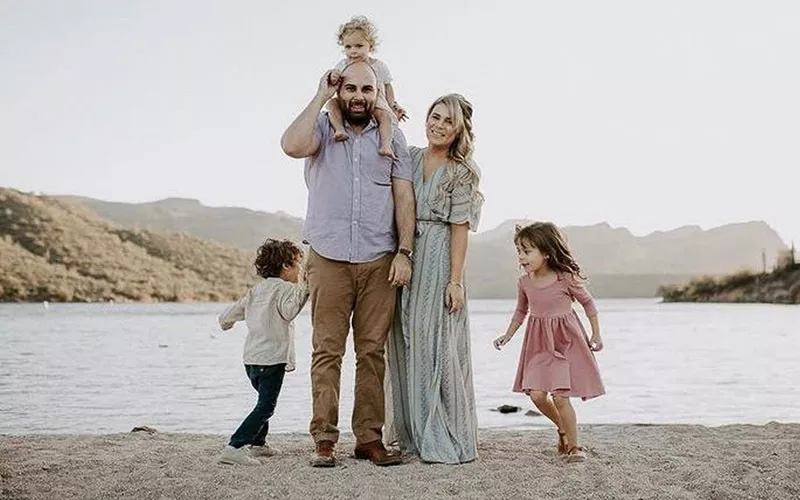
Nadia and Ernest Saco of Gilbert already had been searching for a new home before the pandemic hit in 2020, but when schools and offices closed across Arizona, their quest became more urgent.
“I was working from home all of a sudden,” said Ernest Saco, a senior product manager for a software company and a father of three. “And we have all five of us just on top of each other in this 1,500-square-foot house. I’m working out of our bedroom. And our kids are home because school’s out, but they’re also home because all the places they would normally go to for fun are closed.”
“We were pretty desperate to get out,” Nadia Saco added.
But as the Sacos’ search intensified, they found themselves competing for a shrinking pool of available homes. From April to July 2020, active listings in metro Phoenix declined by 42%, according to data from Realtor.com. So to stand out among the bidders, the Sacos turned to a tactic that’s become increasingly common – and increasingly scrutinized – in the homebuying process: the love letter.
In a letter delivered to the seller of the home they closed on in August 2020, Nadia Saco introduced their family, mentioned what her husband did for a living and detailed the “dreams” they had for the home.
“I could picture the Christmas tree, where it would go and my kids coming down the stairs Christmas morning,” she said. “I love to cook and so I pictured myself making these family dinners. And I just really visualized ourselves in this home and kind of tried to express those feelings.”
A photo of the Saco family accompanied the letter.

Friday, September 24, 2021

Thursday, September 23, 2021


El Tour de Tucson will hold the fifth Pima County El Tour Loop de Loop on Saturday, Sept. 25, and will conclude with an after-party.
The activity, which helps promote the more than 20 nonprofit partners involved in the El Tour event, is the official kickoff for the Banner – University Medicine 38th El Tour de Tucson on Nov. 20.
The Loop de Loop is for 6:30 to 10:30 a.m. and will be held on The Chuck Huckelberry Loop. The after-party will be from 11 a.m. to 2 p.m. at the Mercado Annex on The Loop, 267 Avendida del Convento, with live music, prize drawings and more.
The band Badlands will play from 10 a.m. to 1 p.m. Raffle tickets will be provided at the event.
The grand raffle prize for this year’s Loop de Loop is a LeMond Prolog carbon fiber ebike, designed by Greg LeMond and retails for $4,500.
It is a free, easy, casual and fun ride open to individuals of all ages and abilities.

WASHINGTON – Nine Arizonans are among the more than 500 female athletes who signed on to a brief to the Supreme Court this week challenging Mississippi’s restrictive new abortion law.
The Phoenix Mercury’s Brittney Griner and Diana Taurasi joined seven University of Arizona swimming alumnae and hundreds of other club, collegiate and pro athletes who said overturning Roe v. Wade, which the Mississippi case could lead to, would “violate their most fundamental liberties.”
Christine “Crissy” Perham, an Olympic gold medalist and two-time national champion for the Wildcats in the 100-yard butterfly, said in the brief that she “accidentally became pregnant” while on birth control during her sophomore year in Tucson. She said she could “count on one hand how many people I’ve told about my abortion. Until now.”
“I’m finally speaking up and sharing my story because there shouldn’t be a stigma surrounding personal healthcare decisions,” she said in the friend-of-the-court brief.
One expert called the filing just the latest instance of growing activism by athletes.
“This is another example, like Black Lives Matter from last summer and the U.S. women’s national soccer team’s fair-pay argument, that shows national activism like the Olympics in 1968 and Colin Kaepernick are now so public and spreading,” said Steve Ross, a professor of law at Penn State University.
The athletes’ brief is one of the scores filed on both sides of the case, Dobbs v. Jackson Women’s Health Organization, which challenges a Mississippi law that prohibits abortions after 15 weeks of pregnancy. The law would allow abortions after that in cases of “severe fetal abnormality” or a medical emergency for the woman, but there are no exceptions for rape or incest.
The law was overturned by lower courts, which cited the Supreme Court’s 1972 Roe v. Wade decision that recognized a woman’s right to an abortion and subsequent rulings that protected that right before a fetus was viable outside the womb.

Wednesday, September 22, 2021
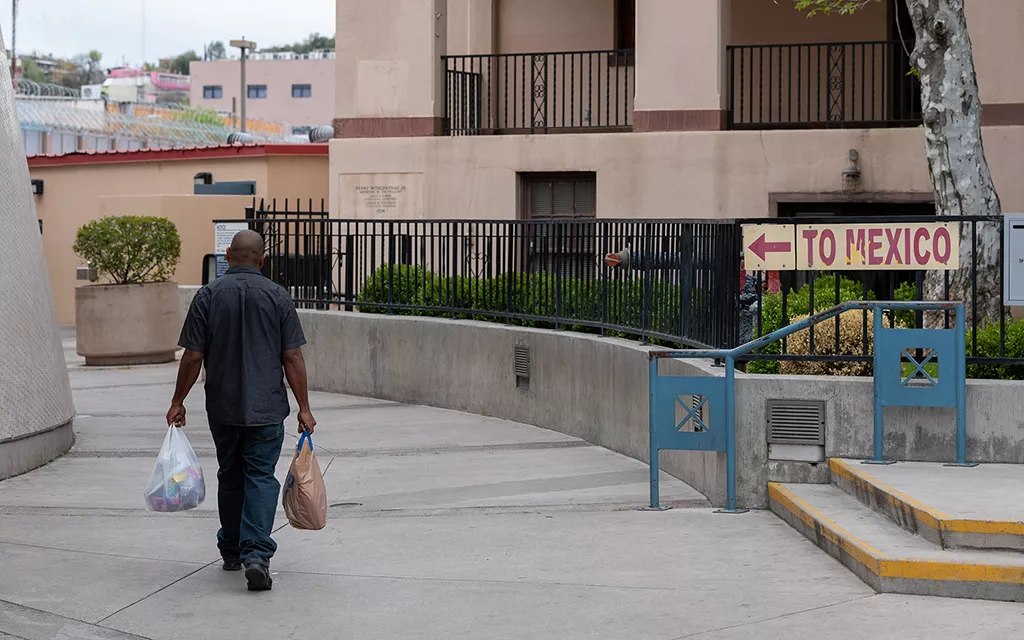
WASHINGTON – The ban on nonessential travel on land crossings between the U.S. and Mexico will be extended another month, a “disheartening” development for border towns and businesses that have already had to cope with the travel limitation for 18 months.
“It’s very disheartening to have it extended again,” Douglas Mayor Donald C. Huish said Monday. “Our economy is suffering due to that, we estimate approximately two-thirds of our sales tax revenue comes from … our neighbors to the south. So, it’s a very big blow.”
The ban on nonessential travel was first imposed in March 2020 in an effort to stem the spread of COVID-19 and has been regularly since then, most recently as the delta variant of the virus led to a spike in new cases. The latest extension was set to expire at midnight Sept. 21, but the White House said Monday that it would be continued through at least Oct. 21.
That announcement came the same day that the Biden administration said it planned to ease COVID-19 related limits on international air travel beginning in early November.
Under that plan, adult foreign travelers will have to prove they have been fully vaccinated before they can come here. U.S. citizens of any age who are not vaccinated could still fly home, but would have to provide proof of a negative COVID-19 test within a day before their travel, and have to prove they have a viral test to take after they arrive.

Tuesday, September 21, 2021
The federal government has notified Arizona that it should expect 1,610 Afghan evacuees to arrive through the end of March, according to the state Department of Economic Security.
DES administers the Arizona Refugee Resettlement Program, which partners with the federal government to service refugees as they adjust to making Arizona their new home. The people expected to arrive from Afghanistan, though, won’t arrive through the refugee resettlement process. Instead, they’ll be part of a temporary humanitarian parole program called the Afghanistan Placement Assistance Program, said Tasya Peterson, a DES spokeswoman.
According to a Department of Homeland Security document, the U.S. government will grant entry into the country to thousands of Afghan evacuees on a case-by-case basis through a humanitarian parole program. They’ll be allowed to live in the country for about two years.
In August, as the U.S. government ended its 20-year war in Afghanistan and withdrew its troops, Taliban forces quickly took over Kabul, the capital city. A crisis unfolded resulting in emergency evacuations where U.S. forces airlifted an estimated 116,700 civilians out of the country, according to USA Today. Among those evacuated were people in the process of requesting entry into the U.S. through the Special Immigrant Visa program, a program available to translators and interpreters who worked for U.S. troops or other Afghans who worked for the U.S. government or U.S.-based companies, such as journalists.
But it’s still unclear if those who will arrive under the humanitarian parole program will have access to the resources that refugees have through the resettlement process, such as a work permit, cash assistance, and help with case management, housing and finding a school for their children.
Arizona community groups that are readying resources to welcome Afghan evacuees are concerned about this lack of clarity on whether federal funds will or will not be available means that nonprofits and private organizations will have to provide that assistance to the new arrivals from Afghanistan.