

Tuesday, July 20, 2021
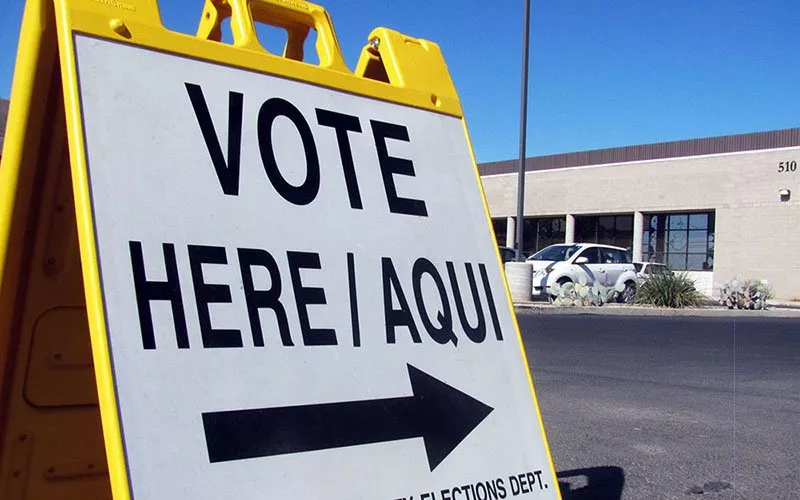
WASHINGTON – Arizona Democrats called on Attorney General Mark Brnovich to investigate the state Senate’s audit of Maricopa County election returns, which they said Friday is little more than a “sham audit” disguising a series of politically motivated attacks.
Their demands come as a congressional panel has launched its own investigation into Cyber Ninjas, the private firm that was contracted to do the audit that is still ongoing after six months.
A House Oversight subcommittee on Wednesday gave Cyber Ninjas two weeks to produce documents showing their experience, their policies, how they are paid and what communication they had, if any, with former President Donald Trump, who has insisted on audits like Arizona’s.
State Democrats welcomed the federal probe, which they hoped would spur Brnovich to do the same.
“Unless he (Brnovich) agrees to investigate, there is no other conclusion we can draw upon, other than that he doesn’t care about Trump’s reported election interference,” Arizona Senate Minority Leader Rebecca Rios said Friday.
Rios was joined by House Minority Leader Reginald Bolding and Arizona Democratic Party Chair Raquel Terán at a news conference in which they said Brnovich needs to take action immediately to stop the “illegal behavior” they said has been seen in the audit.
Requests for comment from both Brnovich and Cyber Ninjas were not immediately returned Friday. But in a meeting Thursday with Senate Republicans, Cyber Ninjas CEO Doug Logan defended his company’s performance in the audit, now six months old, and said its operations have been transparent throughout.

Monday, July 19, 2021
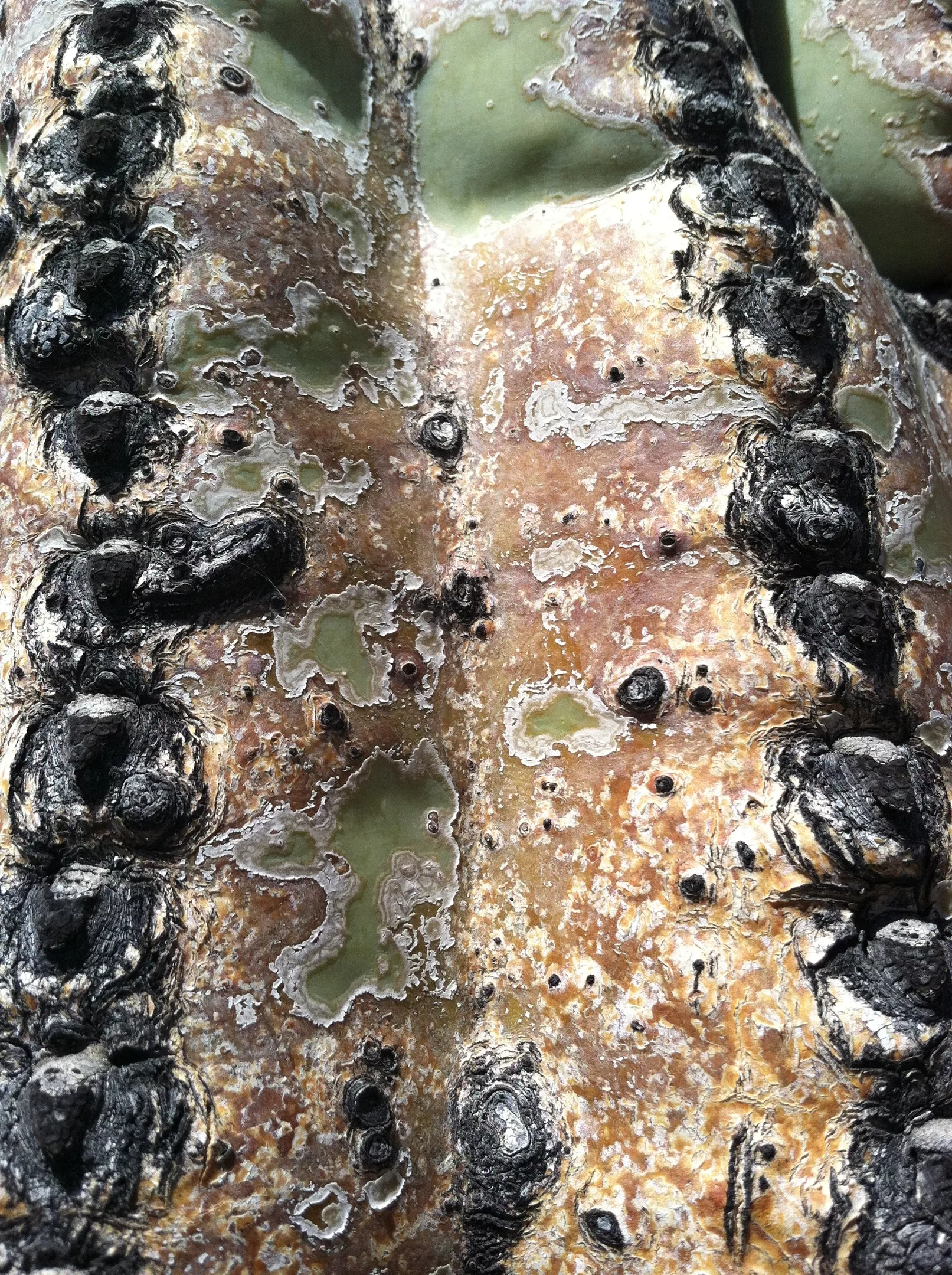
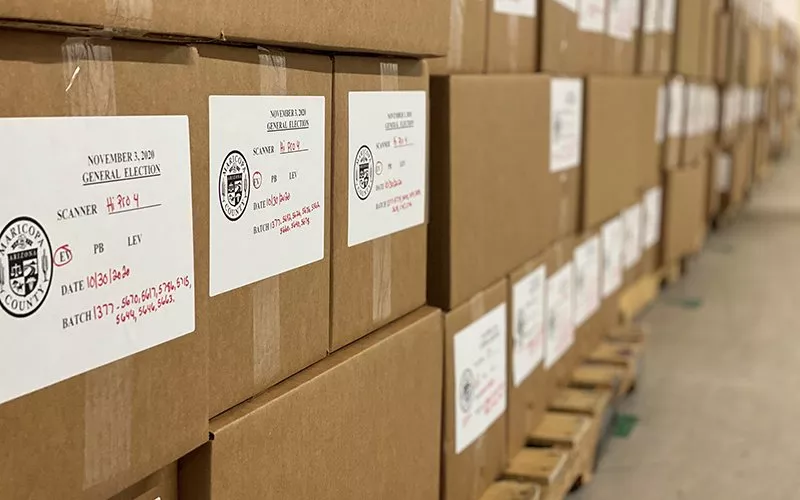
WASHINGTON – The private firms auditing Maricopa County elections told senators Thursday they have finished reviewing the more than 2 million ballots, but will not be able to deliver a complete report without cooperation from county officials.
That led Arizona Senate President Karen Fann to threaten to take the county “back to court” to force compliance – one day after a judge said Fann and the auditors need to comply with county requests for public records in what critics call a “sham audit.”
The comments came during an update of the audit, now six months old, in which no questions or comments were taken and auditors spent much of the time defending their actions and criticizing opponents.
Senate Democrats did not attend the session on the audit, which one said “is clearly an attempt to sow distrust in our election system.”
“At the end of the day, this is Sen. Fann and one other Republican bringing in essentially their clients, their paid clients, to have this back-and-forth conversation, and quite honestly, perpetuate a lot of the conspiracy theories that they’ve been throwing out,” said Senate Minority Leader Rebecca Rios.
Rios said Democrats only learned of the meeting 17 hours before it started.
“This is not a hearing,” Rios said. “If it were a true hearing, we would have had to have been noticed 24 hours in advance, and it would have had to have been held in front of a committee which would include Democrats and Republicans.”
But Fann, a Prescott Republican, and Sen. Warren Petersen, R-Gilbert, were the only two lawmakers at the more than two-hour event, in which former Secretary of State Ken Bennett, Cyber Ninjas CEO Doug Logan and CyFIR CEO Ben Cotton laid out progress of the audit.
Sunday, July 18, 2021

Saturday, July 17, 2021

Friday, July 16, 2021

A free COVID-19 clinic will be held from 5:30 to 8:30 p.m. Saturday in conjunction with the Reid Park Zoo's Summer Safari Nights.
The first 100 people who get their first COVID-19 shot will receive a free daytime admission ticket to come back and visit the Zoo, 3400 E. Zoo Court, according to a Reid Park news release.
No appointments or identification are required for this mobile event. Registration is done on-site.
All three vaccine types will be available – Pfizer, Moderna, and the one-dose Johnson & Johnson. Only the Pfizer vaccine has been approved for 12- to 17-year-olds.
Ward 6 Tucson city council member Steve Kozachik, who helped organize the vaccine clinic, will perform folk and rock tunes. Tucson Roadrunners mascot Dusty will be on hand from 6 to 7 p.m. There will also be games and activities from Tucson Parks and Recreation’s Ready, Set, Rec! as well as animal encounters and presentations throughout the evening.
For a full list of vaccination sites, visit pima.gov/covid19vaccine.


WASHINGTON – Gilbert resident Lori Ament said she and her husband both work full time to support themselves and their 5-year-old son and are getting by. But not much more.
“We can barely afford child care which my son needed, and some regular doctors’ appointments, which meant medical care copays,” Ament said. “And I didn’t have the time or money to address my own mental health needs, and I have to work full time to even make that work.”
But help started Thursday in the form of monthly payments the IRS will begin sending to most American families with children, an advance on their 2021 tax returns that could mean up to $300 a month per child.
“Putting money in the hands of families month to month is helping them then,” Ament said. “You can’t just sit and twiddle your thumbs until February.”
The payments are part of the $1.9 trillion American Rescue Plan that was signed into law in March. That bill increased the previous per-child tax credit, raised the eligibility age from 16 to 17, expanded the payment to cover families that had been excluded because they made too little, and made sure those families got the full benefit – and it’s making the payments in advance, instead of after taxes are filed.
The payments will reach an estimated 39 million households, “covering almost 90% of children in the United States,” the White House said in a June release. In Arizona, an estimated 1.5 million children are expected to benefit from the plan – 692,000 of whom were not previously covered.
“If you look at changes in tax policy in Arizona and the country, this is a really strong policy response to benefit lower-income families and children,” said Andrew Sugrue, assistant director of policy and advocacy for The Arizona Center for Economic Progress.
He said the payments are expected to cut child poverty in half nationally and by about 45% in Arizona, lifting as many 238,000 children in the state above or near the poverty line.

