

Saturday, July 10, 2021
The complaint notes that the Children housed in one of the Biden administration's largest shelters for unaccompanied migrant minors were being watched over by contractors with no Spanish-language skills or experience in child care who usually stood idly at the edge of crowded tents.
It also details lack of medical care, clothing, and regular showers for children in their care and highlights the lack of childcare experience of those working in the facility.
“These allegations are horrific and have no place in our asylum system. Children do not belong in detention, and I’ve long advocated for the closure of these types of facilities,” Grijalva said. “The Biden Administration must pursue community-based alternatives to detention that put the welfare of children first. We need an independent investigation to determine exactly what’s going on and end these inhumane practices one and for all.”
Other immigration advocates have also called for the Biden administration to end the use of emergency intake shelters like Fort Bliss and to use only facilities that operate under state licensing requirements for children, especially as the number of unaccompanied migrant children in the care of Health and Human Services has declined from over 20,000 to fewer than 15,000.
So far, HHS, which has closed some emergency intake facilities, has not announced plans to close Fort Bliss.
Tags: immigration , Biden Administration , Raúl Grijalva , Image
Friday, July 9, 2021

The Belgian German Shepherd female puppy was last seen around the Swan Road and Skyline Drive area. For over a year, Ursa has been bonding and training with her person.
July 4 celebrations have terrorized many a dog with fireworks. The Pima Animal Care Center ran a clinic in preparation for the event. The clinic ran from June 24 to July 1 to microchip pets and provided advice on how to keep pets calm.
“We are ramping up our pet microchip events to get ready for the Fourth of July,” said Director of Animal Services Monica Dangler in a press release prior to the event. “Pets can easily get scared and we want to make sure that they make it back home as quickly as possible, and a microchip is the best way to do that! With a quick scan, PACC staffers can find a phone number and call the pet owner to pick up their lost pet.”
Unfortunately Ursa is not yet microchipped or spayed. The owner has offered a reward and asked people to call (520) 955-5012 if Ursa is found.

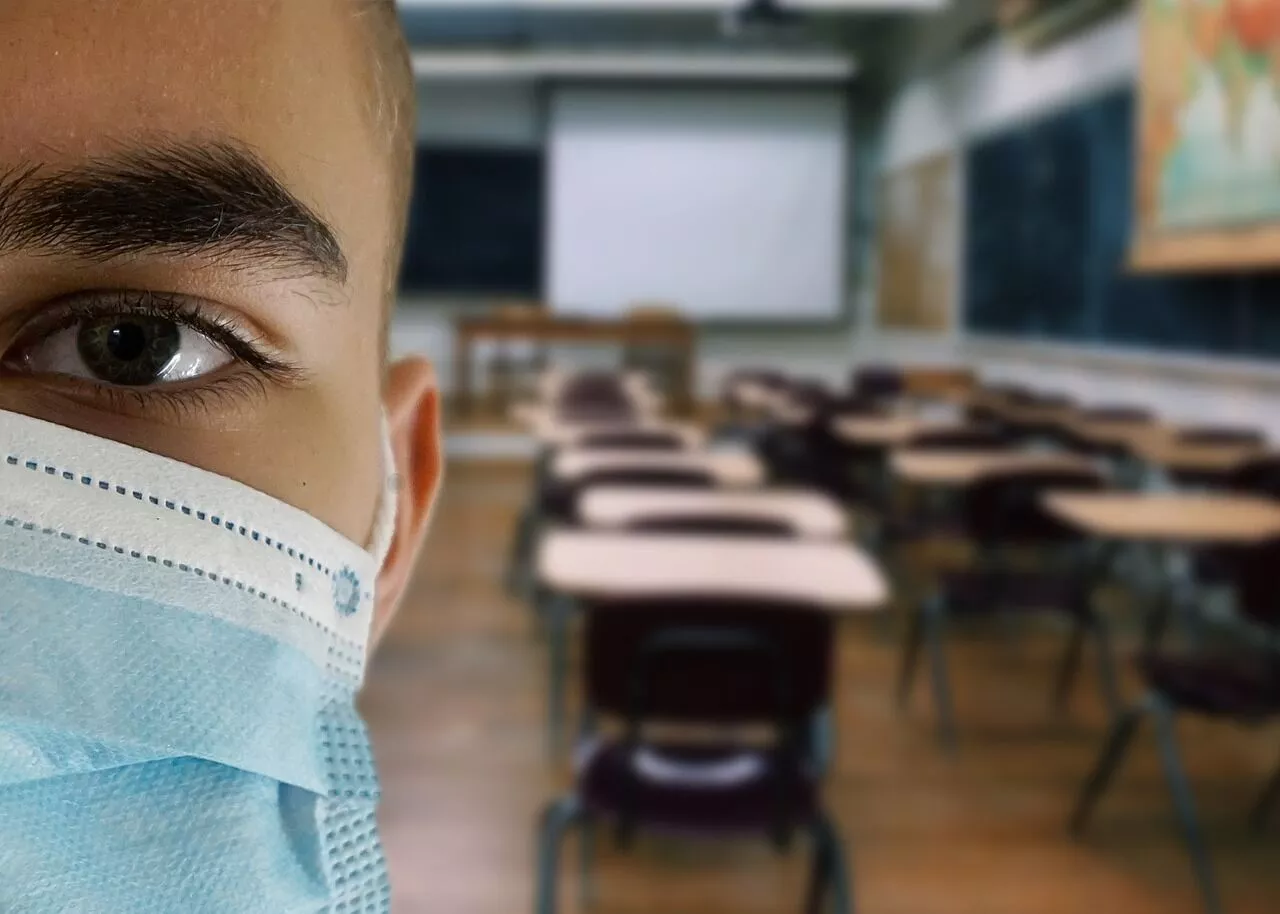
PHOENIX – Health experts are concerned that Arizona’s recently approved budget, which bans public schools and universities from enforcing mask mandates and COVID-19 testing for unvaccinated students, is endangering public health across the state.
In a virtual panel assembled by the Committee to Protect Health Care, a national advocacy organization that aims to “fight for quality, affordable health care that protects patients over profits,” experts weighed in on how the legislation, as well as Gov. Doug Ducey’s June 15 executive order banning masks at schools, could prolong the pandemic in Arizona.
“Students are being linked to community outbreaks, including in Arizona, and they accounted for 72% of all school-related cases in Maricopa (County) at one point in the past spring,” said Dr. Elizabeth Jacobs, a professor of epidemiology at the University of Arizona. “Banning schools from adopting a simple, cost-effective and scientifically proven safety measure like mask wearing while we are still in the midst of a pandemic makes absolutely no scientific or public health sense.”
Daily COVID-19 cases in Arizona have declined since March, according to the Arizona Department of Health Services, with only several hundred new cases per day now compared with the thousands of daily new cases earlier this year. However, in recent weeks, that number has ticked up slightly.
The state’s low vaccination rate also was a major concern for the experts on the panel.
“Only 23.5% of Arizona youth, aged between 12 and 17, have been vaccinated,” said Dr. Ricardo Correa, program director for endocrinology at the University of Arizona. “Policymakers and politicians must do better for Arizona and for children in our state, who deserve elected leaders who will use science and other resources to keep them safe during a pandemic.”
Thursday, July 8, 2021

Pima County reached the goal of 70% vaccination for adults with at least one dose on Thursday.
President Joe Biden in June set a national goal of vaccinating at least 70% of all U.S. adults with at least one dose by July 4. Although Pima County fell short by just four days, it is now one of four counties in Arizona that have reached the goal, including Santa Cruz County, which has vaccinated almost 100% of adults with at least one dose.
As of Thursday, Arizona has vaccinated half of the total population with at least one dose.
According to data from the CDC, the county has fully vaccinated 61.7% of adults ages 18 and older. For those 12 and older, 67.5% have received at least one dose and 92.9% of adults 65 and older has had at least one dose.
"The science has become very clear – being vaccinated protects you from getting COVID," said Pima County Health Director Dr. Theresa Cullen. "COVID is a serious illness. People can end up with significant disease and even death. For those who are still unvaccinated, I want to reassure them that the vaccines are safe and we encourage them to seek vaccination."
The county has reported 401 breakthrough cases and 16 hospitalizations among the more than 535,000 fully vaccinated people in Pima County, about .07% of those fully vaccinated.
Pima County is continuing its mobile vaccination efforts in order to reach traditionally underserved areas and census tracts with lower vaccination rates. For more information, go to pima.gov/covid19vaccine.
County Rescinds COVID-19 Emergency Resolution
On Tuesday, the Pima County Board of Supervisors voted 3-2 to rescind a resolution that declared a state of emergency because of the COVID-19 pandemic.
Since March 19, 2020, the emergency declaration allowed the Board of Supervisors to take immediate and urgent actions that included regulating businesses, limiting gatherings and requiring mask wearing in public as cases began to rise.
Those restrictions had been lifted through state or local actions prior to the July 6 vote.
"We have had substantial and sustained improvement in Pima County," Pima County Chief Medical Officer Dr. Francisco Garcia said."I believe it would be safe to lift the emergency declaration. The cases that we're seeing are cases among unvaccinated individuals, and we continue to work on that population very vigorously and we will continue to move that further. I'm not saying the pandemic is over."
The state's highest single day of reported cases was at more than 12,000 on Jan. 4, but as more people have become vaccinated, the number of cases has declined. For the past two months, the state has fluctuated at around 50 cases of COVID-19 per 100,000 individuals.
County Administrator Chuck Huckelberry noted that the CDC reported last week that 99.5 percent of the COVID-19 deaths across the country in the past six months involved unvaccinated individuals.
"I think the message is, if you're not vaccinated, get vaccinated," Huckelberry told the board on July 6. "The rate of infection is in the hands of those who are unvaccinated."
The Los Reales Landfill is getting a new name—and a new mission.
Tucson Mayor Regina Romero and the Tucson City Council voted this week to rename the Los Reales Landfill as the Los Reales Sustainability Campus.
It is part of a larger planning effort to achieve waste reduction goals established by City Council in a Climate Emergency Declaration.
The declaration committed the City of Tucson to reach carbon neutrality by 2030 and to become a zero-waste city by 2050, with an intermediate 50% diversion goal by 2030. The city currently spends more than $8 million per year at Los Reales for waste processing and disposal operations.
“To become a zero-waste city, we must fundamentally change the way we view waste—from a liability to an asset,” Romero said in a prepared statement. “The Sustainability Campus is an outside-of-the-box initiative to transform Los Reales from merely being a landfill to a sustainable space—illustrating our city’s commitment to acting on climate.”
The project will also update the layout of Los Reales, designing it for new sustainability uses, including allowing solid waste/resource management companies to locate at this campus, space for a city tree nursery to help supply the Tucson Million Trees campaign, installation of solar panels and 500 feet of buffer between the campus and adjacent properties.
“The Los Reales Sustainability Campus will be a catalyst in attaining many of the city’s sustainability goals while yielding extensive community benefits for current and future generations,” said Carlos de la Torre, director of the Environmental and General Service Department.
City staff is working with the Mayor’s Office, the City Commission on Climate, Energy and Sustainability, the Environmental Services Advisory Committee, Mayor Romero’s Climate Action Advisory Council and community stakeholders to outline a plan to achieve zero waste at Los Reales.

State lawmaker Kirsten Engel, a Democrat elected to her first term in the Arizona Senate in 2020 after serving four years in the Arizona House of Representatives, is in the race for the retiring Congresswoman Ann Kirkpatrick’s seat. (The district lines are scheduled to be redrawn before the 2022 election by Arizona’s Independent Redistricting Commission.) Engel is an attorney who has worked for the Environmental Protection Agency and taught environmental law at the University of Arizona Rogers College of Law. Also in the race: Engel’s fellow state lawmakers Rep. Randy Friese and Rep. Daniel Hernandez. (You can find Friese's Q&A here; Hernandez's interview will post on Friday.)
What makes you the person for the job?
I'm a mom, I am a working parent, I've lived through some of the challenges and stresses that families have faced, especially working women during COVID. And I think that gives me perspective and even more understanding of this district, and even more interested in a post-COVID recovery, so that we come back out of this pandemic stronger than ever. We have some real opportunities here. And I think, my experience—as a legislator, as an attorney, as an environmental law professor and somebody who's worked on water issues—puts me in a really good position to deal with some of the challenges we're facing. We're facing issues in terms of investing in our infrastructure. And I'd say that's both hard infrastructure—you know, roads and bridges, digital broadband, EV charging stations—but also that social infrastructure that is so critical to getting parents, moms, back into the workforce, finishing their degrees. And those are things like childcare subsidies, workforce training programs, things that really will make the difference in terms of getting families back to work. And getting people who have been left out back to work, you know, women people of color. So, that's going to be my primary emphasis.
What do you make of the ongoing audit of the Maricopa County election?
Well, I could call it something other than an audit. But I will refrain from that. But I think it's really harmful and it is really endangering our democracy. And it's really trying to and it might be succeeding and perpetuating this conspiracy theory that the 2020 election was stolen. And that is entirely untrue. And it's also opening up citizens’ voted ballots to scrutiny by conspiracy theorists and their contractors. And I'm just concerned about the sanctity of our ballots, and could they be corrupted? And we've already heard from Secretary of State (Katie) Hobbs that the voting machines now cannot be used after they've been tampered with by the auditors. And that's costing the citizens money, that's millions of dollars. So I'm concerned with what it's saying and perpetuating this myth that there was something wrong with that with the election, as well as what it might do with respect to the concrete evidence of the 2020 election.
Were you disappointed that a proposal for a bipartisan commission to investigate the Jan. 6 riot at the U.S. Capitol was blocked by a Senate filibuster?
Yes, I was. I do think that a bipartisan commission to investigate that was in order. That was a really sad day in American history. And I think that we should know more about who was behind it and who was involved with it. And it seems like that commission would have been on track to do that.
How do you grade Congress's response to the pandemic overall?

Tucson's Environmental and General Services Department is holding hazardous waste collection events, allowing residents to drop off hazardous waste, electronic waste and paper documents for shredding at no charge.
The next event will be 8 a.m. to noon, Saturday, July 10, at the Eastside Service Center at 7575 E Speedway Blvd.
The events will continue every second Saturday throughout the year at various locations:
- July 10 – Eastside Service Center – 7575 E. Speedway Boulevard.
- Aug. 14 – Pima West Campus – 2202 W. Anklam Road
- Sep. 11 – Pima East Campus – 8181 E Irvington Road
- Oct. 9 – Pima Downtown Campus – 1255 N. Stone Ave.
- Nov. 13 –Tucson Rodeo Grounds – 4823 S. Sixth Ave. (enter on Third Avenue)
- Dec. 11 – Hi Corbett – 700 S. Randolph Way
Acceptable waste: automotive fluids, engine oil filters, rechargeable batteries, lithium batteries, cleaning products, drain openers, cooking oil, fluorescent lamps and bulbs, wet paint products, solvents, hobby chemicals, pesticides, lawn products, pool chemicals, propane cylinders, computer equipment, printer cartridges, and other items labeled as acid, flammable, caustic, poison, caution, toxic or danger.
The City asks you NOT to bring: business or commercial waste, commercial gas cylinders, explosives, ammunition, infectious or radioactive waste, dried paint, alkaline batteries, televisions, or medical waste such as syringes or old medications.

