

Friday, June 25, 2021
OMAHA, Neb. – Jay Johnson is determined to not let one game define the University of Arizona baseball program.
“Twenty-four hours or 36 hours of disappointment here is not going to change the accomplishments of our team,” the Wildcats coach said. “I’m proud of them and I really believed we could be here. I believed we could be a championship team.”
Monday night just wasn’t the night for the Wildcats.
Arizona fell to Stanford to suffer its second loss of the 2021 NCAA College World Series.
“It’s one thing to think you have that. Talk about doing it. Say you’re going to do it and actually go out and do it,” Johnson said. “In terms of the Pac-12, the two most physical teams made it here.”
Arizona was the first team eliminated from the tournament, giving up 14 runs to Stanford.
Despite the game not going their way, Johnson was still proud of his team’s historical season. Arizona was the outright Pac-12 champion for the first time since 1992.
The Wildcats had a memorable run with 45 wins and only two conference series losses. They were also the only team in the West Region that had three members included in the All-Region First Team. Two of those, freshman catcher Daniel Susac and freshman designated hitter Jacob Berry, were also First Team Freshman All-Americans.
“Great baseball team made up of great competitors and great character,” Johnson said. “They’re collectively pretty special.”
Only two members of the 2020 Arizona baseball team decided to not come back and play in 2021 after the season was canceled last year due to the pandemic. Johnson said that he is proud of the way his players handled adversity and that “itss a tough group to say goodbye to.”
Arizona will say goodbye to seniors Vince Vannelle and Preston Price. Also, 22 players on the Arizona roster are draft eligible.
With this year’s MLB draft lasting only 20 rounds, Arizona believes it will keep a good amount of players for next year’s team although highly coveted junior outfielder Donta Williams probably won’t be one of them. Johnson said that Williams represents everything it means to be a Wildcats player.
“They don’t make them like that very often. The only thing he’s better at than playing baseball is that he’s a first-class and quality human being,” Johnson said. “If there’s a recruit, a young player at home that wants to play baseball at Arizona, look at number 23.”
Although he has a bright future ahead of him, Williams said that his focus and the team’s focus has always been on being in the moment.
“When it was time to play, we just competed. That’s why we came out here,” Williams said. “It was everything I dreamed it would be. I’m just happy I got to be here with this group of guys.”
With the possibility of the team continuing without Williams next year, he feels the team still has strong leadership that will take them back to the College World Series.
“There’s 30 other guys in that locker room that are bleeding right now,” Williams said. “Every one of them are leaders in my eyes. There are going to be a ton of guys that will step up to the plate to carry the team.”
Although early elimination was not what the Arizona baseball coaches, players and fans expected, they can still reflect on a standout season and the memories made.
“I love every one of these guys,” Johnson said. “They’ve poured everything they have into our program.”
Arizona will enter the offseason and be back again to compete for another NCAA national championship next spring. The MLB draft is scheduled for July 11-13.
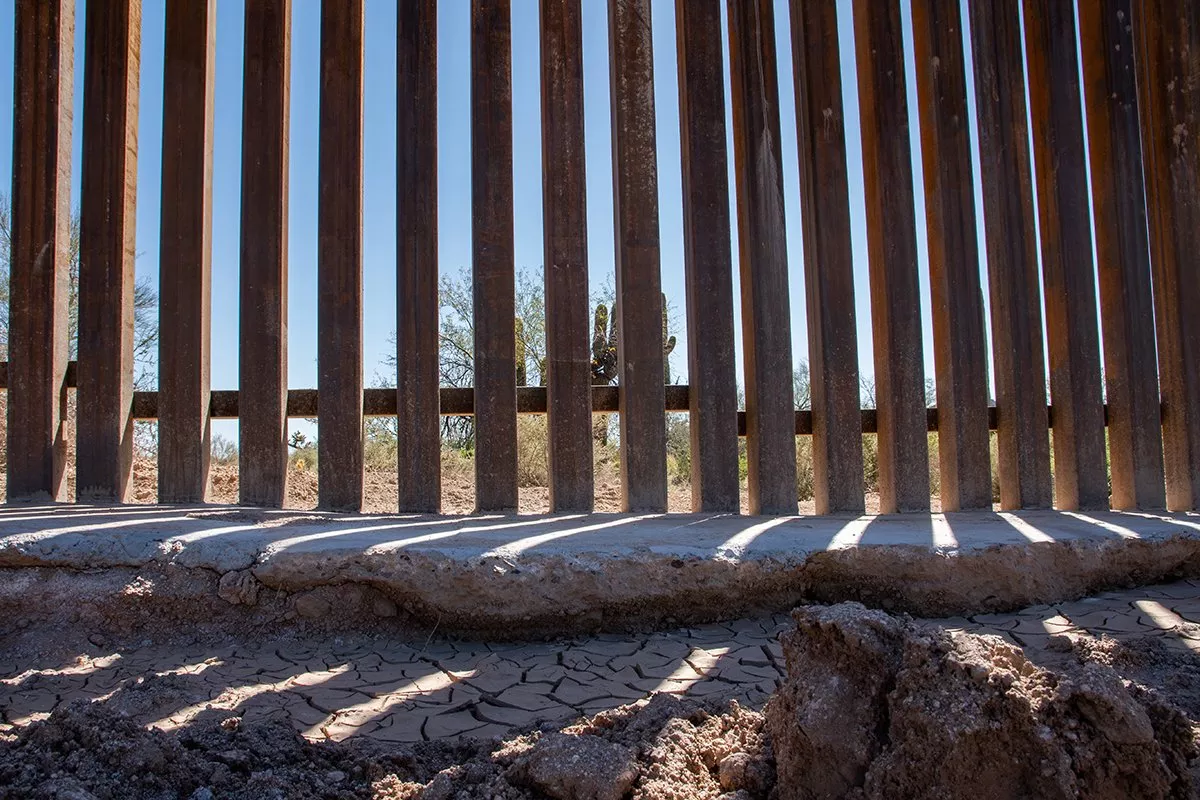
WASHINGTON – Border officials said they were “devastated” this week to find that the federal government has extended a COVID-19 ban on nonessential border crossings for another month, potentially crippling businesses there.
“The ban is a terrible and now-exaggerated response to the pandemic,” said Andy Carey, executive director of the U.S.-Mexico Border Philanthropy Project. “It’s reinstated every month for another month, and it’s been going on for nearly a year-and-a-half now, it’s time for the ban to end.”
The ban was first imposed in March 2020 on nonessential travel – essentially tourists or family visitors – between the U.S., Mexico and Canada in response to the first wave of COVID-19. It was regularly extended but was set to expire Monday.
Customs and Border Protection said that the situation has improved in both Canada and Mexico, as vaccinations have risen and infections have dropped. But it announced Wednesday that things were still too uncertain, particularly given the rise of new variants, to lift the restriction, which was extended to 11:59 p.m. July 21.
CBP did not immediately respond to a request for comment Wednesday. But border community leaders, who had been looking for the ban to end this week, were not happy.
Nogales Mayor Arturo Garino said his city has lost billions of dollars in business from the ban that “should have been lifted months ago.”

Thursday, June 24, 2021
PHOENIX – If you’ve had COVID-19, chances are you lost your sense of smell, at least temporarily.
Losing the sense of smell and taste is one of the most common symptoms of COVID-19. A recent study of more than 2,500 COVID-19 patients published in the Journal of Internal Medicine found that 74% reported loss of smell.
For many, olfaction – the ability to smell – returns after a few days or weeks. In the study, 75% to 85% of the patients had recovered their sense of smell within two months. However, some people feel the lingering effects for much longer.
Dr. Janice Johnston with Redirect Health in metro Phoenix told ABC15 that sufferers are trying to find relief through smell therapy.
“The new term for it is smell therapy or physical therapy for your nose, which is a cute way to phrase that,” Johnston said. “What that means is, where you try to train the neurons that interpret those smells to learn again. And how do you do that? You can smell things that have a real distinct odor … say roses or eucalyptus or herbs or essential oils. As you are smelling them, try to envision what you’re smelling and try to teach your brain what that is.”
If smell therapy doesn’t work, she said, other treatments are being developed.
Dr. David Rosen, an otolaryngologist at Jefferson Health in Philadelphia, said alpha lipoic acid, vitamin A supplements and over-the-counter steroid nasal sprays also could help, according to the Health Nexus.
In this video, Cronkite News reporter Jordan Spurgeon explains smell therapy and how your brain has to retrain its sense of smell after losing it to COVID-19.
Cronkite News has partnered with ABC15 Arizona to expand the station’s Health Insider series, which provides expert advice and insights into health topics. Cronkite News is experimenting with storytelling tools and techniques to help explain the issues.
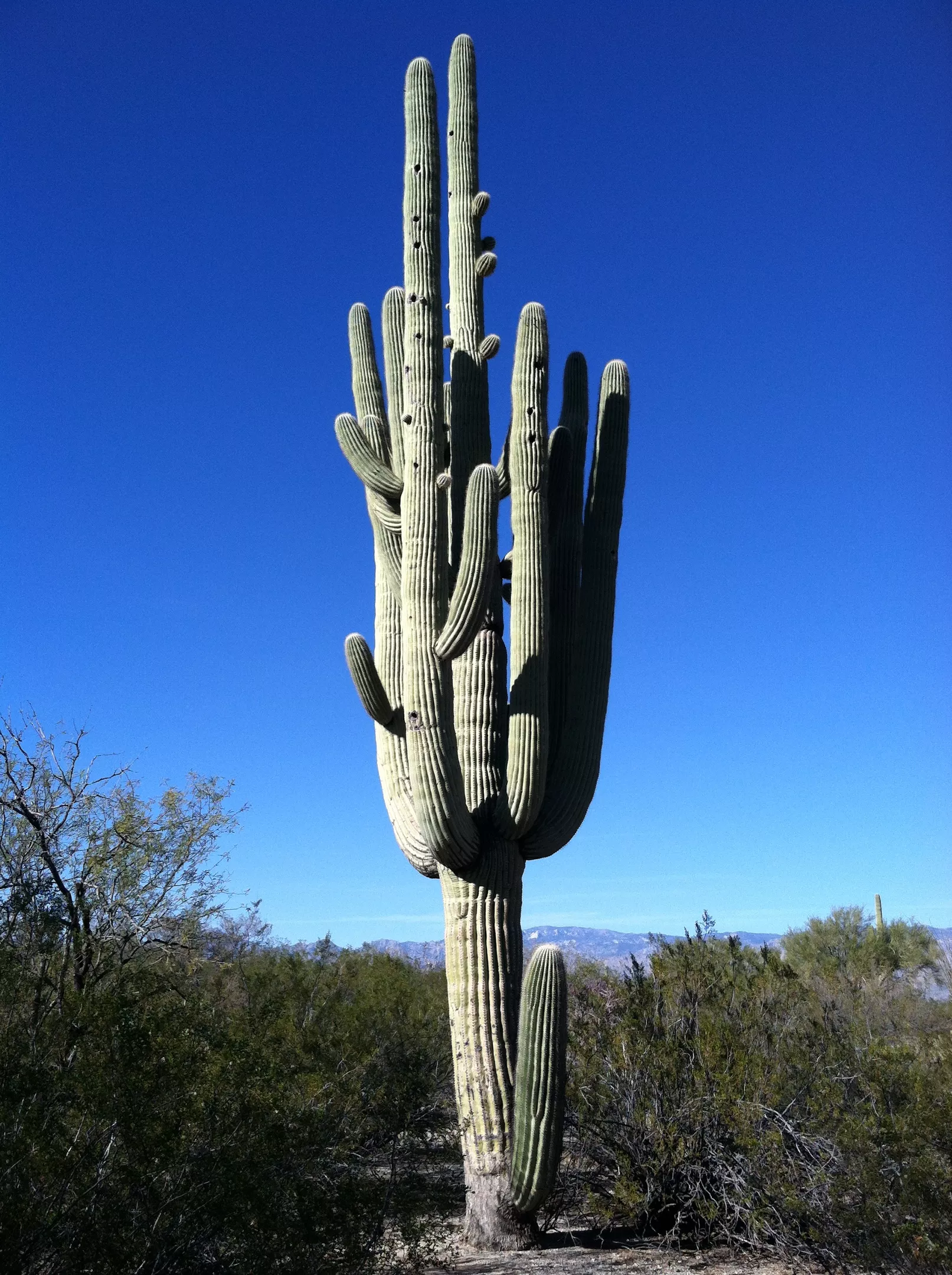
This is, literally, the biggest saguaro I've ever seen. My friend Tim is over 6 feet tall and the top of his hat reaches the top of the arm on the bottom. Saguaro Park east.

WASHINGTON – Border officials said they were “devastated” this week to find that the federal government has extended a COVID-19 ban on nonessential border crossings for another month, potentially crippling businesses there.
“The ban is a terrible and now-exaggerated response to the pandemic,” said Andy Carey, executive director of the U.S.-Mexico Border Philanthropy Project. “It’s reinstated every month for another month, and it’s been going on for nearly a year-and-a-half now, it’s time for the ban to end.”
The ban was first imposed in March 2020 on nonessential travel – essentially tourists or family visitors – between the U.S., Mexico and Canada in response to the first wave of COVID-19. It was regularly extended but was set to expire Monday.
Customs and Border Protection said that the situation has improved in both Canada and Mexico, as vaccinations have risen and infections have dropped. But it announced Wednesday that things were still too uncertain, particularly given the rise of new variants, to lift the restriction, which was extended to 11:59 p.m. July 21.
CBP did not immediately respond to a request for comment Wednesday. But border community leaders, who had been looking for the ban to end this week, were not happy.
Nogales Mayor Arturo Garino said his city has lost billions of dollars in business from the ban that “should have been lifted months ago.”
“You know it’s going to hurt when 65% of our sales tax comes from residents in Sonora coming here and shopping,” Garino said. “That money keeps us afloat.”
Officials in Yuma and in San Ysidro, California, echoed his comments, saying border communities are suffering from a travel ban that has “outlived its purpose.”
“I represent about 800 businesses, and we would do $895 million in retail sales during a normal year,” said Jason Wells, executive director of the San Ysidro Chamber of Commerce. “We are estimating from March 2020 to March 2021 that the number is about $250 million. That’s about a 72% loss.”
WASHINGTON – Arizona advocates are breathing “a sigh of relief” this week after the Supreme Court again refused to invalidate the Affordable Care Act, a decision that should preserve the health care program for at least several years.
The ruling is the third time the court has upheld “Obamacare” and comes as the number of people signed up for health insurance under the ACA continues to grow under a special open enrollment period. That included more than 23,000 Arizonans, bringing the total number insured through the act to 178,125 as of May 31.
“The strongest case they had by far was the one that failed last week,” said Will Humble, executive director of the Arizona Public Health Association, of ACA opponents. He predicted Monday that the act is here to stay for “at least three and a half years,” given the current administration and the unlikelihood of another court challenge.
Arizona was one of 17 states that joined a Texas lawsuit to overturn the act. Calls to attorneys general in Arizona and Texas were not immediately returned Monday.
But a spokesperson for Arizona Attorney General Mark Brnovich told ABC 15 after the ruling was released Thursday that it is “even more incumbent on Congress to pass legally sound policies to fix our broken healthcare system, further fractured by the Affordable Care Act.”
But Democrats were not nearly so hesitant to react to the ruling.
“Thankfully, the Supreme Court laid down a decisive ruling that protects these provisions,” said Arizona Democratic Party Chair Raquel Terán in a statement Friday, after what she called “the Republicans’ decade-long crusade against the Affordable Care Act.”
The court ruled 7-2 Thursday that the latest challenge to the law had to fail because the plaintiffs – 18 states and two individuals – could not show that they would be harmed by the law and, thus, lacked standing to sue.

Wednesday, June 23, 2021

PHOENIX – Amid recent violence in the Middle East, Arizona Gov. Doug Ducey tweeted “Arizona stands with Israel,” joining Republican leaders across the country in a show of political support.
It also provoked outrage among those who support Palestinians, with one activist calling Ducey’s position a “violation of human rights.”
Despite the polarized viewpoints, Arizona’s aerospace and defense industry not only “stands with” Israel, but technology developed here stands watch over the country: Israel’s Iron Dome defense system was created here. In partnership with Rafael Advanced Defense Systems in Israel, Raytheon Missiles & Defense in Tucson produced the anti-missile defense system credited with blocking thousands of missiles fired by Hamas and other groups since it was first deployed in 2011.
Raytheon employs 15,000 Arizonans, according to its spokesperson, and Israeli partner Rafael formed a joint venture last year to build a version of the Iron Dome for use in the United States.
Leib Bolel, president and CEO of Arizona Israel Technology Alliance, said that when the U.S. provides military aid to Israel, it’s primarily in the form of government contracts.
Raytheon and Rafael “work very closely with the Israeli government to supply them with a number of military applications, but most notably is the Iron Dome,” Bolel told Cronkite News. The midair interception technology came “out of Rafael and Arizona, so there’s a lot of military collaboration between the two governments.”
The Iron Dome is a short-range anti-rocket system, with an intercept range of 2.5 to 43 miles, and has been relied on during the recent conflict. A shaky ceasefire remains in place, but the Associated Press reported Israel launched airstrikes on the Gaza Strip late last week.
Last month, clashes escalated between Palestinians and Israeli police when Israel tried to block some Muslims gathering at al-Aqsa Mosque in Jerusalem’s Old City at the beginning of Ramadan, the AP reported. Tensions over a plan to evict dozens of Palestinians from an east Jerusalem neighborhood also fueled confrontations.

