

Wednesday, March 2, 2022
The first censure in the Arizona Legislature (we think) ... All the Republicans who love early voting like the rest of us ... And another round of subpoenas.
Wendy Rogers became the first Arizona senator to be censured yesterday after 24 of her colleagues voted in favor of a condemnation of her behavior.
You can call the censure historic, but that’s about all you can call it. It carries no penalties. She’ll continue to hold her office. She very much did not apologize. She likely won’t change. We expect the “sweet grandma” will only get worse from here.
The censure itself is timid. It doesn’t call out Rogers’ racism, anti-Semitism, white nationalism. Instead, it seemed her threats against other senators — like saying she’d “personally destroy any Republican who partakes in the gaslighting of me simply because of the color of my skin” — were what did her in.
An earlier draft of the censure resolution, which Rogers posted on the right-wing social media platform Telegram, did include stronger language: It mentioned racial and religious discrimination, as well as her comments on the Russian invasion of Ukraine. The version read on the Senate floor called out her statements “encouraging violence against and punishment of American citizens,” and her threats of “political destruction” for those who disagreed with her views.
Tuesday, March 1, 2022
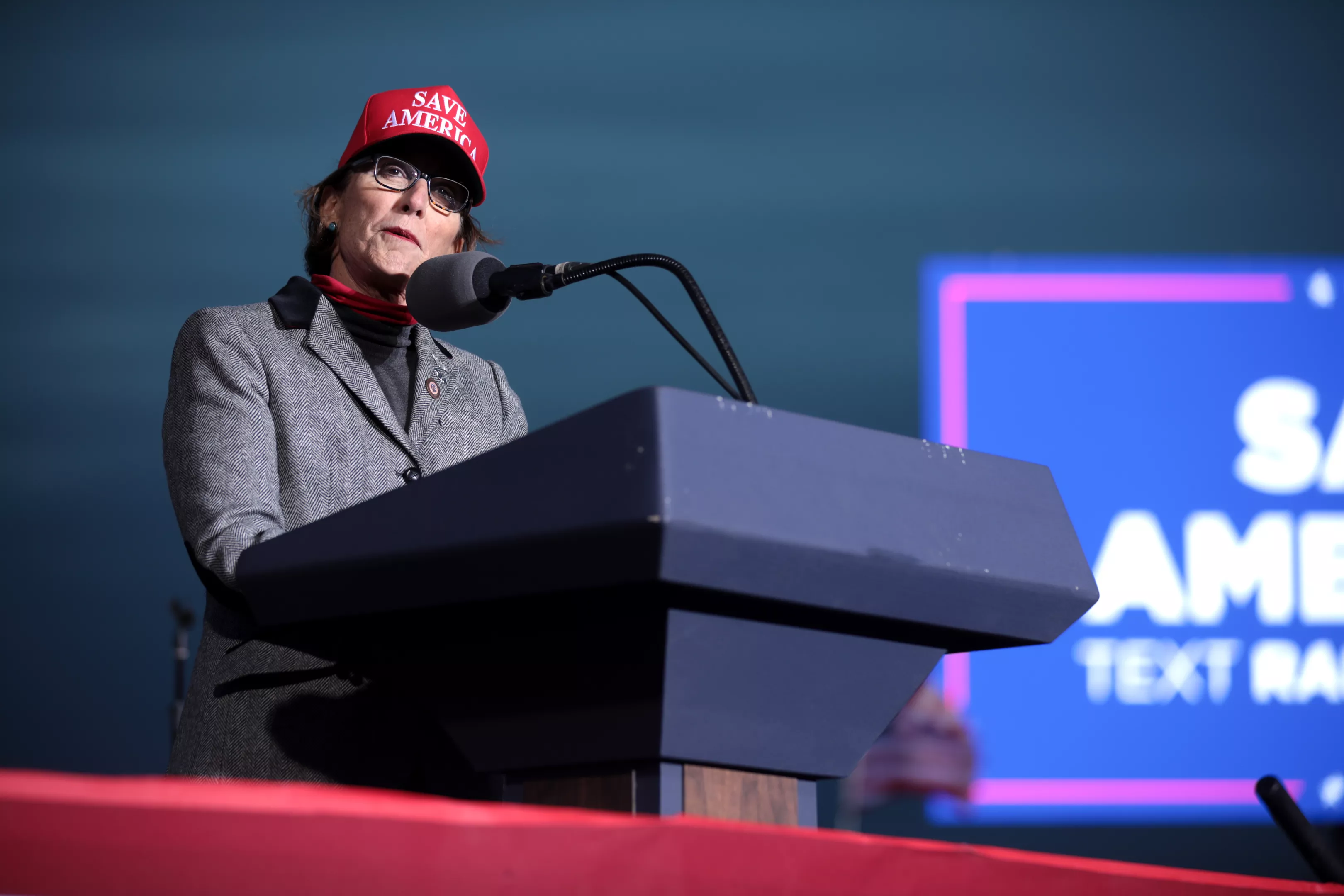
In the wake of her speech to a white nationalist conference and a string of offensive and inflammatory social media posts, the Arizona Senate voted to censure Republican Sen. Wendy Rogers.
The Senate voted 24-3 in a rare censure of one of its own, with 11 of the chamber’s 16 Republicans siding with the chamber’s 13 Democratic members who were in attendance. Rogers voted no, as did GOP Sens. Nancy Barto and Warren Petersen.
The censure, which has no practical effect, was for comments calling for people she perceived as enemies to be hanged from gallows, and for social media postings Rogers made threatening to “personally destroy” fellow Republicans who sought to punish her. The censure resolution was silent on her embrace of white nationalists and a string of antisemitic and racist things she had posted online in recent days.
Rogers, a Flagstaff Republican, didn’t defend or even address her comments on the Senate floor. Instead, she called the censure an attempt to limit her freedom of speech.
“I represent hundreds of thousands of people and the majority of them are with me. And they want me to be their voice. You are really censuring them. I do not apologize. I will not back down. And I am sorely disappointed in the leadership of this body for colluding with the Democrats to attempt to destroy my reputation,” Rogers said. “In the end, I rejoice in knowing I do and say what is right. And I speak as a free American, regardless of the actions of this corrupted process today.”
However, Senate President Karen Fann said the censure wasn’t about freedom of speech.
“We do support First Amendment freedom of speech. We absolutely support it. We fight battles over it. But what we do not condone is members threatening each other, to ruin each other, to incite violence, to call us communists. We don’t do that to each other,” said Fann, a Prescott Republican. “We, as elected officials, are held to a higher standard.”
Rogers spoke to the white nationalist America First Political Action Conference on Feb. 25. She called for gallows to be built so “high-level criminals” and “traitors who have betrayed our country” can be publicly hanged. She also unleashed a torrent of antisemitic tropes on social media over the weekend earlier this week, and voiced overt support for Russian President Vladimir Putin’s invasion of Ukraine.
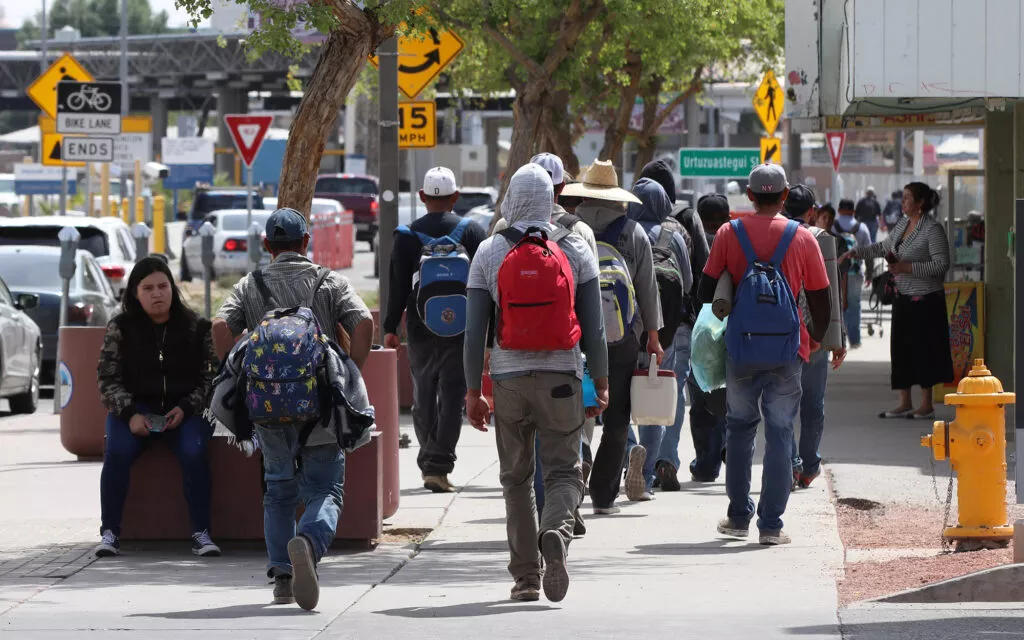
The funds are Arizona’s share of the $3.4 billion in federal funding that will be used at 26 land ports of entry on the northern and southern borders, which in turn is part of the $1.2 trillion Infrastructure Investment and Jobs Act approved last fall.
The General Services Administration announced Friday that $200 million is expected to go to a new commercial port in Douglas, $115 million is budgeted for modernization of the San Luis I port and a still-undetermined amount for the Raul Hector Castro port, which is also in Douglas.
“This funding is a big deal for the region and our state as a whole,” said Annie Vogt, spokesperson for the Arizona Chamber of Commerce. “Not just from an obvious national security perspective, but also from a commercial perspective.”
Port delays affect everything from the shipment of produce to the crossing of farmworkers who pick that produce, from customs safety to supply chain issues that can eventually drive up the prices consumers pay.
“The greater the efficiency of our ports, the better it is for U.S. consumers,” Vogt said. “We’ve seen how the cost of shipping delays is getting passed on to shoppers in stores, so improving these ports and ensuring they’re more efficient is a win for really all of us and our pocketbooks.”
Twenty of the 26 projects identified by the GSA are on the Canadian border, with the southern border projects divided between three in Arizona, two in Texas and one in California. Not all of the projects had price tags attached and the GSA did not release detailed schedules for the work.
“These are long-term investments,” said GSA Administrator Robin Carnahan during a press briefing Thursday. “But there are some instances, like Calexico and San Luis, that we actually hope to have contracts awarded by the end of this year.”
The San Luis project aims to improve the primary border crossing for Yuma-area farmworkers. The port was not designed to handle its current amount of traffic, leading to long wait times that can dissuade Mexican workers from seeking jobs across the border. It can also mean that trucks carrying produce get stuck idling for hours at a time.
“Having people and produce sit for hours at a time at a port of entry is not efficient,” said Robert Medler, government affairs manager for Western Growers. “That port in particular is integral to Yuma County’s and Arizona’s economy to have safe, efficient, cross-border travel and trade.”
The Castro crossing handles commercial and noncommercial traffic in a facility that is old and not big enough to meet current demands. The complex, which dates to 1933, has one building that is on the National Register of Historic Places and it was last expanded in 1993, according to a GSA fact sheet.
Not only is the facility too small “for U.S. Customs and Border Protection’s current mission,” but the GSA said it forces truck traffic through the “same undersized commercial vehicle inspection compound, which slows traffic and poses safety hazards.” Initial plans call for the demolition and reconstruction of parts of the complex to “replace the systems and buildings that are undersized and well beyond their useful life.”
The Castro work will not begin until traffic can be shifted to a new port dedicated to commercial traffic at Douglas, a $200 million project that is “long overdue,” according to Rep. Raúl Grijalva, D-Tucson.
The GSA said the new port will allow for oversized mining equipment and chemicals to cross the border safely. Grijalva said the new Douglas port will shift commercial traffic away from the middle of the city, while making it easier for CBP officers to do their jobs.
“The whole issue is to expedite movement of goods, services and people… in a secure way,” Grijalva said. “That’s the kind of investment we need to be making.”
But he said there is a larger benefit to this type of investment – it brings jobs.
Construction jobs in the short term as well as longer-term jobs tied to the economic activity that an improved port can spur in the region.
“It increases the flow of goods, services and people, shoppers, retail businesses, import-export, commerce, all of that are job generators,” Grijalva said. “If you look at every one of these ports, there’s significant dependency on our side of the border and that side of the border on the flow of goods and services and people.”
Arizona Mirror is part of States Newsroom, a network of news bureaus supported by grants and a coalition of donors as a 501c(3) public charity. Arizona Mirror maintains editorial independence. Contact Editor Jim Small for questions: [email protected]. Follow Arizona Mirror on Facebook and Twitter.
Kids in juvie might see their financial load lightened, thanks to new legislation approved by the state House of Representatives that would eliminate the rollover of court fees on them and their families.
The legislation would scrap the court’s ability to charge juvenile delinquents or their parents' fees related to their trial and conviction.
“This doesn’t take away their responsibility to whatever they did. What it does is — it doesn’t push them down further into a hole of financial debt,” Rep. Walt Blackman, a Republican from Snowflake and the sponsor of House Bill 2033, said during a House Judiciary Committee hearing on Jan. 26. Blackman is a longtime proponent of criminal justice reform.
Under existing law, juveniles can be billed for court-appointed attorneys and court-ordered counseling or treatment programs. They may also be forced to pay for food, clothing, shelter, supervision, and medical or mental healthcare costs incurred while in the custody of the Department of Juvenile Corrections. Even foster care, if the judge deems it necessary, is added to the bill.
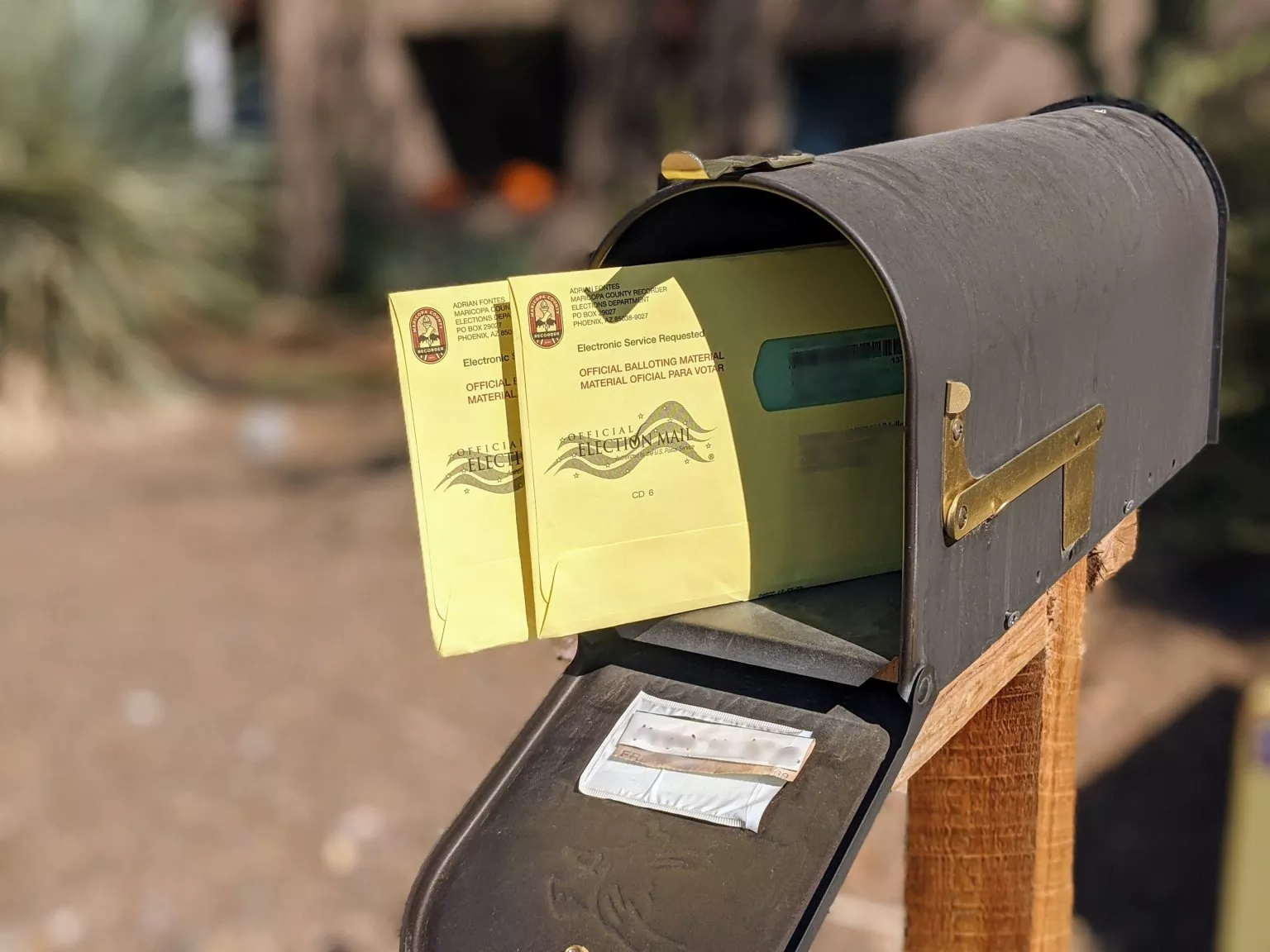
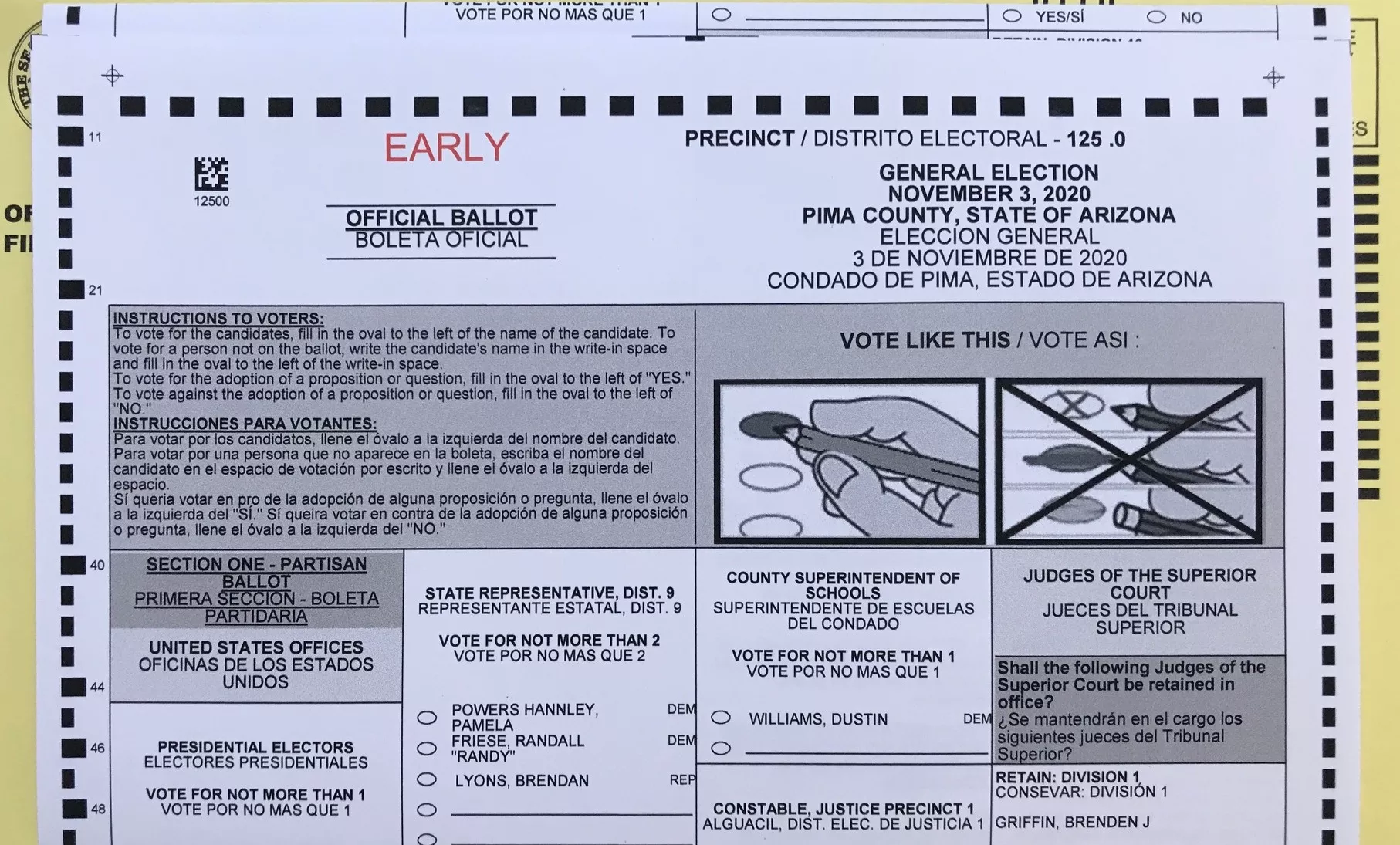
Arizona voters will decide in November whether they should have to put more than a signature on their early ballots to prove their identities.
Voters who cast early ballots, the preferred method of voting for the overwhelming majority of Arizonans — an estimated 89% voted with early ballots in the 2020 general election — affirm their identities by signing an affidavit on the envelope they use to return their ballots. Election officials compare the signatures with others they have on record for those voters to confirm voters’ identities.
The House of Representatives on Monday approved Senate Concurrent Resolution 1012, which seeks to change those rules, on a party-line vote. The Senate has already approved it, so the House vote was the final approval it needed in order to go onto the November ballot as a proposition.
If voters approve the measure in November, people who vote early will have to add something extra: their driver’s license number, state identification number, the last four digits of their Social Security number or their voter identification number. The affidavit would be concealed in the envelope used to return early ballots so that, unlike the signatures on the envelopes currently in use, the voter’s identifying information wouldn’t be visible from the outside.
Ballots that don’t include the information would not be counted.
The law, if approved, would also waive $12 cost of non-operating identification cards, which are state ID cards that don’t entitle a person to drive a vehicle Sen. J.D. Mesnard, R-Chandler, sponsored a SCR1012 and ran a similar bill during the 2021 legislative session. That version died after two House Republicans, Reps. Joel John and Michelle Udall, voted against it. In response, Mesnard, other GOP lawmakers and the conservative Arizona Free Enterprise Club launched a citizen initiative campaign to put the issue on the ballot. But the preference was for the legislature to refer it instead, and the campaign had hired almost no petitioners to collect the 237,645 valid signatures it would have taken to put it on the ballot.
The initiative campaign became unnecessary on Monday when all 31 House Republicans voted for the measure.
“I’m thrilled the voters will have an opportunity to vote on this common sense voter ID legislation,” Mesnard told the Arizona Mirror after the vote.
Voting by mail has become a popular target for Republicans, especially in the wake of the false allegations former President Donald Trump and many of his supporters made that his defeat in the 2020 election, including his loss to President Joe Biden in Arizona, were the result of fraud. Trump falsely told his supporters in the run-up to the election the voting by mail was insecure. Those suspicions became far more prevalent as a result of the “Big Lie,” as some call the fictional conspiracy theories about 2020. In Arizona, the largely debunked claims from the so-called “audit” of the election in Maricopa County helped fuel those allegations.
Elections officials view Arizona’s early voting system and similar systems in other states as highly secure. There have been a small number of cases stemming from the 2020 election in which people forged signatures on other people’s early ballot envelopes, largely other members of their households. The U.S. Attorney’s Office for Arizona announced on Monday that a Mohave County woman was sentenced for illegally casting her dead father’s ballot in 2018.
Rep. John Kavanagh, R-Fountain Hills, said people who want to fraudulently cast other voters’ early ballots can find examples of their signatures at home if it’s a member of their household, online through documents on the county recorder’s website.
“This bill closes a weak link in the security chain of our election system,” Kavanagh said.
Democrats, however, accused Republicans of putting up unnecessary new barriers to fix a system that already works.
“This is not about voter ID, because we all agree voter ID works in Arizona,” said Rep. Mitzi Epstein, D-Tempe. “Voter ID is fine. We respect and appreciate voter ID laws. But this, this is barrier after hoop after lava pit after problem after more barriers. This is voter suppression.”
Rep. Judy Schwiebert, D-Phoenix, noted that voters must already show identification in Arizona without the proposal. Arizonans must show ID to vote in-person, including at in-person early voting sites, and those who vote by mail still must provide proof of citizenship in order to register to vote.
“Democrats are not against showing voter identification. As a Democrat, I am pro-vote. I am for the freedom to vote. But this bill leads people astray. It suggests that it’s about making sure that people show identification, when in fact they already do show identification,” Schwiebert said. “This is just one more bill in a whole litany of bills that build upon the Big Lie that the last election was not conducted properly.”
Rep. Sarah Liguori, D-Phoenix, warned that the law could cause many more early ballots to be rejected. She pointed to the problems Texas has had in recent weeks with new restrictions on absentee voting that have led to an unprecedented number of absentee ballots being rejected.
In Arizona, election officials must attempt to contact voters if they’re unable to verify the signatures on their early ballot affidavits. Voters have up to five days after the election to “cure” the signatures on their early ballots. Under SCR1012, election officials would have to do the same for voters whose identification can’t be confirmed on their early ballots.
Other Democrats noted that Republicans have become increasingly hostile to early voting in general. Several proposed bills would eliminate early voting entirely in Arizona. The Arizona Republican Party on Monday filed a lawsuit alleging that the state’s 31-year-old no-excuse absentee voting system violates the Arizona Constitution.
Arizona Mirror is part of States Newsroom, a network of news bureaus supported by grants and a coalition of donors as a 501c(3) public charity. Arizona Mirror maintains editorial independence. Contact Editor Jim Small for questions: [email protected]. Follow Arizona Mirror on Facebook and Twitter.
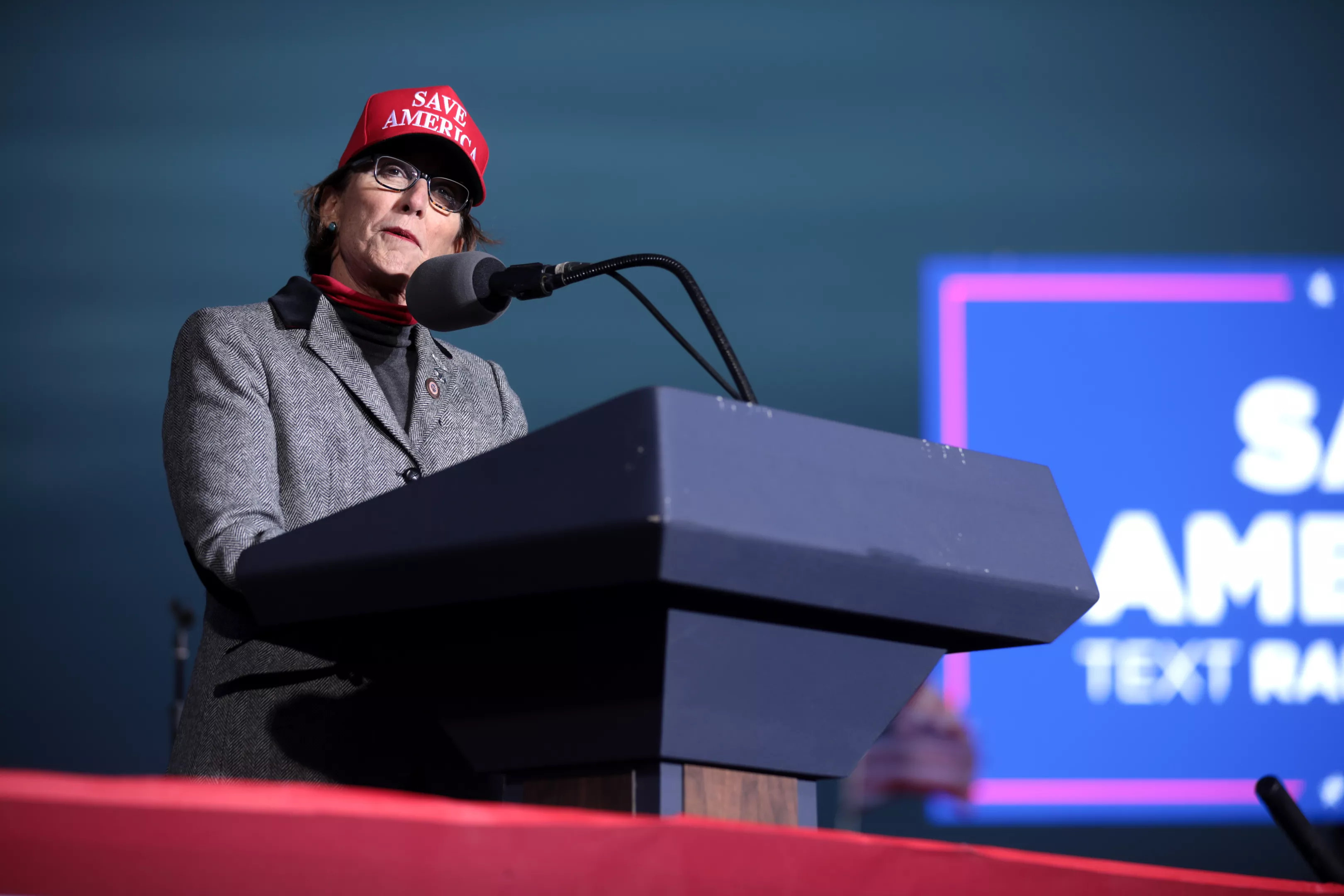
Discussions are underway at the Arizona Senate about possibly censuring Sen. Wendy Rogers over her recent inflammatory comments and her speech to a white nationalist conference over the weekend, according to the chamber’s second-ranking Republican.
“We’re talking about that. We’re discussing that. I think it’s better to consolidate on what we’re going to do before we start talking to the media about what we’re going to do,” Sen. Rick Gray, the Senate majority leader, told reporters on Monday.
Rogers lashed out at the idea Monday night, writing on social media that she “will not apologize for being white. Hit me all you want.”
She continued: “I will personally destroy the career of any Republican who partakes in the gaslighting of me simply because of the color of my skin or opinion about a war I don’t want to send our kids to die in.”
The America First Political Action Conference, as the event is known, is an annual white nationalist gathering. In a speech to the conference in Orlando on Friday, Rogers, a Flagstaff Republican, called for gallows to be built to hang “high-level criminals” and “traitors who have betrayed our country.”
Rogers also praised event organizer Nick Fuentes, a known Holocaust denier with a history of making racist and anti-Semitic remarks. In a speech to the conference, Fuentes said people are comparing Russian President Vladimir Putin to Adolph Hitler, “as if that isn’t a good thing.” Fuentes is a leader of the “groyper” movement that seeks to push the Republican Party further toward white nationalism. Rogers on Friday called him “the most persecuted man in America.”
Gray, a Republican from Sun City, said he had “serious concerns” about the clips he’d seen of Rogers’ comments to AFPAC, as the event is known. Her comment about building gallows were “disappointing,” he said.
“I can say I do not reflect her views. It’s not where I stand,” Gray said.
It’s a lawsuit in name only … The GOP Rogers detractors could maybe field a basketball team now … And welcome to the world, AZ Luminaria!
The Arizona Republican Party is suing to stop you from voting by mail, arguing mail-in voting wasn’t in the Arizona Constitution.
Having struck out at getting politicians to ban early and mail-in voting in favor of “1958-style” voting, the AZGOP filed a lawsuit asking the Arizona Supreme Court last week attempting to ban mail-in voting, or at least return to 1991-style voting, before the state adopted “no-excuse” early voting as we know it.
The lawsuit argues that the way we vote has never been allowed in the first place. (Decertify all elections since 1992, anyone?) Instead, the party says, voting is supposed to take place “at the polls,” according to the constitution, which was written in 1910, just after the invention of the Ford Model T. (Arizona’s Law has a copy of the full suit.)
It’s no surprise the absurdist legal arguments come from Alexander Kolodin, the lawyer who’s representing the AZGOP and whose name you’ll find on several other election fraud lawsuits. As part of his spaghetti-thrown-at-wall legal strategy, Kolodin also says drop boxes, where voters drop off ballots, aren’t legal.
Friday, February 25, 2022
Why are Republican Senate candidates having such a hard time spelling “Tucson” correctly?
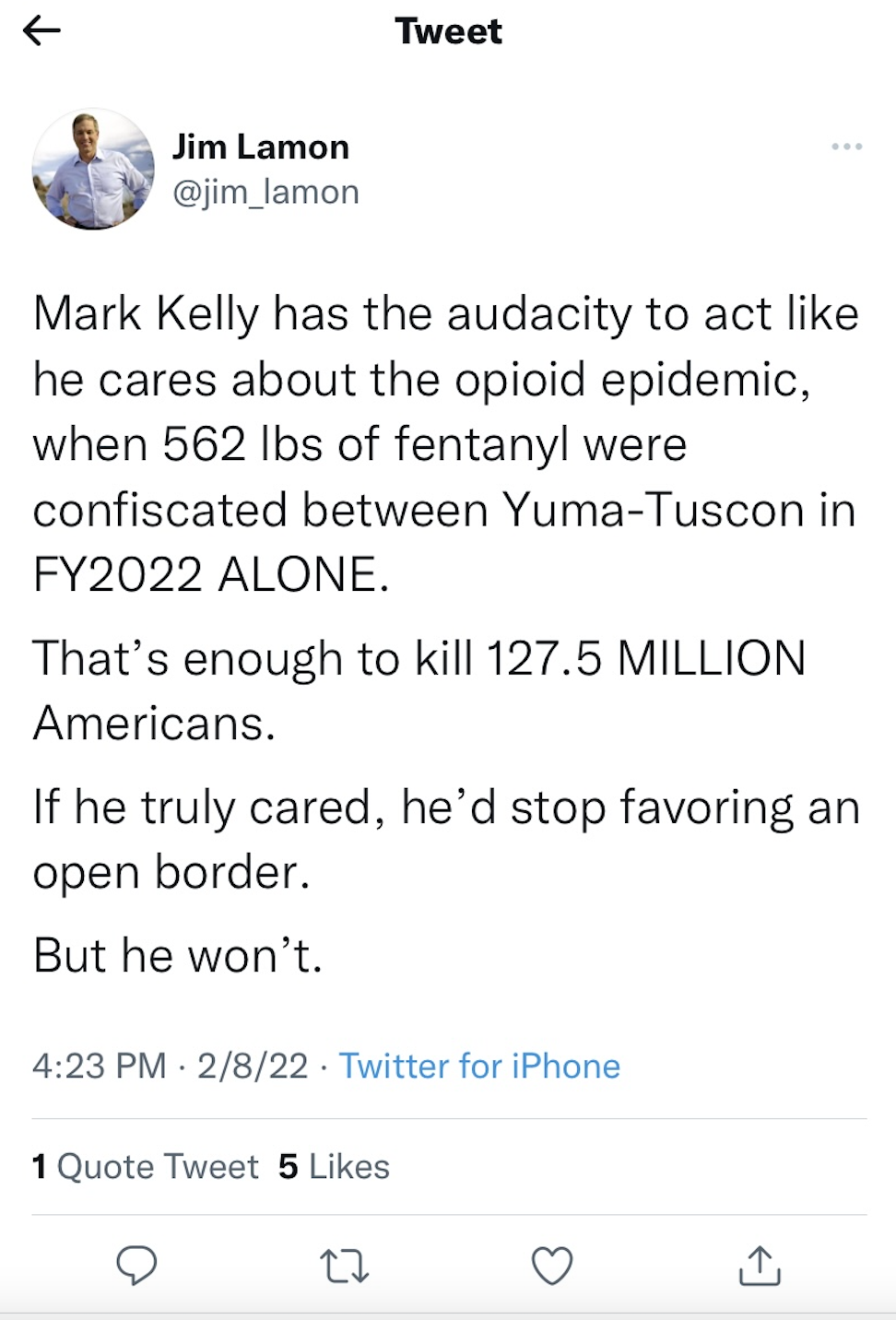
First it was gunfighter cosplayer Jim Lamon, who is seeking to challenge Sen. Mark Kelly in November.
Lamon, who was one of the fake electors who were plotting to overturn the 2020 election, got some ink a few weeks back when he misspelled Tucson as “Tuscon” when announcing he was opening a new office, leading to him getting tweaked on Twitter by Arizona Daily Star columnist Tim Steller.
Spelling “Tucson” right is the first step toward winning it, @jim_lamon . pic.twitter.com/s5utcx53wG
— Tim Steller (@senyorreporter) January 30, 2022
Lamon fixed his spelling errors and then said it was important to get back to talking about "important issues." Then on Feb. 8, Lamon misspelled Tucson again in a subsequent tweet that was deleted before he could get dragged over the coals again.
After Lamon’s first misspelling, fellow Republican Senate candidate and Thiel Capital minion Blake Masters gave Lamon a lesson in how to spell Tucson.
Jim, congrats on your new office. That’s T-U-C-S-O-N by the way, 2nd largest city in the state, I recommend getting that down 🤠 https://t.co/i7pvUhvhZm
— Blake Masters (@bgmasters) January 30, 2022
So you can guess what’s next: Team Masters showed they needed a proofreader of their own. When filing a state of organization for the race with the FEC, the campaign also misspelled Tucson as “Tuscon.” It’s even more embarrassing for Masters, who grew up in the Old Pueblo.
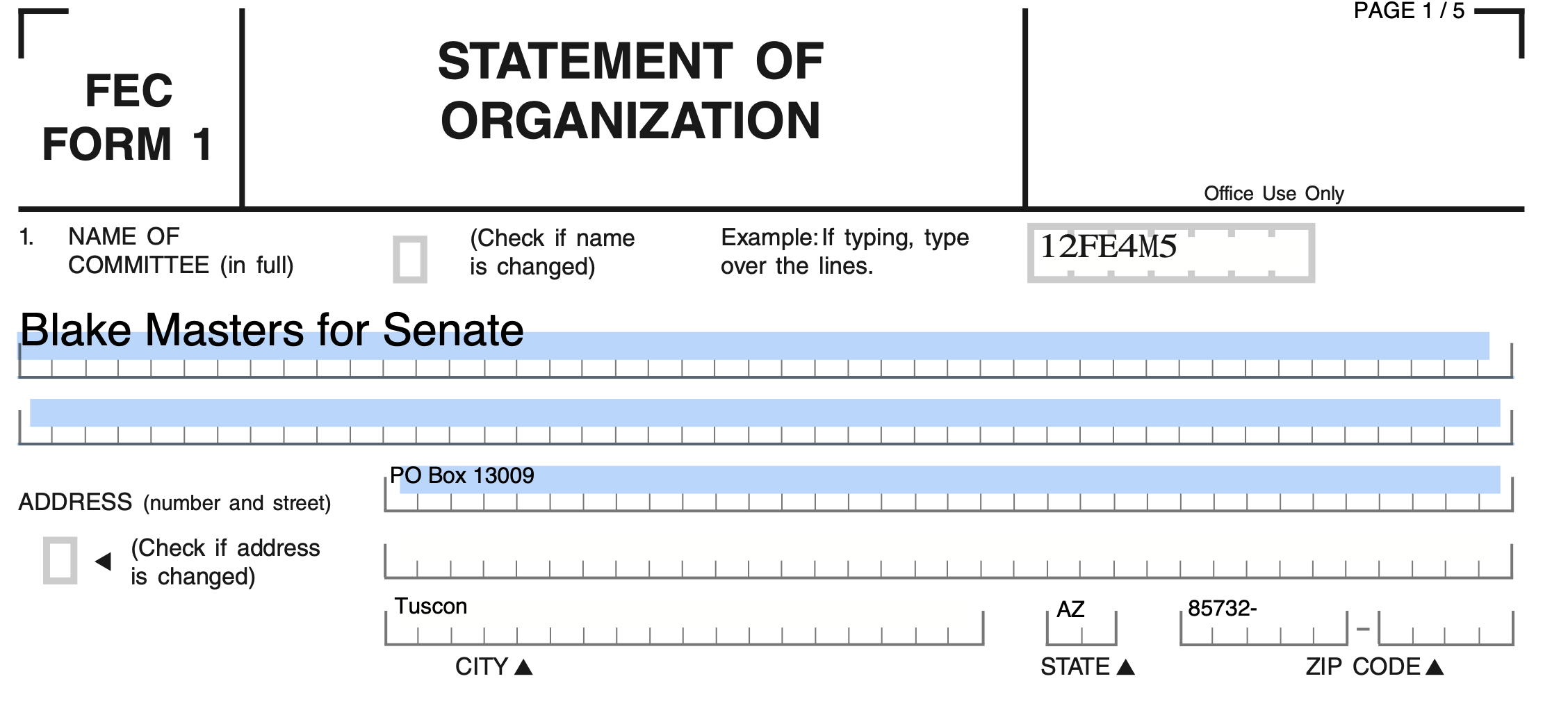
The Masters campaign did not respond to a request for comment from Tucson Weekly. Maybe if we’d spelled it Tuscon Weekly, they would have gotten back to us?
Wednesday, February 23, 2022

A bipartisan plan from two lawmakers whose names end in -ston ... A strange strategy that isn't legally sound ... And the kind of poem you'd write in English 101.
After cities killed a bipartisan, wide-reaching plan to attack Arizona’s unaffordable housing problem, a bipartisan duo are pushing a piecemeal approach that is earning both high praise and some heavy scorn at the Capitol.
Four bills, drafted as strike-everything amendments by Sens. David Livingston, a Republican, and Lela Alston, a Democrat, moved through the Senate Appropriations Committee yesterday.
The strike-everything amendment to Senate Bill 1634 would require cities or counties with more than 100,000 people to choose at least four strategies from a list of more than 20 to incentivize affordable housing. Smaller municipalities would choose at least one strategy, which range from increasing density to expediting applications for new affordable housing to allowing more guest houses or duplexes or triplexes in single-family residential areas. It would also allow for more “novel, creative or innovative incentives for developing affordable housing.” And it would force cities to study and draft plans for addressing their affordable housing shortages.
The striker to SB1117 would incentivize building larger affordable housing complexes by eliminating state property tax for owners of low-income housing with up to 600 units. The previous cap was 200 units.
SB1531 as amended would appropriate $100 million of federal American Rescue Plan Act funds to the Housing Trust Fund, which funds affordable housing developments, housing assistance programs and homeless shelters.
And SB1581 would offer $50 million in federal ARPA funding to cities and counties to develop “sanctioned camping sights” for the homeless.
Of the four, the only measure facing organized opposition is SB1581, which requires as a condition of receiving the grants that cities adopt and enforce ordinances against “urban camping” (read: being homeless) at unsanctioned sites.
Friday, February 18, 2022
“Period Poverty is essentially the lack of access to menstrual products and sanitation facilities and it also covers a lack of education of menstruation and the menstrual cycle,” said DBSA marketing coordinator Riley Mentel.
According to the nonprofit, one in four U.S. women struggle to afford period supplies each year. In addition, one in five low-income women have reported missing work, school or other priorities due to a lack of period supplies. While known for providing diapers and incontinence supplies, DBSA also provides menstrual products, with more than 200,000 products donated every year.
“The pandemic ramped things up for us,” said DBSA CEO Dr. Shannon Roberts. “We’ve seen more requests for product and support now than prior to the pandemic. And that's primarily because people who weren’t in need are now in need.”
Arizona is one of many states that tax menstrual products as a luxury good, whereas products such as toilet paper, condoms and over-the-counter drugs are considered necessities and are not taxed. The tax, as well as the general pricing, continues to bar many in need of these products.
“People don’t ask to have a menstrual cycle, it's something that you’re born with,” Dr. Roberts said. “You shouldn’t have to suffer financially because you can’t provide for those products. It's not a luxury, it's a necessity.”
This year, sororities from the University of Arizona and five local Tucson businesses have volunteered to host period supply drives: MAST Jewelry, Sam’s Place, Casa Kira, The Bra Spa, and Eastland Alley Design Co. All throughout February sorority members and customers are encouraged to bring donations to the participating organizations, and some have even planned events that coincide with the campaign.
“It's a nice opportunity to start conversations about what this tax is and how it might impact women around Arizona,” said Kira Geddes, owner of Casa Kira.
On Feb. 12, Casa Kira encouraged period product and cash donations with a Valentine’s Day open house. Contributors were given 50% off any pair of Casa Kira earrings as well as entered into a raffle to win a basket full of local art.
“This is my second time doing it, I did it last year as well, and I just felt like it could be a really great awareness building and donation opportunity,” Geddes said.
In addition to in-person drives, the Diaper Bank of Southern Arizona and various businesses will be offering virtual drives where cash donations can be made directly to the organization.
While February is used to highlight period poverty, DBSA accepts donations year-round and the fight continues to persist.
“A lot of people come in and are embarrassed to ask for support, and we try to erase the shame and stigma for needing a resource or needing assistance,” Dr. Roberts said. “There's nothing dignified about soiling your clothes, and we want people to know it’s okay to need these resources and help them live a life of dignity.”
For more information, visit diaperbank.org

