

Thursday, February 17, 2022
The election fallout is election fodder … He’s an expert on ethics rules … And please buy us a water slide.
The U.S. House’s January 6th committee subpoenaed two more Arizonans this week. It wasn’t the first time the committee subpoenaed or sought depositions with Arizonans tied to the Jan. 6 insurrection and the events leading up to it, and it probably won’t be the last.
This time, the committee sought records and depositions with Arizona Republican Party chair Kelli Ward and Arizona Rep. Mark Finchem as it looks further into the fake electors who sent documents claiming Trump won the 2020 election in their states.
In a letter to Finchem, the committee cited his public comments about the election being stolen or rigged, as well as a meeting in Phoenix where Finchem met with Trump’s legal team where he made false claims about the election. The committee also noted Finchem’s presence in Washington on Jan. 6.
As for Ward, the committee called out her texts asking an election official to “stop the counting” and her actions as one of the fake electors, among other claims she made about the election.
We’ve talked a bit about the Jan. 6 committee, its Arizona ties and the fake electors plot over the past couple months — it has clear that the fake electors issue resurged recently because of the committee’s work to understand who set up the fake electors plan, any coordination between Trump and the actions some states took to try to usurp the voters.
The committee subpoenaed two others who signed on as fake electors in Arizona in late January. The fake electors plot continues to surface on news networks seemingly daily, like on MSNBC’s Rachel Maddow Show, for instance, which reported that Arizona Rep. Jake Hoffman, one of the fake electors, reached out to former Vice President Mike Pence on Jan. 5, 2021, about the slate of electors and asked him to delay the certification.
Wednesday, February 16, 2022
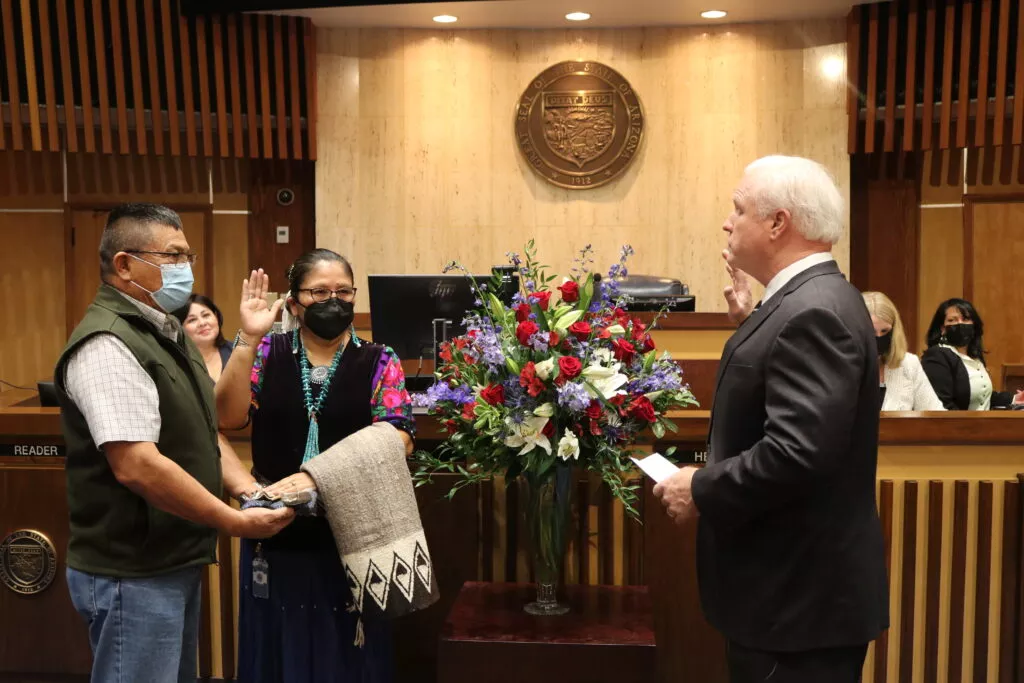
Political party activists, not county supervisors, would get the final say in who fills vacant seats in the legislature under a proposal advanced by the Senate Government Committee.
Currently, if members of the legislature resign, die or otherwise vacate their seats, the precinct committeemen — the elected, voting members of a political party’s organization — from the departed lawmaker’s district nominate three finalists to fill the vacancy. The board of supervisors from the former lawmaker’s county then selects the replacement from that group.
Senate Bill 1063 would change that system to remove the county supervisors from the equation. The precinct committeemen, or PCs, as they’re often referred to, would make the decision themselves.
The bill would make another significant change. Under the current system, only PCs from the county the former lawmaker lived in get a say in who the three finalists are for to fill a vacancy.
In some parts of the state, that restriction is irrelevant. Fifteen legislative districts on the current legislative map, and 17 in the map recently approved by the Arizona Independent Redistricting Commission, are wholly contained within Maricopa County.
Other districts, however, span many more. The current District 7, for example, includes portions of seven counties.
Sen. Vince Leach, the bill’s sponsor, cited the districts that traverse multiple counties as the impetus for the bill.
Last year, Rep. Bret Roberts, Leach’s seatmate in District 11, resigned and moved to South Carolina for a new job. Leach, an Oro Valley Republican, noted that the 77 elected PCs in Pinal County, where Roberts lived, selected the finalists, while the 162 elected PCs from the Pima County portion of the district sat on the sidelines.
“Think about that — shut out of the process,” Leach told the committee. “What this bill does is it says everybody gets to vote.”
It’s the 230 elected PCs in the legislative district who should have made the decision, not the Pinal County Board of Supervisors, Leach said.
Precinct committeemen are the foot soldiers of political parties. They are elected by voters during the primary elections that occur in even-numbered years. They largely handle local political matters in their legislative districts, but also play a role in county party activities and vote for the state committeemen that guide state party actions.
Sen. Warren Petersen, R-Gilbert, said the legislature should delegate more power to PCs when it can.
“They know the people in their district better than anybody — better than the board of supervisors, I must say,” he said.
PCs and county supervisors sometimes have divergent interests. The PCs represent the grassroots base of the party, and at times their first choice is overridden by the board of supervisors. The bill also comes as many Republicans are at odds with the Maricopa County Board of Supervisors over its rejection of false claims that the 2020 election was rigged, a conspiracy theory embraced by many in the GOP.
Though Leach said there should be bipartisan support for the bill, the committee’s Democrats weren’t sold. Sen. Theresa Hatathlie, of Coal Mine Mesa, who was appointed to the Senate in January, questioned whether people in one county know other counties well enough to make decisions about who should represent them. Leach countered that the same factor is in play in regular elections. It’s up to the candidates themselves to convince PCs that they’re the right person for the job, he said.
Sen. Martin Quezada, a Glendale Democrat who originally came to the legislature through appointment, said he liked that the bill includes all of a district’s PCs in the replacement process, not just the ones from the former lawmaker’s county. But he didn’t want to remove the supervisors from the process. He told Leach he was voting no, but appreciated his efforts to reform an imperfect system.
“I like to have that protective layer of the board of supervisors to ensure that the right person is selected,” he said.
Arizona Mirror is part of States Newsroom, a network of news bureaus supported by grants and a coalition of donors as a 501c(3) public charity. Arizona Mirror maintains editorial independence. Contact Editor Jim Small for questions: [email protected]. Follow Arizona Mirror on Facebook and Twitter.
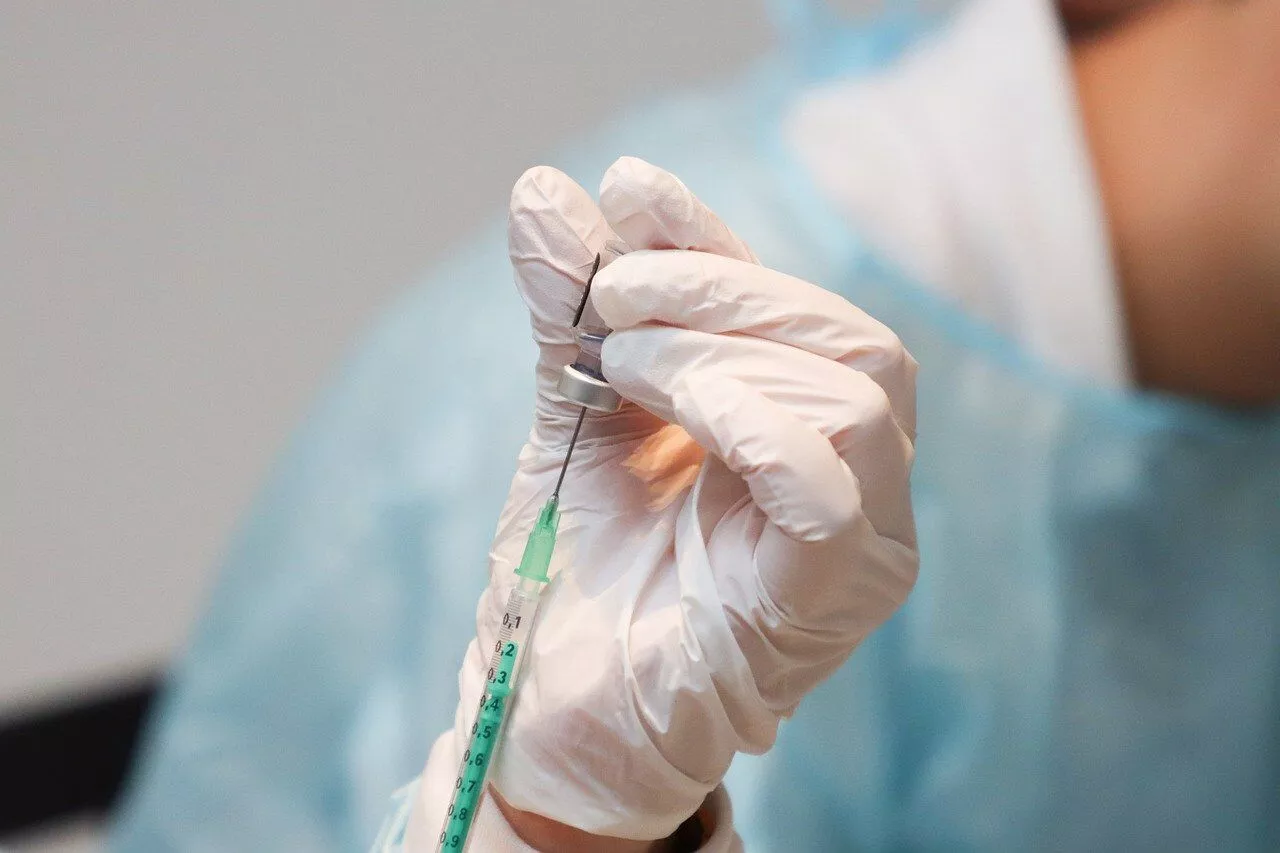
A Republican bill that would bar the state from making the COVID-19 vaccine a requirement for school enrollment passed out of committee Tuesday.
“Some may ask, why is this necessary now? It’s not being mandated,” Rep. Joanne Osborne, R-Goodyear, said of her bill, House Bill 2086. “I want to make sure it stays that way.”
The bill would add “an immunization for COVID-19 or any variant of COVID-19” to the list of vaccines that cannot be required for school attendance.
Currently, Arizona law prohibits schools from requiring students to be immunized against HPV.
Last year, the legislature passed legislation that banned mask and vaccine mandates by schools, but the Arizona Supreme Court struck down the provisions that were unconstitutionally put into the state budget.
Osborne, who said she is not an “anti-vaxxer,” said that she decided to bring the bill because she had heard stories on the radio about young athletes being forced to get the vaccine in order to play in high school sports.
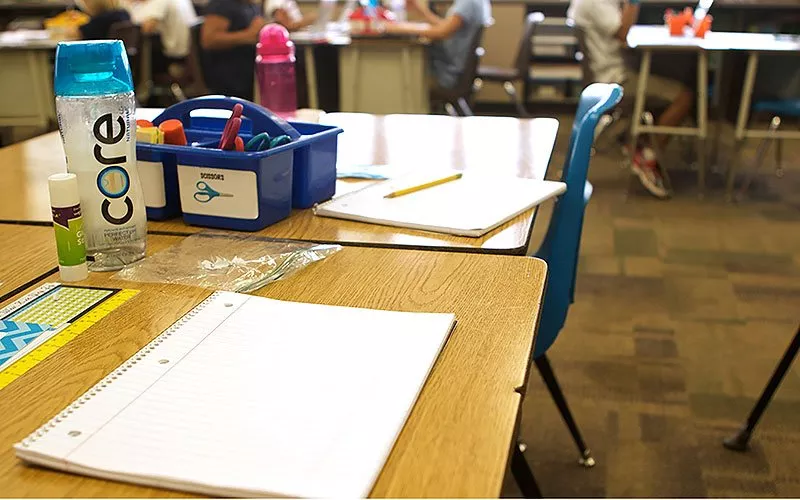
The push to temporarily raise the state’s spending limit for K-12 schools and avoid nearly $1.2 billion in cuts that could close classrooms passed easily in the state House of Representatives but stalled out in the Senate, where it may only be one Republican shy of the 20 votes needed to pass it.
With the Senate’s 14 Democrats unanimously supporting the measure, legislative leaders need only five Republicans to get to the two-thirds supermajority required to raise the aggregate expenditure limit, which is necessary to allow schools to spend the money that lawmakers budgeted for K-12 education last year.
Five Republican senators — Nancy Barto, Paul Boyer, Tyler Pace, T.J. Shope and Senate President Karen Fann, who sponsored the resolution to raise the cap — confirmed to the Arizona Mirror that they’re supporting the measure.
That means there are 19 votes. But the pivotal 20th vote proved elusive on Tuesday. Fann delayed the start of the Senate’s floor session by more than a half hour while she tried to round up the last vote. She wouldn’t confirm how many votes she already has, but says she’s close.
The problem is that many Republican senators won’t vote for the resolution until they know that it won’t open the door for Proposition 208, a voter-approved income tax hike on wealthier Arizonans. The Arizona Supreme Court ruled last year that the tax hike is illegal if the new revenue would exceed the aggregate expenditure limit, and sent the case back to a Maricopa County Superior Court judge to determine. So far, Judge John Hannah has taken his time.
Last week, Hannah told legislative leaders that he’ll issue his ruling on his own timeline. The Arizona Constitution sets a March 1 deadline for lawmakers to raise the expenditure cap before districts will have to start making budget cuts. Superintendent of Public Instruction Kathy Hoffman says that would represent a cumulative 16% cut for school districts.
Because the school year would be roughly three-quarters over when the cuts are scheduled to go into effect, many school districts have said the impact would be massive — and could force teacher layoffs and school shut-downs.
She's even failing at resigning ... One vote down, one to go ... And it's not quite must-see TV.
In what should be the death blow to her short tenure as Maricopa County Attorney, Allister Adel’s five top chiefs penned a three-page letter recounting all her failures that somehow got worse for her with every new sentence.
Adel was already in a world of hurt over the handful of individual scandals that have rocked her office since she took over. But allegedly being drunk on the job — and drunk-dialing an employee about “pranking” another employee who had resigned — was a bridge too far for the professional lawyers at MCAO.
They sent their demand for her resignation to the county board of supervisors and the State Bar of Arizona and have launched their own ethics investigation into their boss.
The letter starts off by stating that her top deputies held an intervention of sorts with her on November 30 and warned that they didn’t have proof she was drinking on the job, but they were watching closely. The staffers walked away hopeful that she would start showing up to the office and get her act together. They said it was disappointing and shocking that she has done neither.
Tuesday, February 15, 2022

Time is a flat circle … Dodging is an art … And counting on your fingers is fine.
Republican leadership in the House and Senate finally introduced bills to temporarily lift the education spending cap, taking the first step to saving schools from running out of money — and possibly closing — two weeks from today.
But it’s far from a done deal. Word at the Capitol is that the House seems to have the votes lined up, while the vote count in the Senate is less sure.
To get that two-thirds vote, it’ll only take six Republicans in the Senate (plus one to make up for Democratic Sen. Juan Mendez, who is out on paternity leave after Senate President Karen Fann refused to let lawmakers vote remotely) and 11 in the House to avert financial disaster and keep schools from closing.
But even that will likely take some arm twisting.
The bills are “clean,” meaning they only deal with the issue of the cap. While House Speaker Rusty Bowers has pledged to keep the bill that way, Fann seemed noncommittal when Capitol scribe Howie Fischer asked. Senate holdouts are already demanding that it be tied to universal school vouchers, which is a non-starter with Democrats.
Many Republicans remain wary of lifting the cap before the dust settles on the court battles surrounding Proposition 208, which would increase taxes on high earners to pay for education. Lifting the cap ahead of that ruling could undercut their legal arguments.
Monday, February 14, 2022
Allister should focus on Allister ... George W. is focusing on Doug ... And the interns are focusing on their pronouns.
Maricopa County Attorney Allister Adel’s office continues to unravel as evidence against her sobriety and ability to do the job continues to pile up.
On the heels of last week’s media tour attempting to salvage her reputation comes a tale of two employees at the Maricopa County Attorney’s Office.
First, Communications Director Jennifer Liewer tendered her resignation Thursday with a letter imploring Adel to stop using her team to defend herself over her “sobriety and leadership.”
“As I have repeatedly conveyed, I believe the best use of the communications team is to communicate about the work of the office — not in defending the county attorney individually,” she wrote.
tweet this
More turmoil at the Maricopa County Attorney’s Office. Communication director resigns citing concerns over @AllisterAdel’s “sobriety and leadership.” Calls the situation untenable.
— Robert Anglen (@robertanglen) February 11, 2022
Read her resignation letter here. Story coming soon @azcentral pic.twitter.com/vKYsKXiFq0
Liewer was one of the few competent public-facing people in that office and Adel’s decision to toss her out of the building for speaking truth to power shows a vindictiveness unbecoming of her position, the Republic’s Laurie Roberts wrote. She called on Adel to resign. Liewer — a longtime communications professional and ally of Adel’s who was among her earliest hires and has stood by her side through a string of scandals in the past two years — offered a three-week notice. But Adel had security escort her out instead.
When you’re perp-walking your top communications person out of the office, you know you’re in trouble. 12 News and The Republic each had stories up Thursday evening within five minutes of each other saying Liewer was escorted out.
Friday, February 11, 2022
If the lawyer representing you struck an agreement with the State Bar over ethics complaints, you’d want to know what exactly they agreed to do to fix their ethical problems.
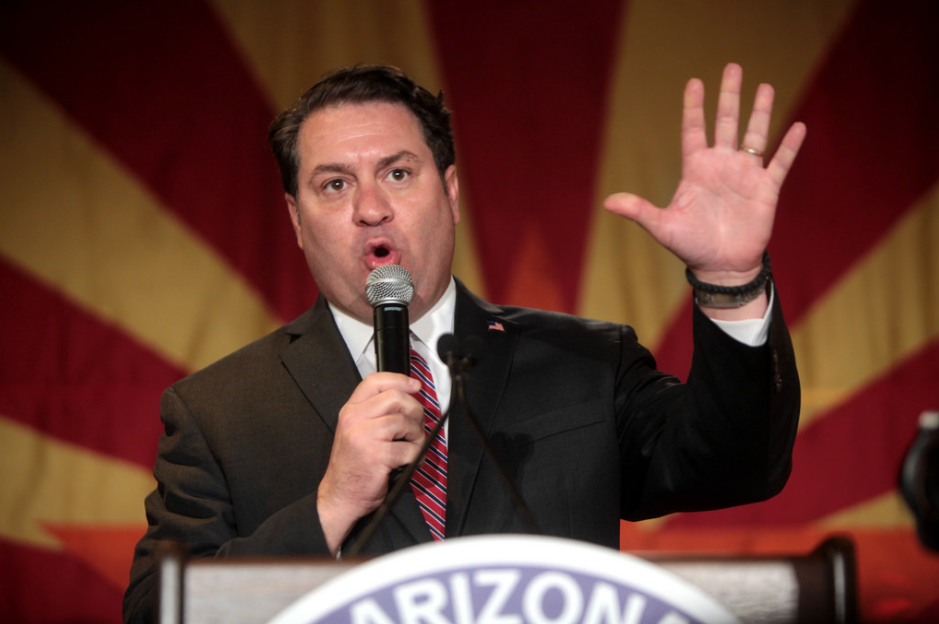
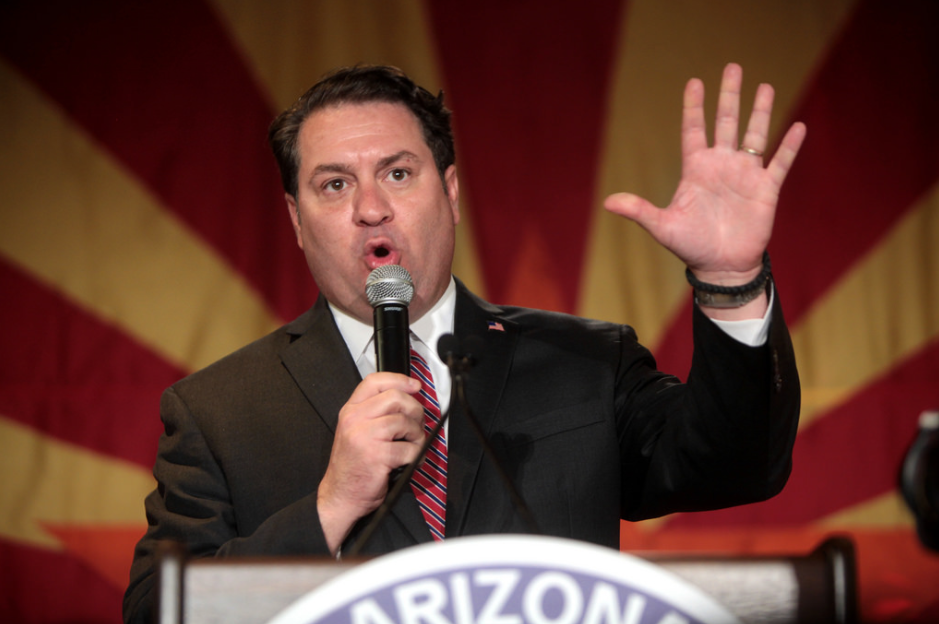
Arizona Attorney General Mark Brnovich, by virtue of his position as the state’s top elected lawyer, represents all Arizonans in court. Yet we have no idea what his recent Bar “diversion agreement” entails because he won’t say.
Brnovich entered the diversion agreement after the Arizona Board of Regents and Arizona Secretary of State Katie Hobbs filed ethics complaints against Brnovich.
The regents say Brnovich acted unethically by suing the universities while also representing them as a client. And Hobbs said the AG’s office would act counter to her instructions and acting against her office.
Diversion is an alternative to discipline, provided that an attorney completes the terms set out by an agreement, the Arizona Supreme Court’s guidelines for the program say. It is meant to protect the public and improve attorneys’ work through “education, remedial and rehabilitative programs so that attorneys modify practices, procedures or other conduct” that doesn’t comply with Bar rules.
Such agreements are confidential under Supreme Court rules. But Brnovich could waive that confidentiality — and he’s the only one who can. The Bar can’t release the information, and the parties who filed complaints don’t know the terms of agreements either.
Thursday, February 10, 2022
All the best grifters are moving to New Mexico ... From Adios Arpaio to Adios Sinema ... It's a nonviolent army, he swears.
New details are trickling out as reporters, investigators and prosecutors continue their quest to piece together who was doing what, where and when in the weeks between the election and Jan. 6. And of course, there’s always an Arizona angle.
Politico yesterday shed some additional light on those never-enacted executive orders pushed by Michael Flynn and his crew of Arizona audit-funding cronies to have the military seize voting machines, including one fascinating Arizona detail: “Metadata on the document says it was created by a user named Christina Bobb.”
Yes, it seems like it’s that Christina Bobb. She’s also an ASU grad (go Sun Devils!).
The timing of Brnovich’s White House visit is important to note: Arizona’s fake electors sent their fake documents to Congress four days after that meeting. Then there’s yesterday’s scoop from the Yellow Sheet Report, which dug up public records from attorney general/U.S. Senate candidate Mark Brnovich showing he was, in fact, at the White House on December 10 and 11, 2020, with a crew of Republican attorneys general who had backed a Texas lawsuit seeking to decertify the 2020 election.OAN’s Christina Bobb was go-between for Guiliani & AZ Senate President Karen Fann, per emails. Also raised money for partisan AZ audit. Also chief propagandist. https://t.co/9dgmJCeX4p
— Brahm Resnik (@brahmresnik) February 9, 2022
(The Republic had previously noted that former Trump Chief of Staff Mark Meadows attempted to contact Brnovich after the election through a member of Congress, but Brnovich’s office dodged questions about whether they actually spoke.)
Which raises all sorts of questions, like what exactly was Brnovich doing at the White House? What did he speak to the president about? Did the fake electors come up? Did Brnovich know that was coming? Is that why he’s not investigating fake electors while he’s chasing the Cyber Ninjas conspiracies down the drain? And, of course, how’s that audit investigation coming?
But as usual, Brnovich’s office isn’t talking.
Meanwhile, Arizona Daily Star columnist Tim Steller penned a scathing piece in which he became the second major newspaper columnist in the state to call on Brnovich to resign.
A crazy thing about the case I made today for @generalbrnovich to resign is all the stuff I had to leave out, but which make the case stronger. https://t.co/DWD5W6AWUy
— Tim Steller (@senyorreporter) February 9, 2022
Steller focused on Brnovich’s most recent attempts to use “the power of the position he holds to establish himself as a super-Trump Republican” in the Senate race. That included his recent opinion that Gov. Doug Ducey can use war powers to send troops to the U.S.-Mexico border, and his tweets in solidarity with Canadian truckers who have been illegally shutting down major U.S.-Canada crossings in defiance of that country’s vaccine mandates.“If he doesn’t bring an indictment, some Republican voters and interests will punish him. If he does, any charges will appear to be political performance. It’s a no-win situation that neither he, nor we as Arizonans, should be in. The solution is for Brnovich to resign,” Steller wrote.
tweet this
Of course, all that brings into question whether Brnovich can handle the pressure placed upon him from Trump and the GOP base to “put the nunchucks down and pick up the handcuffs and arrest people” for election fraud, as Kari Lake once put it, while trying to impartially investigate the claims in the state Senate’s audit of the 2020 election.
And speaking of the audit, it seems the grift continues. New Mexico’s conservative Otero County is paying $50,000 to audit, via door-to-door canvassing, its own election, which Trump won in a landslide.
“Dr. Shiva” Ayyadurai, who was also on contract in the Arizona audit and shared easily debunked findings, got the contract, which the actual state auditor is now investigating, the Daily Beast reports.
To keep track of all the Arizona angles (so many!) of political stories, sign up below to subscribe to our daily newsletter.

|
Government at the speed of government: If you’re a regular watcher of the Arizona Legislature, you probably noticed that the Request to Speak system is melting down more than usual this year. It’s a pain for people who want to track bills and register their support or opposition to them because RTS is a critical tool for public engagement in the legislative process. Legislative Council, the nonpartisan group that keeps the trains running at the Capitol, plans to repair the system sometime soon, possibly by the time you read today’s newsletter. Let’s hope! Fingers crossed that director Mike Braun gets to keep his job:
Looks like system is going online now. Leg Council director Mike Braun told me they’re going to “pray to God it works, because if it doesn’t, if you call this number again, I’m sure you won’t get me.” https://t.co/EAFrRUAOCi
— Wayne Schutsky (@WayneSchutsky) February 9, 2022
Back at it again with a bill roundup:
Teachers say a bill requiring them to put curriculum online and institute parental reviews for certain materials will make their work harder and increase scrutiny.
Arizona Sen. Tyler Pace helped stop a bill in committee yesterday that would have banned gender-affirming health care.
For a roundup within this roundup, here’s a rundown of the environmental bills moving through the Legislature.
The bill that would’ve required a “harmful content” filter on devices died in committee yesterday (story complete with wretched stock image).
A voucher expansion bill is trucking along on party lines.
Everyone’s blaming everyone else: A notice of claim filed by three former assistant police chiefs in Phoenix who were demoted alleges that Phoenix Police Chief Jeri Williams lied when she said she wasn’t aware of plans to charge protesters as a street gang, ABC15’s Dave Biscobing reports. It’s one of many lawsuits stemming from the fallout of the gang charges and Biscobing’s reporting on them.
Were we ever, though?: Arizona isn’t doing full-on contract tracing of all COVID-19 positives these days because cases are so high and the public’s response to efforts to reach out have declined, KJZZ’s Katherine Davis-Young reports. Instead, tracing focuses on schoolchildren and people over age 80 because contact tracing in those populations has a higher impact.
What’s his is yours: Mohave County Supervisor and former best-mustache-in-the-
One way to clear a backlog: To manage lengthy waits for work permits, the U.S. Citizenship and Immigration Services will extend the length of time that six types of permits remain valid in order to reduce the number of applications and wait times, the Republic’s Rafael Carranza reports.
Prankster who went viral for city council rap about vaccinations (@alexstein99) called in to Phoenix this morning to say a council member is having an affair with his wife.
— Jen Fifield (@JenAFifield) February 9, 2022
They let him talk the Full. Three. Minutes. https://t.co/1dZKa4Xtsg pic.twitter.com/BakeowW1op
Speed racers no more: Phoenix Police say they’re seeing less street racing in town these days, and their officers spend less time on the problem since they formed a street racing task force and the city passed an ordinance to seize cars used in such racing last year, KJZZ’s Christina Estes reports.

|
Like finding water in the desert: Part of a massive development 20 years in the making is being built now on state trust land called the Superstition Vistas, but finding enough water to serve the full development, which could be as large as 900,000 people, makes the project and its expansion more difficult, the Republic’s Joshua Bowling reports.
Redo it: Critics of a natural gas plant expansion in Coolidge want the Salt River Project to start over with its proposal. A state committee called the Arizona Power Plant and Line Siting Committee should reject the utility’s plans, Ryan Bentz argues in an op-ed for the Republic.
Still two years away: One group is already raring to go for the eventual 2024 Democratic primary against U.S. Sen. Kyrsten Sinema. Voto Latino started an “¡Adiós Sinema!” campaign to try to raise money for a Sinema opponent in the 2024 cycle, the Republic’s Javier Arce reports. The group says Sinema’s actions have had a negative effect on the Latino community.
Smoke safely: If you’re curious about what the weed you smoke is tested for before you consume it, the Arizona Daily Star’s Edward Celaya walks you through the state requirements for testing on potency and safety.
House Bill 2224, which would make it a crime to declaw a cat, passed the House Government Committee and is heading to the House floor for a vote.
Animal veterinarians explained to the committee how declawing involves more than just cutting a cat’s nails: You have to amputate a piece of their fingers, and it can really mess them up.
Capitol Media Services’ Howie Fischer has all the “gruesome” details, but the highlight is probably Republican Rep. Frank Carroll’s astute declaration that “cats are not citizens.”

|
QAnon dude Ron Watkins plays cowboy in a new video about his campaign for Congressional District 2, and if you’ve been an Agenda reader for more than five minutes, you know this is something we love/hate.
In a cowboy hat, wearing jeans and a suit jacket, standing in front of a barbed wire fence, Watkins does his best “The Good, the Bad and the Ugly” impression. He implores supporters to sign up as volunteers with the “CMZ Army,” presumably a reference to CodeMonkeyZ, Watkins’ handle on several platforms.
He helpfully notes in the video that his “army” is nonviolent and made up of grassroots volunteers. The website he directs people to, cmz.army, goes even further to clarify his army is not an army: “CMZ ARMY is not associated with, or sponsored by, any national or international government agency or branch of the armed forces in any nation.”Ron Watkins has just posted a new video.
— 2022 Karma (@2022_Karma) February 9, 2022
I can’t even take this seriously at this point. pic.twitter.com/2gFmjY2ybx

