

Wednesday, February 9, 2022

WASHINGTON – The Sonoran desert tortoise has been denied endangered species status for a second time after a 14-year battle waged by advocates to protect the “ancient, iconic species of the desert.”
The U.S. Fish and Wildlife Service said Tuesday that after a scientific review of the Arizona tortoise and its habitat, it determined that endangered species protection was “not warranted,” noting the current population of adults estimated to be in the hundreds of thousands.
But environmental groups, which had sued in hopes of forcing the designation, said the tortoise needs protection, as its habitat is threatened by grazing, increased fire risk and housing developments, among other things.
“We hope that the Fish and Wildlife Service is correct … but we’re going to request more information from the agency and we’re going to carefully go over that and look at their models, look at the science they say they’re using and make sure that they’ve done the job they’re supposed to do,” said Cyndi Tuell, the Arizona and New Mexico director for the Western Watersheds Project.
It and the group WildEarth Guardians questioned the government’s analysis and said they will continue to advocate for the tortoise’s protection.
The same two groups sued the service in 2020 in an effort to get it to reverse its 2015 decision that came to the same conclusion on the health of the species. That suit led to the review that ended with Tuesday’s status decision.
An FWS statement on the decision said that “populations remain stable, with estimates in the hundreds of thousands of adult tortoises.” It acknowledged that there are several potential threats to the species, but that none of them pose an immediate threat.
“While several of these threats, mainly development and drought, may increase in scope or severity over time, the species and its associated habitat are projected to remain at levels that do not threaten the survival of the Sonoran desert tortoise in the foreseeable future,” said an agency statement.
The service also noted that large parts of the tortoise’s range is on federal or tribal lands that are managed for its protection.
The environmental groups said the service relied on predictive modeling and data not available to the public to conduct its analysis, painting a rosier picture of the current and future situation of the tortoise.
“The Service’s announcement asserts that 29 percent of the species’ range in Arizona is on publicly-owned lands managed specifically ‘for the benefit of wildlife,’” said a joint statement from the groups. “This includes the Sonoran Desert National Monument where the Bureau resisted conducting a thorough or adequate analysis of the impacts of livestock grazing.”
Tuell also said the FWS ignored data that suggests the border wall will have a negative impact on the tortoise species, instead reporting that it would be impossible to know what impact a wall would have.
“The Fish and Wildlife Service knows that the border wall has basically entirely cut off the tortoises ability to move north and south between the US and Mexico,” Tuell said. “So, I think it was pretty disingenuous of them to make that claim.”
Requests Tuesday for comment on the advocacy groups’ claims were not immediately returned by the service.
Tuell said Western Watersheds and WildEarth Guardians will continue to fight for protection for the tortoise species.
“The tortoise population is declining, the tortoise habitat is being harmed and the Fish and Wildlife Service should still recognize the fact that the species needs protection as an endangered species,” she said.
For more stories from Cronkite News, visit cronkitenews.azpbs.org.
Arizona high school students wouldn’t be able to graduate unless they are taught how communism and totalitarianism conflict with the American “principles of freedom and democracy” under a proposal backed by Republicans Tuesday.
The bill also creates an oral history library to be used for civic education called “portraits in patriotism” in the bill that would be “based on first-person accounts of victims of other nations’ governing philosophies who can compare those philosophies with those of the United States.”
The bill’s sponsor, Prescott Valley Republican Rep. Quang Nguyen, fled communist Vietnam as a child, and he told the House Education Committee about a relative of his who was executed for trying to escape a re-education camp.
His House Bill 2008 is similar in language to a bill passed in Florida last year that was among a litany of other bills targeting socialism, communism and civic literacy. Nguyen pushed similar legislation last year, as well.
High school students in Arizona are already required to pass a civic test in order to graduate, and Nguyen’s proposal would require that the standards created by the State Board of Education also include “a comparative discussion of political ideologies, such as communism and totalitarianism that conflict with the principles of freedom and democracy that are essential to the founding principles of the United States.”

Superintendent of Public Instruction Kathy Hoffman used her annual State of Education address to urge lawmakers to raise a constitutional spending limit on K-12 schools before they face major budget cuts in a few weeks.
Speaking to the Senate Education Committee on Tuesday, Hoffman, a Democrat elected in 2018, said she’d originally planned to give a different speech. But because of legislative inaction, public schools will face a collective 16% budget cut, equal to more than $1.1 billion, if the legislature doesn’t suspend the spending limit by March 1.
“We all agree that we must do everything possible to keep our schools open. But the biggest threat of widespread school closures comes not from the virus, but a school finance relic from 1980 — the aggregate expenditure limit,” she said. “In 21 days, public district schools in every county will face enormous and devastating budget cuts if you fail to diffuse the ticking time bomb that will force them to close.”
K-12 funding in Arizona has never been higher. But without legislative action, schools won’t be able to spend the money that lawmakers provided last year.
In 1980, Arizona voters approved an aggregate statewide spending limit for K-12 schools. The legislature can approve a one-year exemption of that limit with a two-thirds vote in each chamber, but Republican leadership hasn’t made any moves in that direction since the legislative session began last month.
School districts are already planning for the possibility of budget cuts, including potential school closures, Hoffman said.
“If schools close because they are not authorized to spend money already sitting in their bank accounts, the blame will lie with you, not our public schools,” she said.
Rep. Jennifer Pawlik and Sen. Christine Marsh, both Democrats, have introduced resolutions to lift the spending cap, but neither has received a committee hearing. Next week is the last week for legislative committees to hear bills in their chamber of origin, though the House speaker and Senate president can authorize such hearings after the deadline.
“Let me be perfectly clear: Inaction is not an option, and it’s appalling that this wasn’t the first issue addressed when the session started a month ago,” Hoffman said.
Hoffman explained to the committee members what consequences their own school districts will face if the cap isn’t lifted.
Washington Elementary School District, in committee Chairman Paul Boyer’s legislative district, is poised to lose $25 million in funding. Coolidge Elementary School District, whose board Sen. T.J. Shope, the committee’s vice chair, used to serve on, would lose $2.9 million. And the massive Deer Valley Unified School District, represented by Sen. Nancy Barto, would be forced to cut $36.6 million.
If schools close because they are not authorized to spend money already sitting in their bank accounts, the blame will lie with you, not our public schools.
– Kathy Hoffman, state superintendent of public instruction
Boyer, a Glendale Republican, seemed receptive to raising the cap, and noted that the legislature still has three weeks to act. But he also sought acknowledgement that the reason Arizona is about to exceed the cap is because GOP lawmakers, whom Democrats routinely accuse of underfunding K-12 education, have increased funding for schools by so much.
He noted that the legislature recently increased district additional assistance by $700 million. The reauthorization of Proposition 301, a voter-approved sales tax from 2000, maintained about $600 million in annual funding that was set to expire. And the 20×2020 plan that Gov. Doug Ducey spearheaded to increase Arizona teacher salaries, which are among the lowest in the United States, cost another billion dollars, Boyer noted.
In 2009, during the Great Recession, per-pupil funding in Arizona was $8,696, Boyer said. Now it’s $12,371. Arizona has added nearly $8.7 billion to the K-12 budget since 2015, he said.
“What we hear a lot is, well, we’re cutting education. But the reality is the opposite. The reality is the reason why we’re at the limit that we are is because we, the legislature, have put so many dollars into K-12 — one could argue at the detriment to corrections, public safety, other areas of government that desperately need it,” said Boyer, who works as a teacher at a charter high school.
One contributing factor, though not the only one, is that voters exempted Prop. 301 funding from the expenditure limit in 2002. When lawmakers and Ducey reauthorized the Prop. 301 tax in 2018, they didn’t ask the voters to do the same.
Hoffman acknowledged that the legislature has increased K-12 funding and thanked them for those budget increases. Nonetheless, the budget cuts they’ll suffer if the spending cap isn’t increased would be devastating.
Sen. Rick Gray, R-Peoria, questioned why school districts didn’t plan ahead for the possibility, knowing full well that the spending limit was looming. Hoffman responded that districts had no reason to believe that lawmakers wouldn’t permit schools to spend the money that they themselves had allocated, which she said would amount to a “broken promise.”
Marsh, a Phoenix Democrat and former Arizona teacher of the year, echoed that sentiment.
“We gave the schools the money. Period. Full stop. We now are the only ones who can grant them the ability to spend the money that was already appropriated and allocated to them,” Marsh said.
Arizona Mirror is part of States Newsroom, a network of news bureaus supported by grants and a coalition of donors as a 501c(3) public charity. Arizona Mirror maintains editorial independence. Contact Editor Jim Small for questions: [email protected]. Follow Arizona Mirror on Facebook and Twitter.
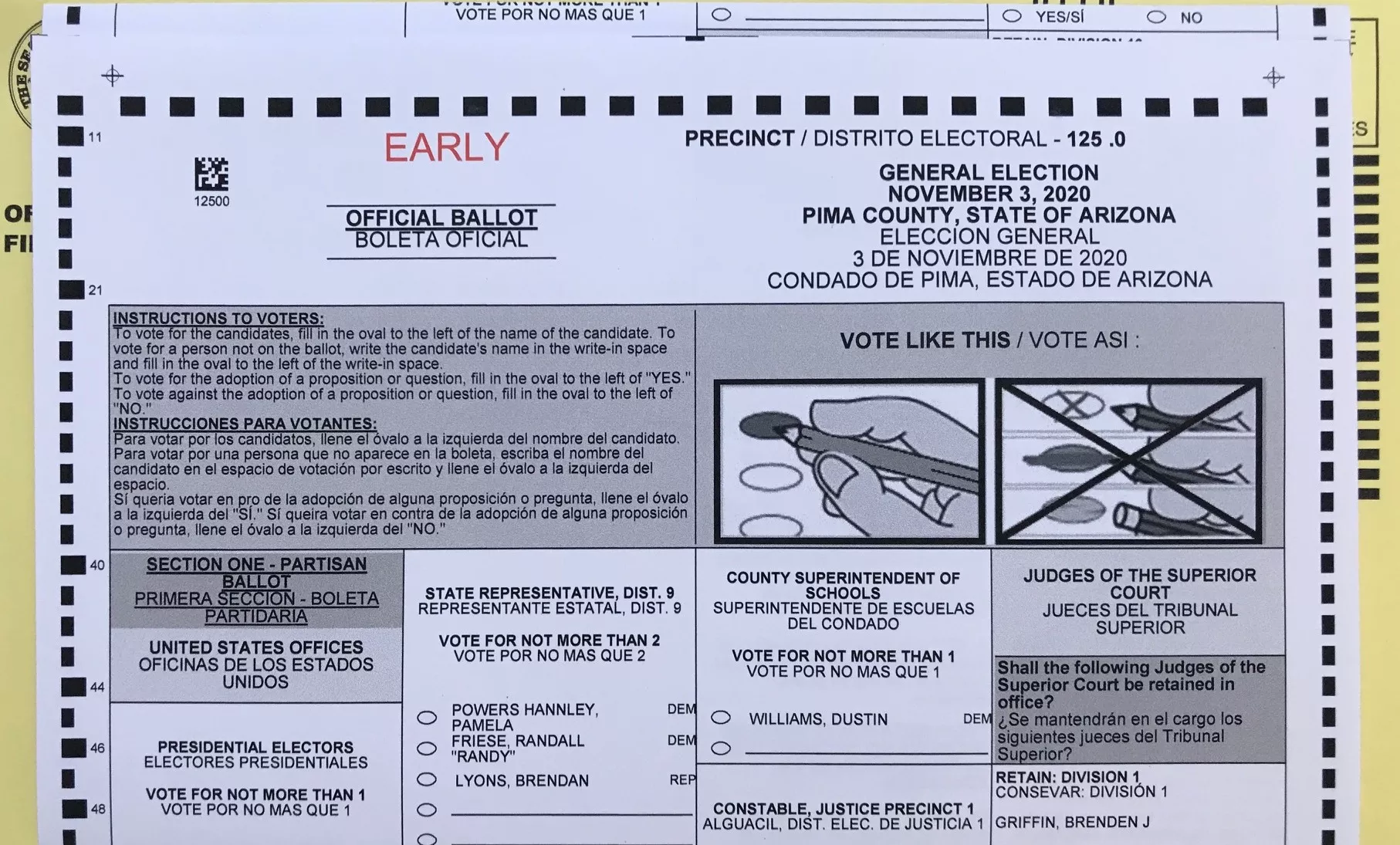
Driven by false claims that the 2020 election was plagued by fraud that changed the outcome in statewide races — but not their own victories — Republican legislators on Monday gave initial approval to a host of proposals that critics say will make it harder for Arizonans to vote.
The changes include doing away with early mail-in ballots for virtually every Arizona voter, barring in-person early voting, requiring voters to present identification to drop off early ballots on Election Day and more.
And in pursuit of combating the imagined claims of fraud that fueled the Arizona Senate’s partisan review of the 2020 election in Maricopa County — which that examination couldn’t find conclusive evidence of — the Republicans on the Senate Government Committee embraced changes that will result in fewer Arizonans casting ballots, said Sen. Martin Quezada.
“That’s the theme here,” the Glendale Democrat said. “Each one of these bills is going to end up with less people voting.”
Republicans in Arizona and in state legislatures across the nation are pushing hundreds of measures to add barriers to voting and make it easier for them to overturn results they don’t like, often under the guise of stopping the exceedingly rare election fraud that they falsely claim is the reason why Democrats won close races in 2018 and 2020.
The Republican Party has defended political violence to overturn an election as “legitimate political discourse.”
Eliminating early mail-in voting
The most radical measure the Government Committee approved was Senate Bill 1404, which would end the state’s no-excuse early voting system that was implemented in the 1990s and is regularly used by more than 80% of Arizona voters. The proposal would limit mail-in early voting to only those people who are physically unable to visit the polls, are 65 years old or older, live more than 15 miles away from their polling place, are visually impaired, can’t attend the polls on Election Day for religious reasons or who live overseas.
As Arizona’s education doomsday clock continues ticking down, Superintendent of Public Instruction Kathy Hoffman served up a pointed State of Education speech to the Senate Education Committee yesterday detailing exactly how much money schools located in lawmakers’ districts stand to lose if lawmakers don’t lift the education spending cap.
And honestly, it’s worth repeating those numbers.
But first, ICYMI, the education spending cap is the biggest looming problem in Arizona right now. But Republican leaders at the Capitol don’t seem worried.
If lawmakers can’t muster a two-thirds vote to increase the cap in the next 11 legislative days, schools will be barred from spending more than $1 billion that they already have in their bank accounts and have budgeted for this school year. That’s a 16% across-the-board cut to schools — but it’s really more like a 100% cut of what’s left for the year.
We’ll try to explain it like a teacher would: Imagine your parents gave you a $100 budget for the month. It’s the 25th day of the month and you already spent $84. Suddenly, your parents say you can only spend $84 this month. So you have $0 instead of $16 for rest of the month. That’s the position schools are in.
We’re talking teacher layoffs, program cuts, class consolidations and full-blown school closures ahead of summer break.
“We all agree that we must do everything possible to keep our schools open. But the biggest threat of widespread school closures comes not from the virus, but a school finance relic from 1980, the aggregate expenditure limit,” Hoffman said.
The reason we’re hitting the cap is somewhat complicated, but it boils down to fewer students were attending school last year because of the pandemic, lawmakers extended an education tax a few years back but didn’t exempt those funds from the cap as they had in the past, and lawmakers have put a bunch more money into education in recent years.
Tuesday, February 8, 2022
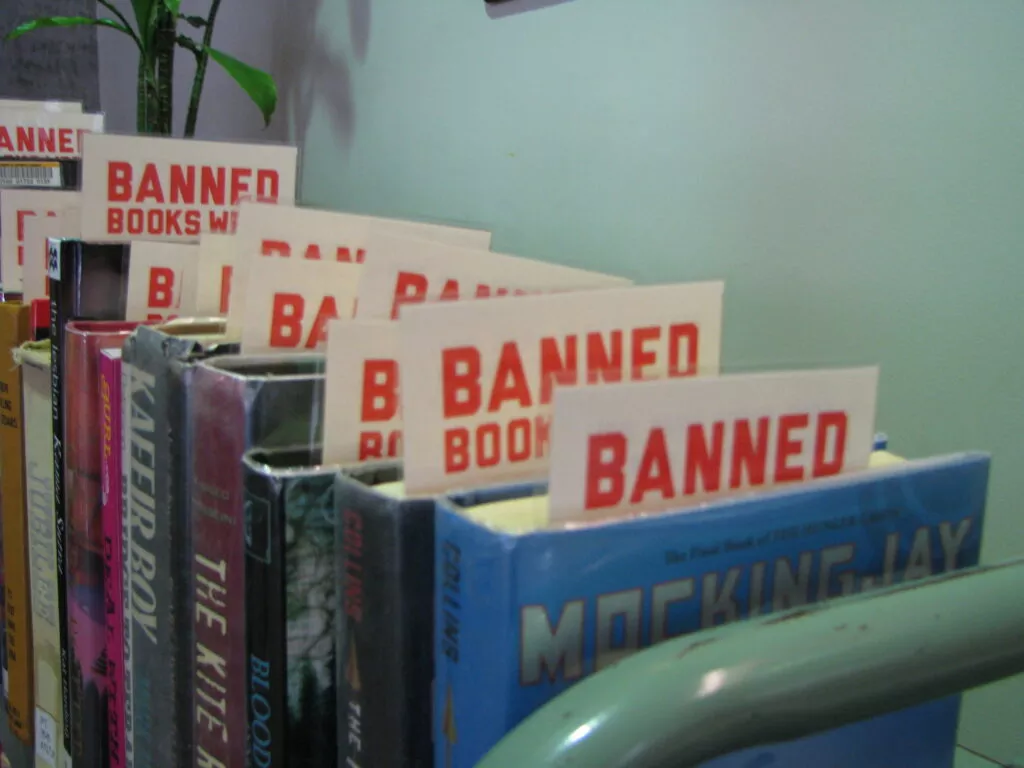
The Republican-controlled House passed a measure that would ban sexually explicit materials in K-12 classrooms across the state.
Rep. Jake Hoffman, a Queen Creek Republican, said the bill would shield children from inappropriate content.
“This (bill) is about nothing more than protecting the innocence of Arizona children from sexually explicit materials,” he said during a debate on the House floor on Thursday.
House Bill 2495 bans any textual, visual or auditory classroom materials that include reference to sexual activity or conduct. The bill defines conduct as broadly as any physical contact with “genitals, pubic area, buttocks or, if such a person is a female, breast.” It doesn’t matter if that contact is made with clothed or unclothed body parts.
The bill came under fire last week for including homosexuality in the definition of sexual conduct, leading to concerns that any content about the LGBT community would be prohibited. Hoffman initially denied the accusation, but ultimately added an amendment that would remove the word shortly before presenting it to the full House.
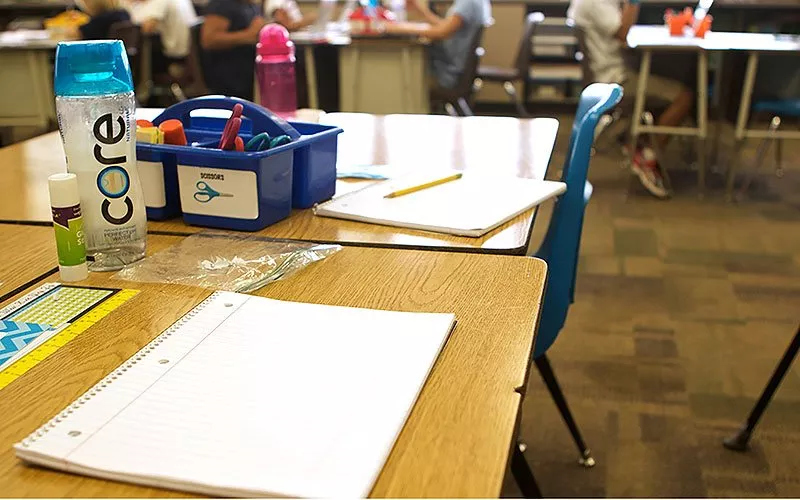
To allow parents to scour lessons for elements of “critical race theory,” Arizona teachers would be required to upload a list of every book and worksheet they use in their classrooms online for parental review if a Republican-backed bill becomes law.
The goal, says state Sen. Nancy Barto, is to increase transparency for parents who are concerned about their children’s education. Senate Bill 1211 requires schools to publicly post all materials and class activities on their website at least 7 days after being used. That means the names, authors, and organizations associated with the materials, along with links if they’re available for free online or descriptions if they’re not. Materials encompass everything from textbooks and worksheets to YouTube videos and phone apps.
Lesson plans that include topics like race, gender, diversity, and non-discrimination must be posted at least 72 hours before they’re carried out.
“More sunshine on what our kids are involved in is a great thing,” Barto, the Phoenix Republican who introduced the bill, said.
This is the second attempt to enshrine this into law, and a response to conservatives’ concern about so-called “critical race theory” being taught in classrooms. Conservatives have appropriated critical race theory as a catchall to describe basically any serious attempt to teach the history of race and racism in America.
Nicole Solas flew in from Rhode Island in support of the bill during a hearing on Tuesday afternoon. Solas was sued by the National Education Association after she filed more than 200 public records requests to determine whether her daughter’s school taught critical race theory. Solas said she was testifying on Arizona legislation so she could take the ideas back to Rhode Island.
She is being represented by the Goldwater Institute, a Phoenix-based libertarian think tank that drafted the bill and is using it as model legislation in other states. Matt Beienburg, Goldwater Institute’s education policy director, said the organization supports other proposed bills of the same vein in 20 other states.
One proponent of the bill is Steve Daniels, the chairman of the right-wing extremist Patriot Party, who spent much of 2021 disrupting local school board meetings to protest mask mandates and how race is taught in schools. At one meeting, he was arrested for trespassing.
“It is racist curriculum — it singles kids out for the color of their skin and tells them: ‘If you’re white, you’re a racist and you can’t help it because you were born that way,’” he said of critical race theory education.
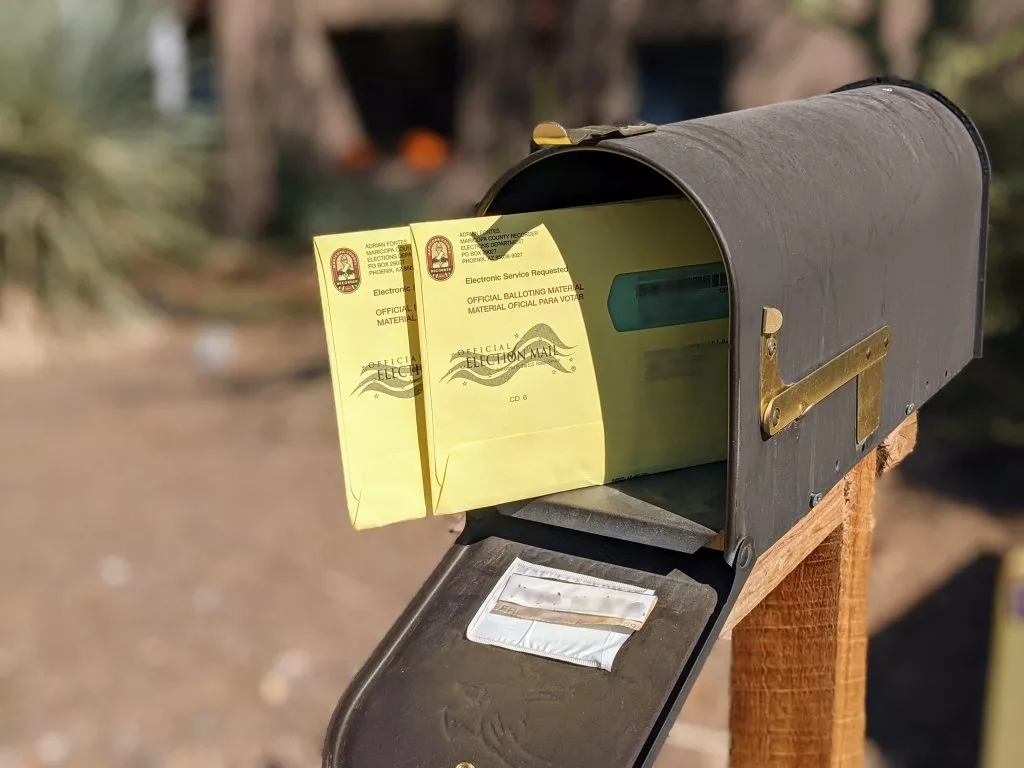
Nail-biter elections that last two weeks after the polls close could be a thing of the past under a proposed measure that could be on the November ballot — with the trade-off that Arizonans will have fewer options for casting their votes.
The proposed ballot measure is called the Easier to Vote, Harder to Cheat Act, though the title is a misnomer. Some of its provisions would make it harder to vote, and appear to have little to do with making it harder to cheat.
Republican election attorney Lee Miller, who’s working on the campaign, said the act’s primary purpose is actually to make it easier to count ballots quickly. Arizona’s prolonged ballot-counting process generates distrust and suspicion in voters, Miller said.
“What we’re really trying to do here — and I will acknowledge the initiative doesn’t come right out here and say this — what we’re really trying to do is put the counties in a position where 99% of the votes cast in any particular general election are counted by the time the sun comes up on the Wednesday after the election,” said Miller, who served assistant secretary of state under Republican Secretary of State Michele Reagan from 2015-18.
Those suspicions become magnified when leads change as the counts wear on, Miller said. That has certainly been true in the past two election cycles, at least when the leads change in favor of Democrats. In 2018, Republicans led several big statewide races on election night, only to see Democrats overtake them to win campaigns for U.S. Senate, secretary of state, superintendent of public instruction and Corporation Commission.
The votes counted after Election Day are primarily early ballots that are dropped off at polling places on Election Day instead of being returned in the mail earlier. In both 2018 and 2020, Democratic candidates won more votes among those voters, allowing them to turn narrow deficits into victories.
“Sure, if you’re an election professional, you understand why that happens. But for the vast majority of the population, when they went to bed Tuesday night, they thought Steve Gaynor was going to be the secretary of state or Martha McSally was going to be Arizona’s next senator,” Miller said, referring to two Republicans who lost in 2018.
“That causes people to go, what happened?
Some Republicans falsely portrayed the 2018 lead changes as suspicious, though there was never any evidence that the count wasn’t legitimate. Democratic candidates have historically always gained ground after Election Day in Arizona, as election officials count early ballots that have been dropped off in person, which typically benefit Democrats.
Post-Election Day gains for Dem candidates are the norm, not the 2018 exception
Republicans didn’t raise similar alarms when GOP candidates overtook their Democratic opponents more than a week after the polls closed in 2020. Democratic County Recorder Adrian Fontes led Republican challenger Stephen Richer for four days, falling behind over the weekend after the election, one of several countywide Democratic candidates who saw their leads evaporate in the days after the election. Democrat Jevin Hodge also led Republican county Supervisor Jack Sellers for more than a week before losing his race.
The proposal seeks to speed up the ballot counts primarily by imposing new restrictions on early voting, which is used by some 80% of Arizona voters.
Currently, election officials must receive early ballots by Election Day in order to count them. Voters have 27 days to mail them, and can drop them off in person through the day of the election.
Under the Easier to Vote, Harder to Cheat Act, early voters would have four less days to cast their ballot: Only early ballots received in the mail or at drop-off locations by 7 p.m. on the Friday before the election would be counted. (This wouldn’t apply to military and overseas ballots, because of federal law.) Miller said the goal is to give the counties several days to process the ballots and verify the signatures that election officials use to confirm voters’ identities. The proposal would require those ballots to be counted by 11 p.m. on election night. It doesn’t say what happens if any of those early ballots are still uncounted at that point.
Voters would still have the option of dropping off their early ballots in person on Election Day. But rather than walk to the front of the line at a polling place and put their early ballot envelopes in a drop box, voters would have to wait in line and show ID to cast their ballots, like people who choose to cast their ballots in-person.
This would eliminate the need to verify the signatures on those ballots, which can be a time-consuming process. It would also prohibit people from dropping off ballots for their spouses or other family members who live in their households, and it would do away with the ease of dropping off an early ballot by potentially requiring a long wait before the voter could cast their ballot.
If you want to take advantage of the privilege of voting by mail, we ask you to exercise that privilege responsibly and get the ballot mailed back in a timely manner.
– Lee Miller
State law currently gives election officials five days after the election to “cure” signatures that can’t be verified, but the proposed ballot measure would eliminate that curing period. It would also eliminate in-person emergency voting in the days before the election.
“If you want to take advantage of the privilege of voting by mail, we ask you to exercise that privilege responsibly and get the ballot mailed back in a timely manner,” Miller said.
Distrust in elections, particularly among Republicans, has become a major issue in the wake of the 2020 election, when former President Donald Trump and many of his supporters have spread lies about the election being rigged against him in Arizona and other swing states where President Joe Biden defeated him. Polling has consistently shown that a majority of Republicans believe Biden won through fraud, though there has been no evidence to back up that claim.
The campaign for the ballot measure must collect at least 237,645 valid signatures from voters by July 7 to put the act on the November ballot. It hasn’t yet hired any paid petitioners for the campaign — effectively a must-have for any successful citizen initiative — but conversations about hiring signature-gatherers is underway, Miller said.
Miller would not say who is funding the measure, saying that information will come out when the campaign committee files its first campaign finance report in April. He also wouldn’t say who helped craft the measure. He confirmed that the committee received input from Republicans, but couldn’t say whether any Democrats worked on it. He said he’s not aware of any county election officials who were consulted in crafting the measure.
One former election official, former Maricopa County Recorder Helen Purcell, took a dim view of the measure. Purcell, a Republican who held the office for 28 years, wasn’t convinced that it would actually result in final ballot counts as quickly as Miller said.
“What if you got in 100,000 ballots that (final) day? How do you get them processed and make sure they’re all processed by that Tuesday?” she said. “I’ve seen the volume that we’ve had in the past. I would just be skeptical about whether or not that would happen.”
Purcell also questioned why counties shouldn’t be able to count early ballots they receive after 7 p.m. on the Friday before the election.
“How do you say that’s the arbitrary date that you’re going to count somebody’s ballot when you’ve actually received it by 7 o’clock on Election Day?” she said. “I don’t see that as being legitimate, because Election Day is Election Day.”
Pinny Sheoran, state advocacy chair and president-elect of the League of Women Voters Arizona, said there’s no good reason to eliminate popular voting methods or to reject legitimately cast ballots that arrive at county election offices before the close of polling on Election Day. And the 11 p.m. deadline for counting early ballots, she said, is based on an “untested time limit” that doesn’t take into consideration the time it takes to actually count ballots.
“A catchy title that claims to make it easier to vote while ensuring the law will make it harder to vote is equivalent to ‘putting lipstick on a pig’ and will not fool the public. While making Election Day a state holiday is laudable, everything else in this act would make it harder for voters,” Sheoran said.
How do you say that’s the arbitrary date that you’re going to count somebody’s ballot when you’ve actually received it by 7 o’clock on Election Day? I don’t see that as being legitimate, because Election Day is Election Day.
– Helen Purcell, former Maricopa County recorder
The one provision in the ballot measure that could make it easier for people to vote is that Election Day would become an official state holiday. Miller said that would provide more opportunities for people to vote in-person on Election Day.
The notion that making Election Day a holiday will make it easier for people to vote is an increasingly popular one among Republicans, many of whom propose the idea as compensation for either restricting or eliminating early voting. Several GOP lawmakers, primarily proponents of bogus claims about fraud in the 2020 election, have proposed legislation to create an Election Day holiday, often in conjunction with curbs on early voting.
However, elections experts say Election Day holidays are nothing more than a fig leaf that will do little to benefit most voters.
Sean Morales-Doyle, the acting director for voting rights and elections at the Brennan Center for Justice, isn’t opposed to the idea of making Election Day a holiday, but warned that it’s far from a panacea. Many people don’t get holidays off from work, such as those who work in retail, food service, health care, law enforcement, firefighters and others. A person who works in an office is a lot more likely to get the day off for such a holiday than a clerk at a Circle K, though the latter may have trouble getting out to vote on Election Day.
“The people who will benefit from Election Day as a holiday are often the people who aren’t struggling to find the time to go vote on Election Day anyway. And the people who are having the hardest time finding time to go vote on Election Day are least likely to be helped by Election Day as a holiday,” Morales-Doyle said.
The only people who would be guaranteed a day off to go vote on Election Day are government workers. Miller acknowledged that many people will still have to work on Election Day, even if it is a holiday. He said the campaign believes many private sector employers will understand how important it is and give their workers the day off. But the law wouldn’t force them to do so, he acknowledged, and employees who couldn’t get the day off to go vote would have no recourse.
“Folks still work on Christmas, Easter and Thanksgiving, without a doubt,” Miller said.
The measure includes a number of other provisions. It would expand opportunities for county political parties to have observers for the processing of early ballots, verification of signatures, and tabulation, duplication and adjudication of early ballots.
Within two days of an election, counties would have to post digital images of the ballots on their websites.
It would also prohibit the state and counties from disseminating voter registration or other election-related information in ways that intentionally targets people based on voters’ race, ethnicity, age, gender, geographic location or political affiliation.
Maria Dadgar, executive director of the Inter Tribal Association of Arizona, worried that the provision would prohibit voter education efforts aimed at Native Americans, whom she said face greater hurdles and challenges than other Arizonans when it comes to registering to vote and casting ballots.
Arizona Mirror is part of States Newsroom, a network of news bureaus supported by grants and a coalition of donors as a 501c(3) public charity. Arizona Mirror maintains editorial independence. Contact Editor Jim Small for questions: [email protected]. Follow Arizona Mirror on Facebook and Twitter.
WASHINGTON – Arizona Democratic Party Chair Raquel Terán concedes that Democrats don’t have the numbers on their own to rebuff Republican election reform bills so she turned Thursday to an unlikely source for help: Republicans.
Terán, speaking on a panel of Democratic leaders from swing states, said it will likely take help from across the aisle to stop the most-extreme bills from passing in Arizona.
That may have happened already, with House Speaker Rusty Bowers on Tuesday referring the most-controversial election reform bill to 12 different House committees for review, a move seen by many as a way to bleed the bill to death.
“That bill is as dead as it can get at this moment,” said Rep. Jennifer Longdon, D-Phoenix. “And generally we don’t say that.”
But that does not mean Democrats are out of the woods: The National Conference of State Legislatures said that of 994 election-related bills filed in state capitals this year, 99 are in Arizona, or 10% of all such bills in the U.S. currently.
“Republicans in our state legislature have been active in putting forward bills that will make it harder for people to vote,” Terán, who is also a state senator, said during the discussion Thursday with Democratic leaders from Wisconsin and Michigan. The call was organized for Democrats to discuss ways they can combat GOP efforts to restrict voting rights in their battleground states.
Terán said that Democrats in Arizona face the trifecta of GOP control of the governor’s office and both chambers of the Legislature. That has forced them to go on “complete defense.”
“We are two seats away from majorities in the House, two seats away from majorities in the Senate,” said Terán, who is also a state senator from Glendale. “So we always just need one Republican to block legislation.”
What we’re really talking about here is protecting democracy, and that shouldn’t be a Democratic value or a Republican value.
– Rep. Jennifer Longdon, D-Phoenix
Getting Republicans to cross the aisle is “an uphill climb,” said Bob Grossfeld, a political and public affairs strategist at Politicare. But it’s not unheard of.
Besides Bowers’ move this week to hobble HB 2596, virtually every expert asked about the possibility of Republicans aiding Democrats pointed to Sen. Paul Boyer, R-Glendale.
Boyer last year bucked his party to oppose SB 1069, which would have removed voters from the Permanent Early Voting List if they had not voted early in the preceding two election cycles. He later supported a slightly modified version of that bill that became law.
Boyer also refused to join other GOP senators last year when they tried to hold Maricopa County supervisors in contempt as part of the partisan audit of county results from the 2020 presidential and Senate elections.
But while Boyer has been “a voice that has sided with the Democrats from time to time,” that does not mean they can count on him – or other Republicans – to join them if they don’t compromise as well, said Jason Rose, a Republican political consultant in Arizona.
He said there is a need for some electoral reform, but charged that Democrats have dug in their heels to gain an electoral advantage.
“The problem for the Democrats is they have developed a good sound bite and it’s voting rights,” said Rose. But he said some Republicans have responded “sometimes fairly, sometimes unfairly” with legislation that protects their own base of voters.
He said it will take “the sobriety of people that have been around the block that can forge great compromise” to move effective voting legislation.
“But until the personalities that often drive politics can emerge from the noise, you’re going to continue to have this paralyzing partisan pandering taking place,” Rose said.
Bowers this week appeared to target one of the most-extreme GOP election bills, HB 2596. It would eliminate early and mail-in voting, limit the number of polling centers to 1,500, require hand-counting of all ballots and give the Legislature the power to overturn election results. The bill even prohibits county officials from making people wear masks at polling places.
The newest GOP election proposal would allow lawmakers to reject election results
While that language may appeal to a certain set of Republican voters, it would likely anger most Arizona voters, “especially considering upwards of 80% or more … vote by early ballot,” said Paul Bentz, chief pollster at HighGround Inc.
Bentz said Bowers’ move with HB 2596 showed “that there (are) even Republicans who recognize that some of the proposals are not having merit and should not be really considered in any serious way.”
But HB 2596 is just one of scores of what one advocate calls “democracy-undermining bills” in the Legislature this year.
“It’s not just that one bill, the provisions that are in that bill are broken up into a bunch of other bills,” said Alex Gulotta, Arizona director of the group All Voting is Local.
“We have real concern, because there are extreme anti-democratic policies that are being pushed by a whole host of legislators that basically undermine our freedom to vote,” Gulotta said.
Grossfeld said Democrats should “not hold out a whole lot of hope for a Republican assist” in the Legislature. He said they would be better served by focusing on ballot initiatives and voter referendums “to stop the worst of the worst.”
The Arizona Democratic Party two weeks ago endorsed a proposed initiative that Terán said prevents “the Legislature from overturning future presidential elections …
establishes both the same-day and automatic voter registration, restores the popular Permanent Early Voting List and expands voting access to Arizonans with disabilities.”
While Democrats look for help from the other side of the aisle, Longdon said it shouldn’t be a partisan issue.
“What we’re really talking about here is protecting democracy, and that shouldn’t be a Democratic value or a Republican value,” Longdon said. “An accurate, secure and accessible election should be the goal of every legislator in this body.”
Cronkite News reporter Alexia Stanbridge contributed to this report.
Arizona Mirror is part of States Newsroom, a network of news bureaus supported by grants and a coalition of donors as a 501c(3) public charity. Arizona Mirror maintains editorial independence. Contact Editor Jim Small for questions: [email protected]. Follow Arizona Mirror on Facebook and Twitter.
You can vote for both, but please don't ... Judging at the speed of business ... And the man just loved craps.
The future of voting in Arizona could be decided at the ballot box this year as two dueling ballot measures that are attempting to qualify for the ballot offer visions of voting that couldn’t be more different.
And then there’s whatever the Arizona Legislature will do, and the options range from nearly 100 election-related bills with hosts of smaller changes to straight-up decertifying an election (as a resolution filed by Arizona Rep. and not-a-lawyer Mark Finchem wants to do).
JUST IN:
— The AZ - abc15 - Data Guru (@Garrett_Archer) February 7, 2022
Speaker Bowers comment on @RealMarkFinchem decertification resolution that just dropped.
"Mr Finchem's obviously unconstitutional and profoundly unwise proposal will receive all the consideration it deserves"
h/t @MarkPhllpsnews
The Arizonans for Fair Elections measure, filed yesterday and backed by a coalition of local left-leaning groups, attacks a spate of laws from the past few years that limited voting access in Arizona and seeks to protect election results from potential overturning.
The measure has four goals, according to Joel Edman, the co-executive director for communications at ADRC Action: protecting the right to vote and access to voting, protecting election results from partisan meddling, protecting the public’s right to pass ballot measures and limiting the power of lobbyists and outside influence.
“Some of these are trying to address long-standing issues and build a democracy where we all have a voice, and some are more targeted to rolling back restrictions we’ve seen in the past few years,” Edman said.
Some of the elements of the measure will cost money, like increased Clean Elections funding for candidates who don’t accept money from outside sources and some funding for elections infrastructure. The costs will be covered by increasing the lobbyist registration fee from $25 to $50, increasing the minimum income tax for large businesses from $50 to $150 and restoring a $5 tax donation program for Clean Elections.

