

Monday, February 7, 2022
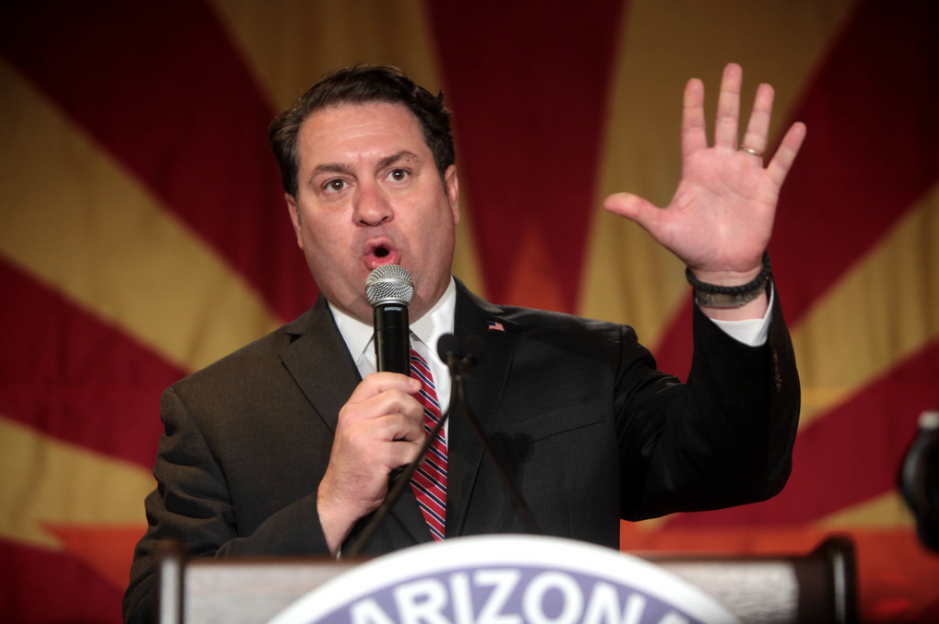
It's never boring to live in Arizona (and that's not a compliment) ... Brnovich should tell us his settlement with the Bar ... And the national press discovers Paradise Valley.
If you need more proof that Arizona was the hub of the attempted coup to overturn the 2020 election and install the former president for four more years and remains the center of attempts to subvert our fragile democracy, there’s a pair of stories in the New York Times you should check out.
Let’s start with Robert Draper’s extensive article detailing disgraced and pardoned Mike Flynn’s ongoing war on the 2020 election. It doesn’t take long to spot the Arizona ties.
A brief recap: After being forced to resign and pardoned for lying to the vice president and others about his dealings with Russia, Flynn, a one-time national security advisor to former president Donald Trump, allegedly pushed plans for a military coup following Trump’s loss, either by having the National Guard seize voting machines in contested states like Arizona or having Department of Homeland Security do it.
Friday, February 4, 2022
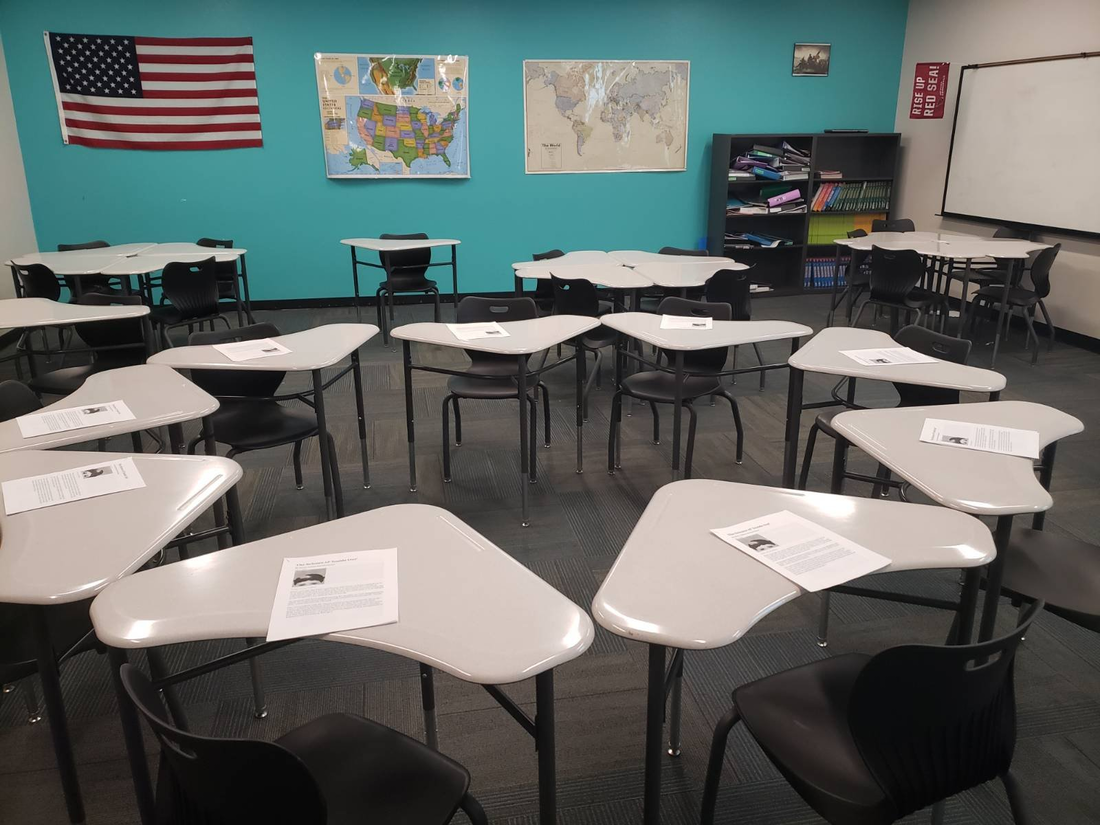
This week, we invited local teacher and fellow substacker Billy Robb back to write today’s top item about teaching during the pandemic. He wrote about a similar topic for us a few months ago. Now, after getting hit with the virus himself, he’s trying to forget about the trolls and focus on the kids. Down below, after Billy’s insight, we have your regularly scheduled bill roundup and look ahead to next week, along with something happening in virtual reality.

|
Schools are getting hit hard by this winter surge. I can attest to this personally now. After teaching without a hiccup for the entire first semester, I caught COVID-19 over winter break. For nearly two weeks at the start of the second semester, I was at home in isolation.
So began a chain reaction: My classes fell behind on content, because even if a school can find a substitute, learning is disrupted in the absence of the lead teacher. Additionally, each prolonged student absence creates a learning gap that needs to be addressed. This mad scramble is playing out in a public school system where teachers are already strained under the weight of counter-productive education policies.
Meanwhile, debates over COVID-19 mitigation efforts continue to rage.
Mask-mandates or mask-optional? Quarantine for exposures? And for how long? What about temperature checks?
It may feel as if we've made no progress in agreeing on how to safely run schools during a pandemic, but we've actually leaped a major hurdle. We're no longer debating open vs. closed. The overwhelming public health consensus is that, all things considered, it's better for students to be in school in person.
The Biden administration said that 96% of the nation's schools are open this January, compared to 46% last January. CDC director Rochelle Walensky reiterated a few weeks ago that schools should be the “first places to open and the last places to close.”
In Arizona, at the beginning of the pandemic, schools were closed down for months. Many schools remained in hybrid mode for an entire year. It’s only recently that we’ve reached a bipartisan consensus that schools should remain open the best they can.
As a teacher, when to open or close a school is not my call. I’m just trying to make good decisions and disseminate credible information.
Thursday, February 3, 2022


Over the last 100 years or so, Hotel Congress has survived structural fires, seen prohibition come come and go, and hosted everyone from U.S. senators to John Dillinger and his criminal gang. Now, a new addition to the historic landmark fuses a New York night club with a borderlands mezcal bar.
Shana Oseran, who owns Hotel Congress with her husband, Richard Oseran, and music programmer Arthur Vint are teaming up to open a jazz club in the hotel’s former Copper Hall space. The Century Room, with a grand opening planned in March, will host weekly jazz performances, serve local mezcals, beers and wines, and offer a step back in time.
“We have the plaza and Club Congress, which is the impetus for everything, and now to evolve into this third genre, it’s really exciting,” Oseran said. “Where in town, or anywhere, can you find a place that has three different music venues?”
The Copper Hall was a banquet hall along the southwest portion of the building with windows looking out to the hubbub of Congress Street. With a reduction in banquets and similar events due to the pandemic, Oseran was searching for a new concept to fill the vacant hall when she started talking with Vint.
“While there are lots of great jazz musicians and great jazz performances in Tucson, there hasn’t been a singular home to host concerts or touring acts,” Vint said. “There are lots of musicians who tour around the country, and these bands usually stop their tours in Phoenix and go home. By building a club and a stage that is world class, we’re hoping to get people to come down to Tucson on their West Coast tours.”

The Arizona Legislature could, maybe, finally act on Arizona’s affordable housing crisis with a bipartisan compromise bill from Arizona Reps. Steve Kaiser and César Chávez that attempts to peel back some barriers to affordable housing.
House Bill 2674 declares housing affordability as a “matter of statewide concern,” which is legislative-speak for preempting local entities from regulating in ways that defy the state. In a broad sense, the state has mostly stayed out of housing beyond some specific laws that restrict cities from regulating the price of rental homes and some lackluster funding for affordable or emergency housing projects.
The bill offers both a Republican and Democratic approach to the problem by imposing a host of rules cramping cities’ abilities to regulate residential housing, while offering a generational investment in the Arizona Housing Trust Fund, which helps promote affordable housing development. Some Democrats are already grumbling about taking away power from cities, and Kaiser described it as a “caucus cutter” at a press conference yesterday.
While some policies, like rent control, are a complete non-starter in the Republican-led Legislature, this at least has a chance.
The lack of state action has left cities and towns to manage the affordable housing crisis in whatever manner they see fit. So we see one-off initiatives like the Tempe one we mentioned yesterday, and efforts by the City of Phoenix to entice landlords to rent to low-income tenants by giving them some additional money. And the federal COVID-19 relief packages infused some money into local rental markets, but didn’t remove barriers to accessing that money. It’s not working.

WASHINGTON – Arizona Democratic Sen. Mark Kelly has raised more than $27.5 million for his reelection bid this fall, almost twice the total raised by a half-dozen Republican challengers, according to new campaign finance reports.
But political analysts said Kelly’s “giant war chest” – the fourth-most among Senate campaigns nationwide in 2021 – does not guarantee a win in a state like Arizona during a year that is expected to be rough for Democrats.
“He could have unlimited amounts of money … but if the political environment is really bad for Democrats, as it might be, there may be no amount of money he could spend that saves himself,” said Kyle Kondik, managing editor of Sabato’s Crystal Ball at the University of Virginia Center for Politics. He calls the Arizona Senate race a toss-up.
But for now, Kelly’s in a good position. Besides a sizable fundraising lead, he does not have a Democratic primary challenger, while his would-be Republican opponents face a bruising and costly primary before they can turn their sights on Kelly.
A poll released Tuesday by OH Predictive Insights showed Kelly would get 42% of the vote to 38% for any Republican candidate, with 19% of voters undecided. The online poll of 855 registered Arizona voters was taken Jan. 11-13 and has a margin of error of plus or minus 3.4%.
Wednesday, February 2, 2022
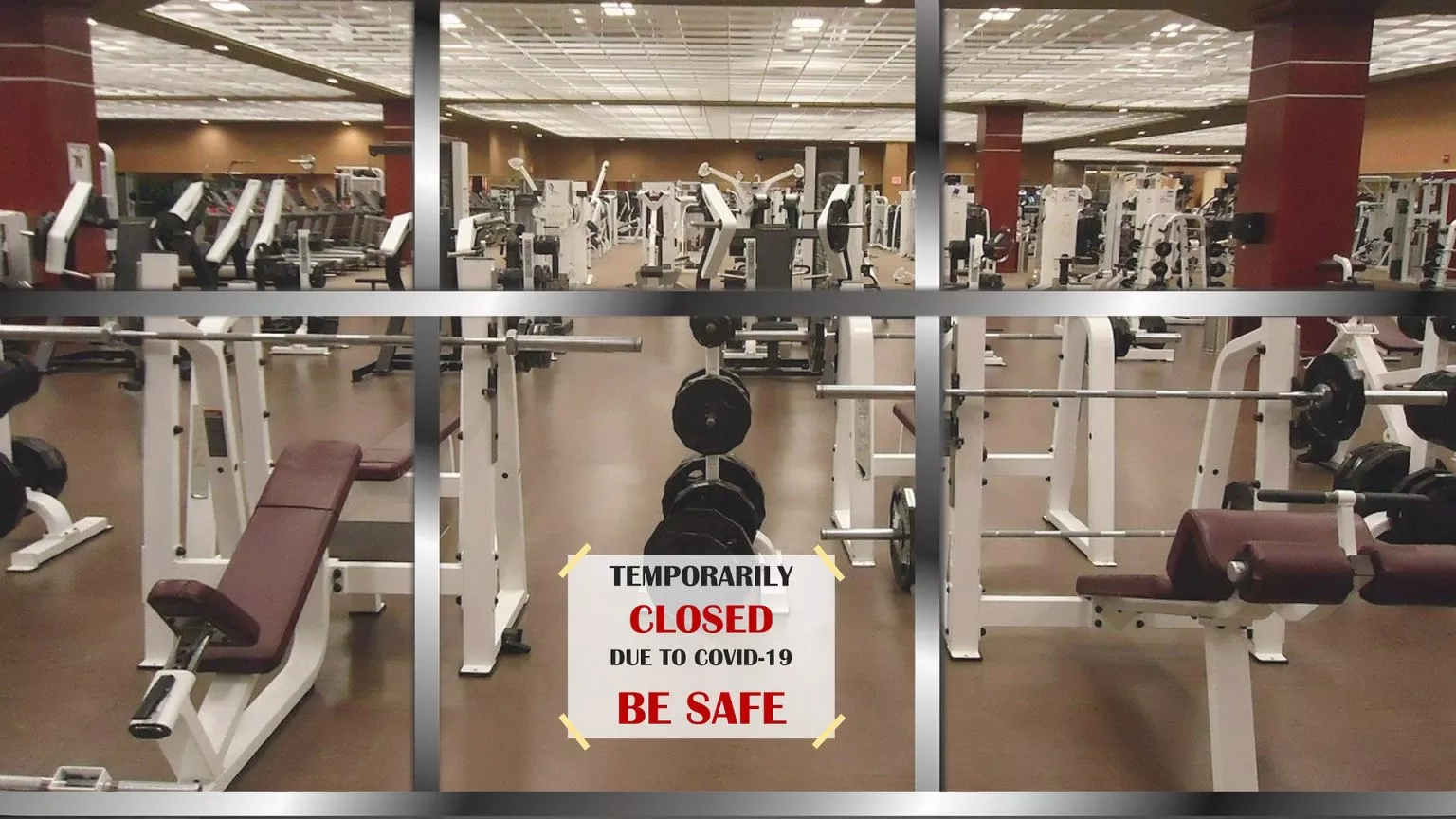
Mayors would no longer be able to order businesses to close during a state of emergency under a GOP-backed proposal fueled by anger stemming from the early days of the COVID-19 pandemic, when Arizona cities ordered many businesses to temporarily close.
It’s the latest attempt to reduce the use of emergency powers, following the advancement last week of a bill that would curtail the governor’s emergency powers.
In March 2020, the mayors of Phoenix and Tucson used those powers to mitigate the spread of COVID-19 by closing bars and setting a curfew for restaurant dining rooms.
In a House Military Affairs and Public Safety meeting Monday afternoon, Lake Havasu City Republican Rep. Leo Biasiucci said the power was being applied unevenly and to detrimental effect.
“When the pandemic was in play, small businesses were told they couldn’t be kept open, but Walmart and Home Depot were,” he said.
Oro Valley Republican Rep. Mark Finchem called mayors who closed businesses “petty tyrants” and said it was hypocritical to be worried about superspreader events when large retailers where lots of people could congregate were kept open.
More expansive square footage likely made it easier to social distance – which the CDC and the Arizona Department of Health Services still recommend as a strategy to reduce the spread of COVID-19.
Biasiucci said customers should be allowed to choose which businesses to visit and how to protect themselves. Ultimately, he said, businesses should decide when to close their doors, not local governments.
But Republicans on the committee dismissed this concern by pointing out that the mayor’s ability to declare evacuations — which would remain in law — solves that conflict.
Roxanna Pitones, a lobbyist for the League of Arizona Cities and Towns, said that limiting mayoral power would remove critical safeguards.
“These decisions are not made lightly, but are taken with public safety in mind,” she said.
Finchem responded that fires, floods and sinkholes are immediate emergencies, but the pandemic — which he referred to simply as the need to wear a mask and stay at home — is not. If it was, he argued, every business would still be shut down.
“There’s a difference between a real emergency and one under the guise of a ‘pandemic,’” he retorted, forming physical quotation marks with his hands.
To date, more than 26,000 Arizonans have died from COVID-19 and caseloads and hospitalizations have been at all-time highs in January.
Republican Rep. Teresa Martinez said that the indefinite nature of the pandemic is what is most harmful to businesses when they’re ordered to cease operations.
“With a fire, you can see a start date — when the fire starts — and an end date,” she said.
For Rep. Marcelino Quiñonez, D-Phoenix, the bill is undermining voter voices.
“Mayors were elected by communities to make decisions and provide guidance,” he said.
The bill passed along party lines, with Republicans supporting it; the next step is for consideration by the full House of Representatives.

Rents in the Phoenix area kept climbing last year, making it one of the U.S. cities with the steepest annual increases, the Washington Post reports.
But if you rent in Phoenix, you already knew that. Still, the Post helpfully quantifies Phoenix’s annual average rent increase at an eye-popping 26%. Other lists put several Arizona cities into the top 10 for rent increases. Economists suspect these rising rents will further drive inflation, too, so this affects you even if you don’t rent.
Guess what didn’t increase by 26% last year: Most people’s salaries.
The Phoenix metro area is in the top 15 for rent increases https://t.co/cFHje0nw0W pic.twitter.com/moSJ8A9MDK
— Rebekah Sanders 🌵 (@RebekahLSanders) February 1, 2022
Cities and towns around the state know they have an affordable housing problem, and some are working to address it. In Tempe, for instance, the city started collecting money the past two years for a program that “puts the onus on the city to create affordable housing rather than relying on developers to bring affordable projects to the city,” the Republic’s Paulina Pineda reports.
Tuesday, February 1, 2022

The two sites, at Pima Community College West Campus and at Kino Event Center in Tucson, are drive-thru PCR testing sites that can conduct and process up to 2,000 free-of-charge self-swab tests a day for appointments or walk-ups. Results usually are available within 48 hours.
“(FEMA) wants to place testing in places where they could remove barriers to access,” Pima County Community Services spokesperson Anthony Gimino said. “They were here in the spring doing vaccinations for two months, and it was a great success.”
The West Campus site will offer tests until Feb. 12, and the Kino site will “remain open a couple of months,” Gimino said in an email.
The Arizona Department of Health Services reported that as of Monday, there have been more than 1.8 million COVID-19 cases in Arizona, with 26,205 deaths. Pima County has reported 228,223 cases and 3,410 deaths, according to its COVID-19 dashboard.
Dr. Francisco García, chief medical officer of Pima County Health and Community Services, said the county has hit what he calls a “high-water mark” in terms of the number of positive cases but has not reached the high mark for hospitalizations or ICU cases.
“We are intermittently at points where we have very low (test) supply to share,” García said at a news conference Thursday. “But that’s also part of the reason why it made sense to expand our testing capacity within the county … that we’re paying for ourselves directly.”

