

Friday, January 29, 2021

Thursday, January 28, 2021

Desert Bloom Re-Leaf Center, 8060 E. 22nd St., opened to recreational sales yesterday.
Desert Bloom, which carries a wide range of flower, edibles, concentrates, lotions and similar products, follows midtown dispensary Harvest, which began recreational sales last Friday.
Other dispensaries are expected to start offering the sales in the coming weeks after the Arizona Department of Health Services allowed recreational cannabis sales to begin, letting dispensary owners know adult-use recreational sales can move forward as soon as licenses are approved and dispensaries are set up to handle both aspects of the market.
Applications for adult-use sales began on Jan. 19, but were restricted to existing medical marijuana establishments that qualified for early "dual license" applications. The language of Proposition 207 that legalized cannabis use for adults over the age of 21 gave AZDHS two months to review and approve applications.
By the end of last week week, though, 86 licenses had been approved. Several Tucson dispensaries have also been authorized for recreational sales, including Desert Bloom Re-Leaf Center, Green Med/Purple Med (6464 E. Tanque Verde and 1010 S. Freeway Drive), Prime Leaf (4220 E. Speedway and 1525 N. Park Ave.) and Nature Med (5390 W. Ina Road in Marana).
Nature Med has announced it will open to recreational sales on Feb. 25 and Prime Leaf is shooting for March 1.
Most dispensaries are not yet ready to start recreational sales, as there are several barriers to immediately expanding, not the least of which is the current state of the coronavirus pandemic still raging through the state.
Find more details here.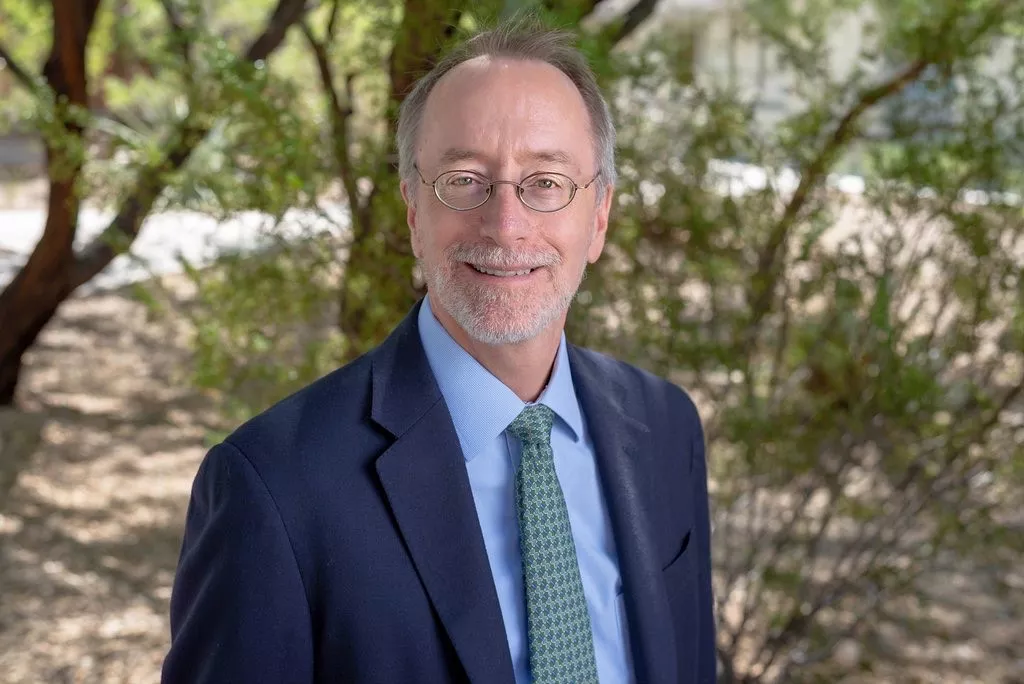
As the spread of COVID-19 forced social distancing policies and widespread business closures, many have lost their jobs since the virus reached Arizona in January 2020.
December saw the smallest gain in employment since recovery began in May, with only 900 jobs added across the state, according to the latest data analyzed by George Hammond, director of UA’s Eller College of Management Economic and Business Research Center.
Weekly claims for unemployment insurance in the state peaked on April 4 at 132,428. The latest data from Jan. 23 shows 18,090 unemployment claims, according to data from the Economic and Business Research Center.
Arizona’s unemployment rate dropped from 8% in November to 7.5% in December, but Hammond says “the state rate has been exceptionally volatile this year.”
“Overall, the state rate can be safely said to have fallen from its April peak, but it is not at all clear by how much,” he wrote in the report.
Employment in Arizona dropped by 150,700 since February 2020, for a total loss of 4.4%, according to the Bureau of Labor Statistics’ household survey.
The survey showed 66,600 jobs in Arizona were lost from 2019 to 2020 for a total loss of 2.3%. In Tucson, employment dropped by 2.9% with 11,300 jobs lost.
Hammond said if Arizona can sustain the average job growth rate it's held since June at about 11,000 per month, it will be back to the February job peak by September. If job growth returns to pre-pandemic levels, however, the state might not reach that peak again until March 2022.
While trade, transportation and utility jobs grew 19.1% above their February level, jobs in leisure and hospitality declined 46,6%, accounting for over half of jobs lost since February, Hammond reports.
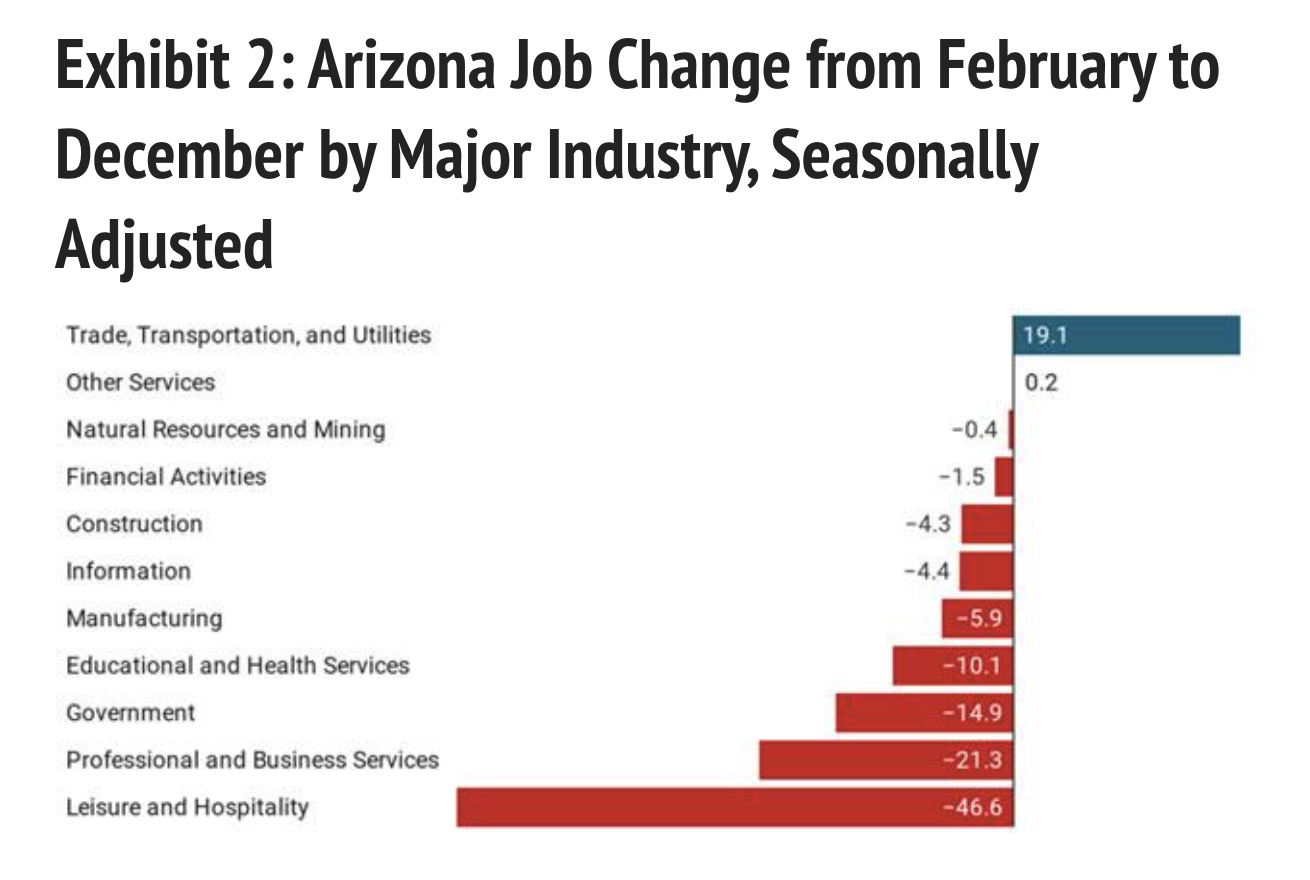
Flagstaff was the hardest hit since February followed by Yuma, Lake Havasu City-Kingman, Tucson, Phoenix and Sierra Vista-Douglas.

PHOENIX – Amid moves by some states to declare racism a public health issue, experts are looking to medical schools to identify strategies to improve care for people of color and eliminate disparities related to a patient’s race or ethnicity.
Dr. David Acosta, chief diversity and inclusion officer with the Association of American Medical Colleges, said students’ training and exposure regarding racism in health will help effect needed change.
“It’s going to require certain attitudes, behavioral changes … constructing the knowledge base so that everybody – not just students of color – but everybody now becomes aware in medicine, nursing, pharmacy, whatever health profession,” Acosta said.
The deaths last year of George Floyd, Breonna Taylor, Dion Johnson and other Black people at the hands of police sparked a new racial reckoning, and governors in Michigan, Nevada, Wisconsin and other states issued executive orders declaring racism a public health crisis.
A slew of city councils and county governments passed similar resolutions, while other states established antiracism work groups or are reviewing policies and addressing institutional racism in public health, criminal justice and other areas.
In Arizona, no action has been taken by Gov. Doug Ducey or the Republican-controlled Legislature to make a formal declaration.
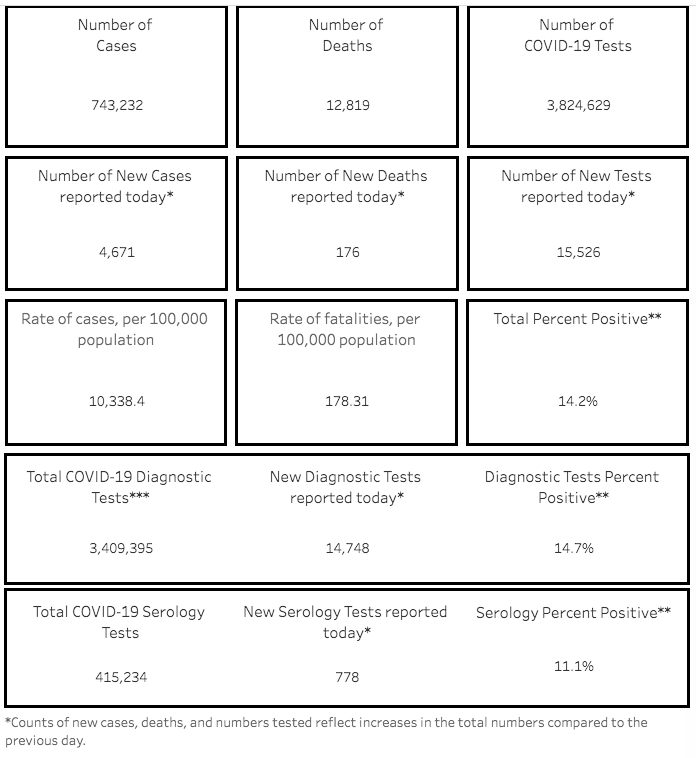
With 4,671 new cases reported today, the total number of Arizona’s confirmed novel coronavirus cases surpassed 743,000 as of Thursday, Jan. 28, according to the Arizona Department of Health Services.

Pima County, which reported 698 new cases today, has seen 99,441 of the state’s 743,232 confirmed cases.
A total of 12,819 Arizonans have died after contracting COVID-19, including 1,706 deaths in Pima County, according to the Jan. 26 report.
The number of hospitalized COVID cases statewide has declined in recent weeks after peaking at 5,082 on Jan. 11 but remains above the peak levels of the summer’s first wave. ADHS reported that as of Jan. 26, 4,087 COVID patients were hospitalized in the state. The summer peak of 3,517 hospitalized COVID patients was set on July 13; that number hit a subsequent low of 468 on Sept. 27.
A total of 1,829 people visited emergency rooms on Jan. 26 with COVID symptoms, down from the record high of 2,341 set on Tuesday, Dec. 29, 2020. That number had peaked during the summer wave at 2,008 on July 7; it hit a subsequent low of 653 on Sept. 28.
A total of 1,023 COVID-19 patients were in intensive care unit beds on Jan. 26, down from a peak of 1,183 set on Jan. 11. The summer’s record number of patients in ICU beds was 970, set on July 13. The subsequent low was 114 on Sept. 22.
Banner chief: Death toll on track to hit 18,500 by May
Despite last week's announcement that COVID-19 cases had decreased and that some elective surgeries would resume, Arizona’s largest hospital system is still treating a record number of coronavirus patients.
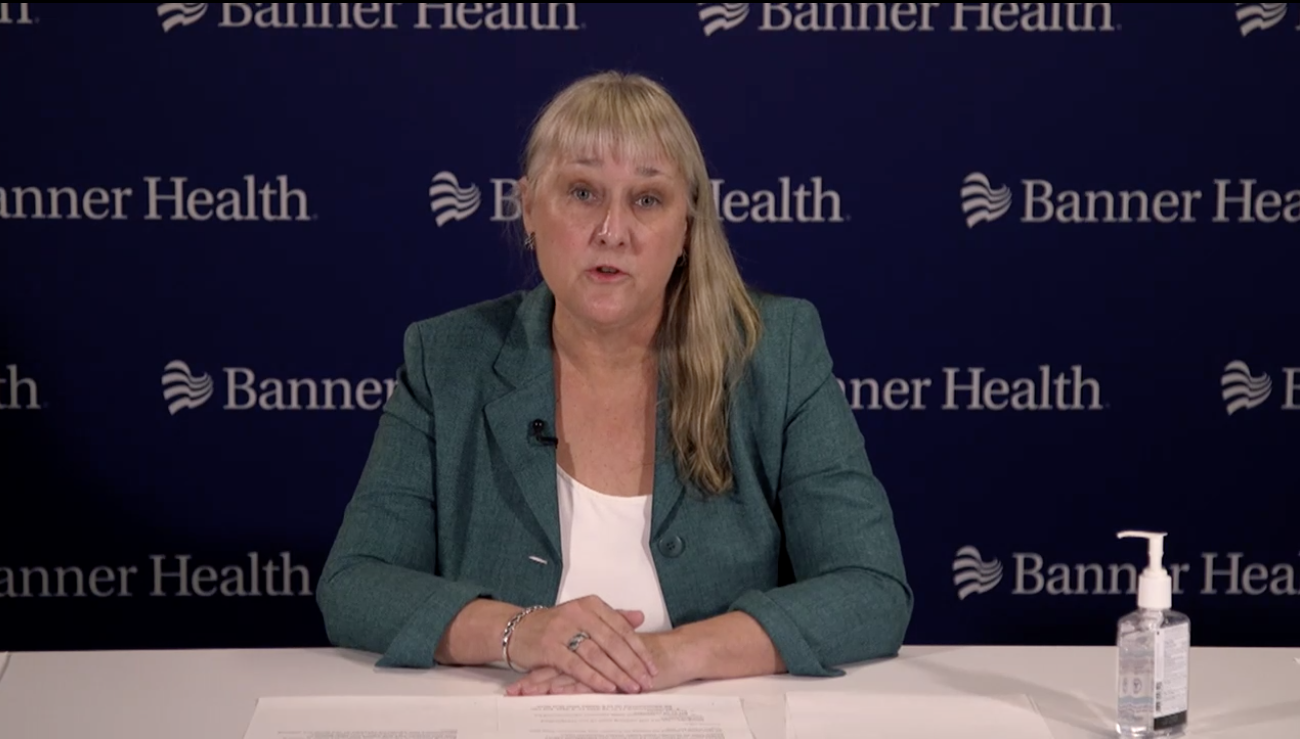
Banner Health’s Chief Clinical Officer Dr. Marjorie Bessel estimated that 45% to 50% of the COVID-19 patients in the state—369,281 as of Wednesday—are being treated by Banner.
“We are currently caring for more COVID-19 patients in our Arizona hospitals and ICUs than we were during the peak of the summer surge,” Bessel said. “Patient care in our hospitals has not yet returned to a state that I would define as usual and customary, and I would caution you against celebrating too early as we slowly work our way out of this difficult surge.”
Reported COVID-19 deaths continue to rise, and Banner is using thousands of out-of-state healthcare workers while upskilling others to help in its ICUs, Bessel said.
The hospital’s forecasting predicts it will take two to three more months for Arizona to fully recover from the winter surge in cases with many more weeks of high numbers of hospitalizations.
Bessel said Banner hospitals frequently monitor the University of Washington’s Institute for Health Metrics and Evaluation tool to grasp likely consequences of COVID-19 in the future.
Estimates predict Arizona will reach 18,500 deaths by May if it continues its current mitigation policies against the virus. If the state eases current mitigations, the death total could reach 22,200 by May, Bessel shared.

Wednesday, January 27, 2021
Despite last week's announcement that COVID-19 cases had decreased and that some elective surgeries would resume, Arizona’s largest hospital system is still treating a record number of coronavirus patients.
Banner Health’s Chief Clinical Officer Dr. Marjorie Bessel estimated that 45% to 50% of the COVID-19 patients in the state—369,281 as of Wednesday—are being treated by Banner.
“We are currently caring for more COVID-19 patients in our Arizona hospitals and ICUs than we were during the peak of the summer surge,” Bessel said. “Patient care in our hospitals has not yet returned to a state that I would define as usual and customary, and I would caution you against celebrating too early as we slowly work our way out of this difficult surge.”
A grim outlook
Reported COVID-19 deaths continue to rise, and Banner is using thousands of out-of-state healthcare workers while upskilling others to help in its ICUs, Bessel said.
The hospital’s forecasting predicts it will take two to three more months for Arizona to fully recover from the winter surge in cases with many more weeks of high numbers of hospitalizations.
Bessel said Banner hospitals frequently monitor the University of Washington’s Institute for Health Metrics and Evaluation tool to grasp likely consequences of COVID-19 in the future.
Estimates predict Arizona will reach 18,500 deaths by May if it continues its current mitigation policies against the virus. If the state eases current mitigations, the death total could reach 22,200 by May, Bessel shared.
Bessel said while vaccines are a long-term strategy to combat coronavirus, “Mitigation and enforcement will be much more effective in reducing COVID-19 deaths in the upcoming weeks and months.”
Banner’s surpasses 100,000 COVID vaccinations
On Tuesday, Banner reached the milestone of 100,000 COVID-19 vaccines at its PODs across the state.
WASHINGTON – Pascua Yaqui Council members called it “a blessing.”
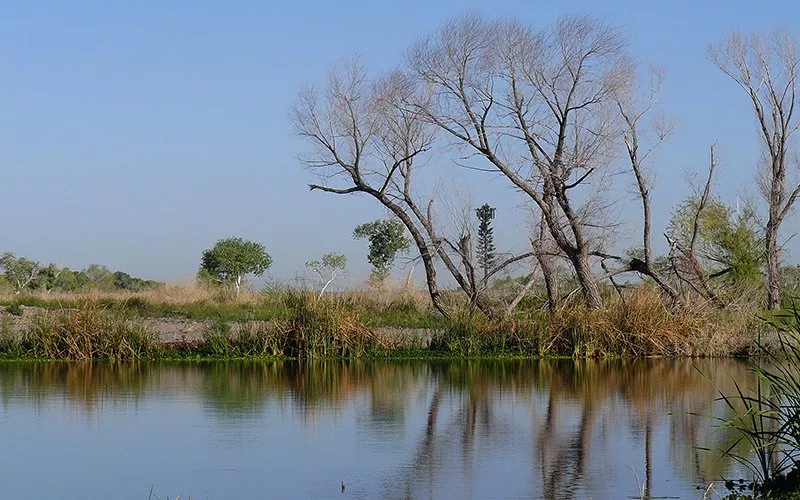
They were talking about $900,000 in federal funds that will be used to bring water to the tribe’s lands for irrigation, the first fruits of a successful effort last year by members of the state’s congressional delegation to win $150 million in federal funding for water projects around the state.
“Water is sacred to a lot of tribes and a lot of Arizonans. For us, it’s a blessing,” Pascua Yaqui Chairman Peter Yucupicio said at a news conference announcing the funding. “We started looking at this and we said, ‘This will help us now and in the future.'”
The money comes from an Army Corps of Engineers fund dedicated to water infrastructure projects in Arizona. Under the bill, local governments can enter into agreements with the corps for water, wastewater treatment, environmental restoration and other projects. The Army would pay 75% of the cost of the project and the local government would assume all operating costs once the work was completed.
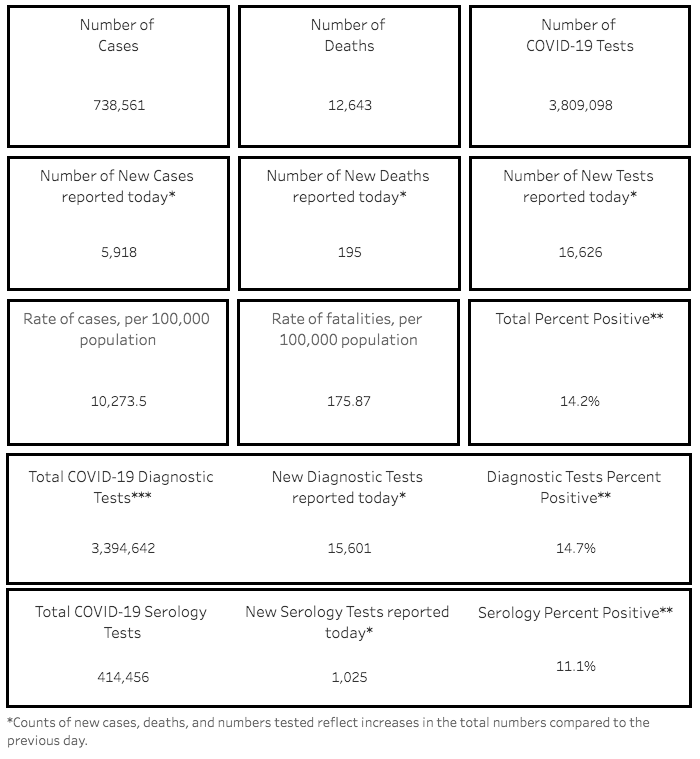
With 5,918 new cases reported today, the total number of Arizona’s confirmed novel coronavirus cases surpassed 738,000 as of Wednesday, Jan 27, according to the Arizona Department of Health Services.

Pima County, which reported 709 new cases today, has seen 98,743 of the state’s 738,561 confirmed cases.
A total of 12,643 Arizonans have died after contracting COVID-19, including 1,680 deaths in Pima County, according to the Jan. 26 report.
The number of hospitalized COVID cases statewide has declined in recent weeks after peaking at 5,082 on Jan. 11 but remains above the peak levels of the summer’s first wave. ADHS reported that as of Jan. 26, 4,250 COVID patients were hospitalized in the state. The summer peak of 3,517 hospitalized COVID patients was set on July 13; that number hit a subsequent low of 468 on Sept. 27.
A total of 1,992 people visited emergency rooms on Jan. 26 with COVID symptoms, down from the record high of 2,341 set on Tuesday, Dec. 29, 2020. That number had peaked during the summer wave at 2,008 on July 7; it hit a subsequent low of 653 on Sept. 28.
A total of 1,024 COVID-19 patients were in intensive care unit beds on Jan. 26, down from a peak of 1,183 set on Jan. 11. The summer’s record number of patients in ICU beds was 970, set on July 13. The subsequent low was 114 on Sept. 22.
Cases in slight decline but still at higher levels than summer wave
While the spread of COVID-19 is still considered substantial across the state, it appears numbers have slightly decreased within the last few weeks.
According to the latest report by Dr. Joe Gerald, a University of Arizona professor who creates weekly coronavirus epidemiology reports based on Arizona Department of Health Services data, the week ending Jan. 17 shows a 21% decrease in coronavirus cases from the week prior.
Both hospitalizations and ICU bed occupancy decreased 8% across the state.
In Pima County, the COVID-19 case count for the same week dropped 19% from the week before, the report says.
However, the welcome changes must be looked at relative to the concerning status the state continues to hold in terms of record-setting COVID-19 statistics.
“This week saw a large, unexpected decline in COVID-19 cases. This decline is unlikely to be an artifact of testing as test positivity continues to decline along with hospital and ICU occupancy,” Gerald wrote in the report. “While this reprieve is a welcomed change, the [coronavirus] continues to rampage through Arizona and remains at an appallingly high level.”
PHOENIX – On his first day in office, President Joe Biden sent to Congress his plan to reform the U.S. immigration system. The bill includes preserving the Deferred Action for Childhood Arrivals program, or DACA, and outlines a path to permanent residence and citizenship for its recipients.
That includes Reyna Montoya, an activist in Phoenix who came to Arizona when she was 10.
“It has been a renewed hope for the immigrant community,” Montoya said. “Before, everything seemed so dark and so deemed, and we constantly were fighting.”
Montoya is the CEO and founder of Aliento, a nonprofit that helps immigrants, particularly young people in the country illegally who have DACA or want to benefit from the Obama-era program. She said she has been looking for a way to obtain U.S. citizenship since her family moved from Tijuana, Mexico, to Nogales, Arizona, in 2001.
“It’s a huge step in the right direction,” Montoya said. “This is an important day that symbolizes a new beginning.”

