

Thursday, January 7, 2021
PHOENIX – Sixty-three years ago today, the New York Times ran this headline on the front page of its sports section: “Jackie Robinson quits baseball.”
It marked the end of one of the most important eras in sports history, one that saw the first African American play Major League Baseball in the modern era.
The barriers Robinson broke remain important, but a recent decline in participation by African Americans has brought disappointment. According to a study by the Arizona-based Society of Baseball Research, participation by African American players in MLB has declined steadily since 1981 and by 2016 that number plummeted to 6.7%, the lowest percentage since 1957.
In April of 1947, Robinson made his debut with the Brooklyn Dodgers as the first African American player to appear in a Major League Baseball game. Three months later, Robinson was followed by Larry Doby and several others to break the color barrier between MLB and the Negro baseball leagues.
In a racially divided country, Robinson and company saw resistance from much of the white community but continued to play the sport he loved to give other African Americans an opportunity to play on baseball’s biggest platform.
During the 1981 season, 17 years removed from the Civil Rights Act of 1964, MLB saw its highest-ever African American representation at 18.7%, according to SABR.
By this point, Jim Crow laws of the South had become “unconstitutional,” but racism was prevalent. Many African Americans still had a passion to play baseball and continued the integration of the sport from the Robinson days all the way into the mid-1990s.
But 1994 is when researchers started to notice a decline of African Americans in the sport. While some MLB fans say the recent numbers must be inaccurate because they see a decent number of “Black” players, star such as Yasiel Puig, Yoenis Cespedes and Francisco Lindor are black Latinos, not African Americans.
Theories vary as to why African Americans continue to lose interest in the sport.
Tolleson High School baseball coach Scott Richardson believes baseball is becoming increasingly less affordable, particularly for minorities.
“I think one of the factors is the lack of opportunities, unless you have money at a young age, to play youth baseball,” Richardson said. “It used to be where everybody in your town played on the local Little League teams, and it was very affordable. But then, when the club and travel “elite” teams started being formed, it started (pushing away) people of diverse cultures.
“It’s not uncommon for a kid that wants to play club baseball (to pay) $800 a season (with) monthly dues. A lot of kids in poor populations have a tough time (paying for that). With basketball, all you need is a basketball, and you go down to the park by yourself. With baseball, you can’t do that (anymore).”
In Arizona, poverty rates were higher in 2019 for Black and African Americans (20.3%) than they were for white residents (13.2), according to the U.S. Census.
Richardson believes another factor is that baseball is more of a skill sport rather than one where athleticism can cover up deficiencies in fundamentals like basketball and football.
“You can be the fastest guy, the guy with the highest vertical jump, the strongest arm, but (baseball is) still kind of a skill game,” Richardson said. “To be successful at baseball, it takes a lot of time, a lot of repetitions, and unfortunately, today in the United States, you need to have some money to get those repetitions.”
Billy Wilson, a Tolleson High School alumnus who plays in the Cleveland Indians minor league system, feels that his team and the Indians organizations as a whole is more diverse than most organizations across professional baseball.
“With the Indians, I feel like we have a very large amount (of diversity) compared to other teams of Black players,” said Wilson, who is Black. “And we’re all pretty close, so it’s kind of cool. I think that’s something Indians probably feel like we’re pretty good (about in the) organization. They look out for that kind of stuff and try to harp on having a big blend of players. The majority group is the Latin, Dominican, Venezuelan and Cuban players in the minor leagues. Everybody else is sprinkled in here and there.”
Wilson also believes financial factors are a big reason why other organizations struggle to bring in African American players.
“Just looking based on statistics, socioeconomic status (for) African Americans (is) a little different than other groups in America,” Wilson said. “Of course, you’re not going to see many African Americans play baseball, and they probably aren’t going to have the resources to be good. With baseball being such a mentally draining sport, you’re not (going to be) really good early on, (so) you’re just going to hate it more and more. (At that point), why would you want to continue to pursue it?”
Former Oakland Athletics second baseman Shooty Babitt has noticed a demographic change in baseball since his last appearance in the MLB in 1981.
“Probably in about the last 10 years that I was playing is when you start to see the decline of African Americans in baseball,” said Babitt, who is Black. “We were at an all-time high at (about) 20% when I grew up playing.”
Baseball has struggled with improving its tempo as well as making it more interesting recently. MLB has made changes to try to adjust the tempo, such as decreasing the time allowed between pitches, but changes haven’t been significant. The lack of entertainment in the game has also contributed to African American kids being reluctant to play the sport, Babitt said.
“Baseball lacks action now,” he said. “It used to be a fun game. It wasn’t so analytically driven. It wasn’t smart people that were playing. It’s a bunch of robots in the game now.”
Babitt believes it is critical for baseball to greater promote African American MLB players to increase interest among young African American athletes.
“People that look like me don’t see themselves on the baseball field anymore,” Babitt said. “So why would they want to play?”
Despite the lack of African American players, baseball continues to grow in diversity. It is becoming more of an international sport, as the percentage of white players has actually declined from 70.3% in 1989 to 63.7% in 2016, according to SABR. This is due to an increase of Latino players in the sport. The number of Latinos has more than doubled since that time, increasing from 13.2% to 27.4%. The number of Asian players is expected to increase as well, as the percentage has increased to over 2% in 2016.
Wilson believes cultural differences in Latin America are the biggest reason many MLB players emerge from that region.
“In those countries, you are raised to be a baseball player, or you’re raised to do something else,” Wilson said. “Their escape is baseball, so obviously, they get really good at it. They have whole facilities designated to just baseball training out there. You don’t even go to school, (and) you just grind in baseball. (In the U.S.), you got options. As you’re getting beat up in baseball, you can just … quit and go do something else that you’re better at, is cheaper, and all your friends are doing.”
Sandra Day O’Connor High School baseball coach Jeff Baumgartner added to the narrative of the increasing number of Latin American players in the big leagues.
“Being in the Dominican, I’ve seen those players in the grind that they go through and not having anything to fall back on,” Baumgartner said. “If they don’t make it to the (major leagues), there’s nothing really else for them to fall back on. That’s really what drives them and keeps them determined, and that’s definitely something that’s pushed the Dominican players.”
Successful African Americans players might be the answer to attracting young players to the game, Baumgartner said.
“(There’s) Jo Adell, there’s some young guys coming up that I think are going to be pretty good,” he said. “(There’s) Riley Greene with the Reds, so there’s some guys coming up that hopefully will pop in and be big-time sensations that can generate the next (African American) youth movement.”
Phoenix East Valley Little League coach Demeitris Wauqua has noticed a low number of African American baseball players on his teams as well as back when he played Little League.
Wauqua noted that many African American baseball players play football or basketball as well. When it comes to choosing one sport, he said, athletes tend to shift away from baseball because of the NCAA’s baseball scholarship system.
“Colleges (only) provide a partial scholarship for baseball,” Wauqua said. “With football, they’re able to get a full ride. Possibly (football or basketball) is an easier route for (African American) athletes.”
Phoenix Little League parent Chris Davis started playing baseball when he was 9 years old. He immediately fell in love with the sport watching Mets star outfielder Darryl Strawberry, an African American who played from 1983-1999.
Davis also believes kids grow up with a stronger interest in sports like football and basketball. His kids play baseball and when he asks them what their favorite sport is, they always list baseball last.
“People talk about (athletes like) Odell Beckham,” Davis said. “They don’t talk about (African American) players in MLB. (There’s) Adam Jones, and I can’t even think of anyone (else) off the top of my head.”
Even as a baseball player, top athletes that come to his mind are football and basketball players like the NBA’s Steph Curry and LeBron James and the NFL’s Le’Veon Bell. Davis added that many kids overall are bored by the sport’s “standing around” and slow pace. Although the issue is not getting any better, he does believe that the sport could take steps to improve interest among African Americans.
“(The sport) definitely (needs to change) its marketing,” Davis said. “If you want to bring in more (African American) players, you definitely have to cater more towards (African American youth athletes), and if you have one (African American) player that’s doing well, then market that player. Kids are not going to get hyped up to go watch (free agent pitcher) Jon Lester.”
In addition to the sport failing to market key African American stars like Andrew McCutchen, Mookie Betts and Adam Jones, Davis believes that African Americans shy away from the sport because of how expensive it is to play.
For his son to play Little League it cost him $275 before buying a glove, bat and other gear. After buying all the equipment, Davis said that it can cost close to $1,000 per season, depending on what brand is purchased. Many African American families don’t have the financial resources for their kids to play baseball as opposed to football or basketball, which are relatively cheaper to play, Davis said.
“Look at (African American) players in hockey,” he said. “I mean there’s just no interest, and that’s (where) I see baseball going.”
MLB has seen growth in general youth participation in the sport, in large part due to the league’s “PLAY BALL,” an initiative designed to spark widespread participation in all forms of baseball activities among all age groups. According to the Sports & Fitness Industry Association’s Topline Participation Report, baseball has grown 20% in participation since 2014, which is the year prior to the launch of the initiative.
No statistical evidence of such growth among African American youth in baseball has been shown, but recently promoted Chief Baseball Development Officer, Tony Reagins, has put multiple diversity-focused programs in place.
Of those programs, the one that hopes to make the biggest impact on drawing baseball interest from African Americans is Reviving Baseball in Inner Cities (RBI) because of the belief inner-city youth heavily favor football and basketball. Programs like the Washington Nationals Youth Baseball Academy are expected to be key in reviving baseball interest in inner cities.
According to an article from health.gov, more than 90 percent of participants in YBA PLAY, one of the Academy’s most popular programs, said that their baseball skills improved, that they learned new things and that they want to keep practicing and getting better. Comparable programs that give youth these types of opportunities and development can cost families up to $4,000 a year.
In 1956, Robinson’s final year in the majors, African-Americans made up 6.7 percent of major league rosters. At the start of the 2020 season, that number was 7.8 percent, according to Major League Baseball, and several teams, including the Diamondbacks didn’t have an African-American player on their Opening Day roster.
The hope by many is that changes. Soon.
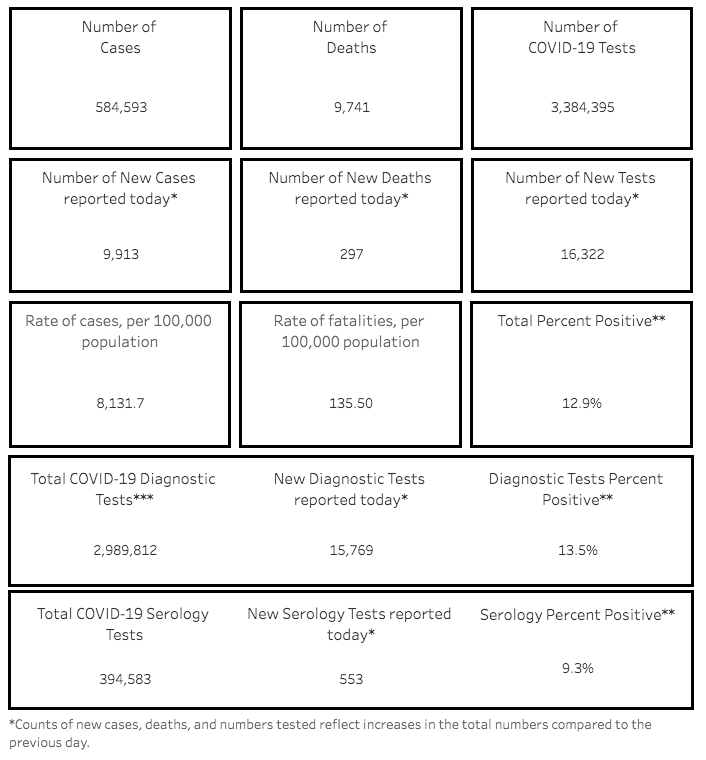
With more than 9,900 new cases reported today, the number of Arizona’s confirmed novel coronavirus cases topped 584,000 as of Thursday, Jan 7, according to the Arizona Department of Health Services.

Pima County, which reported 1,611 new cases today, has seen 77,854 of the state’s 584,593 confirmed cases.
A total of 9,741 Arizonans have died after contracting COVID-19, including 1,189 deaths in Pima County, according to the Jan. 7 report.
The number of hospitalized COVID cases statewide continues to soar as the virus has begun to spread more rapidly, putting stress on Arizona’s hospitals and surpassing July peaks. ADHS reported that as of Jan. 6, a record 4,920 COVID patients were hospitalized in the state. The summer peak of 3,517 hospitalized COVID patients was set on July 13; that number hit a subsequent low of 468 on Sept. 27, or less than a tenth of the current count.
A total of 2,280 people visited emergency rooms on Jan. 6 with COVID symptoms, down from the record high of 2,341 set on Tuesday, Dec. 29. That number had previously peaked at 2,008 on July 7; it hit a subsequent low of 653 on Sept. 28.
A total of 1,001 COVID-19 patients were in intensive care unit beds on Jan. 6. The summer’s record number of patients in ICU beds was 970, set on July 13. The subsequent low was 114 on Sept. 22.
A website that tracks COVID infections across the globe reports that Arizona continues to have the highest rate of COVID infection in the world.
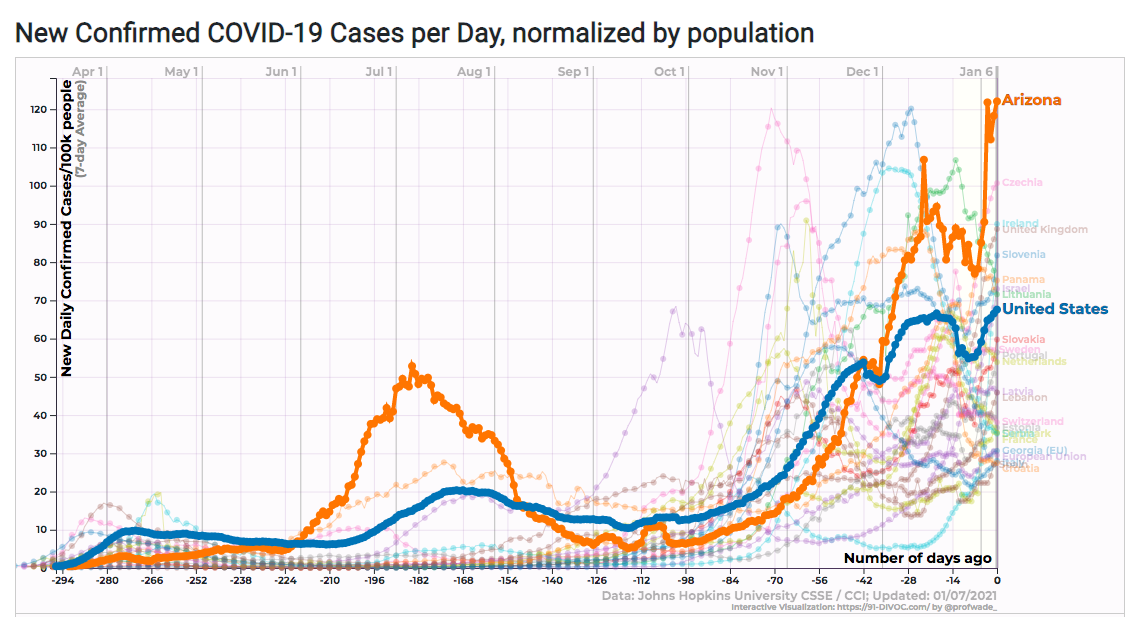
The website 91-divoc.com, which uses data from Johns Hopkins University, reports that Arizona is seeing 122.1 infections per 100,000 people on a seven-day average, compared to 67.6 infections per 100,000 for the United States as a whole.
Progress on vaccine distribution in Pima County
As early as next week, the groups of essential workers and those older than 75 included in the next phase of Pima County’s vaccine distribution plan may have access to the COVID-19 vaccine, the Pima County Health Department announced at a press conference this week.
WASHINGTON – Arizona has 304,180 infants and toddlers who need child care but only 234,270 slots to accommodate them, with poor and rural families most likely to be left out, a recent study said.
Arizona child care advocates said they were not surprised by the numbers in the Bipartisan Policy Center study, which they said has inspired them to push harder for accessible care.
“Some people can afford to put their children in high-quality care and their children will get that and we don’t have to worry about those kids, fortunately,” said Marilee Dal Pra, CEO of First Things First, a Phoenix-based children’s advocacy group.
“Unfortunately, in a state like Arizona that has such a high poverty level, especially for the zero to 5 (year old) population, these families don’t have those resources,” Dal Pra said.
The October report by the Bipartisan Policy Center’s early childhood initiative looked at 25 states – an initial plan to get data from all 50 states was derailed by the COVID-19 pandemic – to analyze gaps in child care across the country.
While Arizona fell short, its nearly 70,000-slot deficit was not the worst in the nation. Arizona fell about in the middle of the 25 states, both in terms of whole numbers and percentage shortfall.
North Carolina had just under 200,000 slots for the more than 459,000 children in need of care there, according to the report, which said California had about 1 million slots to accommodate demand from about 1.7 million children. Only Texas had a supply of child care slots that slightly exceeded its need, according to the report.
Wednesday, January 6, 2021
For Arizona’s students, 2020’s winter break is over, but the alarming spread of COVID-19 remains. As a result, students are returning to school this January predominantly in remote online models.
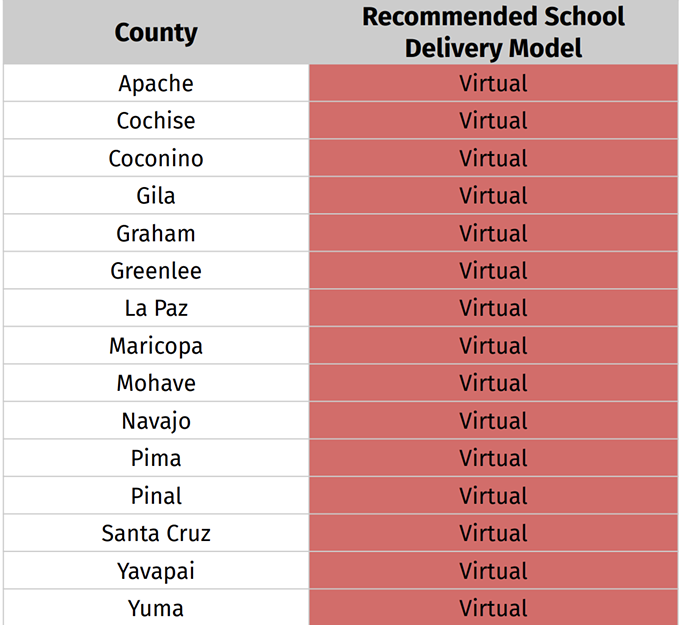
The Arizona Department of Health Services is recommending all counties in the state commit to virtual learning for students to attend classes online with some onsite support services available.
ADHS makes its recommendation based on three key benchmarks: cases per 100,000 individuals, percent positivity and hospital visits for COVID-like illness. All benchmarks are currently in a state of substantial transmission throughout the state.
In Pima County, ADHS data shows 7,298 COVID-19 cases per 100,000 individuals and an 11.2% positivity rate of the virus as of Jan. 6. The most recent data available on the state health department’s school benchmarks website shows hospital visits for COVID-like illnesses at 13.2% as of Dec. 13.
On Twitter, State Superintendent Kathy Hoffman called on Gov. Doug Ducey to order schools to remain in distanced learning for two weeks and allow school leaders to make reopening decisions after this two-week quarantine.
Given the severity of our state's situation and the virus's trajectory after the holiday period, Gov. @dougducey should order schools to remain in distance learning for a limited two-week period to align with quarantine protocols and current @azdhs benchmark recommendations.
— Kathy Hoffman (@Supt_Hoffman) January 2, 2021
The governor’s spokesman, C.J. Karamargin, made clear Ducey will not be issuing the mandatory two-week quarantine for schools.
“Gov. Ducey will not be considering this request or issuing this kind of mandate," Karamargin said. "This is a local decision.”
Of the local public school districts in northwest Tucson, only Catalina Foothills remains open for in-person instruction.
Amphitheater Public Schools
Amphitheater schools returned to classes online only Monday and anticipate staying in a remote model until at least Jan. 19. According to the district’s Communications Director Michelle Valenzuela, Amphi will continue to work with Pima County on its recommendation for schools’ learning models.
Students are expected to participate in remote learning five full days a week and interact with their teachers live at designated times in addition to participating in offline tasks.
Valenzuela says the district has been working with the Amphi Foundation to provide internet service to students in need of it through partnerships with Cox and Comcast. Around 60 families have been provided Wi-Fi, and according to Valenzuela, the district plans to provide more services to families through a partnership with the City of Tucson in the coming weeks.
Teachers are also working with students without internet access to provide them paper packets that contain enough material for the entire academic week. Teachers will be in regular contact with offline students “to provide feedback and support,” according to Amphi’s website.
Catalina Foothills
Catalina Foothills is one of the only local public school districts to remain open for in-person learning after returning from winter break. According to Director of Alumni and Community Relations Julie Farbarik, the decision to remain open was based on the district’s relatively low case counts.
Since Nov. 20, the district has reported 27 new COVID-19 cases throughout its school sites.
“Keeping schools open is important to our students’ social-emotional well-being and their overall academic engagement,” Farbarik wrote in an email. “In their December communication to superintendents, the PCHD made it clear that it supports each school district’s decision based on its local COVID case experience. The numbers at our schools are very low, so we are continuing to offer an in-person learning option.”
Of the district’s seven K-12 schools, two elementary schools began offering five-day in-person instruction starting Jan. 4. The other five offer hybrid learning with two days of in-person learning and three days of remote work. All schools are offering a completely remote option.
Although Catalina Foothills doesn’t have any direct services for students without internet access, students can access its onsite support service for access to Chromebooks, laptops or Wi-Fi, depending on availability.
Flowing Wells Unified School District
Flowing Wells has returned to school remotely, but anticipates reinstating their hybrid option on Jan. 19. However, Superintendent David Baker said this may change in the future. Remote work entails daily scheduled classes via Zoom.
According to Baker, the district provided over 400 hot spots to provide internet to students at home while nearly 100 students come to campus through on-site services to access the internet.
The Emily Meschter Early Learning Center, the district’s preschool, remains open for in-person learning with a remote option. Most students attend four half days a week, Baker said.
“In all reviewed studies and articles, preschool students and pre-schools have very low virus transmission rates and that has proved to be true at our site this school year. Pima County Health has also communicated that preschools and early childhood care facilities across the county have remained opened with very low classroom transmission,” Baker said in an email. “There are also many educational benefits for students to participate in classroom instruction, as compared to virtual learning.”
Marana Unified School District
The Marana district plans on returning to hybrid instruction on Jan. 25 while monitoring public health metrics from the Pima County Health Department, according to Director of Public Relations and Community Engagement Alli Benjamin.
Every student has been issued a Chromebook laptop while remote learning takes place five full days a week with both live teacher-led lessons and independent learning.
According to Benjamin, the district has struggled to locate and purchase Wi-Fi hotspots, but Marana has a limited number of hotspots they’re issuing to families in need. Parents can also apply for students to attend the district’s onsite services for internet access.
Sunnyside Unified School District
Sunnyside schools will be in a remote learning model until Jan. 19. Hybrid learning will commence unless the Pima County Health Department makes the recommendation to stay remote before Jan. 19.
Students are expected to log into their devices to interact with teachers at least three times a day. Kindergarten through first-grade students are provided iPads while second through twelve graders are assigned Chromebooks for participation in remote learning.
Students without internet access are being provided with mobile Wi-Fi devices, according to Sunnyside’s Director of Public Information Marisela Felix. Felix said Sunnyside families can also qualify for a low-cost internet program through Cox.
Tucson Unified School District
Tucson’s largest school district is remaining in a remote-only model as it transitions to 2021. All curriculums can be accessed online through live lessons with teachers and independent work on online educational platforms. Unlike other local districts, TUSD never reopened for in-person instruction during the fall semester.
TUSD has in-person learning spaces where students can access classes online while socially distanced at school sites. According to Leslie Lenhart, TUSD’s director of communications and media relations, there’s no set limit on the number of students attending the learning spaces, but they’re reserved for “at-risk” and “exceptional education” students.
The district doesn’t have an anticipated start date to move to in-person learning.
“The Governing Board will be a part of this decision, but no details are currently available, as we follow the science and the guidelines of PCHD,” Lenhart wrote in an email.
Lenhart said TUSD will provide a free hotspot for internet connection for any family in need of one.

As the second round of Economic Stimulus Payments begins hitting bank accounts and mailboxes nationwide during the first week of 2021, many Americans will have to wait until they file their 2020 tax return to claim their cash.
Funds officially became available on Monday, Jan. 4, with some taxpayers receiving their payment the week prior. However, many Americans who filed their 2019 tax return using H&R Block or TurboTax are complaining of either getting a cryptic “Payment Status #2” message or their funds were sent to an unknown bank account.
The Internal Revenue Service announced on their website taxpayers who are receiving a “Payment Status #2 – Not Available," message when using the IRS’ Get My Payment tool “will not receive a second Economic Impact Payment and instead you need to claim the Recovery Rebate Credit on your 2020 Tax Return."
IRS officials note the recent stimulus payment is an advance on the Recovery Rebate Credit and they are under a “compressed timeline” to distribute funds by Jan. 15.
“Because of the speed at which the law required the IRS to issue the second round of Economic Impact Payments, some payments may have been sent to an account that may be closed or, is or no longer active, or unfamiliar. By law, the financial institution must return the payment to the IRS; they cannot hold and issue the payment to an individual when the account is no longer active,” according to the IRS website.
The credit will be available on this year’s Form 1040 or Form 1040-SR. Any taxpayer who filed their 2019 taxes and did not receive either the first or second stimulus payment may be eligible and is encouraged by the IRS to claim the credit on their upcoming 2020 taxes.
While the IRS has not released an official date on when they will begin accepting 2021 tax returns, historically they start accepting them between Jan. 15 and Feb. 1.
Under the recent Economic Stimulus Payment, individuals are eligible for $600 and married couples who file a joint return will receive $1,200. In addition, citizens could receive an extra $600 for each qualifying child. Dependents over the age of 17 are not eligible for the child payment. Individuals who filed an adjusted gross income of more than $75,000 or married couples who made more than $150,000 in 2019 are ineligible for the payment.
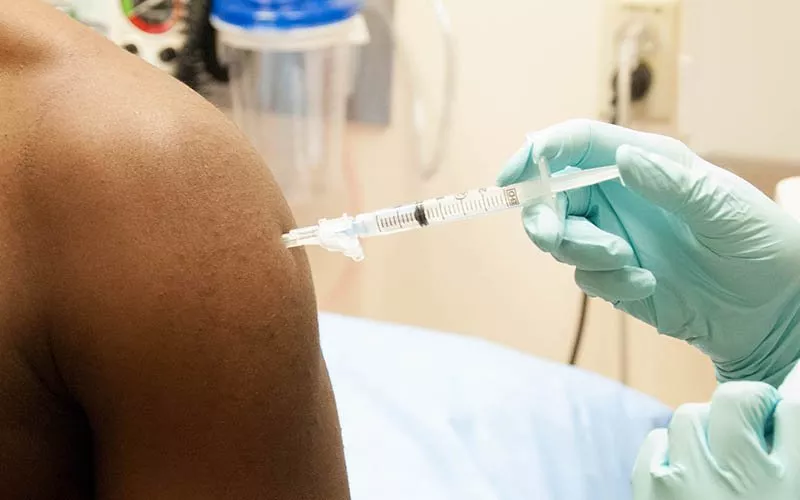
As early as next week, the groups of essential workers and those older than 75 included in the next phase of Pima County’s vaccine distribution plan may have access to the COVID-19 vaccine, the Pima County Health Department announced at a press conference yesterday.
Pima County Chief Medical Officer Dr. Francisco Garcia said the county anticipates rolling out phase 1B of vaccinations at the end of next week.
Phase 1B includes the vaccination of prioritized essential workers in education and protective services, essential workers in fields like transportation and government, adults in congregate settings with high-risk medical conditions and individuals over 75.
Those who qualify in phase 1B can pre-register here.
Every county in Arizona except Pinal and Gila is currently in phase 1A of the vaccination process, which includes healthcare workers, emergency medical service workers, and residents and staff of long-term care facilities.
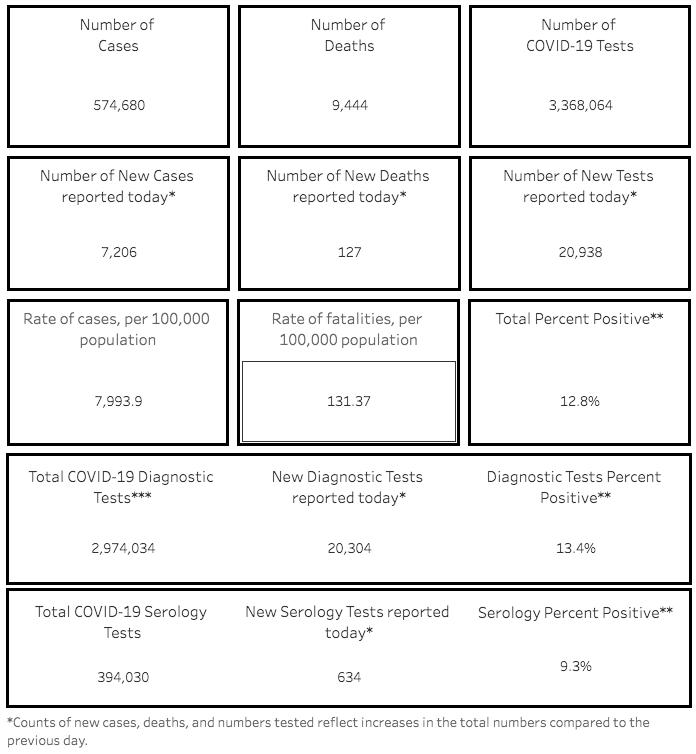
With more than 7,200 new cases reported today, the number of Arizona’s confirmed novel coronavirus cases closed in on 575,000 as of Wednesday, Jan 6, according to the Arizona Department of Health Services.

Pima County, which reported 659 new cases today, has seen 76,243 of the state’s 574,680 confirmed cases.
A total of 9,444 Arizonans have died after contracting COVID-19, including 1,142 deaths in Pima County, according to the Jan. 6 report.
The number of hospitalized COVID cases statewide continues to soar as the virus has begun to spread more rapidly, putting stress on Arizona’s hospitals and surpassing July peaks. ADHS reported that as of Jan. 5, a record 4,877 COVID patients were hospitalized in the state. The summer peak of 3,517 hospitalized COVID patients was set on July 13; that number hit a subsequent low of 468 on Sept. 27, or less than a tenth of the current count.
A total of 2,253 people visited emergency rooms on Jan. 5 with COVID symptoms, down from the record high of 2,341 set on Tuesday, Dec. 29. That number had previously peaked at 2,008 on July 7; it hit a subsequent low of 653 on Sept. 28.
A total of 1,084 COVID-19 patients were in intensive care unit beds on Jan. 5. The summer’s record number of patients in ICU beds was 970, set on July 13. The subsequent low was 114 on Sept. 22.
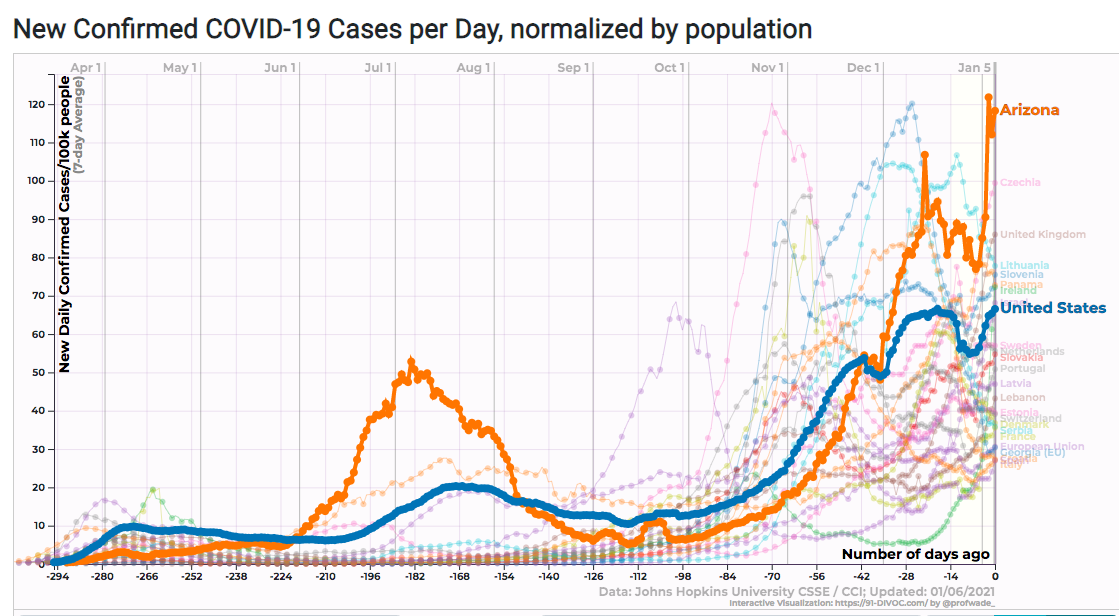
A website that tracks COVID infections across the globe reports that Arizona now has highest rate of COVID infection in the world.
The website 91-divoc.com, which uses data from Johns Hopkins University, reports that Arizona is seeing 118.3 infections per 100,000 people on a seven-day average, compared to 66.5 infections per 100,000 for the United States as a whole.
The Pima County Health Department reported yesterday that the number of COVID-positive patients in Pima County hospitals jumped by 7 percent to 746. Only 10 ICU beds remained available and only 59 medical/surgical beds were available throughout the county.
A total of 80 people in Pima County hospitals had died in the first five days of 2021, according to PCHD.
As of yesterday morning, 95 patients were waiting in emergency rooms for an inpatient bed, including 64 COVID-positive patients.
The health department continues to ask residents to stay home and minimize activities that involve contact with people outside of their households, stay physically distanced and practice mask-wearing and frequent sanitization.
WASHINGTON – For two months since the election, President Donald Trump has challenged the election of President-elect Joe Biden, but there is no question that in some parts of Washington it will soon be time for Trump to go.
The Trump key chains, that is. And Trump mugs. And T-shirts and posters and finger puppets and bottle openers and other souvenirs that have been staples in souvenir shops for the past four years but are now being moved to the clearance shelf.
“It sold well. I mean Trump was a hot commodity,” said Dexter Morse, who manages the Washington Welcome Center, a tourist stop and souvenir shop just blocks from the Trump International Hotel.
But that was before the election.

