

Wednesday, December 23, 2020

Tuesday, December 22, 2020
With more than 5,800 new cases reported today, the number of Arizona’s confirmed novel coronavirus cases now stands higher than 467,000 as of Tuesday, Dec. 22, according to the Arizona Department of Health Services.
Pima County, which reported 984 new cases today, has seen 61,344 of the state’s 467,215 confirmed cases.
A total of 8,125 Arizonans have died after contracting COVID-19, including 938 deaths in Pima County, according to the Dec. 22 report.
The number of hospitalized COVID cases statewide continues to soar as the virus has begun to spread more rapidly, putting stress on Arizona’s hospitals and surpassing July peaks. ADHS reported that as of Dec. 21, a record number of 4,019 COVID patients were hospitalized in the state. The summer peak of 3,517 hospitalized COVID patients was set on July 13; that number hit a subsequent low of 468 on Sept. 27.
A total of 1,817 people visited emergency rooms on Dec. 21 with COVID symptoms. That number, which hit a new record of 2,166 earlier this month, had previously peaked at 2,008 on July 7; it hit a subsequent low of 653 on Sept. 28.
A total of 943 COVID-19 patients were in intensive care unit beds on Dec. 21. The number of COVID patients in ICUs peaked at 970 on July 13 and hit a subsequent low of 114 on Sept. 22.
Healthcare system on the edge of being “overwhelmed”
In a new public health advisory, the Pima County Health Department warned yesterday that the healthcare system is in danger of becoming overwhelmed within the next two to three weeks if the spread of COVID-19 continues at its current pace.
According to County Health Director Dr. Theresa Cullen, the county is on track to see more coronavirus infections in December than all previous months of the pandemic combined.
The advisory asks for continued adherence to the county’s mandatory mask mandate and 10 p.m. to 5 a.m. curfew.
It also asks to limit all gatherings to less than 10 people and that all businesses reduce their occupancy to 25%.
According to the new advisory, the last week has seen multiple instances of zero ICU bed availability and several days where hospital medical-surgical beds have reached capacity.
Emergency departments and hospitals face staff and critical supply shortages.
The health department is asking residents to stay home and minimize activities that involve contact with people outside of their households, stay physically distanced and practice mask-wearing and frequent sanitization.
“This isn’t just about COVID anymore and whether you think it’s a real problem or not. The patients filling these hospitals are absolutely real and if you have a heart attack, or if you get into a car accident, or your appendix bursts, there is a real possibility that you may not get the timely care you need to save your life if we don’t get control of this virus,” Cullen said. “People are dying yet many of those deaths are preventable if the people of this community stay home, wear their masks and avoid people they don’t live with as much as possible.”
TMC cancels elective surgeries
Tucson Medical Center has canceled elective surgeries through Jan. 4.
A letter from TMC COO Mimi Coomler and CMO Dr. Amy Beiter states that TMC is too crowded with COVID patients to move forward with elective surgeries.
“We have reached the point in the pandemic where the number of COVID patients needing care is exceeding available resources on a daily basis,” they wrote.
The letter also notes that TMC turned away 80 direct admissions in the past week.
For weeks, hospital officials and healthcare experts have been urging the community to stop socializing outside of your immediate household, stay home as much as possible, wear masks and frequently wash hands. They have pleaded with people to cancel holiday celebrations with extended family and friends as the virus has returned to widespread transmission.
Dr. Joe Gerald’s weekly update on COVID’s spread shows that as of Dec. 18, 47% of Arizona’s general ward hospital beds were occupied by COVID patients, a jump of 14% from last week.
“We are now undergoing the great ‘displacement’ such that hospital services are now being rationed so that patients with severe COVID-19 illness are displacing others who have slightly less severe non-COVID medical conditions,” Gerald wrote. “As Covid-19 illness continues to increase, delaying others’ care will become ever more difficult. At some point, hospitals will have to expand their physical capacity. Make no mistake, the COVID-19 crisis is now placing a greater share of Arizonans’ at-risk, not just those unfortunate enough to contract COVID-19.”
“Because cases have been increasing, deaths are also increasing,” he wrote. “Sharper rises are expected over the coming weeks as deaths lag new cases by 14- days and are often only made known weeks later. By Christmas, Arizona will be experiencing >500 deaths per week. However, this toll will not be apparent until mid-January once all deaths are accounted for.”
Gerald said Arizona’s spread was among the worst in the nation.
“For those keeping score, Arizona has the 7 th fastest increasing COVID-19 outbreak as measured by Rt.live,” Gerald wrote. “Arizona’s effective viral reproduction number (Rt) is now 1.11. Arizona ranks 4th in the number of daily reported cases at 92.9 per 100,000 residents. We should move ahead of Rhode Island, 93.7 per 100,000 residents, this week.”
Pima County under curfew
Pima County's voluntary curfew has now become mandatory.
The Pima County Board of Supervisors voted 3-2 last week to instate a mandatory 10 p.m. to 5 a.m. curfew throughout the county in an attempt to combat Southern Arizona's rising number of coronavirus cases.
Supervisor Steve Christy and outgoing Supervisor Ally Miller, who attended her last board meeting this week, voted against the proposal.
Penalties for a nonessential business found violating curfew range from having their business permit suspended or revoked.
The mandatory curfew will stay in place until coronavirus infection rates drop below 100 per 100,000 people, according to county officials.
The transmission rate in Pima County was 357 people per 100,000 people in the two-week period ending Nov. 29, but Pima County Health Department Director Dr. Theresa Cullen expects that number to be significantly higher for the period ending Dec. 13.
The mandatory curfew comes as through the first two weeks of December, COVID-19 cases in the county reached 13,589—2,554 more cases than reported in all of November. Last week saw 70 coronavirus deaths, according to a memorandum from County Administrator Chuck Huckelberry.
While businesses will now face losing their operating permits if they don't comply with the curfew, it "carries no penalty associated with the individual, as it would be difficult to enforce a curfew against individuals without the cooperation of law enforcement," Huckelberry writes in the memo.
First healthcare workers vaccinated
Banner University Medical Center and Tucson Medical Center began the first round of COVID-19 vaccinations in Pima County last week. While a small number of test vaccinations were injected earlier this week, last Thursday, Dec. 17, marks the official beginning of the Pima County Health Department’s three-phase plan, beginning with frontline workers.
At Banner University’s northside campus, Iris Delfakis, a nurse at the University of Arizona’s Cancer Center, volunteered to receive the first injection.
“I’m all for it,” Delfakis said. “I know there are some against the vaccine, but I think everyone should get it. We’ve never seen something like COVID in our lifetimes.”
According to Rebecca Ruiz-McGill, information specialist for Banner UMC, the medical center needs to “walk before we run,” with vaccine administrations. Because COVID-19 testing involves similar logistics, Banner expects its vaccine process to be in full order within a week or two. By the end of the month, they expect to be administering more than 100 vaccines per day.
Banner’s vaccine station was in its parking garage and saw several hospital staff in its first hour. Among the staff was Dr. Melissa Zukowski, who works in Banner's Department of Emergency Medicine and was prioritized for vaccination because she works in a COVID unit. Those who receive their vaccine will need to receive a second booster injection three weeks after their first.
“I’m emotional with joy. It’s been such a long time we’ve waited for this vaccine,” said Zukowski, who received the injection while holding her daughter’s hand. “To the skeptics who still don’t think this is real – it’s very real. We’ve been going non-stop. People are sick, and people are dying . . . There’s a long road ahead, but this is a glimmer of light.”
However, the pace of vaccinations may slow this week due to a reduction in state Pfizer vaccine allocations, according to Pima County Health Department Logistics Manager Spencer Graves.
The state last week informed Pima County it would receive fewer than 2,000 Pfizer vaccines, a significant decrease from the 10,000 expected, according to a health department press release.
Although 17,000 Moderna COVID-19 vaccines are expected to arrive this week, with 6,000 going to the Banner and TMC distribution centers, those who received the Pfizer vaccine must receive a second dose of it 21 days from the first one in order to be considered completely immunized. The two doses must be administered by the same vaccine brand.
“The Pfizer reduction may slow the pace of vaccinations,” the press release said. “The County and the regional medical community hope to have every medical professional who works with COVID patients vaccinated by the end of December.”
The vaccine prioritization plan includes three phases with the most high-risk individuals receiving the vaccine first, according to county officials.
Phase one of vaccine implementation is divided into three groups: 1A, 1B and 1C. Group 1A will begin receiving vaccines this week.
Group 1B, which includes teachers, law enforcement and other essential service workers, are expected to receive vaccines by March, Cullen said.
Group 1C includes adults older than 65 and those with high-risk medical conditions, which contains nearly 70% of the population and is expected to receive vaccinations by “late spring, early summer,” according to Cullen.
The Pfizer vaccine is given in two doses 21 days apart. The health department said if the second dose is not received on its scheduled time, the first dose will still be valid and the recipient is still fully protected.
Get tested: Pima County has free COVID testing
Pima County offers a number of testing centers around town.
You’ll have a nasal swab test at the Kino Event Center (2805 E. Ajo Way) the Udall Center (7200 E. Tanque Verde Road) and downtown (88 E. Broadway).
The center at the northside Ellie Towne Flowing Wells Community Center, 1660 W. Ruthrauff Road, involves a saliva test designed by ASU.
In addition, the Pima County Health Department, Pima Community College and Arizona State University have partnered to create new drive-thru COVID-19 testing sites at three Pima Community College locations. At the drive-thru sites, COVID-19 testing will be offered through spit samples instead of nasal canal swabs. Each site will conduct testing from 9 a.m. to noon, and registration is required in advance. Only patients 5 years or older can be tested.
Schedule an appointment at these or other pop-up sites at pima.gov/covid19testing.
The University of Arizona’s antibody testing has been opened to all Arizonans as the state attempts to get a handle on how many people have been exposed to COVID-19 but were asymptomatic or otherwise did not get a test while they were ill. To sign up for testing, visit https://covid19antibodytesting.arizona.edu/home.
—with additional reporting from Austin Counts, Jeff Gardner, Nicole Ludden and Mike Truelsen
WASHINGTON – President-elect Joe Biden has promised to roll back many of the Trump administration’s restrictive immigration policies when he takes office next month.
He’s got his work cut out for him.
While President Donald Trump’s signature – and likely most enduring – immigration policy is the still-in-progress southern border wall, he has touched virtually every part of the immigration issue, beginning with day one of his presidency four years ago.
“What haven’t they done?” asked Sarah Pierce, a policy analyst at the Migration Policy Institute.
“They have entirely shut down the southern border, they have revitalized interior enforcement, they have sped up the immigration courts and increased the number of deportation orders they issue,” Pierce said.
“They’ve tightened the legal immigration system and generally made life really uncomfortable for both legal and illegal immigrants in the United States,” she said.
But many of Trump’s plans have been blocked by courts, and others are vulnerable to being reversed by executive order or shifts in agency policy – because that’s how many of them were enacted by the current administration.
Biden said during his campaign that he would target many of those policies with his own executive orders, raising the cap on the number of refugees the U.S. will accept in a year, reversing the “Muslim ban” that severely limited immigrants from largely Islamic countries and ending the national emergency declaration that allowed construction of the border wall.

Monday, December 21, 2020
In a new public health advisory, the Pima County Health Department warns the healthcare system is in danger of becoming overwhelmed within the next two to three weeks if the spread of COVID-19 continues at its current pace.
According to County Health Director Dr. Theresa Cullen, the county is on track to see more coronavirus infections in December than all previous months of the pandemic combined.
The advisory asks for continued adherence to the county’s mandatory mask mandate and 10 p.m. to 5 a.m. curfew.
It also asks to limit all gatherings to less than 10 people and that all businesses reduce their occupancy to 25%.
According to the new advisory, the last week has seen multiple instances of zero ICU bed availability and several days where hospital medical-surgical beds have reached capacity.
Tucson Medical Center has canceled its elective surgeries, while emergency departments and hospitals face staff and critical supply shortages.
The health department is asking residents to stay home and minimize activities that involve contact with people outside of their households, stay physically distanced and practice mask-wearing and frequent sanitization.
“This isn’t just about COVID anymore and whether you think it’s a real problem or not. The patients filling these hospitals are absolutely real and if you have a heart attack, or if you get into a car accident, or your appendix bursts, there is a real possibility that you may not get the timely care you need to save your life if we don’t get control of this virus,” Cullen said. “People are dying yet many of those deaths are preventable if the people of this community stay home, wear their masks and avoid people they don’t live with as much as possible.”
The full advisory is below.
All signs are pointing to a dry start to 2021 across much of the Colorado River watershed, which provides water to about 40 million people in the Western U.S.
A lack of precipitation from April to October made this spring, summer and fall one of the region’s driest six-month periods on record. And with a dry start to winter, river forecasters feel more pessimistic about the chances for a drought recovery in the early part of 2021.
“We’re starting off water year 2021 with widespread much below-average soil moisture conditions and snow water equivalent conditions,” said Cody Moser, a hydrologist with the Utah-based Colorado Basin River Forecast Center.
Some weather stations in Colorado, Utah, Arizona and Nevada have recorded their driest years on record, Moser said. There doesn’t seem to be much relief in sight. Short-term and long-term weather forecasts all point to above-average temperatures and below-average precipitation for the foreseeable future.
Exceptional drought conditions have expanded across 65% of the Colorado River watershed. Low soil moisture heading into winter will also play a role in how snowpack accumulates this season, and how much water will flow into streams and reservoirs during spring runoff, adding pressure to large-scale water users like municipalities and farmers.
Most major rivers in the basin are projected to flow well below normal levels next year due to extremely low soil moisture conditions, though Moser said there’s significant uncertainty about water supply forecasts so early in the season.
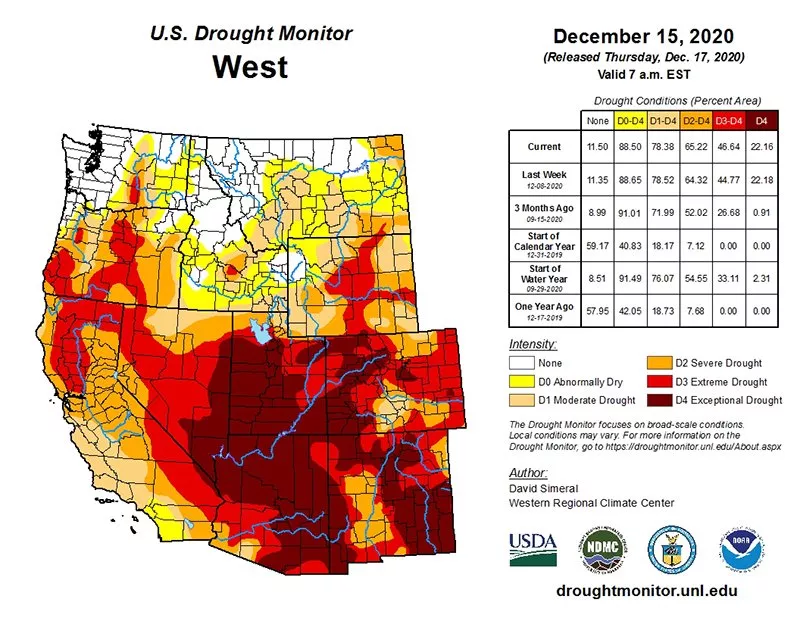
But given the dry conditions heading into winter, an average snowpack won’t be enough to provide significant relief, Moser said.
“It does seem like we’re going to need a really good snow year in order to make up some ground for the dry conditions entering the season,” Moser said.
Soil moisture is an important indicator because it can influence how much snow melts into streams, rivers and reservoirs.
A recent forecast from the Bureau of Reclamation, the federal agency that operates Western water infrastructure, showed the Colorado River’s largest reservoirs are likely to drop next year if demands stay the same.
Without a high snowpack this winter, the agency forecasts the Colorado River system’s biggest reservoirs will be reduced to a combined 44% of their total capacity by fall 2021.
This story is part of a project covering the Colorado River, produced by KUNC and supported through a Walton Family Foundation grant.
PHOENIX – From “Rookie of the Year” to “Little Giants,” sports movies captivated kids growing up in the 1990s.
One of those was a young girl from Chandler, who fell in love with an unlikely sport.
Hockey.
For a native of the Valley, hockey seemed as out of place as a cactus in Buffalo. As someone who found her love from the Mighty Ducks film franchise, the fast-paced, bone-chilling drama of Coach Gordon Bombay and his group of misfits overcoming the odds resonated with young Lyndsey Fry.
These days, the Olympic silver medalist in women’s hockey is a key figure in the Arizona Coyotes’ movement to increase youth hockey participation in the state, especially among non-traditional markets. With various youth development programs and outreach efforts, the Coyotes are making an impact.
“The youth hockey market and the growth (in Arizona) is phenomenal,” said Coyotes President and CEO Xavier A. Gutierrez, who took the job six months ago and became the first Latino to hold those positions in NHL history. “Every youth hockey fan that you can identify and convert leads to 3.3 more fans.”
The presence of the team has made an impact. Arizona ranks second among all U.S. NHL markets in total growth percentage over the past five years, according to a 2019 study by USA Hockey. In addition, Arizona ranked first in total percentage growth for female hockey players and first for total 8-and-under hockey participation percentage over the past five years.
Fry leads the Coyotes’ female development program, the Arizona Kachinas, which looks to promote female youth participation within the Valley in a welcoming environment, while growing the outreach efforts of the Coyotes statewide. The NHL club is also reaching out to youth in the Hispanic community, part of an overall initiative to connect with that market in Arizona.
As COVID-19 continues to spread substantially throughout the state, Arizona is breaking records for its weekly case count, hospitals are having to cancel elective surgeries to care for an exceeding number of coronavirus patients and the first COVID-19 vaccine may already face shortages among healthcare workers.
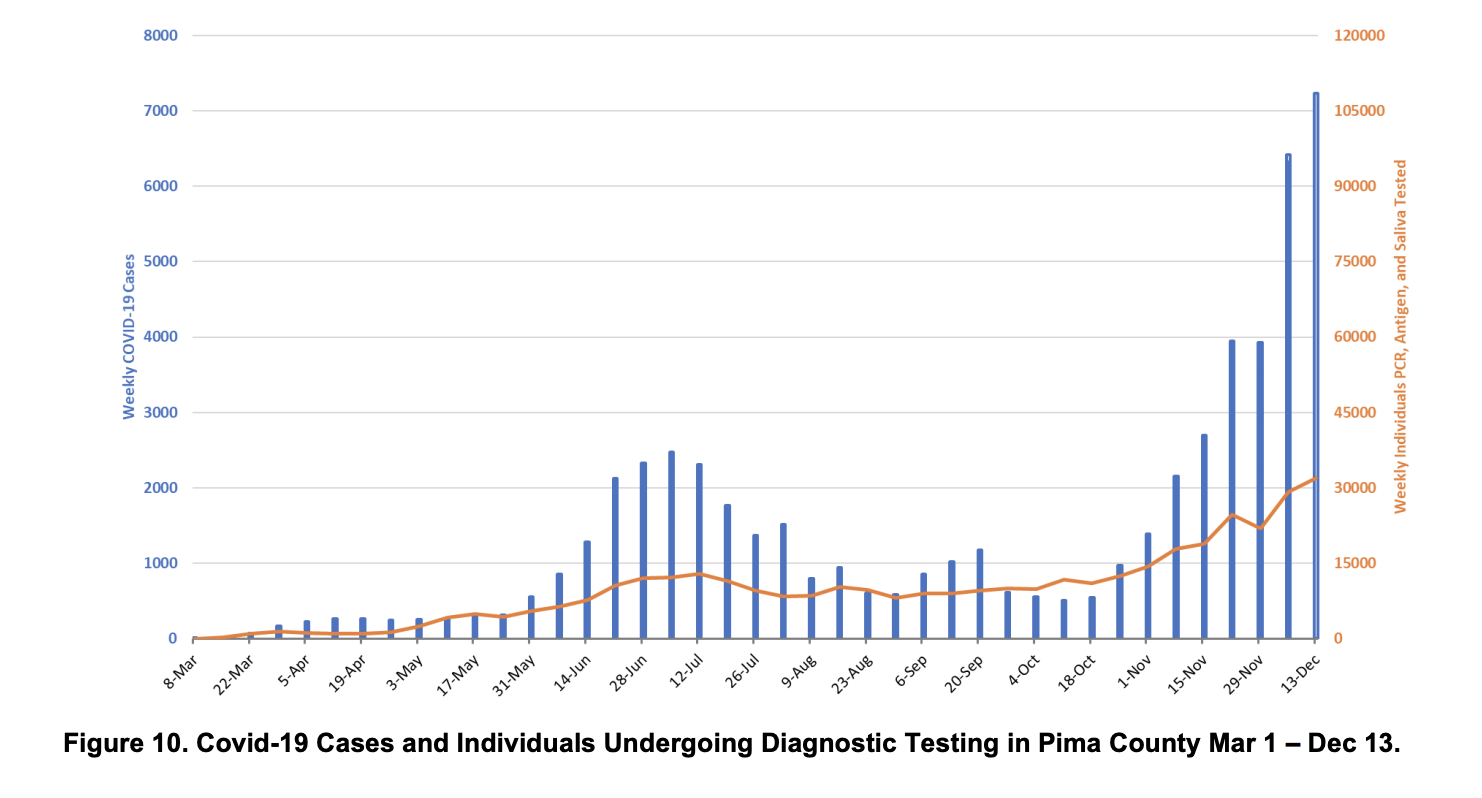
The week ending Dec. 13 saw at least 44,390 new COVID-19 cases in Arizona, a 10% increase from the week prior. This sets a record for weekly case counts in the state, according to Dr. Joe Gerald, a professor at the University of Arizona who creates weekly coronavirus epidemiology reports based on ADHS data.
However, Gerald says this number could be even higher than reported due to a significant lag time in processing COVID-19 tests, as nearly 10,000 patients were told their test could not be completed due to a laboratory backlog.
Coronavirus test positivity also set a record in the state at 26.3% last week, according to Gerald’s report.
Though the state has yet to surpass its deadliest week that ended July 19 with 617 COVID-19 deaths, Gerald estimates by Christmas, Arizona will see more than 500 deaths a week.
Pima County also set a record for cases in a single week with 7,237 coronavirus cases the week ending Dec. 13, a 14% increase from the week prior, Gerald’s report says.
Hospitals dangerously near capacity, cancel elective surgeries
As of Dec. 18, the UA professor’s report says 47% of the state’s general ward beds and 53% of its ICU beds were occupied by COVID-19 patients.
“We are now undergoing the great ‘displacement’ such that hospital services are now being rationed so that patients with severe Covid-19 illness are displacing others who have slightly less severe non-Covid medical conditions. As Covid-19 illness continues to increase, delaying others’ care will become ever more difficult,” Gerald’s said in the report. “Make no mistake, the Covid-19 crisis is now placing a greater share of Arizonans at-risk, not just those unfortunate enough to contract Covid-19.”
PHOENIX – Justice Ruth Bader Ginsburg was a towering figure in the fight against discrimination based on gender, and her death Sept. 18 was a blow to many women who reverently refer to her as the Notorious RBG. On the three-month anniversary of Ginsburg’s death, women across the state continue to remember her legacy.
Cronkite News asked six Arizona women to reflect on how their lives have been affected by Ginsburg, 87, who served 27 years on the Supreme Court and was a founding counsel for the American Civil Liberties Union’s Women’s Rights Project, which resulted in the high court’s 1971 decision that the Equal Protection Clause of the 14th Amendment applies to women.
Each of the women posed for a portrait wearing a jabot, which was popularized by Ginsburg. Text, photos and audio by Hope O’Brien:

Emily Parker
Emily Parker, 29, a law student at Arizona State University with a masters in women’s history, said Ginsburg’s achievements for equality loom large in American history and are especially meaningful for anyone who has worked in women’s rights.
During my time in graduate school, I was aware of who she was because her decisions have been very significant in terms of the trajectory of women’s rights and liberties in the United States.
The ability to complicate her as a person and understand her; not just as a litigator and this women’s rights advocate in her work as a justice, but just the fact that she, in her approach to law, is very complex. She is known in her later years as being a sort of activist justice, which is a phrase that tends to evoke the idea that someone is going out of their way to make changes. Her approach to her decisions was not, “OK, I’m on the Supreme Court, how would I like to remake the law?” Her approach to being on the Supreme Court was to take a precise and exacting approach to the case at bar.
She is unique in the sense that she appealed to people that were really drawn in by her record as a litigator on women’s rights and gender equality issues. But she also was very limited and exacting in the way that she made decisions, which is something kind of often associated with more conservative justices. So I think it’s the fact that she has always made a point in her role as a judge to not say, “OK, we’re going beyond the scope of the question at issue.”
What was your initial reaction to news of her death?
I started crying because this was so horrible and so tragic on so many levels, and after you get through the initial period of being sad about the fact that someone you idolize and looked up to has passed away, obviously concerns about the implications for that in terms of the composition of the court going forward set in. But it is one of those things that you just never forget.

Madison Alonzo
Having grown up in a culture where she says women feel less important than men Madison Alonzo, 20, a first-generation Mexican-American and Arizona State University student, said Ginsburg became an example of how women can work past discrimination.Coming from a culture that is heavily submissive of women, it was astonishing to see such a strong woman persevere through a male-dominated career. It was comforting to know that there was someone in an influential position in the world that was fighting for me and my rights as a woman.
I knew a lot, but quite frankly not enough. She was not heavily mentioned in the public education system, and most of the information I know is because I went out of my way to learn about her. Much like any public figure, after she passed I was brought to light on certain aspects of her life and career that I never knew about prior to her passing.
I loved learning about the endurance and strength she had as a wife, mother and diplomat. She never stopped working and caring for others’ well-being. She exemplifies what it means to be a good person.
I was with a group of friends trying to relieve some of our COVID-19 anxiety and depression when the news hit. When we read the news, we were all scared and heartbroken. I knew what her death would mean for the Supreme Court and for (the Trump) administration and I was scared thinking about what will happen to fundamental rights for minority groups, if a conservative nomination goes through.
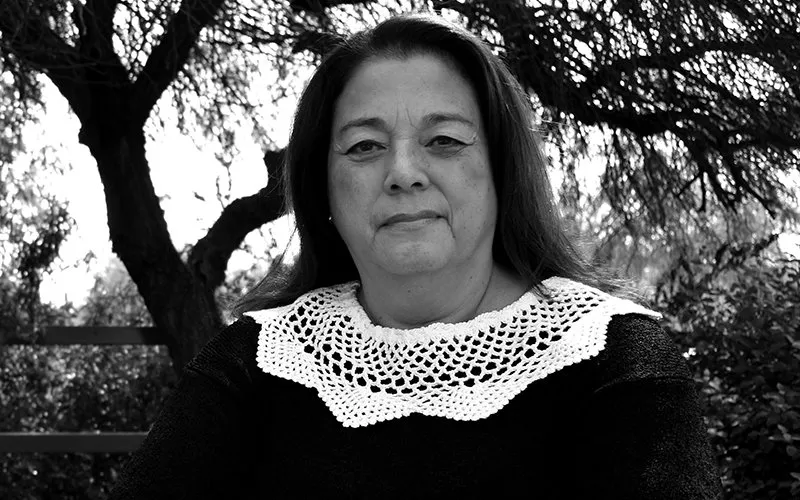
Susan B. Castner
Because she was involved in a case against sex discrimination in pay, business owner Susan B. Castner, 66, had a different perspective on the true impact of the work done by Ginsburg, whom she had looked up to for much of her youth.
The first time I heard about her, and you will laugh about this, was a case in 1976 when I had just graduated from college. And the case that drew my interest was somewhere in Oklahoma and it was about beer. It was a law that said that women could buy beer when they were 18, but men had to wait until they were 21, and as a college graduate that was really important to me at the time. And I didn’t even know at the time that Ruth Bader Ginsburg was going to grow into such an icon.
The first house that I ever bought was in 1978 and I bought it with my now-husband, but we bought the house as equal partners. And I didn’t know it at the time, but I couldn’t have gotten credit or bought a house if his name wasn’t on the mortgage documents. It is things like that that have changed everything that women take for granted now, and it was because of her.
I was being paid 30% less than my male predecessor, and because he was violating my civil rights in not paying me equally, in my mind I believed that I deserved an attorney. That is what I eventually made law on was the appointment of counsel as a plaintiff in a Title XII case. So now if you find yourself a victim of sex discrimination, you can site Castner v. Cablevision, and if you meet the full requirements you will have an attorney appointed to you. And I made law on that in the same courtroom that RBG did for the first time and we were both fighting sex discrimination.
I think the fact that if you were a female in the military you didn’t get an equal housing allowance was nuts, and if you look at a lot of laws that she worked on you scratch your head and go “What?”
And it’s that same thing, she looked at them through the lens of how it affected both sexes, and I think that is why she was such a brilliant attorney and justice. I think she knew in her heart of hearts that she wouldn’t make law if she knew it was bad for women, she had to show how it was bad for everybody.
I was sitting working on something on a deadline and my husband came in and said, “Ruth Bader Ginsburg just died.” And I put my hands in front of my face and just started screaming, I started howling, and he thought I had a stroke. He said I sounded like a wounded animal. And it wasn’t because of the Supreme Court, not because of this experience that we’re going through right now (the nomination and eventual confirmation of Amy Coney Barrett to the high court), but because she was so amazing.

Mary Zatezalo
Ginsburg played a key role in the life of Mary Zatezalo, 26, an instructor of communications at Gilbert Community College, a small business owner and real estate agent. She said Ginsburg influenced more than just who Zatezalo became, but also her ability as a woman to get to where she is now.
When I was growing up, I was fortunate enough to be raised by strong independent females, so it wasn’t uncommon to have conversations on things going on politically or just things going on in the news. She was a name in my household and I feel very fortunate for that.
To me, (author and activist) Mona Eltahawy talks about how one of the seven necessary sins for women is ambition, and I think that is what RBG demonstrated. She committed her whole life to something that not only was work, but was something that she loved. Being able to exist in the spaces that she did, and especially in regards to femininity in how you can still have a family, have an extremely successful marriage and still be successful in your career. And I think it was one of the first times that we saw a female take that lead role, especially in her family unit, and I think that was really special in what she did.
I think about it in terms of independence. Females were kept dependent in order to control, and as soon as just a little bit of wiggle room was given, look at the amazing things that women have achieved in the past hundred years because of women who were able to fight in a public space like her. And there are so many parts of my identity, my career and my existence that I really owe to her.
I think she will be one of those people where you remember where you were when she died. At first, my reaction was shock because I knew what was going to follow (the fight to replace Ginsburg on the court). So part of me was just distant from it, I didn’t want to talk about it, I didn’t want to explain anything or fight with anyone, and so I took a weekend to just sit with it because I knew what was to follow.
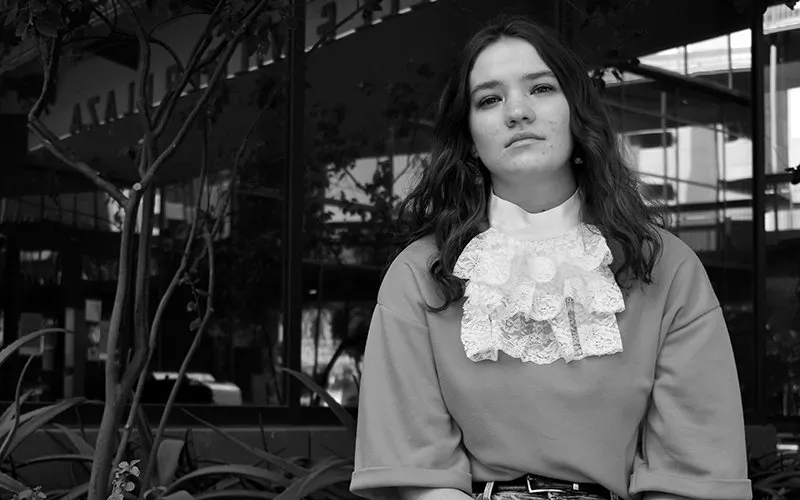
Nora Thompson
With an interest in politics from a young age, Nora Thompson, 21, saw Ruth Bader Ginsburg as a role model in her high school years. She’s now at Arizona State University seeking a career in public service and public policy.
I grew up in a very politically minded family. So, throughout my whole life, I always knew, “Oh yeah, there’s the Supreme Court,” but I think really it was high school. It was specifically this economics class that I took over the summer and I didn’t really learn anything but we talked about the Supreme Court. So, I wrote a paper on the Obergefeld v. Hodges case that legalized gay marriage, and I remember just looking into her more, and I loved her, she was my idol at that point in my life.
Seeing Ruth Bader Ginsburg as a lawyer was insane, and it was crazy what the men on the Supreme Court said to her about things that women should and shouldn’t be allowed to do. And she was arguing for women’s rights and for us to be able to do things like take out a mortgage without a husband signing off on it.
And she stood there and held her ground and said, “Actually, it’s ridiculous that we’re not allowed to and women shouldn’t be treated this way and should be treated equally to men.”
I always thought of her positions in the Supreme Court as a really comforting voice and just as a voice of reason. And though it wasn’t all the time, because I can’t sit here and say to myself that everything she has ever done has been amazing, I think that she was still this guiding light and voice of reason in a very chaotic time and very chaotic society right now.
It was always nice to be like, “Ruth Bader Ginsburg said this very eloquently and very reasonably.” And I think her ability to still be civil with the other people on the Supreme Court will be missed.
I hope that we can remember her as the strong woman that fought for equal rights and fought for equal protection. Right now, I think that her death is being overshadowed by whether a new Supreme Court justice should be allowed to be appointed and just everything that is happening in the political world right now.
And I would also want people to remember her as a Jewish woman because there are a lot of things going around about her being up in heaven as an angel, and while it’s all very sweet, it isn’t necessarily the idea of a Jewish afterlife. And so I would want us to remember that she was this big, strong, amazing woman who was also Jewish.
I was driving home and so I had stopped to check my phone at a particularly long red light and my mother had texted me “Did you hear about RBG?” And I knew that it couldn’t be good, and when I got the news alert I felt this sadness and emptiness that I feel when a family member passes away. I was left extremely nervous as to what would happen next with the state of the world.
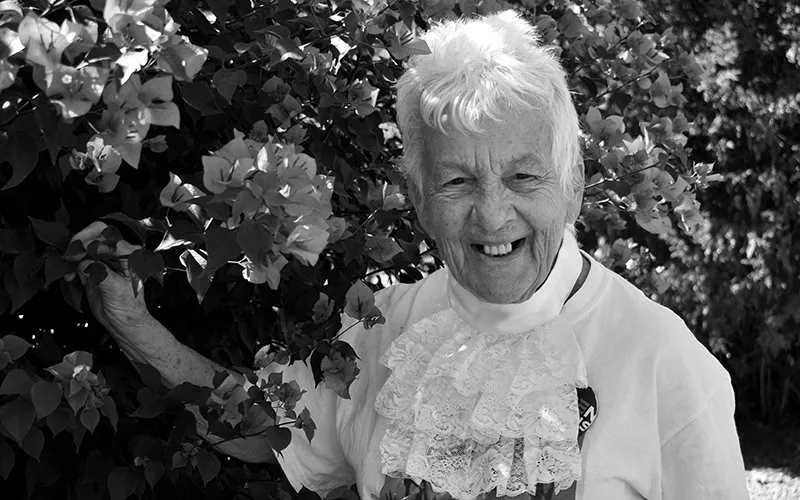
Nan Inskeep
Former registered nurse and women’s health educator Nan Inskeep, 89, watched when Ruth Bader Ginsburg was confirmed and described her confirmation as one that provided relief knowing that women would have a louder voice in the government.
When was the first time you heard the name Ruth Bader Ginsburg?
I am a very political person, and when I was a little girl, my grandfather was Republican and our family was Democrat and so I would always bet him 10 cents on who would win the elections. And so I followed politics, which included the Supreme Court, so I watched all of those votes. Then when our wonderful Ruth Bader came, I knew I could rest easy. I cannot really pinpoint when I first heard of her, but being a woman and watching what she did in the Supreme Court, I knew she was vital to it.
What do you think made her so different?
She was so fair. And interesting about her life is that her best friend on the court was (Justice Antonin) Scalia and he was an arch-conservative. They had the opposite swing on every position they held and yet they maintained a friendship through it all, and I think that says something about her, too.
She was so smart and then she used that to further justice, rights, and she was the kind of Supreme Court Justice that every justice should be.
It’s going to be hard. And they are going to grow up without Ruth Bader Ginsburg, they certainly should know about her because she will carry that reputation with her forever and ever. But it’s a matter of what is fair, and as I said she was so fair, they need to look at what is right for everybody and not what is simply right for you.
I want them to remember that she never gave up. And to feel the way you do and to believe in what you are feeling and to stand up for it no matter what. It’s a gift, and not everybody can do it, and hopefully with somebody like her as a mentor, because even though she won’t be here, her teachings, writings and reputation will always be a part of the Supreme Court.
Just horror. I remember someone calling to tell me and thinking, “She finally can’t do it anymore.” We watched her go through every single one of those cancers and she could always do it. We watched her go through Harvard for her husband. Oh, my goodness, that woman was exemplary! And yet fair. It was a terrible day for us. But we always know we had a champion.

With more than 7,600 new cases reported today, the number of Arizona’s confirmed novel coronavirus cases jumped by nearly 19,000 over the weekend and now stands higher than 461,000 as of Monday, Dec. 21, according to the Arizona Department of Health Services.
Pima County, which reported 1,244 new cases today, has seen 60,360 of the state’s 461,345 confirmed cases.
A total of 7,972 Arizonans have died after contracting COVID-19, including 905 deaths in Pima County, according to the Dec. 21 report.
The number of hospitalized COVID cases statewide continues to soar as the virus has begun to spread more rapidly, putting stress on Arizona’s hospitals and surpassing July peaks. ADHS reported that as of Dec. 20, 3,925 COVID patients were hospitalized in the state, slightly lower than the new record of 4,014 set on Dec. 18. The previous peak of 3,517 hospitalized COVID patients was set on July 13; that number hit a subsequent low of 468 on Sept. 27.
A total of 1,795 people visited emergency rooms on Dec. 20 with COVID symptoms. That number, which hit a new record of 2,166 earlier this month, had previously peaked at 2,008 on July 7; it hit a subsequent low of 653 on Sept. 28.
A total of 904 COVID-19 patients were in intensive care unit beds on Dec. 20. The number of COVID patients in ICUs peaked at 970 on July 13 and hit a subsequent low of 114 on Sept. 22.
TMC cancels elective surgeries
Tucson Medical Center has canceled elective surgeries through Jan. 4.
A letter from TMC COO Mimi Coomler and CMO Dr. Amy Beiter states that TMC is too crowded with COVID patients to move forward with elective surgeries.
“We have reached the point in the pandemic where the number of COVID patients needing care is exceeding available resources on a daily basis,” they wrote.

