

Thursday, December 24, 2020
WASHINGTON – The federal government may not have a stellar track record when it comes to keeping promises with Native Americans, but tribal leaders in Arizona said they think President-elect Joe Biden could be the exception.
Their hopes were reinforced last week when Biden nominated a Native woman, Rep. Deb Haaland, D-N.M., to be secretary of Interior. If approved, she would be the first Native American Cabinet secretary.
Reaction from Tohono O’odham Nation Chairman Ned Norris Jr., who welcomed “the historic nomination of Congresswoman Haaland,” was typical of tribal responses.
“She will bring a unique and long overdue perspective to the department, as well as a fierce determination to protect our environment and the rights of indigenous people,” Norris said in a statement Friday. “The Nation urges the Senate to quickly hold hearings and approve her nomination so she can get to work right away.”
Native leaders are optimistic because of Biden’s “track record with Indian Country,” from the integral part he played in the Obama administration, to his work with his wife, Jill, to help open the first cancer clinic on the Navajo Nation, to his campaign pledge to “strengthen the nation-to-nation relationship” with tribes.
“I was a tribal leader during the … Obama-Biden administration and we had the key to the White House, we had a seat at the table,” said Navajo Nation President Jonathan Nez. “Based on that, I see that same approach being done this time.”
Whatever a Biden administration delivers, leaders said it “will be very, very different than what we’ve expected of the current administration.”
Navajo environmental advocate Carol Davis echoed Nez, saying that she’s optimistic about a Biden administration but that it will be starting in a hole left by the Trump administration.
“I do have confidence in the Biden administration, I just don’t think it will be easy when he’ll have the added challenges of repairing the damages left by this administration,” said Davis, noting that Biden may also have to deal with a Senate still in Republican hands.
“It will take 500 days to accomplish what previous incoming presidents accomplished in 100 days,” said Davis, executive director of Diné C.A.R.E. (Citizens Against Ruining our Environment).
Gila River Indian Community Gov. Stephen Roe Lewis said that while tribal leaders try to work with every administration, he looks forward to partnering with an administration where tribal consultation is “not a check-the-box exercise.”
He and other leaders and advocates cited a number of Biden-Harris policy priorities for tribal nations they said were in step with their own priorities. But their number one reason for hope was the first priority on Biden’s platform: “strengthen the nation-to-nation relationship.”
“In a nutshell … that’s what I’m excited about,” Lewis said. “What I look forward to is a true partner in the federal government relationship – that government-to-government relationship – from the White House all the way to Indian Country.”
The support for a Biden administration is not surprising, considering that Native Americans have long been a reliable Democratic voting bloc.
“Voters on the Tohono O’odham Nation and other Arizona tribes made their voices heard loud and clear in the 2020 presidential election,” Norris said in a statement. “We look forward to a cooperative and respectful relationship with the Biden administration.”
Nez said he’s “seen a glimpse of how they keep their promises.” Lewis echoed the sentiment.
“What I expect from a Biden-Harris administration is to take those formats that were developed during the Obama administration … and build on them and improve upon them and strengthen them,” Lewis said.
Along with Biden’s work on the Violence Against Women Act – which includes provisions for tribes to prosecute non-Native domestic violence offenders – Lewis pointed to Vice President-elect Kamala Harris’ experience enforcing the Indian Child Welfare Act as attorney general in California, which has a large Native American population.
Biden has already pledged to reinstate the White House Tribal Nations Conference – a convening of tribal and federal leaders started by President Barack Obama that has not been held since President Donald Trump took office.
Davis welcomed that step, but said it will take more than one meeting a year to understand tribal needs.
“I think they really do need to build a relationship, but not just with the tribal leaders,” she said, adding that tribal consent should extend to the community level and include non-governmental organizations.
“We want BLM (the Bureau of Land Management) to come out into the communities and hold a public hearing,” she said, a type of outreach that “was very lacking in the last four years.”
That’s why she was so encouraged by the nomination of Haaland, who she thinks will be an “ideal” Interior secretary.
“Protecting our natural resources and public lands are responsibilities that are ingrained into Indigenous peoples. I believe Rep. Haaland has an inherent understanding of the duties and responsibilities the position requires, and because of this, she will excel,” Davis said.
While they like what they have seen so far, tribal leaders said there is much more they hope to see from a Biden administration, with health care at the top of the list.
Lewis said immediate COVID-19 relief is “mission critical” for the U.S., but particularly for tribal areas that have been hit hard by the pandemic. But he said tribal efforts have been thwarted by a lack of federal leadership on the issue.
COVID-19 is not the only health care problem in Indian Country, and officials welcomed Biden’s acknowledgment that “the Indian Health Service (IHS) has been underfunded for decades” and “consistently faces the uncertainty of the federal budget process.” He has pledged to increase and stabilize IHS funding.
As with COVID-19, Nez said infrastructure is both a tribal and a national issue.
“For us on Navajo, the focus is on infrastructure. Water, electricity, broadband and, of course, better roads, repairing bridges,” he said. “And I think that’s the commonality throughout this country and I think that’s where we can start. We can start there to unite this country and move forward.”
Davis, who said the extraction of natural resources has made “the Navajo Nation … a sacrifice zone,” agreed with Nez that infrastructure should be a priority. While she thought the Biden-Harris platform could have been more detailed, she liked that it provided for small business development incentives, technical assistance for tribes, communication infrastructure development and a “just and equitable transition” toward clean energy.
But “the first thing we would like to see is reversal of the executive orders … that gutted parts of the Environmental Protection Act,” Davis said. She noted that this is something Biden could do without congressional approval.
Norris points to Trump administration orders that allowed the Department of Homeland Security to “unilaterally waive environmental and cultural protection laws when building border barriers,” specifically the border wall slicing right through Tohono O’odham lands.
“We must also have an immediate end to construction of President Trump’s failed border wall, which has desecrated our sacred sites,” Norris’ statement said. “We will work with the Biden administration and Congress on action to ensure this can never happen again.”
Tribal leaders said they hope Biden taps “the best and brightest, the most qualified Native Americans” for high-level jobs for his administration. That would be a start in building their trust in the federal government, which is notoriously low: 96% of Native Americans distrust the federal government, according to a recent survey.
Nez called the Haaland nomination a step in the right direction, thanking the “Biden-Harris team for making a statement and keeping their word to place Native Americans in high-level Cabinet positions.” But that doesn’t mean a Democratic administration should take Native Americans for granted, he said.
“We just got to remind those that got elected that we did assist them in this way (voting) and Native Americans in the past have contributed great things to this country,” Nez said.
Lewis said Biden’s election has reenergized his community, but the excitement comes with high expectations.
“It will take time,” Lewis said of Biden’s ability to follow through on his promises.
Nez said just having Biden and Harris in the White House is a start.
“I think this country needs inspirational leaders that will heal this country and move forward and to unite all peoples,” he said. “We’re looking forward to that.”
Even Davis – with her more cautious outlook – said of the Biden-Harris administration, “I have faith that they will try.”
Arizona in Focus is a podcast from Cronkite News, the news division of Arizona PBS. This season we are focusing on science and technology stories that explore everything from driverless cars to innovating a vaccine during the pandemic.
PHOENIX – Paulina Ochoa never had a problem sleeping until the COVID-19 pandemic began in March and life dealt her a series of serious setbacks. She lost both her jobs, her car was stolen and her aunt died – and that’s when the nightmares started. The dreams got so bad they sometimes left her paralyzed in bed.
Ochoa isn’t alone. A sleep study conducted by University of Arizona researchers monitored the role of insomnia during the pandemic, and more than 50% of 1,000 participants reported experiencing insomnia.
Listen to the full podcast here.
Ochoa, a sustainability student at Arizona State University, tried to wear herself out by staying up until 7 a.m. so she’d be forced to finally fall asleep.
Insomnia eventually made her imagine hearing voices or see unsettling shadows.
“I was just so scared, you know? I had two occasions where the ‘voices’ thing started happening,” Ochoa said. “I just didn’t even want to close my eyes.”
Michael Grandner, who runs the Sleep and Health Research Program in the Unversity of Arizona’s Department of Psychiatry, said he has seen a great number of people with sleep problems this year.
“With everything going on during the day, they have a real hard time disconnecting,” he said.
Grandner, who also sees patients at the Behavioral Sleep Medicine Clinic at Banner Health, said insomnia occurs on a spectrum.
“So there’s insomnia, I would say with a lowercase ‘i’, which is just sort of the experience of being unable to sleep sometimes,” he said, adding that many people deal with insomnia at some point in their life.
“Then there’s the line into what we call insomnia disorder, which is actually a diagnosable medical condition that usually does not go away on its own once you meet criteria for it.”
Grandner said if it takes more than 30 minutes to fall asleep for at least three nights a week, and if the pattern has been ongoing for months, you may have insomnia.
Lauri Leadley, president of Valley Sleep Center, a company with several locations in metro Phoenix, said stress is a common cause of insomnia.
“Insomnia is literally the inability to escape your thoughts. And during stressful times, our bodies create cortisol … our ‘awake’ hormone,” Leadley said.
Unable to escape her stressful and frightening thoughts, Ochoa tried to force herself to exhaustion. But even when she finally fell asleep, she said, nightmares would jolt her awake.
Nightmares can do double damage, said Denise Rodriguez, a clinical psychologist who specializes in behavioral sleep medicine to treat insomnia at Banner Health.
“Typically, for a lot of folks who do struggle with nightmare disorders, it’s not just that they’re having a nightmare, but that the nightmare prevents them from going back to sleep,” Rodriguez said.
After losing two jobs and switching to online learning at ASU, Ochoa’s daily routine became less active. Rodriguez said that could cause an increase in dreaming.
“Some of the theories behind why we’re dreaming more is that we’re under-stimulated during our day … and so our brain is trying to give us that extra stimulation at night,” Rodriguez said.
Grandner said inactivity during the day is a common denominator in people with insomnia.
“Sleep difficulties are probably the most reliable predictor of poor mental health,” he said, “and especially in terms of depression and anxiety.”
Poor sleep and suicide rates are directly correlated, Grandner said.
“There have been over 50 studies now that when you pool them together, people who have significant sleep problems, whether it’s nightmares or insomnia, are about three times as likely to be thinking about suicide,” he said.
Ochoa said she was already experiencing stress and anxiety in daily life, which insomnia only made worse. Then, in June, Ochoa tested positive for COVID-19.
“So I was still having trouble sleeping and now I had the added factor of like, (I) can’t breathe right,” she said.
Insomnia can significantly increase the chances of getting sick, Grandner said.
“If you want to have a robust immune system,” he said, “it’s important to sleep. There’s data that shows that people who aren’t getting enough sleep, they’re more likely to get sick, especially for viral infections.”
To get better sleep, Grander suggests reducing screen time, getting sunlight exposure shortly after waking up and exercising during the day rather than at night.
Sleep is programmable, he said, and it’s important to train the brain that the bed is meant for sleep, not for rehashing the day or planning the next.
Before getting in bed, he said, “Check your schedule, process all the stuff that you need to process so that by the time you get into bed, you’ve already done all that work.”
Ochoa took a different approach.
“I actually kind of got it solved. I actually had to go ahead and resolve to getting a blessing from this church,” she said. Her visit to the church was just over two months ago.
The blessing consisted of two missionaries applying oil to her forehead, placing their hands on her head and praying.
“All of a sudden, I could sleep,” she said. “And I think maybe it was just like a mental thing. You know, maybe it was just my fears and anxiety.”
So far, Ochoa said, she’s having fewer nightmares and sleeping much better.
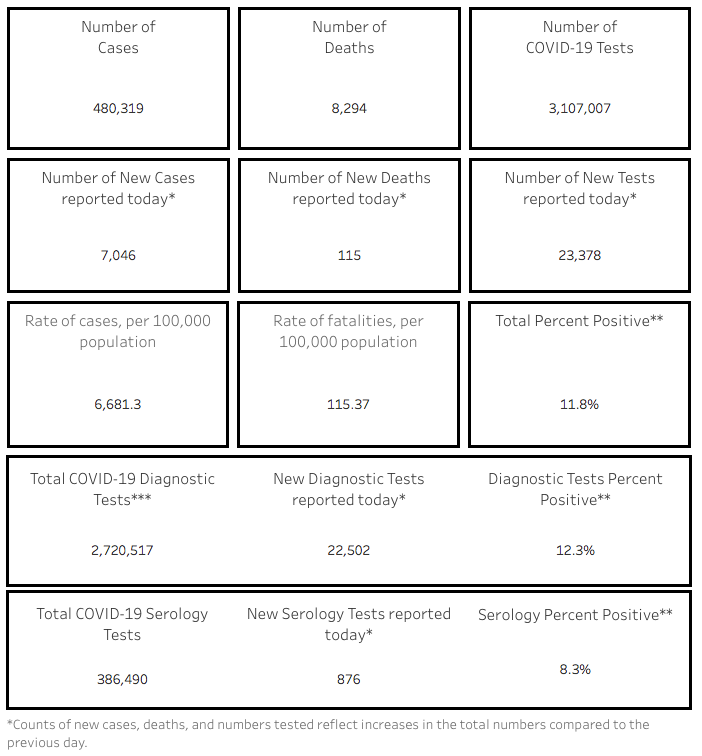
With more than 7,000 new cases reported today, the number of Arizona’s confirmed novel coronavirus cases now stands higher than 480,000 as of Thursday, Dec. 24, according to the Arizona Department of Health Services.

Pima County, which reported 1,313 new cases today, has seen 63,472 of the state’s 480,319 confirmed cases.
A total of 8,294 Arizonans have died after contracting COVID-19, including 962 deaths in Pima County, according to the Dec. 24 report.
The number of hospitalized COVID cases statewide continues to soar as the virus has begun to spread more rapidly, putting stress on Arizona’s hospitals and surpassing July peaks. ADHS reported that as of Dec. 23, a record 4,221 COVID patients were hospitalized in the state. The summer peak of 3,517 hospitalized COVID patients was set on July 13; that number hit a subsequent low of 468 on Sept. 27.
A total of 1,965 people visited emergency rooms on Dec. 23 with COVID symptoms. That number, which hit a new record of 2,166 earlier this month, had previously peaked at 2,008 on July 7; it hit a subsequent low of 653 on Sept. 28.
A total of 965 COVID-19 patients were in intensive care unit beds on Dec. 23. That’s a slight dip from the 972 COVID patients who were in ICU yesterday, breaking the previous high of 970 on July 13. The subsequent low was 114 on Sept. 22.
Healthcare leaders continue to plead with public to stay home as much as possible as healthcare system is overloaded
Arizona’s largest hospital system continues to experience record occupancy levels and overflowing morgues, resulting in bodies being stored in refrigerated trucks.
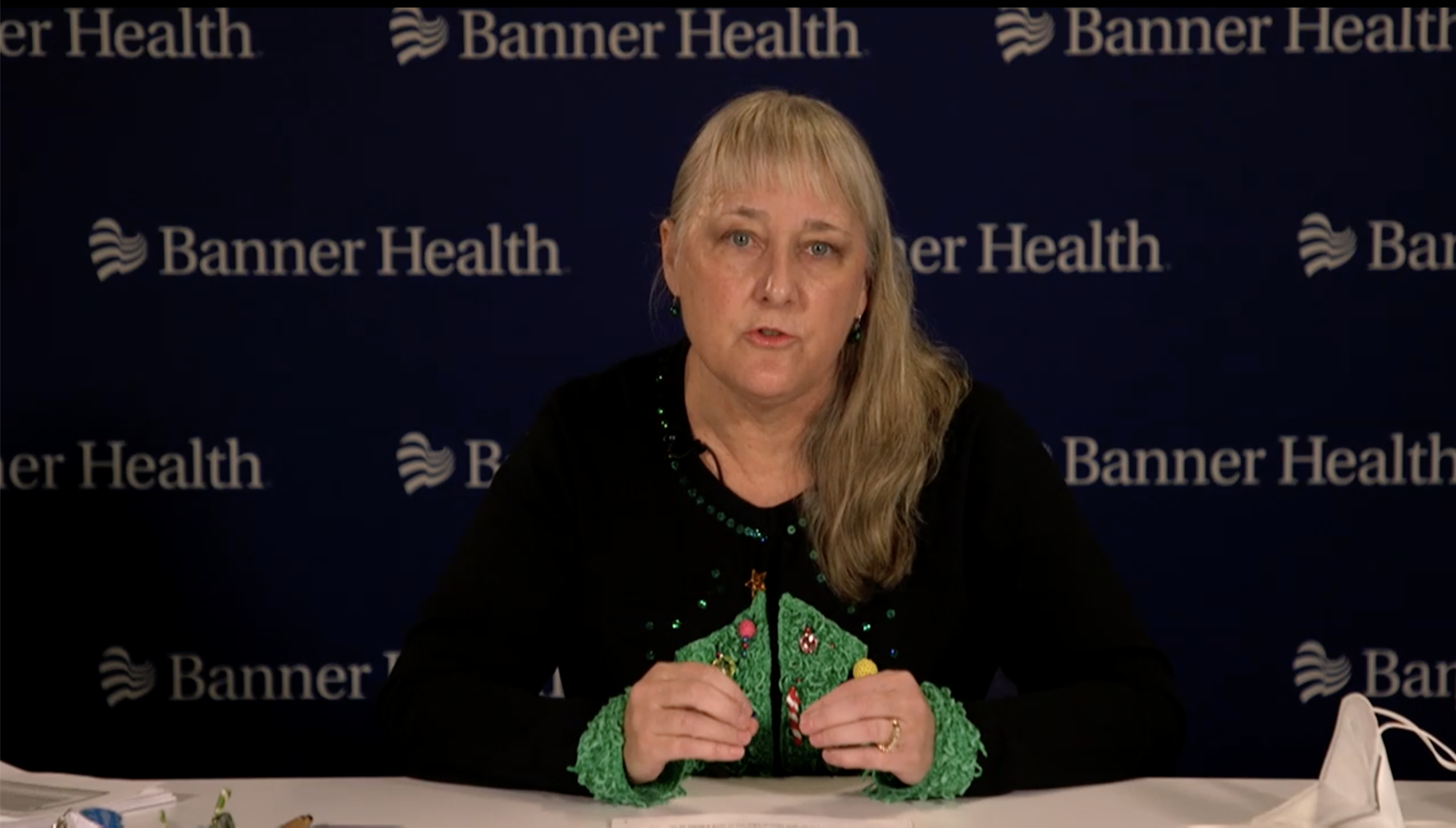
Banner Health’s Chief Clinical Officer Dr. Marjorie Bessel shared in a press conference yesterday that 58% of the hospitals’ adult ICU beds and 74% of its ventilators are being used by COVID-19 patients.
Compared to a pandemic-free winter season, Banner hospitals are seeing 160% of their peak winter occupancy.
As more patients die from COVID-19, Bessel said Banner hospitals are seeing two to three times more bodies than they typically store in their morgues, causing some hospitals to place bodies in refrigerated trucks.
According to Bessel, nearly half of their deceased patients died from coronavirus.
Bessel said Banner expects the peak of the current COVID-19 surge to hit in early to mid-January.
“The biggest concerns as we go into that significant surge and experience that post-holidays in January will be continued strain on our health care system,” Bessel said. “We've had to take steps to reduce or stop elective surgeries and procedures. These are patients that need these procedures. In addition to that, as we have significant more surge forecasted to happen in January, it will cause additional strain on our staffing.”
Bessel’s warnings come the same week that the Pima County Health Department warned that the healthcare system is in danger of becoming overwhelmed within the next two to three weeks if the spread of COVID-19 continues at its current pace.
According to County Health Director Dr. Theresa Cullen, the county is on track to see more coronavirus infections in December than all previous months of the pandemic combined.
WASHINGTON – President Donald Trump entered office pledging to blow up trade deals, and he later imposed tariffs on trading partners around the world – but the biggest threat to Arizona-Mexico trade over the past four years appears to have been COVID-19.
Despite four years of tumult, trade between Arizona and Mexico has been remarkably stable since Trump took office, with a dip this year that experts blame on the pandemic.
That leaves President-elect Joe Biden taking over with a new trade deal in hand, and with a break to COVID-19 on the horizon, giving Arizona Chamber of Commerce President Glenn Hamer hopes for a “renaissance in our relationship with Mexico and Canada.”
That would be good news for Arizona businesses, which export “four times as much stuff to Mexico as really any other country,” Hamer said.
Total trade between Arizona and Mexico was between $15 billion and $16 billion in 2016 and 2017 before rising to almost $16.7 billion in 2018 and $17.5 billion in 2019. Arizona exports to Mexico totaled almost $8.3 billion in 2016, dipping to about $7.6 billion in 2017 and 2018 before climbing back to almost $8.2 billion last year.
Wednesday, December 23, 2020
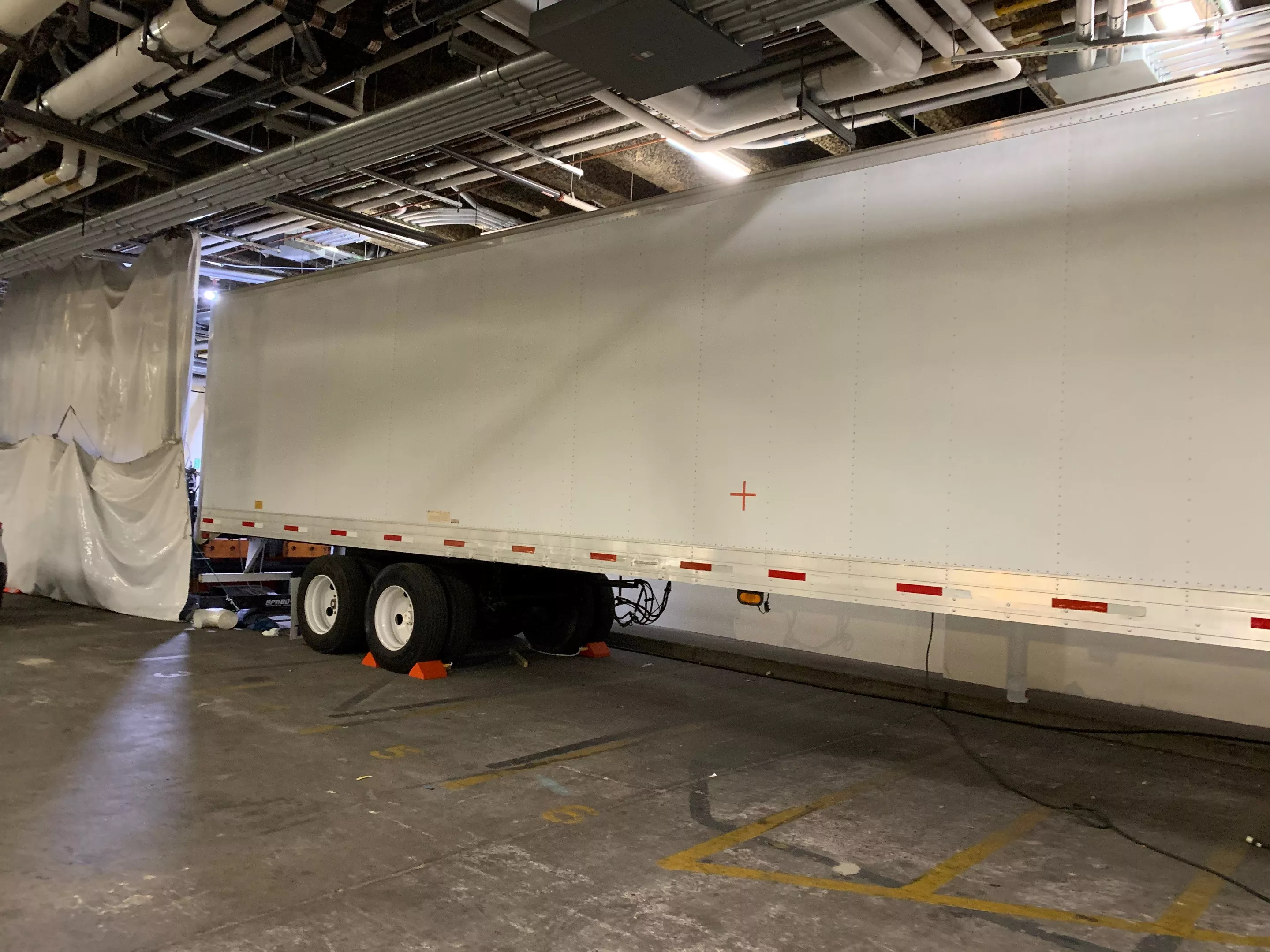
Arizona’s largest hospital system continues to experience record occupancy levels and overflowing morgues, resulting in bodies being stored in refrigerated trucks.
Banner Health’s Chief Clinical Officer Dr. Marjorie Bessel shared in a press conference this morning that 58% of the hospitals’ adult ICU beds and 74% of its ventilators are being used by COVID-19 patients.
Compared to a pandemic-free winter season, Banner hospitals are seeing 160% of their peak winter occupancy.
As more patients die from COVID-19, Bessel said Banner hospitals are seeing two to three times more bodies than they typically store in their morgues, causing some hospitals to place bodies in refrigerated trucks.
According to Bessel, nearly half of their deceased patients died from coronavirus.
Dr. Joe Gerald, a professor at the University of Arizona who creates weekly coronavirus epidemiology reports based on ADHS data, estimates by Christmas, Arizona will see more than 500 deaths a week.
PHOENIX – Hot summers are nothing new in Arizona, but humans aren’t the only ones who have suffered from record-breaking heat: queen palm trees across the Valley have been burning up.
2020 was the hottest year on record in Phoenix, with 48 days of excessive heat warnings and a heat peak in July and August, according to the National Weather Service. Although palm trees have thrived in the arid Southwest for generations, some species are more resilient than others.
“The queen palm just doesn’t take the heat nearly as well as some of the other varieties,” said Bill Jones, an operations manager at Arcadia Color Garden Nursery in east Phoenix.
Queen palms are synonymous with warm regions and are popular landscape trees because of their long, glossy fronds. But the sustained heat and arid conditions of the Sonoran Desert are a challenge for the South American natives.
Signs of heat damaged palms include wilted, weeping leaves with burned ends and brown marks along drying edges, Jones said. When all leaves are brown and the tree’s trunk is oozing, the tree’s in trouble, he said. Palm trees need a deep soaking of water twice a week to help recover.
Although more watering would seem to be the answer, that’s not always the case, said Debrah Thirkhill, program coordinator for Arizona State University’s Arboretum Services.
“We get a salt buildup in the soil because we’re high in calcium,” Thirkhill said. “Our water is hard water and that, when it comes through this long hot summer, there’s also a salt burn on the roots. … It’s just too much trauma for the plants at the end of a long hot summer.”
With more than 6,058 new cases reported today, the number of Arizona’s confirmed novel coronavirus cases now stands higher than 473,000 as of Wednesday, Dec. 23, according to the Arizona Department of Health Services. Pima County, which reported 815 new cases today, has seen 62,159 of the state’s 473,273 confirmed cases.
A total of 54 Arizonans have died after contracting COVID-19, including 946 deaths in Pima County, according to the Dec. 23 report.
The number of hospitalized COVID cases statewide continues to soar as the virus has begun to spread more rapidly, putting stress on Arizona’s hospitals and surpassing July peaks. ADHS reported that as of Dec. 22, 3,899 COVID patients were hospitalized in the state. The summer peak of 3,517 hospitalized COVID patients was set on July 13; that number hit a subsequent low of 468 on Sept. 27.
A total of 1,961 people visited emergency rooms on Dec. 22 with COVID symptoms. That number, which hit a new record of 2,166 earlier this month, had previously peaked at 2,008 on July 7; it hit a subsequent low of 653 on Sept. 28.
A total of 972 COVID-19 patients were in intensive care unit beds on Dec. 22, breaking the previous high of 970 on July 13. The low was 114 on Sept. 22.
WASHINGTON – After years of steady declines, enrollment in Affordable Care Act coverage ticked up in Arizona and held steady in the U.S. this year in what one advocate called a “pleasant surprise” after a challenging year.
The six-week open enrollment period that ended last Tuesday showed enrollment going from 153,020 in Arizona for coverage plans for this year to 154,265 people who signed up for coverage in 2021, according to preliminary numbers released Friday by the Centers for Medicare and Medicaid Services.
Nationally, the number of people signing up for coverage in the federal exchange dipped from 8.3 million last year to 8.2 million this year – but federal officials note that New Jersey and Pennsylvania shifted from the federal marketplace to state-based marketplaces this year. That removed 578,251 people from those states who would otherwise have been counted on the federal rolls.
CMS Administrator Seema Verma said in a statement Friday that the Trump administration’s “focus on delivering more choices along with a smooth and streamlined consumer experience continues to drive strong enrollment.”
“We’ve opened more pathways to enroll by taking advantage of the private sector and people are clearly finding the coverage they need at this critical time,” she said.
Morgan Tucker, state director for Protect Our Care Arizona, agreed that more people took advantage of coverage this year – but she said it was no thanks to the Trump administration, which she accused of trying to “sabotage” the Obama-era health insurance program.
“Despite anything they may have heard over the last four years, it is safe, reliable health insurance that they can trust,” Tucker said of coverage available under the “Obamacare” program.
The ACA has also been under assault by a coalition of states, including Arizona, that argued before the Supreme Court this fall that the plan is unconstitutional. A ruling in that case is not expected for months, but Tucker said it cast a shadow over this year’s open enrollment.

