Tuesday, December 29, 2020

Monday, December 28, 2020
WASHINGTON – After years of steadily slashing the number of refugees it will accept, the U.S. can expect to see an increase under the incoming Biden administration.
An eight-fold increase and then some.
President-elect Joe Biden has said that when he enters office next month, he plans to raise the number of refugees who can be admitted to the U.S. to 125,000 from the current cap of 15,000.
The current number was the most recent in an annual series of reductions by President Donald Trump, who inherited a refugee cap of 85,000 from President Barack Obama. Trump has since cut the number steadily, to 50,000 in 2017, then 45,000, then 30,000, then 18,000 for 2020 and, finally, 15,000 for next year.
Refugee groups in Arizona have compared the Trump administration’s cuts to the U.S. “closing its doors during the Holocaust.” The reduction comes despite what the United Nations High Commissioner for Refugees calls the largest international refugee crisis since the end of World War II, with almost 80 million people, or about 1% of the world’s population, forcibly displaced.
Other critics said the move harmed the country’s reputation as a world leader, for failing to lead by example.
But defenders of the new refugee ceiling – the lowest since the Refugee Act of 1980 – said it will protect American jobs during the recession and limit the abuse of the policy by those who are not in humanitarian need.
PHOENIX – A team of researchers at Petrified Forest National Park east of Holbrook have discovered fossilized remains of a new species of prehistoric reptile. The 220-million-year old burrowing reptile is a drepanosaur, an ancient reptile that had a claw on its tail and a birdlike beak.
Researchers, who named the species Skybalonyx skapter, announced the discovery Oct. 8.
Originally, drepanosaurs were thought to have lived in the trees that grew lush in prehistoric Arizona, but Bill Parker, a paleontologist with Petrified Forest National Park, said Skybalonyx skapter suggests something else.
“The new one, we think, is actually what they call fossorial, so it actually dug in the ground and burrowed,” Parker said. Researchers suspect the claw on the tail, as well as elongated claws on the reptile’s second fingers, helped it dig for bugs to eat.
Skybalonyx was discovered by a group of summer interns from Arizona State University, Virginia Tech, the University of Washington and other colleges who teamed with park researchers to scour an area of the park known as Thunderstorm Ridge.
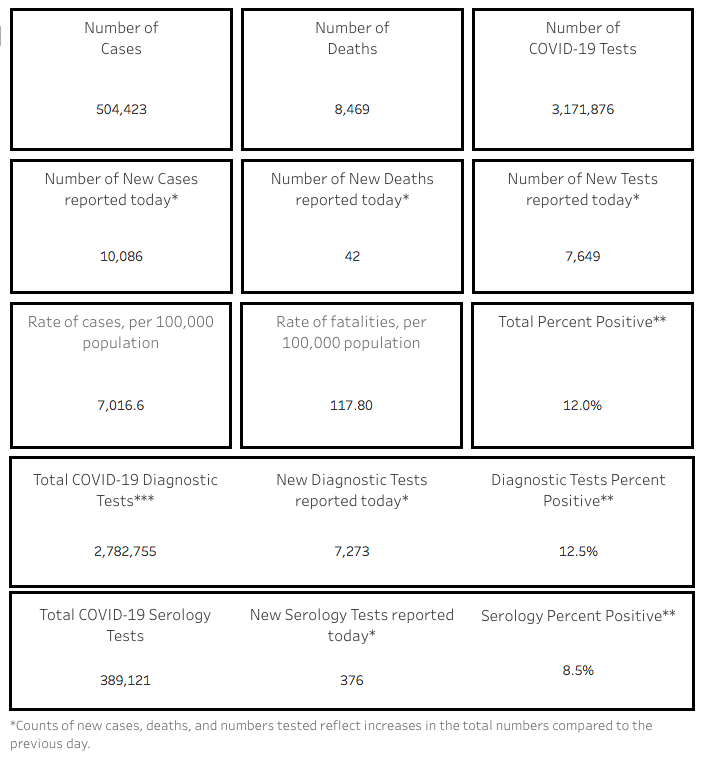
With more than 10,000 new cases reported today, the number of Arizona’s confirmed novel coronavirus cases topped a half-million as of Monday, Dec. 28, according to the Arizona Department of Health Services.

Pima County, which reported 1,313 new cases today, has seen 67,360 of the state’s 504,423 confirmed cases.
A total of 8,469 Arizonans have died after contracting COVID-19, including 983 deaths in Pima County, according to the Dec. 28 report.
The number of hospitalized COVID cases statewide continues to soar as the virus has begun to spread more rapidly, putting stress on Arizona’s hospitals and surpassing July peaks. ADHS reported that as of Dec. 27, a record 4,390 COVID patients were hospitalized in the state. The summer peak of 3,517 hospitalized COVID patients was set on July 13; that number hit a subsequent low of 468 on Sept. 27.
A total of 1,877 people visited emergency rooms on Dec. 27 with COVID symptoms. That number, which hit a new record of 2,166 earlier this month, had previously peaked at 2,008 on July 7; it hit a subsequent low of 653 on Sept. 28.

A total of 1,007 COVID-19 patients were in intensive care unit beds on Dec. 27, breaking the 1,000 threshold for the first time. The summer’s record number of patients was 970, set on July 13. The subsequent low was 114 on Sept. 22.
Healthcare leaders continue to plead with public to stay home as much as possible as healthcare system is overloaded
Arizona’s largest hospital system continues to experience record occupancy levels and overflowing morgues, resulting in bodies being stored in refrigerated trucks.
Banner Health’s Chief Clinical Officer Dr. Marjorie Bessel shared in a press conference last week that 58% of the hospitals’ adult ICU beds and 74% of its ventilators are being used by COVID-19 patients.
Compared to a pandemic-free winter season, Banner hospitals are seeing 160% of their peak winter occupancy.
As more patients die from COVID-19, Bessel said Banner hospitals are seeing two to three times more bodies than they typically store in their morgues, causing some hospitals to place bodies in refrigerated trucks.
According to Bessel, nearly half of their deceased patients died from coronavirus.
Bessel said Banner expects the peak of the current COVID-19 surge to hit in early to mid-January.
“The biggest concerns as we go into that significant surge and experience that post-holidays in January will be continued strain on our health care system,” Bessel said. “We've had to take steps to reduce or stop elective surgeries and procedures. These are patients that need these procedures. In addition to that, as we have significant more surge forecasted to happen in January, it will cause additional strain on our staffing.”
WASHINGTON – For four years, the Trump administration took steps to boost uranium mining for what it called national security reasons, a move environmentalists saw as an attempt to open the door to mining near the Grand Canyon.
President-elect Joe Biden may be ready to shut that door for good.
“I can’t believe I have to say this, but we can’t let Donald Trump open up the Grand Canyon for uranium mining,” Biden tweeted in August, after a Trump administration task force on nuclear fuel proposed relaxing restrictions on mining on federal lands.
In a statement posted at the same time, Biden called the Grand Canyon an “irreplaceable jewel” and blasted the Trump administration’s mining plan, saying he would focus instead on developing clean energy. While Biden did not lay out a specific mining plan, his statement was still enough for Kevin Dahl.
“I’m thrilled that the new administration has taken that stand even before inauguration. It’s a well-considered policy,” said Dahl, the Arizona senior project manager for the National Parks Conservation Association.
Mining supporters disagree, saying that “well-considered policy” is actually short-sighted and ill-informed.
“Mining on this land can be done responsibly and would bring hundreds of good-paying jobs to my district,” said Rep. Paul Gosar, R-Prescott. “As I have said on many occasions, this withdrawal is not about protecting the Grand Canyon, but crippling the domestic uranium mining industry.”
The withdrawal Gosar referred to was then-Interior Secretary Ken Salazar’s decision in 2012 to impose a 20-year moratorium on new mines on just over 1 million federal acres around Grand Canyon National Park. The moratorium was aimed at protecting the Grand Canyon watershed from “adverse effects of … mineral exploration and development.”
Dahl said the moratorium has allowed scientists to study the risks and impacts mining could have on the environment, and has led to interesting discoveries about the watershed.
Friday, December 25, 2020
Arizona in Focus is a podcast from Cronkite News, the news division of Arizona PBS. This season we are focusing on science and technology stories that explore everything from driverless cars to innovating a vaccine during the pandemic.
PHOENIX – Planetary scientists have confirmed the existence of a large saltwater lake under the icy surface of Mars, and they discovered three more lakes beneath the red planet’s south pole.
The discovery, which was published in the journal Nature Astronomy in September, is based on radar data obtained from the European Space Agency’s Mars Express spacecraft.
Listen to the full podcast here.
“Mars actually has a lot of water in a lot of different places and a lot of different forms,” said Jonathon Hill, a mission planner at Arizona State University’s Mars Space Flight Facility. “But none of them are in forms that would even potentially, you know, provide for current life somewhere. This (new research) I think, has the potential to be different.”
In 2018, the spacecraft’s Mars Advanced Radar for Subsurface and Ionosphere Sounding detected an underground lake of water about 4,921 feet below the ice, according to the European Space Agency’s website. The three new lakes vary in size, but the largest is 65,616 feet by 98,425 feet. Scientists say the lakes likely have a high salt content to remain liquid in temperatures as low as minus 225 degrees Fahrenheit.
Mars used to be “warmer and wetter with water flowing across the surface, much like early Earth,” the European Space Agency said.
“While it is not possible for water to remain stable on the surface today, the new result opens the possibility that an entire system of ancient lakes might exist underground, perhaps millions or even billions of years old,” it said. “They would be ideal locations to search for evidence of life on Mars, albeit very difficult to reach.”
Arizona in Focus is a podcast from Cronkite News, the news division of Arizona PBS. This season we are focusing on science and technology stories that explore everything from driverless cars to innovating a vaccine during the pandemic.
PHOENIX – The roadways of metro Phoenix may not look much different 10 years from now, but how we travel them might.
We may have more vehicles without drivers behind the wheel, according to Andrew Maynard, an associate dean at Arizona State University’s College of Global Futures. Artificial intelligence packed with centuries’ worth of driving knowledge – which takes human error out of the equation – will control vehicles on Arizona roads.
Listen to the full podcast here.
That future isn’t far away, said Maynard, adding that it wouldn’t surprise him if in a decade “we see fairly ubiquitous use of self-driving vehicles, certainly for deliveries, certainly for transportation of goods.”
And he imagines in that time frame, more people will use driverless taxis, such as those developed by Waymo, which began in 2009 as the Google Self-Driving Car Project. This fall, Waymo introduced a fully driverless ride-hailing service to the east side of metro Phoenix.
The service was made available to members of Waymo One, the company’s premium membership, on Oct. 8, and it’s now available to anyone in Chandler, southeast Tempe, and southwest Mesa through Waymo’s app.
Julianne McGoldrick with Waymo said the company has logged more than 20 million miles on public roads to perfect its driverless technology. This includes 6.1 million miles of automated driving with a trained driver in Arizona in 2019 and 65,000 miles of driving with no driver in the vehicle according to the company’s blog.
Waymo’s autonomous driving software represents more than 500 years of driving for the average licensed U.S. driver, according to the company, which began its early rider program in metro Phoenix in 2017 using a hybrid Chrysler Pacifica.
Kevin Biesty, deputy director for policy at the Arizona Department of Transportation, said the service helps solve the long-standing issue of driver safety.
Biesty said transportation departments across the country have grappled with how to improve driver safety, but “the one key component is the driver.”
“Ever since the advent of the automobile, government has been trying to figure out what’s the secret sauce to have drivers operate safely behind the wheel,” he said.
After years of only somewhat effective incentives and penalties, autonomous vehicles may bring “significant safety factors that society will benefit from,” Biesty said.
According to the federal Centers for Disease Control and Prevention, more than 32,000 people die in vehicle accidents each year, and many of those deaths are caused by human error.
Biesty said human drivers are like millions of individual operating systems similar to what controls autonomous cars. He imagines a day when those millions of systems are down to five.
“And if there was a problem, you can actually go in and tweak the system to address that problem, which is not available today,” Biesty said.
Chandler Mayor Kevin Hartke said Waymo’s ride-hailing service is an innovative approach to transportation.
“It makes a lot more sense to look for additional technologies rather than thinking we need to rip up roads and put light rail or to add an expensive bus line,” he said.
Waymo has been mapping Chandler’s streets for about four years now, he said.
“I think they crossed their t’s and dotted their i’s in terms of safety to be on our streets,” said Hartke, who said he has ridden in these cars when there was a driver onboard, just in case.
PHOENIX – His story is full of chapters. Some are complete, defined by adversity and accomplishments, and others remain unwritten, blank pages waiting to be filled with more life experiences.
Former NBA standout Eddie Johnson is beginning his 20th year as the color analyst for the Phoenix Suns, who open their season tonight against the Dallas Mavericks. He also is completing his sixth year as a radio host on Sirius XM radio, and is a motivational speaker for businesses.
Johnson grew up in Chicago, first at Cabrini-Green, the now-demolished housing project that became a national symbol of crime and urban struggle, and later on the city’s West Side. After his father left when Johnson was young, the soon-to-be basketball star was determined to prove skeptics wrong and make a name for himself.
“It puts you in a position to make a choice, you know. Do you follow your peers and the things that they are doing that are not good? Or do you stay straight and lose friends and have successes?” Johnson said. “And that’s what I did. I was a very focused individual and I knew what I wanted.”
Basketball became his passion from an early age. He was also driven by his goal to take care of his mother. With the help of Janice Gehrke, a counselor at Westinghouse High School who kept Johnson on track, plus his own hard work, he was recruited by many schools.
Johnson chose the University of Illinois and played basketball there while majoring in history. Guided by his professor and now good friend, Art Goldsmith, he was presented with the idea to attend law school. But with his end goal of playing professional basketball in mind, Johnson went on to become the 29th pick in the 1981 NBA Draft, selected by the Kansas City Kings.
He played for 18 years. He competed for six NBA teams, including the Phoenix Suns, and also spent one season playing in Greece. At the time of his retirement in 1999, Johnson’s 19,202 points in 1,999 games was the 22nd highest total in the NBA.
After his time in the league, he had a choice: stay home and spend time with his family or coach and continue the life of traveling for games. He decided he’d prefer to be home with his kids, Justin and Jade, who were in middle school at the time, and his wife, Joy. That led him to stay in Phoenix and begin the first year of his career calling games for Arizona State basketball.
In the second year of his broadcast career, Johnson became the Phoenix Suns color analyst. After 20 years in the business, he is still going strong in his position with the Suns and has had many memorable experiences.
“I got a chance to call some games that Michael Jordan played in at the end of his career. You know, obviously the great Suns team with Amar’e (Stoudemire) and Steve (Nash). So those were the best especially when the Suns were doing well and they were beating the Lakers in the playoffs,” Johnson said. “Devin Booker’s 70-point game a couple years ago, it was thoroughly enjoyable calling that game when he did that. So a lot of great memories in a position I think a lot of people would love to have.”
Just like for the rest of the world, Johnson’s job looked different after the coronavirus pandemic struck. When the Suns went to the NBA bubble in Orlando to finish their 2020 season, Johnson stayed in Phoenix and used new technological developments and strategies to do his job. He tried to make his fans feel as though he was at the games in Orlando.
“It’s always much more difficult to be able to describe a game and call a game looking at the television, instead of actually being there and feeling the energy of the crowd and being able to see it up close and personal. So that was tough,” Johnson said.
Kevin Ray, Johnson’s longtime friend and play-by-play announcer for the Suns, reflected on the adjustment of covering games played in the Orlando bubble.
“First off, we were certainly thrilled and grateful to be able to continue working, being one of those 22 teams to continue working, and you understood it was going to be different.” Ray said. “The fact the communication was very clear and everything was upfront we knew exactly the type of environment we would be working in and you just learned to adapt.”
Although the bubble atmosphere was different, Johnson and Ray made the most of their experience. And Johnson continued to work with the goal of bringing the game experience to fans.
“We had fun calling games,” he said. “We were all just in a room here in Phoenix. We were watching the games and calling the games. And you know, a lot of fans thought we were there, so that made me feel really good, to know that I was doing a good job.”
While Johnson enjoys his position with the Suns, he also appreciates working as a motivational speaker for businesses and their employees with the goal of improving other people’s mindsets. When speaking, he tackles the topics of health, depression, staying focused and leadership.
“It’s those types of things that I love,” Johnson said. “Just being in a room with successful people who have a desire to get better and not be content on where they are.”
Johnson continued to spread his knowledge and message in his book “You Big Dummy,” published in 2013.
“In the book I just talk about a lot of things I motivate people with. I give them my story on where I came from, how tough it was, what I had to do,” Johnson said. “And just give them different advice based on, like I said, leadership, motivation, improving themselves, resume, being able to trick people, because that’s what a resume is, believe it or not. And so it’s just those things in the book.”
Johnson has continued to give back to the community in different ways. To Ray, this is why Eddie plays such a big role in the Suns community.
“For Suns fans, he’s a beloved figure just because of his time with the Suns, even when he was competing against the Suns, when he played for Seattle in the ‘93 playoffs,” Ray said. “But again, because he’s made himself visible in the community and made Phoenix his home, he’s made no secret about this is where he loves to be.”
While Johnson balances different careers, in his free time you can find him on the fairways.
“Eddie loves golf and he’s a pretty good golfer, so he loves to live on the course,” Ray said.
Johnson had to overcome adversity throughout his lifetime and has accomplished many goals he set for himself. With some chapters of his life complete, Johnson is ready for whatever may be written on the blank pages to come.
“That’s about it for me, but it’s not done. My story is not done.” Johnson said.