Thursday, December 31, 2020
With more than 7,718 new cases reported today, the number of Arizona’s confirmed novel coronavirus cases now stands higher than 520,000 as of Thursday, Dec. 31, according to the Arizona Department of Health Services.
Pima County, which reported 1,085 new cases today, has seen 69,522 of the state’s 520,207 confirmed cases.
A total of 8,864 Arizonans have died after contracting COVID-19, including 1,064 deaths in Pima County, according to the Dec. 31 report.
The number of hospitalized COVID cases statewide continues to soar as the virus has begun to spread more rapidly, putting stress on Arizona’s hospitals and surpassing July peaks. ADHS reported that as of Dec. 30, 4,564 COVID patients were hospitalized in the state. The summer peak of 3,517 hospitalized COVID patients was set on July 13; that number hit a subsequent low of 468 on Sept. 27.
A total of 2,304 people visited emergency rooms on Dec. 30 with COVID symptoms. That number is down slightly from yesterday's 2020 peak of 2,341.
A total of 1,028 COVID-19 patients were in intensive care unit beds on Dec. 30, down from yesterday's peak of 1,076. The low was 114 on Sept. 22.
One out of every 1,000 Pima County residents has died from COVID-19; Hospitals overwhelmedPima County Public Health Director Dr. Theresa Cullen shared troubling details on the accelerated transmission of COVID-19 throughout the county amid a new public health advisory at a virtual press conference Wednesday.
WASHINGTON – The numbers can be numbing. And that’s exactly what health officials fear.
More than a half-million Arizonans have contracted COVID-19 and more than 8,700 have died from it so far, according to state data. The disease is surging again, with one week this month seeing an average of 7,770 new cases a day, soaring past the previous high set in July of a seven-day average of 3,482 new cases.
Hospital capacity is being stretched to the breaking point, with COVID-19 patients taking up a record 61% of beds in the state’s intensive care units as of Tuesday, and health care workers struggling under the strain.
But news of the disease, while prominent, does not command the headlines or the attention it did just months ago.
“The phenomenon some call COVID fatigue is real, and it’s dangerous,” said Dr. Cara Christ, director of the Arizona Department of Health Services, in a late-November video update.
Wednesday, December 30, 2020
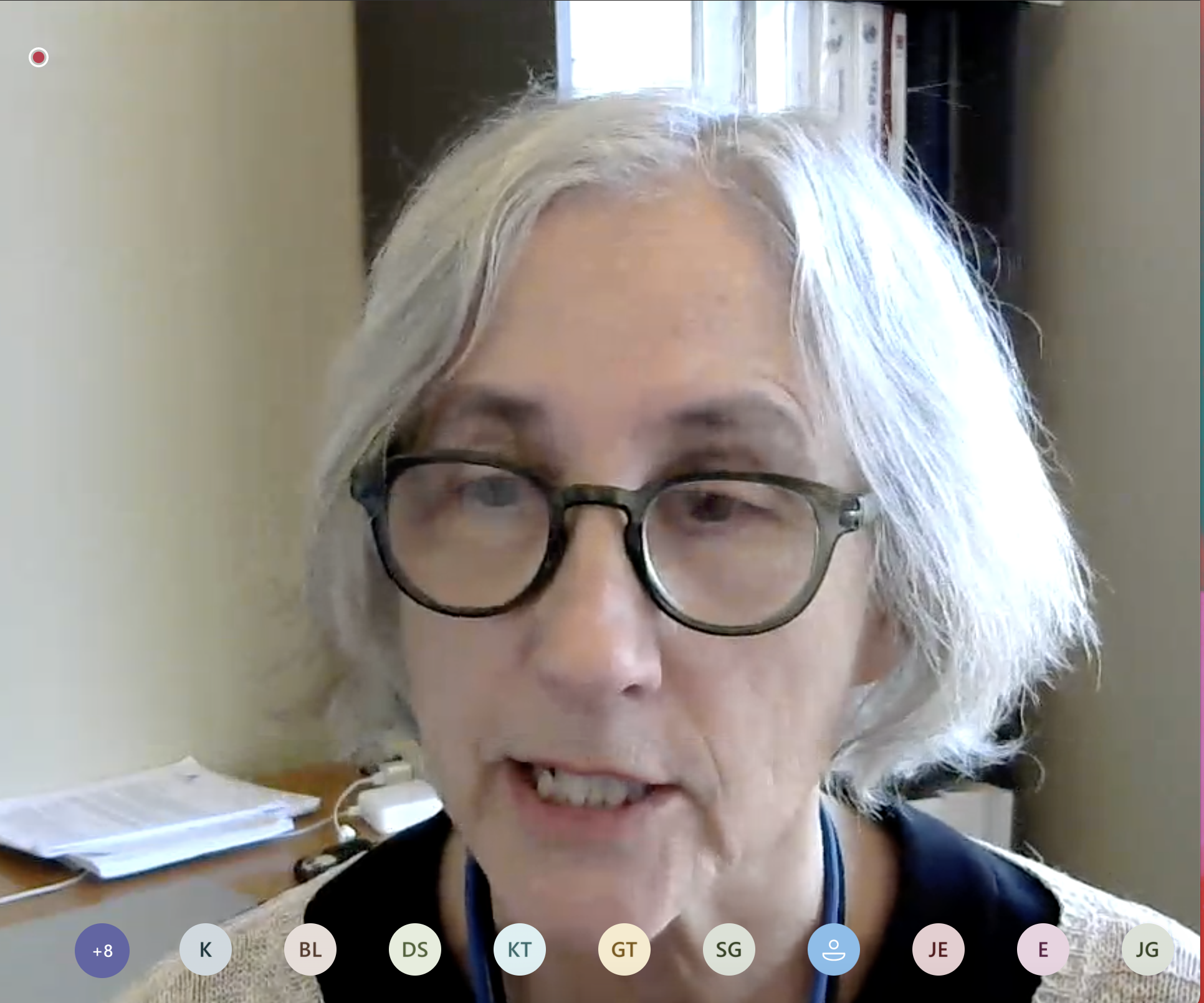
Pima County Public Health Director Dr. Theresa Cullen shared troubling details on the accelerated transmission of COVID-19 throughout the county amid a new public health advisory at a virtual press conference Wednesday.
Public health officials expect to see more coronavirus cases in December than the eight months between March and October combined.
Currently, one out of every 1,000 Pima County residents has died from COVID-19.
Amid confirmation of a more contagious strain of COVID-19 that originated in the UK being identified in Colorado, Cullen said Arizona health officials are actively looking for the coronavirus variant and have not found any cases in the state, although “that could change quite rapidly,” she said.
Cullen said the county’s hospital beds and ICU capacity remains “very limited,” and many facilities are relying on the Arizona Surge Line to transfer patients based on their necessary level of care.
This morning, there were five ICU beds and 42 medical surge beds available in Pima County. Meanwhile, more than 80 patients were waiting in emergency rooms for admission, Cullen said.

With more than 5,200 new cases reported today, the number of Arizona’s confirmed novel coronavirus cases topped 512,000 as of Wednesday, Dec. 30, according to the Arizona Department of Health Services.

Pima County, which reported 758 new cases today, has seen 68,437 of the state’s 512,489 confirmed cases.
A total of 8,718 Arizonans have died after contracting COVID-19, including 1,039 deaths in Pima County, according to the Dec. 30 report.
The number of hospitalized COVID cases statewide continues to soar as the virus has begun to spread more rapidly, putting stress on Arizona’s hospitals and surpassing July peaks. ADHS reported that as of Dec. 29, a record 4,526 COVID patients were hospitalized in the state. The summer peak of 3,517 hospitalized COVID patients was set on July 13; that number hit a subsequent low of 468 on Sept. 27.
A record number of 2,341people visited emergency rooms on Dec. 29 with COVID symptoms. That number had previously peaked at 2,008 on July 7; it hit a subsequent low of 653 on Sept. 28.
A record number of 1,076 COVID-19 patients were in intensive care unit beds on Dec. 29. The summer’s record number of patients in ICU beds was 970, set on July 13. The subsequent low was 114 on Sept. 22.
Healthcare leaders continue to plead with public to stay home as much as possible as healthcare system is overloaded
The Pima County Health Department shared a number of sobering statistics about COVID-19 this week:
• There is an all-time high of 1,512 medical/surgical beds in use in Pima County.
• Med/Surg bed availability hit an all-time low with 2%, or just 33 beds available in the county.
• On Monday morning there were 96 patients waiting for an inpatient bed, 62 of whom were COVID-19 patients.
• There are 669 hospital patients who are COVID positive.
• ICU beds usage hit an all-time high with 364 ICU beds in use, 198 are COVID-19 patients, the most ever. Despite an increase of 20 ICU beds in the past week, only 2% (9 beds) remain available. Hospitals continue to implement their surge plans to add ICU capacity.
• COVID-19 patients account for 54% of ICU bed and ventilator usage.
• There was a record high of 27 COVID-19 ICU admissions in a single day in the past 24 hours.
• On Christmas Day, County hospitals reported 19 COVID-19 deaths.
The health department is asking residents to stay home and minimize activities that involve contact with people outside of their households, stay physically distanced and practice mask-wearing and frequent sanitization.
“This isn’t just about COVID anymore and whether you think it’s a real problem or not. The patients filling these hospitals are absolutely real and if you have a heart attack, or if you get into a car accident, or your appendix bursts, there is a real possibility that you may not get the timely care you need to save your life if we don’t get control of this virus,” said Dr. Theresa Cullen, the director of the Pima County Health Department who herself contracted COVID-19 earlier this month. “People are dying yet many of those deaths are preventable if the people of this community stay home, wear their masks and avoid people they don’t live with as much as possible.”
Pima County under curfew
Pima County remains under a mandatory 10 p.m. to 5 a.m. curfew in an attempt to combat Southern Arizona's rising number of coronavirus cases.
Penalties for a nonessential business found violating curfew range from having their business permit suspended or revoked.
The mandatory curfew will stay in place until coronavirus infection rates drop below 100 per 100,000 people, according to county officials.
While businesses will now face losing their operating permits if they don't comply with the curfew, it "carries no penalty associated with the individual, as it would be difficult to enforce a curfew against individuals without the cooperation of law enforcement," Pima County Administrator Chuck Huckelberry wrote in the memo regarding the memo.
Get tested: Pima County has free COVID testing
Pima County offers a number of testing centers around town.
You’ll have a nasal swab test at the Kino Event Center (2805 E. Ajo Way) the Udall Center (7200 E. Tanque Verde Road) and downtown (88 E. Broadway).
The center at the northside Ellie Towne Flowing Wells Community Center, 1660 W. Ruthrauff Road, involves a saliva test designed by ASU.
In addition, the Pima County Health Department, Pima Community College and Arizona State University have partnered to create new drive-thru COVID-19 testing sites at three Pima Community College locations. At the drive-thru sites, COVID-19 testing will be offered through spit samples instead of nasal canal swabs. Each site will conduct testing from 9 a.m. to noon, and registration is required in advance. Only patients 5 years or older can be tested.
Schedule an appointment at these or other pop-up sites at pima.gov/covid19testing.
The University of Arizona’s antibody testing has been opened to all Arizonans as the state attempts to get a handle on how many people have been exposed to COVID-19 but were asymptomatic or otherwise did not get a test while they were ill. To sign up for testing, visit https://covid19antibodytesting.arizona.edu/home.
—with additional reporting from Austin Counts, Jeff Gardner, Nicole Ludden and Mike Truelsen

Tuesday, December 29, 2020
LOS ANGELES – Being locked up was supposed to be a punishment for Terry “Tank” Johnson. It also turned out to be an awakening.
In the early 2000s, the product of Tempe McClintock High and the University of Washington was basking in the spotlight of football success – playing seven NFL seasons with Chicago, Dallas and Cincinnati – but he was leading a double life. In 2007, while the Bears were getting ready to play in Super Bowl XLI, Johnson was navigating the criminal justice system.
As a young man looking to have fun, Johnson said, he put himself in “uncontrolled environments,” including his November 2005 arrest in a Chicago nightclub for unlawful possession of a handgun. He was convicted and given probation.
But there were subsequent brushes with the law, including illegal possession of weapons and drugs, culminating in a March 2007 court order remanding him to 120 days behind bars for violating the terms of his probation.
He languished at first, frustrated by his bad choices. He went to the Cowboys and then the Bengals, but his football career was essentially over. But because of what he witnessed during incarceration, Johnson turned that disappointment into motivation, and he now finds himself a key figure in a renewed debate about the role of private for-profit prisons.
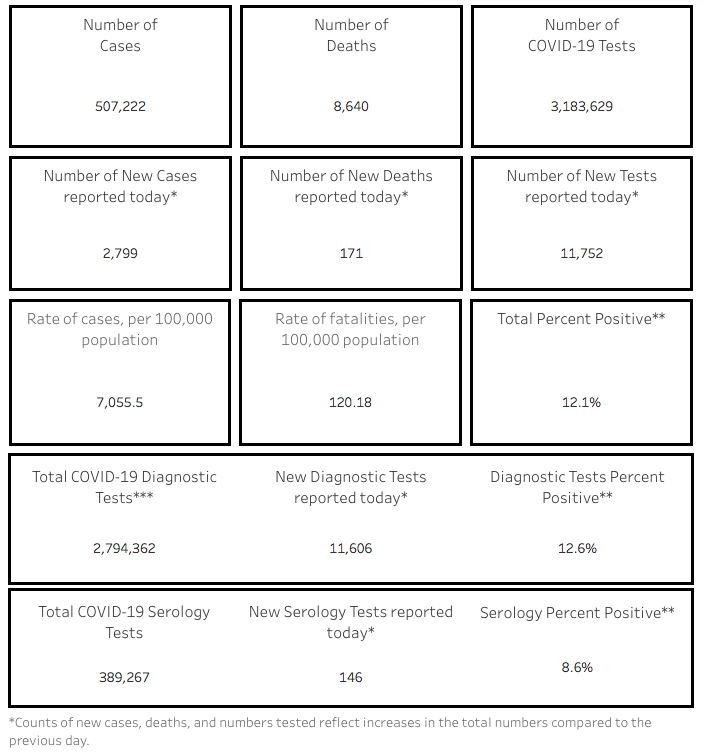
With more than 2,700 new cases reported today, the number of Arizona’s confirmed novel coronavirus cases topped 507,000 as of Tuesday, Dec. 29, according to the Arizona Department of Health Services.

Pima County, which reported 1,313 new cases today, has seen 67,679 of the state’s 507,222 confirmed cases.
A total of 8,640 Arizonans have died after contracting COVID-19, including 1,023 deaths in Pima County, according to the Dec. 29 report.
The number of hospitalized COVID cases statewide continues to soar as the virus has begun to spread more rapidly, putting stress on Arizona’s hospitals and surpassing July peaks. ADHS reported that as of Dec. 28, a record 4,475 COVID patients were hospitalized in the state. The summer peak of 3,517 hospitalized COVID patients was set on July 13; that number hit a subsequent low of 468 on Sept. 27.
A total of 2,117 people visited emergency rooms on Dec. 28 with COVID symptoms. That number, which hit a new record of 2,166 earlier this month, had previously peaked at 2,008 on July 7; it hit a subsequent low of 653 on Sept. 28.
A total of 1,053 COVID-19 patients were in intensive care unit beds on Dec. 28, breaking the 1,000 threshold for the first time. The summer’s record number of patients was 970, set on July 13. The subsequent low was 114 on Sept. 22.
Healthcare system continues to buckle under strain
The Pima County Health Department shared a number of sobering statistics about COVID-19 yesterday:
• There is an all-time high of 1,512 medical/surgical beds in use in Pima County.
• Med/Surg bed availability hit an all-time low with 2%, or just 33 beds available in the county.
• On Monday morning there were 96 patients waiting for an inpatient bed, 62 of whom were COVID-19 patients.
• There are 669 hospital patients who are COVID positive.
• ICU beds usage hit an all-time high with 364 ICU beds in use, 198 are COVID-19 patients, the most ever. Despite an increase of 20 ICU beds in the past week, only 2% (9 beds) remain available. Hospitals continue to implement their surge plans to add ICU capacity.
• COVID-19 patients account for 54% of ICU bed and ventilator usage.
• There was a record high of 27 COVID-19 ICU admissions in a single day in the past 24 hours.
• On Christmas Day, County hospitals reported 19 COVID-19 deaths.
Last week, the Pima County Health Department warned that the healthcare system is in danger of becoming overwhelmed within the next two to three weeks if the spread of COVID-19 continues at its current pace.
The ancient people of western Utah’s Danger Cave lived well. They ate freshwater fish, ducks and other small game, according to detritus they left behind. They had a lush lakeside view with cattails, bulrushes and water-loving willows adorning the marshlands.
But over time, the good life became history. As heat and drought set in, the freshwater dried up, and the ancients were forced to survive by plucking tiny seeds from desert shrubs called pickleweed. Archaeologists know this from a thick layer of dusty chaff buried in the cave’s floor.
It might be ancient history, but science tells us that the past could also become the future. In fact, thanks to global warming, regional climate patterns linked to extended periods of heat and drought that upended prehistoric life across the Southwest thousands of years ago are setting up again now.
“The benefit of any kind of paleoclimate data is that it tells us what nature is capable of,” said Matthew Lachniet, a paleoclimatologist at the University of Nevada, Las Vegas.
The climate risk across the Southwest is actually growing, based on Lachniet’s recent study of a different cave about 200 miles across the Great Basin, which covers most of Nevada and the western half of Utah.
His geochemical data from Leviathan Cave in Nevada shows that drought can last 4,000 years – findings that Lachniet’s team cross-checked against paleoclimate data from the Arctic and tropical Pacific. In short, the story in the cave data suggests a worst-case scenario that could – and probably should – guide planning throughout the Southwest, home to 56 million people.