
Monday, December 7, 2020
As University of Arizona students finish the fall semester remotely, they’ll return to more stringent guidelines to prevent the spread of coronavirus in the spring semester.
The university will require weekly COVID-19 testing for all students attending in-person classes on its main campus or living in dorms, UA President Robert Robbins said in a press conference this morning.
Any students visiting campus will be required to complete a COVID-19 diagnostic test within the prior week. If students aren’t noted as having completed a test in UA’s system, they will be denied access to the university’s Wi-Fi network.
“We think this is an incentive for people to comply with our mandatory testing,” Robbins said. “We think it’s really going to be important, and we’re changing our approach because we’re going to be able to expand our testing capability.”
Robbins announced a testing blitz to coincide with dorm move-in dates from Jan. 6-12, similar to the one it conducted before fall break. Residents are required to test negatively before moving into their dorm rooms.
While the tests conducted during the testing blitz will still be in the form of antigen nasal swabs, the university has developed a new saline gargle test for its regular weekly testing.
New saline gargle test
Developed by the head of the university’s Department of Ecology and Evolutionary Biology Michael Worobey, the saline gargle test detects present coronavirus material and amplifies it to a traceable amount.
Those receiving the test swish and gargle 5 milliliters of saltwater three times, and spit the solution into a tube to be tested for the presence of COVID-19.
Instead of the oftentimes unpleasant nasal swab that reaches the pharynx, or deep into the back of the nasal cavity, the swish test is “much more tolerable,” according to Worobey.
PHOENIX – Research from Arizona and beyond suggests the coronavirus that causes COVID-19 can spread erratically, making some infected people “superspreaders” and others dead ends for transmission.
This can create clusters or “micro-hotspots” – neighborhoods, schools, towns or other small geographic areas where the virus runs rampant – even while communities next door remain relatively unscathed. These concentrated outbreaks aren’t included in the Arizona Department of Health Service’s COVID-19 data dashboard, which breaks down cases by county.
Dr. Peter Plantes, an internal medicine specialist, works with hc1, a health care data analysis company that recently launched a COVID-19 dashboard explaining the dynamics of the pandemic in new detail.
The company partners with more than 20,000 labs across the U.S. that quickly share the results of COVID-19 tests, along with the patient’s address. The firm then calculates the percentage of positive COVID-19 tests by city and, in some cases, neighborhood. Plantes said the patient information they receive from labs is subject to privacy laws.
For example, the platform’s Maryvale east zone in Phoenix, which is bounded by 27th and 59th avenues and Interstate 10 and Camelback Road, showed a percent positivity of more than 29% over the past week. That rate is nearly double the recent positivity rate for Maricopa County, and is second only to the Yuma zone for highest in the state.
Conversely, the Tempe north zone just 10 miles away had a positivity rate of about 11% over the same time period – the lowest of all zones across Arizona.
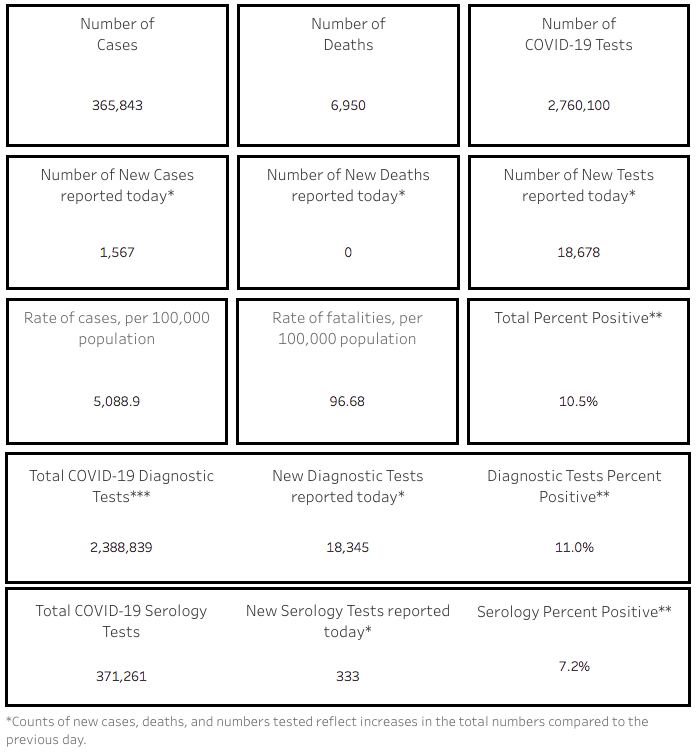
With more than 1,500 new cases reported today, the number of Arizona’s confirmed novel coronavirus cases closed in on 366,000 as of Monday, Dec. 7, according to the Arizona Department of Health Services.

Pima County, which reported 726 new cases today, has seen 45,892 of the state’s 365,843,101 confirmed cases.
A total of 6,950 Arizonans had died after contracting COVID-19, including 730 deaths in Pima County, according to the Dec. 7 report.
The number of hospitalized COVID cases statewide continues to soar upward as the virus has begun to spread more rapidly, putting stress on Arizona’s hospitals. ADHS reported that as of Dec. 6, 3,059 COVID patients were hospitalized in the state, the highest that number has been since July 21. That number peaked with 3,517 hospitalized COVID patients on July 13; it hit a subsequent low of 468 on Sept. 27.
A total of 1,485 people visited emergency rooms on Dec. 6 with COVID symptoms. That number peaked at 2,008 on July 7; it hit a subsequent low of 653 on Sept. 28.
A total of 736 COVID-19 patients were in intensive care unit beds on Dec. 6, the highest that number has been since July 29. The number of COVID patients in ICUs peaked at 970 on July 13 and hit a subsequent low of 114 on Sept. 22.
Judy Rich, president and CEO of Tucson Medical Center, warned the Tucson City Council last week that local hospitals are near or at capacity.
“I believe stricter measures, like the ones we used earlier this year, are the only path to avert the impending crisis,” Rich told the council. “I recognize that the City might not have the legal authority to mandate such actions, but it should be the position of the City to advocate to state leadership that it is required to prevent unnecessary loss of life and illness.”
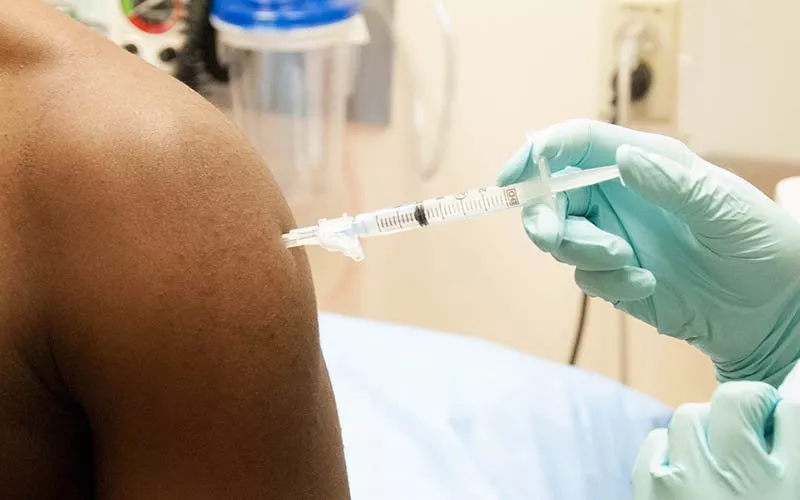
WASHINGTON – Arizona health officials said they expect to get the first of more than 380,000 doses of COVID-19 vaccine by Dec. 15 and will begin vaccinating health care workers and first responders shortly thereafter.
Arizona Department of Health Services Director Dr. Cara Christ made that announcement Friday, as the state submitted its plans for vaccine distribution to the Centers for Disease Control and Prevention for approval.
Under that plan, hundreds of approved providers could begin vaccinating Arizonans, with health care workers and long-term care residents first. Christ said priority groups should be vaccinated by the end of February, and that anyone in the state who wants the two-dose vaccination should have received it by late summer or early fall.
Christ called the vaccine a “light at the end of the tunnel” during a dark time for the state: Confirmed COVID-19 cases and deaths are surging in Arizona, with the health department reporting more than 11,000 new cases in the last two days alone. Overall cases in the state stood at 352,101 Friday, when COVID-19 related deaths reached 6,885.
It’s part of a national surge that has brought confirmed cases to just over 14 million, with 275,386 deaths as of Friday, according to the CDC.
In the face of the growing pandemic, the Trump administration in May kicked off Operation Warp Speed, with the goal of “delivering safe and effective vaccine doses to the American people beginning January 2021.”
That effort paid off late last month when two pharmaceutical companies, Pfizer and Moderna, submitted paperwork for final Food and Drug Administration approval of their versions of COVID-19 vaccines that are at least 94% effective. Pfizer’s version could be approved as soon as Dec. 10, with Moderna’s OK expected a week later.
Once approved, the drugs will go to the CDC, which will allocate it to the states for distribution every week. Under the complex distribution plan outlined Friday by Christ, the doses will go directly to the health providers who will deliver the vaccine, bypassing state and local health departments.
Arizona will be told each week how many doses to expect, and it will allot those by county, based on the percentage of county residents in a priority group. The counties will then tell the state how many doses to send, and where, and the state will relay that information to the CDC distributor.
“The CDC distributor will ship the vaccine directly to the providers that are approved to receive an allocation,” Christ said. “So, the state and local health departments will not receive that vaccine or serve as a middle man in the distribution chain.”
The CDC early on said first responders and health care workers should get priority for vaccination, followed by at-risk groups such as the elderly. Arizona’s plan mirrors those guidelines, with the first phase targeting three groups ahead of the general population.
Phase 1A includes health care personnel, frontline workers and long-term care residents and staff. Phase 1B covers essential workers such as teachers, police and emergency response staff, as well as utility, food and public transport workers, and state and local government employees.
Phase 1C is defined as people at high risk of contracting a severe case of COVID-19, including those 65 and older and adults in congregate settings, such as prisons. The general population is Phase 2.
There are currently 359 approved providers to administer the COVID-19 vaccine in Arizona, Christ said, with applications pending from more than 1,000. And providers said they are eager to get started.
“As soon as it gets approved, I believe we will have the vaccine in our hands very quickly,” said Dr. Janice Johnston, medical director and co-founder of Redirect Health, one of the approved providers.
It has several clinics in Arizona where it will store and administer the vaccine. Johnston said Redirect Health responded to the department’s call for providers, “went through their screening process, and were approved to be one of the providers once they do become available for the deep-freeze version of the vaccine.”
David Berg, chairman of the board and co-founder of Redirect Health, emphasized the need for coordination between clinics, counties and the state to make the distribution and administration of vaccines as seamless as possible.
“The state will give us guidance on who the groups are and what they would like us to do,” Berg said. “And I think it is important that everybody follows the state guidance so that we can do this is a very coordinated way.”
As more vaccine providers are approved in the state, they will be listed on the CDC’s Vaccine Finder once doses are available, according to an AZDHS spokesperson.
Christ said she expects “hundreds of millions of doses” to be available for the general public in March or April, with vaccinations complete several months thereafter.
Gov. Doug Ducey this week signed an executive order requiring insurance companies to cover the entire cost of COVID-19 vaccinations for all Arizonans.
“The vaccine should be free for anyone who needs it,” Ducey said Wednesday. “This is a global pandemic and the vaccine shouldn’t cost Arizonans a penny.”
Christ referenced that order Friday when she said the COVID-19 vaccine will be considered “in network” for all state-regulated insurance companies.
“Everyone who wants to get one, will get one,” she said.
Friday, December 4, 2020
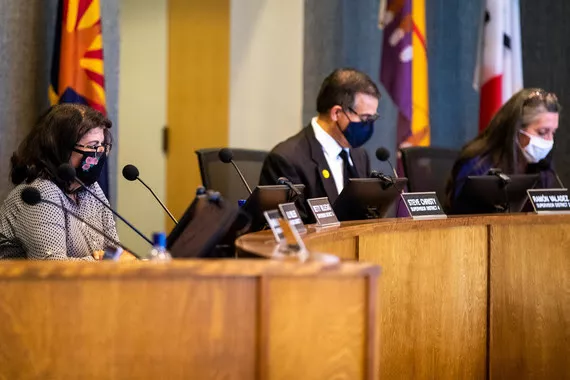
The Pima County Board of Supervisors approved six measures to combat the spread of coronavirus at an emergency special meeting today.
The board approved the following motions:
A revised mask mandate with a civil penalty for noncompliance; businesses now required to mandate masks for all customers.
Upon their second violation of noncompliance to safety protocols, businesses will be reprimanded by means of having their license revoked or operations suspended.
Event organizers planning gatherings of more than 50 persons are required to give the county a minimum $1,000 deposit per each event (with the deposit rising depending on the number of people expected in attendance). The money will be returned if there is sufficient compliance to safety protocol.
The county’s voluntary curfew will remain in place as it examines Tucson’s curfew enforcement.
A revised public health advisory with recommendations for the public to avoid contracting COVID-19.
A motion to review Pima County’s vaccination strategy draft
The decisions come as within the first three days of December, Pima County saw 2,023 COVID-19 infections, surpassing the county’s total infection count for March, April and May combined, according to a memorandum from County Administrator Chuck Huckelberry. Today, the county reported 816 cases.
Hospitals are facing record numbers of COVID-19 patients and on Dec. 3, only one ICU bed was available to the public, the memo says.
On all the motions except approving a vaccination strategy, the board voted 3-2 with GOP Supervisors Ally Miller and Steve Christy opposing. Only Miller opposed the vote to review the vaccination strategy.
Mask wearing to be enforced
The board previously adopted a mask mandate in June with no penalties for noncompliance. Now, those who refuse to wear masks in public areas will be subject to a civil penalty of $50 per infraction. These penalties will be enforced by law enforcement agencies, but it has yet to be determined the manner in which they will do so.
Businesses are also now required to mandate masks for all those who enter their premises. Before, the county’s resolution said businesses “may refuse” those not wearing masks, but now, they must.
Stricter enforcement for businesses who defy guidelines
Businesses that are reported as not following the imposed safety guidelines will face a civil infraction that carries a penalty of $500 and may lose their license or operating permits upon their second reported offense.

Starting Friday, Dec. 4, Santa will be up on the rooftop at Playground, 278 E. Congress St., to wave to kids from the proverbial safe physical distance. Kids can drop their letter to Santa in a mailbox on Fifth Avenue next to the Tucson Together mural painted on the side of Playground.
Plus, all good boys and girls get a free scoop of peppermint ice cream from the HUB Ice Cream truck, which will be on hand to bring us all a little more holiday cheer.
And if the grownups in your group have been good, HUB
Restaurant and Ice Creamery has put together a new cocktail menu to celebrate the season. Among the offerings:
- Santa’s Peanut Butter Cookies (Screwball peanut butter whiskey, creme de Cacao, half/half)
- Red wine and winter spices (Orange, clove, cinnamon, nutmeg)
- Spiced Rum (cream of coconut, vanilla, cinnamon
- Tucson Boulevardier (Del Bac, Campari, Sweet Vermouth
Santa will be on duty between 4 and 6:30 p.m. on Fridays and Saturdays and noon to 4 p.m. on Sunday every weekend through Dec. 19. (After that, Santa has a lot of work to get done!) Free parking is available at the nearby AC Marriott Downtown.
PHOENIX – Suns fans are certainly excited for the arrival of Chris Paul, but center Deandre Ayton might be the most excited of all.
“We got CP3 in Arizona, y’all trippin’,” Ayton said Thursday in a press conference via Zoom. “We got Chris Paul in Phoenix!”
Arizona sports fans have endured a lot of heartbreak over the years, and Suns fans are no exception. After the team went 8-0 in the NBA bubble in Orlando, yet still failed to reach the 2020 playoffs, it felt like the latest in a long line of proverbial slaps to the face.
Once the Suns’ season reached its bitter end, trade rumors again began swirling around star guard Devin Booker, and fans prepared for the worst.
Every year, it seems like the same old story. Players and fans get excited at the chance to finally break the cycle of misery, only to be let down.
This time, however, there’s a legitimate reason to believe that cycle might end.
Fresh hope arrived when the Suns made waves across the NBA on Nov. 16 by acquiring Paul, the 10-time All-Star guard, from the Oklahoma City Thunder.
“He’s an ultra-competitor, and he’s been (one) for many long years, that’s why he has the resume that he has,” Booker said Thursday. “But his leadership, even in the short time (he’s been) here … just makes you want to work that much harder.”
The Suns also signed free-agent forward Jae Crowder to a three-year contract on Nov. 28, solidifying the team’s frontcourt.
Aside from the on-court talent the two veterans bring, a lot has been made of the improvements they can make to the culture around the team.
“I feel like the culture has definitely changed, even from the bubble to now,” Booker said. “I think with the additions of the players that we added, we have a depth team with a lot of (basketball) IQ and guys that know how to play the game.”
Booker also mentioned how this is an important step in Phoenix becoming a destination city for high-level players.
“That says a lot. I think that was what was most important for this organization and this team this summer, was having guys who wanted to come here,” Booker said. “A guy like Jae wanting to come here, a guy like Chris, a Hall-of-Fame guy wanting to come to Phoenix after what we’ve been through for the past five to 10 years, so I think that’s a step forward for this organization. People really see something’s brewing over here.”
The Suns will have a new look in 2021, and not just on the roster. A newly-renovated arena, brand new practice facility and the new ‘The Valley’ City Edition uniform are all contributing to the new identity the team is trying to build.
“It’s perfect timing, we have a new arena, new practice facility that we’re in now, so it’s a great culture around here, and it’s still building,” Booker said. “We’re having fun in here, the energy’s high, the personality’s out, and the competitiveness is there.”
The Suns are in a transition period, and the NBA is taking notice. Paul might not be the only new piece of the puzzle, but he’s certainly the most exciting.
“Just knowing the type of tradition, and the type of dude, and the type of career (Paul’s) had, and the foundation he’s laid in this league, it’s tremendous,” Ayton said. “And knowing that I’m going to be a part of his legacy? I can’t stop moving, I mean we’ve been working hard, I want to lift more weight, it’s go time.”
The Suns are tentatively scheduled to begin their 2020-21 season at home Dec. 23 against the Dallas Mavericks.
WASHINGTON – With a shortage of beds, oxygen and staff, the Navajo Nation can no longer depend on regional aid and is sending critical patients farther afield for care, officials reported Thursday.
That news came as area health care workers and Navajo government officials warned that the coming surge in COVID-19 cases would be worse than the first, when the tribe recorded some of the highest infection and death rates in the country.
“It’s gotten to the point where our facilities are deeply challenged and getting to the point of being overwhelmed,” said Dr. Jonathan Iralu, a national and area infectious disease consultant for the Indian Health Service.
“Our hospital beds are full, and when we try to send persons to other hospitals in New Mexico and Arizona … they are essentially 100% full,” said Iralu, who works at the Gallup Indian Medical Center.
His comments came during a wide-ranging two-hour update during which tribal officials said they are extending a reservation-wide lockdown for another three weeks and are seeking a disaster declaration from the federal government.
Navajo Nation President Jonathan Nez said the tribe has also expanded the number of alternative care centers, where people who test positive can “hunker down” and wait out their quarantine period, rather than go home and risk infecting family members. He said the seven alternative care centers will help keep hospital beds open for more serious cases.
Dr. Eric Ritchie, chief medical officer at the IHS hospital in Chinle, said Navajo hospitals “are reaching a breaking point and a point of crisis … both for COVID and for non-COVID care.”
He and others said that the main difference between this surge and the spring is that when reservation and border community hospitals ran out of beds then, they could easily transfer patients to hospitals in Albuquerque or the Valley. But those hospitals are now facing their own COVID-19 crises.
That has put a strain on all medical services for Navajo. Ritchie said a patient recently came to the Chinle hospital in a coma for a non-COVID issue, and it took the staff 24 hours to find a hospital that could accept the patient for the specialized care they needed.
While the shortage of personal protective equipment for hospital staff was a problem in the spring, health care workers now find themselves running short of oxygen and high-flow oxygen machines, one of the primary tools for treating COVID-19 patients.
“We are competing for oxygen supplies,” said Dr. Paula Mora, chief medical officer at the Gallup hospital. “Many of our vendors that provide oxygen for our hospitals are challenged with getting replenished supplies into their companies and therefore we are challenged with trying to find new vendors to provide oxygen.”
Fewer patients require ventilation, but many require “extensive and prolonged oxygen support,” said Dr. Quida Vincent, clinical director at the Northern Navajo Medical Center in Shiprock, N.M. When her hospital had too few high-flow oxygen machines for the number of patients who needed them last week, they made adjustments, “but it was traumatic for staff.”
She expected 10 new machines to arrive Thursday – when workers will need to adapt the new machines to the old hospital, which does not have sufficient oxygen hookups to meet the need she anticipates.
Hospitals are also creating ways to expand bed capacity, but the bigger problem is finding health care workers to staff them. Vincent said there is a 50% nurse vacancy rate, made worse by the spring wave and worker fatigue. All the officials noted that the health care workers they do have are reaching a breaking point.
“Many are disheartened to see the rise in cases and are struggling to come to grips with the fact that we are going to face a moment in time where our hospitals are stretched even further than they were before, during May or June when we had the first surge,” Ritchie said.
At his hospital, Iralu said, “You can see their worry lines on their faces above their face masks.”
Nez said the current public health executive order – which was set to end Sunday – will be extended another three weeks, until Dec. 27. The order mandates a stay-at-home lockdown, closing the Navajo Nation and limiting residents to their homes, with the exception of essential workers and services.
“We need to recommit ourselves to staying home and helping bring these numbers down,” he said.
The new order will allow essential businesses to be open from 7 a.m. to 7 p.m., from Monday through Friday, rather than having to close at 3 p.m. Weekend lockdowns will run from 9 p.m. Friday to 5 a.m. Monday, and people will have to stay home from 8 p.m. to 5 a.m. on weeknights.
“This is entirely in our hands,” said Nez, urging residents to abide by the rules. “We’ve got to encourage and we’ve got to hold our people accountable.”
Vice President Myron Lizer told “negative Nellies out there” that it was time to “fall in line.”
Dr. Michael Tutt, chief medical officer at Tsehootsooi Medical Center in Fort Defiance, said he and his children haven’t seen his elderly parents since February, due to the risk of spreading the virus. At the same time, he has “seen grandmothers and grandfathers, husbands and wives die from COVID.”
The Navajo Nation had recorded 17,035 confirmed cases of COVID-19 and 658 deaths as of Wednesday. But Tutt said hope is around the corner.
“There’s a vaccine coming,” Tutt said. “Don’t be afraid of it because you hear all this nonsense on Facebook, on the news.”
After a vaccine comes, he said, “We’ll gather up at our chei’s (grandpa’s) sheep camp and go camping like the way we did in the past.”