

Tuesday, November 17, 2020
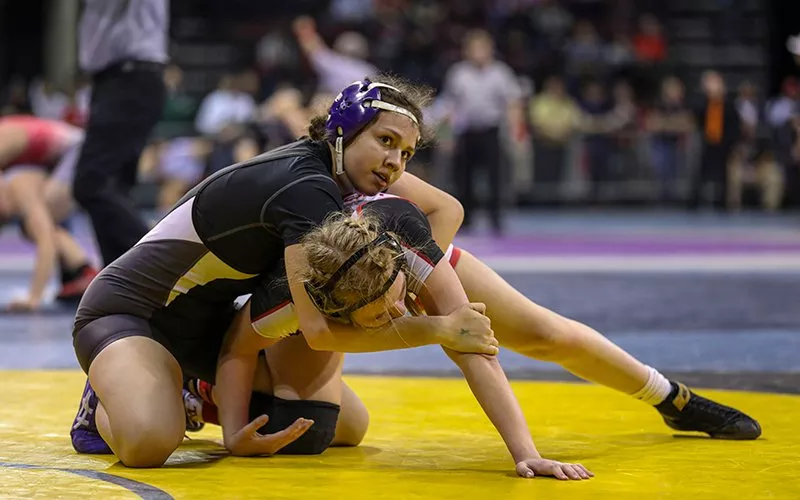
PHOENIX – The Arizona Interscholastic Association recommended postponing the start of winter high school sports such as basketball, wrestling and soccer to its executive board Monday, possibly pushing the start of those sports into January.
AIA Executive Director David Hines will meet with state health and education officials before the executive board votes on the proposal.
The news is forcing high school coaches to make some tough decisions.
“I think we had a good returning team and a good shot at repeating,” said Gino Crump, the basketball coach for defending 6A state champion Desert Vista. “(We’re) not practicing because I just don’t think it’s wise for me to get my team prepared to play. Some of the private schools or Catholic schools are practicing, but it just doesn’t make much sense to me to prepare my kids, and then get them ready to play and then they can’t compete.
“Our restrictions prevent us from (getting meaningful practice). You can’t share balls, you can only have a limited number of kids on the floor at one time, and those kind of things make it very restrictive to have a full and meaningful practice. I just chose not to do it.”
In a statement released Monday, the AIA, which is the governing body of Arizona high school sports, said:
“The Arizona Interscholastic Association has made a recommendation to the AIA’s Executive Board for consideration of postponing the start of the winter sports season. AIA Executive Director David Hines will meet with state health and education officials this week regarding the rising infection and positivity rates around Arizona. The information and statistics gathered at this meeting will be shared with the Executive Board at a meeting yet to be determined for a vote. The recommendation is to have the competition season begin sometime in January with the two weeks of mandatory AIA practice to take place before competition can begin.”
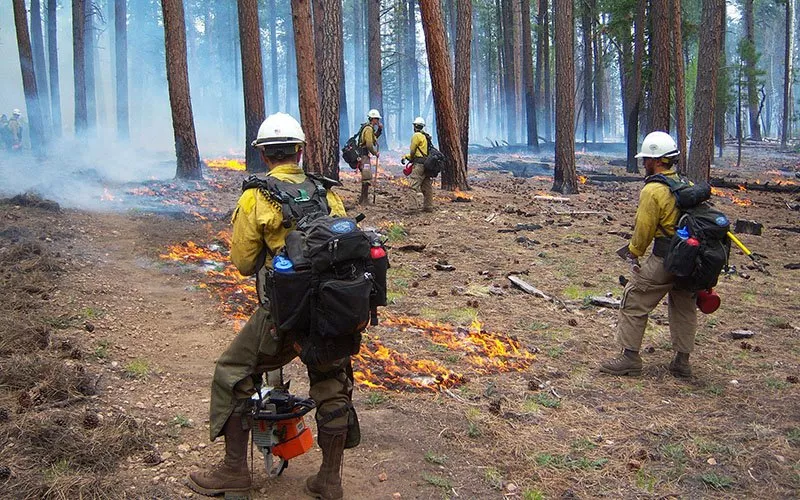
WASHINGTON – The acreage torched by wildfires in Arizona was up sharply this year, but fire officials said it was still not a particularly bad season in terms of lives lost and structures burned in the blazes.
The 2020 wildfire season had burned just under 955,000 acres as of Wednesday, according to the Arizona Department of Forestry and Fire Management, That’s almost double the 520,000 acres that burned in 3,627 fires over the previous two years combined.
The state recorded 2,357 fires statewide this year, of which 1,919 were caused by human activity.
“We don’t say there’s a fire season in Arizona anymore, because we are seeing fire activity in January, February, April and November,” said Tiffany Davila, public affairs officer for the Arizona Department of Forestry and Fire Management. “We are seeing fires year-round now.”
But unlike other Western states, Davila said Arizona has had only one confirmed fire-related death this year – when the pilot of a helicopter bringing supplies to the Polles fire was killed in the crash of his aircraft – and “multiple” structures burned. California, by comparison, recorded 31 deaths and 10,488 structures damaged or destroyed by wildfires that have burned almost 4.2 million acres so far this year.
“We’ve had examples this year in Arizona, large fires that were quite destructive, and also large fires that are burning entirely within the range of variation that you would expect prior to white settlement of the West,” said Joe Trudeau, a Southwest conservation advocate at the Center for Biological Diversity.
As coronavirus cases and hospitalizations increase across the state, public health officials are warning of a wintertime surge that could limit hospitals’ resources as it did this summer.
Within the first 17 days of November, Arizona is averaging 1,997 new COVID-19 cases a day. Nov. 14 saw a case count of 3,476— the highest reported in the state since July.
Pima County has contributed 33,444 cases to the total state count of 279,896 as of Nov. 17. Today, the county reported 357 new cases.
The county’s percent positivity for COVID-19 remains at 7.5%. A rate of 5% is a good indicator the spread of the virus is under control.
Over 2,000 cases were reported the first week of November countywide, according to a press release from the Pima County Health Department.
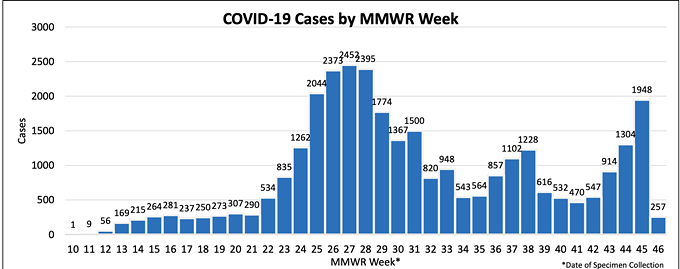
Hospitalizations for coronavirus in this time period reached the highest one week total since the summer spike in cases, according to the release.
“We are very concerned, especially with holidays like Thanksgiving upon us,” Pima County Health Department Director Theresa Cullen said in the release. “This is starting to look like the beginning of the huge spike that we saw over the summer.”
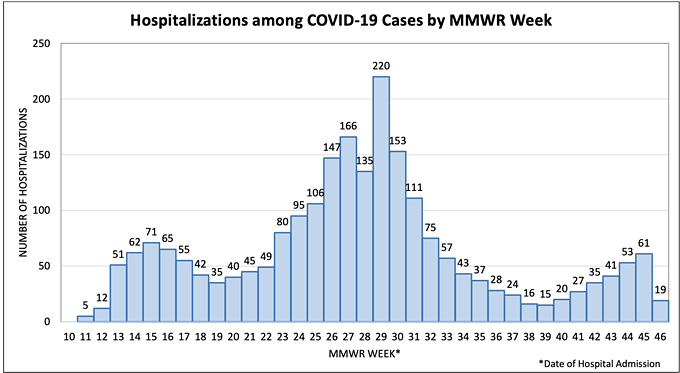
The county health department expected COVID-19 cases to go up after Halloween celebrations and election events. But the remainder of the holiday season is yet to come, and case numbers are already rising.
“Two thousand cases, that's very similar to the number of cases per week the first couple of weeks of June when we really saw that huge spike, so that's very concerning to us,” said Aaron Pacheco, the health department’s communications manager.
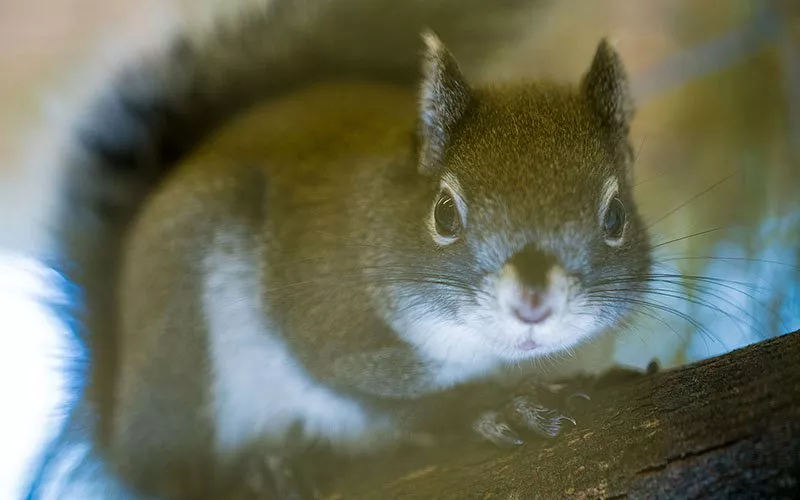
WASHINGTON – An endangered squirrel that was driven to the brink of extinction by wildfire just three years ago in southern Arizona has seen its numbers more than triple following federal, state and local preservation efforts.
The Mount Graham red squirrel population was cut from 252 to just 33 squirrels in the wild after the Frye fire destroyed much of their habitat in 2017. But a survey released last month by state and federal agencies estimated there are now at least 109 squirrels on the mountain.
Advocates welcomed the improvement, but said the squirrel, which was put on the endangered species list in 1987, is not out of the woods yet.
“It’s a good sign that it’s heading in an upwards direction rather than stagnating or … heaven forbid, going down,” said Marit Alanen, a biologist with the U.S. Fish and Wildlife Service.
Alanen points to a long list of factors threatening the squirrel’s mountain forest habitat, including fires, both natural and man-made, insect infestations and competition from the Abert squirrel, which was introduced in the 1940s. But wildfires have been the biggest threat, reducing the number of trees available to the squirrels and leaving them exposed to predators.
“We’ve been seeing these fires that have just gotten bigger and bigger over the years and have been of higher severity,” said Alanen. She said the Peak fire in 1996, the Nuttall Gibson fire in 2004 and the Frye fire “have impacted at least 95% of the squirrel’s habitat to some degree.”
That reduction in the forest has led to a “habitat bottleneck,” with squirrels competing for fewer suitable trees, said Robin Silver, cofounder of the Center for Biological Diversity. It’s one reason the center filed suit against the Fish and Wildlife Service in September, in an effort to force an expansion of the squirrels’ critical habitat.
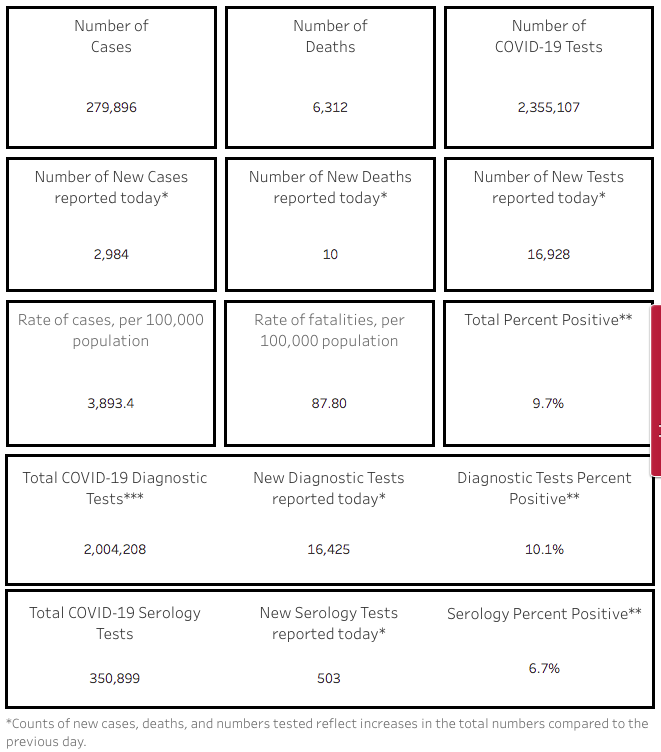
With nearly 3,000 new cases reported today, the number of Arizona’s confirmed novel coronavirus cases climbed to nearly 280,000 as of Tuesday, Nov. 17, according to the Arizona Department of Health Services.

Pima County, which reported 357 new cases today, has seen 33,444 of the state’s 279,896 confirmed cases.
A total of 6,312 Arizonans had died after contracting COVID-19, including 670 deaths in Pima County, according to the Nov. 17 report.
The number of hospitalized COVID cases statewide continues to climb upward as the virus has begun to spread more rapidly. ADHS reported that as of Nov. 16, 1,624 COVID patients were hospitalized in the state, the highest that number has been since Aug. 8. That number peaked with 3,517 hospitalized COVID patients on July 13; it hit a subsequent low of 468 on Sept. 27.
A total of 1,143 people visited emergency rooms on Nov. 16 with COVID symptoms. That number peaked at 2,008 on July 7; it hit a subsequent low of 653 on Sept. 28.
A total of 385 COVID-19 patients were in intensive care unit beds on Nov. 16, the highest that number has been since Aug. 19. The number of COVID patients in ICUs peaked at 970 on July 13 and hit a subsequent low of 114 on Sept. 22.
On a week-by-week basis in Pima County, the number of positive COVID tests peaked the week ending July 4 with 2,452 cases, according to an Nov. 9 report from the Pima County Health Department. (Numbers in this report are subject to revision.)
Pima County is seeing a steady rise in cases in recent weeks. For the week ending Oct. 17, 545 cases were reported; for the week ending Oct. 24, 911 cases were reported; for the week ending Oct. 31, 1,247 cases were reported; and for the week ending Nov. 7, 1,227 cases were reported.
Deaths in Pima County are down from a peak of 54 in the week ending July 4 to three in the week ending Oct 10, one in week ending Oct. 17, four in the week ending Oct. 24 and four in the week ending Oct. 31.
Hospitalization admission peaked the week ending July 18 with 221 COVID patients admitted to Pima County hospitals, but it has been on the rise in recent weeks. In the week ending Oct. 17, 37 people were admitted; in the week ending Oct. 24,40 people were admitted; in the week ending Oct. 31, 52 people were admitted; and in the week ending Nov. 7, 34 people were admitted.
State officials warn: Don’t let your guard down
As coronavirus cases, deaths and hospitalizations continue to rise across the state, Arizona’s public health officials are warning of an active increase in the virus that will worsen without widespread mitigation tactics.
The statewide percent positivity for COVID-19 increased to 9% last week. A rate of 5% is a good indicator the spread of the virus is under control.
Arizona reported over 13,000 cases the week of Nov. 1, an 187% increase from the beginning of last month, according to data from the Arizona Department of Health Services (ADHS).
“Arizonans need to remain vigilant, now is not the time to let our guard down,” ADHS Director Dr. Cara Christ said in a COVID-19 video update for Nov. 10. “We have seen a concerning increase in the COVID-19 rates in many counties over the past few weeks.”
According to Christ. COVID-19-like illness is also on the rise with increased inpatient and emergency room visits. She said although the state’s hospitals are reporting sufficient capacity, they’re also reporting a higher number of beds in use.
The Arizona Surge Line, a system established by ADHS in April that prevents one hospital from becoming overwhelmed by facilitating COVID-19 patient admission and transfer, is seeing increased instances of these transfers. Christ called this “an early indicator of hospital capacity concerns.”
The health director said while statewide benchmarks for businesses and schools to reopen are being met, metrics tracking case rates, percent positivity and COVID-like illness are all increasing.
Christ said the age group ranging from 20 to 44 makes up nearly 50% of the coronavirus cases in Arizona, but that these are mostly “college-age individuals.”
ADHS asks everyone to practice mitigation tactics such as frequent hand-washing, physical distancing and mask-wearing.
“We urge all Arizonans to appropriately wear a mask, whether or not they live in an area with a mandate,” Christ said in the video.
Get tested: Pima County opening new sites alongside existing spots for free COVID testing
Within the next three weeks, new drive-thru COVID-19 testing sites will be available at three Pima Community College locations, the county health department announced in a press release Friday.
The Pima County Health Department, Pima Community College and Arizona State University have partnered to create three new testing sites in an extension of the current ASU testing site at the Ellie Towne Flowing Wells Community Center.
At the drive-thru sites, COVID-19 testing will be offered through spit samples instead of nasal canal swabs.
Each site will conduct testing from 9 a.m. to noon, and registration is required in advance. Only patients 5 years or older can be tested.
“As cases rise, we are eager to increase available testing for the people of Pima County,” Pima County Public Health Director Theresa Cullen said in the press release. “If you know or suspect you have been exposed to COVID-19, we encourage you to get tested.”
The first testing site opened Monday, Nov. 16 at the Pima Community College West Campus.
Here are the three drive-thru locations that will be offering COVID-19 testing:
Pima Community College West Campus
2202 W. Anklam Road
Mondays, except national holidays and Dec. 28
Testing starts: Monday, Nov. 16
Pima Community College Desert Vista Campus
5901 S. Calle Santa Cruz
Wednesdays, except national holidays and Dec. 30
Testing starts: Wednesday, Dec. 2
Pima Community College East Campus
8181 E. Irvington Road
Fridays, except national holidays.
Testing starts: Friday, Dec. 4
The new sites will join the county’s other four free testing centers around town with easy-to-schedule appointments—often with same-day availability—with results in 24 to 72 hours.
You’ll have a nasal swab test at the Kino Event Center (2805 E. Ajo Way) the Udall Center (7200 E. Tanque Verde Road) and downtown (88 E. Broadway). The center at the northside Ellie Towne Flowing Wells Community Center, 1660 W. Ruthrauff Road, involves a saliva test designed by ASU.
Schedule an appointment at pima.gov/covid19testing.
The University of Arizona’s antibody testing has been opened to all Arizonans as the state attempts to get a handle on how many people have been exposed to COVID-19 but were asymptomatic or otherwise did not get a test while they were ill.
To sign up for testing, visit https://covid19antibodytesting.arizona.edu/home.
—with additional reporting from Austin Counts, Jeff Gardner, Nicole Ludden and Mike Truelsen.
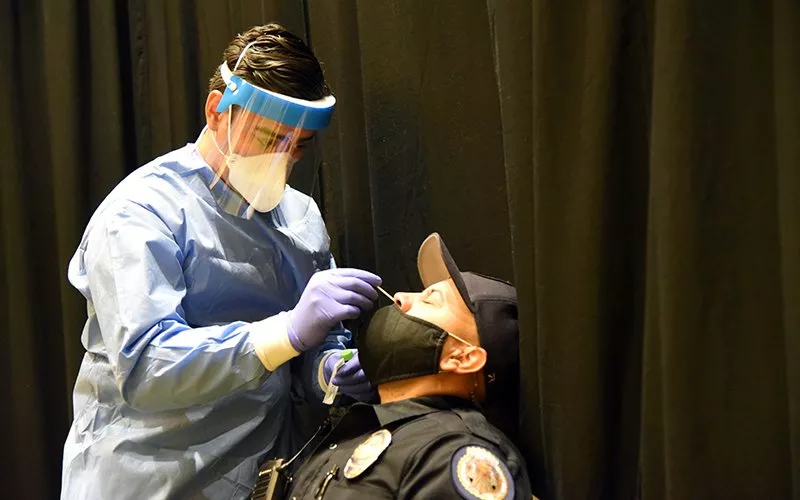
Rapid antigen testing is a mess. The federal government pushed it out without a plan, and then spent weeks denying problems with false positives.
The promise of antigen tests emerged as a miracle this summer. With repeated use, the theory went, these rapid and cheap coronavirus tests would identify highly infectious people while giving healthy Americans a green light to return to offices, schools and restaurants. The idea of on-the-spot tests with near-instant results was an appealing alternative to the slow, lab-based testing that couldn’t meet public demand.
By September, the U.S. Department of Health and Human Services had purchased more than 150 million tests for nursing homes and schools, spending more than $760 million. But it soon became clear that antigen testing — named for the viral proteins, or antigens, that the test detects — posed a new set of problems. Unlike lab-based, molecular PCR tests, which detect snippets of the virus’s genetic material, antigen tests are less sensitive because they can only detect samples with a higher viral load. The tests were prone to more false negatives and false positives. As problems emerged, officials were slow to acknowledge the evidence.
With the benefit of hindsight, experts said the Trump administration should have released antigen tests primarily to communities with outbreaks instead of expecting them to work just as well in large groups of asymptomatic people. Understanding they can produce false results, the government could have ensured that clinics had enough for repeat testing to reduce false negatives and access to more precise PCR tests to weed out false positives. Government agencies, which were aware of the tests’ limitations, could have built up trust by being more transparent about them and how to interpret results, scientists said.
Monday, November 16, 2020
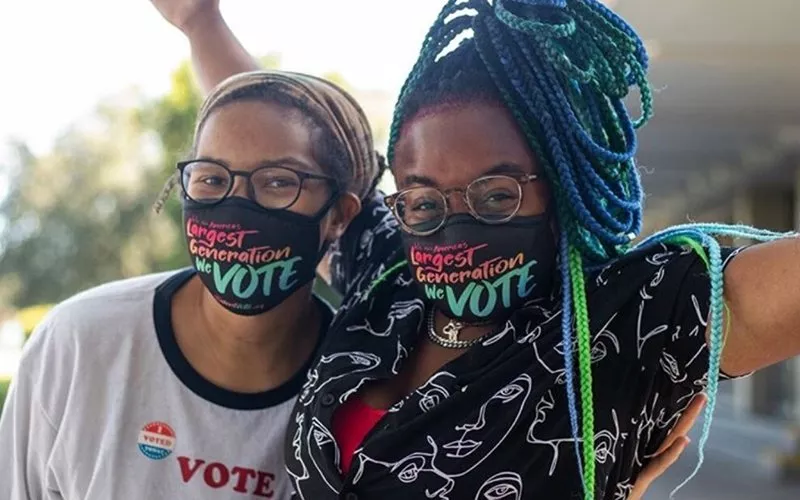
LOS ANGELES – Young people stepped up on two fronts this Election Day: volunteering to replace older poll workers who feared exposure to COVID-19 and pushing more of their peers – an age group with historically low turnout – to register and vote.
Across the Southwest, such organizations as Future Leaders of America, California Campus Vote Project and Arizona PIRG Students New Voters Project worked until the last minute to help students register to vote, answer questions and inform voters about initiatives on the ballot, including Proposition 15 in California.
For 18-year-old Yesenia Ramirez Garcia of Goleta, casting her first vote was a proud moment, as she is the first in her family to vote and the first to go to college. Identity and background affect Garcia’s political advocacy, she said, because her identity is political.
“When being queer is something that is debated, when being a person of color and your protections is something debated. It definitely impacts my background, it impacts who I’m going to pick,” Garcia said.
She is one of many youth leaders who spent the past year working to boost voter turnout among people 18 to 29. Throughout the summer, she worked with Future Leaders of America, an organization that provides engagement opportunities, education experiences and personal development for Latino youth and their families in Ventura and Santa Barbara counties. She worked the phones for Proposition 15, which would have required commercial and industrial properties, except for commercial agriculture, to be taxed based on market value rather than purchase price.

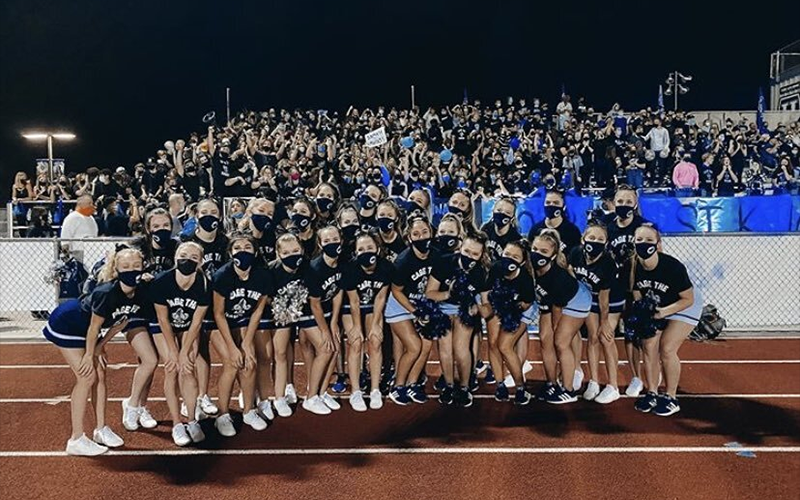
GILBERT – With several schools experiencing outbreaks of COVID-19 during the high school football season, social media has served as a platform for those pointing fingers at programs that appear to have stands packed with fans, many without face coverings.
But David Hines, executive director of the Arizona Interscholastic Association, which oversees high school sports in the state, said that the AIA can only issue protocols for players, coaches and officials on the field during the season.
It’s up to school districts to establish guidelines for fans, based on the recommendations of county health departments.
Photos of big crowds at schools such as Highland High, Higley High and Williams Field High in Gilbert and the private school Northwest Christian in Phoenix have surfaced on Twitter. Some are from fans and others from media members and they are often accompanied by comments about how closely fans are packed into the stands or the apparent lack of masks.
Hines said he is aware of the tweets, but noted that the crowds are outside the AIA’s jurisdiction.
“We put out a Return to Play document to get kids and coaches back to play,” Hines said. “We also have modifications, which are required for the schools to follow. Now part of our modifications is that the coaches, bench players, bench personnel, etc. all have to be in a mask all the time.
“Obviously, we have kids that come in and out of the game, that’s a little different story. The fans themselves are really under the purview of the school. During the regular season, the schools are in charge of those games.”
While the AIA does not have jurisdiction over how schools handle spectators, Hines said some schools are more diligent about ensuring that their fans are social distancing and wearing masks.
“Our recommendation is that all fans have a mask when they come in and keep a mask on when they are in that facility, especially in indoor facilities, because now we’re closer together, we have less ventilation, and all those criteria,” Hines said. “However, we have had some schools that aren’t quite as diligent as others with the requirement to their fans.

