

Monday, November 16, 2020
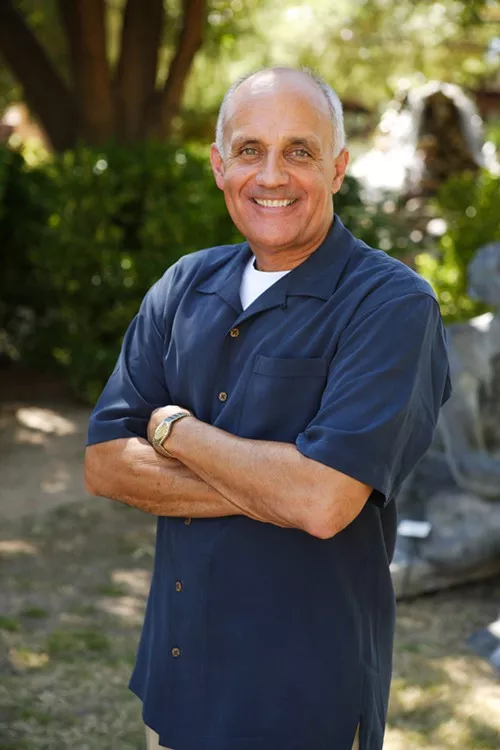
As the University of Arizona conducts a pre-fall break testing blitz, its coronavirus numbers are remaining relatively steady, UA President Robert C. Robbins shared in a news conference Monday, Nov. 16.
From Nov. 6 through Nov. 15, UA found 76 positive coronavirus cases after administering 8,651 tests for a positivity rate of 0.9%, the same rate the university reported the previous 10-day period.
On Nov. 9, the university began its “testing blitz” to reduce the spread of COVID-19 as travel is likely to increase over the holiday season. Testing will run through Nov. 25, and students are asked to register for an appointment-only test after completing a survey with their traveling plans.
Robbins said this week, the university has administered 7,541 tests as part of this program, a 34% increase in COVID-19 tests since last week.
If students travel outside the Tucson area over fall break, the university is asking them to complete the semester outside the area or remotely online. Those who don’t travel can complete the semester from their student residences.
All students will complete the semester remotely when classes resume Nov. 30. In January, the university will return to stage two of its reentry plan with up to 50 students attending classes in person, according to Robbins.
All students who attend in-person classes in the spring semester will be required to get tested for COVID-19. Robbins said UA will only require tests for on-campus students because they “cannot legally mandate testing for other students as a prerequisite for enrollment.”
Reentry Task Force Director Richard Carmona went over statewide COVID-19 data that shows a 14-day increase in cases of 75%, a 29% increase in deaths and a 57% increase in hospitalizations throughout Arizona.
Pima County’s current R0, pronounced “R naught”—which indicates how contagious a virus is by showing the average number of people who will contract the virus from an infected person—is at 1.68. The transmissibility rate for the zip code surrounding the university has decreased from 2.22 last week to 1.33 this week, according to Carmona.
“We feel confident that some of our public health practices have been manifest in better numbers, but we are also very concerned of what’s happening in the bigger environment, and this is continuing to spread in spite of these good practices,” Carmona said.
UA’s CART team, a collaboration with the UA and Tucson police departments that looks for noncompliance to COVID-19 precautions, responded to 14 incidents of large gatherings last week. The week prior, they reported 7 incidents.
“That tells us that there are still people in our university community who are not taking this seriously,” Carmona said. “They’re going to social events, which are the cause of the spread... We must do all we can to prevent the spread.”
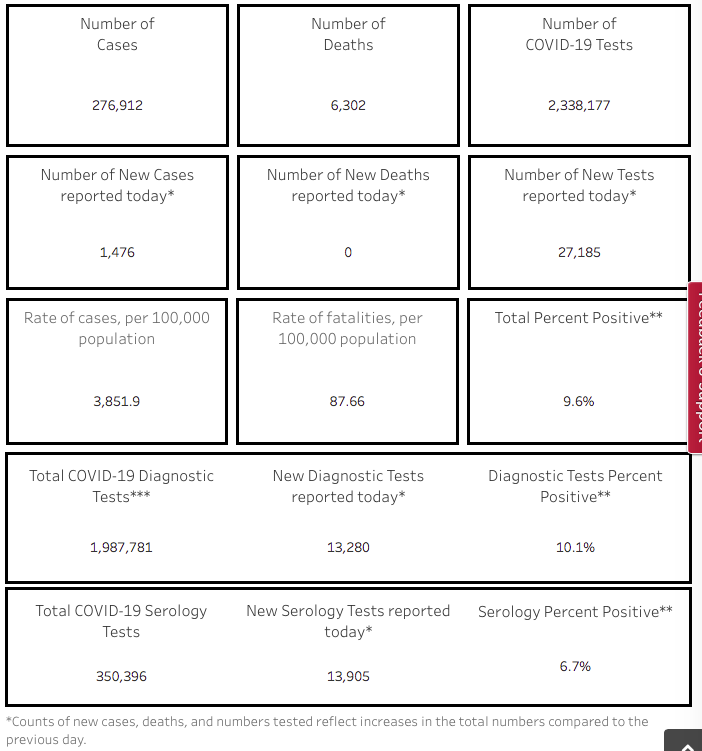
With more than 7,300 new cases reported since Friday morning, the number of Arizona’s confirmed novel coronavirus cases climbed to nearly 277,000 as of Monday, Nov. 16, according to the Arizona Department of Health Services.

Pima County, which reported 285 new cases today, has seen 33,087 of the state’s 276,912 confirmed cases.
A total of 6,302 Arizonans had died after contracting COVID-19, including 670 deaths in Pima County, according to the Nov. 16 report.
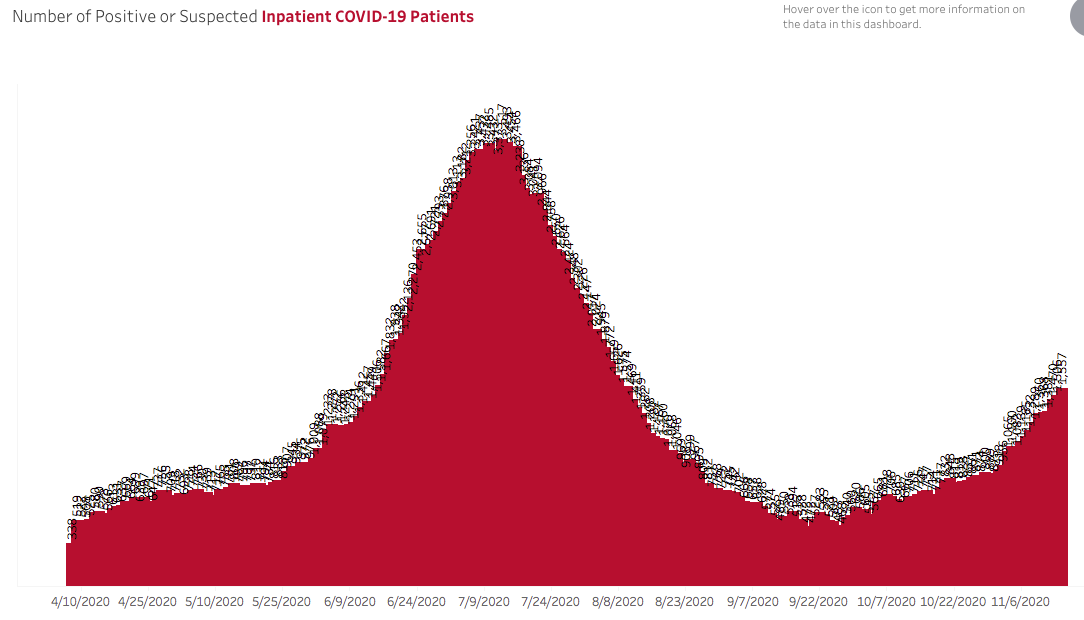
The number of hospitalized COVID cases statewide continues to climb upward as the virus has begun to spread more rapidly. ADHS reported that as of Nov. 15, 1,557 COVID patients were hospitalized in the state, the highest that number has been since Aug. 10. That number peaked with 3,517 hospitalized COVID patients on July 13; it hit a subsequent low of 468 on Sept. 27.
A total of 1,038 people visited emergency rooms on Nov. 15 with COVID symptoms. That number peaked at 2,008 on July 7; it hit a subsequent low of 653 on Sept. 28.
A total of 374 COVID-19 patients were in intensive care unit beds on Nov. 15, the highest that number has been since Aug. 19. The number of COVID patients in ICUs peaked at 970 on July 13 and hit a subsequent low of 114 on Sept. 22.
On a week-by-week basis in Pima County, the number of positive COVID tests peaked the week ending July 4 with 2,452 cases, according to an Nov. 9 report from the Pima County Health Department. (Numbers in this report are subject to revision.)
Pima County is seeing a steady rise in cases in recent weeks. For the week ending Oct. 17, 545 cases were reported; for the week ending Oct. 24, 911 cases were reported; for the week ending Oct. 31, 1,247 cases were reported; and for the week ending Nov. 7, 1,227 cases were reported.
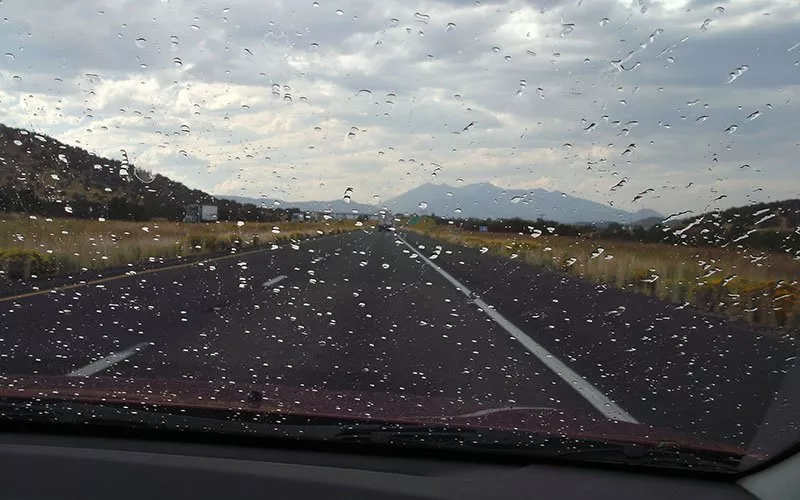
WASHINGTON – State and federal weather officials are predicting a warmer and drier than normal winter for Arizona, which would come on the heels of the driest monsoon ever recorded in the state.
The “nonsoon” summer followed by a La Niña winter could spell trouble for water resources and wildfire conditions in a state already gripped by drought, the officials said.
“Going into a dry winter after this dry summer is going to be making the drought worse, for sure,” said Nancy Selover, a state climatologist at Arizona State University.
Usually occurring once every two to seven years during the winter, the La Niña weather pattern stems from a cold phase of the Pacific Ocean that shifts the jet stream, leading to colder weather in the north and warm and dry weather in the Southwest.
David Miskus, a meteorologist at the Climate Prediction Center at the National Weather Service, said that if the La Niña weather system “does what it normally does – sub-normal precipitation and above-normal temperatures in the wintertime – that’s exactly what Arizona and the Southwest does not need this winter.” The long-term outlook is calling for just that.
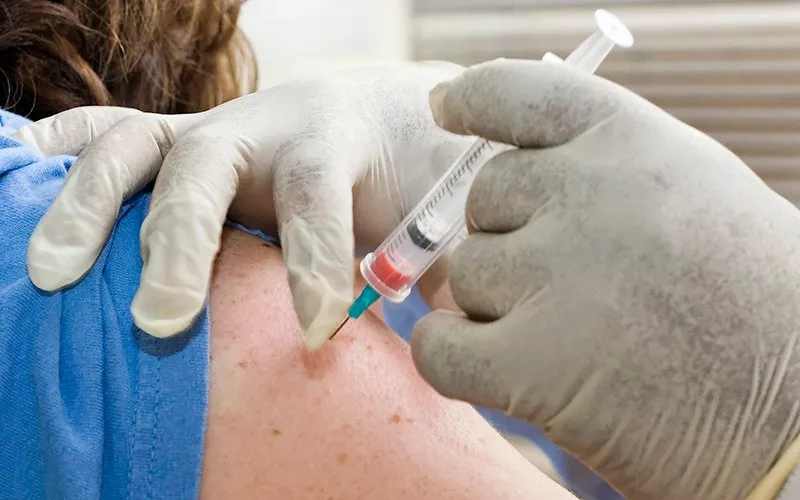
WASHINGTON – With Santa Cruz County facing one of the highest rates of COVID-19 cases in the state, Tubac Fire Department Fire Chief Cheryl Horvath knew that a vaccine is what’s needed to bring an end to the pandemic.
But a vaccine requires human volunteers as test subjects.
Horvath had never taken part in a clinical research trial before and was a little concerned about the risk, but she said she wanted to do something that would help her community and also protect her firefighters. So after some research, she signed up.
Rep. Amish Shah, D-Phoenix, knows all about the risks involved in clinical trials from his 19 years working as a doctor. But he also knows the safeguards. And Shah, like Horvath, wanted to help.
“Having a familiarity with it, I felt comfortable volunteering for it,” Shah said. “I understand the risk and benefits of what is involved, and I think it’s a service to humanity.”
They are just two of the tens of thousands of people across the country who have volunteered to be test subjects for pharmaceutical companies racing to come up with a vaccine to fight the coronavirus that had infected 10.7 million and killed 244,269 Americans as of Friday, according to data from Johns Hopkins University. Arizona officials reported 269,577 people had tested positive for COVID-19 and 6,257 had died from it as of Friday.

Saturday, November 14, 2020

With all the votes counted in Pima County, Democrat Rex Scott has won the District 1 seat on the Pima County Board of Supervisors by a mere 730 votes.
The district, representing Marana, Casa Adobes, Oro Valley, and the Catalina Foothills, has reliably voted for Republicans in recent decades but with an open seat up for grabs, the voters supported the Democratic candidate over GOP nominee Steve Spain, who had the endorsement of retiring incumbent Republican Supervisor Ally Miller.
The Board of Supervisors is responsible for a wide range of public policy in the county. The five-member board represents each district, approves the county budget, sets health regulations such as the current mask mandate to combat the spread of the coronavirus. The board also oversees development issues such as rezoning and permitting and manages the county sewer system along with roads in unincorporated areas, among other responsibilities.
Scott began running for District 1 supervisor in September 2019, three months before current supervisor Ally Miller announced she wouldn’t seek another term.
The new District 1 supervisor has worked in public schools as both a teacher and administrator for 30 years and said he felt “a combination of honored and humbled” when he learned he won the race.
“It’s a tremendous honor to be able to represent people in a place that I know very well, and that has deep meaning for me, but I’m also very humbled because of the challenges that we're going to be taking on, especially dealing with the remainder of the pandemic and the recovery from it.”
Coronavirus recovery is Scott’s top priority when entering the office. As a supervisor, he says he’ll start by addressing “people who have suffered the most,” such as those struggling to make rent as coronavirus’ economic toll continues.
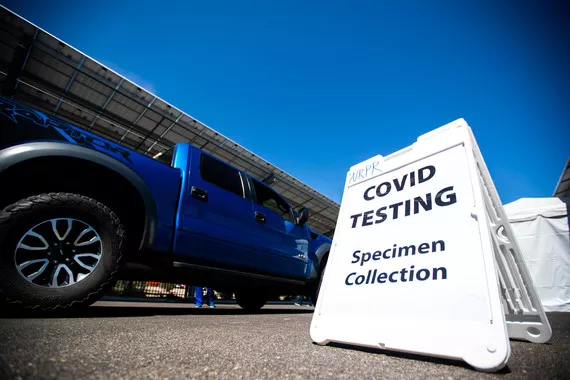
Within the next three weeks, new drive-thru COVID-19 testing sites will be available at three Pima Community College locations, the county health department announced in a press release Friday.
The Pima County Health Department, Pima Community College and Arizona State University have partnered to create three new testing sites in an extension of the current ASU testing site at the Ellie Towne Flowing Wells Community Center.
At the drive-thru sites, COVID-19 testing will be offered through spit samples instead of nasal canal swabs.
Each site will conduct testing from 9 a.m. to noon, and registration is required in advance. Only patients 5 years or older can be tested.
“As cases rise, we are eager to increase available testing for the people of Pima County,” Pima County Public Health Director Theresa Cullen said in the press release. “If you know or suspect you have been exposed to COVID-19, we encourage you to get tested.”
The first testing site will open Monday, Nov. 16, at the Pima Community College West Campus.
Here are the three drive-thru locations that will be offering COVID-19 testing:
Friday, November 13, 2020
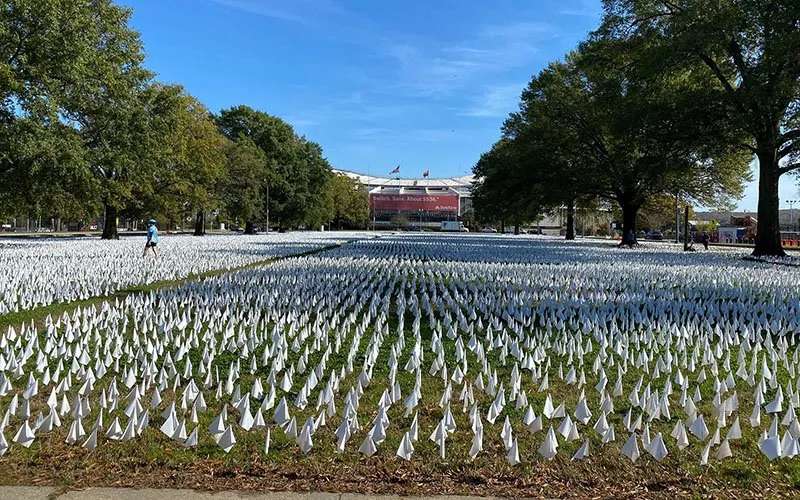
WASHINGTON – The hardest part of Suzanne Firstenberg’s day is when she changes the numbers on the board – each number representing an American who has died as a result of COVID-19.
She climbs on a concrete ledge, pulls off a large poster with one number on it and replaces it with a higher number – 241,949 as of Thursday – on a billboard in front of a field of nearly as many little, white flags, each representing a victim of the pandemic.
It’s all part of Firstenberg’s exhibit, “In America: How could this happen…”, an installation that sprawls over the parade grounds at the D.C. Armory. Firstenberg said she was inspired to create the exhibit “to help people understand the number, to make sense of it.”
“So that we would not just release it (the death toll) and say, it is what it is, but rather, we would be inspired to take care of each other,” she said recently.
It comes as the number of new cases is spiking across the country, with more than 100,000 new cases every day for the past nine days, according to Johns Hopkins University’s Coronavirus Resource Center.
The trend is reflected in Arizona, where cases have started to surge again after falling sharply from this summer, when the state was a national hotspot for the spread of the disease.

McSally congratulated her Democratic opponent Mark Kelly on winning an election that turned out to be one of the most expensive in the nation. According to the Associated Press, Kelly won 51.2% of the vote (1,714,466), beating McSally by more than 75,000 votes.
"With nearly all the votes counted, I called Mark Kelly this morning to congratulate him on winning this race. I also offered support in his transition to ensure Arizonans are best served during this time. I wish him all the best," McSally said.
With her defeat, this is McSally's second senate loss to a Democrat in only two years, after losing in the 2018 election to Kyrsten Sinema. McSally was subsequently appointed to fill out the late Sen. John McCain's senate seat.
This will be the first time Arizona has had two Democrat senators since the 1950s.
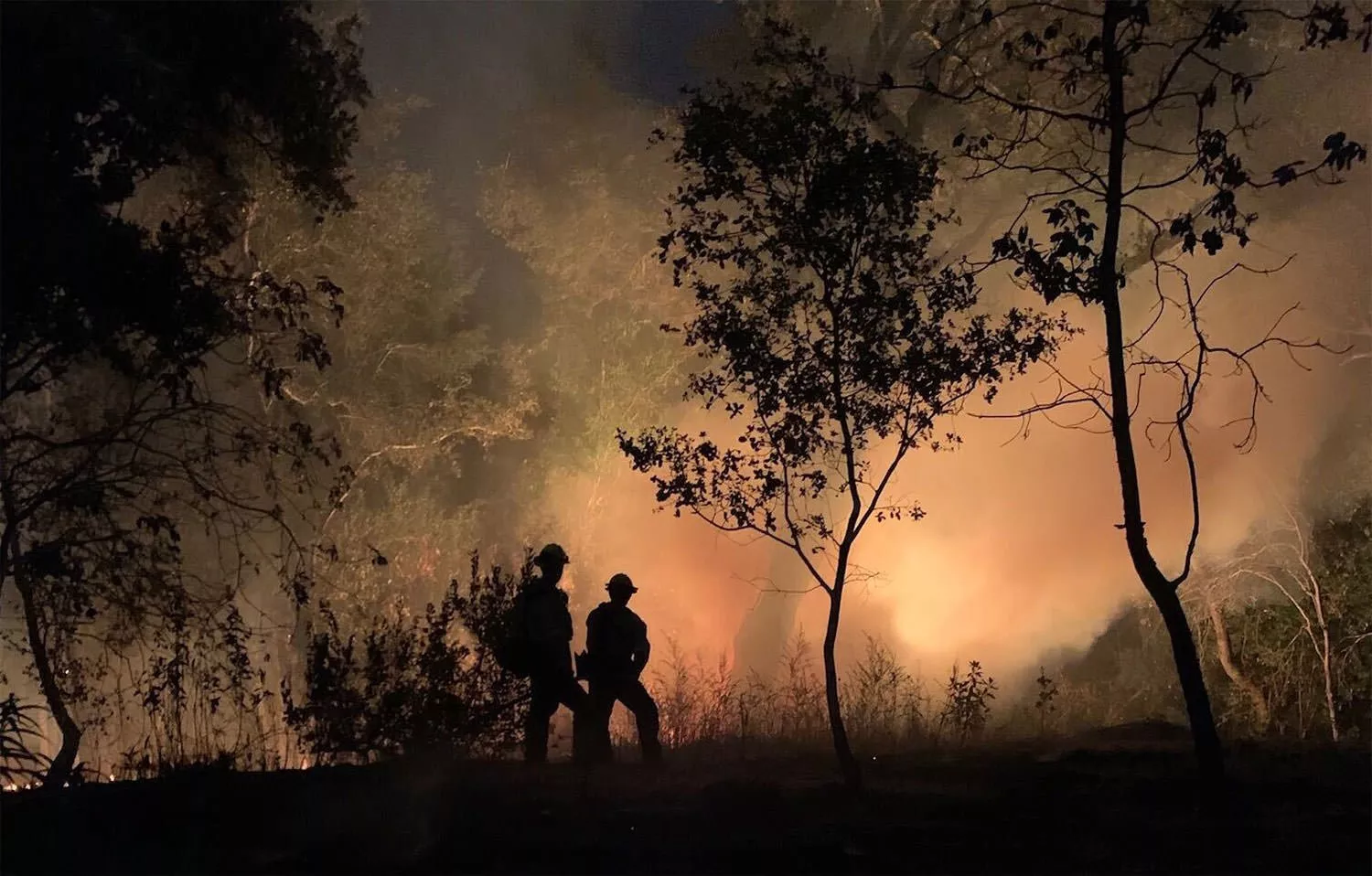
LOS ANGELES – California’s record wildfire season has left many cannabis growers concerned about Croptober – the primary harvest season for marijuana sold in California, where it’s legally consumed.
As fires continue burning into the record book, California growers – whose operations are federally illegal and therefore difficult to insure – are demanding protections for their billion-dollar industry.
Cannabis farms, as well as wineries, agricultural farms, have been hard hit by the wide range of California fires, and the toll faced by cannabis farms is among the worst.
Since January, California has had more than 9,177 wildfires burning more than 4.1 million acres, which is more than double the old record in 2018, according to Cal Fire.
High in the hills overlooking the Russian River Valley in Sonoma County, Kila Peterson and her daughter, Keala Peterson, are partners on Sweet Creek Farm, a small family-owned and licensed cannabis farm that also grows avocados and sweet bananas.
The cannabis venture started more than 10 years ago when Kila began growing it to produce CBD for her father, who had cancer. The mother-daughter approach is rooted in sustainability; their techniques include a solar-powered irrigation system fed by rainwater catchment and pollinator-friendly companion flowers, according to the farm’s website.

