

Friday, November 13, 2020
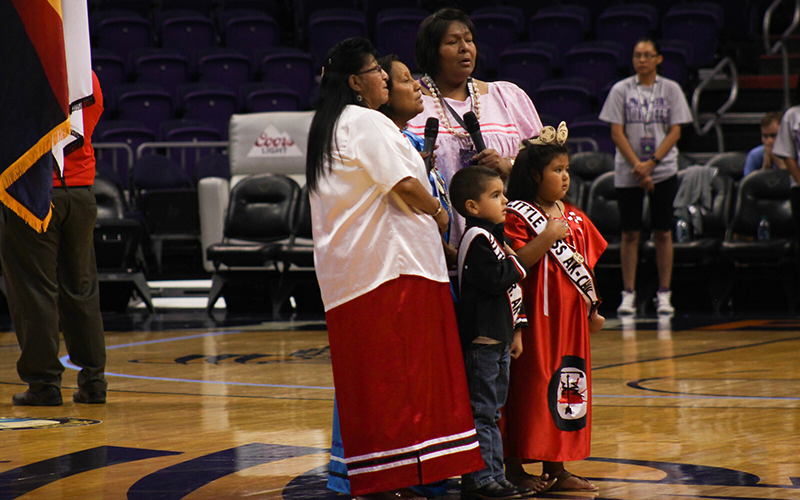
PHOENIX – After a one-year absence because of the COVID-19 pandemic, the Native American Basketball Invitational will return in July, showcasing indigenous basketball players from across the U.S., Canada and New Zealand at venues around the Valley.
The championship games will take place at the newly renovated downtown arena of the Phoenix Suns and Mercury.
The decision to cancel the 2020 tournament crushed organizers.
“We cried. We had tears when we had to cancel because we know how important the event is to the kids,” said GinaMarie Scarpa, founder and president of the NABI Foundation, which formed in 2002 to organize the event. “And then, of course, news stories started coming out about the cancellation and how devastating it was to our tribal youth across the country.”
It is another blow to a community that has been disproportionately impacted by the coronavirus. The Center for Disease Control and Prevention reports that Native Americans are 5.3 times more likely than the white community to be hospitalized due to COVID-19.
The NABI is considered the premier basketball tournament for indigenous youth, and was the first to become certified by the NCAA (2007), according to the organization’s website.
While basketball brings the athletes – boys and girls ages 14 to 19 – together for the tournament, the NABI Foundation’s ultimate goal is to teach athletes the importance of education and provide opportunities through scholarships and educational seminars. The program has provided more than $250,000 in scholarships.
During the invitational, NABI hosts a college and career fair. College scouts are on hand, and a training camp is offered. High school teams that participate can bring one freshman player for a free training camp and an educational youth seminar with guest speakers, who are often tournament alumni.
“We expanded our educational seminar to a full-blown educational youth summit,” Scarpa said. “We had 36 presentations in 2019. We had great speakers. So they really come to learn and we use basketball as a tool.”
While there is hope that the pandemic will be under control by July, the NABI is planning ahead in case it is still a threat. A Native American youth summit will be held online and organizers will strictly follow protocols recommended by the CDC and the state of Arizona.
“The NABI Foundation will continue to monitor the situation and amend the program according to imposed safety guidelines closer to the program dates. A full schedule of events will be released mid-June,” said Lynette Lewis, Director of Basketball Operations & Program Development, in the statement released by the NABI when the return of the event was announced.
One of the organization’s board members will play an important role in preparations.
“We have a wonderful kind of diverse board of directors, and one of our board of directors just happens to be one of the owners of a PPE (personal protective equipment) company,” Scarpa said. “So, he’s committed to providing everything we need for all the gyms, all the kids. I really think we will bring it back to normal.”
“I think if we do allow a big sporting event, it might be limited seating … masks are going to be mandatory, there will be sanitizing stations. We are going to do everything possible to keep our kids safe.”
While the tournament didn’t happen last summer, organizers were still at work. One avenue for raising funds at the tournament is the sale of merchandise during the event, and there are now plans to make items available beyond tournament week.
“Usually we’re like, ‘Nope, you have to buy it this week and then it’s done.’” Scarpa said. “And so, we are now in talks with another big sporting company who wants to take the NABI line nationally and online.
“Not only will it be sold at NABI during NABI week, but it will be sold all year round. We’ll have designers (and) have access to the graphic designers in their marketing department – all that fun stuff that goes with it – and also producing our own native theme for the uniforms for the teams.”
The NABI Foundation and tournament were started in 2002 by Mark West, the former Suns center and current team vice-president for player programs; Scarpa, who is the former executive director of the charitable foundation of another former Suns player, A.C. Green; and the late Scott Podleski, the former ticket director of the Arizona Rattlers who passed away from cancer in 2010.
Their enthusiasm for the project has carried on, and drives organizers still.
“I think it’s just the passion, and it’s my staff that shares that passion,” Scarpa said. “They love it. They love working with the kids. They love to see the outcome.”
Now with the NABI tournament set to return in 2021, Scarpa is hoping the event will continue to serve its purpose for years to come, providing educational opportunities for young Native American athletes as well as indigenous hoopers from Canada and beyond.
“It’s really the backbone portion of it, to load them up with opportunities,” Scarpa said. “The goal is (when they) leave NABI and NABI week, they’re really thinking seriously about a higher educational plan for their lives.”
Since opening in a hybrid model on Oct. 12, the Amphitheater Unified School District has reported 32 total COVID-19 cases causing 234 individuals to resultantly quarantine, according to Communications Director Michelle Valenzuela.
Coronavirus cases have reached 14 different school sites, and 11 of those cases are still active. From Nov. 1-9, Amphitheater reported 12 coronavirus cases resulting in 43 students and staff members quarantining.
Here are all the Amphitheater schools that have reported positive coronavirus cases since reopening:
Amphitheater High School
Two positive student cases reported on Nov. 1; 34 quarantined as a result.
Canyon del Oro High School
One positive employee case reported on Nov. 7; no individuals quarantined as a result.
One positive student case reported on Nov. 2; one quarantined as a result.
One positive student case reported on Oct. 19; 12 quarantined as a result. This case is no longer active.
Ironwood Ridge High School

With more than 3,000 new cases reported today, the number of Arizona’s confirmed novel coronavirus cases climbed past 269,000 as of Friday, Nov. 13, according to the Arizona Department of Health Services.

Pima County, which reported 191 new cases today, has seen 31,874 of the state’s 269,577 confirmed cases.
After 17 new deaths were reported today, a total of 6,257 Arizonans had died after contracting COVID-19, including 669 deaths in Pima County, according to the Nov. 13 report.
The number of hospitalized COVID cases statewide continues to climb upward as the virus has begun to spread more rapidly. ADHS reported that as of Nov. 12, 1,381 COVID patients were hospitalized in the state, the highest that number has been since Aug. 12. That number peaked with 3,517 hospitalized COVID patients on July 13; it hit a subsequent low of 468 on Sept. 27.

A total of 1,105 people visited emergency rooms on Nov. 12 with COVID symptoms. That number peaked at 2,008 on July 7; it hit a subsequent low of 653 on Sept. 28.
A total of 335 COVID-19 patients were in intensive care unit beds on Nov. 12, the highest that number has been since Aug. 23. The number of COVID patients in ICUs peaked at 970 on July 13 and hit a subsequent low of 114 on Sept. 22.
On a week-by-week basis in Pima County, the number of positive COVID tests peaked the week ending July 4 with 2,452 cases, according to an Nov. 9 report from the Pima County Health Department. (Numbers in this report are subject to revision.)
Pima County is seeing a steady rise in cases in recent weeks. For the week ending Oct. 17, 545 cases were reported; for the week ending Oct. 24, 911 cases were reported; for the week ending Oct. 31, 1,247 cases were reported; and for the week ending Nov. 7, 1,227 cases were reported.
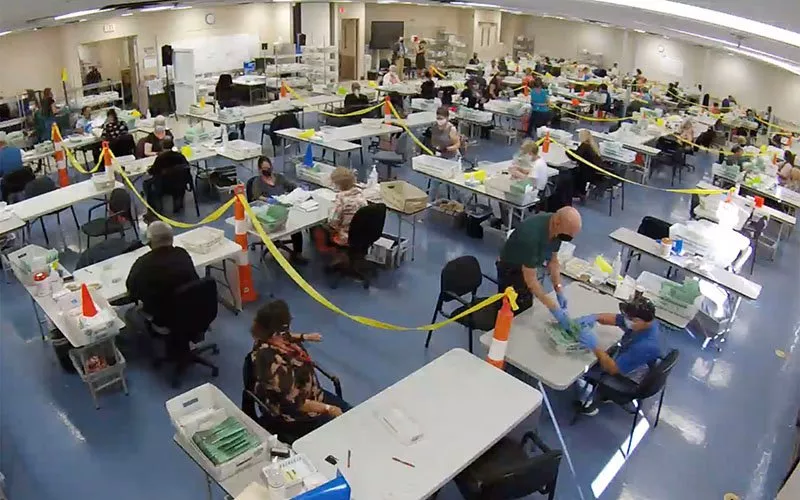
WASHINGTON – Trump campaign lawyers dropped claims of voter fraud Thursday, telling a Maricopa County Superior Court judge instead that they were in court to point out “good faith errors” by election officials that could have affected the vote count.
“We are not alleging fraud in this lawsuit,” said Kory Langhofer, an attorney for the Trump campaign, in response to pointed questioning from Superior Court Judge Daniel Kiley. “We are not alleging that anyone is stealing the election.”
That is contrary to what Trump supporters have been saying during several days of protests in which they gathered outside the State Capitol and the Maricopa County Tabulation and Election Center around the rallying cry “Stop the Steal.”
The hearing comes as the latest returns from state elections officials show President Donald Trump trailing President-elect Joe Biden by 11,034 votes in Arizona with just 16,040 still to be counted – 6,715 in Maricopa County.
That gap was noted by lawyers for state and county officials, who said the Trump campaign was arguing over fewer than 200 ballots out of more than 3.4 million cast. They accused the campaign of simply trying to “undermine the integrity and credibility of the election.”
Thursday, November 12, 2020

PHOENIX – If fans look a little, well, stiff at Saturday’s Arizona State game, don’t be alarmed.
They’re not real.
The Pacific-12 Conference’s decision to allow only family members to attend football games this season prompted the university to follow the lead of professional teams by allowing fans to buy cardboard cutouts of themselves and loved ones.
Those loved ones include dogs, cats and yes, even iguanas.
Chandler’s Sherry Brooks bought four cutouts, one for each member of her family.
“Someone sent me a photo and we are already in our seats,” she said. “We like to get to games early.”
Gilbert’s Megan Foutz, 28, has attended ASU games for years and was disappointed at the direction the season took. She was grateful when her parents bought a cutout of her although she mused, “I would have preferred to see my dog, Bailey.”
The cutouts cost $40 for faculty and season-ticket holders, and $50 for everyone else. About 1,000 have been produced for students and another 1,000 for other fans.
ASU will also place cardboard cutouts of famous alums in the stands. The university’s student spirit group, the 942 Crew, will determine who they will be.
Cutouts of band members will be there, too, so that the group that provides game-day entertainment will have a presence.
The university turned to the ASU Print and Imaging Lab instead of sourcing the orders out to cut down on cost and provide more money to the athletic department. After printing, the lab delivers large pallets with the cutouts so they can be installed in the stadium.
We were blown away by the response,” said Michael Meitin, ASU senior associate athletic director. “We kind of predicted it would get good response based on what we’d seen in the professional leagues, but we were still surprised at just how excited people were.”
If Saturday’s game against California will be played remains a mystery. The decision to allow the Golden Bears to compete is in the hands of Berkeley Public Health, which has required players from one entire position group to quarantine for up to 14 days after being exposed to a teammate who has tested positive for COVID-19.
Kickoff is set for 8:30 MST and will be televised by ESPN2 if the game is allowed to go forward.
As coronavirus cases, deaths and hospitalizations continue to rise across the state, Arizona’s public health officials are warning of an active increase in the virus that will worsen without widespread mitigation tactics.
The statewide percent positivity for COVID-19 increased to 9% last week. A rate of 5% is a good indicator the spread of the virus is under control.
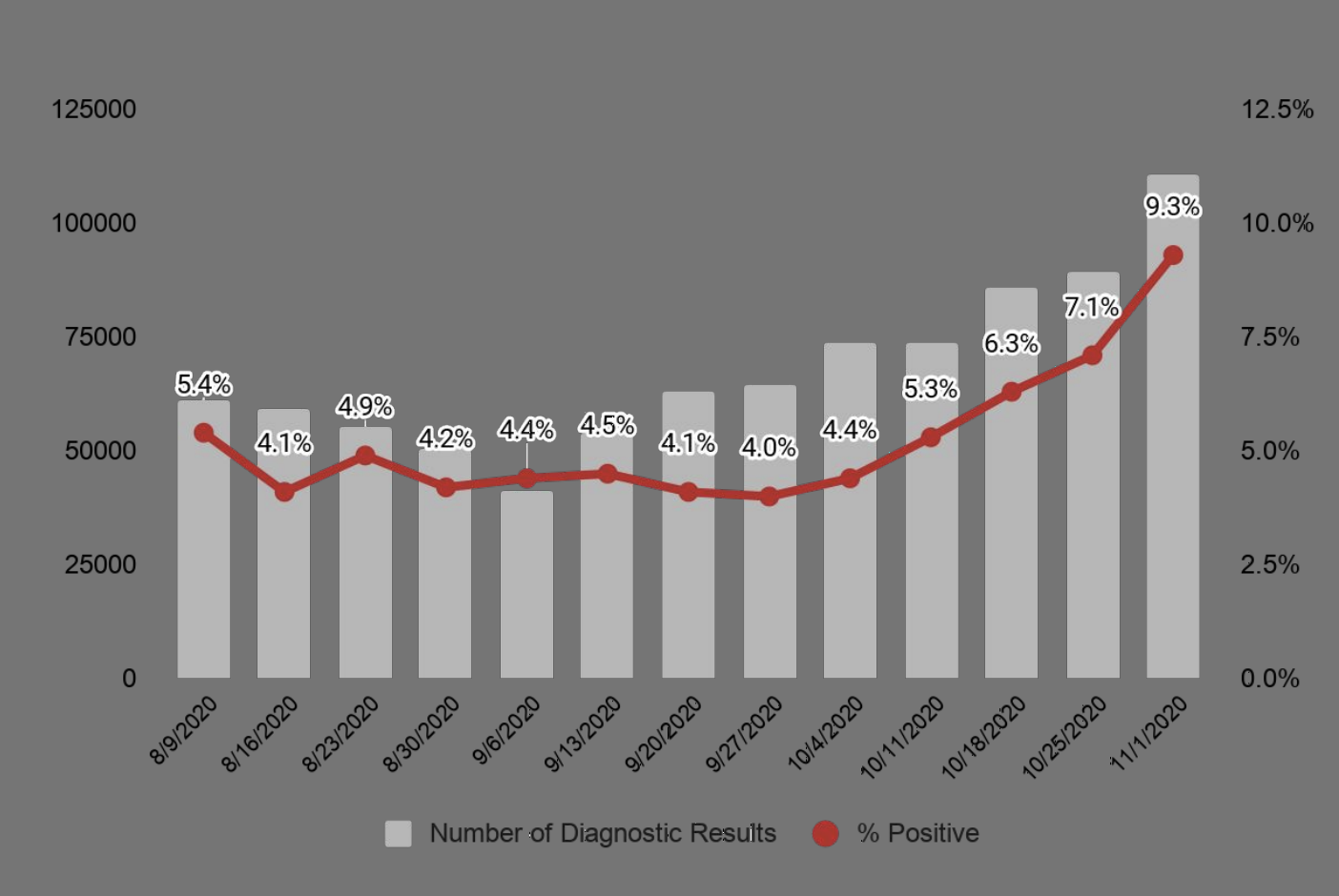
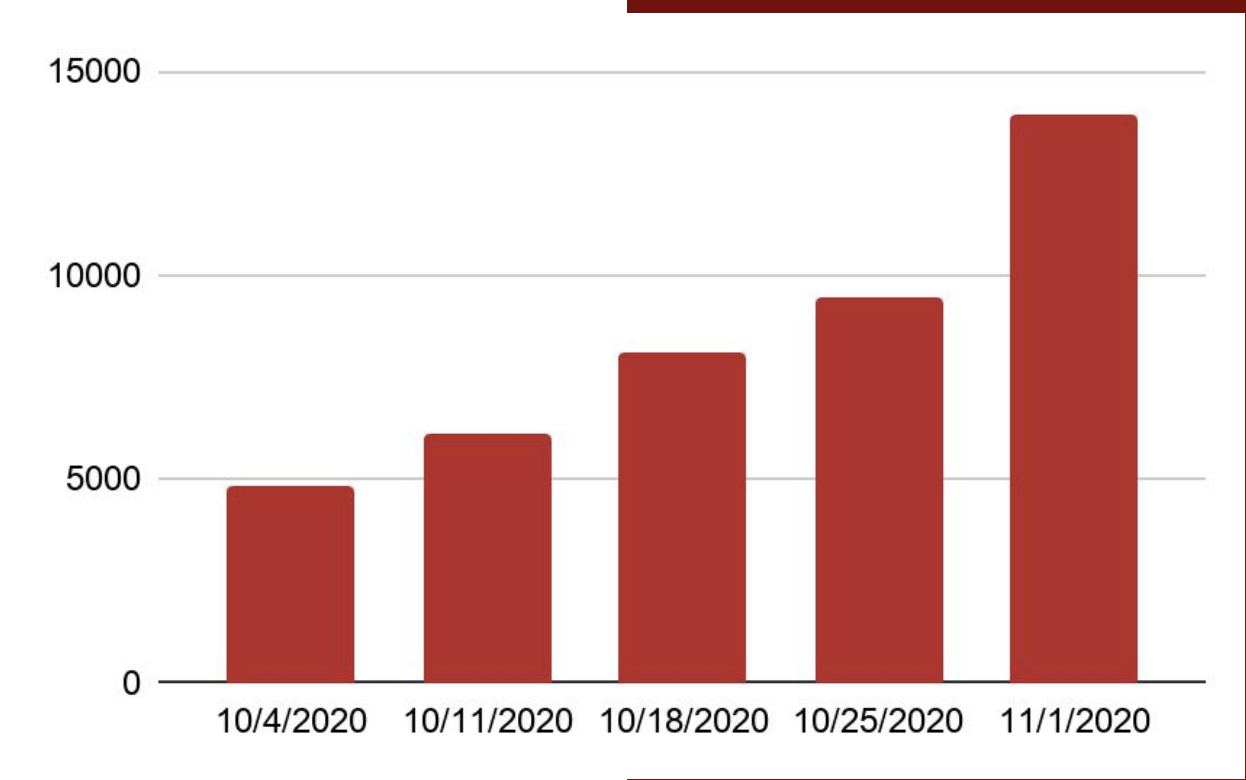
Arizona reported over 13,000 cases the week of Nov. 1, an 187% increase from the beginning of last month, according to data from the Arizona Department of Health Services (ADHS).
“Arizonans need to remain vigilant, now is not the time to let our guard down,” ADHS Director Dr. Cara Christ said in a COVID-19 video update for Nov. 10. “We have seen a concerning increase in the COVID-19 rates in many counties over the past few weeks.”
Today, Arizona reported nearly 1,400 new coronavirus cases and hit a statewide total of 266,562 cases. Pima County reported 191 new cases today and has seen 31,538 total cases.
According to Christ. COVID-19-like illness is also on the rise with increased inpatient and emergency room visits. She said although the state’s hospitals are reporting sufficient capacity, they’re also reporting a higher number of beds in use.
The Arizona Surge Line, a system established by ADHS in April that prevents one hospital from becoming overwhelmed by facilitating COVID-19 patient admission and transfer, is seeing increased instances of these transfers. Christ called this “an early indicator of hospital capacity concerns.”
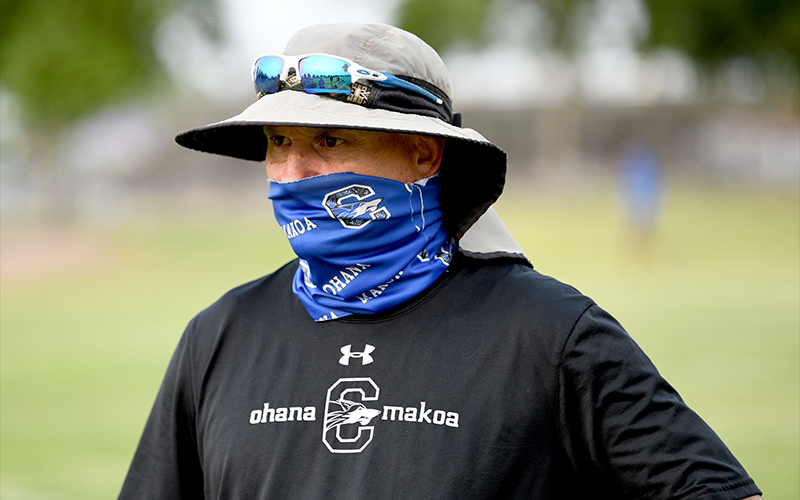
PHOENIX – It’s official. AZ Preps 365 has released its first football rankings after a one-week delay.
As usual, they are full of surprises, like they are most every year.
But this year, the rankings endured a different process because so many teams had to cancel games and shuffle their schedules to accommodate either their own or opponents’ COVID-19 outbreaks.
The undefeated Chandler Wolves are in the 6A top spot, followed by the 5-0 Hamilton Huskies and then, surprisingly, the 4-2 Liberty Lions. Undefeated Corona Del Sol and Mountain View round out the top five.
The Saguaro Sabercats, who are ranked No. 3 in the state by Maxpreps, clocked in at No. 6 in the 5A state rankings. The Sabercats have had numerous last-minute cancellations, but have been able to replace two of their canceled games and are on pace to move up in next week’s rankings. 5A newcomers Desert Edge and Salpointe Catholic, both undefeated, sit at the top of the conference rankings.
“Last year, 97% of the eligible 207 schools for postseason play completed a minimum five games prior to the first release of the rankings, with all schools playing at least four games,” said Seth Polansky, AIA sports information coordinator. “With the cancellations due to this unique year, only 73% of the eligible 145 schools for football postseason have completed a minimum of five games, with some schools only completing two to three games thus far. It is based on those statistics the AIA has decided to push the first release of the 11-man football rankings to Nov. 10.”
As it stands right now, the Open Division features 6A’s Chandler, Hamilton, and Liberty, 5A’s Desert Edge, Salpointe Catholic, Sunrise Mountain and Sunnyslope, and 4A’s Casa Grande. This would leave out 2019 Open Division No. 2 seed Centennial, No. 8 seed Chaparral and Saguaro, which was seeded third.

The Old Pueblo ranks #1 in the nation's top 100 largest cities for having the cheapest studio apartment prices, at an average of $659 a month, as reported by a recent apartmentguide.com study. Tucson also has the 10th cheapest one-bedroom apartments and rises to 16th for a two-bedroom unit, according to the study.
Tucson comes in at #3 for smallest studio apartments in America's top 100 cities weighing in with an average of 361 square feet of living space. One-bedroom rentals come in at #5 with a 654 square-foot average and two-bedroom domiciles top out at #16 on the list at 972 square feet.
The study was intended to see which U.S. city had the smallest apartments based populations of more than 220,000 inhabitants, taking into account the average square-foot per space, along with the average rent for the type of residence in each city researched.
Portland, Ore., and Reno placed #1 and #2 respectively on the ranking with Albuquerque coming in #4, and Kansas City capping the list's top 5.
To see the full results of the apartmentguide.com study, click here.
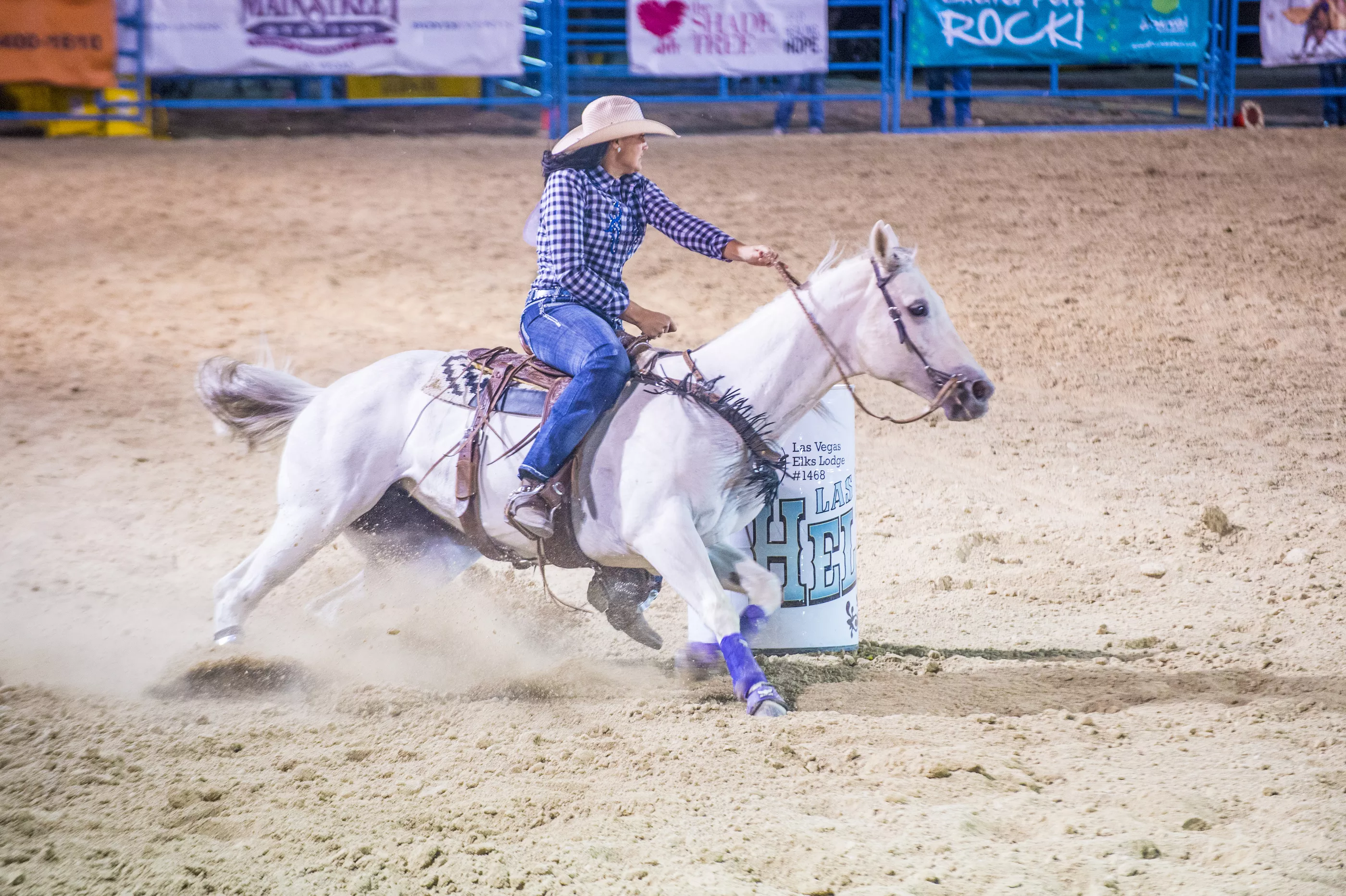
“With the amount of planning that goes into this event, we feel there is too much uncertainty to take the chance of continuing forward at this time,” Mark Baird, Chairman of the Board, Tucson Rodeo said in a released statement. "This difficult decision is in the best interest of the health and safety of our community, guests, volunteers, vendors, sponsors and contestants."
The Tucson Rodeo typically brings in $15 million in revenue to surrounding businesses in the area each year, according to the release. The board donates approximately $250,000 to charitable organizations on average.
Organizers hope COVID-19 subsides in the near future and are already planning the 2022 Rodeo for Feb. 19-27.

