

Thursday, October 22, 2020

As the drums ring out the Chinese New Year in a Singapore market, two young women wearing face masks watch the celebration. It's a scene characteristic of local artist Jacqueline Chanda’s work, which often allows the viewer to construct their own narrative of a scene.
“I like to catch these those kind of scenes where people can say ‘I wonder what they were thinking?’ or ‘I wonder where was this guy is going?’,” Chanda said. “Did he have intent or was he was he simply taking a stroll?”
Chanda’s painting, “Girl with a Turquoise Face Mask,” is based on a photograph she took while on vacation in February. The artwork is featured in the “Great American Paint In,” a new collection of works which shares artists’ experiences of living through the pandemic.
“The Great American Paint In,” now available online, documents the emotions felt by professional artists across the country, with 48 states represented in over 250 pieces, according to project founder, artist and engineer Bill Weinaug.

“I put a lot of effort into trying to make sure I did not lose my business at the end of the day, because I had no clue when the end of the day was coming,” Weinaug said. “And my daughter's telling me ‘Dad, you just can't shut down you need to stay relevant. This will be over with someday.’”
His daughter pitched him the idea of taking the “plein air” painting events he hosted at his eco-resort Wekiva Island in Longwood, Florida, and moving them online. Arists gather for plein air painting events and simultaneously paint their outdoor environment.
“In our case they go out into the wilderness and they paint for a week,” Weinaug said. “So they come with blank canvases, every day they add art and we build a temporary art gallery.”
Thus, “The Great American Paint In” was created. Artists paint their response to the pandemic and the emotions of quarantine, and submit the work to a jury who decides if it merits inclusion in the project.
The concept was a natural fit for artists nationwide with ample time to practice their craft but without access to galleries or events. The project’s website allows the artists to be able to sell their work and promote themselves.
Weinaug said he used his training as an engineer to investigate previous pandemics and said he didn’t see much art being created at the time of the outbreaks.
“We wanted to document what was going on in America during this pandemic so that future generations could look back and see it through the artist's eyes,” he said
Through the eyes of Chanda’s since returning to the United States somethings that haven’t changed is she goes into her studio to paint but finds herself accumulating more of her work.
“It's really been that sense of isolation, not being able to be connected with my friends, my daughter lives with me and my mother is not too far from here ... So I see her often enough, but it's been a different sense of isolation, it's an unwanted isolation,” she said.
Weinaug’s vision for the project is for it to serve as a textbook example of how to paint emotion. He intends to publish the collection as a book and is in the process of selecting a publisher but noted: “We're still in the middle of the pandemic and the story is still being written.”
To view the collection and Chanda’s submission, visit: thegreatpaint-in.com
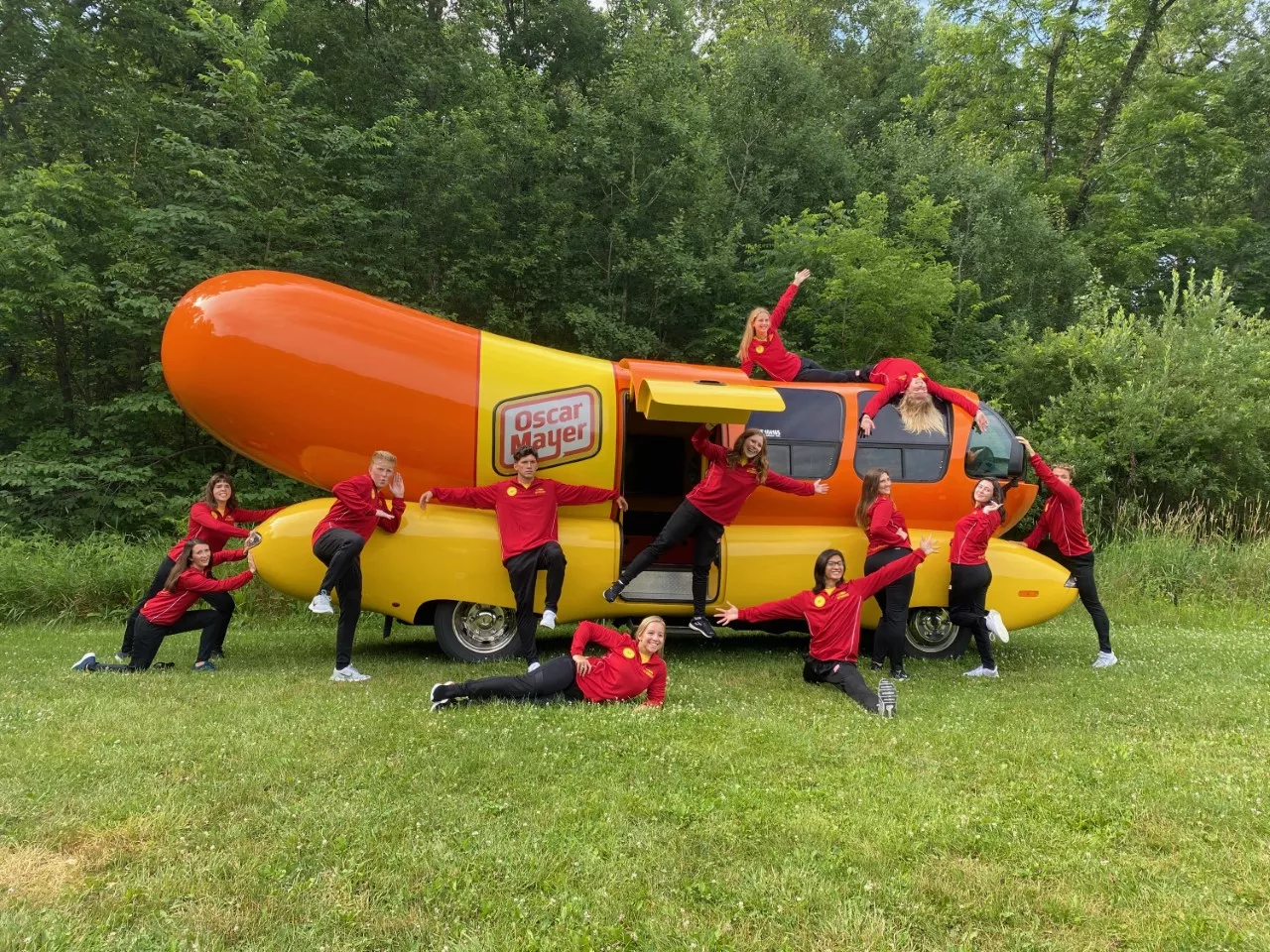
“Oh, I wish I were an Oscar Mayer wee-ner”
The world-famous Wienermobile is rolling through Pima County this weekend, giving residents an experience to relish—a chance to “meat” those bun-tastic hot doggers who are on a coast to coast weenie roast.
Oscar Mayer Hotdoggers Mayochup Molly and Saucy Spence will be handing out wiener whistles and taking pictures with you, their sausage subjects. If you’re nice to them, they may even give you your own honorary hot dogger name. If you’re really nice, you’ll even get a chance to win their special Halloween wiener whistle.
The Wienermobile will be making stops at:
- Marana Pumpkin Patch — 1 to 7 p.m., today, 14901 N. Wentz Road
- Botanical Gardens — 9 to 11:30 a.m., Oct. 23, 2150 N. Alvernon Way
- St. Philip's Plaza Market — 9 a.m. to 1 p.m., Oct. 24, 4280 N. Campbell Ave.
- Petting Zoo and Funny Foot Farm — 3 to 6 p.m., Oct. 24, 2405 W. Wetmore Road
- San Xavier del Bac Mission — noon to 1:30 p.m, Oct. 25, 1950 W. San Xavier Road
Want the Wienermobile to come visit your work or private event while in town?
Send them a request at https://khcmobiletour.com/wienermobile/request. They can't honor all requests during their limited time in the Old Pueblo, but they'll doggone try!
Oscar Mayer began employing the Wienermobile during the Great Depression after the owner’s nephew, Karl Mayer, came up with the idea that driving around a giant wiener could sell hot dogs. The original 1936 Wienermobile was only 13 feet and cost about $5,000. Soon after hitting the highways of the U.S.A, the public went crazy high octane hot dog cut the mustard and it became an icon almost overnight.
Two petitions are currently circulating on change.org, seeking to ban no-knock warrants in Arizona: one aimed at city lawmakers in Phoenix, and one aimed at state lawmakers. Together, the petitions have garnered more than 5,000 signatures.
“If our home is invaded, how are we to differentiate between a home invader and the police if they don’t announce their presence?” said Kenneth Cochran, a Tucson smoke shop owner who started the statewide petition. “With a huge percentage of Arizonans legally carrying firearms, this will almost always lead to tragedy."
These calls for reform are not limited to citizens. In July 2020, Pima County Sheriff Mark Napier issued a document calling for law enforcement reform under the initials ACT: Accountability - Community Engagement - Transparency. Among Napier's calls for reform is a ban on no-knock warrants, unless approved by the Sheriff, which would "only occur under the extreme circumstances."
Click below to read the specifics of the petitions:
Ban No-Knock Warrants In Phoenix
Ban No-Knock Warrants in Arizona
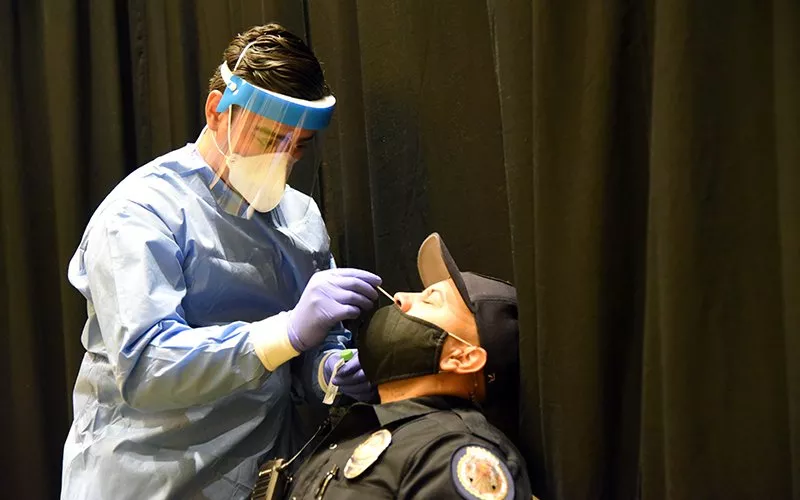
PHOENIX – Arizona is experiencing a COVID-19 surge similar to the one it saw in mid-June, and a vaccine that will get the population closer to herd immunity is in the distant future, the director of ASU’s Biodesign Institute said Wednesday.
“We are very close for a seven-day trailing average to crossing the 1,000 new cases a day mark,” Joshua LaBaer, institute executive director and professor at Arizona State University, said at an online news conference.
LaBaer said distributing a vaccine, once it’s developed and approved, will take some time. He urged Arizona residents, even though they are weary of the pandemic and its economic toll, to continue to wear masks, social distance and get tested every week until a reliable vaccine is ready.
The Arizona Department of Health Services has drafted a COVID-19 vaccination plan that allows county health departments and tribal health partners to decide who gets the vaccine in their communities.
With 994 new cases reported today, the number of Arizona’s confirmed novel coronavirus cases closed in on 235,000 as of Thursday, Oct. 22, according to the Arizona Department of Health Services.
In a worrisome trend, the number of cases statewide has climbed by nearly 3,000 in just three days.
Pima County had seen 27,208 of the state’s 234,906 confirmed cases.
With five new deaths reported yesterday, a total of 5,859 Arizonans had died after contracting COVID-19, including 635 deaths in Pima County, according to the Oct. 22 report.

WASHINGTON – Arizona Sen. Martha McSally left little doubt how she plans to vote on Supreme Court Judge Amy Coney Barrett’s nomination, calling Barrett “a gift to America” during a brief meeting Wednesday.
The meeting, one of a series between senators and Barrett, came on the eve of a Senate Judiciary Committee vote on the nomination, which is expected to be before the full Senate for a final vote as early as Monday.
“I am so inspired to meet you,” McSally said to Barrett. “Really looking forward to voting to put you on the Supreme Court.”
Democrats do not appear to have the votes to block the confirmation, but continued to criticize the rushed process, which could put Barrett on the court less than six weeks after the death of Justice Ruth Bader Ginsburg and just days before Election Day.
Tags: mcsally , Amy Coney Barrett , Image

Wednesday, October 21, 2020
On Tuesday, Oct. 20, the OSIRIS-REx spacecraft touched down on the asteroid Bennu for 4.7 seconds, a maneuver that was more than a decade in the making. Scientists at the University of Arizona nervously watched the data from the autonomous process — because the asteroid is more than 200 million miles away, messages from the spacecraft take some 20 minutes to reach Earth, meaning the entire maneuver had to be programmed ahead of time. Preliminary data shows the “touch-and-go” process was a success, putting OSIRIS-REx one step closer to being the first American space mission to bring a sample of an asteroid back to Earth.
“It’s amazing just how fast it happened,” said Sara Knutson, science operations team lead engineer for the mission. “It was like a marathon that turned into a sprint.”
See the video from yesterday’s TAG event — NASA’s first asteroid sample collection attempt! Tune in TODAY at 5 pm EDT here: https://t.co/Sja14xcQ3o pic.twitter.com/iqP6I3Kzw0
— NASA's OSIRIS-REx (@OSIRISREx) October 21, 2020
However, researchers won’t know for another few weeks whether the amount of dust and rocks collected from Bennu’s surface is sufficient. The spacecraft will measure this by a series of maneuvers to determine the sample’s weight — should there be less than 2 oz. (roughly 60 grams) of captured space material, the spacecraft will attempt a second “touch-and-go” process no later than January 2021.
The OSIRIS-REx spacecraft left Earth in September 2016 with the goal of capturing carbon-rich material from Bennu’s surface, which may help scientists better understand the formation of our early solar system, and even the origins of life on our planet.
The sample process took more than four hours, with the spacecraft slowly descending 2,500 feet from orbit toward the asteroid. While the spacecraft came in contact with the asteroid, it didn’t land. Instead, it extended a robotic arm and fired a jet of pressurized nitrogen to kick up dust from the asteroid’s surface. Some of the agitated material was captured in OSIRIS-REx’s collector head, and the spacecraft then used thrusters to move away from the asteroid. Scientists believe the spacecraft touched the surface only three feet from where they originally planned.
“We spent all these years planning for today, and it happened so quick I almost missed it,” said Carl Hergenrother, staff scientist for OSIRIS-REx, who described the mission as a kind of relay race, with multiple teams working on different parts at different times.
According to Betsy Cantwell, UA’s senior vice president for research and innovation, this type of mission has the potential to affect science for decades to come.
“These kinds of events change the way we view the world around us,” Cantwell said. “I expect an immediate scientific explosion of interest [when the samples return].”
Because the collected samples will be finite, Cantwell says a major decision will be figuring out who gets to work with them. Cantwell expects a portion of the material will be investigated at UA, and some will even be stored for posterity to be examined when even more advanced scientific sensors are available in the future. Researchers expect to find “a large number of biological precursors” in the sample.
OSIRIS-REx is expected to return to Earth in 2023.
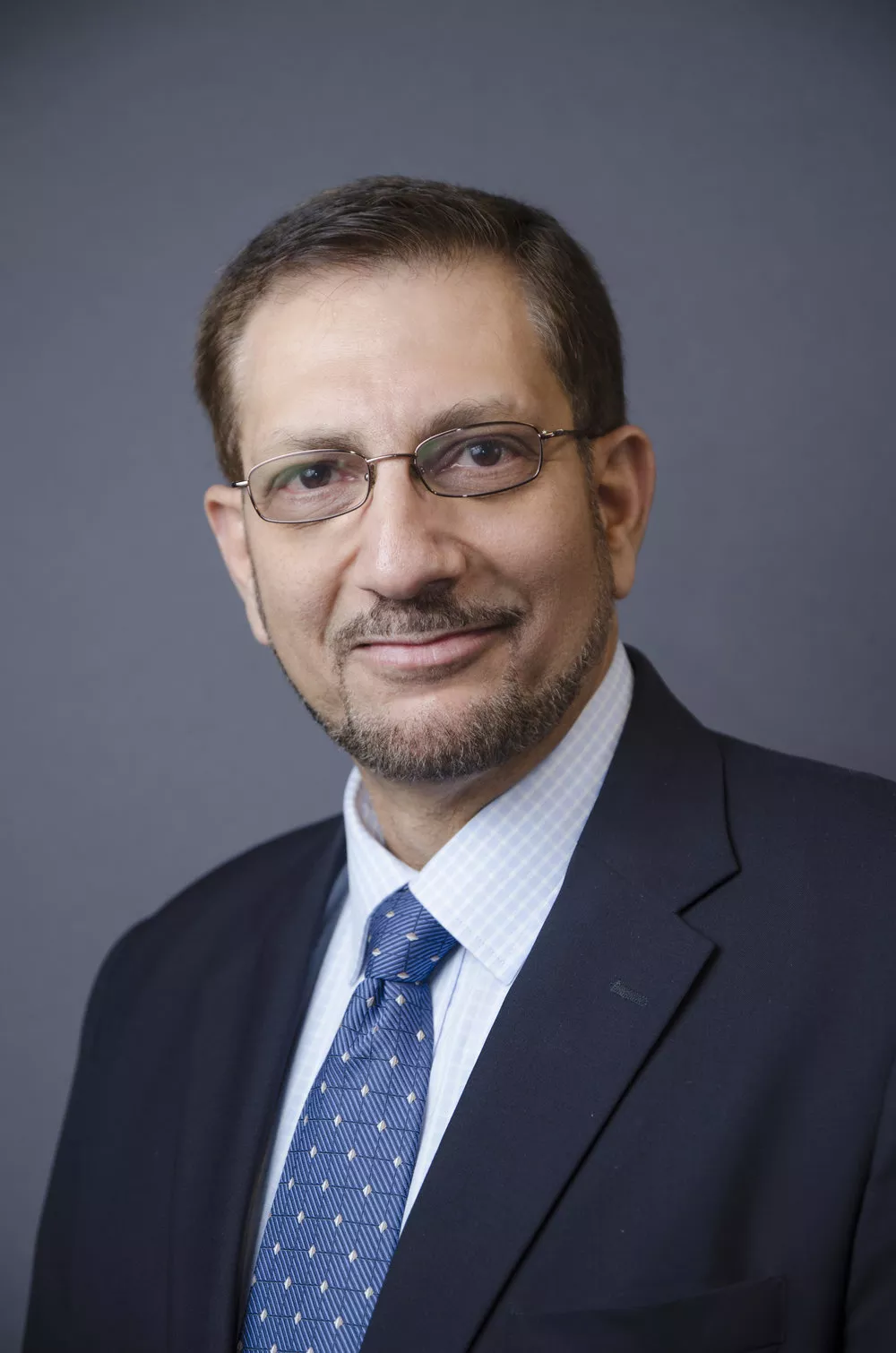
The Town of Marana’s mayor and council chose Police Chief Terry Rozema to replace Jamsheed Mehta as town manager in a 6-1 vote during a special council meeting on Tuesday, Oct. 20.
Rozema will begin his new job today.
Council Member Roxanne Ziegler cast the lone dissenting vote.
“I think this was something managed about a week and a half ago by some folks on this council,” Ziegler said during last night’s meeting.
The council member expressed her concern over her colleague’s decision to hire Rozema due to his lack of experience in the position. She preferred the chief serve as interim town manager—as Mehta did when former town manager Gilbert Davidson moved to be chief operating officer for the State of Arizona in 2017—while the council conducts a nationwide search for candidates with five to 10 years of municipality management experience. Rapid development within the town’s limits in recent years and how it will continue to be handled in the future is a driving force behind Zigler’s discontent with the decision.
“What we need is experience. This town is 52,000 plus citizens now. I think you could’ve gotten away with this when we were 35,000, 40,000 people and put someone who has absolutely no town manager experience,” Ziegler said. “I think the town of Marana and the employees of this town deserve something better than that.”
While town officials were tight-lipped as to why they wanted Mehta to go, Ziegler gave a glimpse as to a reason why the former town manager was abruptly dismissed, saying “this was a done deal” before the meeting took place.
“We also need somebody that isn’t handpicked and that’s what’s happened here,” Ziegler said, referring to why the council chose Rozema. “We need somebody with new eyes, a new face and a new perspective and insight to come into our town and take a very open-minded look at what we’ve got on our plates.”
Ziegler later added, “What I am tired of is 16 to 17 years being on this council and I know a few things and here we go again. Handpicking somebody in advance because, I think, mayor and vice mayor, you want somebody you can control. That’s not right. I’ve just about had it with that.”
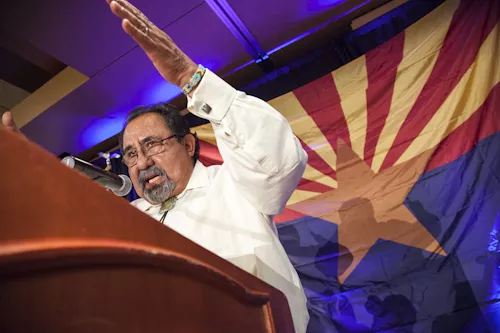
Lawyers were unable to track down the parents of 545 children removed from their families through the Trump administration’s family separation policy, according to a news release from Rep. Raúl Grijalva’s office.
When former Attorney General Jeff Session announced the administration’s “zero-tolerance policy” in April 2018, migrant children were separated from their parents instead of held with them in detention centers.
When the American Civil Liberties Union (ACLU) filed a class-action lawsuit against the Trump administration, a federal court order halted the separate detention of children and their parents in June 2018 and ordered the government to reunite children with their families.
According to Grijalva’s news release, lawyers from the ACLU and other pro-bono law firms haven’t been able to find parents separated from 545 children at the border.
“They were ripped from their parents’ arms, off-handedly placed in shelters, and left to wonder when, if ever, they would see their parents again. Due to the cruelty of Donald Trump and the xenophobia of Stephen Miller, we know that some of them may never see their parents again,” Grijalva said in the release.
“The Trump Administration must undertake every effort to reunite the families they so willingly destroyed, and every official complicit in this tragedy must face consequences for their actions. Human rights abuses should never be the foundations of government policy.”

