

Tuesday, January 18, 2022

WASHINGTON — The Biden administration on Friday launched a new website for Americans to request up to four free COVID-19 tests per household.
The administration is buying 1 billion at-home rapid COVID-19 tests, and Americans will be able to begin ordering the tests online on Jan. 19 at COVIDtests.gov.
This is part of the administration’s effort to curb the spike of the omicron coronavirus variant that has overwhelmed hospitals and schools.
Tests should ship via the U.S. Postal Service between seven and 12 days after they are ordered, senior administration officials said on a call with reporters.
“Testing is a critical tool to help mitigate the spread of COVID-19,” a senior administration official said.
The White House said tests should be used by individuals who begin to have COVID-19 symptoms; after five days of coming into close contact with someone with COVID-19; or if gathering indoors with someone who is at risk for a severe disease or is unvaccinated. Children 4 and under are not eligible for vaccines.
The initial 500 million tests are expected to cost $4 billion, a senior administration official said.
The Biden administration also announced that starting Monday, private insurance providers will cover the cost of up to eight at-home COVID-19 tests per person per month.
On Thursday, Biden said that in addition to free tests, Americans would also get free high quality masks.
The administration also aims to make sure members of some communities the hardest hit by COVID-19 will have a hotline they can access if they do not have internet access or have difficulty ordering tests online. The number to call for help is not available yet.

We're salty about desalination ... Welcome back to Arizona 2020 ... Is six mentions a lot or a little?
Gov. Doug Ducey unveiled a $14.3 billion budget proposal on Friday that spreads money across so many priorities that it’s bound to start a lot of little fights at the Capitol.
But for his last hurrah, the budget is pretty blah.
Rather than a single focus or grand vision, it’s packed with a smattering of smaller appropriations for pet projects and tax cuts, and big windfalls for the decidedly necessary but boring, likely bipartisan topic of infrastructure.
The budget was crafted on two major premises that may or may not end up being true: The courts will stop the implementation of Prop. 208, the Invest in Education Act, and Ducey’s historic tax cut package from last year will stand despite the threat of a referendum. (Another possible wrench in budgeting: The feds are threatening to revoke $163 million of their anti-COVID-19 money back after Ducey used it to help move kids into schools with COVID-19-friendly policies.)
But the state is so flush with cash that it’s getting hard to spend it all. In fact, there’s so much money that the largest single new discretionary expense in Ducey’s budget proposal is simply squirreling away another $425 million in the state’s rainy day fund, bringing the state’s emergency savings to $1.4 billion.
But the Ducey administration billed the budget as education, border and water-centric, so let’s focus on those three areas today.
On the education front, the biggest investment isn’t the $100 million “civics summer camp” program that Ducey touted as the crown jewel of his State of the State speech last week (which, by the way, will be paid for with federal pandemic money), but rather the $300 million in state spending on the much less sexy but more necessary areas of school upgrades and new buildings. His budget also offers another round of bonuses for schools that are already succeeding, and smaller bonuses for schools that need improvement.
Monday, January 17, 2022
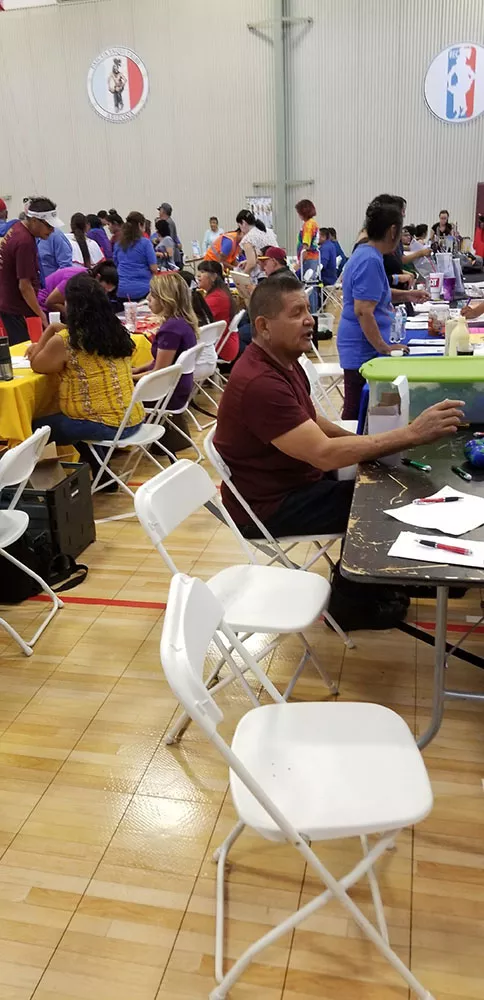
PHOENIX – Selso Villegas knows the criminal justice system well. His daughter has battled a drug addiction for years, so for the past decade, he has cared for his grandchildren, including two grandsons who have been incarcerated. But as an American Indian, Villegas and his family face additional hurdles.
“We were conquered and we were put on reservations, isolated,” said Villegas, executive director of water resources for the Tohono O’odham Nation. “So I think our biggest problem for young men and women is that we were stripped from our social development.”
Villegas’ grandsons are a part of a disproportionately large group of American Indians held in southern Arizona jails. Data from the Safety and Justice Challenge – which is funded by the John D. and Catherine T. MacArthur Foundation – shows that Native Americans are 1.8 times as likely as white Americans to be booked into a Pima County jail.
“Racial bias and racial bias compounded by poverty or economic struggle really make certain communities much more vulnerable to getting involved in and trapped up in the criminal legal system,” said Valena Beety, a law professor at the Sandra Day O’Connor College of Law at Arizona State University.
Villegas blames colonization for the situation Native Americans are in today.
“We were conquered, and we’re put on reservations, isolated,” he said. “So I think our biggest problem for young men and women or men is that we were stripped from our social development.”
Every year in the United States, more than 10 million people are jailed, according to data from the U.S. Department of Justice. The Safety and Justice Institute says about 75% of them are behind bars for nonviolent offenses related to traffic, property, drug or public order offenses. And, since 2000, the Native American jail population nationwide is up 85%, according to the Prison Policy Initiative.
The vast majority of people in jail are awaiting trial, meaning they haven’t been convicted of any crime. And jail time for any reason can have a cascading effect.
“Even three days of being in jail can mean you lose your job,” Beety said. “That can mean you’re abandoning your children legally, so your custody of your children could be in question.”
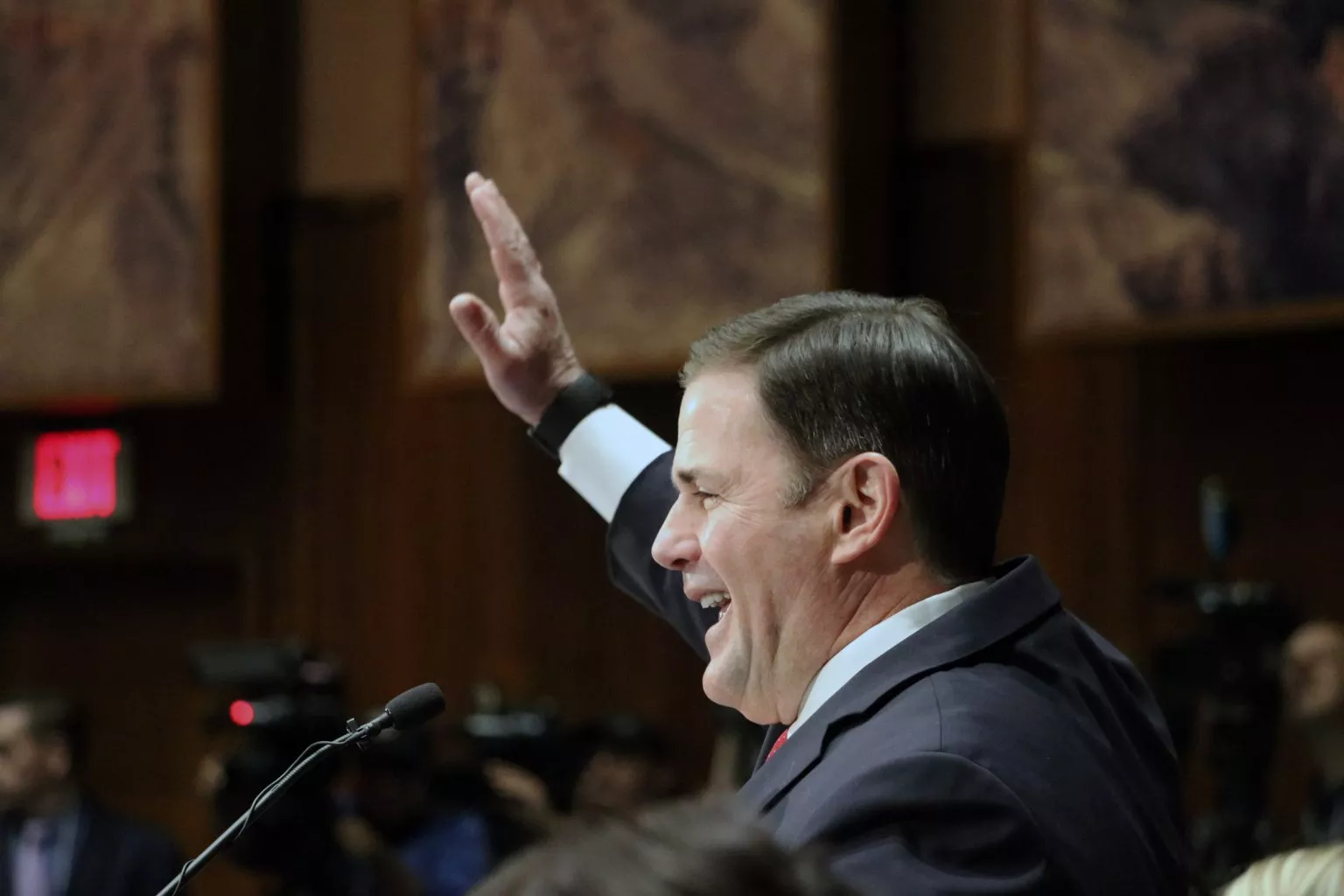
Gov. Doug Ducey’s final budget proposal calls for $14.25 billion in spending for the 2023 fiscal year that includes nearly $1.4 billion in new spending, the bulk of which will be one-time spending on K-12 education, water infrastructure, beefing up the state’s rainy day fund and expanding Interstate 10.
About $364 million of that new spending will be ongoing, with nearly a third going toward new tax cuts.
Following up on last year’s historic tax cut, which aims to eventually reduce individual income tax rates to a flat 2.5%, the governor is budgeting money for two tax relief packages. One is a 5% earned income tax credit for low-income working families with children. The Ducey administration said the program is intended to provide tax relief to Arizonans while recognizing the value of work.
The governor’s office said 577,000 Arizonans would be eligible, and that the average recipient would get $128 per year. Families with three or more children would be eligible for as much as $325, according to estimates from the governor’s office, depending on their income level. The earned income tax relief program is expected to cost about $74 million next year.
The second proposal is an undefined corporate tax cut. Ducey penciled in $58 million in his budget, but has no explicit proposal. The administration said there are several lawmakers who have their own proposals, so Ducey will negotiate with the legislature to determine what kind of tax cut they pass. Ducey’s office noted that Arizona has the 10th highest industrial property tax rate in the U.S., indicating that the tax cut could be in that area.
Ducey’s plan assumes that last year’s billion-dollar income tax cut, which is on hold after Democrats collected enough signatures to refer it to the November ballot for a citizen referendum, will ultimately go into effect. Republican lawmakers are discussing plans to repeal the tax cuts and replace them with a similar law in order to negate the referendum and keep the proposal off the ballot.
Friday, January 14, 2022
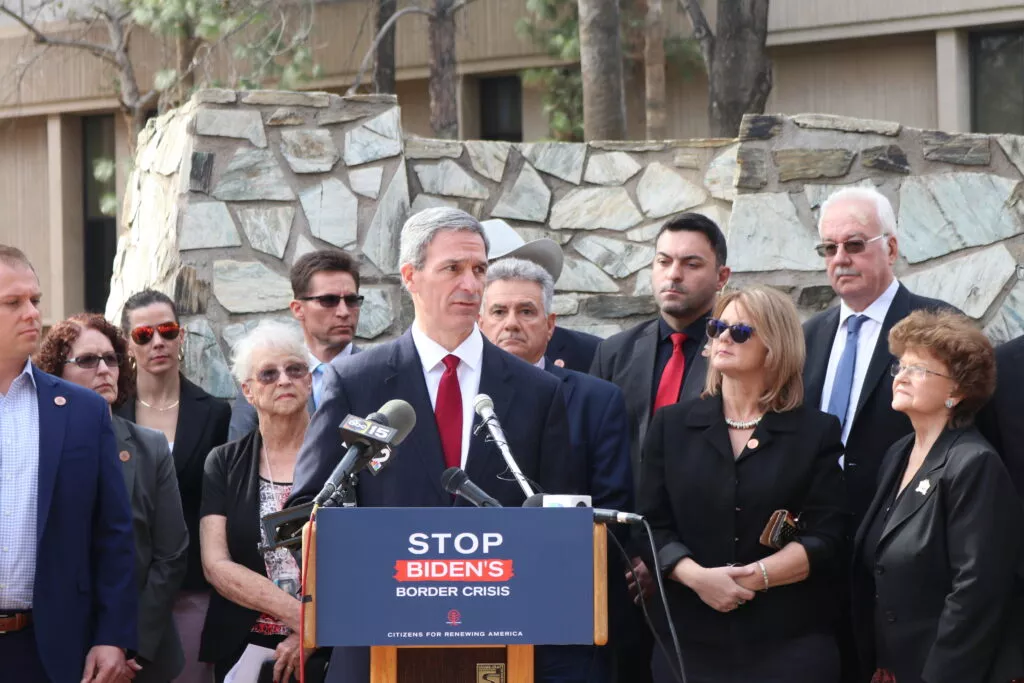
A nativist former top Trump White House official on Wednesday exhorted Gov. Doug Ducey to use Arizona’s National Guard to turn immigrants back at the border.
Ken Cuccinelli, a top United States Citizenship and Immigration Services official in Donald Trump’s administration, said Ducey has the constitutional ability to direct national guardsmen to remove those crossing the southern border. Cuccinelli pointed to the “self defense clause” of the Constitution that prohibits states from engaging in war unless they’re facing immediate danger or active invasion. He said the recent influx of immigrants qualifies as such.
“Thumbprint them, give them food and water and send them back,” he said.
Cuccinelli spoke at the Arizona Capitol Wednesday, flanked by several Republican state legislators.
With the U.S. seeing a record-breaking number of encounters at its southern border that is straining Border Patrol agents and the country’s capacity to process migrants, Republican leaders in Arizona and nationally have insisted there is an “open border” and that the influx of migrants — many seeking asylum — are foreign invaders who need to be repelled.
 Free image via Pixabay

A Republican lawmaker wants to bar the sale of any computer, smartphone or tablet in Arizona if it doesn’t include a filter that would block children from accessing “harmful content,” and would hold them criminally liable if they fail to do so.
The legislation from Rep. Michelle Udall, R-Mesa, also would allow parents to sue anyone who helps their child bypass the internet filter.
The measure appears to be the brainchild of an anti-LGBT and anti-porn activist known for his wild stunts.
House Bill 2115 shares almost identical language to the “Save Our Children Act” created by Chris Sevier, a man who has drafted model anti-pornography legislation around the country, including in Arizona.
Most notably in 2019, Rep. Gail Griffin, R-Hereford, put forward a bill by Sevier that would have charged Arizona residents $20 to access pornographic material and used the money to fund construction of a border wall along the state’s southern border with Mexico. Griffin later said she would no longer pursue the bill after it drew national attention.
Udall’s bill is similar in how it seeks to limit computer access to “material that is harmful to minors” on any device that can access mobile networks, wired networks or the internet, according to the bill.
The bill also gives parents the right to sue the manufacturer if their child accesses “harmful material,” and anyone who removes a filter would face a class 6 felony and a $50,000 fine. Companies that don’t comply also can face criminal liability under the bill’s language.
Thursday, January 13, 2022

Arizona reported 18,783 COVID-19 cases Wednesday, the latest in a surge of infections that experts say is stressing a state health care system that is “not well suited” to take on more cases.
The state has been averaging almost 12,000 new cases a day since Jan. 1, according to data from the Arizona Department of Health Services, as the new, more-contagious omicron variant has raced through the state. COVID-19 deaths in the state are averaging 64 a day this month, and totaled just under 25,000 Wednesday.
The rate of infection is “going up, and it’s going up fast,” stretching health care workers to their limit, said Dr. Josh LaBaer.
“We have fewer health care workers than we used to,” said LaBaer, executive director of Arizona State University’s Biodesign Institute. “There are empty beds but there is no one to staff the beds.”
Officials at Valleywise Health said the health care system has seen the number of COVID-positive patients in its emergency departments nearly double in the last month.

