

Thursday, January 13, 2022

More than 25,000 Arizona have now died after contracting COVID-19.
The virus has killed 25,002 people as of today, including 3,273 in Pima County, according to the Arizona Department of Health Services.
The grim milestone came one day after the state reported a record 18,783 new cases of COVID-19 as the Omicron variant continues to rapidly spread across the state. The previous record was 17,234 cases, set on Jan. 3, 2021.
While Omicron appears to be less severe than the Delta variant, especially among vaccinated people, the surge of cases is still putting pressure on Arizona’s overwhelmed hospitals and ICU units.
This week, Dr. Marjorie Bessel, the chief clinical officer for Banner Health in Arizona, said the health network was seeing a steady uptick in admissions in recent weeks and healthcare workers are contracting the virus, leading to staffing crunches at Banner Health.

That’s not how the law works, senator … It’s like we’re time traveling … And wow, those fines add up fast.
Programming note: We have a guest column coming to your inboxes on Friday, but the Daily Agenda won’t publish on Monday for Martin Luther King Jr. Day. We’ll be back with the Daily Agenda at 6 a.m. Tuesday.
When candidate Donald Trump planned his first major rally following his campaign launch (in which he described Mexicans crossing the border as criminals, drug dealers and rapists), he turned to Arizona, where he found a loving crowd that ate up his 90 minutes of anti-immigrant, anti-establishment, anti-media meandering.
So it’s no wonder that as he seeks to launch a comeback and a possible 2024 campaign, Trump is returning to Arizona this weekend.
He’ll continue to spread his Big Lie surrounded by his hand-picked GOP frontrunners for the top two state offices; three-quarters of Arizona’s Republican congressional delegation; the leader of the Arizona Republican Party; Mike Lindell, the pillow salesman who helped spread Arizona election conspiracies and helped fund the audit to prove them; Ron Watkins, the guy who is most likely Q of QAnon fame, and other prominent QAnon celebrities. (Arizona’s most famous QAnoner, Jake Angeli, will, regrettably, not be able to attend.)
Wednesday, January 12, 2022
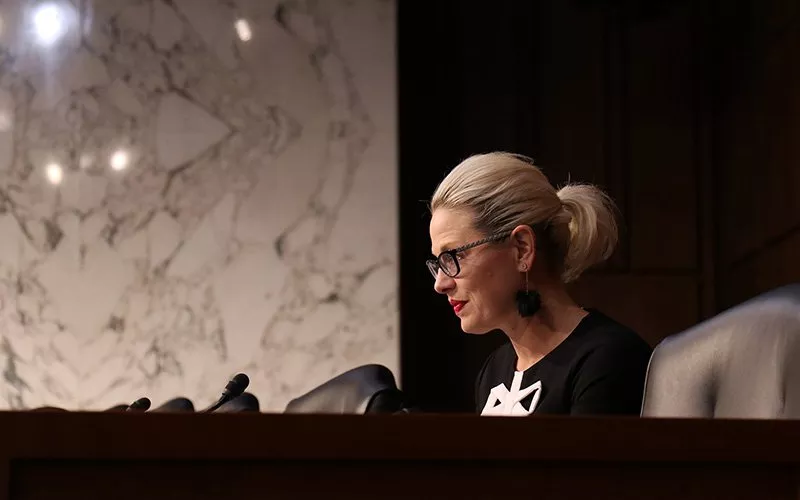
On the morning of Oct. 3, Sen. Kyrsten Sinema gave her students in an advanced fundraising class at Arizona State University a break. She stepped out of the classroom to go move her car to another location near the downtown Phoenix campus, but instead found a group of four activists waiting to talk to her.
As the four organizers recorded the confrontation on their phone, Sinema didn’t stop to listen to the activists, some of whom had shown up to her Phoenix office months earlier to ask to meet with her. Sinema ignored them and, instead of going to move her car as planned, she made her way to a nearby bathroom.
The move was intentional and calculated: Sinema told ASU police she intentionally went into the bathroom because she believed that recording someone inside a bathroom is a crime, Sgt. Katie Fuchtman wrote in a police report the Arizona Mirror obtained under the state’s public records law. The senator’s comments in it have not been reported on before now.
One of the activists, whose identity police couldn’t confirm, is an organizer with Living United for Change Arizona, a community organization that has mobilized working class and majority-Latino neighborhoods to vote. She told Sinema her name is Blanca in the video she filmed at the entrance of the bathroom. The video went viral. Some condemned the LUCHA organizers for recording the Democratic U.S. senator inside the bathroom. Others claimed Blanca should be deported.
After the incident, Sinema told police officers that she believed the activists had committed a crime by breaking a state law that bars surreptitious filming — the law she said prompted her to seek refuge in the bathroom. That law applies in cases where the victim is filmed while “urinating, defecating, dressing, undressing, nude” or engaged in a sexual act.
After an investigation, ASU police said they disagreed with Sinema. The agency announced on Oct. 20 that it recommended Maricopa County Attorney’s Office prosecutors charge four people with misdemeanors, but not for the felony of recording a person in a bathroom that Sinema told officers the activists committed and should be “held accountable” for.
But prosecutors returned the investigation back to police and requested more information on the case. ASU police are still investigating the case, ASU PD spokesman Adam Wolfe said on Jan. 11.
Three months after the incident, Sinema still believes the activists committed a crime, her office told the Mirror in an email.
If police or prosecutors were to agree with Sinema, Blanca, who has no immigration status, could face deportation.
The Mirror knows Blanca’s identity, but is not disclosing her full name because she fears for her safety.
An arrest or charge could result in end DACA privileges
Standing at the bathroom entrance, Blanca spoke to Sinema. Blanca talked about being brought to the country when she was 3. How her grandparents were deported in 2010 during the Senate Bill 1070 years in Arizona. How she was unable to attend her grandfather’s funeral because she can’t leave the country and be allowed back in. Why a pathway to citizenship was crucial to include in the Build Back Better proposal.
“There’s millions of undocumented people just like me who share the same story. Or even worse things that happen to them because of SB1070 and because of anti-immigrant legislation, and this is the opportunity to pass it right now and we need you to.
“We need to hold you accountable to what you told us you were going to pass when we knocked on doors for you. It’s not right,” Blanca said.
Blanca has temporary deferral from deportation and a two-year work permit through the Deferred Action for Childhood Arrivals program. Those with DACA, also known as dreamers, are a low priority for deportation. But that protection could end with an arrest for a crime, even if the case is later dismissed.
“One of the ways to quickly lose DACA is to get arrested for any crime,” said Ruben Reyes, an immigration attorney. “Even without a conviction, simply the arrest record… may complicate the renewal case for DACA. That would open you up to removal by the government.”
Reyes explained that those who benefit from DACA, an Obama-era program implemented in 2012, are subject to the discretion of federal immigration officials.
“When you apply for DACA, you can have a misdemeanor on your record and still get DACA, but there is discretion that the government is going to use in deciding on whether or not you deserve it,” he said. “So, if that misdemeanor happened a long time ago… it’d be easy to argue they made the mistake, they’ve learned their lesson, and they’ve been productive members of society since then. It’s very different when they are actively engaging in conduct that leads to their arrest.”
Reyes said dreamers who engage in activism face significant risks because their future in the United States is in the hands of federal immigration agencies.
For over a decade, dreamers and other undocumented immigrants have “come out of the shadows” that their parents felt safer in and stepped into the public sphere, meeting with lawmakers in Phoenix and Washington, D.C, and, sometimes, protesting and engaging in civil disobedience to push elected leaders to reform immigration laws and provide them and their families permanence in the country.
Sinema spokesman John LaBombard said his boss told law enforcement she doesn’t want the activists to face “immigration-related consequences.”
“She expressed to law enforcement that she hopes no students would face immigration-related consequences as a result of this activity,” LaBombard said in an email.
The police report doesn’t say whether Sinema feared the activists would face immigration consequences, though Fuchtman did write that Sinema said she didn’t want the activists to have “their lives ruined.” However, she also told officers they need to be “held accountable” for their alleged crimes.
“Sinema cares about the students and does not want their lives ruined for a horrible mistake they made but agrees she wants them held accountable,” Fuchtman wrote in the report.
LaBombard didn’t respond to a question on what Sinema considers accountability in the context of a law enforcement investigation where she believes a felony was committed.
Reyes, the immigration attorney, said he isn’t convinced by Sinema’s position.
“I think she wants to be tough on crime, but also soft on immigrants — and to some extent, she’s not really convincing anyone,” he said. “In this particular issue, this is I think a consequence of making promises you didn’t keep to people who are desperate for a solution.”
Last year, a coalition of community groups in Arizona came together to push Sinema to commit to passing landmark immigration and election reform legislation by ending the Senate filibuster rule. The groups have felt ignored by their senator.
LUCHA is part of that coalition. The night before activists confronted Sinema outside the ASU classroom, LUCHA also protested outside a Phoenix fundraiser Sinema was hosting.
Alejandra Gomez and Tomas Robles, co-directors of LUCHA, said in an October statement following the backlash on the viral video that Sinema’s constituents have been “been ignored, dismissed, and antagonized.”
ASU police initially sought multiple felony charges
Police initially sought charges against three of the activists who entered the bathroom, with five counts for the felony for unlawful recording, which could result in over two years in prison, according to the police report.
ASU police also looked into charging the activists with four misdemeanor charges including criminal trespassing, harassment by communication, disorderly conduct and interference with the use of educational property. Those misdemeanors each carry sentences of up to four to six months in jail.
Besides Sinema, police identified four other victims, all women students in Sinema’s class who were in the bathroom at the time the confrontation happened. One told police she didn’t want to be part of what was happening, but felt forced to be a part of the incident. Another one told police she believed the activists were harassing Sinema, and she was shocked they did so inside a bathroom. Another student told police she felt violated for being filmed in the bathroom and that the video was posted online.
Sinema told police she felt intimidated and was scared for her class, according to the police report. She was escorted to her vehicle once the class ended.
ASU police let activist into the building where Sinema was teaching
Sinema’s class was taught on a Sunday morning on the second floor of the University Center at the downtown Phoenix campus. But the university building was not open to all students and those associated with the university that day: Only those students taking Sinema’s class could use their ASU ID cards to access the building. Some of the activists were ASU students; they tried scanning their cards to open the building, but failed, according to the police report.
ASU police used card scan logs to identify two of the activists as Arianna Reyes and Alexis Delgado Garcia.
Reyes used her ASU ID card to get into the neighboring Walter Cronkite School of Journalism and Mass Communication building, and asked a patrol officer to let her into the University Center. She told him she had left her laptop in the lobby. He opened the doors of the University Center for her, and returned to his post at the Cronkite building, according to the police report.
In the police report, officers said it’s unclear how one of the activists got into the University Center building. But she let Delgado Garcia and Blanca into the building. They met Reyes in the lobby, according to the police report.
The police found that the activists were in the building for less than 20 minutes.
Later that afternoon, ASU police saw several people who they believed were the activists involved in the morning incident walking near the downtown campus. They detained two women, including ASU student Sophia Marjanovic. She had stood in front of Sinema’s stall during the morning protest.
Marjanovic told Sinema she was a victim of human trafficking. On social media, Marjanovic said she identifies as a Native woman and “fell into human trafficking due to not having worker protections in the gig economy.” That’s why she wanted to tell Sinema to pass the Build Back Better Act, which – among many reforms on climate change, health care, education and housing – would strengthen the rights of workers trying to organize a union.
According to the report, ASU police detective Rustin Standage recommended MCAO charge three people – Marjanovic, Reyes and Delgado – with two misdemeanors for disorderly conduct and interference or disruption of an education institution. Each offense is considered a class 1 misdemeanor and could carry a sentence of about six months in jail.
It is unclear who the fourth person ASU police referred for charges was. Wolfe, the ASU police spokesman, did not clarify that discrepancy.
SUPPORT NEWS YOU TRUST.
Arizona Mirror is part of States Newsroom, a network of news bureaus supported by grants and a coalition of donors as a 501c(3) public charity. Arizona Mirror maintains editorial independence. Contact Editor Jim Small for questions: [email protected]. Follow Arizona Mirror on Facebook and Twitter.
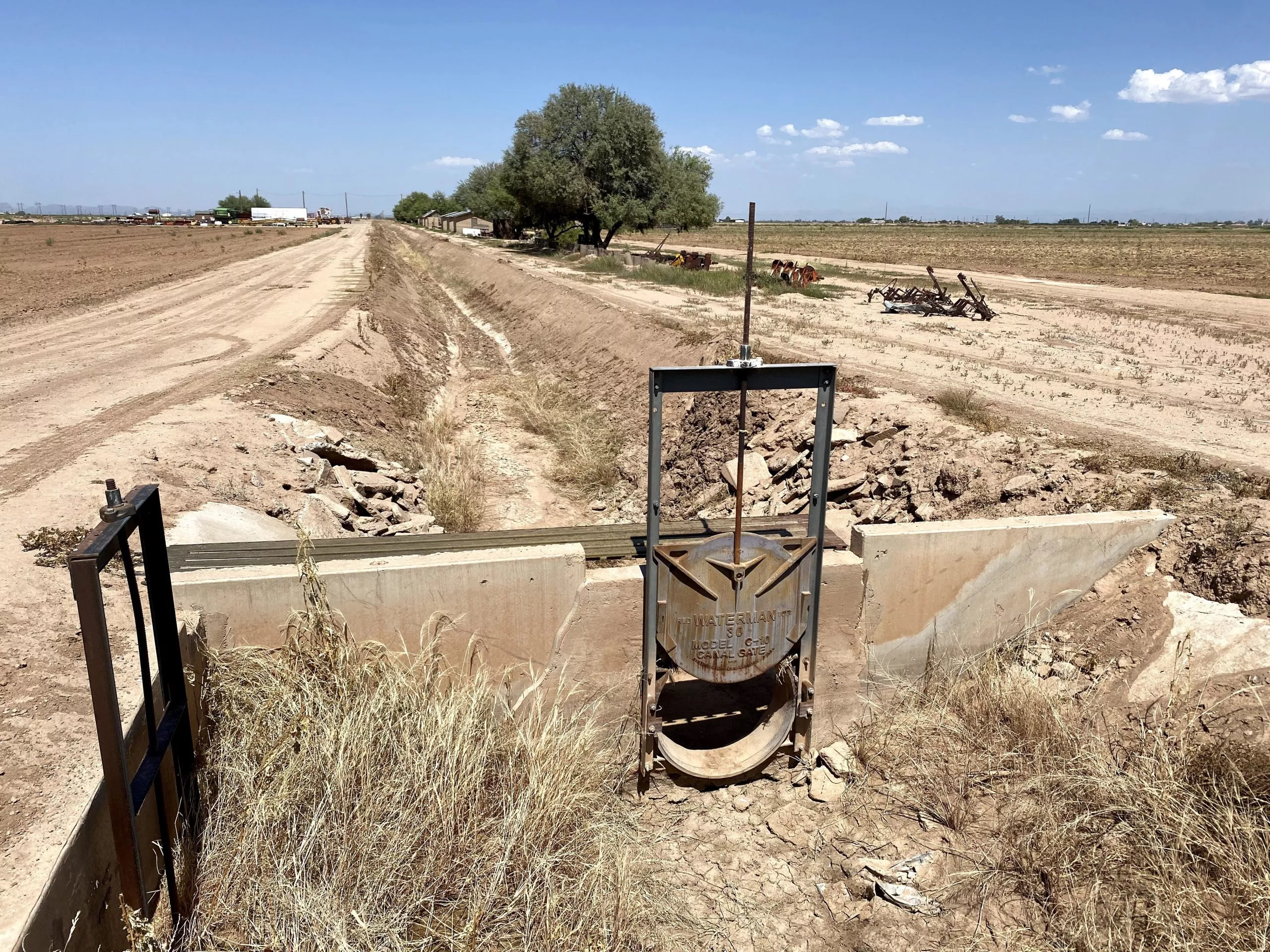
CASA GRANDE – It’s harvest season for Caywood Farms east of Casa Grande. The tractor is gassed up, the swather blades are sharp and Nancy Caywood is ready to farm.
Only one thing is missing.
“This all should be alfalfa,” Caywood said, standing in a dry field. “Every bit of this land should be in production.”
Caywood walks across a dry, nearly barren field. Each step she takes, alfalfa crunches beneath her boots. A few stalks poke out of the ground.
“Everything is dead out here,” Caywood said.
Working on a fifth-generation family farm with her son, Travis, Caywood knows about the challenges of growing alfalfa and cotton – two water-heavy crops – in south-central Arizona. Yet her farm faces a decades-long drought that could further threaten the already bleak picture of her fields.
Ducey is still the governor, and still not in charge of the border … Start your own police force … Anyway, let’s go!
Gov. Doug Ducey declared yesterday that “Arizona schools are open and they will remain open.”
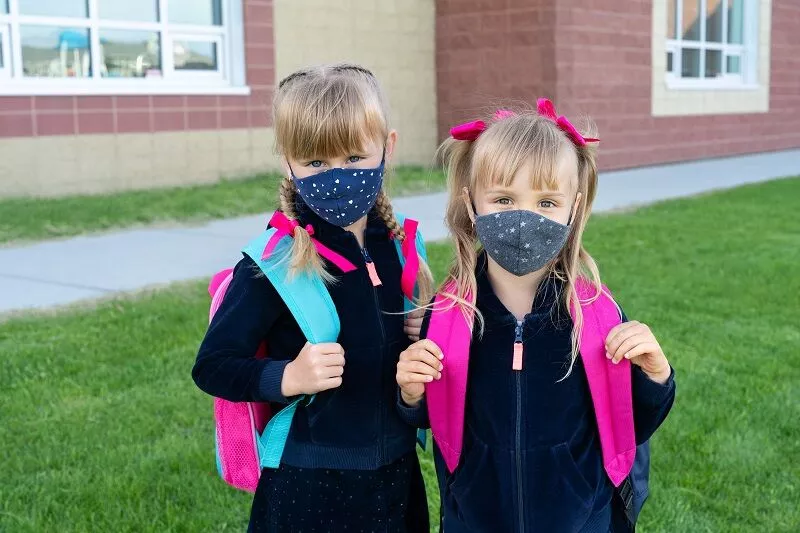
But as schools welcome children back following a winter break where many gathered and traveled, they’re finding that staying open amid a once-again surging pandemic, often without relying on masks to help curb the spread, is difficult and requires a lot of stop-gaps.
Perhaps the best measure of the struggle to keep schools open is substitute teachers — the poor souls who keep 30 screaming children in line on a moment’s notice when a teacher gets sick. Without them, all hell breaks loose.
But after nearly two years of pandemic-ing, many of the state’s underpaid, under-appreciated and generally mistreated substitutes have finally had enough, the Republic’s Yana Kunkchoff and Megan Taros report. When you have to find substitutes for the substitutes, you’re in trouble.
Meanwhile, thousands of kids are getting sick as the vastly more transmissible omicron variant rips through schools (though only 54 Arizona kids have died from COVID-19), KJZZ’s Rocio Hernandez writes. Only 29 percent of Arizona kids under 19 have received at least one shot of the vaccine.
And kids, who can no longer turn off the webcam for a quick break, are having a hard time adjusting to returning to real classes. School officials say kids are showing more aggressive behaviors and shorter attention spans, the Daily Star’s Genesis Lara writes.
While teachers and school administrators generally don’t want to return to remote learning, many schools literally can’t afford to because of the way school funding formulas limit remote learning, Kunichoff explains.
But if politicians demand schools stay open, the least they can do is ensure that everyone, including students who can’t receive vaccinations, feels as safe as possible at school. And they can acknowledge that “open” doesn’t always make for better learning, as one student in New York shared a few days ago.


Arizona cannabis sales continued on an upward trajectory in 2021, with the Arizona Department of Revenue reporting more than $1.23 billion in combined cannabis sales through the first 11 months of the year.
In November, adult-use recreational cannabis sales hit a new peak and crossed $60 million for the first time. Medical sales have fluctuated throughout the year, topping out at about $73 million in March and April.
Medical sales eclipsed recreational from February through October — adult-use sales began on Jan. 22 — but in November, those numbers were almost identical, with the medical program bringing in an estimated $60,365,545, while recreational sales reached $60,299,191.
In October, estimated cannabis sales for both programs were within $7 million of each other, the first time recreational sales came within $10 million of medical sales. But the adult-use market is in its infancy and is expected to match the medical program’s economic heft within a few years.
Cannabis sales also provided a solid tax contribution in 2021.
The state collects 16% excise tax on recreational sales in addition to the standard sales tax; medical patients pay a 6% excise tax. Local jurisdictions charge an additional 2% or so for all marijuana sales.
Taxes collected in November for recreational cannabis sales were $5,055,950, with medical slightly less at $5,026,317. The excise tax reached $10,110,032 for a total of $20,192,299 in tax revenue from November marijuana sales.
Tuesday, January 11, 2022
COVID hospitalizations are on an upward climb thanks to the Omicron variant and healthcare workers are contracting the virus, leading to staffing crunches at Banner Health.
As a result of the staffing crunch, some Banner urgent care locations are closed, causing longer wait times at other urgent care facilities, according to Dr. Marjorie Bessel, Banner Health chief clinical officer, who gave a media briefing on Tuesday, Jan. 11.
Banner’s staffing shortage reflects a national shortage of healthcare workers due to the surge of Omicron.
Banner is following the crisis CDC guidelines when allowing health care workers to return to work after being infected with the COVID virus. All healthcare workers have to remain out of the workplace for five days from the date of their positive tests and are screened for symptoms before returning to work process. Individuals that are asymptomatic and mildly symptomatic may return to work.
In addition, Banner is using outside contracted workers at its hospitals during this surge to compensate for the staffing shortage.
With crowded emergency rooms and long waits, Bessel said Banner is using ERs for life-threatening issues and asked Arizonans to consider primary care doctors and urgent care clinics for non-emergency needs.
She also urged Arizonans to get vaccinated and receive a booster shot because it’s “the best way to prevent serious COVID illness that requires hospital level care.” She also said people should mask up when indoors, preferably with a fitted KN95 mask, stay home when feeling sick and to get tested when experiencing symptoms.
COVID treatment options remain limited. Sotrovimab, a monoclonal antibody treatment for those who test positive, is in short supply and will require a doctor’s recommendation for patients. Due to limited supply, not all eligible patients will receive the treatment.
Oral antivirals such as paxlovid and molnupiravir, which have received emergency use authorization by the FDA for patients that meet the clinical requirements, are also in limited supply and are being distributed to roughly 32 retail pharmacies across the state. These medications also require a referral.
Bessel said Omicron has yet to peak but she predicted it will be in weeks to come based on how the virus has behaved in other countries, where the descent of the variant has been just as rapid as its spread.
“We continue to learn through the pandemic," Bessel said. “Banner Health, as we have been throughout the entire pandemic, continues to operate and evaluate our business on a day-to-day basis and will make appropriate responses based on the needs of our community.”
Correction: An earlier version of this story suggested all Banner Urgent Care clinics were temporarily closed. Only some of the clinics have temporarily closed.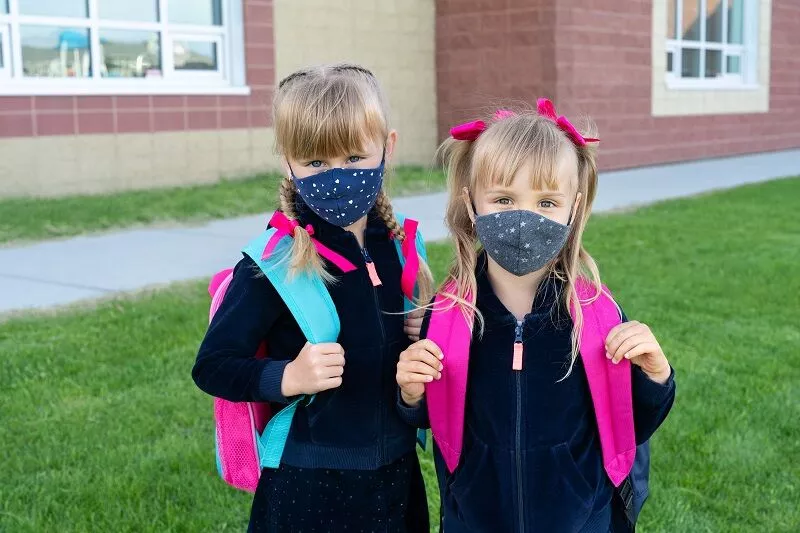
Democrats and public school advocates said Gov. Doug Ducey had two glaring holes in his final State of the State speech on Monday: funding for public schools and COVID-19.
“If we truly want Arizona to be unstoppable, our priority should be increasing education attainment,” said Education Forward Arizona spokeswoman Shannon Sowby, referencing Ducey’s slogan for the speech, #AZUnstoppable. “Increasing our attainment rate to the national average would generate over $7B for Arizona’s economy.”
School funding should be a priority issue, said Senate Minority Leader Rebecca Rios, given that schools will face up to $1.2 billion in budget cuts on March 1 without legislative action. That means a drastic reduction in per pupil expenditures — an average of $1,300 per student.
Ducey committed to keeping schools open and increasing school choice. For many, this ignored key issues facing a struggling education system.
Ducey declared schools would not be closed, despite the ongoing and worsening COVID-19 pandemic which has risen to record levels as the omicron variant has swept the state.
The governor lauded Arizona’s status as the number one state for school choice and promised to continue providing alternatives for poor and minority students stuck in “failing” schools.
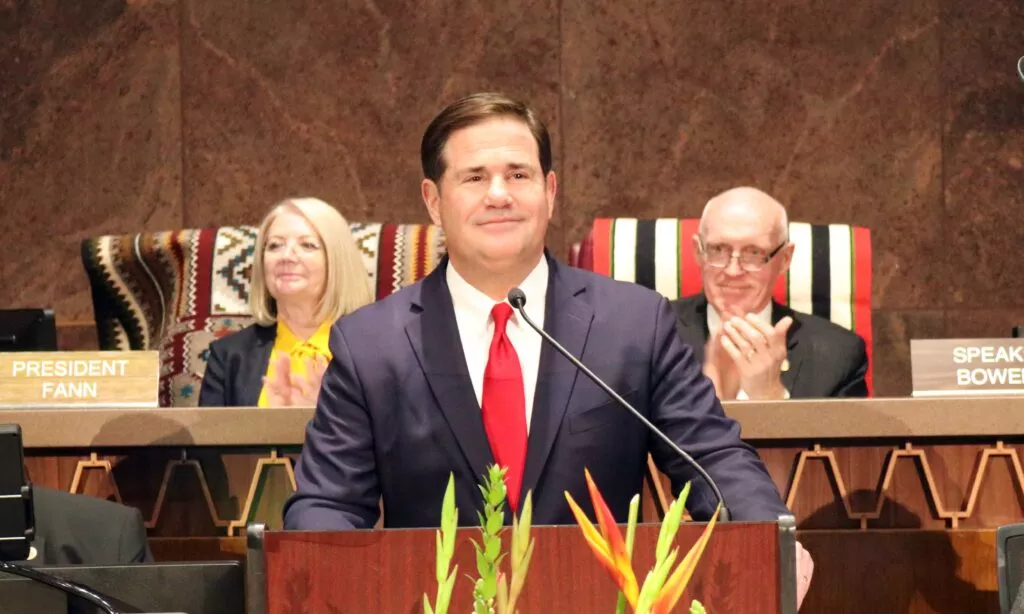
Gov. Doug Ducey vowed to use state resources to increase border security, spend a billion dollars to treat and transport water from the Sea of Cortez, expand school choice and continue lowering taxes as he laid out a wide-ranging agenda for his last year in office.
In his eighth and final State of the State address on Monday, Ducey took a victory lap, highlighting his accomplishments from the past seven years, including 2021, which he called “one for the record books.” But his last year won’t be a quiet one, he said.
“I have a hard time stopping to celebrate victory. It was true at Cold Stone, and it’s been true in the public square,” Ducey said, referencing his time as the head of Cold Stone Creamery. “So, naturally, after we signed the budget, I told my staff: ‘In 2022, we’re going to top all of this.’ And so we’ve been hard at work to make this a banner year.”
Last year, Ducey signed a billion-dollar tax cut, fulfilling a pledge from his first gubernatorial campaign in 2014 to reduce the state’s income tax rate to as close to zero as possible. And with the state sitting on a multi-billion-dollar surplus, Ducey said the state will cut taxes once again rather than appease the “spending lobby.”
Still, the governor outlined some big-ticket budget items he wants to pursue this year, and none as big as his plans for water.

