Tuesday, January 11, 2022
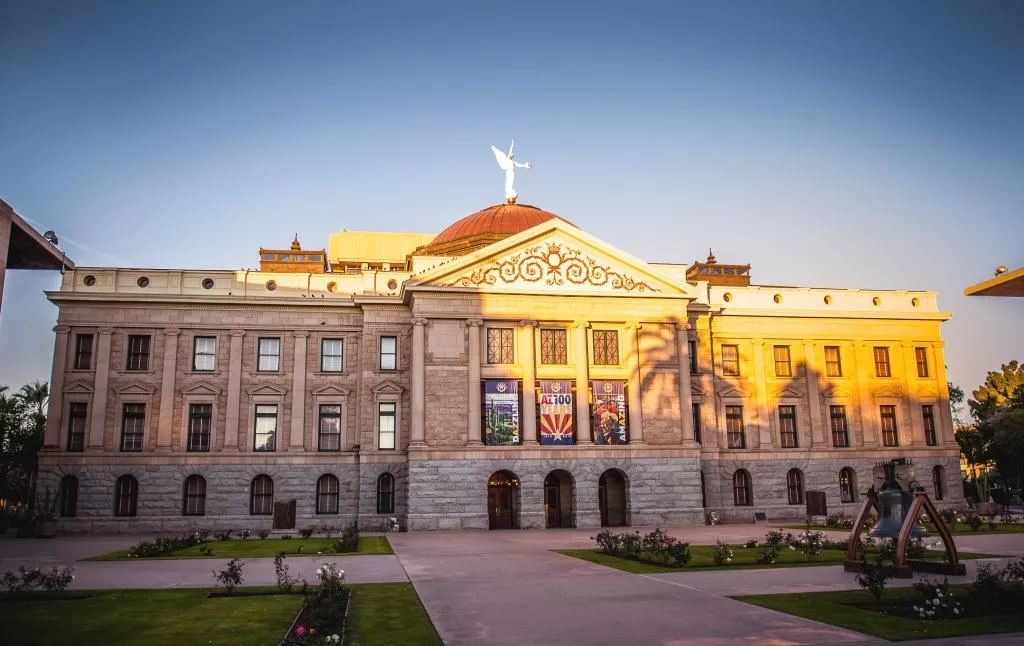
The state of the state is still strong ... Don't pull a David Gowan on us ... And Jan Brewer meets a former nemesis
Nothing exemplifies the Ducey administration like the governor screaming “WE WILL CUT TAXES!”
And scream Gov. Doug Ducey did at yesterday’s eighth and final State of the State speech, which Team Ducey billed as a policy-heavy forward-looking final address, but which felt more like a final victory lap touting old policies with and a few new promises sprinkled in.
Perhaps the most significant proposal came at the end of the speech: Sticking $1 billion in the Drought Mitigation Fund over the next three years and a vague promise of building a desalination plant in Mexico. (Not to mention an issue near and dear to our hearts: Speeding up the Interstate 10 widening project.)
The smaller policy proposals Ducey touted include: paying off more debt and “topping off” the state’s rainy day fund; making his regulation-cutting executive orders law; waiving in-state college tuition for military spouses; banning (again) teaching Critical Race Theory in schools; putting all K-12 curriculum online for review; expanding school choice generally; a pay raise for state troopers; increasing the foster stipend for caretakers who are relatives; and banning counties from charging rape victims processing fees for testing rape kits.And in case you were wondering how excited I was to hear Gov. @dougducey mention my work on I-10 expansion and the how it would be sped up, here you go! #LD08 @PinalCounty @CGDispatch @CityOfCG pic.twitter.com/nkDW66dakB
— T.J. Shope (@TJShopeforAZ) January 10, 2022
Rounding out the governor’s big agenda items for the year are a summer school program to get students up to speed on math, reading and American civics (of all things) and border security. The border security portion of his agenda is multifaceted, including funding for border counties to prosecute human smugglers, building a wall with Mexico on lands “where Arizona can,” (of which there ain’t much) and teaming up with Texas Gov. Greg Abbott to create a “American Governor’s Border Strike Force” with the goal of patrolling and securing the border. As with much of this, the details were scarce.
Monday, January 10, 2022
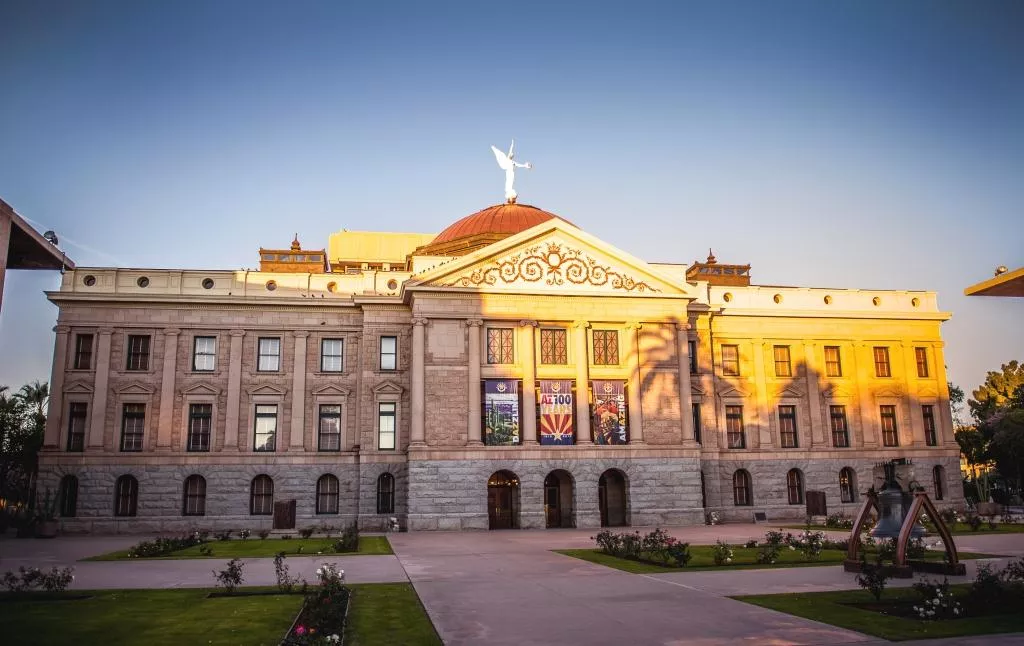
With near-record COVID-19 caseloads and hospitalizations driven by the highly infectious omicron variant sweeping Arizona, the state legislature will convene today, Jan. 10, with almost no restrictions in place aimed at limiting spread of the virus at the Capitol.
Neither the House of Representatives nor the Senate will require masks. Plastic shields that had been constructed around lawmakers’ desks have been dismantled, and there will be no social distancing requirements.
“Our goal is business as usual, with a few additions,” said Kim Quintero, a spokeswoman for Senate President Karen Fann and the Senate Republican caucus.
The only notable difference from pre-pandemic times will be that some legislators will be allowed to vote remotely — but only from their legislative offices at the Capitol, and only if they have a doctor’s note.
House Speaker Rusty Bowers told the Arizona Mirror that legislators who can’t come to the Capitol because they are sick — or for any other reason — will not be able to vote remotely. The Senate is implementing a similar rule, Quintero said.
And in both chambers, lawmakers who are authorized to vote remotely won’t be able to participate in debates or discussions about legislation.
The lack of COVID-19 mitigation efforts outraged Rep. Athena Salman, a Tempe Democrat who is pregnant. She wrote on Twitter Friday morning that her due date is Jan. 11 — the second day of the legislative session — and blamed Bowers for ignoring her request to work remotely and then eliminating the possibility for all lawmakers.
“What I’m asking for isn’t anything new. Had I given birth last year, health protocols the Speaker adopted would have guaranteed protection for me & my baby. But GOP leadership—comprised of only men—have decided to play political games with the life of me & my future child,” she wrote on Twitter.
The changes stand in stark contrast to last year, when the state was facing record high COVID-19 caseloads and vaccine deployment only in its earliest stages last year and the legislature restricted public access, required facemasks and temperature checks, and allowed robust remote participation from both elected officials and the public.
SUPPORT NEWS YOU TRUST.
Arizona Mirror is part of States Newsroom, a network of news bureaus supported by grants and a coalition of donors as a 501c(3) public charity. Arizona Mirror maintains editorial independence. Contact Editor Jim Small for questions: [email protected]. Follow Arizona Mirror on Facebook and Twitter.

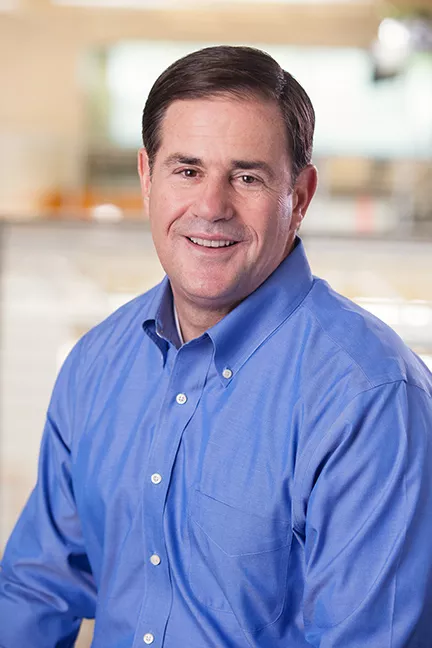
We’re heading down to the Capitol today to tempt fate with unmasked, anti-vax lawmakers who were recently freed from their individual Plexiglas partitions and basically any other precautions against the surging virus to watch Gov. Doug Ducey deliver his eighth and final State of the State speech.
Most sober assessments of the upcoming legislative session have a common theme: It’s gonna be long and torturous.
The Republic’s conservative columnist Robert Robb, for example, predicts a long session full of “misery and dismay” on several fronts: The outstanding budget-related court cases and excess cash mean budgeting will be a slow-moving nightmare, while the election sideshow and the looming election will interject more stupidity and dysfunction and cause the session to go longer than usual. (He mercifully didn’t even mention all the new lawmakers who have no idea how any of this works.)
“I hear people say that 2022 can’t be as bad as 2021. Please don’t say that. The zeitgeist may regard it as a challenge,” Robb wrote.
But Ducey is in no hurry. As a lame duck governor, today’s speech (and more broadly, this entire year) will serve as his last chance to brag about his accomplishments in the past seven years. Expect to hear a lot about the economy and the contrast to when he took office.
Lawmakers are still fixated on the 2020 elections and the Senate’s shambolic audit and are drafting all sorts of doomed proposals to Make Voting Great Again."I love the long sessions," @dougducey says when asked about the prospect of a long legislative session. "Governors don't sine die."
— Mary Jo Pitzl (@maryjpitzl) January 7, 2022
In many respects, it will be a backward-looking session — or as Capitol scribe Howie Fischer would say, a Groundhog Day session.
Saturday, January 8, 2022
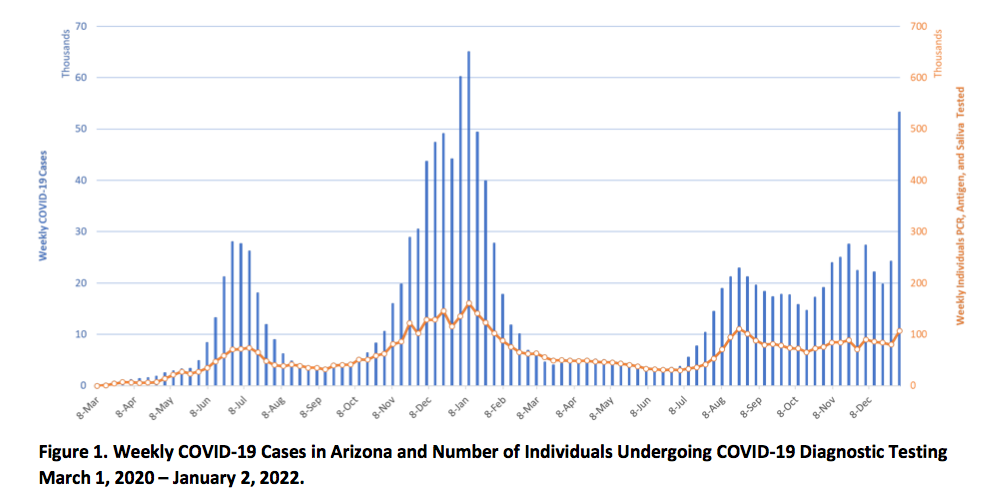
In his latest weekly report , Dr. Joe Gerald, the UA epidemiologist who has been tracking Arizona's COVID outbreak since its earliest days, confirms Omicron is bringing skyrocketing COVID case numbers. A total of 53,207 Arizonans tested positive for COVID in the week ending Jan. 2, which was more than twice as many as the previous week. Along with that 120% increase, cases are being diagnosed at 731 per 100,000.
It's spreading especially fast among those 15 to 24 years of age, who are seeing rates of 1,005 cases per 100K, and lowest among those 65 and older, at 407 cases per 100,000, and those younger than 15, at 409 cases per 100,000. Those high numbers likely undercount the number of positive cases because not everyone who gets COVID will get a test.
Speaking of testing, positivity of those getting tested, which dipped down to the 8% range last summer, jumped to 50% and "remains inadequate for public health practice and many cases are going undiagnosed," according to Gerald.
While people tend to have less severe bouts with Omicron, hospitals are still facing huge pressure, particularly thanks to unvaccinated patients who make up the majority of those who end up hospitalized with COVID.
"While peak occupancy will not reach prior levels, the Delta, and now Omicron, waves have placed much higher levels of chronic stress on our health system," Gerald wrote. "We have so far seen 146 consecutive days with a combined occupancy >2000 patients whereas the summer 2020 and winter 2021 waves saw 57 and 98 days, respectively. Until last week, we had experienced 37 consecutive days with >3000 combined occupancy whereas the summer 2020 and winter 2021 waves saw 35 and 78 days, respectively. After a 10-day respite over Christmas-New Years, we are once again >3000 combined occupancy (last 4 days)."
Gerald—whose opinions are his alone, not those of the UA Zuckerman School of Public Health—says too many elected leaders are pursuing business-as-usual policies in the face of the wave and “the outcome will be more death and disability than necessary, more death and disability than others in similar circumstances will experience."Here's Gerald's complete note. His weekly summary is attached as a PDF:
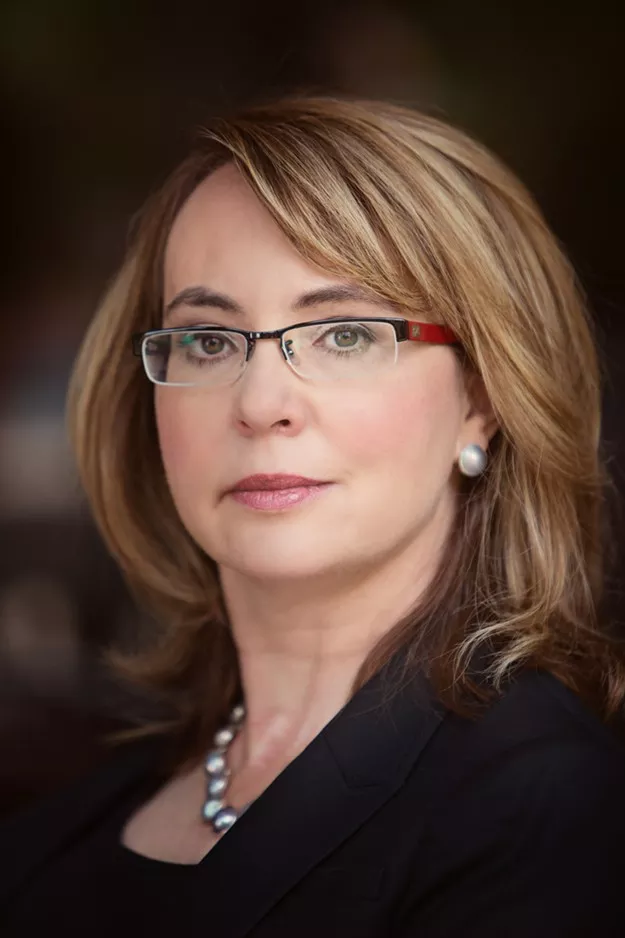
My life and my community would never be the same. We were devastated, but we were not broken. The Tucson community came together. We found purpose and hope in each other.
We mourned our friends, neighbors, grandparents, and children: Christina-Taylor Green, Dorothy Morris, Judge John Roll, Phyllis Schneck, Dorwan Stoddard, Gabe Zimmerman. I will carry their memories with me forever.
My recovery has been tough. I can’t speak or walk the way I used to. But one word after another, I find the hope and the determination to keep going. I have found strength and support in my husband Captain Mark Kelly, our family, my speech therapist, and my friends.
Today, I will attend memorials. I will hug my fellow survivors and the families who lost their loved ones. I will hold my husband a little closer knowing life can be gone in an instant. Together, we will reflect, remember, and keep working toward a safer country.
[Via Facebook]
Friday, January 7, 2022

Thanks to the fast-spreading Omicron variant, Arizona reported one of its highest single-day COVID-19 case totals on Friday, Jan. 7, with 14,888 new COVID-19 cases across the state.
That’s the second-highest number of single-day cases reported since the pandemic began, exceeded only by the 17,234 on Jan. 3, 2021.
Here in Pima County, there were 1,701 new COVID-19 cases in Pima County on Jan. 7, according to the Arizona Department of Health Services. By comparison, the single highest day in Pima County in November was 792 cases.
Pima County Health Department Director Dr. Theresa Cullen said this week that the county’s “epi curve”—the visual graphing of cases per day—continues to climb.
“What we need is that curve to go down,” she saidCullen said the next several weeks will be crucial and she hopes to see the curve go down later in January.
Genetic sequencing of COVID cases in Pima County during December revealed that Omicron was only 7.8% of cases. However, Cullen said that county health officials “did see a significant increase in Omicron for the days of 12/19 to 1/1 and about 40% of what was sequenced from the county was Omicron.”
Thus far, health officials say the Omicron variant is highly transmissible but causes less severe illness, especially among the vaccinated, and fewer hospitalizations.
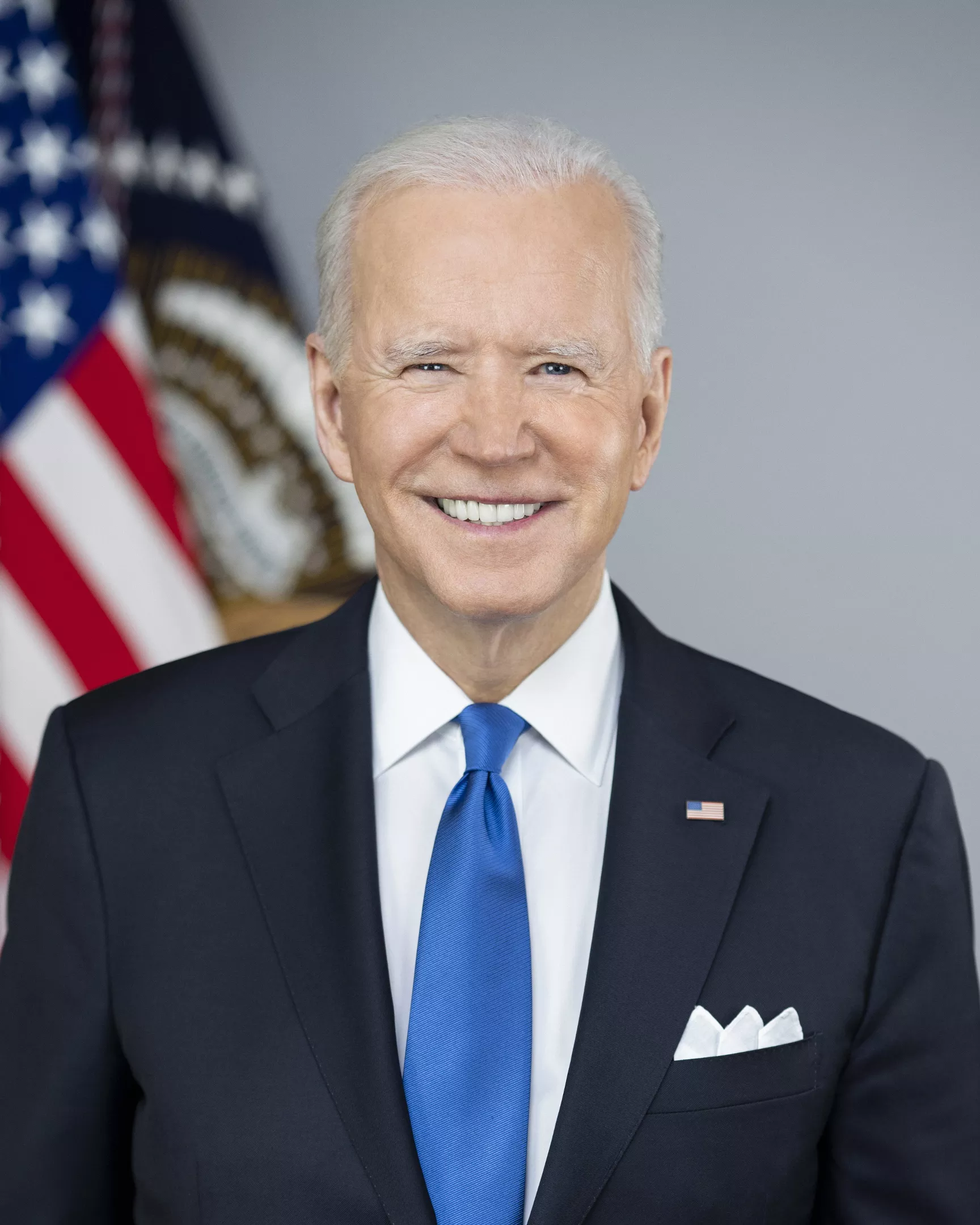
WASHINGTON — President Joe Biden on Thursday warned of the dangers of a collapse of American democracy, standing in a historic chamber in the U.S. Capitol that was besieged by an angry mob of pro-Trump supporters who attempted to halt the certification of the 2020 presidential election.
“We are in the battle for the soul of America,” Biden said during a somber and strongly worded speech in Statuary Hall to mark the first anniversary of the Jan. 6 attack on the Capitol.
“This was an armed insurrection,” he said. “They weren’t looking to uphold the will of the people.”
Biden stressed that the way forward for the nation to recover from the attack is to “recognize the truth and to live by it.”
“We must be absolutely clear what is true and what is a lie,” he said. “And here’s the truth: The former president of the United States of America has created and spread a web of lies about the 2020 election. He’s done so because he values power over principle.”
Without citing former President Donald Trump by name, Biden noted that rioters threatened the life of the speaker of the House, and were “literally erecting gallows” to hang the vice president as they rampaged through the Capitol and battled police.
Trump, Biden said, sat in the dining room just off the Oval Office at the White House, “watching it all on television and doing nothing for hours.”
Biden said that Americans should not let Jan. 6 mark the end of democracy, and it instead should spur a renaissance period of protecting the ballot through congressional action.
“Deep in the heart of America burns a flame lit almost 200 years ago,” he said. “Here in America, the people rule through the ballot, and their will prevails.”

As lawmakers and Gov. Doug Ducey prepare for the start of the 2022 legislative session, the Arizona Supreme Court provided a simple blueprint for how not to craft their budgets.
The lesson is simple: Don’t include laws in the state budget that don’t actually have anything to do with the funding in the state budget.
On Thursday, the court issued its full opinion on its unanimous ruling from November that struck down substantial portions of last year’s state budget on the grounds that the bills violated a provision of the Arizona Constitution known as the single-subject rule. That provision requires the bills that the legislature passes to encompass a single subject, and for the bill’s title to provide adequate notice about what subjects it pertains to. The provision is intended to prevent a practice known as “logrolling,” in which lawmakers are forced to vote for something they oppose in order to pass another law they support.
Four budget bills were struck down in whole or in part, which scrapped dozens of new laws covering a wide variety of disparate subjects, including banning public schools from requiring face masks or vaccinations to combat COVID-19, prohibiting the teaching of “critical race theory” in K-12 schools, imposing new requirements for security measures in ballots, changing to dog racing and harness racing permitting requirements, stripping the secretary of state of authority over the state Capitol museum and of her ability to defend the state election laws in court, and changing the state’s definition of what constitutes a newspaper so more publications can publish public notices.
Three of the budget bills that the Arizona School Boards Association challenged will stand, sans the provisions that failed to comply with the title requirement in the single-subject rule. One of the bills, described only as a budget reconciliation bill for “budget procedures,” was struck down in its entirety.
Justice John Lopez noted in the court’s opinion that the bill, Senate Bill 1819, contains 52 sections that cover 30 distinct subjects. Despite the state’s claim that “budget procedures” is a broad concept that covers a wide variety of topics, Lopez wrote that the challenged laws have no relation to the state budget and that they’re “devoid of any reference or significant to budget procedure.”
“Our conclusion is inescapable: SB 1819 contains an array of discordant subjects that are not reasonably connected to one general idea, and certainly not to budget procedures,” Lopez wrote.