Wednesday, October 14, 2020

WASHINGTON – The road to the ballot box in Arizona apparently runs through the 9th U.S. Circuit Court of Appeals, which heard two cases in just the past two days concerning ballots and voter registration in the state.
Late Tuesday night, the court ruled in one of those cases, reversing a lower court order that had extended the state’s voter registration from Oct. 5 to Oct. 23.
The appeals court, balancing the burden the registration extension put on state elections officials against the harm that reversing the order outright would have on people who registered after Oct. 5, said the extended registration would end Thursday. That ruling came just a day after Monday argument’s in the case.
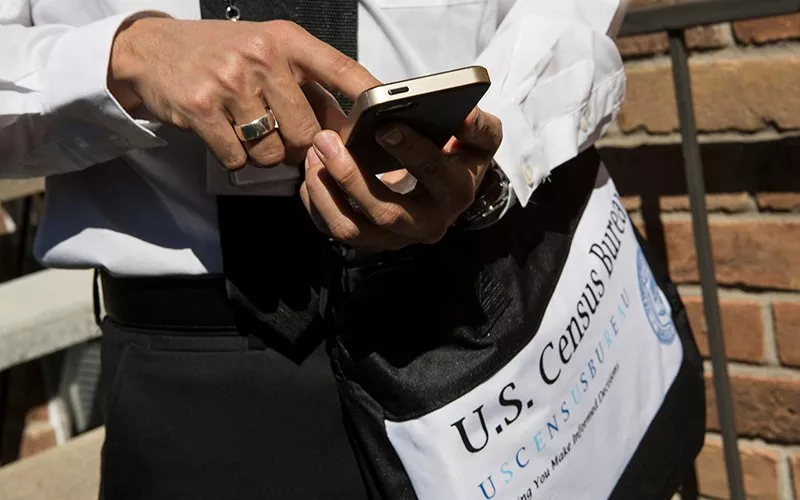
WASHINGTON – The Supreme Court Tuesday said the Census Bureau can stop its count of the population, a blow to tribal leaders and local advocates for underrepresented communities in Arizona who said they would be hit hardest by an undercount.
The court blocked lower courts that had ordered the bureau to continue counting until Oct. 31 and essentially allows the agency to stop counting with 99.9% of homes in the U.S. – and in Arizona – accounted for.
The decision was immediately criticized by plaintiffs in the suit, who said ending enumeration before everyone is counted will just mean the groups they represent will continue to be left at “the margins of the U.S. society at large.”
“Today’s decision by the U.S. Supreme Court is a bitter pill for us to swallow here on the Reservation,” said Gila River Indian Community Gov. Stephen Roe Lewis said in a statement Tuesday evening. “With no explanation or rationale, a majority simply decided that our people do not deserve to be counted.”

WASHINGTON – The number of migrants apprehended at the southern border fell sharply in fiscal 2020, a drop analysts attribute in large part to fears of the COVID-19 pandemic and the economic havoc left in its wake.
Final numbers are set to be released Wednesday at an event with Border Patrol officials in Tucson, but apprehensions through the first 11 months of the fiscal year are less than half the total for fiscal 2019. About 400,000 migrants had been apprehended through August, compared to 977,509 people caught the year before.
Experts said part of the slowdown is due to Trump administration policies, but much can be blamed on COVID-19 and the economic woes that followed, giving migrants “less of a reason to come here in the first place.”
“It being fairly pandemic-induced because of elevated fears and lack of economic opportunity in the places where they would have maybe sought out to go before,” said Sara Ritchie, director of communications at Kino Border Initiative.
Tuesday, October 13, 2020
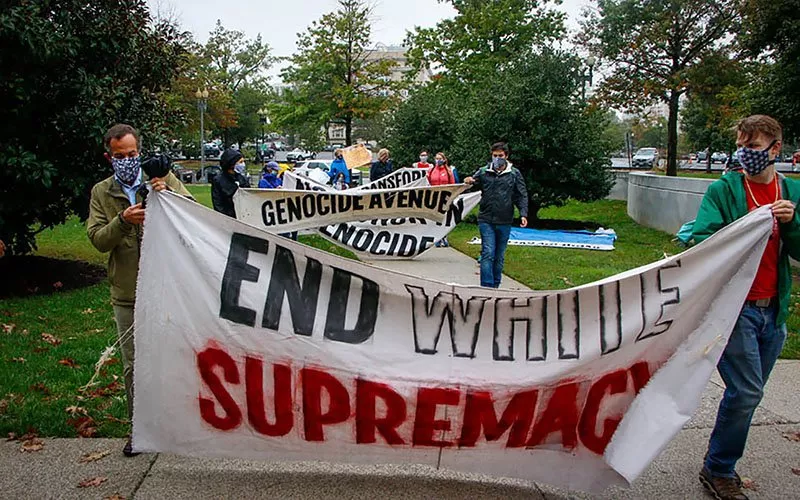
WASHINGTON – Native Americans in Arizona finally celebrated Indigenous Peoples’ Day as an official state holiday Monday – but it was a win with an asterisk.
After years of advocacy by tribal groups, Gov. Doug Ducey last month signed a proclamation making Oct. 12, 2020, a joint celebration of both Indigenous Peoples’ Day and Columbus Day, but just for this year.
“I’ve been working on this for years now and so when the governor signed the proclamation, … we were all taken aback,” said state Sen. Jamescita Peshlakai, D-Cameron, who first introduced a bill to replace Columbus Day with Indigenous Peoples’ Day in 2013.
“And so we’re surprised and we’re very thankful,” she said, calling it a “step towards making it an official state forever holiday.”
Peshlakai said she will use the momentum and reintroduce her bill in January to make the change permanent – and do away with Columbus Day. “We’re in it for the long haul,” she said.
Tags: columbus day , Indigenous Peoples’ Day , politics , Image
With 683 new cases reported today, the number of Arizona’s confirmed novel coronavirus cases closed in on 227,000 as of Tuesday, Oct. 13, according to the Arizona Department of Health Services.

Pima County had seen 26,516 of the state’s 226,734 confirmed cases.
A total of 5,767 Arizonans had died after contracting COVID-19, including 633 deaths in Pima County, according to the Oct. 13 report.
The number of hospitalized COVID cases continues to decline from July peaks. ADHS reported that as of Oct. 12, 667 COVID patients were hospitalized in the state. That number peaked with 3,517 hospitalized COVID patients on July 13.
A total of 710 people visited emergency rooms on Oct. 12 with COVID symptoms. That number peaked at 2,008 on July 7.
A total of 155 COVID-19 patients were in intensive care unit beds on Oct. 12. The number of COVID patients in ICUs peaked at 970 on July 13.
On a week-by-week basis in Pima County, the number of positive COVID tests peaked the week ending July 4 with 2,453 cases, according to an Oct. 7 report from the Pima County Health Department. For the week ending Sept. 5, a total of 863 cases were reported; for the week ending Sept. 12, 1,105 cases were reported; for the week ending Sept. 19, 1,219 cases were reported; for the week ending Sept. 26, 582 cases were reported; for the week ending Oct. 3, 472 cases were reported. (Recent weeks are subject to revision.)
Deaths in Pima County are down from a peak of 54 in the week ending July 4 to 10 in the week ending Sept. 5, one in the week ending Sept. 12, three in the week ending Sept. 19, two in the week ending Sept. 26 and one in the week ending Oct. 3. (Recent weeks are subject to revision.)
Hospitalization peaked the week ending July 18 with 221 COVID patients admitted to Pima County hospitals. In the week ending Aug. 29, 37 COVID patients were admitted to Pima County hospitals; in the week ending Sept. 5, 26 patients were admitted to Pima County hospitals; in the week ending Sept. 12, 23 patients were admitted; in the week ending Sept. 19, 14 patients were admitted; in the week ending Sept. 26, 11 people were admitted and in the week ending Oct. 3, 17 patients were admitted. (Recent weeks are subject to revision.)
Cases down near campus, more in-person classes this week
The University of Arizona will allow students to attend in-person classes of 30 students or fewer this week, UA President Robert C. Robbins said in a news conference Monday, Oct. 12.
The change will bring 1,500 more students to campus every week, and classes will continue “if and only if” public health data gauging the spread of coronavirus in the county permits, Robbins said.
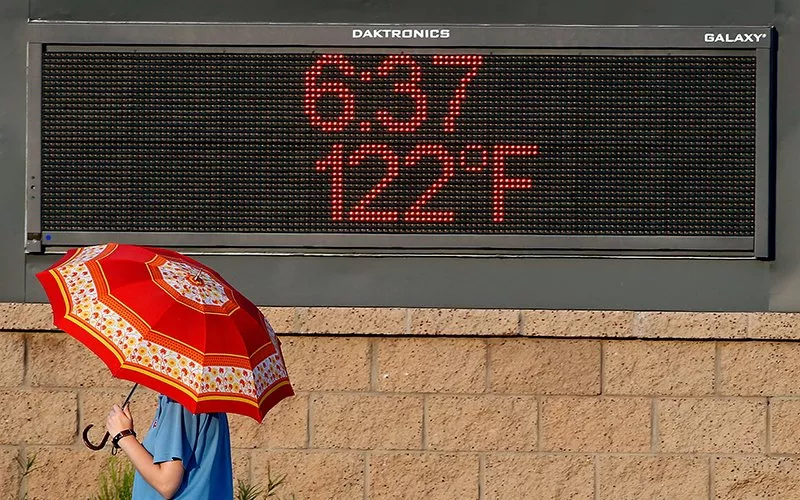
PHOENIX – Arizona will experience more days of extreme heat in the coming decade, according to an Arizona State University study that comes on the heels of the state’s hottest summer on record. But researchers are looking for ways to mitigate a hotter, drier climate.
The study, “The motley drivers of heat and cold exposure in 21st century U.S. cities,” is one of the first looks at human exposure to extreme temperatures, and it involves three factors that haven’t previously been considered together: data on population growth, greenhouse gas emissions and temperature changes caused by human development.
Researchers at the School of Geographical Sciences & Urban Planning at ASU ran decadal-length climate simulations “to quantify potential changes in population-weighted heat and cold exposure” in metropolitan regions. When compared with conditions in 2000, Phoenix and other fast-growing Sunbelt cities will see the “largest relative changes in population heat exposure,” according to the paper, which was published in August in the Proceedings of the National Academy of Sciences.
Tags: climate change , Image
With the election just days away, Cronkite News is taking a closer look at some of the measures on the Nov. 3 ballot.
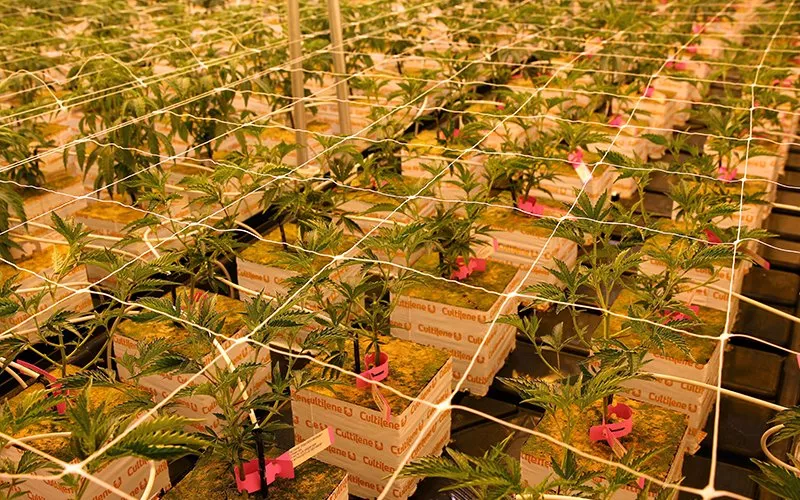
Four years after Arizona voters rejected legalizing recreational marijuana, the issue is back, appearing on November’s ballot as Proposition 207.
Eleven states have legalized recreational marijuana. Arizona joins three others – Montana, New Jersey and South Dakota – with the question on the Nov. 3 ballot.
The Marijuana Legalization Initiative, also known as the Smart and Safe Arizona Act, would legally allow people 21 and older to possess up to 1 ounce of marijuana, although smoking it in public places and open spaces would be prohibited. Arizonans would be allowed to grow up to six plants in their personal residences, and anyone arrested for, charged with or convicted of less serious marijuana-related offenses would be allowed to petition to have their criminal records expunged beginning July 21, 2021. Those offenses include possession of 2.5 ounces of marijuana or less and possessing paraphernalia used to smoke marijuana.