
Wednesday, October 7, 2020
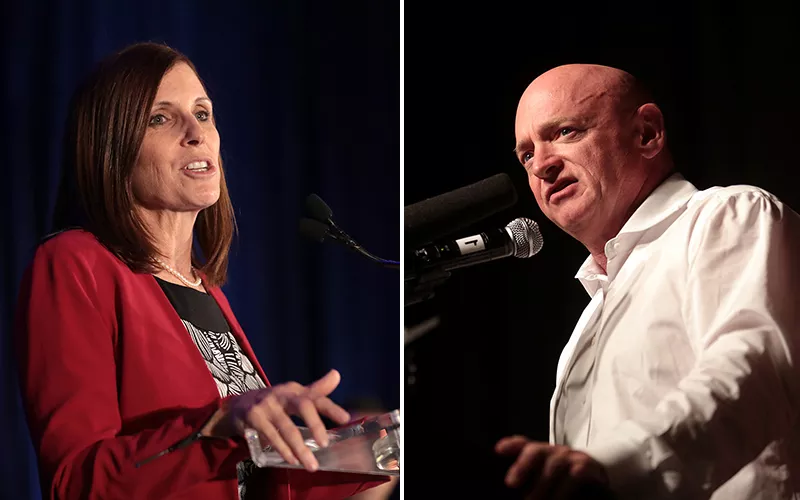
PHOENIX – Republican Sen. Martha McSally and Democratic challenger Mark Kelly, two military veterans battling for a congressional seat in Arizona that is drawing the attention of the nation, debated over the country’s COVID-19 response, jobs and immigration and President Trump’s attacks on Arizona Sen. John McCain.
Kelly and McSally wielded the usual disdain of political opponents, accusing one another of misleading Arizonans while outlining their own familiar campaign stances in a debate that offered few surprises.
McSally called Obamacare “a government takeover of health care,” praised the government response to the coronavirus and businesses suffering financial losses in the pandemic and said corporate interests that Kelly scorns actually bolster his campaign.
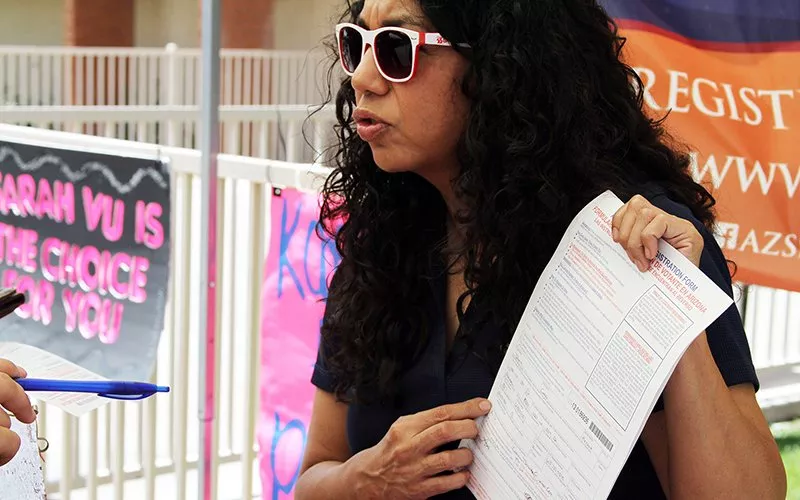
WASHINGTON – Arizona nonprofits are working “nonstop” to register voters before opponents can overturn a federal judge’s ruling that extended the state’s voter registration deadline from Monday to Oct. 23.
U.S. District Judge Steven Logan agreed with voter advocacy groups that COVID-19 restrictions imposed by the state earlier this year may have cost “possibly tens of thousands of voter registrations” and that the best way to fix that was by extending the deadline.
Arizona Secretary of State Katie Hobbs, who had originally tried to block the suit, said late Monday that she would not appeal Logan’s ruling. But national Republican groups that had joined the case said through a spokeswoman Tuesday that “we respectfully disagree” with the ruling and would be “moving expeditiously to appeal.”
Voting rights groups that won the extension were wasting no time Tuesday registering voters – one day after the original deadline would have passed.
Tuesday, October 6, 2020
The healthcare advocacy organization Protect Our Care took a “virtual bus stop” in Arizona on Tuesday to advocate for protecting the Affordable Care Act and to bring awareness to Republican-led efforts to dismantle it.
The group usually tours the nation on a physical bus, but this year, they’re hosting virtual meetings with elected leaders and health care advocates throughout 16 states to discuss present dangers to Americans’ access to healthcare and how this is complicated by the coronavirus pandemic.
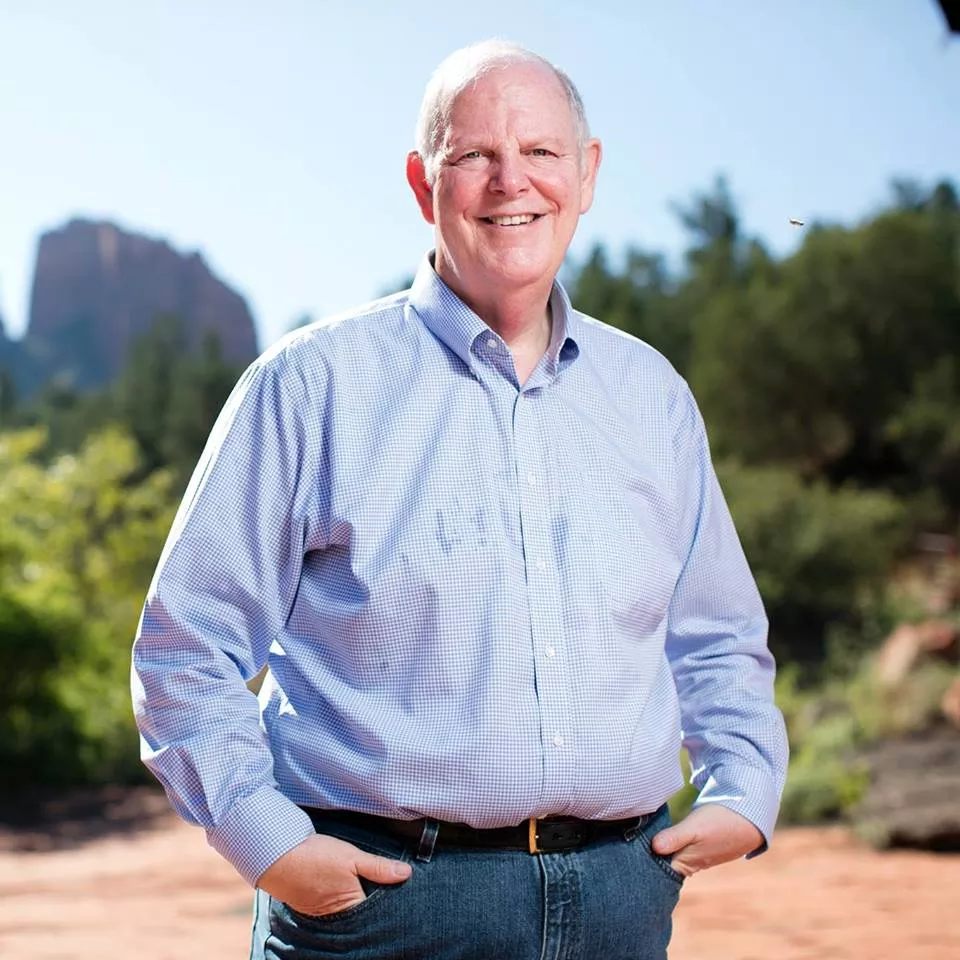
Democratic Rep. Tom O’Halleran kicked off the presentation of live speakers. He told a story about one of the first bills he tried to pass in Congress that addressed the coverage gap in Medicare drug plans. When he went to present his bill, the chairman of the rules committee set four large piles of paper on the front desk — the four healthcare plans the committee had already written since 2012.
Now, O’Halleran supports the Obama-era healthcare plan and believes “people really count on the ACA,” and that getting rid of it without a clear replacement could mean further digression in healthcare and put 300,000 Arizonans with pre-existing conditions at risk.
“These are costly issues that involve life or death situations for many people,” O’Halleran said. “This is not about moving America forward, but moving America backward. If you’re going to go after [the ACA], have a better plan, or at least have a plan. And they don’t have any of that.”

After a pause for the pandemic, debt buyers are back in the courts, suing debtors by the thousands.
Earlier this year, the pandemic swept across the country, killing 100,000 Americans by the spring, shuttering businesses and schools, and forcing people into their homes. It was a great time to be a debt collector.
In August, Encore Capital, the largest debt buyer in the country, announced that it had doubled its previous record for earnings in a quarter. It primarily had the CARES Act to thank: The bill delivered hundreds of billions of dollars worth of stimulus checks and bulked-up unemployment benefits to Americans, while easing pressures on them by halting foreclosures, evictions and student loan payments. There was no ban on collections of old credit card bills, Encore’s specialty.
At the same time, the pandemic compelled households to cut spending. Finding themselves with enough money to settle old debts, people responded to collectors’ calls and letters. Debt-buying executives couldn’t help marveling at their good fortune. All this created “a perfect storm from a cash perspective,” the CEO of Portfolio Recovery Associates, Encore’s main competitor, told Wall Street analysts.
After its record second quarter, analysts expect Encore to blow past $200 million in profit this year and reward stockholders with 40% earnings growth compared with last year. Portfolio Recovery is set for similar growth. The share prices of both have soared off their early April lows.Tags: business , foreclosure , covid , Image
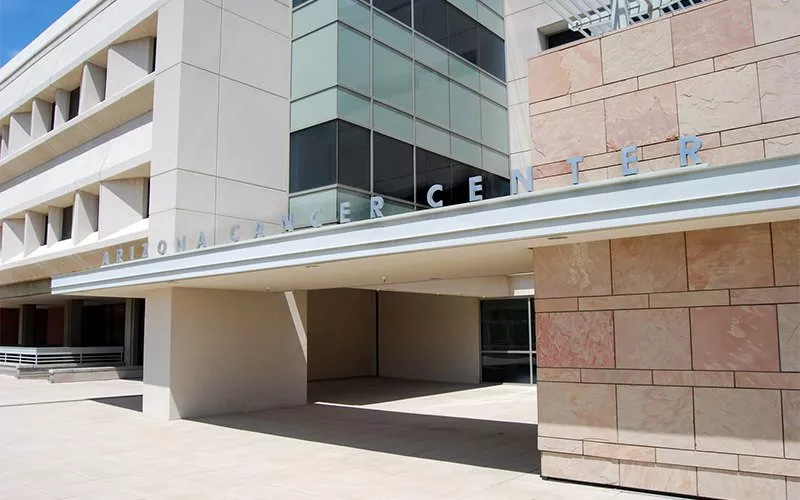
PHOENIX – Colorectal cancer has received a great deal of attention since actor Chadwick Boseman lost his four-year battle to the disease in August. It’s the second-leading cause of cancer death among Native Americans, prompting calls for increased screenings to improve detection and treatment of colorectal disease.
Donald Haverkamp, an epidemiologist with the U.S. Centers for Disease Control and Prevention, said many factors play a role in the number of cases among Native Americans, including lack of access to health care or insurance, increased natural bacteria on some reservations and diet and lifestyle.
“Cultural beliefs can come into play as well,” he said. “There are tribes, for example, that don’t even want to mention the word cancer, for fear of bringing on that disease, bringing it onto yourself by mentioning it.”
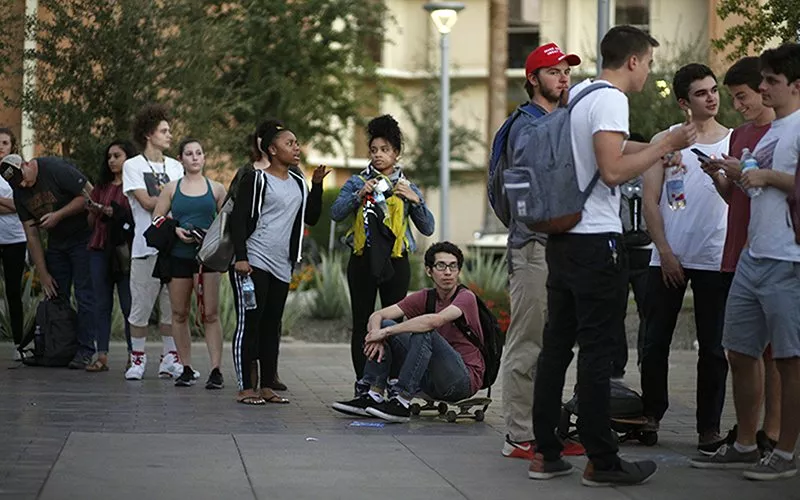
PHOENIX – Activists who believe young voters in Arizona have the power to swing the state are working to mobilize this often inconsistent and underrepresented group by engaging with them across all platforms – including Bumble and Tinder.
Roughly 35% of eligible Arizonans did not vote in 2016, spurring advocacy groups on both sides to galvanize young voters in the Black and Latino communities, who account for about one-third of the state’s population of 7.3 million.
“The focus on younger demographics – all across the country, but (especially) in Arizona – have certainly been sort of a unicorn,” said Garrett Archer, a former data analyst with the Secretary of State’s Office who now works for KNXV-TV (ABC15). “In many ways, Democrats need increased turnout in this group in order to have any chances in Arizona.”
In particular, the state has magnetized progressives determined to turn Arizona away from its more recent Republican leanings. Arizona’s purple turnout in the 2018 midterm election, which resulted in the state’s first elected Democratic senator since 1988, showed the potential for a Democratic presidential win for the first time in Arizona since Bill Clinton in 1996. Progressive and conservative voting groups are moving to harness inconsistent voters – those who are historically unpredictable in whether they turn out at the polls – but often vote blue if they do, according to studies and politics experts.
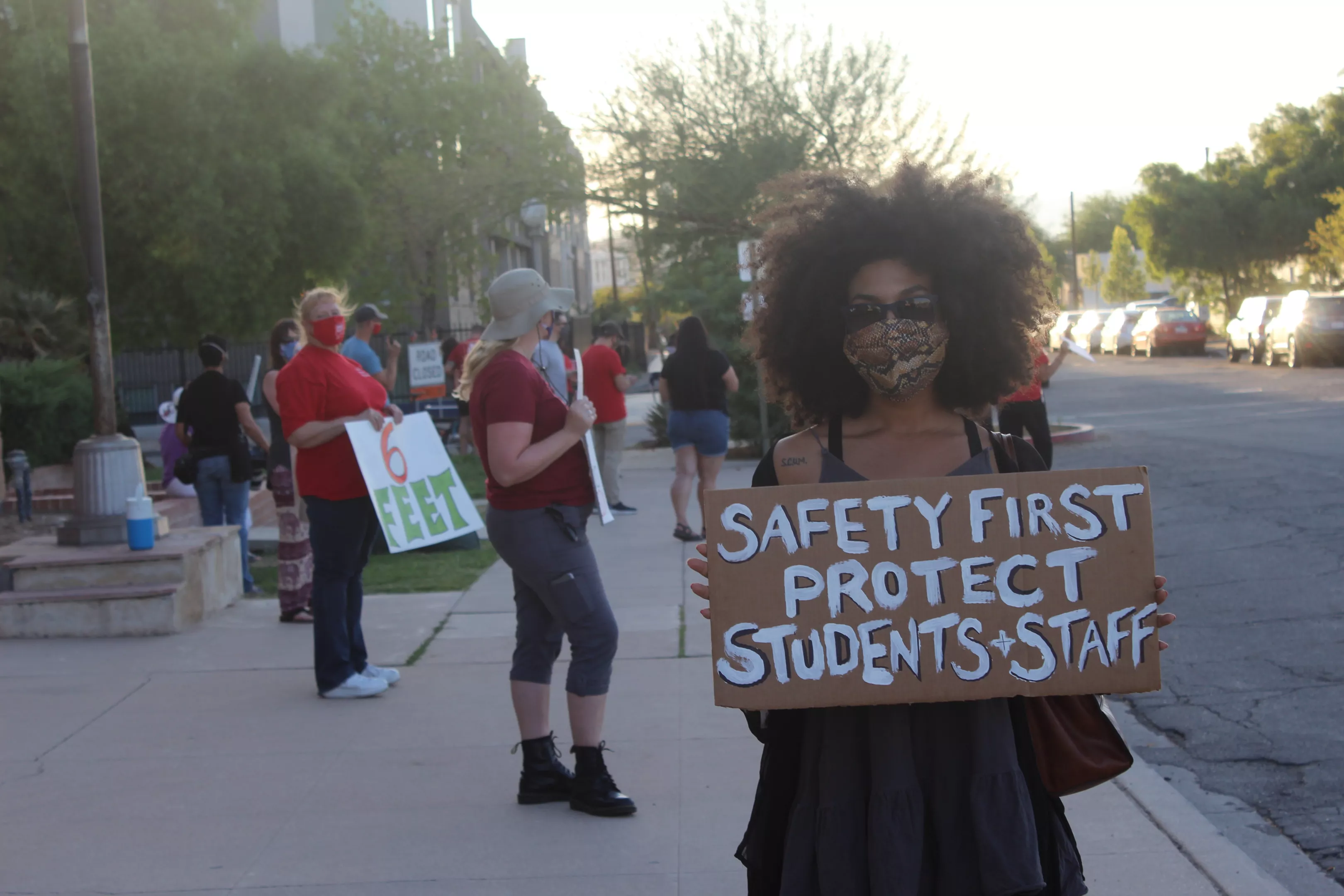
After school hours on Monday, Oct. 6, dozens of members of the Tucson Unified School District gathered in front of the district headquarters to protest planned school reopenings.
In a meeting last month, the school board voted to move forward with a hybrid learning model beginning Monday, Oct. 19. However several teachers and staff are demanding in-person classes to be delayed until classroom gatherings are safe, citing Pima County Health Department’s recommendation that there should be no groups more than 10.
The TUSD Board is scheduled to meet tonight to determine the next step in reopening schools. The district's plan, as it stands now, is to have students attend schools two days a week in separate groups and work independently at home or elsewhere on the other three days.
“This is a public expression of our sentiment: We simply don’t want to reopen until it’s safe,” said Marea Jenness, a science teacher at Tucson High. “I don’t think the masks cut it. In my opinion, we should wait until there’s a vaccine.”
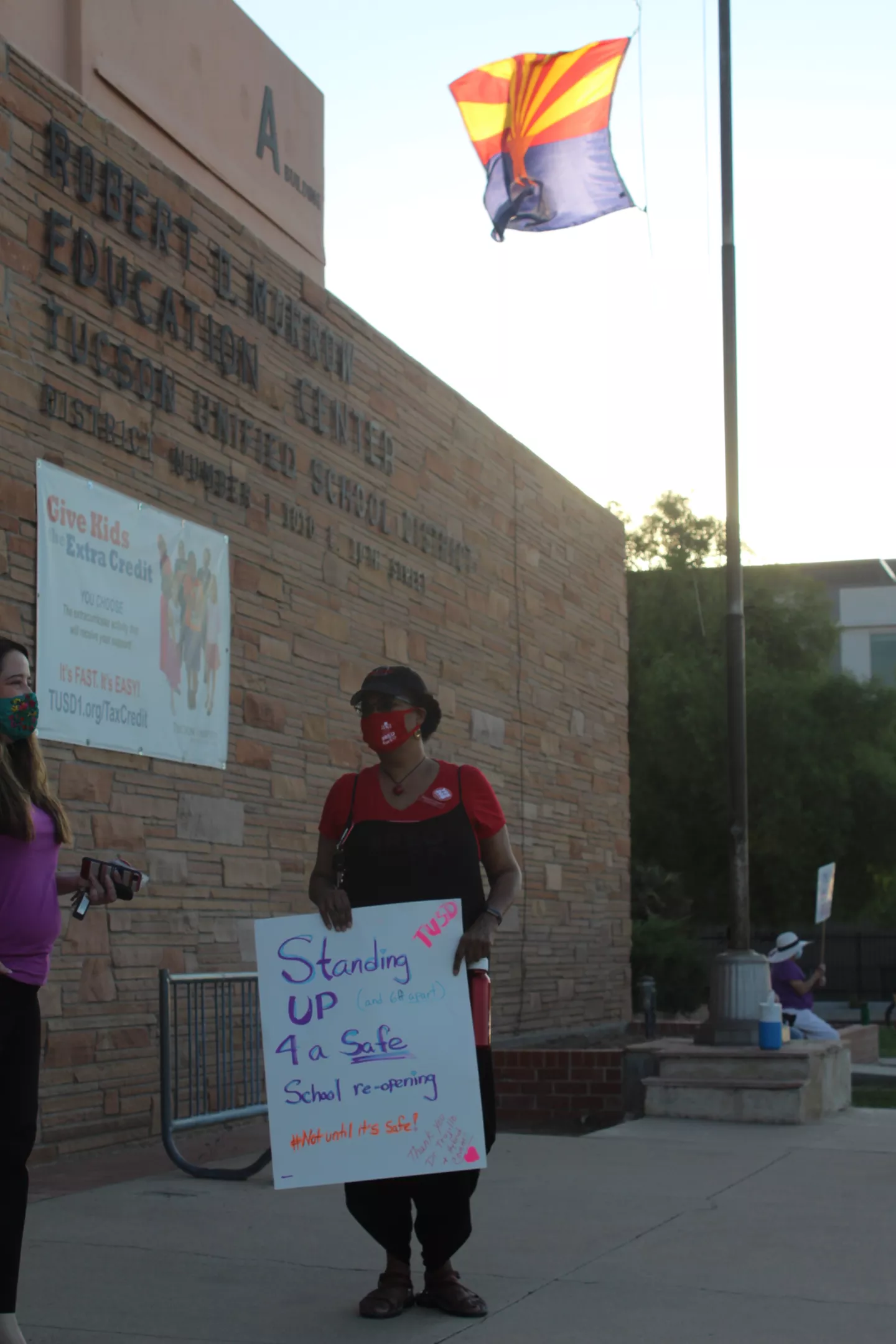
While PCHD's COVID-19 Progress Report indicates the majority of local health criteria are making progress or have been met, the demonstrators argue social distancing and telecommuting remain vital to stop the virus’ spread.
Demonstrators displayed a quote from one Pueblo High School student: “I miss my friends and remote learning is hard! But I don’t want to risk infecting my family. I couldn’t live with the guilt.”
Jenness, who has a preexisting lung condition, says she received a letter from the school district acknowledging her condition, but stating she should prepare for schools to reopen regardless.
“We are talking about human lives, not just a number,” Jenness said. “It’s mostly a case of the right hand not knowing what the left hand is doing, which can happen in a large district like ours… We’re talking about potential funerals for teachers and students.”
Senator @KyrstenSinema knows that Arizonans need an independent voice representing them in the Senate. pic.twitter.com/quSlnyMAj5
— Captain Mark Kelly (@CaptMarkKelly) October 3, 2020
Tonight is the first big showdown between appointed U.S. Sen.
Martha McSally and her Democratic opponent, Mark Kelly, the former NASA
astronaut who is leading in the polls.
McSally and Kelly will meet at 7 p.m. for a 90-minute debate
that’s being moderated by Phoenix NPR station KJZZ’s Steve Goldstein, Ted
Simons of Arizona PBS, Lorraine Rivera of Arizona Public Media and Yvone
Wingett Sanchez of the Arizona Republic.
You can watch the debate in Tucson on PBS 6.
Ahead of the debate, Kelly rolled out new TV ad from Sen. Kyrsten
Sinema, the Democrat who defeated McSally in 2018. (McSally was later appointed
to a U.S. Senate seat by Gov. Doug Ducey to finish the term of the late John
McCain.)
Sinema charges that “McSally will say anything
to get elected” and adds that the Republican incumbent hitting Kelly with the same
kind of “false attacks” that she tried against Sinema two years ago.
“But Martha’s worst lies
are the ones about her own record,” Sinema concludes. “She voted to eliminate protections for pre-existing health
conditions. An Arizona senator
should be an independent voice that puts everyday people first.
That’s why I support Mark.”
Polling shows Sinema is considerably more popular that
McSally in the state. At the start of 2020, McSally was ranked among the most
unpopular senators in the country, with 37 percent of those surveyed approving
of the job she’s doing and 40 percent disapproving, giving her a with a net
approval of -3. Sinema, by contrast, had an approval rating of 44 percent and a
disapproval rating oof 30 percent, giving her a net approval rating of +14.
Piggybacking on the theme that McSally can’t be trusted, the
Arizona Democratic Party rolled out a new website, MisleadingMcSally.com, linking
to various news outlets and fact-checking sites that have called out McSally
for false or dishonest statements.
Among the areas that the site explores: McSally’s record on
preexisting conditions, which she herself admitted was a major vulnerability in
her unsuccessful 2018 campaign for Senate. Democrats link back to articles by
PolitiFact and the Washington Post fact checker that recount McSally’s previous
votes for eliminating protections for people with preexisting conditions by
repealing the Affordable Care Act to counter McSally’s vow that she will “always”
protect people with preexisting conditions. It also reminds readers that
McSally has not opposed the Trump administration’s effort to persuade the U.S.
Supreme Court to dismantle the entire Affordable Care Act.
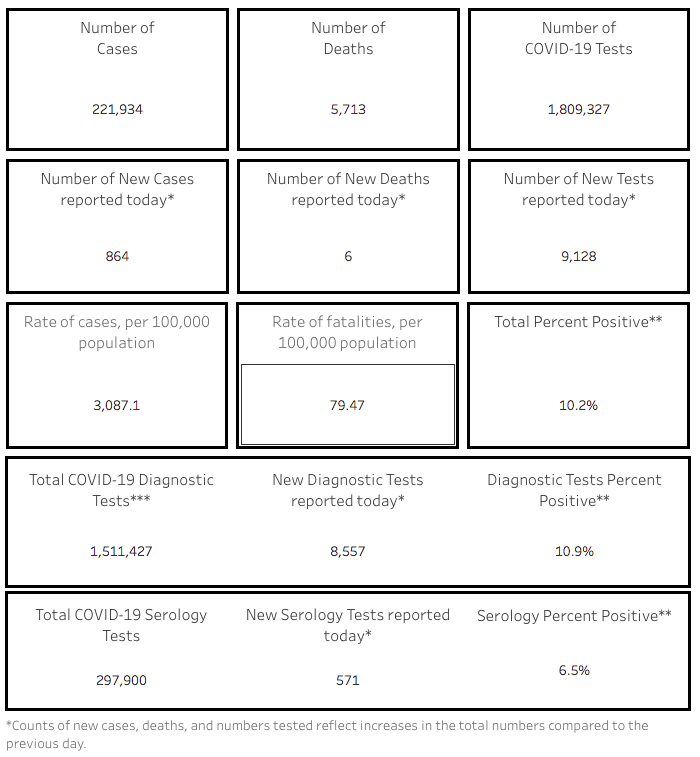

Pima County had seen 26,052 of the state’s 221,934 confirmed cases.
With six new deaths today, a total of 5,713 Arizonans had died after contracting COVID-19, including 628 deaths in Pima County, according to the Oct. 6 report.
The number of hospitalized COVID cases continues to decline from July peaks. ADHS reported that as of Oct. 5, 665 COVID patients were hospitalized in the state, a jump of 98 from yesterday. The number of hospitalized COVID patients peaked at 3,517 on July 13.
A total of 644 people visited emergency rooms on Oct. 5 with COVID symptoms. That number peaked at 2,008 on July 7.
A total of 138 COVID-19 patients were in intensive care unit beds on Oct. 5. The number of COVID patients in ICUs peaked at 970 on July 13.
On a week-by-week basis in Pima County, the number of positive COVID tests peaked the week ending July 4 with 2,453 cases, according to a Sept. 29 report from the Pima County Health Department. With the return of UA students, local numbers ticked upward in September but have began to decline again. For the week ending Sept. 5, a total of 859 cases were reported; for the week ending Sept. 12, 1,102 cases were reported; for the week ending Sept. 19, 1,203 cases were reported; and for the week ending Sept. 26, 470 cases were reported. (Recent weeks are subject to revision.)
Deaths in Pima County are down from a peak of 55 in the week ending July 4 to 13 in the week ending Aug. 22, 10 in the week ending Aug. 29, zero in the week ending Sept. 5, two in the week ending Sept. 12 and two in the week ending Sept. 19. (Recent weeks are subject to revision.)
Hospitalization peaked the week ending July 18 with 234 COVID patients admitted to Pima County hospitals. In the week ending Aug. 29, 37 COVID patients were admitted to Pima County hospitals; in the week ending Sept. 5, 25 patients were admitted to Pima County hospitals; in the week ending Sept. 12, 19 patients were admitted; in the week ending Sept. 19, 14 patients were admitted; and in the week ending Sept. 26, five people were admitted. (Recent weeks are subject to revision.)
Campus cases in decline but UA officials stress need to stay vigilant
This week, the University of Arizona will remain in phase one of their staged plan for reopening but anticipates moving into phase two of the plan next week, UA President Dr. Robert C. Robbins said in a news conference yesterday.
Phase one allows students to attend essential in-person classes only, but the university plans to add in-person instruction for classes of 30 or fewer students the week of Oct. 12.
According to Robbins, about 2,500 additional students will have the option to attend in-person classes, and the new opportunity only applies to those who signed up for in-person classes during the registration period at the beginning of the school year.
Phase 2 was originally set to begin on Aug. 31, but the high numbers of positive coronavirus cases delayed the step toward having more in-person classes on campus.