

Thursday, October 8, 2020

A local watchdog group that critically monitors the Tucson Unified School District will hold a forum with the seven candidates running for three open seats on the district’s school board at 6:30 p.m. tonight, Thursday, Oct. 8.
CARE (Coalition for Accountability, Respect and Excellence,) a group that aims to hold TUSD board members accountable, will give the candidates a chance to answer questions emailed by constituents.
The seven candidates running for three open school board positions include Ravi Grivois-Shah, Natalie Luna Rose, Nicolas Pierson, Adam Ragan, Sadie Shaw, Cindy Winston and write-in candidate Cristina Mennella.
Three volunteer, nonpartisan positions on the school board are opening when the terms of current board members Bruce Burke, Kristel Foster and Rachael Sedgwick expire in November.The candidate forum will be available live at: youtube.com/channel/UCNxtVlmWkpT8K9NzP8DGy-g?view_as=subscriber
Meet the candidates
Ravi Grivois-Shah: Family physician
Natalie Luna Rose: Communications manager for the Arizona Center for Disability Law
Cristina Mennella (write-in candidate): Speech-language pathologist
Nicolas Pierson: Former U.S. Army veteran and financial advisor
Adam Ragan: Public high school teacher
Sadie Shaw: Art educator
Cindy Winston: Science teacher

Mercado San Agustin recently announced that their monthly flea market is returning from hiatus on Sunday, Oct. 11. The open-air flea market takes place in the parking lots and sidewalks on Avenida Del Convento between the Mercado San Agustin and the MSA Annex, and features dozens of local sellers. The market runs from 8 a.m. to 2 p.m., and the following restaurants and cafes in the Mercado district will also be open: Seis Kitchen, Agustin Kitchen, Decibel Coffee, Presta Coffee, Dolce, La Estrella Bakery, Beaut Burger, Kukai and Westbound bar.
In addition to the Flea, the Tucson Eat Yourself mobile event will be set up at the Mercado on Saturday and Sunday, Oct. 10 and 11, from 11 a.m. to 5 p.m. It will feature several food trucks across from the Mercado, and a large LED screen running footage from previous Tucson Meet Yourself events and new video works from local musicians produced for Tucson Eat Yourself.
Shoppers at the Mercado Flea are requested to bring a mask and be prepared to wear it during any close contact during the market.
For more information: mercadodistrict.com
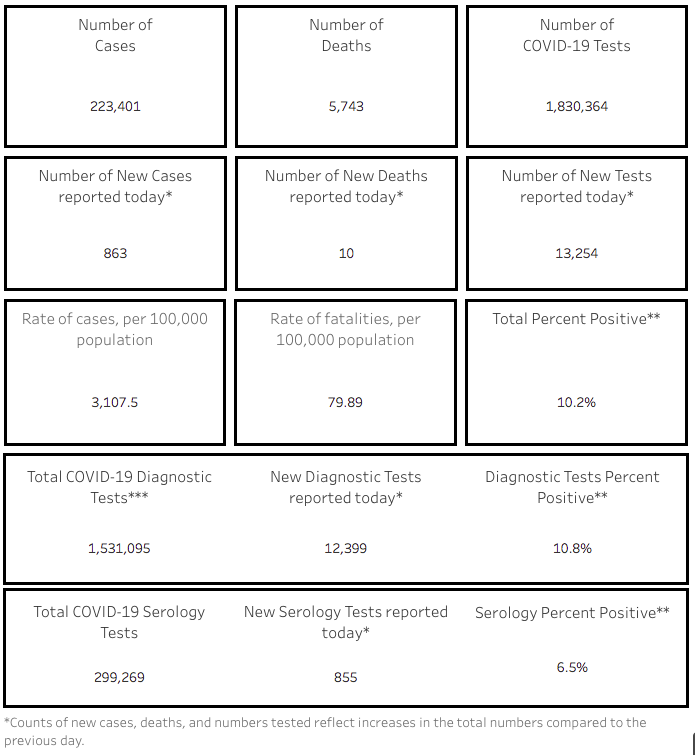
With 863 new cases reported today, the number of Arizona’s confirmed novel coronavirus cases closed in on 223,000 as of Thursday, Oct. 8, according to the Arizona Department of Health Services.

With 125 new cases today, Pima County had seen 26,217 of the state’s 223,401 confirmed cases.
With 10 new deaths today, a total of 5,743 Arizonans had died after contracting COVID-19, including 630 deaths in Pima County, according to the Oct. 8 report.
The number of hospitalized COVID cases continues to decline from July peaks but has steadily creeped upward this week. ADHS reported that as of Oct. 7, 728 COVID patients were hospitalized in the state, an increase of . While that number has increased by 183 since Saturday, Oct. 3, it’s still far below the peak of 3,517 hospitalized COVID patients set on July 13.
A total of 744 people visited emergency rooms on Oct. 7 with COVID symptoms. That number, which peaked at 2,008 on July 7, has also been on the rise this week.
A total of 156 COVID-19 patients were in intensive care unit beds on Oct. 7, up from 133 on Saturday, Oct. 3. The number of COVID patients in ICUs peaked at 970 on July 13.
On a week-by-week basis in Pima County, the number of positive COVID tests peaked the week ending July 4 with 2,453 cases, according to an Oct. 7 report from the Pima County Health Department. With the return of UA students, local numbers ticked upward in September but have begun to decline again. For the week ending Sept. 5, a total of 863 cases were reported; for the week ending Sept. 12, 1,105 cases were reported; for the week ending Sept. 19, 1,219 cases were reported; for the week ending Sept. 26, 582 cases were reported; for the week ending Oct. 3, 472 cases were reported. (Recent weeks are subject to revision.)
Deaths in Pima County are down from a peak of 54 in the week ending July 4 to 10 in the week ending Sept. 5, one in the week ending Sept. 12, three in the week ending Sept. 19, two in the week ending Sept. 26 and one in the week ending Oct. 3. (Recent weeks are subject to revision.)
Hospitalization peaked the week ending July 18 with 221 COVID patients admitted to Pima County hospitals. In the week ending Aug. 29, 37 COVID patients were admitted to Pima County hospitals; in the week ending Sept. 5, 26 patients were admitted to Pima County hospitals; in the week ending Sept. 12, 23 patients were admitted; in the week ending Sept. 19, 14 patients were admitted; in the week ending Sept. 26, 11 people were admitted and in the week ending Oct. 3, 17 patients were admitted. (Recent weeks are subject to revision.)
CDC report supports use of masks, physical distancing
A new report from the Centers for Disease Control and Prevention examines how effective Arizona’s mitigation measures were on stopping the increase of COVID-19. The report, which tracked case numbers from Jan. 22 to Aug. 7, shows a clear correlation in reduced virus cases after face masks and social distancing were mandated.
In Arizona, the average number of daily virus cases increased approximately 151% after the statewide stay-at-home order was lifted in mid-May, with Gov. Doug Ducey declaring “we are clearly on the other side of this pandemic.”
According to CDC data, two weeks after Arizona's stay-at-home orders were first lifted on May 15, daily new COVID cases increased from 808 on June 1 to 2,026 on June 15. This led to a peak in cases from June 29 to July 2. Cases then began to reduce after Ducey allowed local officials to implement their own mandates on June 17. The ensuing local policies were applicable to approximately 85% of the total Arizona population.

PHOENIX – La Palma Correctional Center, a privately run immigration detention center in Eloy, is facing an alarming spike in COVID-19 cases among immigration detainees.
U.S. Immigration and Customs Enforcement officials confirmed the first case of COVID-19 at the La Palma Correctional Center on April 6. On May 30, at least 76 undocumented immigrants tested positive for COVID-19. As of Oct. 4, ICE reported 400 cases. Those numbers are the highest of active COVID-19 cases at any federal immigration facility in the nation, followed by Atlanta Field Office Stewart Detention Center with 360.
Dulce Granados of Phoenix said her husband has been detained at La Palma for more than two years, and she fears he could get infected by the novel coronavirus that causes the deadly disease.
“This whole virus thing is a difficult situation because they have people in quarantine there,” Granados said. “They are mixed with the people who tested negative, with people who tested positive.”

Wednesday, October 7, 2020
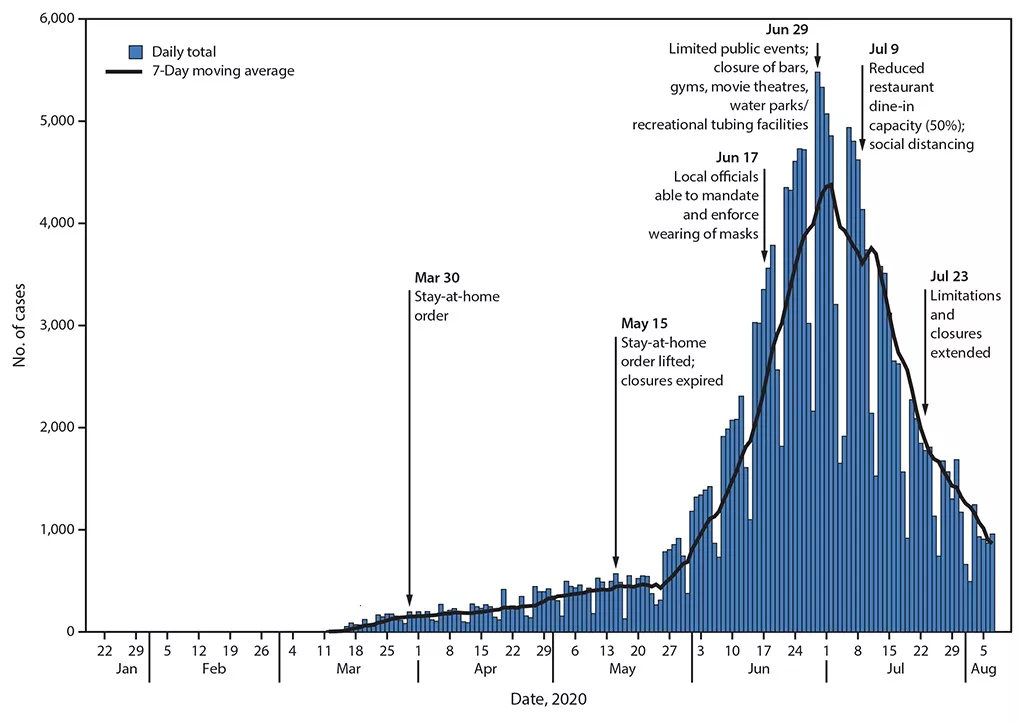
A new report from the Centers for Disease Control and Prevention examines how effective Arizona’s mitigation measures were on stopping the increase of COVID-19. The report, which tracked case numbers from Jan. 22 to Aug. 7, shows a clear correlation in reduced virus cases after face masks and social distancing were mandated.
In Arizona, the average number of daily virus cases increased approximately 151% after the statewide stay-at-home order was lifted in mid-May, with Gov. Doug Ducey declaring “we are clearly on the other side of this pandemic.”
According to CDC data, two weeks after Arizona's stay-at-home orders were first lifted on May 15, daily new COVID cases increased from 808 on June 1 to 2,026 on June 15. This led to a peak in cases from June 29 to July 2. Cases then began to reduce after Ducey allowed local officials to implement their own mandates on June 17. The ensuing local policies were applicable to approximately 85% of the total Arizona population.
COVID-19 cases then declined by approximately 75% following "sustained prevention efforts" across Arizona. These prevention efforts include wearing masks, limiting public events and closing certain businesses such as bars, movie theaters and gyms. Due to the infection cycle of the virus, case increases and reductions are delayed by an average of two weeks after mandates change.
The report states: The number of COVID-19 cases in Arizona stabilized and then decreased after sustained implementation and enforcement of statewide and locally enhanced mitigation measures, beginning approximately two weeks after implementation and enforcement of mask mandates and enhanced sanitation practices began on June 17; further decreases were observed during July 13–August 7, after statewide limitations and closures of certain services and businesses.
The CDC continues by saying that quantitative data on the effectiveness of community mitigation measures at suppressing the virus’ spread is difficult to calculate, and the primary goal of implementing these widespread “enhanced mitigation measures” in Arizona was to protect and save lives and maintain capacity in the health care system. Ultimately, a combination of voluntary and enforceable measures is more effective than any single measure, although public policy can effectively increase social distancing.
These mitigation measures should still be implemented, particularly before a vaccine or other treatments become widely available. State, local and tribal officials are best positioned to continually monitor data and collaborate to determine the level and types of enhanced mitigation required. Mitigation measures, including mask mandates, that are implemented and enforced statewide appear to have been effective in decreasing the spread of COVID-19 in Arizona.

A new solar technology developed by a University of Arizona researcher has been licensed to the startup company Gen3 Solar, with the goal of manufacturing the technology for commercial and industrial use.
Whereas traditional photovoltaic systems use flat solar panels, this new technology, developed by optical sciences professor Roger Angel, uses mirrors to focus sunlight onto a multi-junction solar cell. While other solar technologies have also implemented mirrors, such as solar towers, Angel's "mirror modules" use curved mirrors to focus sunlight, and remove heat from the photovoltaic cells by flowing liquid coolant, providing additional thermal power output.
Gen3 is now "perfecting the design and making sure that the technology works in a variety of environments and weather conditions."
According to Gen3 founder David Vili, there are researchers who are using solar generators to split water into hydrogen, so one potential use of the technology is not just making electricity directly, but also making hydrogen for potential fuel.
The company is currently building 15 units for a phase one program. After, they plan to build a larger factory with an estimated 160 units. The third phase, in the next three to five years, is to work with governmental and private clients on a large-scale to implement solar projects throughout the country.
TUSD Delays Return to In-Person Instruction Until November (at the Soonest), Unveils New Hybrid Plan
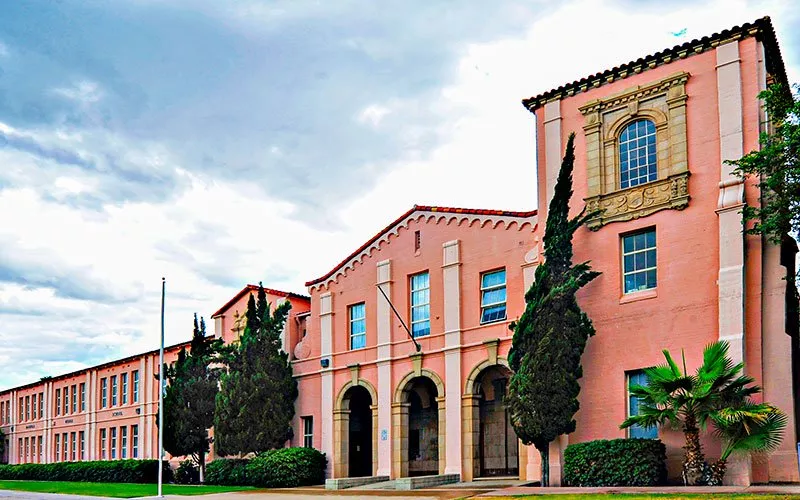
The Tucson Unified School District’s governing board approved a new hybrid learning model for returning to classes but delayed voting on when to implement it.
In a 4-1 vote, the board approved the new model but put off deciding on a return date until the next TUSD board meeting Oct. 27.
Superintendent Dr. Gabriel Trujillo asked board members to consider a new start date for the revised hybrid model on Nov. 12, dependent on Pima County data tracking the spread of coronavirus in the county.
To move to the hybrid model, TUSD must meet criteria from Pima County’s COVID-19 Progress Report, which tracks local disease data, healthcare capacity and public health capacity. As of Oct. 1, eight of the nine health criteria are making “progress” or have been officially “met.”
Pima County has not met the benchmark of a two-week decline in the number of COVID-19 cases, and therefore, the district does not currently meet guidelines set out by the Pima County Health Department to return to in-person classes.
Trujillo says this guideline hasn’t been met because of some TUSD schools’ proximity to the University of Arizona campus.
“TUSD is unique amongst the school districts in that we have six schools that are directly on the U of A campus or adjacent to it, so this is really close to home for us,” Trujillo said. “It’s the fact that the COVID-19 spike at the U of A has most influenced the movement backward of this key metric in the last two weeks that still does have me concerned.”
According to a survey taken by more than 20,000 parents and teachers within TUSD, 56% support remote learning only, while 44% support returning to classes with a hybrid model.
“This hybrid model places education utterly last on the list of priorities,” Cheryl Watters, a teacher and parent in the district said in an email read aloud at the board meeting. “Instead of teaching, I will be disinfecting my classrooms and monitoring my students to be sure they are complying with the safety protocols. I will now be responsible for the physical health of my students. How can I focus on teaching when I carry that weight?”
Vicki Saunders, an office assistant at Rincon High School, wrote, “I’m strongly in favor of moving to a hybrid model on Oct. 19, because our students are asking to return and begging to return... We have so many students struggling academically, mentally and physically.”
Largely split on the decision of returning to schools, the TUSD board voted to delay the vote 3-2 with members Adelita Grijalva and Rachael Sedgwick opposing.
“If this item passes and we table this until [Oct.] 27, I would hope that on that date, we can have a real honest discussion about pushing this off and the majority of the board will make a decision then,” Grijalva said. “While I know that our teachers are in limbo and will feel it, I think that will give us an opportunity to get some breathing room.”
Sedgwick said delaying the vote will put a further burden on teachers who would have to quickly adapt their lesson plans to fit a new hybrid model.
“I think we understand how difficult it is to prepare a classroom for a school year with just two weeks’ notice, and for this board to continue to put this decision off is to make hundreds of thousands of people wait for our decision every two weeks,” Sedgwick said.
Trujillo mentioned many teachers’ concerns about adjusting to a hybrid model, but ultimately recognized that nearly half of survey respondents want in-person learning.
Early voting for the Nov. 3 general election is underway in Pima County! Some county residents are so eager to cast their ballots that they were in line bright and early today before the County Recorder opened an early voting location at 8 a.m. at 240 N. Stone.Early birds wait before 8 a.m. for Early Voting downtown at 240 N. Stone. Vote in person. #FirstWeekVoters pic.twitter.com/IWcFNnkzMV
— Pima County Recorder (@Pima_Co_Record) October 7, 2020
If you want to cast your early ballot in person, you can find a list of early-voting sites here.
If you'd like to request an early ballot by mail, click here. The last day to request an early ballot by mail is Friday, Oct. 23.
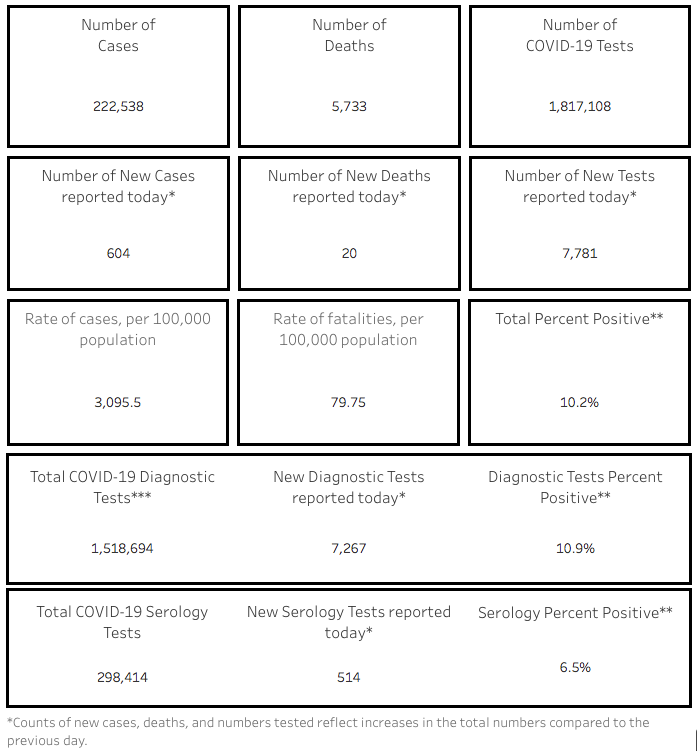

Pima County had seen 26,052 of the state’s 222,538 confirmed cases.
With 20 new deaths today, a total of 5,733 Arizonans had died after contracting COVID-19, including 629 deaths in Pima County, according to the Oct. 7 report.
The number of hospitalized COVID cases continues to decline from July peaks. ADHS reported that as of Oct. 6, 681 COVID patients were hospitalized in the state. While that number has creeped up by more than 100 since Sunday, it’s still far below the peak of 3,517 hospitalized COVID patients set on July 13.
A total of 728 people visited emergency rooms on Oct. 6 with COVID symptoms. That number peaked at 2,008 on July 7.
A total of 147 COVID-19 patients were in intensive care unit beds on Oct. 6. The number of COVID patients in ICUs peaked at 970 on July 13.
On a week-by-week basis in Pima County, the number of positive COVID tests peaked the week ending July 4 with 2,453 cases, according to an Oct. 5 report from the Pima County Health Department. With the return of UA students, local numbers ticked upward in September but have begun to decline again. For the week ending Sept. 5, a total of 867 cases were reported; for the week ending Sept. 12, 1,112 cases were reported; for the week ending Sept. 19, 1,222 cases were reported; for the week ending Sept. 26, 578 cases were reported; for the week ending Oct. 3, 397 cases were reported. (Recent weeks are subject to revision.)
Deaths in Pima County are down from a peak of 54 in the week ending July 4 to 10 in the week ending Sept. 5, zero in the week ending Sept. 12, two in the week ending Sept. 19, two in the week ending Sept. 26 and 1 in the week ending Oct. 3. (Recent weeks are subject to revision.)
Hospitalization peaked the week ending July 18 with 234 COVID patients admitted to Pima County hospitals. In the week ending Aug. 29, 37 COVID patients were admitted to Pima County hospitals; in the week ending Sept. 5, 23 patients were admitted to Pima County hospitals; in the week ending Sept. 12, 19 patients were admitted; in the week ending Sept. 19, 14 patients were admitted; and in the week ending Sept. 26, 11 people were admitted and in the week ending Oct. 3, 10 patients were admitted. (Recent weeks are subject to revision.)
TUSD delays return to in-person instruction
The Tucson Unified School District’s governing board approved a new hybrid learning model for returning to classes but delayed voting on when to implement it.
In a 4-1 vote, the board approved the new model but decided to delay voting on a return date until the next TUSD board meeting Oct. 27.
The district had previously planned on resuming a hybrid model of in-person classes with children attending classes on two days a week and working online at home three days a week on Monday, Oct. 19.
Tags: coronavirus , TUSD , in-person instruction , delay , case numbers , testing , covid-19 , Image

