

Friday, October 9, 2020
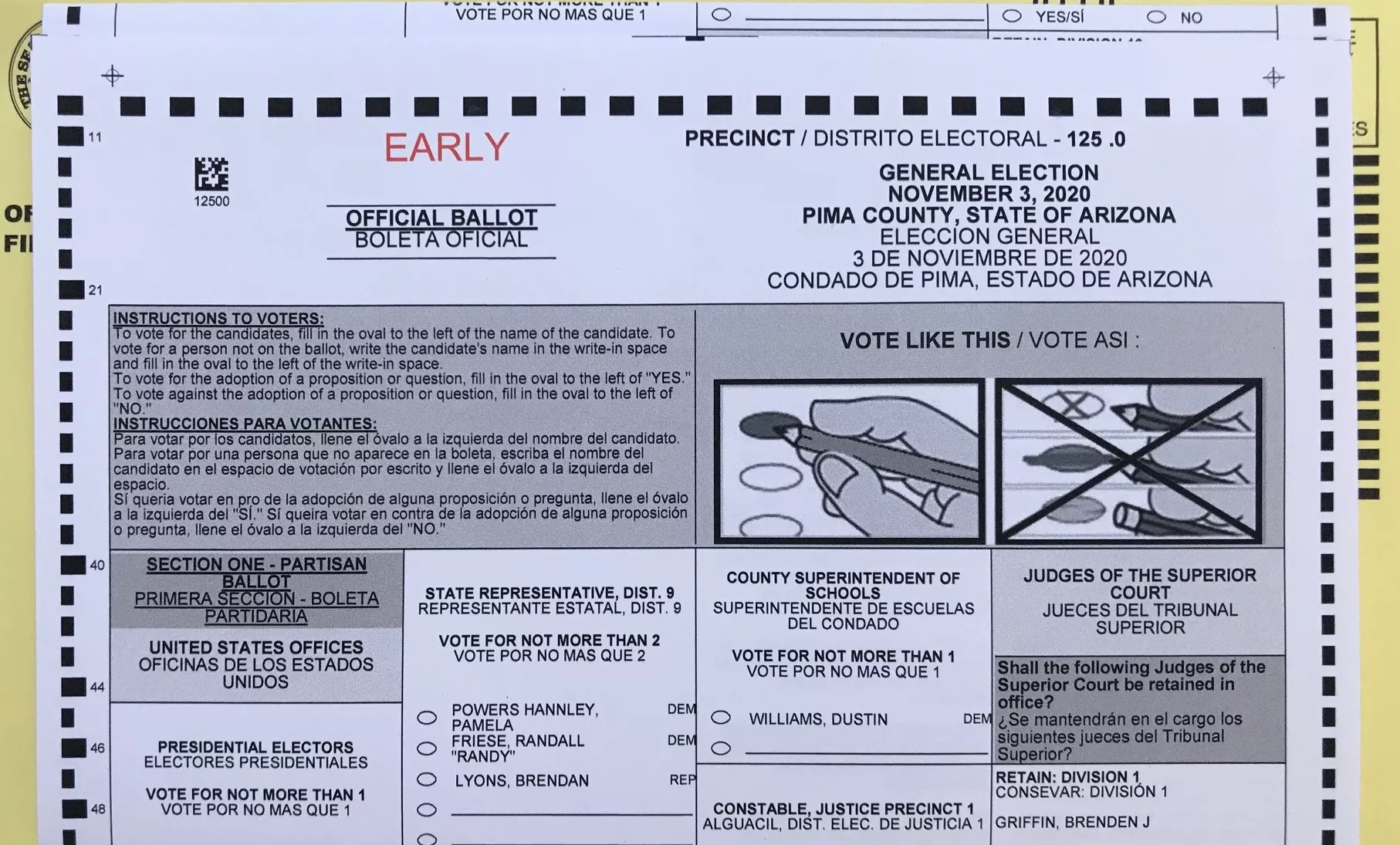
As early ballots arrived in mailboxes across Pima County this week, registered Democrats are concerned about a suspicious text alerting voters they’re not registered as permanent mail voters—when in fact, they are.
The Pima County Recorder's Office even issued a warning to not open the text’s link to a Vote.org page on their Twitter account Thursday, Oct. 8, suspecting it could be fraudulent.
Registered Democrat Kristi Williams was perplexed by the text she received around 3 p.m. on Thursday saying she was not a permanent mail voter. When she opened her mailbox moments later, there sat the sage green envelope containing her early ballot.
“I was confused at first. I’ve been doing early voting for many years so I was shocked by the text,” Williams said. “I was also worried after seeing the link in the text that someone was trying to fish for information and trying to make it so my vote didn’t count.
Williams forwarded the text to her husband, Pima County Superintendent of Schools Dustin Williams, who warned the Pima County Democratic Party and officials at the County Recorder's Office.
Turns out the text was sent by Oakland-based Resistance Labs, a political text-bank that supports progressive grassroots causes and candidates. The organization was helping facilitate early ballot registration texts for another group, Vote From Home 2020. Resistance Labs CEO Yoni Landau responded via email that his organization sends out tens of millions of texts a day and errors are inevitable.
“Our data is over 90 percent accurate,” Landau wrote. “We reach out beforehand to the Sec. of State staff in good faith before we start texting. We also immediately paused our texting and changed our script as soon as the Pima County staff let us know there was a problem with a link and with the data source.”
Landau estimates no more than 2,000 Pima County Democrats received the text since the company did not receive complaints from their texters, he wrote.
However, the Pima County Recorder's Office received enough complaints to issue Thursday’s Twitter alert, county officials said.
The episode highlights heightened concerns about disinformation regarding early ballots, which growing numbers of Arizona voters have embraced in recent decades. More than three out of four voters cast ballots by mail or by dropping their ballots off at polling stations in 2018 and that number is expected to grow this year with voters avoiding polling places because of the risk of contracting coronavirus.
In an email, Vote.org Director of Programs Sydney Rose wrote, “There are many organizations who use our tools and this is an example of them linking to our resources within their messaging.”
Vote From Home 2020 has a goal of contacting 393,000 Arizona voters during the 2020 election, according to their website.
The Pima County Recorder’s Office recommends contacting them at 520-724-4350 if you receive suspicious texts and phone calls during the election year.
The week's new streaming offers include the following:
Triggered
Get ready to get Triggered by this action-packed horror thrill-ride in which friendships are made to be broken, bloodied and blown sky high!
Major Arcana
A carpenter struggles to move beyond his troubled past when he returns to his hometown to mend relationships and finds solace in building a log cabin by hand.
Dating Amber
The rare teen comedy in which the gay best friends take center stage, Dating Amber shows that while fleeting romantic love is nice, sometimes the deep power of friendship can transform us most of all.
My Name is Pedro
The inspiring, award-winning documentary My Name Is Pedro is an essential and timely reminder of the importance of the great educators who exist within our country’s public-education system.
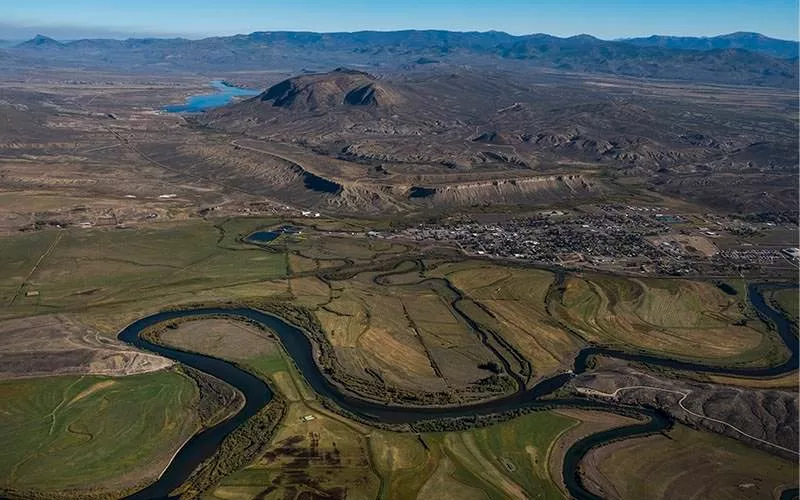
The Colorado River’s largest reservoirs are expected to keep struggling over the next five years due to climate change, according to the federal agency that oversees them.
The Bureau of Reclamation’s new modeling projections, which include this year’s record-breaking heat and dryness in some parts of the southwestern watershed, show an increasing likelihood of an official shortage declaration before 2026.
If dry conditions like the Colorado River Basin has seen since 2000 persist, the agency’s model shows an almost 80% chance of seeing an official shortage declaration by 2025. The chance of seeing the reservoir drop to a critically low level is about 20% in that same time period.
The basin is about to enter its 21st year of sustained dry conditions. The watershed is also rapidly warming, leading to increased evaporation from streams and reservoirs, and depleted groundwater.
The river’s water supply problems are exacerbated by the fact that cities, farmers and industries across the watershed have been overly reliant on the river’s water for decades. The supply and demand imbalance on the river has left its two biggest reservoirs – Lakes Powell and Mead – extremely low. Lake Powell is currently at 48% of its capacity. Lake Mead is at 40%.
Bureau of Reclamation Commissioner Brenda Burman said even with Drought Contingency Plans in place, there’s a significant chance the reservoirs will drop even further by 2026. Those plans, signed in 2019, spell out a series of water cutbacks to users in Nevada, Arizona, California and Mexico.
“There is uncertainty and risk on the horizon. But the policy decisions we’re making have been made to address that risk,” Burman said.
Flows into Lake Powell this summer were about half of what they are in an average year. This year’s dismal runoff has only increased pressure on the Colorado River, Burman said.
“We knew we had risk in the next five and six years, and the drought contingency plans are meant to address that,” Burman said.
More than 62% of the Colorado River watershed is experiencing extreme drought at this time.
This story is part of a project covering water in the western U.S. and the Colorado River basin, produced by KUNC and supported through a Walton Family Foundation grant. KUNC is solely responsible for its editorial content.
Tags: colorado river , water , climate change , Image
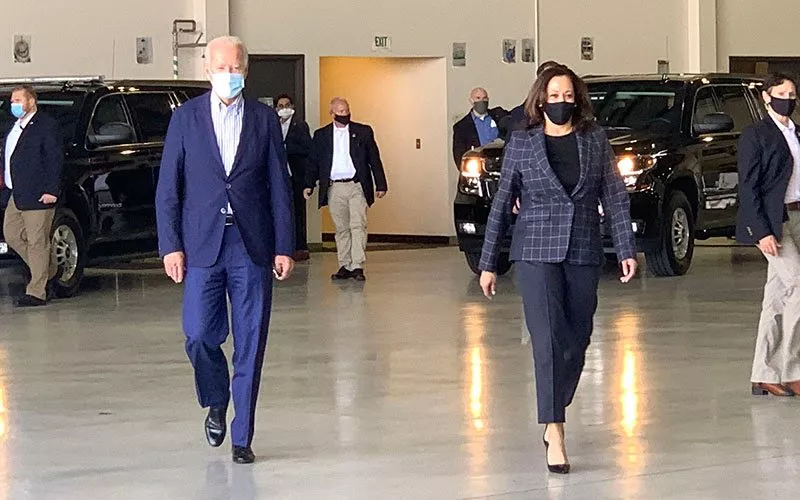
PHOENIX – Democratic presidential candidate Joe Biden and running mate Kamala Harris, on their first trip to Arizona, dropped by a union hall Thursday and several small businesses they say need federal relief from the COVID-19 pandemic.
Their bus tour, which began in Flagstaff, included an outdoor stop at Barrio Cafe, a central Phoenix staple known nationally for its Mexican cuisine.
Small business owners, particularly in Phoenix, are “busting their necks,” Biden said – and that didn’t have to happen.
“Too many Arizonans are facing hard times right now,” Biden earlier told supporters at a labor union hall in west Phoenix. “They’re trying their best, but it never feels like it’s enough. You’re not looking out for a handout, you’re just looking for a fair shot.”
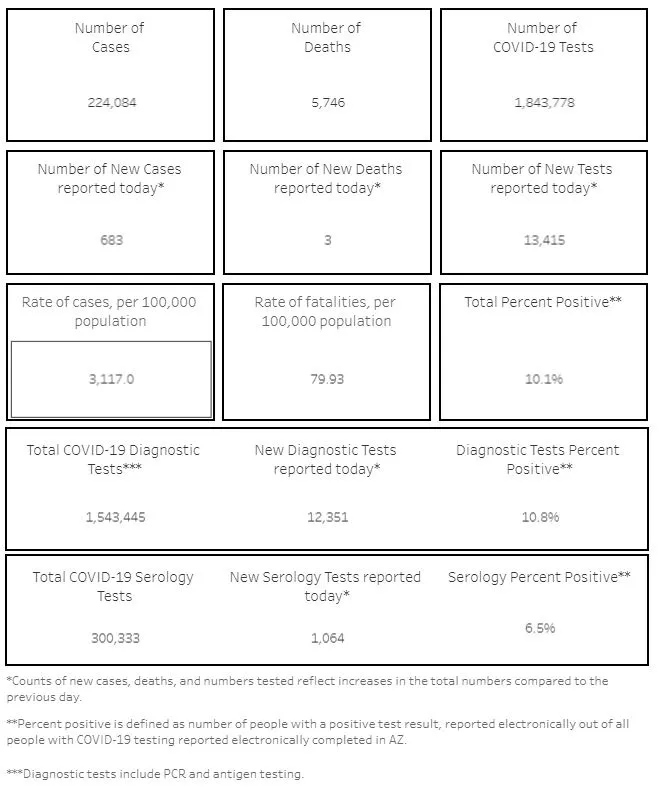
With 683 new cases reported today, the number of Arizona’s confirmed novel coronavirus cases topped 224,000 as of Friday, Oct. 9, according to the Arizona Department of Health Services.
Pima County had seen 26,287 of the state’s 224,084 confirmed cases.
With 3 new deaths today, a total of 5,746 Arizonans had died after contracting COVID-19, including 630 deaths in Pima County, according to the Oct. 9 report.
The number of hospitalized COVID cases continues to decline from July peaks but has steadily creeped upward this week. ADHS reported that as of Oct. 8, 706 COVID patients were hospitalized in the state. That number peaked with 3,517 hospitalized COVID patients on July 13.
A total of 740 people visited emergency rooms on Oct. 8 with COVID symptoms. That number peaked at 2,008 on July 7.
A total of 155 COVID-19 patients were in intensive care unit beds on Oct. 8. The number of COVID patients in ICUs peaked at 970 on July 13.
On a week-by-week basis in Pima County, the number of positive COVID tests peaked the week ending July 4 with 2,453 cases, according to an Oct. 7 report from the Pima County Health Department. With the return of UA students, local numbers ticked upward in September but have begun to decline again. For the week ending Sept. 5, a total of 863 cases were reported; for the week ending Sept. 12, 1,105 cases were reported; for the week ending Sept. 19, 1,219 cases were reported; for the week ending Sept. 26, 582 cases were reported; for the week ending Oct. 3, 472 cases were reported. (Recent weeks are subject to revision.)
Deaths in Pima County are down from a peak of 54 in the week ending July 4 to 10 in the week ending Sept. 5, one in the week ending Sept. 12, three in the week ending Sept. 19, two in the week ending Sept. 26 and one in the week ending Oct. 3. (Recent weeks are subject to revision.)
Hospitalization peaked the week ending July 18 with 221 COVID patients admitted to Pima County hospitals. In the week ending Aug. 29, 37 COVID patients were admitted to Pima County hospitals; in the week ending Sept. 5, 26 patients were admitted to Pima County hospitals; in the week ending Sept. 12, 23 patients were admitted; in the week ending Sept. 19, 14 patients were admitted; in the week ending Sept. 26, 11 people were admitted and in the week ending Oct. 3, 17 patients were admitted. (Recent weeks are subject to revision.)
Amphi plans to launch in-person classes Oct. 12.
The Amphi School District will start hybrid learning with in-classroom instruction starting on Monday, Oct. 12.
Students will attend smaller classes two days a week and learn remotely three days a week.
Students, staff and faculty will be required to wear masks while in school and will be encouraged to stay at least six feet away from other people.
Meanwhile, The Tucson Unified School District’s governing board this week approved a new hybrid learning model for returning to classes but delayed voting on when to implement it.
In a 4-1 vote, the board approved the new model but decided to delay voting on a return date until the next TUSD board meeting Oct. 27.
Superintendent Dr. Gabriel Trujillo asked board members to consider a new start date of Nov. 12, dependent on Pima County data tracking the spread of coronavirus in the county.
Read more details here. https://www.tucsonweekly.com/TheRange/archives/2020/10/07/tusd-delays-return-to-in-person-instruction-until-november-at-the-soonest-unveils-new-hybrid-plan
CDC report supports use of masks, physical distancing
A new report from the Centers for Disease Control and Prevention examines how effective Arizona’s mitigation measures were on stopping the increase of COVID-19. The report, which tracked case numbers from Jan. 22 to Aug. 7, shows a clear correlation in reduced virus cases after face masks and social distancing were mandated.
In Arizona, the average number of daily virus cases increased approximately 151% after the statewide stay-at-home order was lifted in mid-May, with Gov. Doug Ducey declaring “we are clearly on the other side of this pandemic.”
According to CDC data, two weeks after Arizona's stay-at-home orders were first lifted on May 15, daily new COVID cases increased from 808 on June 1 to 2,026 on June 15. This led to a peak in cases from June 29 to July 2. Cases then began to reduce after Ducey allowed local officials to implement their own mandates on June 17. The ensuing local policies were applicable to approximately 85% of the total Arizona population.
COVID-19 cases then declined by approximately 75% following "sustained prevention efforts" across Arizona. These prevention efforts include wearing masks, limiting public events and closing certain businesses such as bars, movie theaters and gyms. Due to the infection cycle of the virus, case increases and reductions are delayed by an average of two weeks after mandates change.
Read more details here. https://www.tucsonweekly.com/TheRange/archives/2020/10/07/cdc-report-sustained-mandates-for-masks-physical-distancing-reduced-covid-infections-in-arizona
University cases on the decline
This week, the University of Arizona will remain in phase one of their staged plan for reopening but anticipates moving into phase two of the plan next week, UA President Dr. Robert C. Robbins said in a news conference this morning.
Phase one allows students to attend essential in-person classes only, but the university plans to add in-person instruction for classes of 30 or fewer students the week of Oct. 12.
According to Robbins, about 2,500 additional students will have the option to attend in-person classes, and the new opportunity only applies to those who signed up for in-person classes during the registration period at the beginning of the school year.
Phase 2 was originally set to begin on Aug. 31, but the high numbers of positive coronavirus cases delayed the step toward having more in-person classes on campus.
Since Aug. 24, about 6,200 UA students have attended essential in-person courses.
Read more details here https://www.tucsonweekly.com/TheRange/archives/2020/10/05/ua-cases-on-decline-campus-will-move-to-reentry-phase-2-next-week-if-trend-continues
UA football coach tests positive for coronavirus
University of Arizona head football coach Kevin Sumlin was in self-isolation after testing positive for coronavirus, according to university officials.
The Oct. 5 announcement came days after UA announced the team’s delayed 2020 Pac-12 football schedule on Saturday, Oct. 3. The Wildcats plan to start pre-season practice on Friday, Oct. 9.
“My positive test result, while a shock, is a stark reminder of how we must all remain vigilant in our focus on handwashing, physical distancing and face coverings,” Sumlin said in a statement released by UA. “I am feeling well and will be engaged in our ramp-up activities on a virtual basis until I complete the isolation protocol.”
The university has begun contact tracing protocols and has determined “the test result is not related to any team activities and no close contacts were identified within the football program”, according to the school’s press release.
“I look forward to being back on the field in time to begin preparing for the season,” Sumlin said in the release.
The Wildcats are scheduled to play their season opener against the University of Utah Utes on Nov. 7.
Read more details here. https://www.tucsonweekly.com/TheRange/archives/2020/10/05/ua-football-head-coach-catches-covid-19
Get tested: Pima County has several testing centers, UA offering antibody testing
Pima County has three free testing centers with easy-to-schedule appointments—often with same-day availability—with results in 24 to 72 hours.
You’ll have a nasal swab test at the Kino Event Center, 2805 E. Ajo Way, and the Udall Center, 7200 E. Tanque Verde Road. The center at the northside Ellie Towne Flowing Wells Community Center, 1660 W. Ruthrauff Road, involves a saliva test designed by ASU.
Schedule an appointment at pima.gov/covid19testing.
The centers are also tied into Pima County’s developing contact tracing operation, which aims to be able to identify potential clusters and warn people if they have been in contact with someone who is COVID-positive.
The University of Arizona’s antibody testing has been opened to all Arizonans as the state attempts to get a handle on how many people have been exposed to COVID-19 but were asymptomatic or otherwise did not get a test while they were ill.
To sign up for testing, visit https://covid19antibodytesting.arizona.edu/home.
—with additional reporting from Nicole Ludden, Austin Counts, Jeff Gardner and Mike Truelsen

PEORIA – With only 26 days until the election and polls consistently showing the Trump campaign trailing in Arizona, Vice President Mike Pence visited a military and tactical gear company Thursday for a “Make America Great Again” campaign event.
Pence began by calling his Wednesday night debate with Democrat Kamala Harris a “debate between two visions.”
“If you didn’t figure it out watching last night, I’ll tip you off, they want to pack the Supreme Court and defund the police,” he told a crowd of about 300 outside TYR Tactical.
In making the case for President Donald Trump’s reelection, Pence drew stark contrasts between the president and his Democratic challenger, former Vice President Joe Biden.
“So when you compare the Biden-Harris agenda with all that President Trump has done these last 3½ years, I think there’s no question about it,” he said. “President Donald Trump won that (Sept. 29) debate hands down.”
Pence did not wear a mask at the outdoor event but remained socially distanced. Masks were handed out, although not everyone wore them, and seats were set apart from one another, although not by the recommended 6 feet.
The appearance came on the same day Biden and Harris were in Phoenix, campaigning together for the first time. Repeated visits by both campaigns have firmly established Arizona’s evolving status as a battleground state.

Thursday, October 8, 2020
Millie Bobby Brown shines as the title character in Enola Holmes, a bubbly, fun detective yarn that gives the little sister of Sherlock Holmes (Henry Cavill) her own vehicle. Let’s hope it’s the first of many such mysteries.
Brown, who has been gloomy in most of her biggest roles thus far (Stranger Things, Godzilla: King of the Monsters), gets to show she’s a full-force movie star with complete control of the camera. The movie has her talking to the camera, à la Ferris Bueller, at many turns, and it works like a charm. The film’s mysteries, involving Enola’s missing mother (Helena Bonham Carter) and a runaway boy (Louis Partridge), are fine as starters, but the film is more of a place-setter for future installments than anything else.
Cavill adds class as Sherlock, imbibing his few scenes with plenty of oomph, but never stealing them from the movie’s true star. Brown—who has already proven that she has major dramatic chops, which are on further display here—has impeccable comic timing. I see pure comedies and musicals in her future.
It’s a fair guess to say sequels will be in order, because this is too much fun to stop here. (The film was intended for a theatrical release, but it was sold to Netflix due to the pandemic.) Brown (who has another Godzilla movie and a new Stranger Things season coming up) has another franchise, and this is the one that will show what she really brings to the party. Watch with the whole family, and enjoy.
Enola Holmes is now streaming on Netflix.

As of Monday, Oct. 8, tech company Waymo is publicly offering a self-driving car service in the Phoenix area. Waymo—formerly the Google self-driving car project—is opening up their fully driverless car service on their app, which allows Waymo One users to take friends and family along on their rides.
Waymo has already been facilitating driverless rides throughout 2020 to a select group under an NDA, but are now public with their plans to expand. At this time, only those who are already Waymo One users can hail rides, but in the coming weeks, they plan to add more people into the service through their app (available on Google Play and the App Store).
“It’s really remarkable to have the world’s first fully driverless ride hailing service, Waymo One, in Mesa and the East Valley,” said Mesa mayor John Giles. “As Mesa grows and evolves, this innovative technology is in alignment with our City’s future, and I’m excited that our residents will be among the first to take advantage of this one-of-a-kind service.”
After Waymo finishes adding in-vehicle barriers between the front row and the rear passenger cabin later this year, they'll also be re-introducing rides with a trained vehicle operator, which will add capacity and serve a larger geographical area.
For more information, visit waymo.com
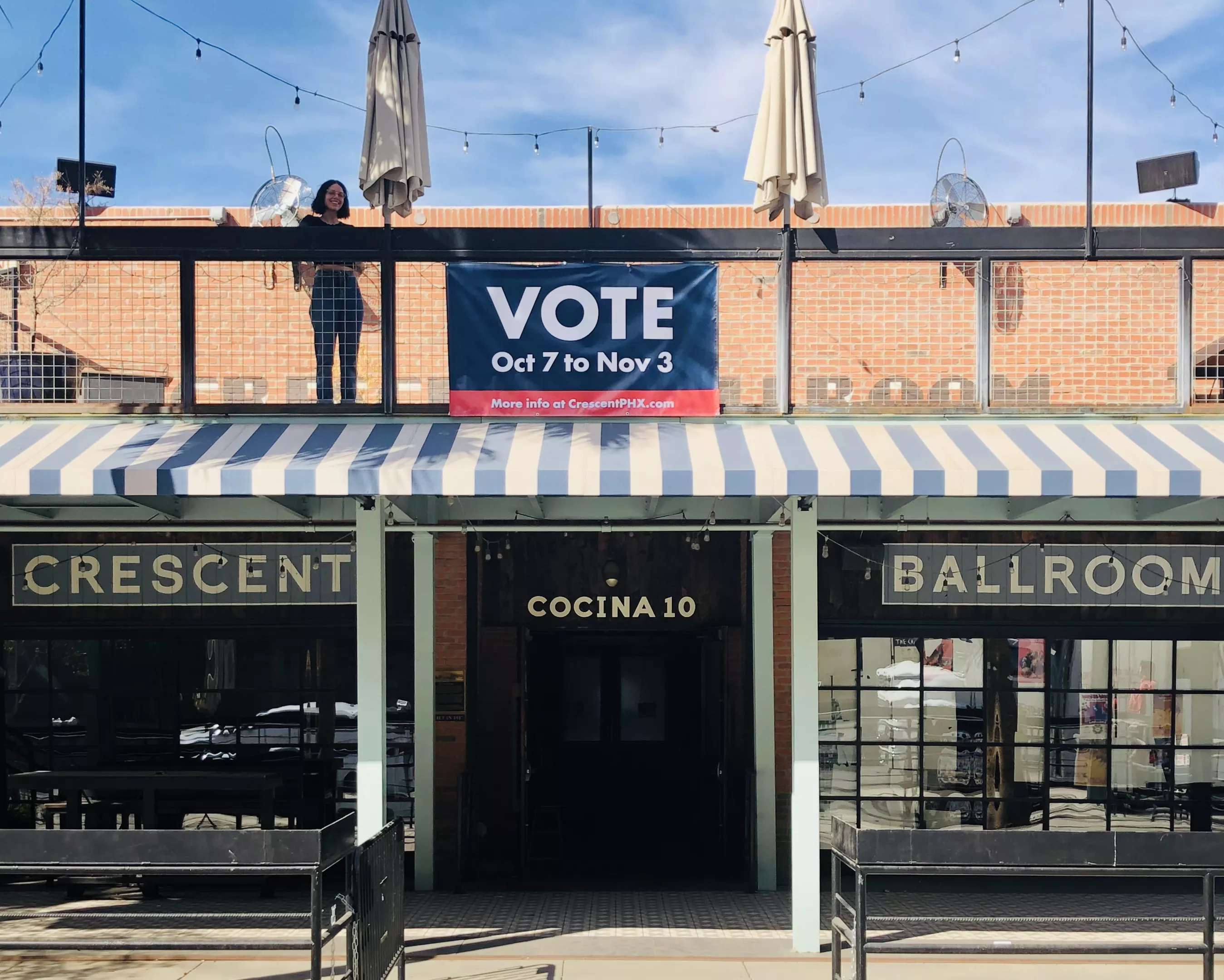
Although in-person concert venues remain silent during the pandemic, downtown Phoenix’s Crescent Ballroom is reverberating with information this election season.
Charlie Levy, who opened the popular music venue in 2011, has created a voter guide available on the venue’s website.
The guide, "Everything You Need to Know About Voting in 2020: An Easy Guide by Crescent Ballroom,” summarizes major statewide propositions, key election dates and the lay of the land when it comes to submitting a ballot this year.
“A lot of people were having questions about voting this year, so we set out to answer all those questions in a pretty easy-to-read format,” Levy said. “At Crescent, we really try to make it about community as much as music, so part of what we try to do to is make it part of the Arizona community.”

