

Tuesday, September 29, 2020
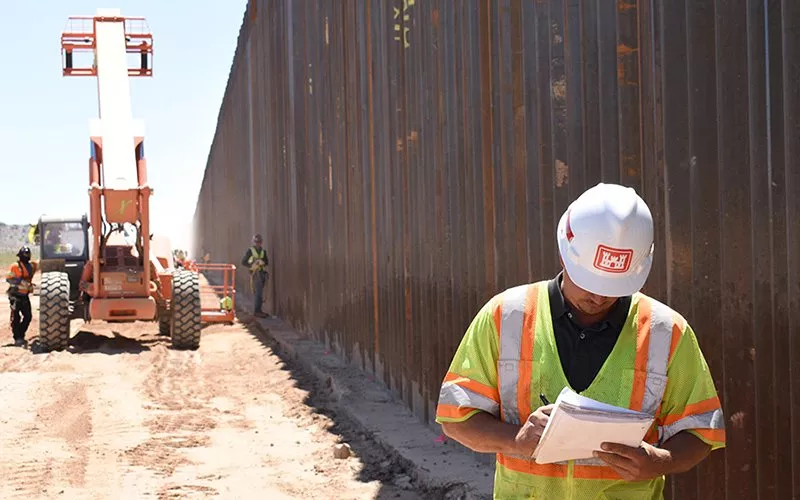
WASHINGTON – Critics of the Trump administration’s border wall on Monday welcomed a court ruling that breathed new life into a congressional lawsuit challenging the White House’s decision to divert funds to the project from other agencies.
The ruling Friday by a panel of a federal circuit court in Washington said President Donald Trump’s decision to shift Treasury and Defense Department funds to the wall, after Congress specifically prohibited, violates the Appropriations Clause of the Constitution.
“To put it simply, the Appropriations Clause requires two keys to unlock the Treasury, and the House holds one of those keys. The Executive Branch has, in a word, snatched the House’s key out of its hands,” wrote Judge David B. Sentelle for the three-judge panel of the U.S. Circuit Court of Appeals for the District of Columbia.

WASHINGTON – The poverty rate in Arizona fell for the eighth straight year in 2019, to 13.5%, but while advocates welcomed that as “great news” they also cautioned that the state’s economic gains were not shared equally by all Arizonans.
Despite the improvements, the Census Bureau numbers show Arizona’s poverty rate remained higher than the nation, where the rate was 12.3% last year.
And the numbers are almost certain to increase in 2020, advocates say, when the effects of COVID-19 on the economy are factored in.

Monday, September 28, 2020

Although the number of positive coronavirus cases on campus is trending downward, the University of Arizona will again delay phase 2 of its reentry plan and remain open only for in-person instruction of essential courses through the week of Oct. 5, UA President Dr. Robert C. Robbins said in a news conference this morning.
According to the university’s data, on Friday, Sept. 25, UA had a COVID-19 positivity rate of 3.4 percent, with 36 new positive cases out of 1,051 new tests.
This is a significant improvement from a week prior, on Friday, Sept. 18, which saw a 6.4 percent positivity rate and evidence of off-campus gatherings lacking safety precautions against COVID-19.
“We certainly like to see it down under 5 percent, so well done everyone,” Robbins said. “I’m pleased to report that our outreach and enforcement initiatives are having a very positive effect on compliance with public health guidelines.”
The university had 252 students in isolation housing as of Friday evening, with 348 isolation beds available and 43 dorm students isolating off-campus.
According to Robbins, around 5,200 students are attending in-person classes with strict guidelines in place for social distancing, use of protective gear and frequent sanitation. He says cases are not being transmitted in the classroom, but rather, “in off-campus large gatherings.”
The university has a staged plan for reopening but still remains in phase one of the plan, which allows students to attend essential in-person classes only.
Robbins recognized some students’ and faculty’s desire to slowly integrate to more in-person learning, noting it may help improve mental health amid isolating conditions. However, he said the university is not yet ready to move into the next stage of reopening the university.
Robbins says the university is seeing fewer off-campus gatherings and calls regarding public health violations—an important step in quelling the transmission of the virus.
The university responded to 13 properties for violations throughout Thursday, Friday and Saturday nights, which Robbins said is four fewer than the week prior.
The previous week, the university issued three university-related red tags, 10 citations and 13 code of conduct referrals to the dean of students. Last weekend, 10 red tags, 19 citations and 25 code of conduct violations were issued.
“This is not a time to become complacent, however,” Robbins warned. “I continue to see groups of students around University Boulevard and elsewhere without face coverings. I beg you, please listen and follow the guidelines.”
Robbins also announced the university’s voluntary 14-day self-quarantine program, in which students were asked to stay home and avoid unnecessary trips, will end tomorrow, Sept. 29.
“We believe there has been a significant positive impact. If case numbers begin to rise again, there may be a need to reinstate this self-imposed quarantine, but if the cases skyrocket again, then working with the county health department, more legal quarantine issues may need to be enacted,” Robbins said.
All asymptomatic students, faculty and staff have access to COVID-19 testing through the university’s “test all test smart” program, while symptomatic individuals can be tested at a campus health center.
According to the university’s Reentry Task Force Director, Dr. Richard Carmona, the number of tests administered by day has decreased toward the end of September. In the future, this could lead to calls for mandatory coronavirus testing on campus.
“As students start to see that as they test positive, they may be quarantined, they’re less likely to want to be tested. So it maybe we have to consider mandatory testing for students who come on campus,” Carmona said.
According to Robbins, the university has the capacity to administer nearly 10,000 tests a week.
“My hope would be that the technology evolves quickly and by the coming months, by January when we all come, that we have the capability of testing at least all the students who come to classes in person,” Robbins said.
While satisfied with a seemingly increased compliance to public health guidelines throughout the university, Robbins still stresses the importance of maintaining public health safety protocols even as the campus’s COVID-19 positivity rate slows.
“I encourage all of you, students, faculty, staff and other members of our southern Arizona community, to continue to follow to rules so we can protect one and another and move forward,” Robbins said. “We cannot control the virus on our own.”
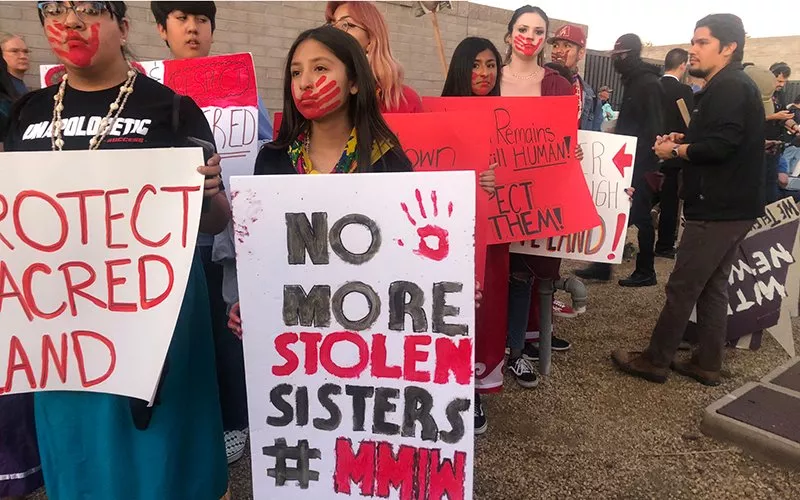
WASHINGTON – Native American advocates and victim’s families have worked for years to draw attention to Indian Country’s epidemic of missing and murdered Indigenous women.
The federal government finally passed legislation that could help do something about it.
The House gave final approval this week to two bills, Savanna’s Act and the Not Invisible Act, that would essentially force a review of the problem and create a federal plan of action. The bills are awaiting the president’s signature.
“We’re not celebrating necessarily, but we also recognize that for Congress to take action is a pretty big deal in terms of acknowledging that there’s an issue, first and foremost,” said Elizabeth Carr, an adviser at the National Indigenous Women’s Resource Center. “And then, secondly, taking some actions to address some of the issues that contribute to the crisis.”
Murder was the third most common cause of death for young Native women in 2017, according to the Centers for Disease Control and Prevention. Four out of five Native women experience violence in their lifetimes, according to the National Institute of Justice. And an Urban Indian Health Institute report on missing and murdered indigenous women in urban areas found Tucson had the fourth-highest number of cases among cities studied and Arizona was third among states.
“Survivors and families of countless missing and murdered” have been “doing the best they can to address the missing and murdered crisis throughout Indian Country,” said Navajo Nation Council Delegate Amber Kanazbah Crotty, a vocal leader on the issue.
In 2018 testimony to the Senate Indian Affairs Committee, Crotty highlighted the jurisdictional complexity of tracking such cases in and around Indian Country, where the FBI, state and tribal jurisdictions create a patchwork that often slows down missing persons investigations.
Savanna’s Act and the Not Invisible Act will improve coordination between agencies, force an official review of the problem and create an overarching plan to combat the ongoing crisis of murdered, missing and trafficked Native Americans – something that hasn’t happened before. Most importantly, advocates say, the bills bring Native Americans who have been combating the crisis on the ground into the process.
Tribal and survivor input was missing from President Donald Trump’s creation last year of a task force on missing and murdered Native Americans, dubbed Operation Lady Justice, advocates said. That task force only includes federal officials, though some of them are tribal members.
“A real solution to this crisis will never be found without the explicit inclusion of survivors, which is what is so special about this bill,” said Rep. Deb Haaland, D-N.M., who introduced the Not Invisible Act.
Haaland introduced her bill to complement Savanna’s Act, which focuses on collecting data on missing and murdered Native Americans, especially women, which has been a major hurdle in search efforts. The Not Invisible Act aims to improve coordination across the agencies that deal with violence involving Native Americans.
“They complement each other,” said Terrelene Massey, executive director of the Southwest Women’s Law Center in Albuquerque, N.M. The bills “are needed, they are tangible and … they are action-oriented in addressing the problems that we see out in Indian Country.”
Savanna’s Act requires the Justice Department to report statistics on missing and murdered Native Americans, train tribal law enforcement to use the national missing persons database and develop law enforcement protocols on dealing with missing Native Americans.
Named for Savanna LaFontaine-Greywind, a North Dakota member of the Spirit Lake Tribe who was murdered in 2017 while pregnant, the bill provides some grant funding to agencies who help develop these protocols and complete annual reports on missing and murdered Native Americans.
The Not Invisible Act will create a position in the Bureau of Indian Affairs to coordinate federal efforts to combat violence against Native Americans and form a joint commission between the departments of Justice and the Interior. It requires the commission to include tribal representatives, health experts and victims’ families.
Advocates like Carr would rather see funding in Savanna’s Act go to victim services, violence prevention and increased visibility for the problem, but concede that some funding is better than none. And neither bill addresses shortfalls that Crotty outlined in her testimony, which spelled out how much funding would be needed to update tribal data collection systems, correct the overall shortage of tribal officers and provide services to affected families.
Despite that, advocates overwhelmingly welcomed the bills.
“It’s bringing more resources, more authority … making some of the major players do work to address the issues,” Massey said. “It’s bringing in that accountability.”
Carr called the bills a “pat on the back,” but said advocates will continue to push for more.
“It’s just a baby step, but for us a baby step is better than no step at all,” she said.
Tags: native american , Image
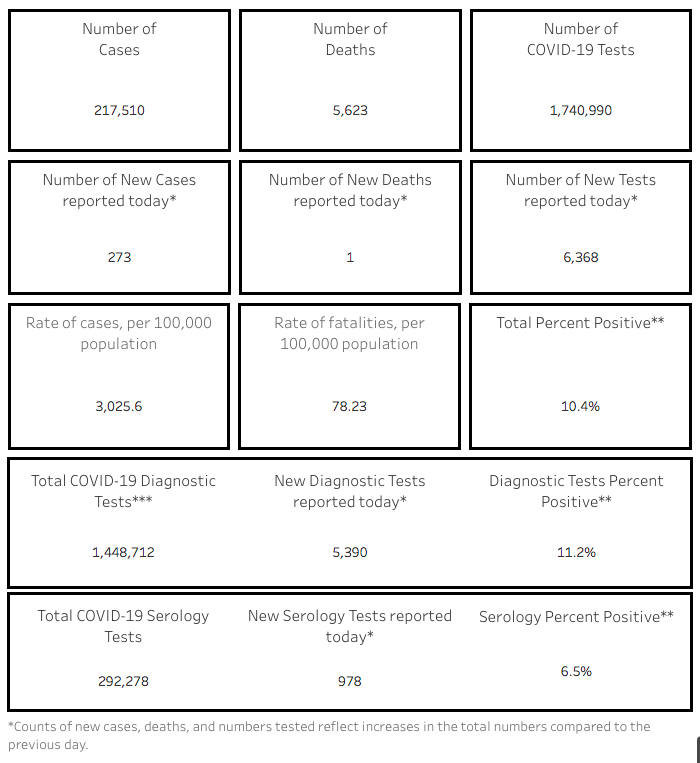
With 273 new cases reported today, the number of Arizona’s confirmed novel coronavirus cases topped 217,000 as of Monday, Sept. 28, according to the Arizona Department of Health Services.
Pima County had seen 25,445 of the state’s 217,510 confirmed cases.
With one new deaths today, a total of 5,623 Arizonans had died after contracting COVID-19, including 622 deaths in Pima County, according to the Sept. 28 report.
The number of hospitalized COVID cases continues to decline from July peaks, ADHS reported that as of Sept. 27, 468 COVID patients were hospitalized in the state, the lowest that number has been since April 8, when 338 people were hospitalized with COVID symptoms. The number of hospitalized COVID patients peaked at 3,517 on July 13.
A total of 684 people visited emergency rooms on Sept. 27 with COVID symptoms. That number peaked at 2,008 on July 7.
A total of 115 COVID-19 patients were in intensive care unit beds on Sept. 27. The number of COVID patients in ICUs peaked at 970 on July 13.
On a week-by-week basis in Pima County, the number of positive COVID tests peaked the week ending July 4 with 2,453 cases, according to a Sept. 25 report from the Pima County Health Department. While a vocal minority continues to insist that masks do no good, the spread of the virus began to decline within weeks of Pima County’s mask mandate, as more people began wearing them in public, although the level of new cases has more than doubled in recent weeks with the return of UA students. For the week ending Aug. 29, 569 new cases were reported; for the week ending Sept. 5, a total of 861 cases were reported; for the week ending Sept. 12, 1,103 cases were reported; for the week ending Sept. 19, 1,203 cases were reported. (Recent weeks are subject to revision.)
Deaths in Pima County are down from a peak of 55 in the week ending July 4 to 19 for the week ending Aug. 15, 13 in the week ending Aug. 22, 10 in the week ending Aug. 29, zero in the week ending Sept. 5, and two in the week ending Sept. 12. (Recent weeks are subject to revision.)
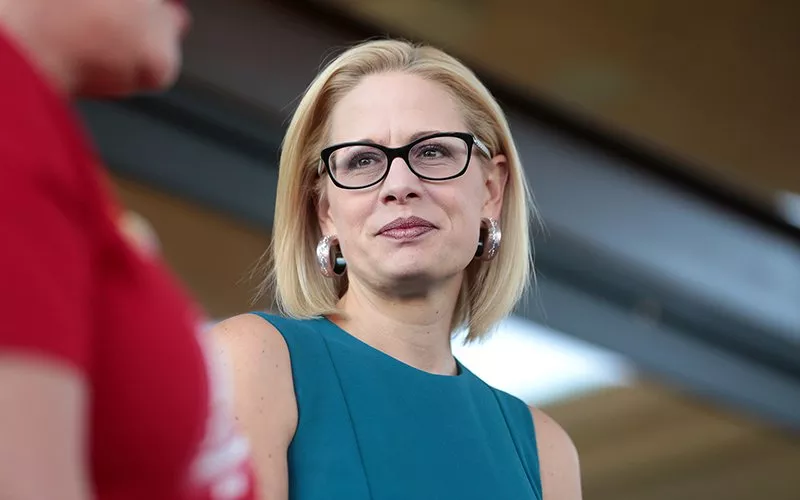
WASHINGTON – Almost every Senate Democrat has come out against President Donald Trump’s plan to rush through a replacement for the late Supreme Court Justice Ruth Bader Ginsburg, saying the nomination should wait until after the looming elections.
Every Senate Democrat but one – Arizona Sen. Kyrsten Sinema.
While other Democrats were using language like “shameful,” “brazen hypocrisy,” “horrible precedent” and “theft” of a Supreme Court seat in what they called a power grab, Sinema has only commented on Ginsburg’s legacy after the justice’s death last Friday.
Political analysts said Sinema’s silence is not surprising given her carefully cultivated image as bipartisan and moderate.
“If you’re going to be a Democrat that wins in a traditionally red state, you’re not going to be a super-progressive liberal democrat, you’re probably going to be more moderate,” said Frank Gonzalez, an assistant professor at the University of Arizona School of Government and Public Policy.
He said Sinema is a politician who wants to be viewed as an “independent thinker,” a posture echoed by Garrett Bess, vice president of government relations at the Heritage Foundation.
“I think it tracks with sort of her … quasi maverick-type record,” Bess said.
But it did not sit well with some progressive Democrats in Arizona.
“This is going to affect the country for another 30, 40 years,” said Signa Oliver, co-lead for Desert Progressives Indivisible. “Open your mouth.
“Those of us that knocked on doors for her to get her elected, have been very disappointed several times with her inability to, you know, step forward and represent the Democratic Party principles that we elected her to do,” Oliver said.
Sinema’s office did not respond to requests for comment on her position – or lack thereof – leaving her weekend tweet expressing “gratitude and service to our country” as her only comments on Ginsburg and the court vacancy she left behind.
Within hours of Ginsburg’s death last Friday, by contrast, Senate Majority Leader Mitch McConnell released a statement promising a Senate vote on Ginsburg’s replacement.
“We pledged to work with President Trump and support his agenda, particularly his outstanding appointments to the federal judiciary,” McConnell’s statement said. “President Trump’s nominee will receive a vote on the floor of the United States Senate.”
Trump is scheduled to announce his pick Saturday and most Republicans, including Arizona Sen. Martha McSally, rushed to agree with McConnell. But Democrats were livid.
They have repeatedly brought up McConnell’s refusal in 2016 to even grant a hearing to President Barack Obama’s Supreme Court nominee, Merrick Garland, because it was an election year. McConnell, who delayed action for almost the entire year, said then that voters should have a say in who makes the choice.
“Unfortunately, Sen. McConnell has decided to go against Justice Ginsburg’s dying wishes and is cementing a shameful legacy of brazen hypocrisy,” Vermont Sen. Bernie Sanders, an independent who caucuses with Democrats, said in a tweet the night of Ginsburg’s death. “The right thing to do here is clear, and Senate Republicans know it. We should let voters decide. Period.”
Even moderate Democrats jumped to criticize McConnell and the White House for rushing to fill the seat, an appointment that could give conservatives an unassailable 6-3 majority on the court.
“The American people deserve to choose the president who will fill this vacancy,” said Sen. Tom Carper, D-Del., the co-chair of the Moderate Democrats Working Group. “I will oppose any Supreme Court nominee until after Inauguration Day, and I will do everything I can to fight for fairness.”
Tags: scotus , sinema , supreme court , Image
Friday, September 25, 2020
Some movies are made to make viewers miserable. It’s what they set out to do, and if done well, cinema geeks such as myself will tip our hats to them.
The Devil All the Time is one of those movies. It’s an ugly film—and it’s supposed to be. I understand that a lot of people do not need this sort of movie in their lives right now. I, for one, found it a mildly rewarding viewing experience, even though I had to take two showers afterward.
The film starts in World War II, where soldier Willard Russell (Bill Skarsgard) makes a discovery that will pretty much fuck him up for the rest of his life. Upon returning stateside, he tries to live the American life: He gets married to Charlotte (Haley Bennett) and has a boy named Arvin (Tom Holland, when the character grows up). Try as Willard might to live a good, pious life, tragedy strikes multiple times.
Arvin grows up with a decent-enough head on his shoulders despite the trauma, and has a strong bond with his stepsister, Lenora (Eliza Scanlen). When a creepy preacher (Robert Pattinson) moves to town, things—rather predictably—go bad again.
Meanwhile, in another subplot, a sadistic couple (Jason Clarke and Riley Keough) drives around picking up hitchhikers and asking them to do some strange things. There’s also a corrupt sheriff (Sebastian Stan), the brother to the woman doing the strange hitchhiking things. There are a lot of other characters in the mix as well.
Bottom line: The film has way too much going on. It needed to be a miniseries rather than a single 138-minute film. That said, Holland and Pattinson are especially good, and the film is worth seeing for them. Skarsgard, Keough, Clarke and Scanlen all do just fine, but the movie is way too crowded.
The Devil All the Time is streaming on Netflix.

