
Friday, September 11, 2020
Christopher Nolan’s Tenet is the sort of movie you just need to take in the first time without trying to figure out what’s going on. If your brain picks up on shit, and you figure stuff out on first viewing, fine. If not, relax, because it all does make sense in that Christopher Nolan puzzler sort of way. You’ll figure it out later.
After many postponements, Hollywood has rolled the dice and put Tenet exclusively in theaters during a time when films like Mulan (exclusively on Disney+) and Bill and Ted Face the Music (combo of streaming and limited theatrical engagement) dabble with new release formulas.
Yeah, I risked life and limb to go to a local theater and watch this on an IMAX screen. Quality of the film aside, I must confess, this was probably the most fun I’ve had since closing the vault door to my apartment 6 months ago and staying in there every day. With the exception of a daily walk and some store runs, I’ve been shut in.
So, it was a wow moment for me to plant myself in a theater chair for the first time in half a year and get my ears and face blasted with a Nolan film. And it’s a good one at that.
John David Washington plays a character called “The Protagonist,” an agent of some sort on a mission to find pieces of a complex puzzle to save the world. That’s it. That’s all I’m telling you about the plot. Robert Pattinson (recently sidelined on The Batman shoot due to testing positive for COVID) is a terrific sidekick as another mysterious agent, Elizabeth Debicki mesmerizes as Kat, the troubled wife of Andrei, a nasty, nasty guy played by Kenneth Branagh.
Visually stunning and, yes, at times totally confusing, the movie pays off in the end with revelations that tie things up enough for you to leave the theater satisfied, and perhaps spend the next five days putting remaining mystery bits together. I can tell you I’ve already had a couple of fun conversations about Tenet with my brother where we argue over what certain things meant. I love movies that spark that kind of conversation.
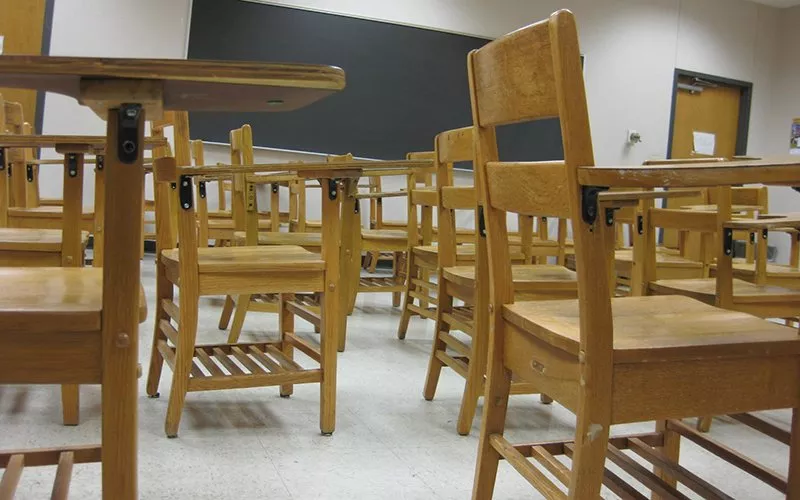
WASHINGTON – Lawmakers and tribal leaders berated the Bureau of Indian Education on Thursday for a school reopening plan that prioritizes in-person learning, despite tribes’ opposition to the plan in the face of COVID-19 health concerns.
When the BIE released its “Return to Learn!” plan in late August, it was “in effect doubling down on the very position that drew strong criticism from Indian Country in early August,” said Joe Garcia, co-chair of an education subcommittee for the National Congress of American Indians.

Dear Colleagues,
I write to inform you that I will step back from my duties on a temporary basis starting immediately. I do so in order to recover from a recent injury and to ensure that I can properly support my husband, who is undergoing aggressive treatment for terminal cancer.
This has been a challenging time for both of us. Thank you for the support that you have offered to our family.
In the meantime, my office will continue to be available to each of you and Ward 3 constituents.
For those of you looking to keep things indoors for the time being, The Loft's streaming series continues. Here are this week's offerings:
The Hole
Set just prior to the start of the 21st century, this vaguely futuristic story follows two residents of a quickly crumbling building who refuse to leave their homes in spite of a virus that has forced the evacuation of the area.
Jimmy Carter: Rock & Roll President
Part-rockumentary, part-presidential portrait, Jimmy Carter Rock & Roll President traces how rock music helped propel Jimmy Carter to the White House.
Feels Good Man
When indie comic character Pepe the Frog becomes an unwitting icon of hate, his creator fights to bring Pepe back from the darkness.
Buoyancy
This gripping drama tells the story of a Cambodian teenager sold into forced labor on a Thai fishing boat, offering a passionate testimony against social injustice and a moving coming-of-age tale about a boy whose humanity is put to the test.

The Amphi Foundation, in partnership with Cox and Comcast, will pay for at least six months of free internet for those who qualify. Participating households will receive internet service speeds of up to 25 Mbps download and 3 Mbps upload.
For more information on the program or assistance getting connected, contact Beth Lake with Amphitheater Public Schools at (520) 696-5211 or [email protected]. To support the initiative, head to amphifoundation.org for information on how to help.
“We are grateful for the donors and nonprofit partners that have stepped up to make this initial commitment, but this is also a Call to Action for our community to consider making an investment in an Amphi student’s education this school year so that we can ensure that every Amphi student is connected,” said Leah Noreng, Executive Director of the Amphi Foundation.

Thursday, September 10, 2020
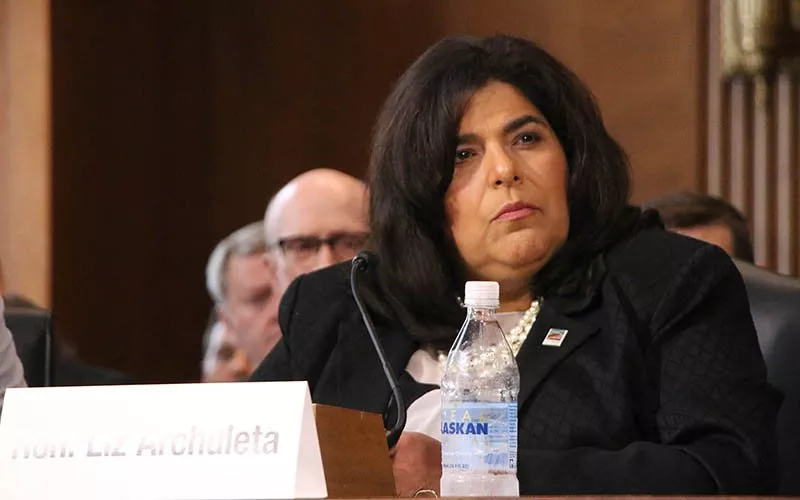
WASHINGTON – Coconino County Supervisor Liz Archuleta urged federal officials Wednesday to honor their commitments to fund rural counties, where increased demand for services from COVID-19 comes “at a time when we are stretched very thin to provide them.”
Archuleta joined other county officials from across the country on a National Association of Counties call to discuss Payment in Lieu of Taxes and Secure Rural Schools – special payments to counties that have large tracts of otherwise nontaxable federal lands.
Arizona counties got $39.5 million for PILT in fiscal 2020 and $10.5 million for SRS in fiscal 2019, the most recent years for which numbers are available. Coconino got $2.6 million in PILT money and another $2.6 million in SRS funds in those same years, according to data from the departments of Interior and Agriculture, which oversee the funds.
But Agriculture Department budgets show overall SRS payments fell by $189.8 million fiscal 2010 to 2019, when it was $226 million nationwide. While PILT funding rose by about $156.6 million from 2010 to 2020, when it was $514.7 million nationwide, it saw a $1 million drop in the last year.
Federal officials could not predict funding for the upcoming years. But Archuleta, currently serving as chairman of the board of supervisors, said continued federal funding is “vital” for rural counties that face “massive budgetary shortfalls” from the pandemic.
Archuleta said her county faces a “double whammy,” because it has used most of its general fund to combat the COVID-19 pandemic since March, all the while expecting reimbursement from the federal government. She said the county has already spent all of the AZCARES Act emergency funding it received to support first responders.
“Counties are bearing the double burden of increased demand for our services at a time when we are stretched very thin to provide them,” Archuleta said. Coconino County had 3,409 confirmed cases of COVID-19 as of Wednesday, according to Arizona Department of Health Services data.
Payments to the state have mirrored the national trends, with SRS funds falling by $8.5 million over the decade while PILT payments grew by about $11.7 million.
In recent weeks, county officials said they lobbied their federal representatives to fully fund the programs and to approve the funding before it expires on Sept. 30, the end of the current fiscal year.
Coconino County is the largest county in the state and the second-largest in the nation, trailing on San Bernardino County in California. But while much of the Coconino County’s revenue comes from property taxes, just 13% of its more than 18,600 square miles of land area is taxable.
Since 1977, the PILT program has issued more than $9.7 billion in payments to counties and local governments, under the law that “recognizes the financial impact of the inability of local governments to collect property taxes on federally owned land,” according to the Interior Department’s website. According to a 2020 congressional report, approximately 28 percent of the land in the U.S. under federal control.
“Rural America depends on that resource,” Archuleta said. “Especially as we go about combating COVID-19.”
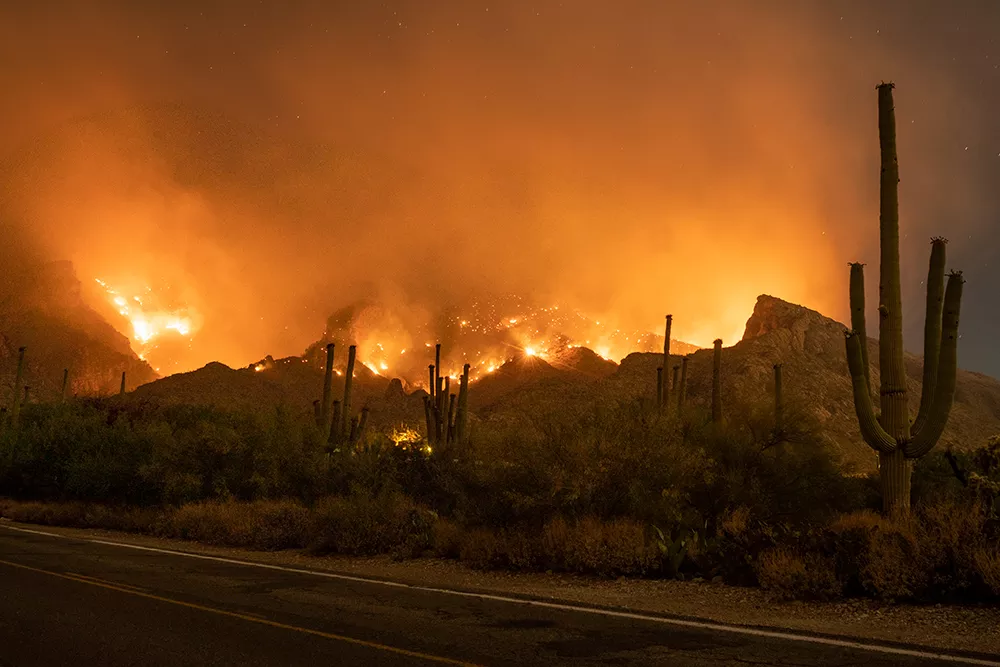
Two weeks ago, after freak lightning strikes torched Northern California but before the inferno of Labor Day weekend had begun, a friend called to talk, like you do when the world is turning to crap and nothing is stable or makes sense. In the past six months she’d fled New York for rural West Marin (due to the pandemic), and West Marin for San Francisco (due to smoke). Now she was planning to leave San Francisco for Los Angeles, as the gross air had descended here. We joked, as I’d joked with every friend this summer, that we should all just drop out and start a commune on a lake in Maine. “Every commune needs lesbians!” she said. “I’ll be our lesbian! California is going to become unlivable!”
Two weeks ago, this was a funny conversation. By Sunday, it was not.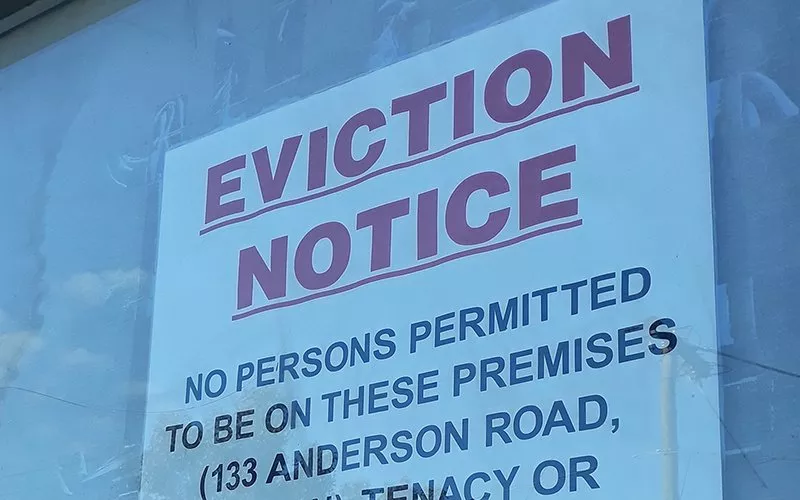
WASHINGTON – Arizona had the highest rate of “housing loss” in the nation, according to a new national study, and that was before what experts called a “tsunami of evictions” that is expected to hit this fall.
The report by New America Foundation looked at evictions and foreclosures by county across the country and found Arizona was first for overall housing loss and second for evictions from 2014-2016. The state was third for foreclosures from 2014-2018.