

Friday, September 4, 2020
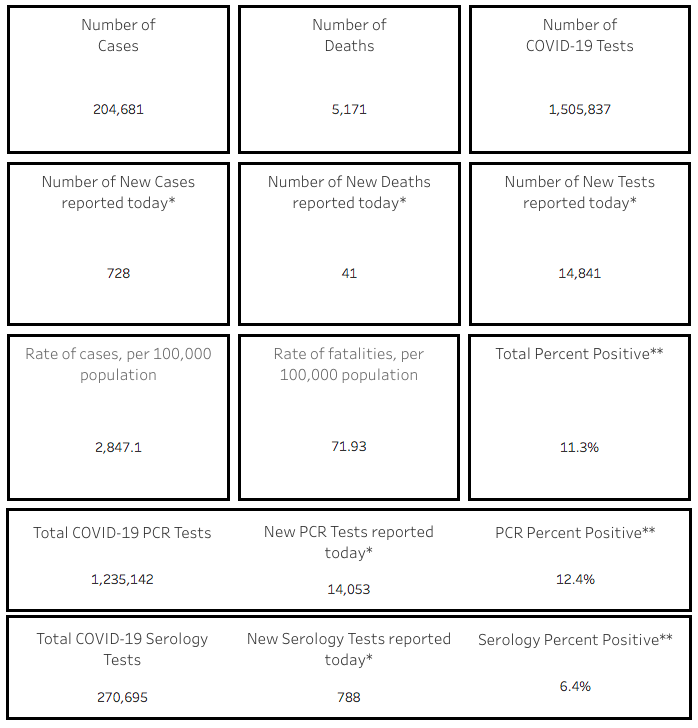
With 728 new cases today, the number of Arizona’s confirmed novel coronavirus cases topped 204,000 as of Friday, Sept. 4, according to the Arizona Department of Health Services.

Pima County had seen 21,574 of the state’s 204,681 confirmed cases.
A total of 5,171 Arizonans had died after contracting COVID-19, including 593 deaths in Pima County, according to the Sept. 3 report.
The number of hospitalized COVID cases continues to decline from July peaks. ADHS reported that as of Sept. 3, 742 COVID patients were hospitalized in the state. That number peaked at 3,517 on July 13.
A total of 814 people visited emergency rooms on Sept. 3 with COVID symptoms, the lowest that number has been since June 4, when 725 COVID patients visited ERs. That number peaked at 2,008 on July 7.
A total of 236 COVID-19 patients were in intensive care unit beds on Sept. 3, the lowest that number has been since April 8, when 155 people were in ICU. The number of COVID patients in ICUs peaked at 970 on July 13.
In Pima County, the week-by-week counting of cases peaked the week ending July 4 with 2,398 cases, according to an Aug. 26 report from the Pima County Health Department. Those numbers have dropped with Pima County requiring the wearing of masks in public but they have bumped upward recent weeks, with 804 cases in the week ending Aug. 8 and 930 cases in the week ending Aug. 15. (Not all recent cases may have been reported.)
Deaths in Pima County are down from a peak of 54 in the week ending July 4 to 35 for the week ending Aug. 8 and 15 for the week ending Aug. 15.
Hospitalization peaked the week ending July 18 with 247 COVID patients admitted to Pima County hospitals. For the week ending Aug. 15, 63 COVID patients were admitted to Pima County hospitals.
UA antibody testing open to all
The FDA gave approval to the University of Arizona’s antibody test. As a result, the testing has now been opened to all Arizonans as the state attempts to get handle on how many people have been exposed to COVID-19 but were asymptomatic or otherwise did not get a test while they were ill.
To sign up for testing, visit https://covid19antibodytesting.arizona.edu/home.
Benchmarks met to allow schools to begin hybrid learning
Pima County yesterday reached benchmarks indicating that it has moved from “substantial” spread of the coronavirus to “moderate” spread, meaning local school districts can now consider hybrid learning that would allow some students to return to the classroom while others continue distance learning.
Pima County has had less than 100 cases per 100,000 individuals for two consecutive weeks; two straight weeks with the percentage of positive tests below 7 percent; and two consecutive weeks with the total of people visiting hospitals with COVID-like symptoms at less than 10 percent of the total number of people seeking medical attention.
Local school district boards will have to consider the new numbers before making decisions as to how to proceed following the Labor Day holiday.
Get Help From City of Tucson While You Can
Time is running out to get aid from the City of Tucson if you’ve experience a COVID-related hardship.
Thursday, September 3, 2020
WASHINGTON – The Environmental Protection Agency announced plans Wednesday for a new office that will focus on tracking and cleaning up abandoned mines in Western states, a particular problem in Arizona with uranium and other mines.
The unveiling of the Office of Mountains, Deserts and Plains was welcomed by officials from the states where it will be operating. That included Arizona Department of Environmental Quality Director Misael Cabrera. He said during Wednesday’s announcement that he looks forward to “innovative yet practical solutions that respect local concerns.”
“I commend EPA for establishing a Western lands-focused office that will address the complex problems associated with hardrock mine cleanups,” Cabrera said of the office that will be based in Lakewood, Colorado.
The office will have jurisdiction over mining and environmental issues unique to states west of the Mississippi River, according to the EPA, which said it placed the office out West to be more focused on issues there and to combat environmental issues more directly and efficiently.
“It’s going to, I think, make the (cleanup) work better and … more accessible to communities that have these issues,” said Doug Benevento, EPA’s acting associate deputy administrator, said at the press conference to announce the office.
Environmental and tribal officials welcomed Wednesday’s announcement – but noted that it comes from an administration that they said has pushed for more uranium mining and opened the door elsewhere to problematic mining operations.
RELATED STORY
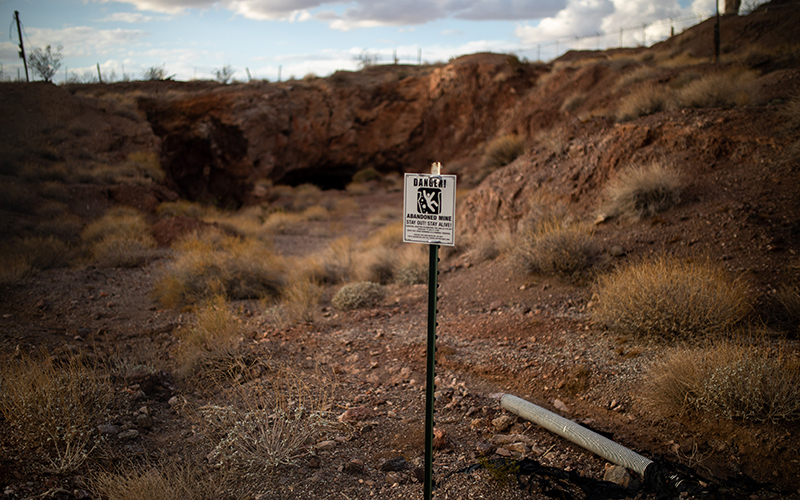
In a hole: Arizona officials lack resources to find, secure at least 100,000 abandoned mines
“The Navajo Nation opposes any hard rock mining on or near the Navajo Nation,” said Oliver Whaley, director of the Navajo Nation Environmental Protection Agency. “Obviously that’s something that hasn’t been the case with this (Trump) administration.”
But Whaley welcomed any move to clean up any of the many abandoned uranium mines on the Navajo Nation, an environmental hazard the tribe has raised for years.
“The abandoned uranium mines on the Navajo Nation need to be addressed at a lot faster rate than they currently are,” Whaley said.
Mineral-rich Western states like Arizona, Colorado and Idaho have long benefited from hard-rock mining, including uranium mining, but those benefits have come at an environmental cost. Those include acid mine drainage and erosion that can lead to contamination of surface and groundwater and can damage surrounding habitats, among other problems.
Benevento said one of the main objectives of the EPA’s new office is to track the progress of cleaning the abandoned mines.
“Some of these (abandoned mine) sites have been on the list for 30 years,” he said. “That’s a long time to clean up sites, and communities want it done faster and this office will have it done faster.”
Benevento said the EPA’s Superfund program – a 1980s law aimed at cleaning up toxic abandoned industrial sites by forcing responsible parties to either do the cleanup or reimburse the government for it – was initially designed for smaller, compact sites in Eastern states.
“What this office will do is it will bring a focus on how to address those larger (Western) sites,” Benevento said, citing the 63 Superfund mining sites across Western states today.
An official with the Center for Biological Diversity echoed Whaley, saying that while the changes are welcome, they are long overdue and that the Trump administration has not helped so far.
President Donald Trump is “about to give mining companies even more of an upper hand, to create more toxic pollution and taxpayers will be stuck with the bill,” said Randi Spivak, the center’s public lands program director. “It’s very good to see the EPA plan to address a long-overdue cleanup of hard-rock mining Superfund sites.”
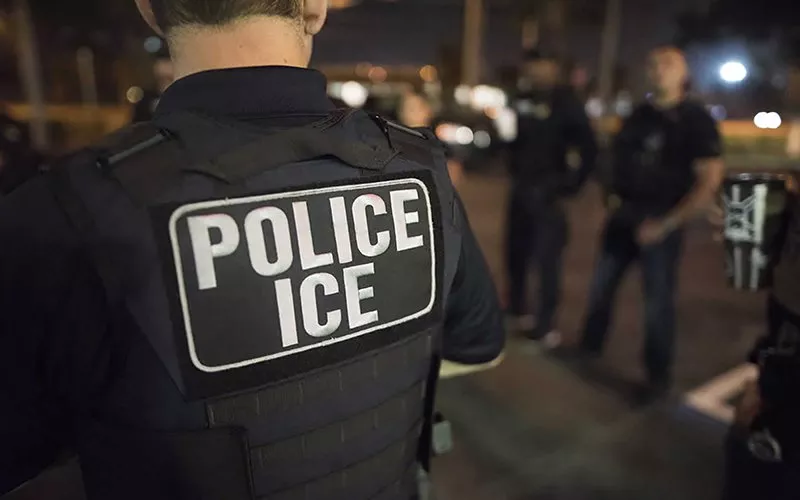
WASHINGTON – ICE this week touted the arrest of more than 2,000 immigrants, 67 of them in Arizona, in a five-week nationwide sweep as the agency recovers from a dip in apprehensions caused by the COVID-19 pandemic.
Immigration and Customs Enforcement officials said the effort, from July 13 to Aug. 20, targeted immigrants with criminal charges and convictions, including convictions in Arizona ranging from DUI to having sex with a minor.
“Through our targeted enforcement efforts every day, we are eliminating the threat posed by these perpetrators, many of whom are recidivist offenders,” an ICE spokesperson said.
But those arrests have been hampered for ICE this year by COVID-19. The number of at-large arrests, when ICE officers head into the community to apprehend people who have evaded arrest, dropped from 2,836 in March to 469 in April, before climbing back up to 1,397 through the first three weeks of August.
The recent five-week sweep by ICE’s Enforcement and Removal Operations (ERO) office brought total arrests this year to 94,490 – or just two-thirds of the 143,099 arrests that had been made at the same time last year.
One expert said the latest sweep was little more than the administration’s way to show that it’s “business as usual” despite the presence of COVID-19.
Randy Capps, director of research for U.S. programs at the Migration Policy Institute, said the administration is acting as if the pandemic were over, so it’s “going to go back to large-scale immigration operations.”
RELATED STORY
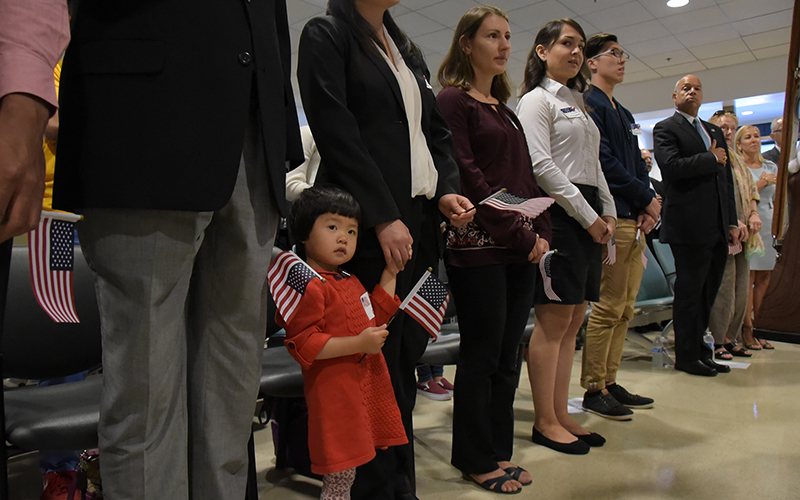
USCIS delays furloughs with 'drastic cuts' that sharply reduce service
Capps questioned ICE’s claim that it focused its efforts on immigrants who “preyed on men, women and children in our communities, committing serious crimes and, at times, repeatedly hurting their victims.”
He noted that the more than 2,000 people nabbed by ICE had 1,089 criminal convictions between them, and that many of those with convictions may have had more than one. The others only had charges filed against them, if that, Capps said.
“We don’t know what share of the total number of people that ICE pulled in actually had these convictions,” he said.
In a statement this week on the arrests, ICE said that about 85 percent of those it arrested had criminal convictions or pending criminal charges. The vast majority of charges and convictions cited by the agency were for assault, domestic violence and family offenses.
Of six Arizona arrests highlighted by the Phoenix field office, convictions included drunken driving, aggravated assault, domestic violence, sexual molestation and leaving the scene of an injury accident, among others.
But Jessica Vaughan, director of policy studies at the Center for Immigration Studies, welcomed the return to mass operations despite the pandemic.
“These operations are important to the community because they remove individuals causing problems and send them back to their home country,” Vaughan said. It’s even more important now, she said, when U.S. unemployment is high because of COVID-19.
“We have a legal immigration system and those who aren’t eligible to be here, should be removed,” she said.
ERO Executive Associate Director Henry Lucero said during a press call Tuesday that ICE agents have protective gear like masks, gloves, and face shields, if required, and that those arrested get the same protective equipment that officers do.
“Our officers take every precaution to prevent the spread of COVID-19,” Lucero said.
But Capps questioned whether it is worth the risk of arresting 2,000 people during a pandemic.
“(It) is a lot of people to risk exposure, A, of the officers in the community, B, of the immigrants being arrested during their transportation and the people around them,” he said, and, “C, especially as we know, booking into highly infected detention centers that makes sense only when they truly are a public safety threat.”
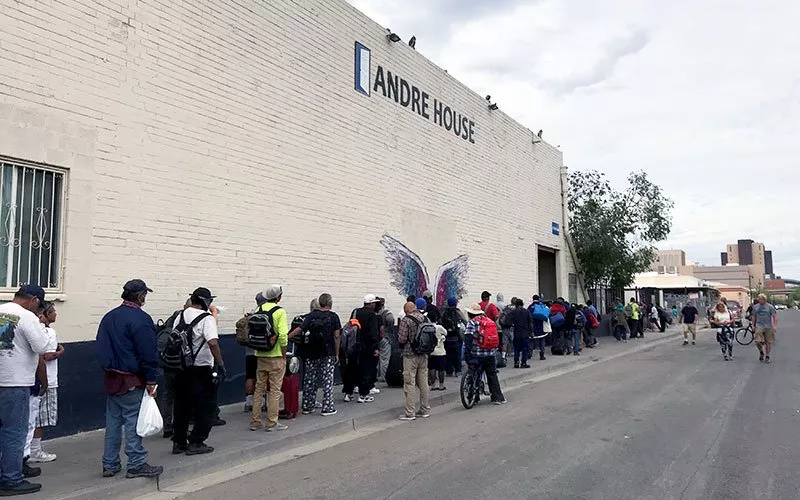
PHOENIX – For more than three decades, André House just west of downtown has provided food, showers, temporary housing and other services to Arizonans experiencing homelessness or poverty.
In the wake of the COVID-19 pandemic, the number of families seeking such services has almost doubled, said Ash Uss, the faith-based nonprofit’s coordinator of advocacy and partnerships.
“We have had families who show up and say, ‘I was just evicted,’ or ‘I’m about to be evicted,’ or ‘We’re living out of our car,’” Uss said. “The need is greater than it ever was.”
On Tuesday, the Centers for Disease Control and Prevention implemented a nationwide temporary eviction moratorium through the end of the year to help stop the spread of COVID-19. Under the order, landlords cannot evict renters who meet certain conditions: “exhausted their best efforts to pay rent, seek Government rental assistance, and are likely to become homeless due to eviction,” according to a statement from the White House.
However, the latest efforts may have little impact for those already struggling to secure housing. A July report from University of Arizona researchers suggests the spike in people seeking homeless services at André House and elsewhere in metro Phoenix may be just the beginning. Researchers found the COVID-19 pandemic and subsequent economic shutdown could increase the state’s homeless population – about 11,000 as of January – by 16% to 42%.
“I think everybody needs to take this very seriously,” said Claudia Powell, associate director of the university’s Southwest Institute for Research on Women and co-author of the report, which put the number of at-risk renters at 365,000.
“It will be a bigger crisis than we can imagine if we don’t act soon.”
Shutdowns a tipping point for families struggling to make ends meet
Many Americans were on shaky financial footing before the pandemic took hold in March: Despite low unemployment, the Federal Reserve found in a 2019 survey that 1 in 4 would struggle to cover an unexpected $400 expense.
In Arizona, 1 in 7 residents – and 1 in 5 children – was living below the poverty line, according to 2018 census data, the most recent available. Arizona is among the strictest in the country in terms of eligibility requirements for state benefits and caps on cash assistance. And the state’s Housing Trust Fund, designed to provide affordable housing, still hasn’t recovered from steep Great Recession-era cuts.
When efforts to slow the spread of COVID-19 resulted in layoffs and reduced work hours – Arizona’s unemployment rate ballooned from 4.5% in February to 13.4% in April, federal labor data shows – many households didn’t have the resources to weather the financial hit.
RELATED STORY
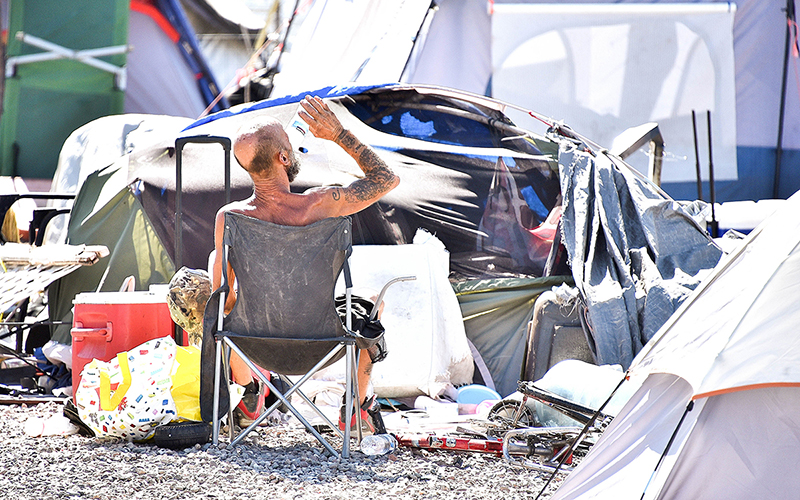
Months later, communities still await federal aid for the homeless
By June, as the state’s unemployment rate hovered at 10%, 1 in 5 Arizona households had missed the previous month’s rent or mortgage payment or doubted their household could cover the next month’s payment on time, according to a Census Bureau survey.
Gov. Doug Ducey in July extended a moratorium on COVID-19-related evictions for renters, in effect at least through Oct. 31. But the moratorium delays, rather than forgives, monthly payments, meaning renters unable to secure assistance through other programs will be on the hook for thousands of dollars once the moratorium expires – the same as with the federal moratorium. It also doesn’t apply to Arizonans who own a home.
Meanwhile, the $600 weekly supplement Congress passed to boost unemployment benefits in all 50 states ran out in late July, leaving Arizonans to receive the state maximum of $240 a week – the second-lowest state benefit in the nation. President Donald Trump has since authorized a new weekly supplement of $300, which Arizonans began receiving Aug.17.
“Unfortunately,” the University of Arizona report said, “we find ourselves in a rather dire situation as a result of the combination of the pandemic, high preexisting levels of poverty in Arizona, the magnitude of job losses, the fact that Arizona safety-net programs are comparatively stingy and difficult to access, and that homelessness service programs were inadequately funded prior to the pandemic.
“If we let these factors run their course unmitigated, we are very likely to see levels of hunger and homelessness of a magnitude and intensity unfamiliar to most.”
Key findings of the COVID-19 report
If Arizona’s unemployment rate peaks at 15% – which the report called the “optimistic” scenario – it could spur a 16% increase in the homelessness rate, leaving at least 12,736 Arizonans on the streets, living with friends and family or sheltering in a vehicle.
If unemployment peaks at 25% – the “pessimistic” scenario – the homelessness rate could jump to 15,590, a 42% rise.
Minority communities would likely bear the brunt of any uptick, said Keith Bentele, an associate research professor and co-author of the report.
People of color, particularly Black people, already are “dramatically overrepresented” in the homeless population, Bentele said. They’re “more likely to be impacted negatively” by the pandemic and have, “on average, dramatically fewer resources to mitigate that strain,” he said.
Pew Research Center found earlier this year that COVID-related job and wage losses had hit Black and Hispanic adults hardest, with larger portions of those groups saying they “cannot pay some bills or can only make partial payments on some of them.”
Black and Hispanic households also were less likely than white households to have enough savings to cover emergency expenses.
In addition to the human toll, a surge in homelessness could affect Arizona’s bottom line.
The University of Arizona report indicates the state could end up paying more than $2 billion to cover increases in shelter use, emergency room visits, child welfare cases and interactions with the juvenile court system if the state’s 365,000 at-risk renters are evicted.
‘We all need to brace ourselves’
The good news, according to University of Arizona researchers: It doesn’t have to be that way. The report argues the pandemic has created an opportunity to “fundamentally transform our approach to servicing people experiencing homelessness.”
Bentele said the use of traditional congregate shelters, for example, is becoming “very untenable” in a situation where public health experts have identified social distancing as a key strategy for preventing new infections.
The “homelessness literature is very, very clear” that a “housing first” approach – providing a safe, livable space first before focusing on treating addictions or getting a job – is a more efficient and cost effective strategy, he said. The report recommends the state boost rapid rehousing efforts, including the additional staff needed to handle increased demand.
“This is a real moment when there’s a lot of attention to the issue,” Bentele said, “and there’s actually a lot of funding coming from the federal government right now of a scope that we’ve really never seen before in terms of investments directly for homelessness services.”
The report also recommends offering more emergency rental aid and making it easier to apply for and receive assistance. Arizona has been slow to process requests for rental help, with only 1,400 applications approved out of more than 21,000 submitted as of Aug. 10, according to The Arizona Republic. UArizona researchers attributed the delays to understaffing and “cumbersome” documentation requirements.
Powell said the state also needs to increase support for property owners because “landlords can’t necessarily go for long periods of time without people being able to pay their rent.” The state in August launched a program with $5 million in funding to help landlords affected by COVID-19, but organizations representing rental owners have sued Ducey claiming state aid is insufficient.
Uss, the André House coordinator, said the pandemic has given lawmakers at both the state and federal levels a chance to “stop looking at, ‘How do we try and put Band-Aids on the challenges that we face?’”
In March, for example, Arizona legislators passed an emergency budget that included financial assistance for food banks and organizations serving Arizonans without stable housing.
Officials should find “a more strategic way to look at how we actually prevent, mitigate and solve homelessness in our communities” on the front end, Uss said – such as by expanding housing options, as recommended in the UArizona report.
“I don’t feel as though lawmakers on any level have really understood the magnitude of what we should expect in terms of the amount of people who are going to fall into homelessness because of the pandemic,” Uss said. “We all need to brace ourselves.”
This story is made possible through a partnership between the Walter Cronkite School of Journalism and the Center for the Study of Religion and Conflict at Arizona State University, with the support of the Henry Luce Foundation.

The Arizona Interscholastic Association is allowing the upcoming high school fall sports season to proceed after recent state metrics show COVID-19 cases on a downward trend.
Football practice for many Arizona high schools could begin as soon as Labor Day, Monday, Sept. 7.
“The metrics have gotten to a place that we can start football practice,” AIA Executive Director David Hines said. “We can get kids in a helmet and shoulder pads and begin doing work.”
During a special meeting on Wednesday, Sept. 2, the AIA Executive Board voted in favor of endorsing guidelines set by the Sports Medicine Advisory Committee. The SMAC guidelines include social distancing, staying home when sick and no physical contact like high fives or fist bumps.
Modifications are being made to team schedules, and the qualification process for postseason advancement. The AIA plans on announcing the updates shortly once finalized.
Schools across the state will have control over when they allow fans back to watch the fall season in person. For more information, contact your local school to see if they’re allowing fans in the stands.
The 2020-2021 winter sports season is still expected to start one week later than previously scheduled to accommodate for amendments to the fall sports season, according to the AIA Executive Board.
AIA Fall Sports Schedule:
Football
First Practice: Sept. 7
First Competition: Sept. 30-Oct. 3
Championships: Dec. 11/12 (4A-6A & Open)
The 1A-3A conferences are currently discussing possibilities for length of their regular seasons and when to hold state championships.
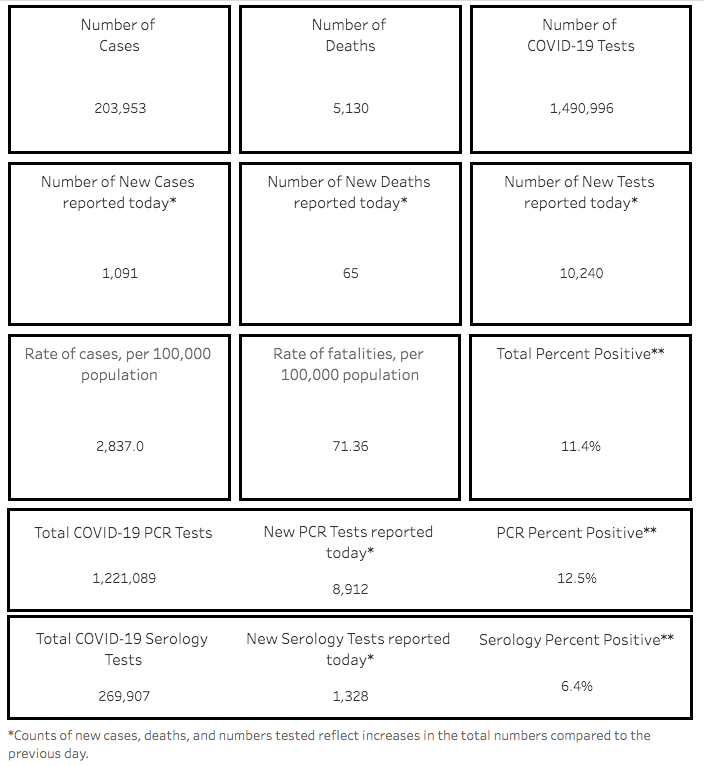
With more than 1,000 new cases today, the number of Arizona’s confirmed novel coronavirus cases closed in on 204,000 as of Thursday, Sept. 3, according to the Arizona Department of Health Services.
Pima County had seen 21,443 of the state’s 203,953 confirmed cases.
A total of 5,130 Arizonans had died after contracting COVID-19, including 590 deaths in Pima County, according to the Sept. 3 report.
The number of hospitalized COVID cases continues to decline from July peaks. ADHS reported that as of Sept. 2, 745 COVID patients were hospitalized in the state. That number peaked at 3,517 on July 13.
A total of 924 people visited ERs on Sept. 1 with COVID symptoms. That number has seen some uptick this week but remains far below the peak of 2,008 on July 7.
A total of 241 COVID-19 patients were in intensive care unit beds on Sept. 2, the lowest that number has been since April 8, when 155 people were in ICU. The number of COVID patients in ICUs peaked at 970 on July 13.
In Pima County, the week-by-week counting of cases peaked the week ending July 4 with 2,398 cases, according to an Aug. 26 report from the Pima County Health Department. Those numbers have dropped with Pima County requiring the wearing of masks in public but they have bumped upward recent weeks, with 804 cases in the week ending Aug. 8 and 930 cases in the week ending Aug. 15. (Not all recent cases may have been reported.)
Deaths in Pima County are down from a peak of 54 in the week ending July 4 to 35 for the week ending Aug. 8 and 15 for the week ending Aug. 15.
Hospitalization peaked the week ending July 18 with 247 COVID patients admitted to Pima County hospitals. For the week ending Aug. 15, 63 COVID patients were admitted to Pima County hospitals.
Benchmarks met to allow schools to begin hybrid learning
Pima County today reached benchmarks indicating that it has moved from “substantial” spread of the coronavirus to “moderate” spread, meaning local school districts can now consider hybrid learning that would allow some students to return to the classroom while others continue distance learning.
Pima County has had less than 100 cases per 100,000 individuals for two consecutive weeks; two straight weeks with the percentage of positive tests below 7 percent; and two consecutive weeks with the total of people visiting hospitals with COVID-like symptoms at less than 10 percent of the total number of people seeking medical attention.
Local school district boards will have to consider the new numbers before making decisions as to how to proceed following the Labor Day holiday.
Get Help From City of Tucson While You Can
Time is running out to get aid from the City of Tucson if you’ve experience a COVID-related hardship.

Wednesday, September 2, 2020
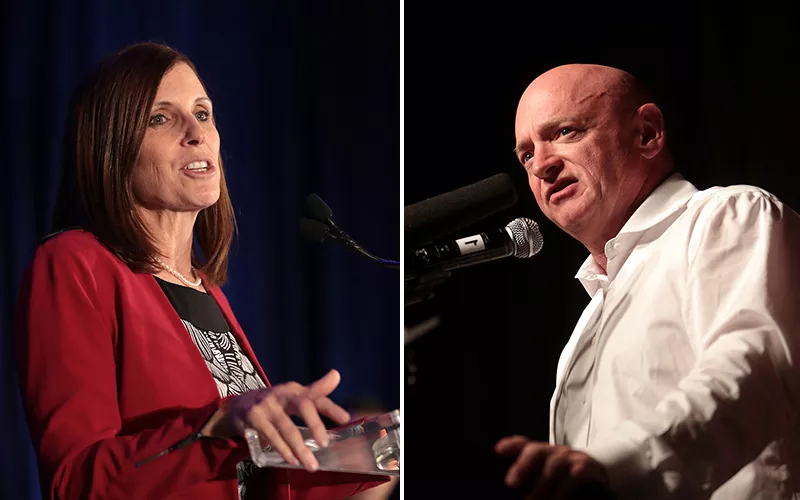
That's way outside the survey's =/- 3.5 percent margin of error.
The survey shows 56 percent of those polled prefer Kelly, while just 39 are supporting McSally, a Republican who lost a 2018 Senate race to Democrat Kyrsten Sinema but was later appointed to the Senate seat previously held by the late John McCain by Gov. Doug. Because she was appointed, McSally must face voters again this year (and whoever wins in November will have to defend the seat in 2022).
With only one recent exception, McSally has consistently trailed Kelly in polling, as a roundup at FiveThirtyEight.com shows. The polling average Real Clear Politics now puts Kelly ahead by an average of 11.3 percentage points. McSally has decried the poor numbers as "fake polls."
The Fox News poll also showed Democrat Joe Biden leading President Donald Trump in Arizona. Biden had the support of 49 percent of likely voters, while Trump had the support of 40 percent.
It’s been nearly 30 years since Bill and Ted of San Dimas, Calif., went to hell, played Twister with Death, and supposedly saved the world with a sorta-crappy song that was actually performed by Kiss.
Now, after many failed attempts, we’ve finally gotten a third Bill and Ted film, in which the middle-aged dudes grappling are with parenthood, marital troubles and a killer robot.
Was it worth the wait? Yeah, sure.
If that doesn’t seem like a resounding endorsement, that’s because it isn’t. This film sometimes feels flat, with Dean Parisot (Galaxy Quest) at the helm, and the writers of the first two films returning for a third go. Alex Winter is back as Bill, and he basically steals the film from Keanu Reeves as Ted, who doesn’t seem to be feeling the joy this time out.
I thought they’d saved the world with “God Gave Rock and Roll to You,” but apparently that’s not the case. The film begins with Bill and Ted performing at a wedding; their career is a mess after Death (William Sadler) quit Wyld Stallyns, and their many albums failed to chart.
Enter Kelly (Kristen Schaal), the daughter of Rufus (played previously by the late George Carlin), who shows up in a time-traveling pod. Reality as we know it is collapsing upon itself, and if Bill and Ted don’t come up with a universe-saving song, everything is going to go away. Bill and Ted, shortly after leaving marriage counseling, get back in the time-traveling phone booth and visit themselves in the future in an attempt to steal what could be the already-written universe-saving song.

