

Wednesday, September 2, 2020

The report, set to be filed in federal court this week, confirms reporting from ProPublica and The Texas Tribune that found portions of the wall were in danger of overturning if not fixed due to extensive erosion just months after it was built.
ProPublica is a nonprofit newsroom that investigates abuses of power. Sign up to receive our biggest stories as soon as they’re published.
This article is co-published with The Texas Tribune, a nonprofit, nonpartisan local newsroom that informs and engages with Texans. Sign up for The Brief weekly to get up to speed on their essential coverage of Texas issues.
It’s not a matter of if a privately built border fence along the shores of the Rio Grande will fail, it’s a matter of when, according to a new engineering report on the troubled project.
The report is one of two new studies set to be filed in federal court this week that found numerous deficiencies in the 3-mile border fence, built this year by North Dakota-based Fisher Sand and Gravel. The reports confirm earlier reporting from ProPublica and The Texas Tribune, which found that segments of the structure were in danger of overturning due to extensive erosion if not fixed and properly maintained. Fisher dismissed the concerns as normal post-construction issues.
Donations that paid for part of the border fence are at the heart of an indictment against members of the We Build the Wall nonprofit, which raised more than $25 million to help President Donald Trump build a border wall.
Former Trump chief strategist Steve Bannon, We Build the Wall founder Brian Kolfage and two others connected to the organization are accused of siphoning donor money to pay off personal debt and fund lavish lifestyles. All four, who face up to 20 years in prison on each of the two counts they face, have pleaded not guilty, and Bannon has called the charges a plot to stop border wall construction.
We Build the Wall, whose executive board is made up of influential immigration hard-liners like Bannon, Kris Kobach and Tom Tancredo, contributed $1.5 million of the cost of the $42 million private border fence project south of Mission, Texas.
Last year, the nonprofit also hired Fisher to build a half-mile fence segment in Sunland Park, New Mexico, outside El Paso.
Company president Tommy Fisher, a frequent guest on Fox News, had called the Rio Grande fence the “Lamborghini” of border walls and bragged that his company’s methods could help Trump reach his Election Day goal of about 500 new miles of barriers along the southern border.
Instead, one engineer who reviewed the two reports on behalf of ProPublica and The Texas Tribune likened Fisher’s fence to a used Toyota Yaris.
“It seems like they are cutting corners everywhere,” said Alex Mayer, a professor of civil engineering at the University of Texas at El Paso. “It’s not a Lamborghini, it’s a $500 used car.”
Since Fisher’s companies embarked on construction of the Rio Grande fence, the Trump administration has awarded about $2 billion in federal contracts to the firms to build segments of the border wall in other locations.
Fisher agreed to the inspection as part of ongoing lawsuits against Fisher Sand and Gravel filed last year by the National Butterfly Center and the International Boundary and Water Commission. They unsuccessfully sought to convince a federal judge to stop the construction of the project until the potential impacts of the wall on the Rio Grande could be determined.
Mark Tompkins, an environmental engineer hired by the wildlife refuge, noted in his report that widespread erosion and scouring occurred after heavy rain events such as Hurricane Hanna in July, but that the fence has yet to experience a flood of the Rio Grande.
“Fisher Industries’ private bollard fence will fail during extreme high flow events,” concluded Tompkins, who specializes in river management.
“When extreme flow events, laden with sediment and debris, completely undermine the foundation of the fence and create a flow path under the fence or cause a segment of the fence to topple into the river, unpredictable and damaging hydraulics will occur,” he added in an affidavit to be filed in court.
Experts have said the fence will face a never-ending battle with erosion given its proximity to the water and the sandy, silty material of the banks. In the Rio Grande Valley, the federal government usually builds sections of the wall miles inland on top of existing levees, partly due to erosion concerns.
A second report, based on a geotechnical and structural inspection by the Millennium Engineers Group of Pharr, Texas, also hired by the National Butterfly Center, found that the fence was stable for now, but that it faces a host of issues. They include soil erosion on the river side — in some areas gaps up to three feet wide and waist deep, concrete cracking, construction flaws and what the firm concluded was likely substandard construction material below the fence’s foundation.
The Millennium engineers called for a clay covering to protect the embankment from erosion, as well as closely monitoring the project.
Its conclusion: “The geography at the wall’s construction location in comparison to the river bend is not at a favorable location for long-term performance.”
According to a copy of an operation and maintenance plan, Fisher Sand and Gravel plans quarterly inspections of the fence as well as extra checkups after large storms. The company had also said it would plant grasses that better hold in place the sandy riverbank and add a layer of rocks to lessen erosion. New soil will also be “treated and seeded” to help fill ground cover.
Tompkins called the maintenance plan “completely inadequate” and a “haphazard and unprofessional approach to long-term maintenance.”
Tommy Fisher said Tuesday that he couldn’t comment on the reports because he hadn’t reviewed them. But he added that his company has fixed all of the erosion, in part by adding a 10-foot-wide road made out of rocks for the Border Patrol to drive over that his crew considered big enough so it wouldn’t be as easily displaced. He estimates it will cost up to $150,000.
“Bottom line, if you want border security on the border you have to think outside the box,” he said. “I feel very comfortable with what we’ve done.”
In July, Fisher appeared on a podcast hosted by Bannon, who called Fisher “kind of a mentor” who “taught me really about how you actually have to build a wall.”
Asked about the engineering concerns, which Bannon said were part of a “hit piece,” Fisher called them “absolutely nonsense.”
“I would invite any of these engineers that so-called said this was gonna fall over, I’ll meet ‘em there next week. … If you don’t know what you’re talking about, you probably shouldn’t start talking,” he said. “It’s working unbelievably well. There’s a little erosion maintenance we have to maintain.”
But to experts, Fisher’s planned fixes are inadequate.
“To me, it’s almost like putting a Band-Aid on a gaping wound,” said Adriana E. Martinez, a Southern Illinois University Edwardsville professor and geomorphologist who reviewed the reports on behalf of ProPublica and The Texas Tribune.
Officials with the International Boundary Commission have said that they too have found “significant erosion,” but spokeswoman Sally Spener said she couldn’t elaborate on that or on mitigation plans due to pending litigation. The binational body regulates building in the floodplain between the U.S. and Mexico because structures can worsen flooding and alter the course of the river, potentially violating international water treaties.
The Mexican section of the commission has said it worries the wall could obstruct the river’s flow or be knocked down by the force of the water, according to Spener.
Trump supporters funded a private border wall on the banks of the Rio Grande, helping the builder secure $1.7 billion in federal contracts. Now the “Lamborghini” of border walls is in danger of falling into the river if nothing is done, experts say.
Trump tried to distance himself from the private fence after the ProPublica/Tribune stories, saying that he had never agreed with it and that it had been done to make him look bad. He again distanced himself from the project and We Build the Wall after the charges against Bannon and the others.
“When I read about it, I didn’t like it,” he said. “It was showboating and maybe looking for funds. But you’ll have to see what happens.”
Last November, We Build the Wall representatives met with Customs and Border Protection officials about donating the group’s first border wall project — a half-mile fence in Sunland Park, New Mexico, just outside El Paso. According to a memo obtained by The Nation, CBP called it an “overall positive meet and greet.”
But the federal agency identified several areas of concern with the Sunland Park project, including the possibility that it would require an environmental assessment, but also the fact that Fisher Industries had inflated the speed with which it could complete the project.
“Their performance on this small project shows that some claims may have been inflated due to lack of experience with this type of work,” the memo states.
Fisher has said he wants to donate the Rio Grande fence to the federal government as well, although it’s unclear whether the government will take it. The fence likely will come with a hefty tax bill if not donated, after Hidalgo County recently appraised the land’s value at more than $20 million, which Fisher said his company will fight.
The next court hearing regarding the pending federal lawsuits is scheduled for Sept. 10.
The national GDP dropped by more than 30 percent at the beginning of the outbreak in the United States and since then, national unemployment has risen to 10.2 percent. However, Marana has reported strong revenue numbers and received additional funds from the federal CARES Act.
During the Sept. 1 council meeting, Marana Finance Director Yiannis Kalaitzidis said Marana’s hotel occupancy rate fell by about 10 percent and hotel revenues fell by about 11 percent in July compared to last year. The number of issued housing permits remains strong in Marana, with 855 single-family housing permits issued in fiscal year 2020 compared to 802 in 2019.
In April through June, restaurant and bar revenues dropped by about 20 percent, while retail revenues increased by six percent. When the COVID-19 pandemic hit, Marana officials anticipated a sharp drop in sales tax revenues. But revenues only took a minor dip in April and May, and came back even stronger than projections from before COVID-19 in June and July.
“However, it is still too early to determine what’s going to happen as our future really does depend very much on the federal relief funds, how effective they’re going to be and if we find a solution for the virus,” Kalaitzidis said.
The Town of Marana passed a reduced budget for fiscal year 2020-21 in anticipation of the negative financial impact of the Coronavirus. The town government slimmed their budget by deferring capital projects, delaying or freezing new hires and restricting budget capacity in certain departments.
Kalaitzidis recommends the council stay with this current budget and monitor new revenue numbers closely in order to anticipate future changes.
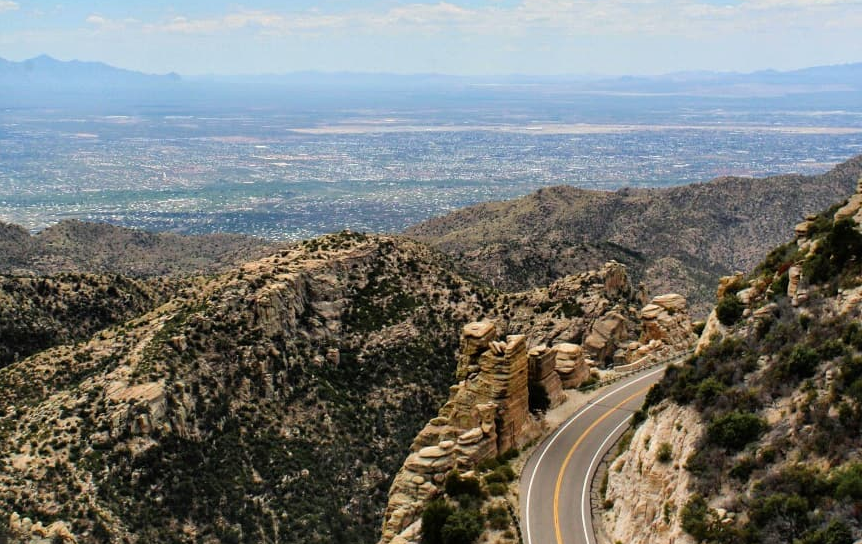
The following areas areas along the Catalina Highway are removed from the closure order: Soldier Trail, Baad Do’ag Trail and Vista, AZ Trail East of Catalina Highway, Molino Canyon Vista, Molino Basin for day use, Gordon Hirabayashi area for day use, Bug Spring Trail, Thimble Rock Vista, Seven Cataracts Vista, Cypress Picnic Area, Chihuahua Pine Picnic Area, Middle Bear Picnic Area, Windy Point Vista, Geology Vista, Hoodoo Vista, San Pedro Vista, Sycamore Vista, Aspen Vista and Loma Linda Picnic Area. Restrooms and trash service in these areas are still unavailable.
No one involved with the program – from the IRS to Arizona business organizations to Washington think tanks – could say how many businesses will actually participate in the voluntary program, and how many workers might be affected.
“You can’t simply flip a switch to make this work in the payroll department,” said Paul Van de Water, senior fellow at the Center on Budget and Policy Priorities, citing just one of the many concerns critics have raised about the “holiday.”
The first is that, like most holidays, this one could come with a big bill in a couple of months.
Under the executive order, businesses are allowed to defer four months of Social Security withholding payments that normally come out of workers’ paychecks, and put that money back in the employees’ pockets. But it’s currently only a deferral – workers could get hit with a bill in 2021 to pay back all the withholding that was deferred.
“You could be forcing American workers into a situation that could result in a big tax bill next year, and yet it is a decision that will largely be made by employers,” said Garrick Taylor, executive vice president for the Arizona Chamber of Commerce and Industry.
The U.S. Chamber of Commerce said the policy, which was unveiled less than four weeks ago, has raised such “serious concerns for both employers and employees” that it does not believe many businesses will opt in, choosing instead to keep withholding as always.
The White House had framed the executive order as an attempt to get financial help to Americans hit by COVID-19, and it would mean extra money for workers whose companies participate.
With Social Security withholding making up 6.2% of each paycheck, the U.S. Chamber of Commerce estimates that a deferral would mean an extra $83 per paycheck for someone making $35,000 a year and paid biweekly. It would be an increase of $248 per paycheck for someone making $104,000, the maximum income eligible for the deferral.
But all those savings, from $751.15 on the low end to $2,232 on the upper end, might have to be paid back by April 30 unless the deferral is made permanent – something Trump has vowed to do. His executive order directs the Treasury to “explore avenues, including legislation, to eliminate the obligation to pay the taxes deferred.”
Rep. Tom O’Halleran, D-Sedona, said Congress is not likely to sign off on an elimination of the payroll tax. People on both sides of the aisle would oppose such a move because it would hurt senior citizens, veterans and individuals with disabilities in the long run, he said.
“No matter who the president is, they need to go through Congress when you begin to impact the tax structure of the people,” O’Halleran said.
Critics say making the cuts permanent could endanger Social Security. But making people pay the deferred money in 2021 could also be problematic for low-income households, said Rachel Greszler, research fellow for the Heritage Foundation.
Greszler said it is unlikely that someone living paycheck-to-paycheck would be able to save for a day when the bill might come due. If Trump was trying to boost the economy, she said, it would make more sense to do another one-time stimulus payment.
“You are likely to spend a higher amount when you get it in a paycheck then when you get it in a lump sum,” she said.
O’Halleran echoed concerns that a short-term paycheck boost now might not be ideal in the long run. He said businesses in his district, especially those in the service industry, have expressed concern that if they participate in the program, their employees will not be able to pay back the bills in time.
Other businesses appear to be just as reluctant to take part in what Taylor called “a well-intentioned attempt to provide relief to Americans during the pandemic,” but one that presents numerous challenges.
Taylor said he did not know how many Arizona businesses planned to participate. Nor did O’Halleran. Van de Water said there is “no measure” yet of the number of participating businesses. The Arizona Small Business Association referred the question to the IRS, where a spokesman said it’s too early to know.
Greszler said she did not know how many companies will take part – she even had to ask her boss Tuesday if the Heritage Foundation would be participating.
“This is going to be, for some employers, a complicated decision since it has tax implications for employees into the next year,” Taylor said.
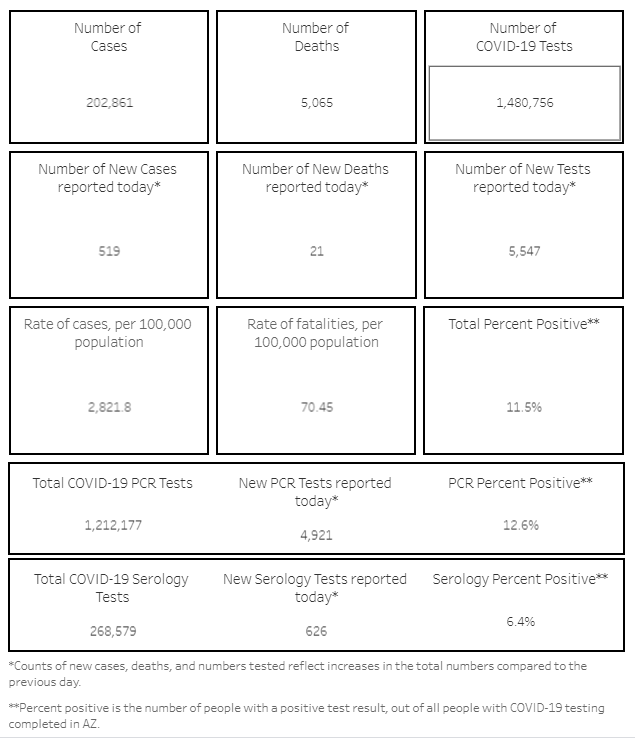
The number of Arizona’s confirmed novel coronavirus cases closed in on 203,000 as of Wednesday, Sept. 2, according to the Arizona Department of Health Services.
Pima County had seen 21,294 of the state’s 202,861 confirmed cases.
A total of 5,044 Arizonans had died after contracting COVID-19, including 576 deaths in Pima County, according to the Sept. 2 report.
The number of hospitalized COVID cases continues to decline. ADHS reported that as of Sept. 1, 752 COVID patients were hospitalized in the state. That number peaked at 3,517 on July 13.
A total of 871 people visited ERs on Sept. 1 with COVID symptoms. That number peaked at 2,008 on July 7.
A total of 248 COVID-19 patients were in intensive care unit beds on Sept. 1, the lowest that number has been since April 9, when 248 people were in ICU. The number of COVID patients in ICUs peaked at 970 on July 13.
In Pima County, the week-by-week counting of cases peaked the week ending July 4 with 2,398 cases, according to an Aug. 26 report from the Pima County Health Department. Those numbers have dropped with Pima County requiring the wearing of masks in public but they have bumped upward recent weeks, with 804 cases in the week ending Aug. 8 and 930 cases in the week ending Aug. 15. (Not all recent cases may have been reported.)
Deaths in Pima County are down from a peak of 54 in the week ending July 4 to 35 for the week ending Aug. 8 and 15 for the week ending Aug. 15.
Hospitalization peaked the week ending July 18 with 247 COVID patients admitted to Pima County hospitals. For the week ending Aug. 15, 63 COVID patients were admitted to Pima County hospitals.
UA keeps reentry plan on pause
The University of Arizona administration announced they will continue to delay their staged reopening plan and remain in Stage 1 of the reopening (essential in-person classes only) during the third week of instruction, which begins Monday, 7.
Stage 2 was originally set to begin on Aug. 31 and would have allowed small classes to resume in person, bringing another 9,000 people to campus.
Out of more than 11,300 antigen tests performed in the university community between July 31 and Aug. 31, the UA has uncovered 103 positive COVID-19 cases.
The university is using far more antigen tests—which are less expensive and produce rapid results—than traditional PCR tests, which can take 48 hours or longer to produce results. There has been controversy over the effectiveness of antigen testing. During the same time period, the university conducted 442 PCR and reported two positive COVID-19 results.
At a press conference yesterday, UA President Robert C. Robbins said the university was working with the Tucson Police Department and the Tucson City Council ward offices to respond to reports of parties in neighborhoods around the university.
“We encourage everyone: Please do not have large gatherings,” Robbins said. “We know that is ripe for transmission of this deadly virus.”
For more information, visit covid19.arizona.edu/updates.
Get Help From City of Tucson While You Can
Time is running out to get aid from the City of Tucson if you’ve experienced a COVID-related hardship.
The City of Tucson has allocated $4.5 million of federal CARES Act funding for an emergency rent and utility assistance program available to city residents, but the city will soon stop accepting applications.
To be eligible for the financial assistance, participating renters must have been financially impacted by the COVID-19 pandemic and the household income cannot exceed $68,400.
Visit www.tucsonaz.gov/hcd/rent-help to complete an application. If you need assistance or are unable to complete the application online, call (520) 837-5364 or email [email protected].
The city is also setting aside $3 million of CARES Act funding to be distributed to local workers and families that have been negatively impacted by the crisis. Applications are due by 5 p.m. on Wednesday, Sept. 9.
The grant program, named the “We Are One | Somos Unos Resiliency Fund” will focus on individuals and households that have not received any state or federal COVID-19 relief money and whose income does not reach Pima County’s self-sufficiency standard.
The self-sufficiency standard measures how much money an individual or family needs to earn to be able to meet their basic needs with no public or private financial assistance. In 2018, the self-sufficiency standard for a single adult in Pima County was $9.66 per hour or $1,700 per month. For a household with two adults and two young children, the standard was $13.22 per hour for both adults, or $4,711 per month.
The city is partnering with the Women’s Foundation of Southern Arizona, who will administer the grants.
In addition, the city’s We Are One | Somos Unos Resiliency Fund recently received a $1.25 million donation to provide financial relief for Tucson’s immigrant communities during the COVID-19 pandemic.
The donations, from the Open Society Foundations and an anonymous donor, will provide funds to immigrants living in the City of Tucson and the City of South Tucson. These are people who have been significantly impacted by COVID-19 but are often excluded from federal aid.
The $1.25 million will be disbursed through grants to those who were not eligible to receive federal CARES Act stimulus checks earlier this year, and who face additional barriers to financial assistance programs, according to a city press release.
The Sunnyside Foundation has been designated as the administrator of the funds. Details on how to receive aid can be found at www.sunnysidefoundation.org.
“Entire families in our community are being evicted from their homes, losing jobs, and having to decide between buying groceries or paying utility bills,” said Sunnyside Foundation Executive Director Kerri Lopez-Howell in a press release. “We are honored to steward these resources and eager to work alongside grassroots community leaders, organizers, and advocates to ensure that those most impacted receive these dollars.”
Ducey: Get a Flu Shot
Gov. Doug Ducey and public health experts are asking Arizonans to get a flu shot to help keep hospital capacity low and available for those with COVID.
The governor said the Arizona Department of Health Services will be implementing an aggressive plan of action during this flu season by distributing the vaccination for free to all Arizonans through doctor’s offices, pharmacies, local health departments and community healthcare centers statewide.
“We don’t want cost to be something that gets in the way of this,” Gov. Ducey said during Monday’s press conference. “If you are uninsured or underinsured we want you to get a flu shot and it’s the best thing you can do to add more help to our situation in Arizona.”
Gov. Ducey said the overlap with COVID produces greater challenges than a typical flu season and preventing the flu is more important than ever. More than 4,000 people were hospitalized with flu symptoms in Arizona last year and roughly 700 people die from the illness each year, according to the governor.
The state will reimburse Arizona Health Care Cost Containment System providers offering free flu shots to AHCCCS members, while giving AHCCCS members a $10 gift card for their troubles after they've been vaccinated, said Gov. Ducey. The governor announced he is also allowing certified pharmacists the ability to administer the vaccine to AHCCCS-enrolled children.
“These actions have led to a 50 percent increase of flu shot administration rates in other states,” Gov. Ducey said. “We’re confident they’ll make a big difference in Arizona as well.”
Certain COVID-19 testing sites will also offer flu shots to those getting tested for coronavirus in starting in September, said Gov. Ducey. The Arizona Department of Health Services will expand online resources to help the public find free vaccine distribution locations as well as help businesses set up their own flu shot clinics for employees, according to the governor.
“I want to emphasize Arizona’s most important partner in this fight is you, the people of Arizona” Gov. Ducey said. “You’ve made a big difference in where we are today and you could make a huge difference in where we’ll be tomorrow going forward.”
Get tested: Pima County has several testing centers
Pima County has three free testing centers with easy-to-schedule appointments—often with same-day availability—with results in 48 to 72 hours.
You’ll have a nasal swab test at the Kino Event Center, 2805 E. Ajo Way, and the Udall Center, 7200 E. Tanque Verde Road. The center at the northside Ellie Towne Flowing Wells Community Center, 1660 W. Ruthrauff Road, involves a saliva test designed by ASU.
Schedule an appointment at pima.gov/covid19testing.
The centers are also tied into Pima County’s developing contact tracing operation, which aims to be able to identify potential clusters and warn people if they have been in contact with someone who is COVID-positive.
If you’re interested in a test to determine if you’ve already had COVID-19, the UA has expanded a free COVID-19 antibody testing program to include 15 new categories of essential workers considered at high risk for exposure. The antibody test, developed by researchers at UA Health Sciences, determines who has been exposed to and developed an immune response against COVID-19.
In addition to healthcare workers and first responders, the test program is now open to educators, childcare workers, agriculture, grocery and foodservice workers, hospitality employees, solid-waste collection workers, transportation services workers and members of the National Guard. More information and registration for the test is available
—with additional reporting from Kathleen B. Kunz, Austin Counts, Jeff Gardner and Tara Foulkrod

Tuesday, September 1, 2020
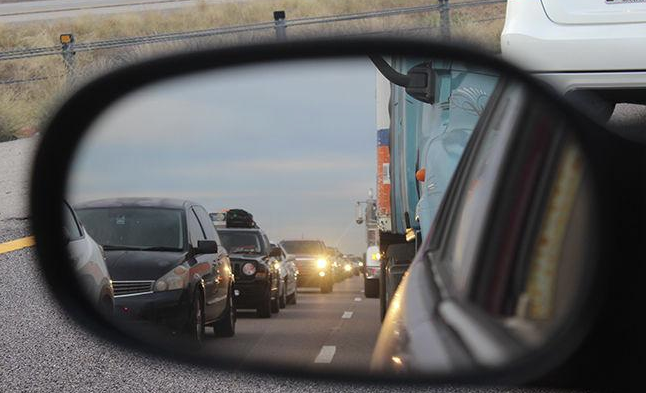
In an attempt to reduce the number of in-person visits to Motor Vehicle Departments, Gov. Doug Ducey issued an executive order today deferring requirements to renew standard driver licenses.
If your license has an expiration date through Dec. 31, 2020, renewal requirements have been extended by one year.
According to the Governor's office, under this Executive Order, all Arizona police as well as state government agencies, county and municipal governments, and election officials will accept Arizona driver licenses with expiration dates between March 1, 2020 and Dec. 31, 2020, as valid identification for any purposes for which unexpired driver license cards would otherwise be accepted.
This follows Ducey's executive order in March, which delayed expiration dates on Arizona driver licenses for six months.
Arizona drivers may see their updated driver license expiration date at AZMVDNow.gov. Drivers have the option to order a duplicate license with the updated expiration date.
ProPublica is a nonprofit newsroom that investigates abuses of power. Sign up to receive our biggest stories as soon as they’re published.
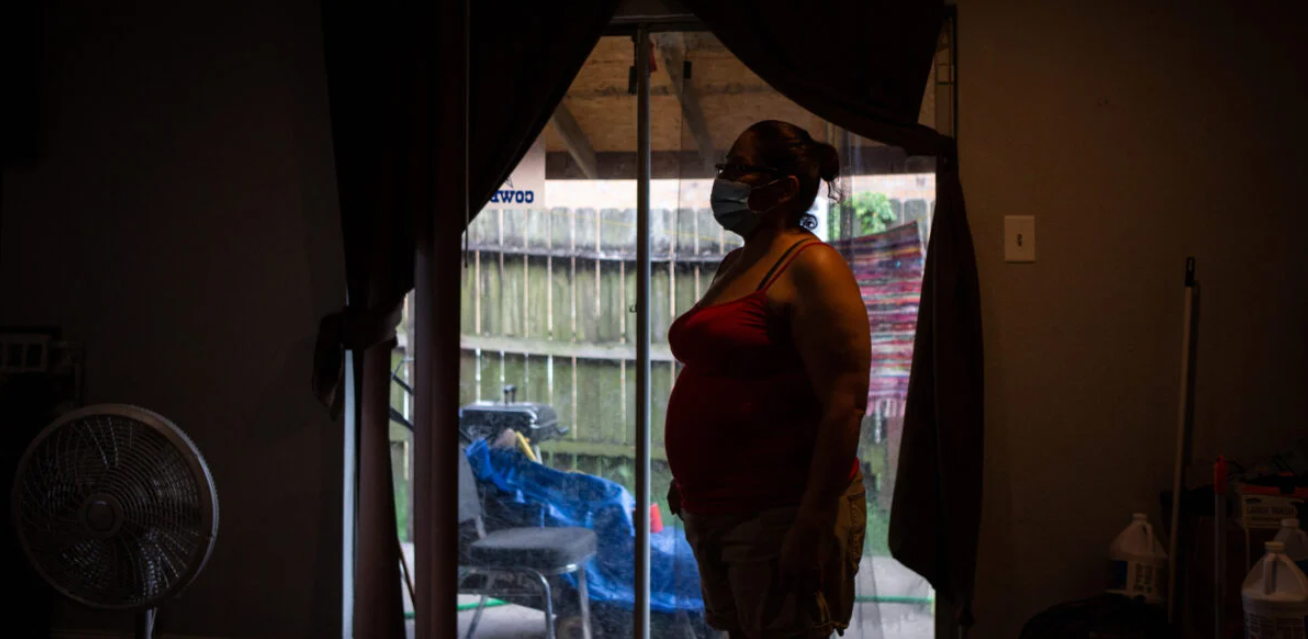
HOUSTON — On an afternoon in mid-June, Analleli Solis was walking home from her brother’s house just down the street when she noticed someone she didn’t know retreating from the front door of her modest brick home.
Solis approached the woman, who handed her an envelope.
Inside was a lawsuit from Oportun Inc., a personal loan company Solis had turned to for years when she and her husband didn’t have enough cash to cover rent, fix their cars or take a vacation.
Now, the company was suing Solis to recoup some of that money, demanding $4,196.23 including fees and interest.
Solis’ shock quickly gave way to anger. Three months earlier, after she missed a few of her $130 bimonthly payments, she said she called Oportun to tell the company she had lost her jobs as a hotel housekeeper and fast food worker because of the coronavirus pandemic and needed some relief.
The 43-year-old mother of three expected the company would understand.

ProPublica is a nonprofit newsroom that investigates abuses of power. Sign up to receive our biggest stories as soon as they’re published.
Millions of Americans who are struggling to put food on the table may discover a new item in government-funded relief packages of fresh fruits and vegetables, dairy and meat: a letter signed by President Donald Trump.
The message, printed on White House letterhead in both English and Spanish, touts the administration’s response to the coronavirus, including aid provided through the Farmers to Families Food Box Program, a U.S. Department of Agriculture initiative to buy fresh food and ship it to needy families.
The letter is reminiscent of Trump’s effort to put his signature on stimulus checks and send a signed letter to millions of recipients. It’s the latest example of the president blurring his official duties with his reelection campaign, most prominently by hosting Trump’s acceptance speech for the Republican nomination last week on the White House lawn.
Democratic lawmakers have gone so far as to say the USDA letter violates the federal Hatch Act. The law prohibits government officials from using their positions or taxpayer resources to engage in electioneering. Though the president himself is exempt, the ban applies to White House staff and agencies such as the USDA.
“Using a federal relief program to distribute a self-promoting letter from the President to American families just three months before the presidential election is inappropriate and a violation of federal law,” argued 49 House Democrats led by Marcia Fudge of Ohio in an August 14 letter to Agriculture Secretary Sonny Perdue, requesting information about the purpose and process behind Trump’s letter. “A public health crisis is not an opportunity for the administration to promote its own political interests. Likewise, a federal food assistance program should not be used as a tool for the President to exploit taxpayer dollars for his re-election campaign.”

PHOENIX – The small office building, nestled just off the road near a medical office and appliance store, looks more like a house where a quiet family might live. The only signs of activity are the cars in the small parking lot out front.
Most passersby likely have no idea what goes on behind the dark purple door; an intercom doorbell ensures that only those who belong are allowed in. There are no signs outside, only inside, such as “You Matter” and “Happy Thoughts.”
Bulletin boards are brightened by slips of neon-colored paper with phone numbers to Planned Parenthood and shelters for homeless youth. There are nearly 10 work spaces, each with a computer, a landline and a chair.
On a Friday night early last spring, Madison Marks, 20, sits in one of the chairs waiting for the phone to ring. The part-time Starbucks barista, who’s dressed in black and rocks blonde streaks through her short brown hair, picks up when a 15-year-old calls to share the troubles that led her to seek help from a stranger.
Marks stops her at one point and asks the requisite question: “On a scale of one to 10, one being you’re OK and 10 being you’d kill yourself right now, how are you feeling?”

