

Tuesday, September 1, 2020
For decades, researchers have looked to human genetics for linkages to mental illness, such as depression, bipolar disorder, and schizophrenia. Patterns of inheritance are murky, but it is clear that “stuff runs in families,” says Dr. Douglas Gray, a psychiatrist and researcher at the University of Utah School of Medicine.
His 2018 study – published in the journal of Molecular Psychiatry – went a step further. It examined four specific gene variants that appear to raise the risk of suicide.
Four percent “of genes in the genome have current evidence associated with suicide risk,” according to the study, which identified the variants as APH1B, AGBL2, SP110 and SUCLA2. Their presence is “noticeably associated with suicide risk.”
“We need to tell people who’ve had a suicide that their family’s at risk,” said Gray, who studies suicide to better understand risk factors and develop prevention programs. This genetic component may account for as much as “45 to 50% of the risk,” he said.
Genetic screenings or simply reviewing family histories could be one method of increasing both awareness and prevention, Gray said.
The study was rooted in the work of another researcher at the University of Utah in 1980: Paul H. Wender. His team of American and Danish researchers in Denmark compared adopted children and their adoptive parents to biological parents and their children.
“They looked at a group of children who were adopted at birth and then grew up and completed suicide,” Gray said. “It turned out that almost all of the risk of suicide was from the biological relatives and not the relatives that raised the child. So your suicide risk doesn’t come from the parents that adopt you, it comes from the parents you never met.”

WASHINGTON – American Airlines’ announcement that it could let go up to 19,000 workers on Oct. 1 has left the airline’s roughly 10,000 employees in Arizona worried, but hopeful the state can avoid the worst of the cuts.
The airline has not specified which regions of the country will see the cuts – which American executives said would not be needed if the federal government passes a new round of relief funding.
That has one local union “blasting out all over Facebook” to get members to press their representatives for a deal.
“I think some think that a second stimulus will come,” said Pat Rezler, assistant general chairman of the International Association of Machinists and Aerospace Workers, 141st District. “But some are hesitant on believing that.
“People are worried,” Rezler added.
It is unclear how many jobs, if any, American will cut at the airline’s hub in Phoenix Sky Harbor International Airport. An airline spokesperson said a regional breakdown of the job cuts is not yet available.
In a letter to employees last week, American Chairman and CEO Doug Parker and President Robert Isom announced plans to either furlough or permanently lay off 19,000 U.S. employees on Oct. 1 if Congress fails to pass a new round of stimulus to support the airline industry.
Pima County had seen 21,286 of the state’s 202,342 confirmed cases.

A total of 5,044 Arizonans had died after contracting COVID-19, including 576 deaths in Pima County, according to the Sept. 1 report.
The number of hospitalized COVID cases continues to decline. ADHS reported that as of Aug. 31, 729 COVID patients were hospitalized in the state, the lowest that number has been since May 10, when 717 COVID patients were hospitalized. That number peaked at 3,517 on July 13.
A total of 832 people visited ERs on Aug. 31 with COVID symptoms, the lowest that number has been since June 7, when 815 people visited ERs with COVID symptoms. That number peaked at 2,008 on July 7 and has bounced between 900 and 1,100 for most of August.
A total of 253 COVID-19 patients were in intensive care unit beds on Aug. 31, the lowest that number has been since April 9, when 248 people were in ICU. The number of COVID patients in ICUs peaked at 970 on July 13.
In Pima County, the week-by-week counting of cases peaked the week ending July 4 with 2,398 cases, according to an Aug. 26 report from the Pima County Health Department. Those numbers have dropped with Pima County requiring the wearing of masks in public but they have bumped upward recent weeks, with 804 cases in the week ending Aug. 8 and 930 cases in the week ending Aug. 15. (Not all recent cases may have been reported.)
Deaths in Pima County are down from a peak of 54 in the week ending July 4 to 35 for the week ending Aug. 8 and 15 for the week ending Aug. 15.
Hospitalization peaked the week ending July 18 with 247 COVID patients admitted to Pima County hospitals. For the week ending Aug. 15, 63 COVID patients were admitted to Pima County hospitals.
Ducey: Get a Flu Shot
Gov. Doug Ducey and public health experts are asking Arizonans to get a flu shot to help keep hospital capacity low and available for those with COVID.

WASHINGTON – Arizona passed 200,000 COVID-19 cases this week and the death toll from the disease topped 5,000 Saturday, but despite those somber milestones experts said the numbers are all moving in the right direction – for now.
Rates of infection and death are down sharply from just a month ago and hospital bed availability has improved, which experts attribute to tighter restrictions on congregating and mask-wearing, among other changes.
But they all warn that now is not the time to relax.
“Just because the numbers are better, does not mean we can relax on the efforts that we’ve been putting forward,” said Holly Ward, spokeswoman for the Arizona Hospital and Healthcare Association.
Challenges to those practices could come soon, as improving infection rates have put eight of the state’s 15 counties in the “moderate” range for transmission and one in the “minimal” range – thresholds that let bars and restaurants start reopening.

So Gov. Doug Ducey and public health experts are asking you to roll up your sleeve and get a flu shot to help keep hospital capacity low and available for those with COVID.
The governor said the Arizona Department of Health Services will be implementing an aggressive plan of action during this flu season by distributing the vaccination for free to all Arizonans through doctor’s offices, pharmacies, local health departments and community healthcare centers statewide.
“We don’t want cost to be something that gets in the way of this,” Gov. Ducey said during Monday’s press conference. “If you are uninsured or underinsured we want you to get a flu shot and it’s the best thing you can do to add more help to our situation in Arizona.”
Gov. Ducey said the overlap with COVID produces greater challenges than a typical flu season and preventing the flu is more important than ever. More than 4,000 people were hospitalized with flu symptoms in Arizona last year and roughly 700 people die from the illness each year, according to the governor.
The state will reimburse Arizona Health Care Cost Containment System providers offering free flu shots to AHCCCS members, while giving AHCCCS members a $10 gift card for their troubles after they've been vaccinated, said Gov. Ducey. The governor announced he is also allowing certified pharmacists the ability to administer the vaccine to AHCCCS-enrolled children.
“These actions have led to a 50 percent increase of flu shot administration rates in other states,” Gov. Ducey said. “We’re confident they’ll make a big difference in Arizona as well.”
Certain COVID-19 testing sites will also offer flu shots to those getting tested for coronavirus in starting in September, said Gov. Ducey. The Arizona Department of Health Services will expand online resources to help the public find free vaccine distribution locations as well as help businesses set up their own flu shot clinics for employees, according to the governor.
“I want to emphasize Arizona’s most important partner in this fight is you, the people of Arizona” Gov. Ducey said. “You’ve made a big difference in where we are today and you could make a huge difference in where we’ll be tomorrow going forward.”

Monday, August 31, 2020
ProPublica is a nonprofit newsroom that investigates abuses of power. Sign up to receive our biggest stories as soon as they’re published.
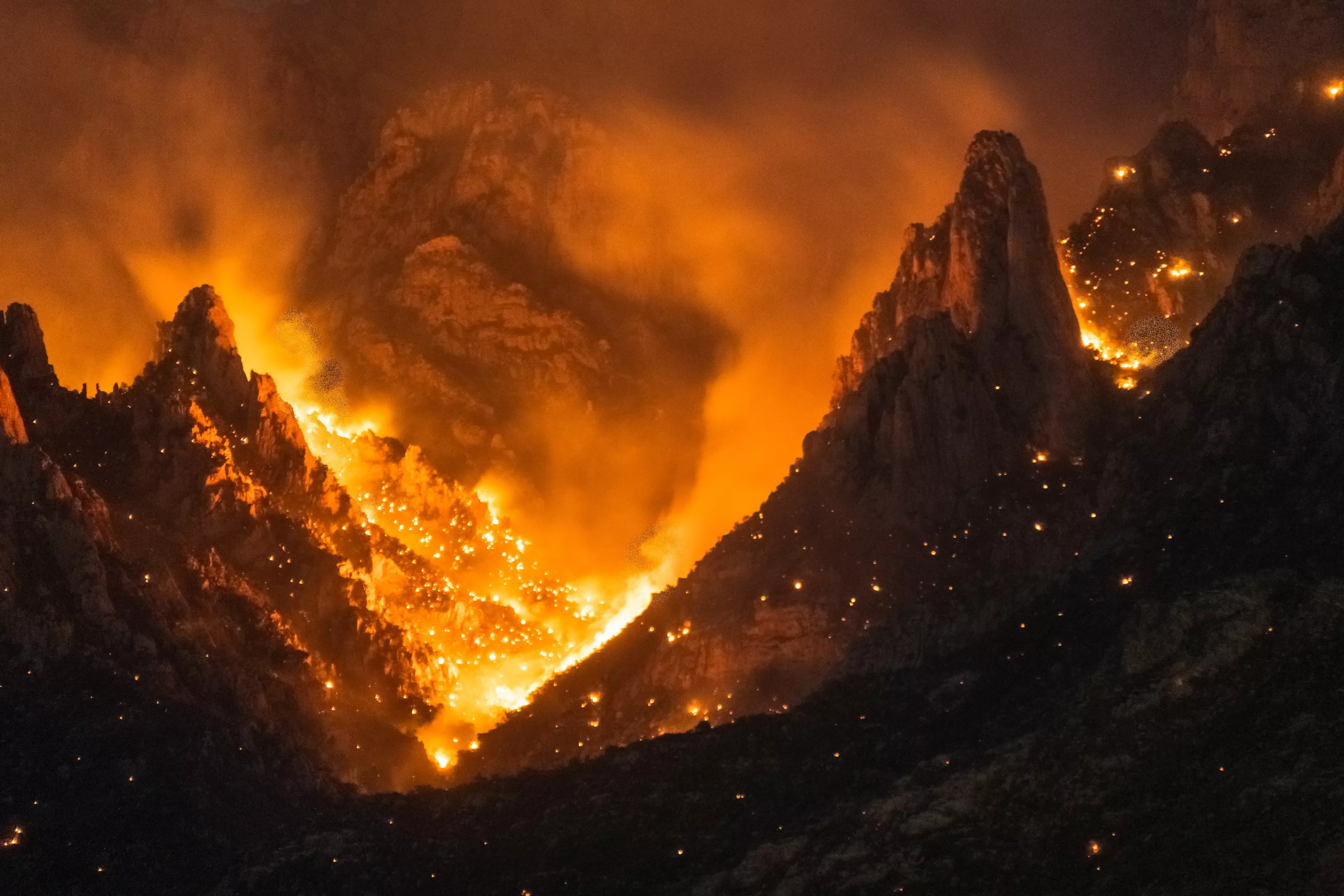
What a week. Rough for all Californians. Exhausting for the firefighters on the front lines. Heart-shattering for those who lost homes and loved ones. But a special “Truman Show” kind of hell for the cadre of men and women who’ve not just watched California burn, fire ax in hand, for the past two or three or five decades, but who’ve also fully understood the fire policy that created the landscape that is now up in flames.
“What’s it like?” Tim Ingalsbee repeated back to me, wearily, when I asked him what it was like to watch California this past week. In 1980, Ingalsbee started working as a wildland firefighter. In 1995, he earned a doctorate in environmental sociology. And in 2005, frustrated by the huge gap between what he was learning about fire management and seeing on the fire line, he started Firefighters United for Safety, Ethics, and Ecology. Since then FUSEE has been lobbying Congress, and trying to educate anybody who will listen, about the misguided fire policy that is leading to the megafires we are seeing today.
So what’s it like? “It’s just … well … it’s horrible. Horrible to see this happening when the science is so clear and has been clear for years. I suffer from Cassandra syndrome,” Ingalsbee said. “Every year I warn people: Disaster’s coming. We got to change. And no one listens. And then it happens.”
The pattern is a form of insanity: We keep doing overzealous fire suppression across California landscapes where the fire poses little risk to people and structures. As a result, wildland fuels keep building up. At the same time, the climate grows hotter and drier. Then, boom: the inevitable. The wind blows down a power line, or lightning strikes dry grass, and an inferno ensues. This week we’ve seen both the second- and third-largest fires in California history. “The fire community, the progressives, are almost in a state of panic,” Ingalsbee said. There’s only one solution, the one we know yet still avoid. “We need to get good fire on the ground and whittle down some of that fuel load.”

Inside Tucson Business, a sister paper of Tucson Weekly, will focus on nonprofit organization in its Sept. 11 edition.
As part of this project, ITB is inviting regional nonprofits to submit guest commentaries of 500 to 1,000 words about how their organization has pivoted as a result of the COVID-19 pandemic. While not all guest commentaries will be published in the print edition, we will publish them on the ITB website.
Please email your submissions to [email protected] with a photo of the author by Friday, Sept. 4.

Tags: music , jazz , tucson jazz festival , downtown , Image
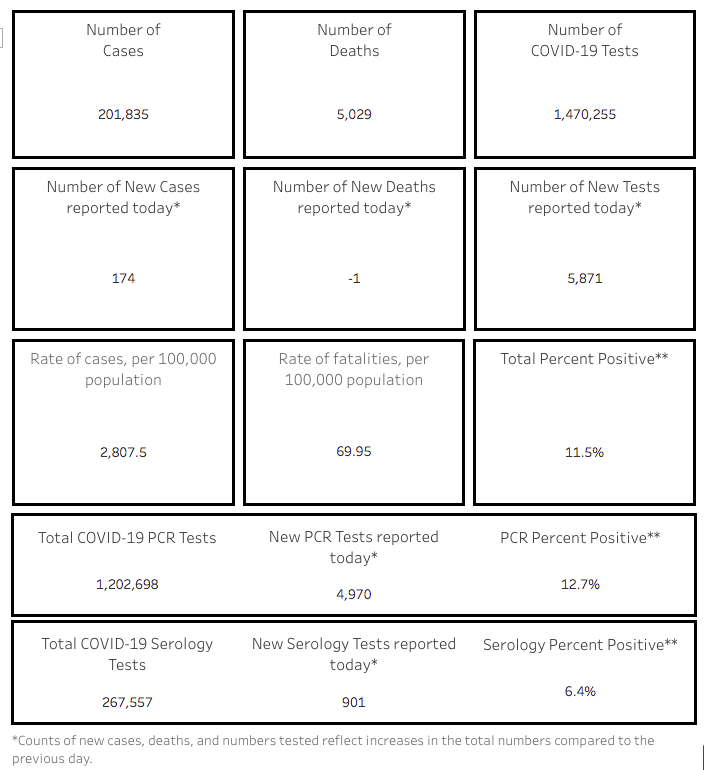
Pima County had seen 21,221 of the state’s 201,835 confirmed cases.
A total of 5,029 Arizonans had died after contracting COVID-19, including 576 deaths in Pima County, according to the Aug. 31 report.
The number of hospitalized COVID cases continues to decline. ADHS reported that as of Aug. 30, 786 COVID patients were hospitalized in the state. That number peaked at 3,517 on July 13.
A total of 894 people visited ERs on Aug. 30 with COVID symptoms. That number peaked at 2,008 on July 7 and has bounced between 900 and 1,100 for most of August.
A total of 256 COVID-19 patients were in intensive care unit beds on Aug. 30, the lowest that number has been since April 9, when 248 people were in ICU. The number of COVID patients in ICUs peaked at 970 on July 13.
In Pima County, the week-by-week counting of cases peaked the week ending July 4 with 2,398 cases, according to an Aug. 26 report from the Pima County Health Department. Those numbers have dropped with Pima County requiring the wearing of masks in public but they have bumped upward recent weeks, with 804 cases in the week ending Aug. 8 and 930 cases in the week ending Aug. 15. (Not all recent cases may have been reported.)
Deaths in Pima County are down from a peak of 54 in the week ending July 4 to 35 for the week ending Aug. 8 and 15 for the week ending Aug. 15.
Hospitalization peaked the week ending July 18 with 247 COVID patients admitted to Pima County hospitals. For the week ending Aug. 15, 63 COVID patients were admitted to Pima County hospitals.
Gyms, movie theaters, other biz reopening
Gyms, movie theaters and water parks were allowed to reopen last week in Pima, Maricopa and six other counties after they hit certain benchmarks that indicated “moderate” COVID-19 transmission category last week.

