

Thursday, June 25, 2020
ICYMI, here are the stories we covered for you today.

- The number of confirmed coronavirus cases in Arizona crossed the 63,000 threshold as of Thursday, June 25, after the state reported 3,056 new cases this morning, according to the Arizona Department of Health Services.
- It’s a tale of two rivers: The Verde, which flows south from near Flagstaff to metro Phoenix, and the San Pedro, which begins in Mexico and flows north to Winkelman.
- When Major League Baseball canceled the remainder of spring training games on March 12 in response to the coronavirus pandemic, it was with the initial hope of holding Opening Day for the 2020 season on April 9.
- Lucas Rensko was making money through a popular handyman-for-hire app called TaskRabbit, doing odd jobs and delivering groceries, when he picked up a task that led him to a leaky-roofed warehouse on a tattered road in northwest San Antonio.
- Arizona posted one of the sharpest unemployment drops in the country in May, falling from a historic high of 13.4% in April to 8.9% last month, according to the latest numbers from the Bureau of Labor Statistics.
- Tucson Mayor Regina Romero today said she did not believe Tucson Police Chief Chris Magnus should resign following yesterday's press conference during which Magnus offered to step down.
- By the time he persuaded the guards to let him call his family, Michael Williams could feel his life slipping away.
- The nation’s largest debt collectors should suspend seizing wages “immediately,” two prominent senators demanded in letters sent Wednesday.
- Arizona Gov. Doug Ducey has blunt advice for anyone worried about catching COVID-19: Stay home where it’s safer.
- Arizonans will face a 14-day quarantine if they travel to New York, New Jersey, or Connecticut, whose governors announced the restriction Wednesday to keep people from COVID-19 “hot spots” from bringing the infection with them.
TEMPE – Arizonans will face a 14-day quarantine if they travel to New York, New Jersey or Connecticut, whose governors announced the restriction Wednesday to keep people from COVID-19 “hot spots” from bringing the infection with them.
The quarantine, which took effect at midnight Wednesday, applied to nine states with positive virus test rates above 10% or 10 cases per 100,000 residents over a seven-day period. Arizona has been well beyond that threshold for the past three weeks, as the state has regularly set new records for daily infections.
New York Gov. Andrew Cuomo, New Jersey Gov. Phil Murphy and Connecticut Gov. Ned Lamont jointly announced the quarantine Wednesday on travelers from Arizona, Alabama, Arkansas, Florida, North Carolina, South Carolina, Washington, Utah and Texas.
Cuomo said the three Northeast states, which were hit hard by COVID-19 early in the pandemic, “worked very hard to get the viral transmission rate down” and they want to keep it that way.
“We don’t want to see it go up because a lot of people come into this region and they could literally bring the infection with them,” Cuomo said. “It wouldn’t be malicious or malevolent, but it would still be real.”
Murphy said imposing the quarantine is just “a smart thing to do” to protect their states.

The quarantine, which took effect at midnight Wednesday, applied to nine states with positive virus test rates above 10% or 10 cases per 100,000 residents over a seven-day period. Arizona has been well beyond that threshold for the past three weeks, as the state has regularly set new records for daily infections.
New York Gov. Andrew Cuomo, New Jersey Gov. Phil Murphy and Connecticut Gov. Ned Lamont jointly announced the quarantine Wednesday on travelers from Arizona, Alabama, Arkansas, Florida, North Carolina, South Carolina, Washington, Utah and Texas.
Cuomo said the three Northeast states, which were hit hard by COVID-19 early in the pandemic, “worked very hard to get the viral transmission rate down” and they want to keep it that way.
“We don’t want to see it go up because a lot of people come into this region and they could literally bring the infection with them,” Cuomo said. “It wouldn’t be malicious or malevolent, but it would still be real.”
Murphy said imposing the quarantine is just “a smart thing to do” to protect their states.
Arizona Gov. Doug Ducey has blunt advice for anyone worried about catching COVID-19: Stay home where it’s safer.
The governor’s tip, delivered during his weekly press conference, came as the state passed 63,000 confirmed cases of the coronavirus.
“COVID-19 is widespread in Arizona,” Ducey said. “It’s in all 15 of our counties. It’s growing, and it’s growing fast across all age groups and demographics. Anyone can get this virus, and anyone can spread this virus.”
The Arizona Department of Health Services listed 3,056 new cases Wednesday morning. Pima County has seen 6,546 of the state's 63,033 confirmed cases. A total of 1,490 people have died after contracting the virus, including 255 in Pima County. Maricopa County has more than half the state's cases, with the number of confirmed COVID-19 cases hitting 37,135.
Ducey called the rate at which the virus is spreading “unacceptable,” and says now is the time for all Arizonans to take personal responsibility for their actions by donning a mask in public, washing their hands often, and maintaining six feet of social distance.
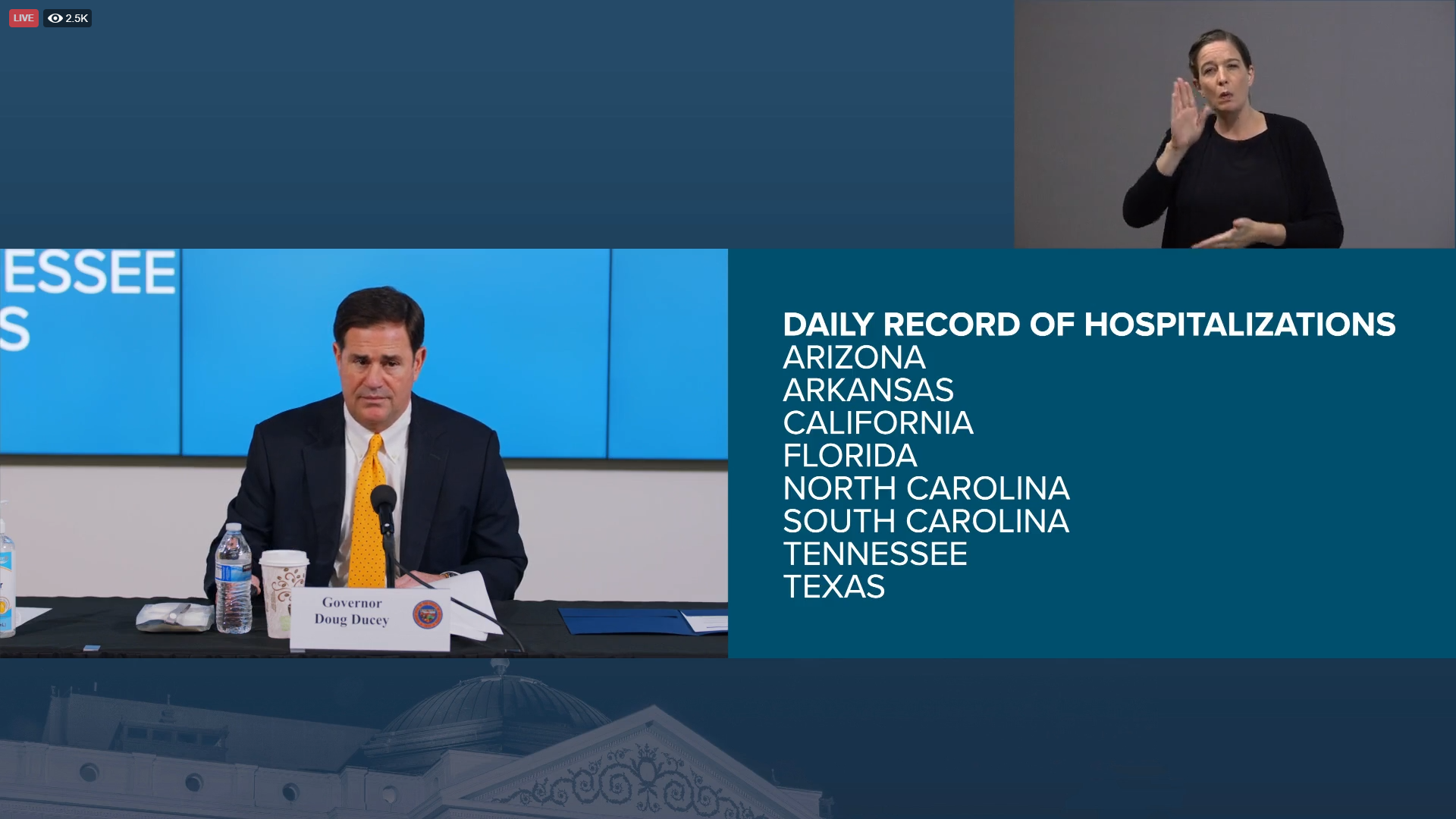
The governor’s tip, delivered during his weekly press conference, came as the state passed 63,000 confirmed cases of the coronavirus.
“COVID-19 is widespread in Arizona,” Ducey said. “It’s in all 15 of our counties. It’s growing, and it’s growing fast across all age groups and demographics. Anyone can get this virus, and anyone can spread this virus.”
The Arizona Department of Health Services listed 3,056 new cases Wednesday morning. Pima County has seen 6,546 of the state's 63,033 confirmed cases. A total of 1,490 people have died after contracting the virus, including 255 in Pima County. Maricopa County has more than half the state's cases, with the number of confirmed COVID-19 cases hitting 37,135.
Ducey called the rate at which the virus is spreading “unacceptable,” and says now is the time for all Arizonans to take personal responsibility for their actions by donning a mask in public, washing their hands often, and maintaining six feet of social distance.
ProPublica is a nonprofit newsroom that investigates abuses of power. Click here to read their biggest stories as soon as they’re published.
The nation’s largest debt collectors should suspend seizing wages “immediately,” two prominent senators demanded in letters sent Wednesday.
The letters came in response to a ProPublica story this month that focused on how the most prolific filers of debt collection lawsuits, Capital One and large debt buying companies, continue to garnish paychecks amid the COVID-19 pandemic. While most courts shut down to new hearings in March, wage seizure orders obtained before then were allowed to continue in most places. That left some essential workers and others desperately searching for relief amid the economic downturn.
“Filing collection lawsuits and garnishing the wages of consumers already struggling to pay for basic necessities will only exacerbate the economic and public health crisis,” Sens. Elizabeth Warren, D-Mass., and Sherrod Brown, D-Ohio, wrote.
Brown and Warren sit on the Senate Banking Committee, which oversees financial services companies. Brown is the ranking member.

The nation’s largest debt collectors should suspend seizing wages “immediately,” two prominent senators demanded in letters sent Wednesday.
The letters came in response to a ProPublica story this month that focused on how the most prolific filers of debt collection lawsuits, Capital One and large debt buying companies, continue to garnish paychecks amid the COVID-19 pandemic. While most courts shut down to new hearings in March, wage seizure orders obtained before then were allowed to continue in most places. That left some essential workers and others desperately searching for relief amid the economic downturn.
“Filing collection lawsuits and garnishing the wages of consumers already struggling to pay for basic necessities will only exacerbate the economic and public health crisis,” Sens. Elizabeth Warren, D-Mass., and Sherrod Brown, D-Ohio, wrote.
Brown and Warren sit on the Senate Banking Committee, which oversees financial services companies. Brown is the ranking member.
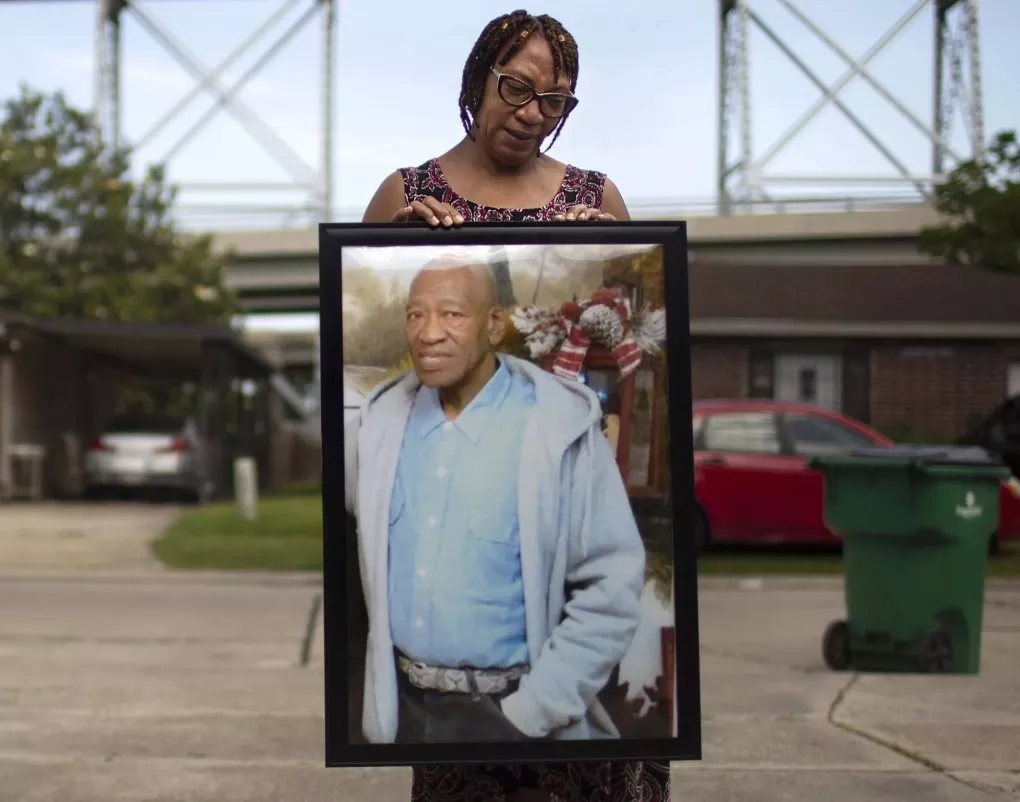
Terry Rogers holds a photo of Michael Williams, her brother, in front of her home in Bridge City, Louisiana, on May 17, 2020. (Kathleen Flynn/ProPublica)
By the time he persuaded the guards to let him call his family, Michael Williams could feel his life slipping away. His body ached, and he was struggling to breathe. For three days, he had been locked behind the heavy metal door of a cramped prison cell, terrified and alone.
“They weren’t treating him,” his son, Kevin Cooks, recalled. “He kept telling me, ‘Son, I’m going to die in here.’” Williams, a 70-year-old diabetic, was serving a life sentence for a 1974 convenience store murder he had always maintained he did not commit. It was the first time his son had ever heard him cry.
Williams’ family and his lawyer called over and over to the Louisiana State Penitentiary in Angola, pleading with guards and nurses to have him moved to a hospital. When they finally reached one of the senior guard officers, family members said, he told them Williams didn’t have the virus.
On May 7, a nurse assured one of Williams’ sisters that he was improving. The next day, he was rushed to a regional hospital in critical condition. The day after that, a doctor called to say Williams had gone into cardiac arrest. If they wanted to say goodbye, he said, they should hurry.
While the novel coronavirus burned through Angola, as the country’s largest maximum-security prison is known, officials insisted they were testing all inmates who showed symptoms, isolating those who got sick and transferring more serious cases to the hospital in Baton Rouge, about 60 miles to the south.
But from inside Angola’s walls, inmates painted a very different picture — one of widespread illness, dysfunctional care and sometimes inexplicable neglect. They said at least four of the 12 prisoners who have died in the pandemic, including Williams, had been denied needed medical help for days because their symptoms were not considered sufficiently serious.
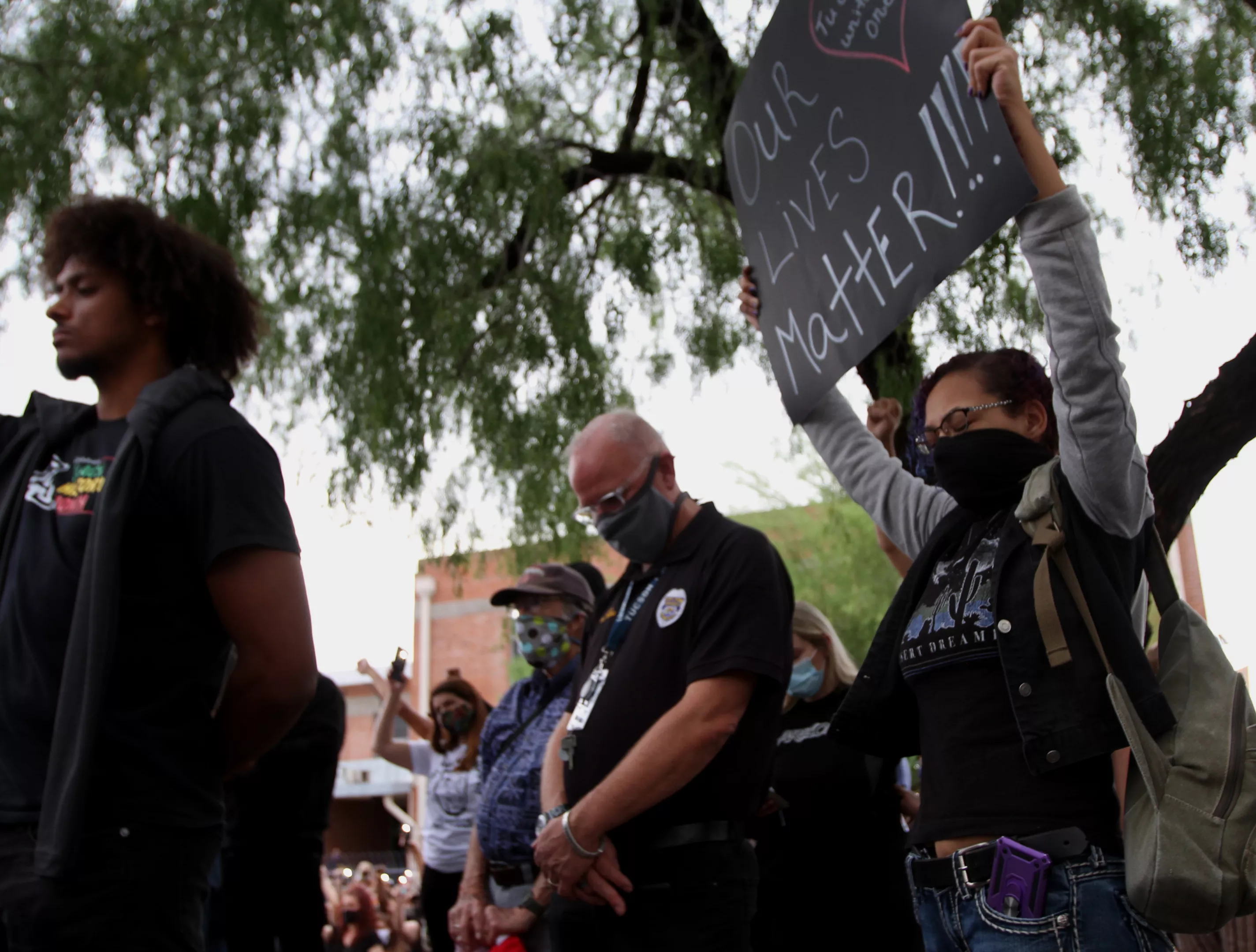
Austin Counts
Tucson Police Chief Chris Magnus bows his head during a moment of silence during a vigil for George Floyd earlier this month.
Tucson Mayor Regina Romero today said she did not believe Tucson Police Chief Chris Magnus should resign following yesterday's press conference during which Magnus offered to step down following the completion of an investigation into the in-custody death of 27-year-old Carlos Adrian Ingram, who died of cardiac arrest as he was physically held down by TPD officers.
UPDATE: City Manager Mike Ortega has declined to accept Magnus' resignation.
Romero's statement:
City Manager Ortega's email to Romero and City Council members:In this moment, my focus is on the fact that the life of a fellow Tucsonan, Carlos Adrian Ingram-Lopez, was needlessly lost. The Chief’s abrupt announcement at the press conference yesterday should not take away from that. I continue to extend my most sincere condolences to the family of Carlos Adrian during this incredibly difficult time for them. The best way we can honor Carlos Adrian’s memory is by coming together and taking immediate action to build a better, more just community.
By city charter, it is the City Manager’s responsibility to accept resignations or fire Department Directors. After listening to the feedback of my colleagues on the Council, I do not believe the Chief should resign.
Chief Magnus has brought forward thinking changes to TPD policies, practices and trainings, and has built strong relationships with our community since he joined the Department in 2016. Now is the time to work together and rebuild public trust in our police department by increasing transparency, ensuring accountability, and re-imagining how we provide safety to our community. I look forward to working with Chief Magnus to accomplish these reforms.
WASHINGTON – Arizona posted one of the sharpest unemployment drops in the country in May, falling from a historic high of 13.4% in April to 8.9% last month, according to the latest numbers from the Bureau of Labor Statistics.
But that drop still left May’s unemployment rate for the state at the highest point in almost nine years and was twice the jobless rate that Arizona posted at the beginning of year, before the COVID-19 pandemic hammered the economy.
The biggest job gains came in hotel and food services jobs, according to data from the Economic and Business Research Center at the University of Arizona’s Eller College of Management. It said jobs in those categories rose from 178,500 in April to 216,900 in May.
“Huge difference because of usual suspects reopening, which include bars, restaurants, retail, and more,” said Elliott Pollack, economist and CEO of Elliott D. Pollack and Co., an economic and real estate consulting firm in Scottsdale.
University of Arizona economist George Hammond said the numbers reflect a bounce back from the stay-at-home order that was lifted in Arizona in May. But while the numbers are encouraging, he said the state’s economy still has a long way to go before it gets back to pre-coronavirus vitality.
“As we look forward, it will be a process of gradual improvement,” Hammond said.
The Arizona numbers, released Friday, mirrored national jobless statistics that were released early this month. The BLS reported that the national unemployment rate fell from 14.7% in April to 13.3% in May, bucking economists’ fears of an increase and leading President Donald Trump to tout the gain of almost 3 million jobs.

Jaime Rivera, a TaskRabbit worker, said the warning “medical use prohibited” was omitted when masks were moved from their original packaging, shown at left in an image shared by Rivera, into new packaging, right. A mask broker tried to sell them to the Texas Division of Emergency Management. (Right: Courtesy of Texas Division of Emergency Management)
This article is co-published with The Texas Tribune, a nonprofit, nonpartisan local newsroom that informs and engages with Texans.
Lucas Rensko was making money through a popular handyman-for-hire app called TaskRabbit, doing odd jobs and delivering groceries, when he picked up a task that led him to a leaky-roofed warehouse on a tattered road in northwest San Antonio.
Inside, a man named Jaime Rivera had set up long tables where five or six other “Taskers” earning about $20 an hour were ripping Chinese masks out of plastic bags and stuffing them into new ones that were identical but for one potentially deadly difference. The old packages were labeled in all caps “MEDICAL USE PROHIBITED,” meaning not to be used by doctors and nurses who need the strongest protection from tiny particles carrying the novel coronavirus. The new bags, intended to make their way to Texas hospitals, simply omitted that warning.
This seemingly small deception highlights a huge problem for medical workers whose best defense against a virus that ravages the body with horrifying complexity is a simple, but trustworthy, mask. That trust has eroded as Chinese-made masks claiming, sometimes falsely, to be 95% effective at filtering virus-laden particles made their way into hospitals and now local convenience stores. You might have bought them: KN95s.
PHOENIX – When Major League Baseball canceled the remainder of spring training games on March 12 in response to the coronavirus pandemic, it was with the initial hope of holding Opening Day for the 2020 season on April 9.
That hope never manifested as the spread of the coronavirus forced the league and its players into a labor dispute that lasted just shy of three months. After much back and forth between MLB and the MLBPA, the two sides managed to strike a deal on Monday.
Finally, it was decided, there will be baseball in 2020.
“I can’t wait to compete and have our players compete,” Diamondbacks Executive Vice President and General Manager Mike Hazen said Wednesday. “The hardest part of this has been the team we put together in the offseason getting paused and not getting to see those guys go out there as a team. They tell us to play, we’re going to go out there and compete. We have a good team and I’m glad we’re going to be able to bring baseball to a lot of people.”
Teams are to report to a “Spring Training 2.0” at their home facilities on July 1 to begin preparing for a 60-game season that will begin on July 23.
The Diamondbacks’ schedule will feature 10 games against each club in the National League West. The remaining games will be played against clubs playing in their opposite league’s corresponding geographical division in order to mitigate travel. For the Diamondbacks, that means playing against teams in the American League West, setting up entertaining matchups with the rival Los Angeles Dodgers and the 2019 American League champion Houston Astros.
In an effort to finish games more quickly, every half-inning after the ninth will begin with a runner on second base, USA Today reported. The designated runner would be the player who made the final out in the previous half-inning.
On top of that, the designated hitter will be utilized in the National League for the first time in 2020. Thus far, neither of these rule changes has been extended past this upcoming season.

That hope never manifested as the spread of the coronavirus forced the league and its players into a labor dispute that lasted just shy of three months. After much back and forth between MLB and the MLBPA, the two sides managed to strike a deal on Monday.
Finally, it was decided, there will be baseball in 2020.
“I can’t wait to compete and have our players compete,” Diamondbacks Executive Vice President and General Manager Mike Hazen said Wednesday. “The hardest part of this has been the team we put together in the offseason getting paused and not getting to see those guys go out there as a team. They tell us to play, we’re going to go out there and compete. We have a good team and I’m glad we’re going to be able to bring baseball to a lot of people.”
Teams are to report to a “Spring Training 2.0” at their home facilities on July 1 to begin preparing for a 60-game season that will begin on July 23.
The Diamondbacks’ schedule will feature 10 games against each club in the National League West. The remaining games will be played against clubs playing in their opposite league’s corresponding geographical division in order to mitigate travel. For the Diamondbacks, that means playing against teams in the American League West, setting up entertaining matchups with the rival Los Angeles Dodgers and the 2019 American League champion Houston Astros.
In an effort to finish games more quickly, every half-inning after the ninth will begin with a runner on second base, USA Today reported. The designated runner would be the player who made the final out in the previous half-inning.
On top of that, the designated hitter will be utilized in the National League for the first time in 2020. Thus far, neither of these rule changes has been extended past this upcoming season.
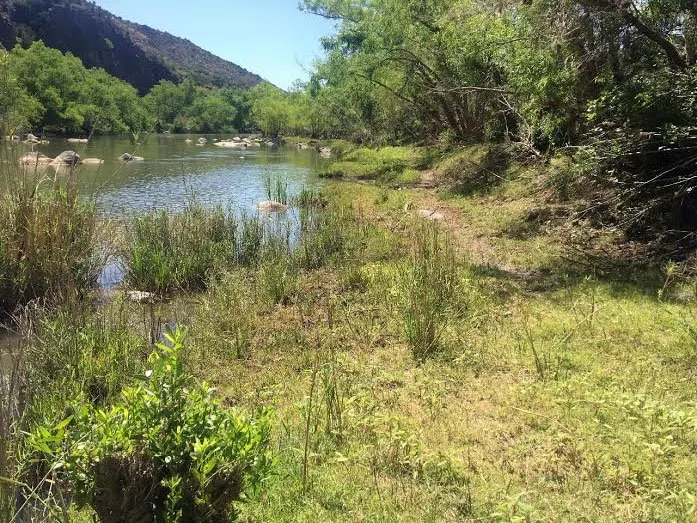
The Verde River is home to the rare loach minnow and another small fish, the spikedace, and birds protected under the Endangered Species Act, including the yellow-billed cuckoo and the southwestern willow flycatcher. (Photo courtesy of Joe Trudeau, Center for Biological Diversity)
In some ways, the rivers differ drastically. The San Pedro is one of the last undammed rivers in the Southwest, while the Verde has many dams, including Horseshoe and Bartlett northeast of Phoenix. Parts of the Verde are protected under the Wild and Scenic Rivers Act – protections the San Pedro doesn’t share.
But for all the differences, there are many similarities. Both have diverse ecosystems that are home to many endangered wildlife species, including the southwestern willow flycatcher and loach minnow. Both have felt the effects of increased groundwater pumping and cattle grazing. And, just recently, both have been at the center of lawsuits filed to protect each river.
“The story of Arizona rivers is that we have demonstrated many times that we can dry them up, but we haven’t demonstrated that we can save them,” said Sandy Bahr, the director of the Sierra Club’s Grand Canyon Chapter.
In this two-part series, Cronkite News takes a deep dive into these two Arizona rivers and the threats they face.
Part 1: The Verde
At almost 60, Jon Fuller would rather be canoeing the Verde than sitting in a reclining chair. The author of “Verde River Elegy: A Paddling Journey to the River’s End,” Fuller has studied rivers for almost four decades. During his journey down the Verde in 2017, Fuller witnessed cattle grazing along the banks.
“The cows drop their droppings on the campsite, on the river,” he said. He points out the irony of having to carry his own waste, in accordance with the law, while seeing far more waste from what he calls unregulated cattle. Cattle also erode river banks and sandbars, and eat large amounts of streamside vegetation.
“It turns out most wilderness areas have exemptions for cattle grazing, although they should not be in the river corridor themselves, according to the rules the federal government agreed to,” Fuller said. “Yet there they were.”

