
Thursday, June 25, 2020
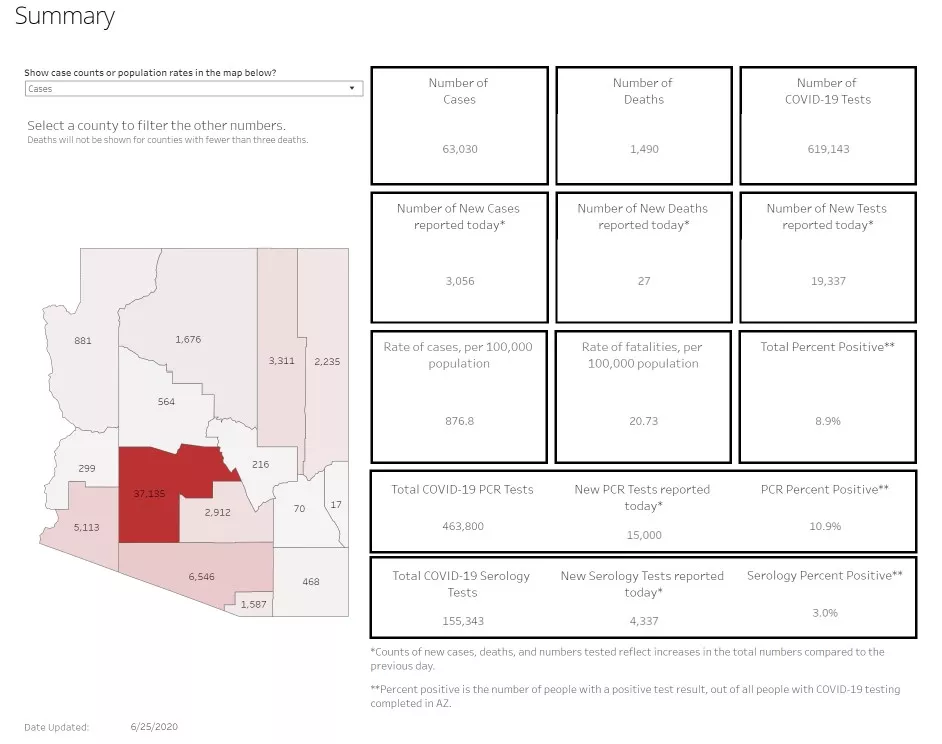
Pima County had seen 6,546 of the state's 63,033 confirmed cases.

Cases in Arizona have more than tripled since June 1, when the state had 20,123 confirmed cases.
A total of 1,490 people have died after contracting the virus, including 255 in Pima County.
Maricopa County has more than half the state's cases, with the number of confirmed COVID-19 cases hitting 37,135.
Arizona hospitals continue to see a steady rise in the number of people hospitalized with COVID symptoms, as well as more people visiting emergency rooms. This morning's Arizona Department of Health Services report shows that as of yesterday, a record 2,453 Arizonans were hospitalized, more than double the 1,009 hospitalized on June 1.
A daily total of 1,161 people arrived at emergency rooms with COVID-like symptoms on June 24. Previous to June, the number of people seeking help in emergency rooms never topped 667.

The number of COVID-19 patients in ICU beds rose to 611 yesterday.
If you're out in public in Pima County, you're now expected to wear masks or face coverings if you're older than 5. The Pima County Board of Supervisors voted 3-2 along party lines to require face masks on Friday, June 19. Likewise, Tucson Mayor Regina Romero issued a proclamation last week that requires face masks and includes a $50 penalty for those who don't mask up, although she said authorities would first try to educate those who don't wear masks and would resort to fines only for report offenders. There are exceptions for those who can't wear a mask for medical reasons.
• Gov. Doug Ducey and State Superintendent of Public Instruction Kathy Hoffman yesterday announced new funding for Arizona schools to support the reopening of schools in August. Ducey resolved a major challenge that schools were facing: Funding is based on how many students physically attend schools and with some families turning to online learning to avoid infection in the classroom, those numbers are likely to fall. Ducey, rather than call a special session of lawmakers to change the law, instead issued an executive order providing $200 million to Arizona schools to prevent the funding cuts and support remote learning.
The package also includes $40 million to improve broadband lines in rural Arizona, where internet connections can be spotty; $20 million for high-need schools; $6 million for the Arizona Teacher Academy to help with a teacher shortage; $1 million in micro-grants for innovative learning programs; $1 million to purchase vehicles for the Arizona School for the Deaf and Blind; $700 for leadership development; and $500,000 for tutoring programs.
The Arizona Department of Education is providing an additional $25 million from the federal CARES Act for additional assistance to schools.
Wednesday, June 24, 2020

Vote Now in Best of Tucson® 2020: The Lost Treasures!
- The number of confirmed coronavirus cases in Arizona jumped to just shy of 60,000 as of Wednesday, June 24, after the state reported 1,795 new cases this morning, according to the Arizona Department of Health Services.
- President Donald Trump toured a newly finished section of border wall Tuesday in Yuma, crediting it not only for a reduction in border crossings and drugs but claiming it has helped prevent “a coronavirus catastrophe” on the southern border.
- The recent protests sparked by the death of George Floyd (as well as Breonna Taylor and many other people of color) have affected families with young children in many different ways.
- The 75,000-acre Bighorn Fire is now burning on several fronts throughout the Catalina Mountains after being fanned by gusty weather and has even stretched across the Pinal County line to the north.
- Donald Trump is famous — and infamous — for his use of Twitter and Facebook. But particularly since the pandemic forced him to largely swear off his favorite mass, in-person rallies, his campaign has been amping up the use of another form of alternative media: YouTube and podcasts.
- President Donald Trump signed an executive order Monday suspending H-1B, L-1, J and other temporary work visas until the end of the year, while also extending the hold on green cards for new immigrants.
- As President Donald Trump was hailing the pace of border wall construction Tuesday, Tohono O’odham Nation Chairman Ned Norris Jr. was bemoaning it as a project that continues “to destroy … sacred sites.”
- Tucson’s Reid Park Zoo said “goodbye” to one of its animals Wednesday when the organization announced the passing of Shombay the African lion. Shombay lived to 12 and was diagnosed with polycystic kidney disease in 2016.
- Carlos Adrian Ingram-Lopez died after Tucson police detained him on April 21, 2020. He was 27 years old.
- Tucson Police Chief Chris Magnus offered his resignation to Mayor Regina Romero over how TPD officers handled the in-custody death of Carlos Ingram-Lopez last April during today's press conference regarding the incident.
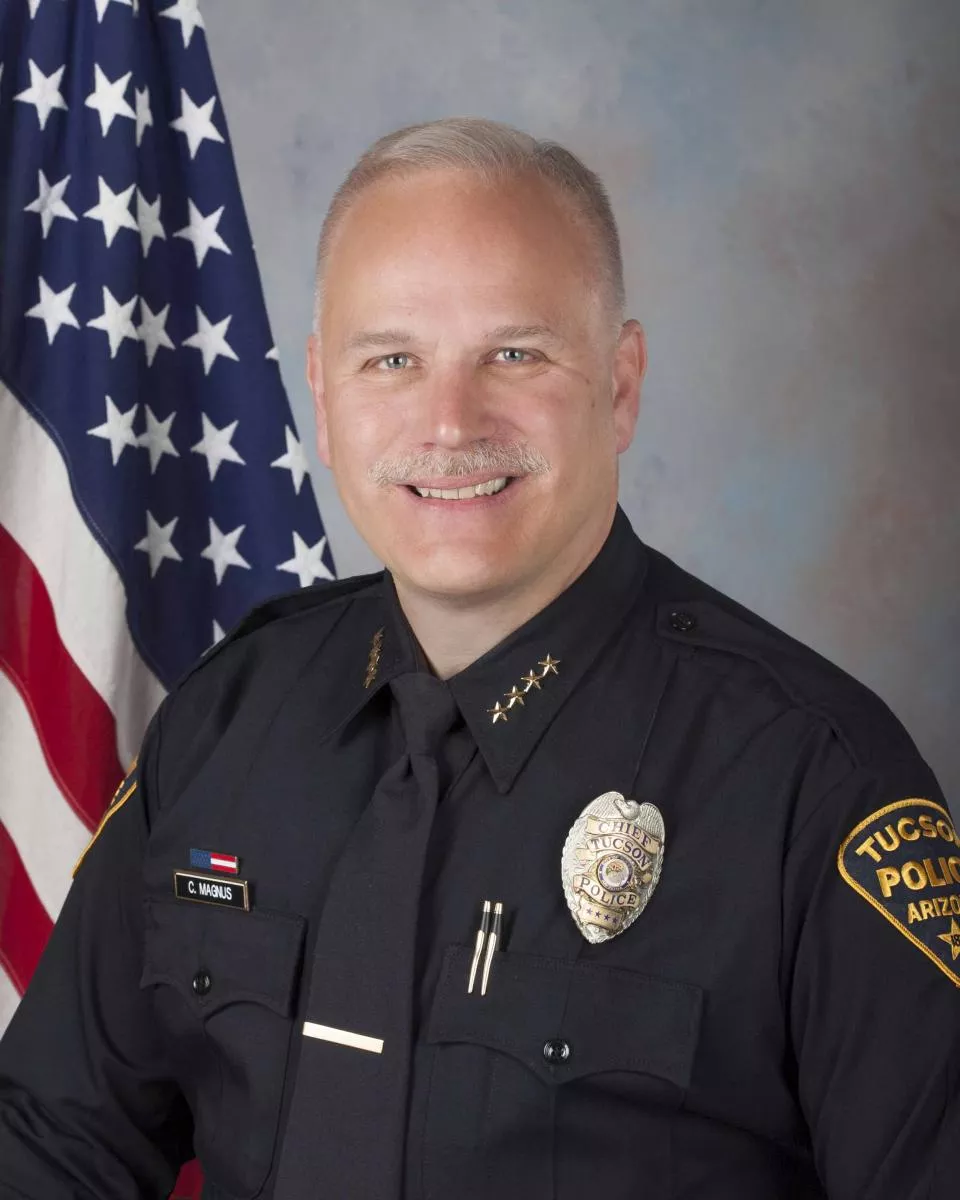
Before announcing his offer of resignation, Magnus addressed and accepted responsibility for the department's failure to notify the public of the in-custody death of Ingram-Lopez while he was in their custody. He also took responsibility for TPD executive officers' failure to review bodycam footage of the incident in a timely manner.
"As chief, I accept responsibility for both these serious misstep, although I believe neither was a result of any sort of malevolence or deliberate attempt to hide anything," Magnus said. "To demonstrate my willingness to take accountability for these mistakes, I am offering my resignation to the mayor, city council and the city manager, which they can accept or handle as they deem fit."
Ward 2 Councilmember Paul Cunningham said Magnus still has his full support.
"I've already asked the chief not to resign," Cunningham said. "While the incident in April was tragic and demonstrates the need for police reform, our chief has a track record of being community-oriented and a police reformer. I think it would be a mistake to let Chief Magnus go."
Ward 6 Councilmember Steve Kozachik also thinks accepting Magnus' resignation would be a mistake.
"He was let down by people who work for him and he has been an excellent chief," Kozachik said. "I don't think there is any rational reason for (Magnus) to resign and I've already told (City Manager) Mike Ortega if he is polling people, my vote is to retain him."
After Kozachik viewed the bodycam footage, he believes the fault lies with the officer's handling of the situation—not the chief.
The in-custody death was just revealed yesterday, June 23, and has been met with outrage from the Tucson community. A medical examiner’s report determined Ingram-Lopez suffered cardiac arrest from a combination of physical restraint by the officers involved and acute cocaine intoxication.
During a Wednesday press conference discussing details of the event, Tucson Police Chief Chris Magnus offered his resignation to Mayor Regina Romero and called for “full accountability” within the department. Romero said she was not expecting Magnus' offer to resign and would have to consider it before commenting further.
Magnus said the three officers involved in detaining Ingram-Lopez violated department policies for interacting with people who are in mental distress or under the influence of drugs. All three officers have resigned; Magnus added that they would have been fired otherwise for “multiple policy violations.”
Magnus said Ingram-Lopez’s grandmother called 911 at 1 a.m. on April 21 to report that her grandson was “drunk, yelling and running naked.”
Body camera footage shows officers arriving at the home and screaming at Ingram-Lopez to “get on the fucking ground.” Ingram-Lopez is shown running to the garage, where officers handcuff him behind his back and lay him face-down on the floor.
The audio captures Ingram-Lopez screaming in distress, saying repeatedly “no,” “please” and “I’m sorry.” Magnus said Ingram-Lopez was “highly erratic” at the beginning of the encounter, but became more compliant.

“Losing Shombay is particularly difficult for our team,” said Dr. Sue Tygielski, Director of Zoo Operations, in the zoo’s announcement. “Our animal care and veterinary teams worked so hard to encourage him to participate in training sessions to help save his life. When he received these additional fluids, he would act more energetic. The team could see clear evidence of how their skills and dedication helped Shombay. They are all proud to have worked with him and our zoo is so lucky to have such dedicated staff.”
According to the zoo, the lion’s recent blood tests showed a decline in kidney function, and “he was not participating in fluid sessions.”
“These factors combined contributed to the zoo’s decision to humanely euthanize him on Wednesday morning,” the zoo stated.
Shombay landed at Reid Park Zoo in 2010, when he was 2 years old. Known as a cautious lion, Shomby was well known for investigating new habitats before making himself comfortable—and longtime patrons may remember the mohawk he once sported in his youth.
Shombay and Kaya, a female lion at the zoo, were responsible for the birth of several litters of cubs. Their 6-year-old, Nayo, lives at Reid Park.
“We expect their behaviors to be different in the near future as they adapt to life without Shombay,” Animal Care Supervisor Rebecca Edwards said. “Our team will do all we can to make the transition as easy as possible.”
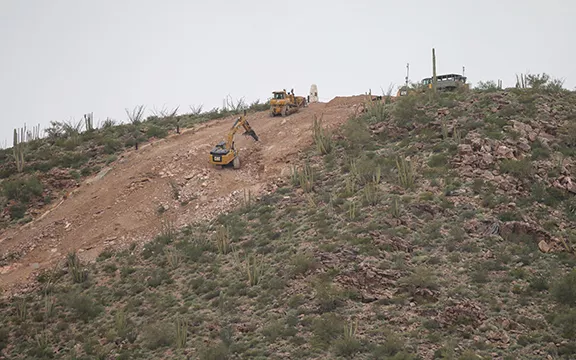
PHOENIX – As President Donald Trump was hailing the pace of border wall construction Tuesday, Tohono O’odham Nation Chairman Ned Norris Jr. was bemoaning it as a project that continues “to destroy … sacred sites.”
“We have an obligation, we have a duty, we have a responsibility, to protect those sites of our ancestors, sacred sites of our ancestors, and do what we can do to protect those areas,” Norris said.
He was one of five tribal leaders, along with San Carlos Apache Chairman Terry Rambler, who took part in a National Congress of American Indians virtual forum Tuesday on threats to tribal lands from federal government action.
The forum, “Protecting Tribal Lands and Sacred Places: Current Threats across Indian Country,” ranged from complaints of physical destruction of tribal sites to efforts to block tribal checkpoints aimed at stopping the spread of COVID-19.
For Norris, it is the wall going through his reservation which straddles the U.S.-Mexico border and through the Organ Pipe Cactus National Monument where the Tohono O’odham say there are burial and archeological sites.
For Rambler, the threat is the Resolution Copper Mine planned for an area known as Oak Flat. The site was part of a land swap engineered by members of Arizona’s congressional delegation in 2014, that gave the mining company 2,400 acres of copper-rich federal land in exchange for 5,000 privately held acres in southeastern Arizona.

The suspension is in addition to an earlier order signed April 22, which put a 60-day restriction on the flow of immigrants into the United States to soften the economic downfall caused by the COVID-19 pandemic.
The order goes into effect Wednesday, potentially affecting thousands of immigrants, among them tech workers and foreign au pairs, who hold H-1B and J-1 visas, respectively.
“We estimate that this would prevent the entry of 167,000 temporary workers and their family members in July through December,” said Julia Gelatt, a senior policy analyst at the Migration Policy Institute, a nonpartisan think tank. “And would block an additional 158,000 people who would have otherwise come to the United States on green cards from abroad.”
According to a senior Trump administration official who discussed the order in a teleconference, the order will free up about 525,000 U.S. jobs, making way for American citizens to have the first shot at applying.

This story was co-published with WNYC.
Donald Trump is famous — and infamous — for his use of Twitter and Facebook. But particularly since the pandemic forced him to largely swear off his favorite mass, in-person rallies, his campaign has been amping up the use of another form of alternative media: YouTube and podcasts.
The president’s most recent sit-down interview? As it happens, it occurred last week on “Triggered,” a YouTube program hosted by his namesake son. In a conversation in the White House’s map room, Trump Jr. quizzed his dad about everything from who his favorite child is to whether aliens exist — to a Fox News report that Osama bin Laden wanted to assassinate President Barack Obama so that Joe Biden would ascend to the presidency.
This was no ordinary campaign video, nor was it a random question, this week’s episode of “Trump, Inc.” makes clear. “Triggered” followed the exchange about bin Laden with a campaign ad that repeated the same point, showing how closely the program’s conversations are tied in with campaign talking points. “Trump, Inc.” explores the Trump campaign’s universe of podcasts and YouTube shows, which has expanded since the coronavirus began locking down huge swaths of the country. (The campaign did not respond to requests for comment.)
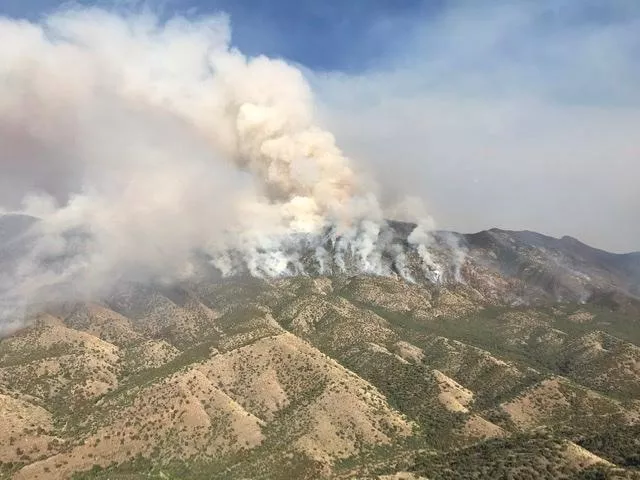
The 75,000-acre Bighorn Fire is now burning on several fronts throughout the Catalina Mountains after being fanned by gusty weather and has even stretched across the Pinal County line to the north. The June weather is reaching near 110 degrees during the day, and causing poor humidity recovery at night, resulting in “critical fire conditions,” according to the national Incident Information System. The fire is currently 33 percent contained, with 876 fire personnel on the job.
The fire is burning across the northern, southern, and eastern flanks of the Catalinas, which is expected to lead to smoky conditions today. This smoke is anticipated to worsen due to higher winds over the coming days.
During a morning meeting, Tim Reid, deputy incident commander on the Bighorn Fire, assessed the multiple areas of burning: Reid says the southern fire in Sabino Canyon and Catalina Foothills areas is fairly secure and that fire teams are "fairly optimistic, but there's still a threat." The burning across Pusch Ridge near Oro Valley is also in good shape, as the fire is entering sparser fuels as it comes off the mountain flanks.
Reid said fire crews are focusing on the fire burning north near Oracle, using bulldozers and burn lines to keep the Oracle Ridge area in check and braced for additional winds.
They are also taking steps to protect Mount Lemmon's Sumerhaven.
"The area where we're really focusing on is the Summerhaven area,” Reid said. “The basic strategy and tactics are lining and firing underneath the values at risk, and connecting them to the Mount Lemmon highway, and then bringing fire down the highway so that the values at risk are protected from a southwest push."
According to the National Forest Service, Catalina and Oro Valley have the greatest risk of smoke, especially in the morning.
"We're feeling pretty good about where we're at,” Reid said. “If we have a successful day today, the stage will be set for success with the wind test that's coming up."
Fire crews remind the public that drones are prohibited over the fire area, as firefighting aircraft are busy and must be grounded in drones' presence. According to NFS, on June 8, a drone was observed over the Bighorn Fire’s southern perimeter, which "forced the aircraft suppression effort to be halted, endangering the lives of on the ground firefighters and the aircrews at a critical time during the height of the burning period."
This was the second such incident in three days.

The recent protests sparked by the death of George Floyd (as well as Breonna Taylor and many other people of color) have affected families with young children in many different ways. Some children are seeing protests in their own neighborhoods. Others are hearing their families talk about the protests or they are seeing news coverage. Many children are aware that adults in their lives are upset and anxious, but they may not know why.

The focus of this article is on how to talk with young children about these current events and, especially, how to reassure children who might feel confused, frightened, or worried. How parents talk with their children about the protests will certainly be influenced by each family’s lived experience with racism and their beliefs about how change happens. Research shows that parents of color are significantly more likely to talk with their children about race than their white peers. In some families, especially for people of color, a discussion about the protests may take place in the context of frequent ongoing conversations about racism. For families who have experienced the trauma of racism directly, what’s happening now may make those conversations more urgent and difficult. In other families, especially white families, this may be the first time parents have discussed racism with their children. All children are impacted by racism in one way or another and most children will benefit from an opportunity to talk with their families about what’s happening. For more in-depth guidance about how to talk with children about racism, see the suggested resources listed at the end of the article.